Aria means “air; melody”
Say it AR-ee-uh
Aria is the Italian word for "air," and in music it names a solo song, especially in opera. As a given name it carries both senses: air and melody.
- Popularity 2025
- #26 for girls6,130 US babies
- Nicknames
- Ari, Ria
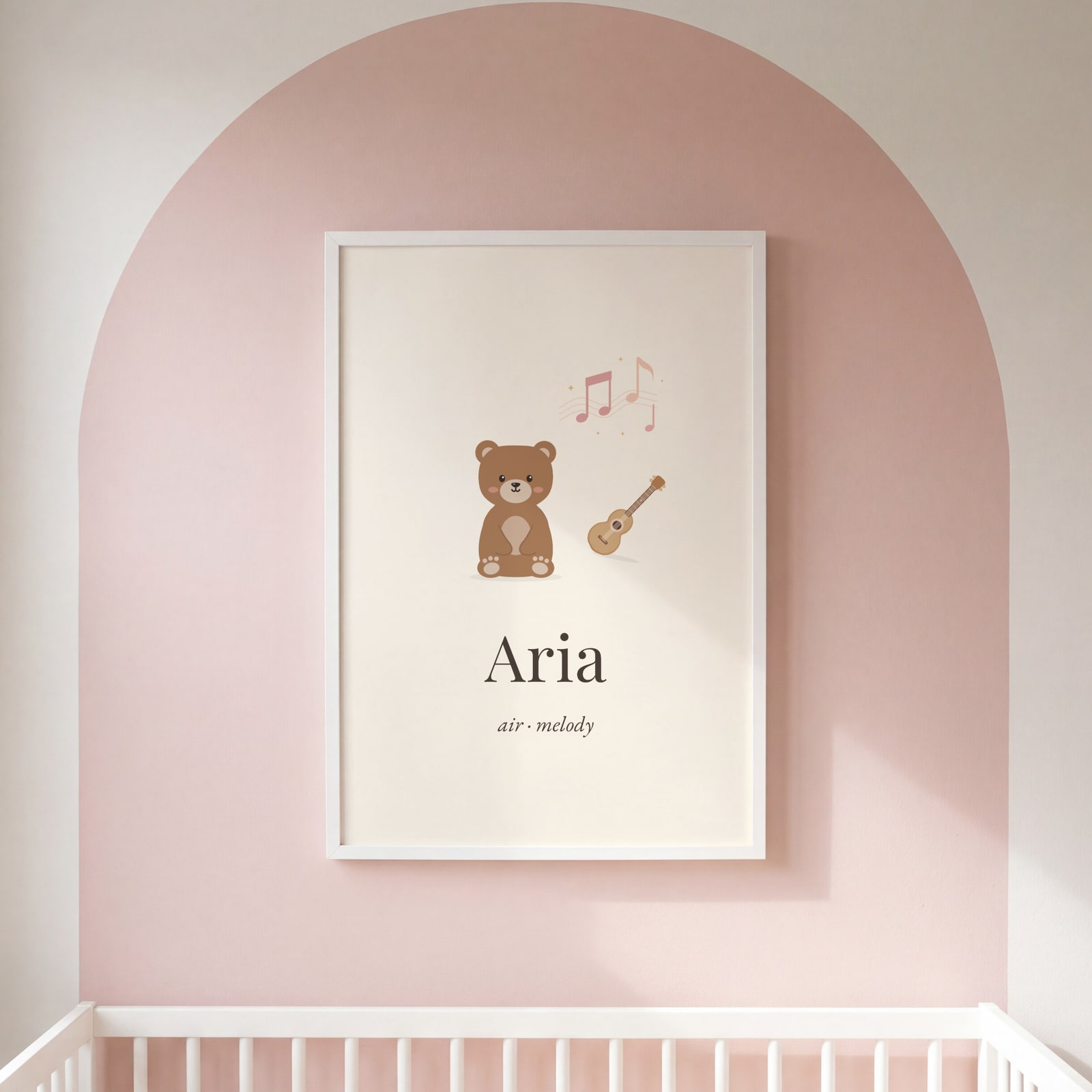
What does Aria mean?
Aria comes directly from the Italian word aria, meaning "air." It traces back through Latin aer to Greek aēr, both meaning "air." In Italian the word also came to mean a tune or manner of singing. From there it became the musical term for a solo vocal piece, the showcase songs of opera and oratorio written by composers such as Handel, Bach and Mozart. English speakers adopted Aria as a given name for its musical sound and meaning. It is also sometimes linked to the Persian name Arya, from an ancient Indo-Iranian word often glossed as "noble," but that is a separate name that happens to sound alike. Another common claim is that Aria means "lion." That idea comes from Hebrew Ari, a different word with a different history.
The Italian word means "air" and "melody," but the name is also linked to the unrelated Persian Arya ("noble") and is sometimes wrongly said to mean "lion" from Hebrew Ari.
Other forms and spellings
Ariah, Aaria
How popular is Aria?
In 2025, Aria was the #26 name for girls in the US, given to 6,130 babies.
Aria nursery prints
Storybook illustrations picked for the name. Open any of them to change the name, colors, illustration and words, or arrange it freely.
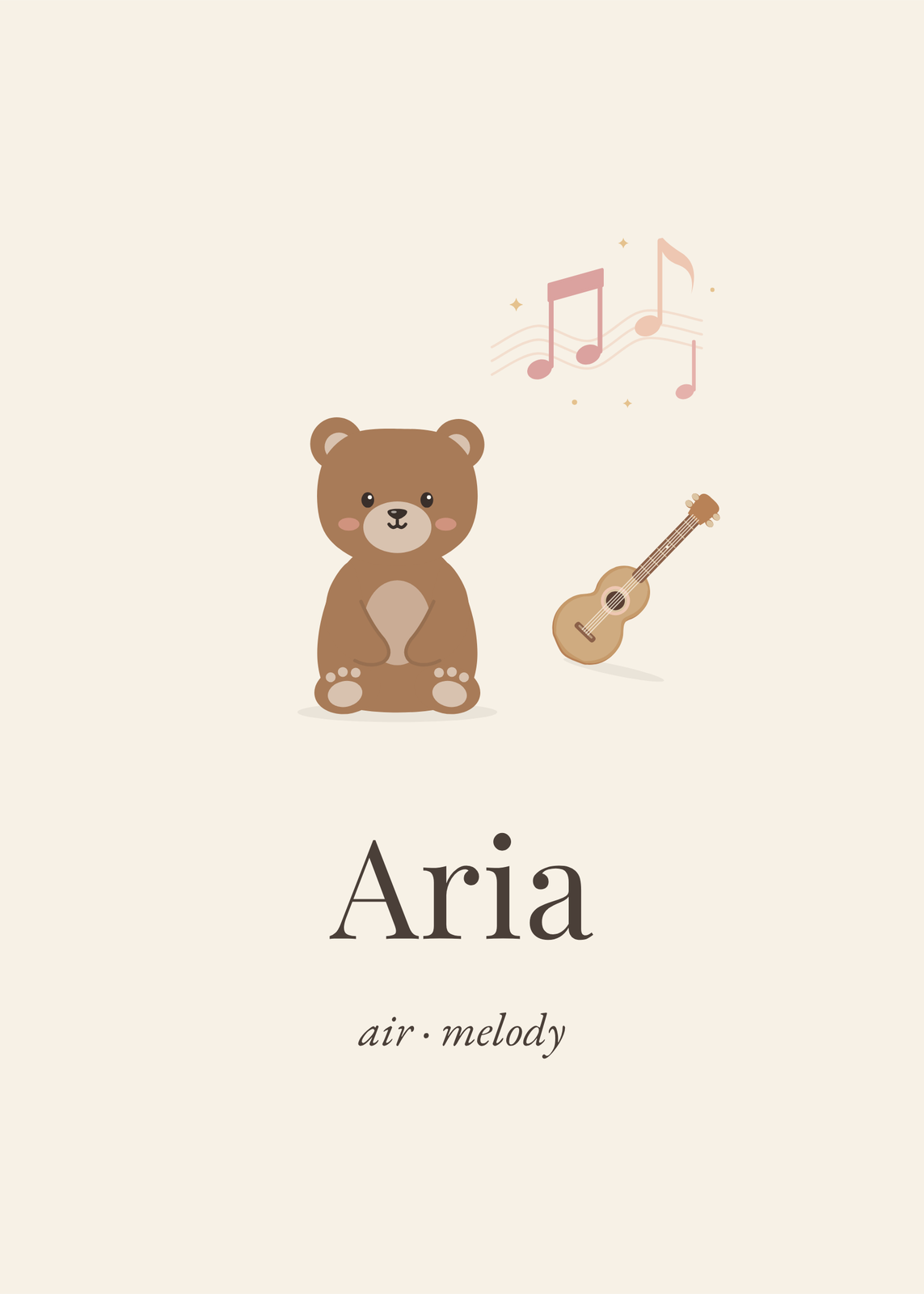 Little lullaby, with the meaningEdit this →
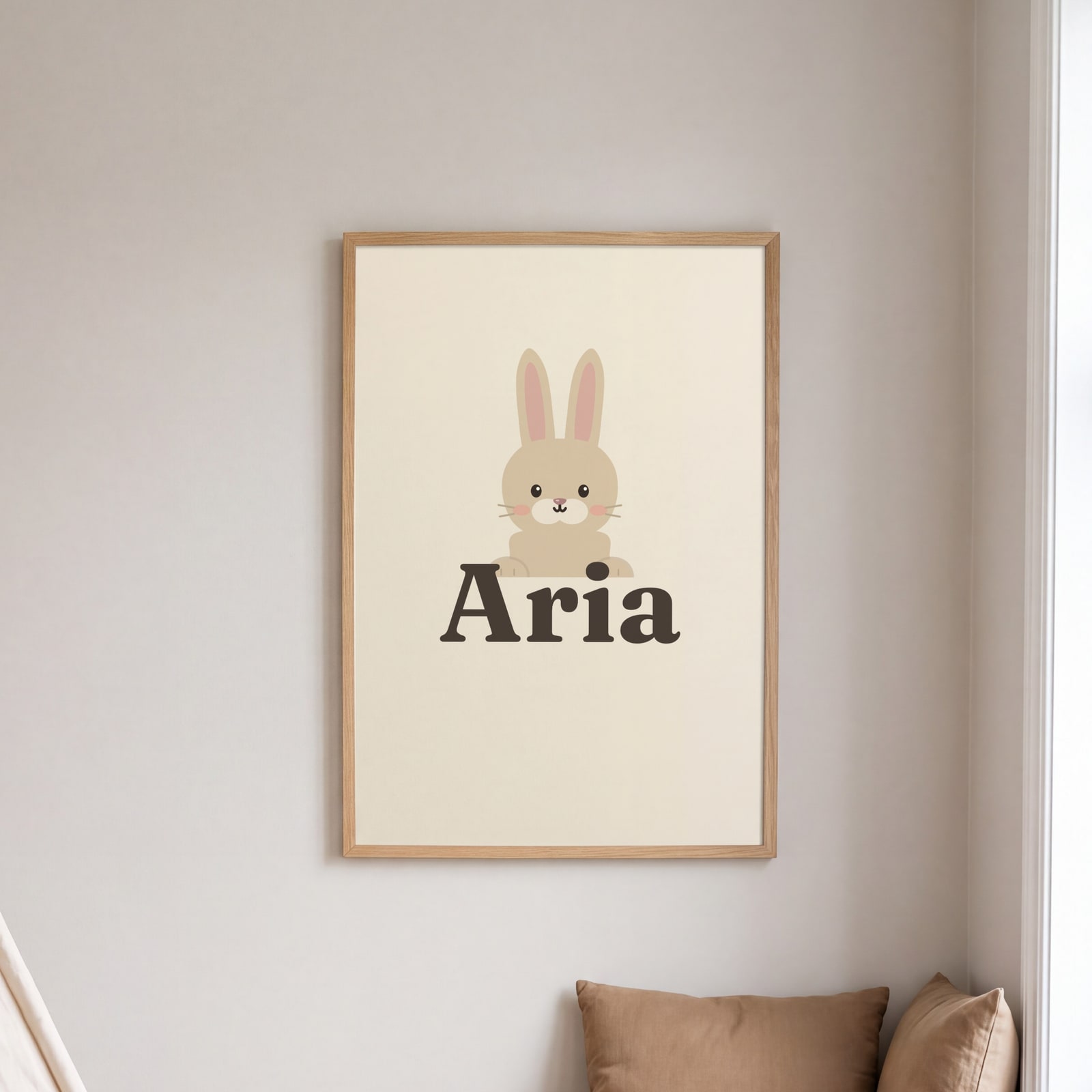
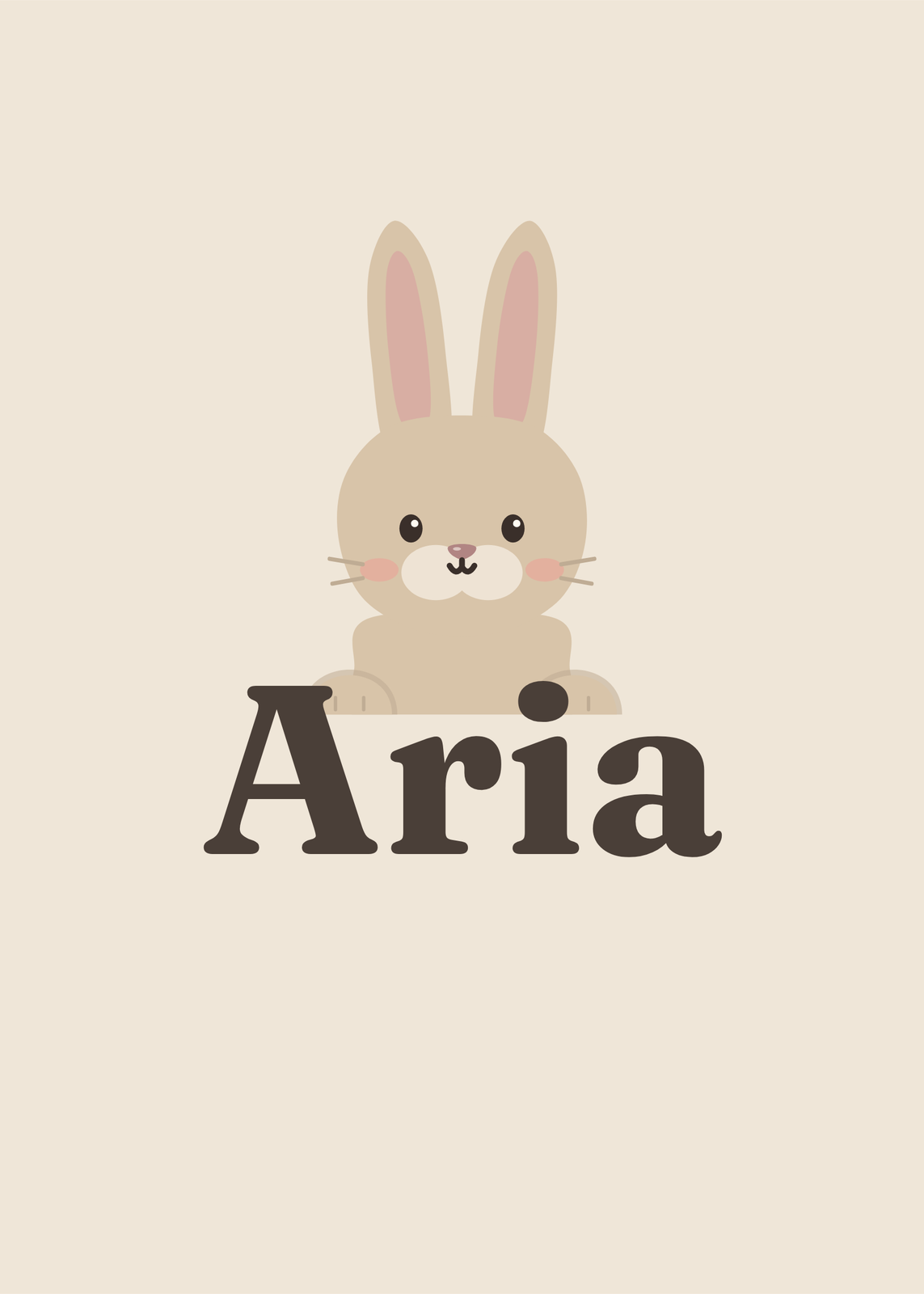 A bunny peeking over the nameEdit this →
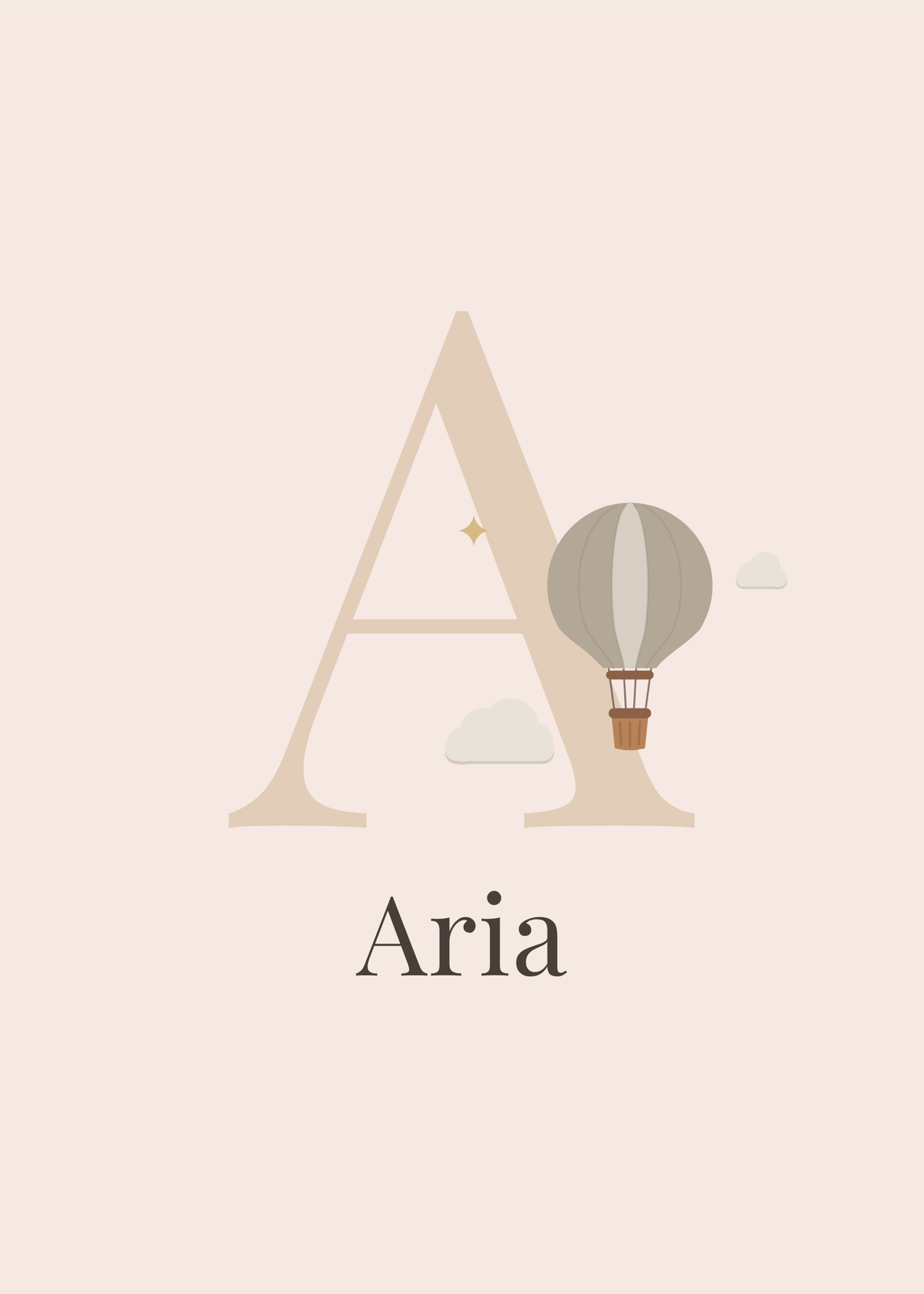 Big initial with hot-air balloon and cloudsEdit this →
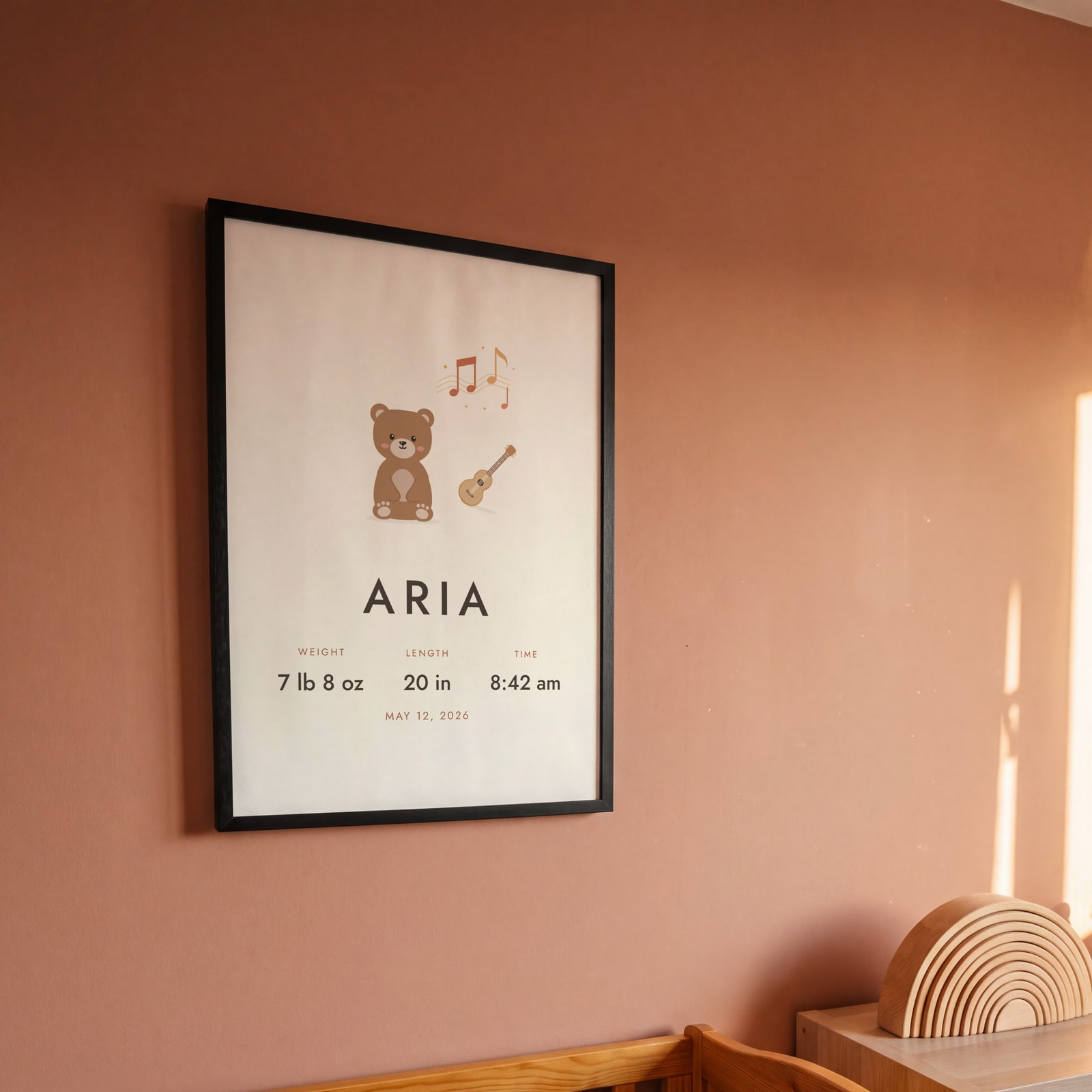
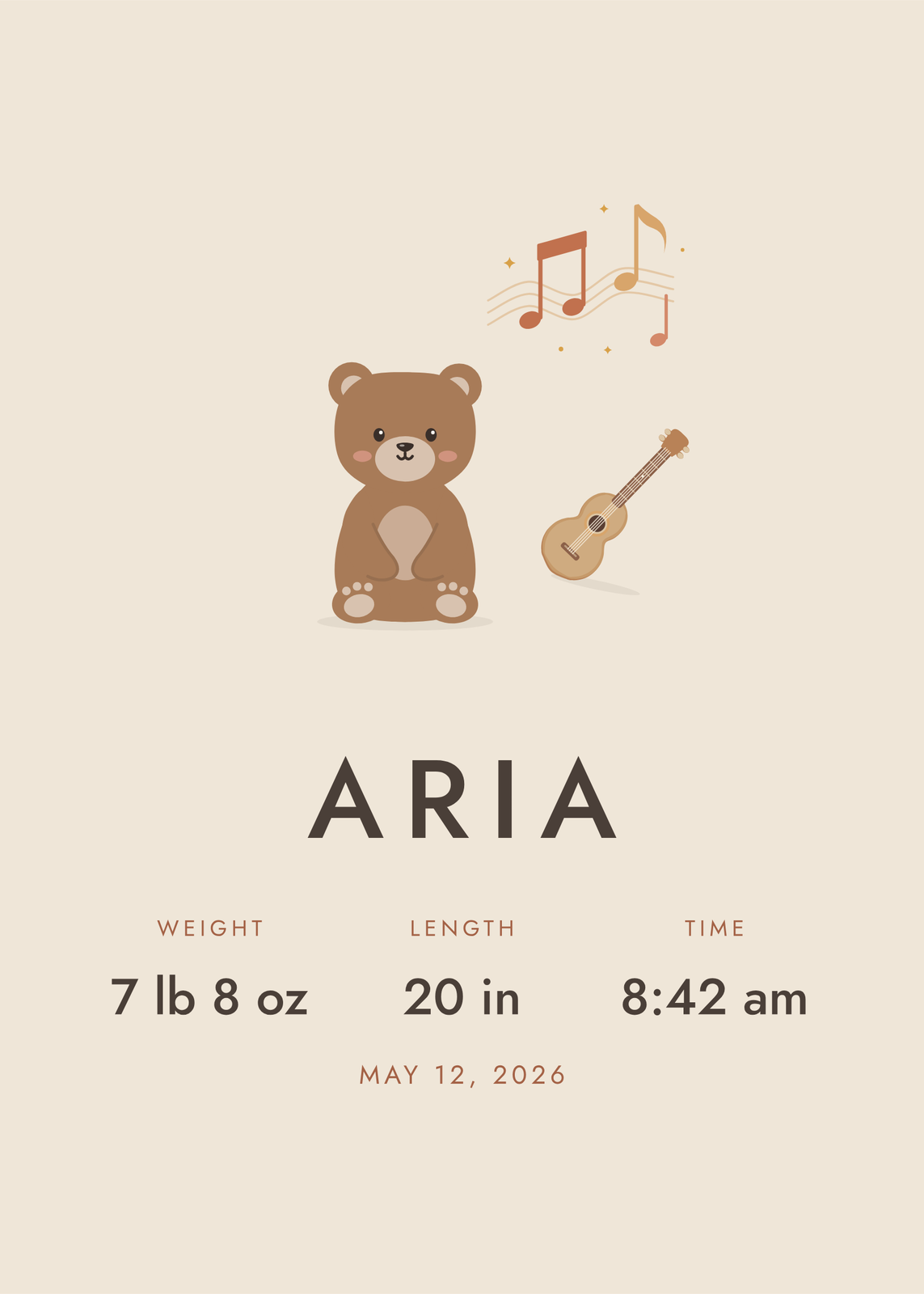 Birth details with little lullabyEdit this →
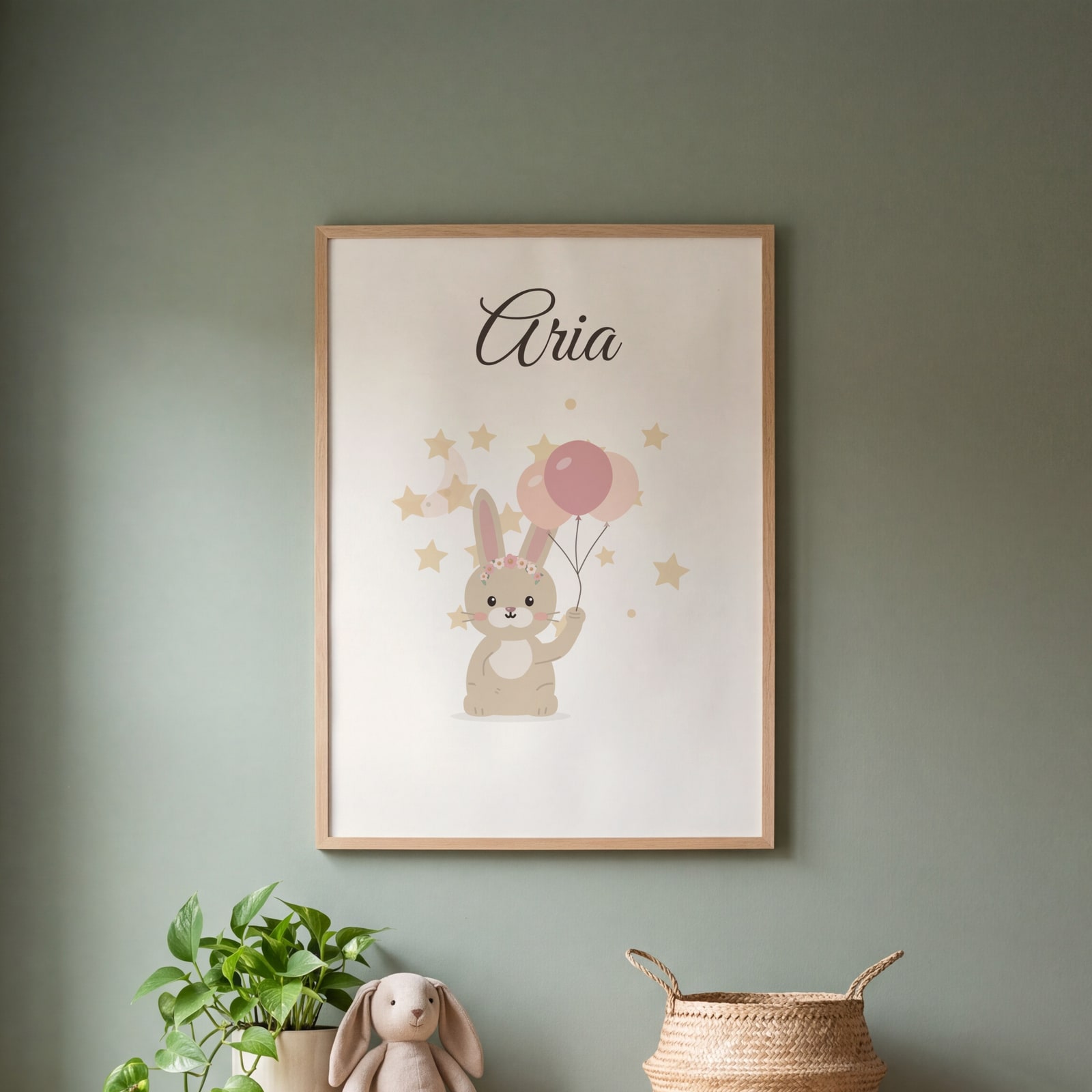
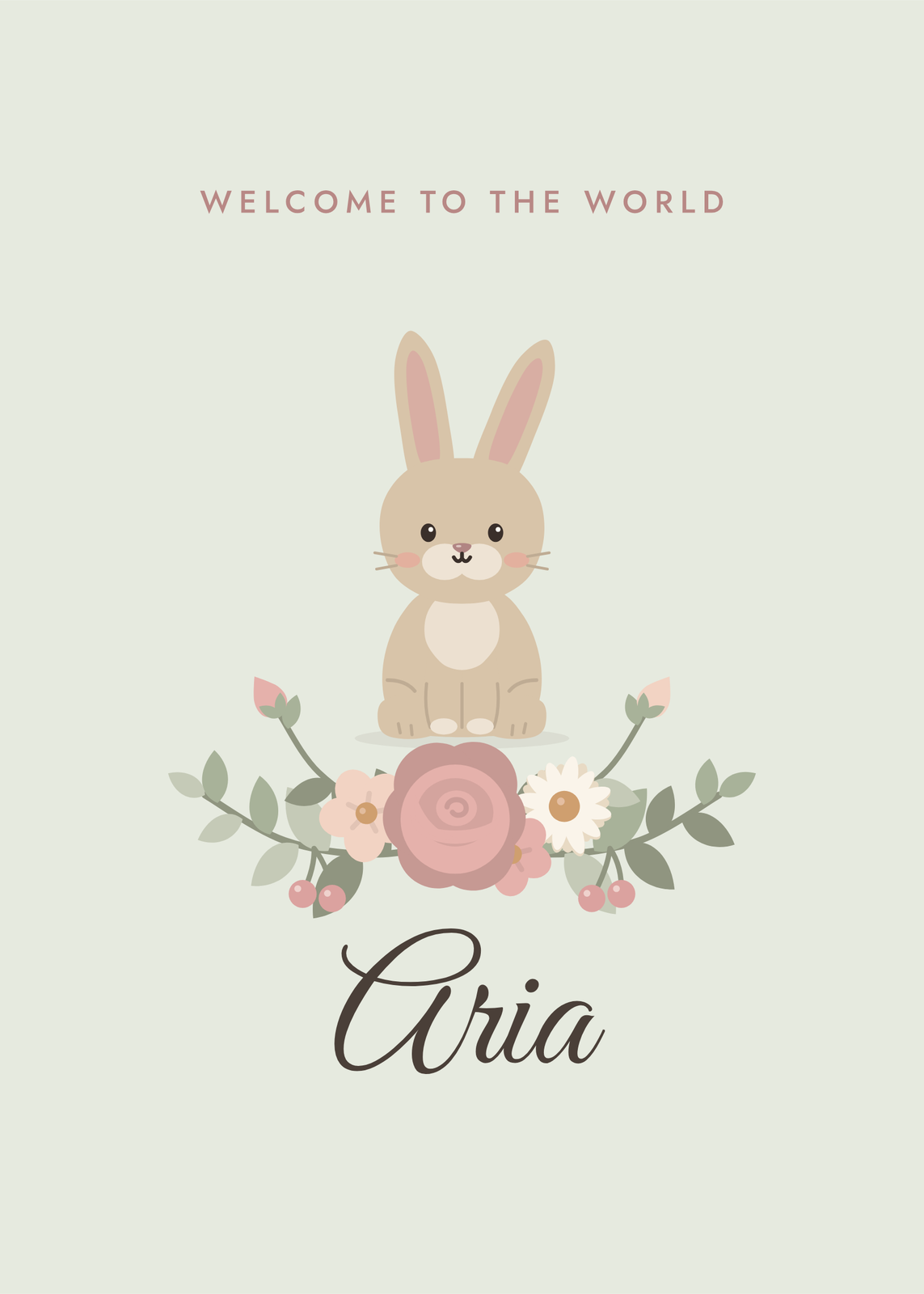 Welcome to the world, bunny and flowersEdit this →
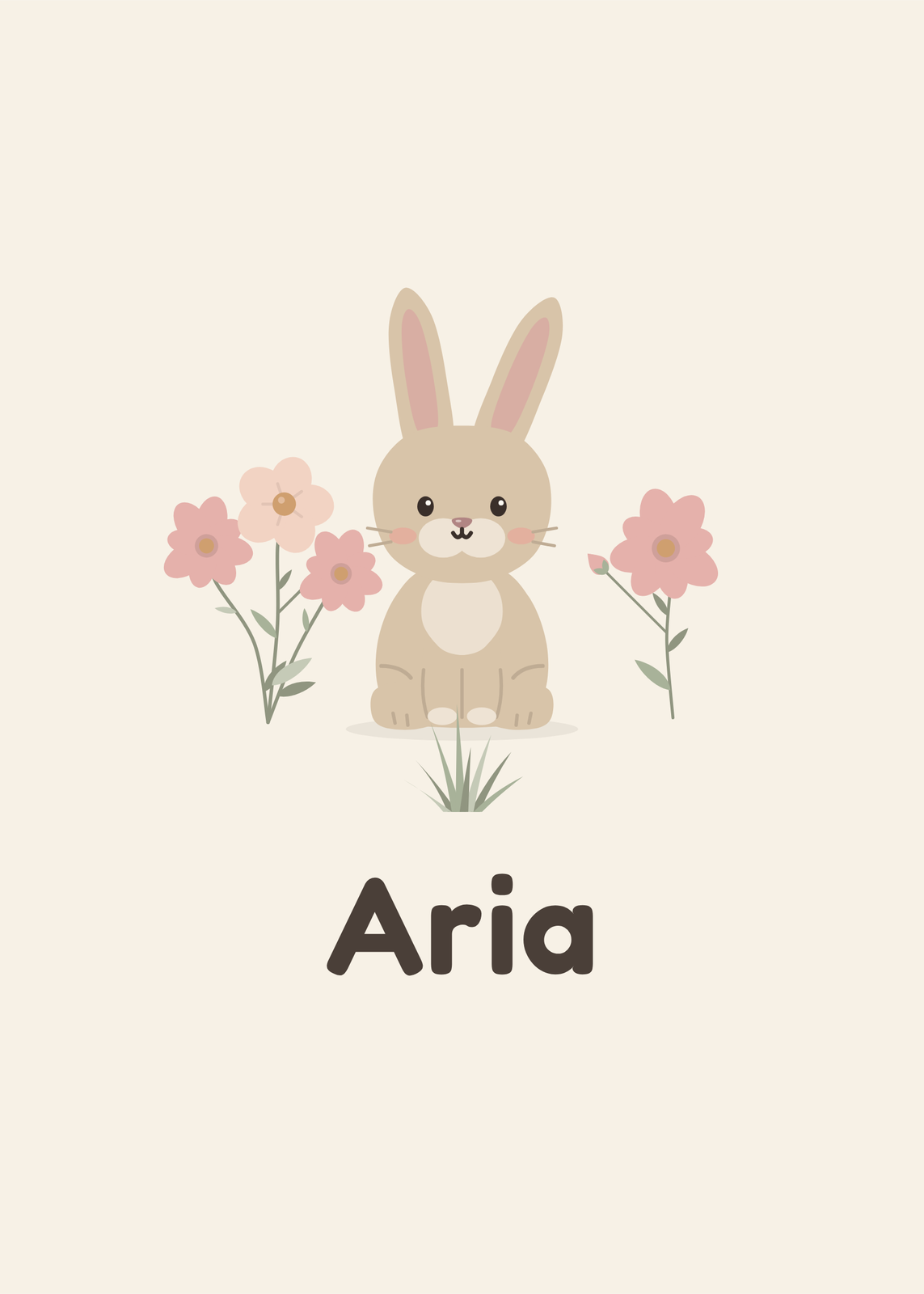 Bunny in wildflowersEdit this →
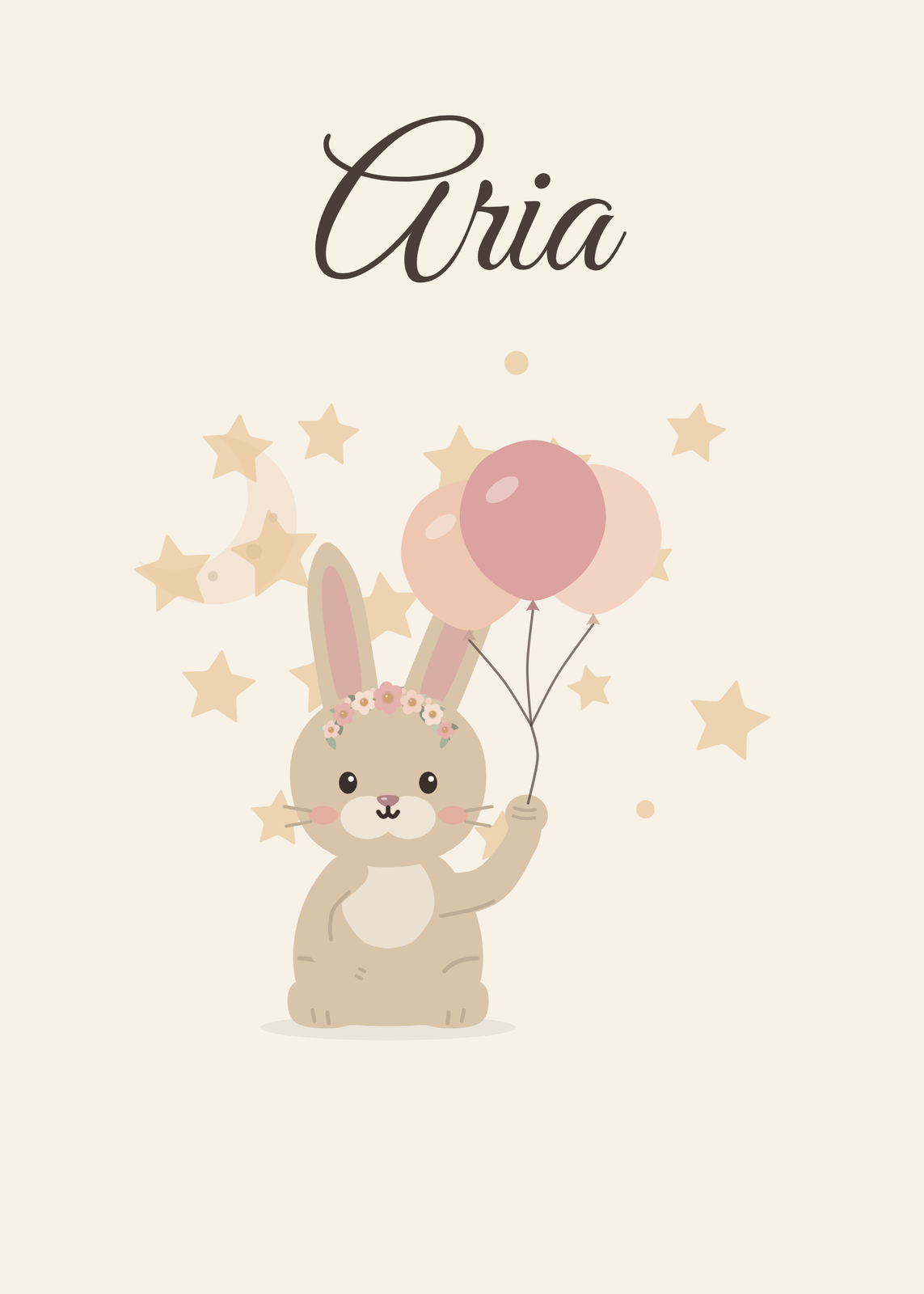 Arranged by hand: balloons, crown and moonEdit this →
Aria prints in the nursery
The same prints, framed at 50 × 70 cm in nurseries and playrooms, to see how they read on a wall.



Names that go with Aria
- Luca
- Nora
- Ivy
- Leo
- Clara
- Mila
More names
Meanings are written with AI and fact-checked by a second AI model against the accepted etymology; popularity is from the US Social Security Administration (1950–2025).