Stereogram your word or shape hidden in a pattern, popping out in 3D as you look
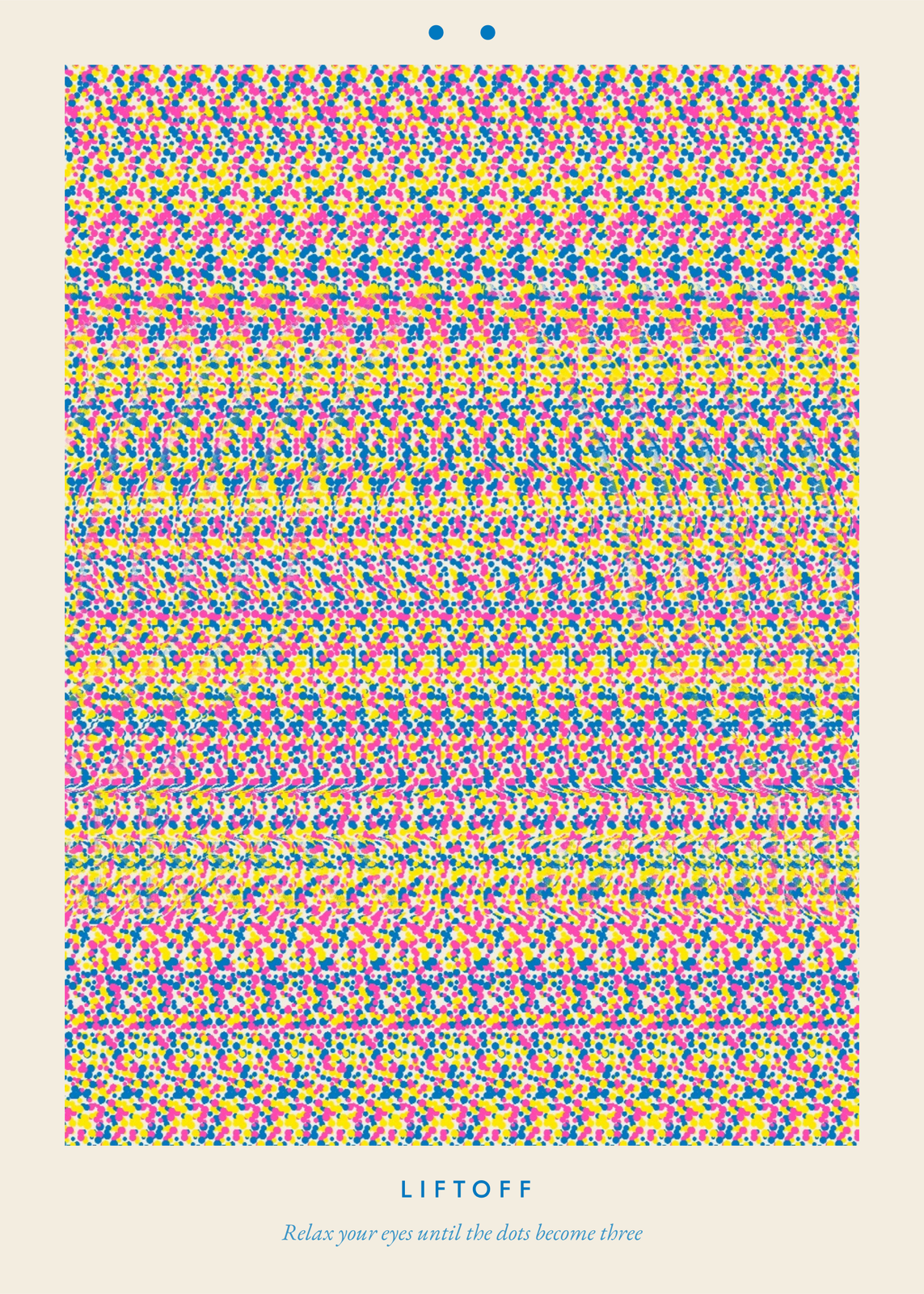
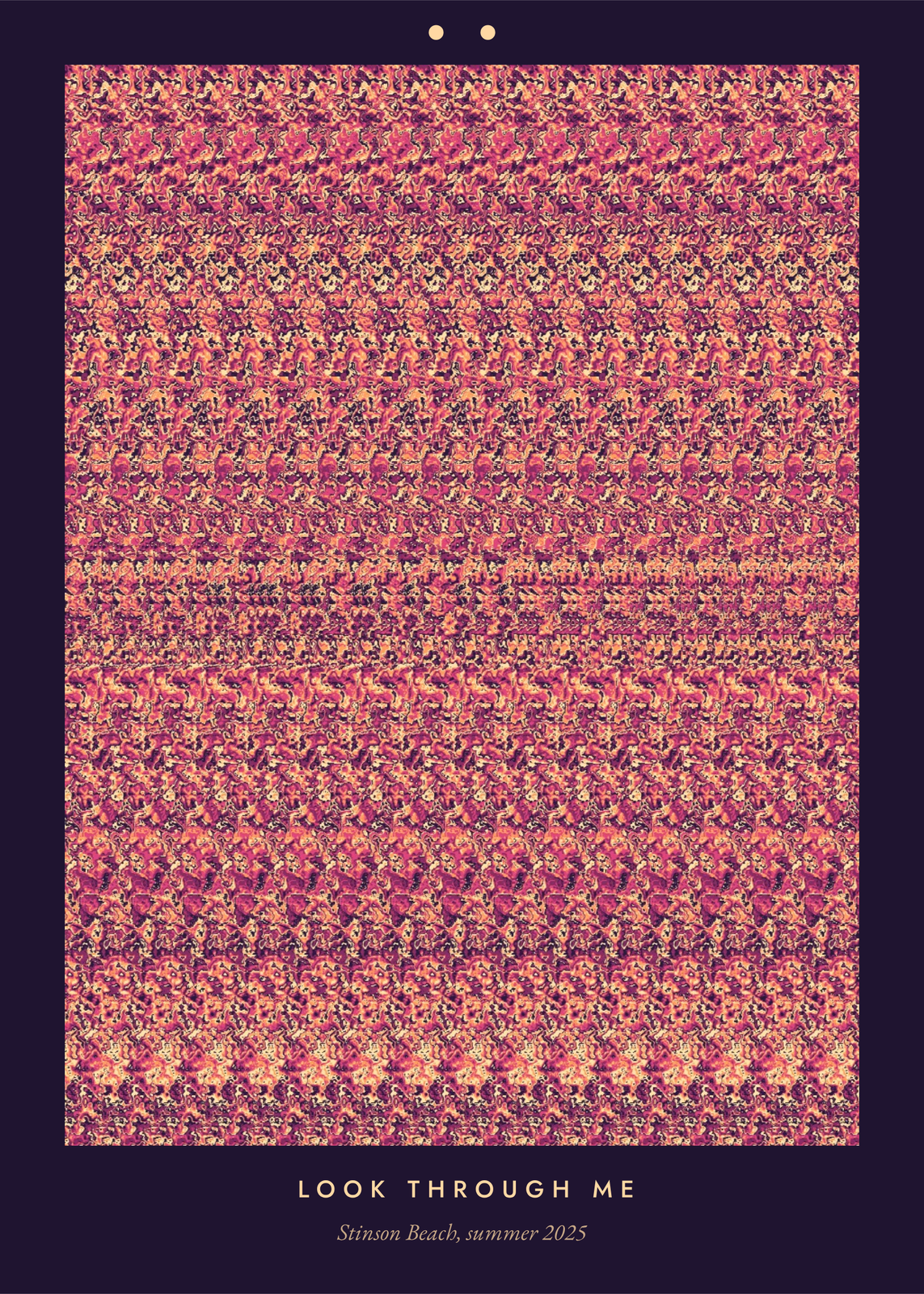
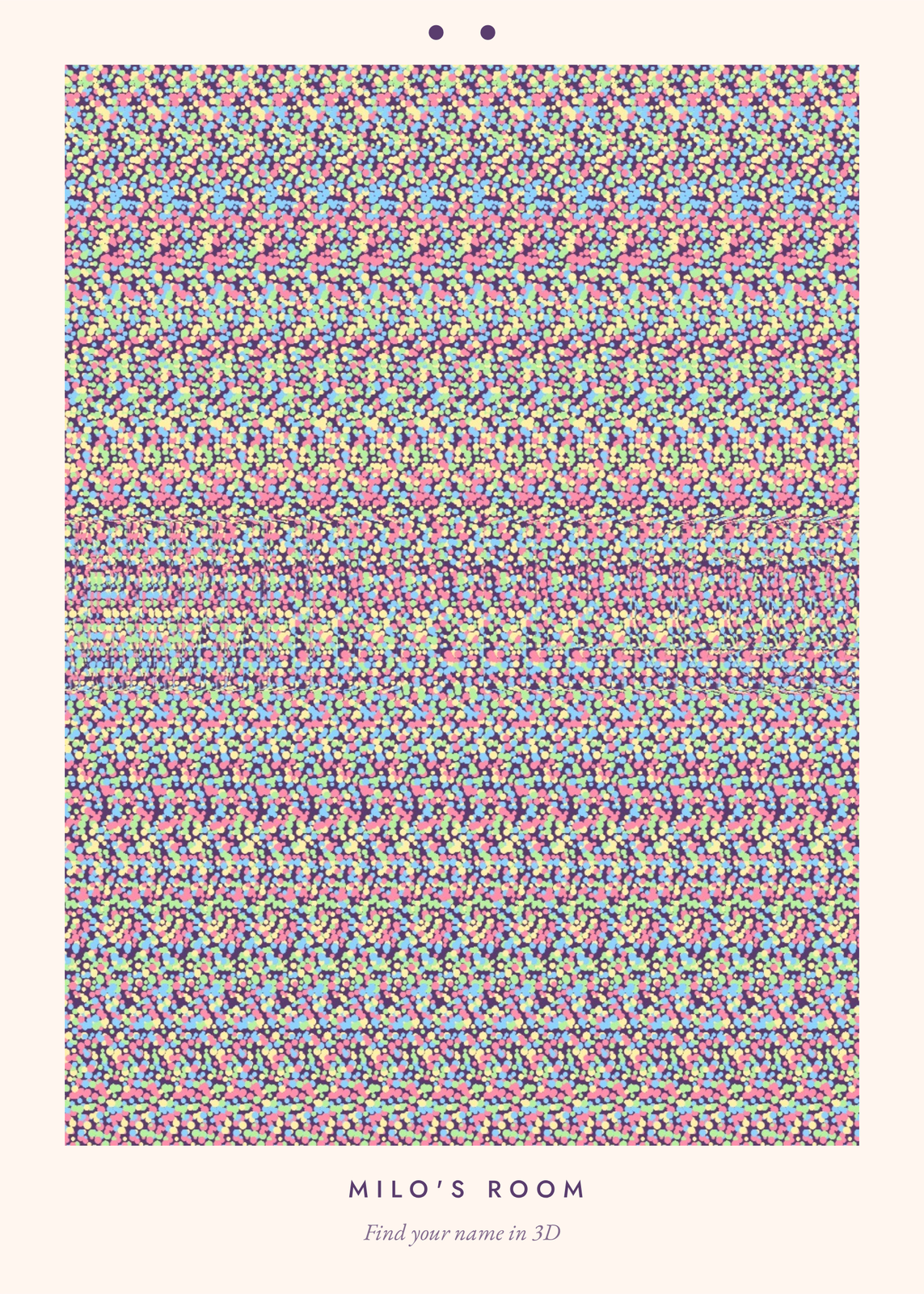
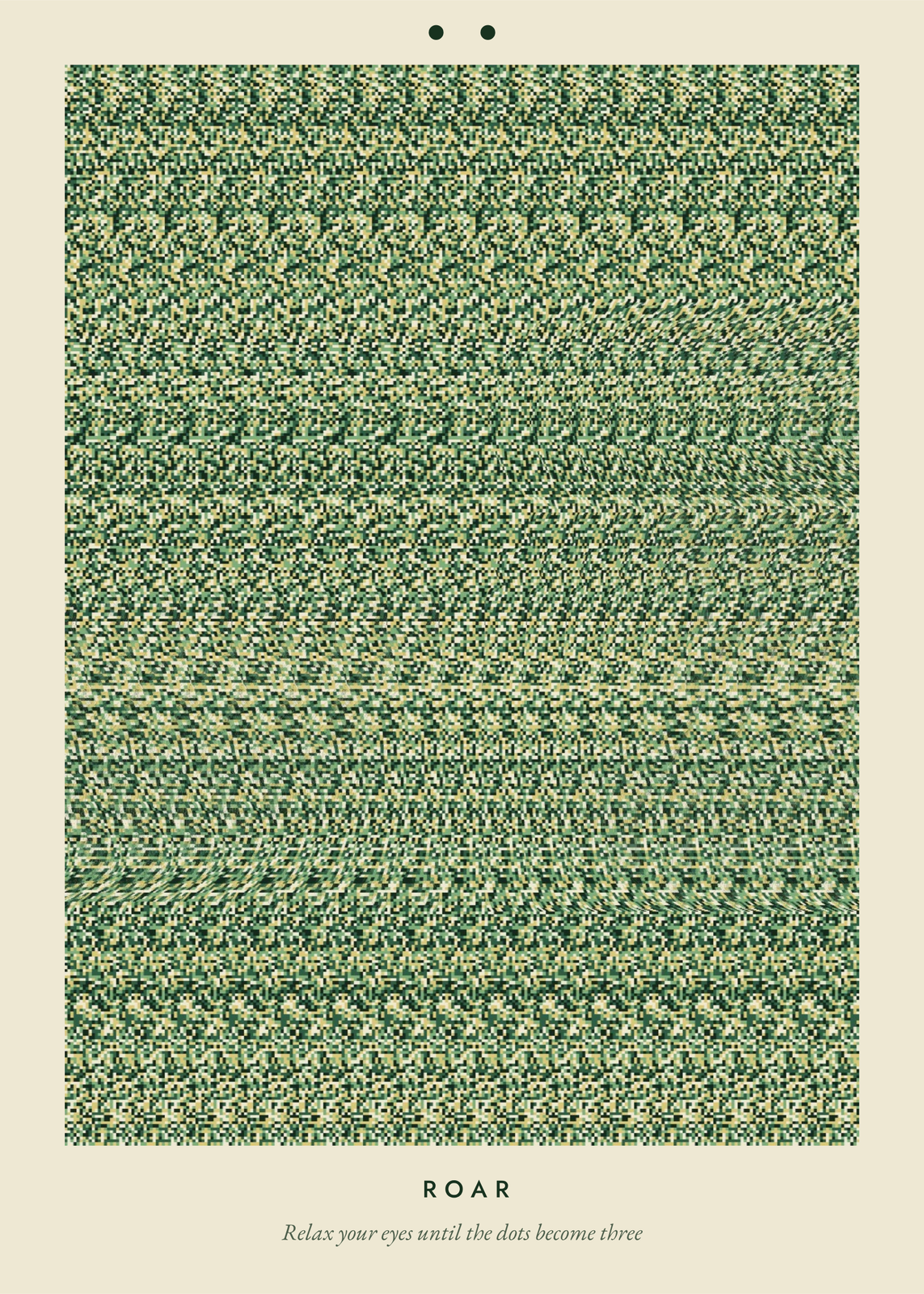
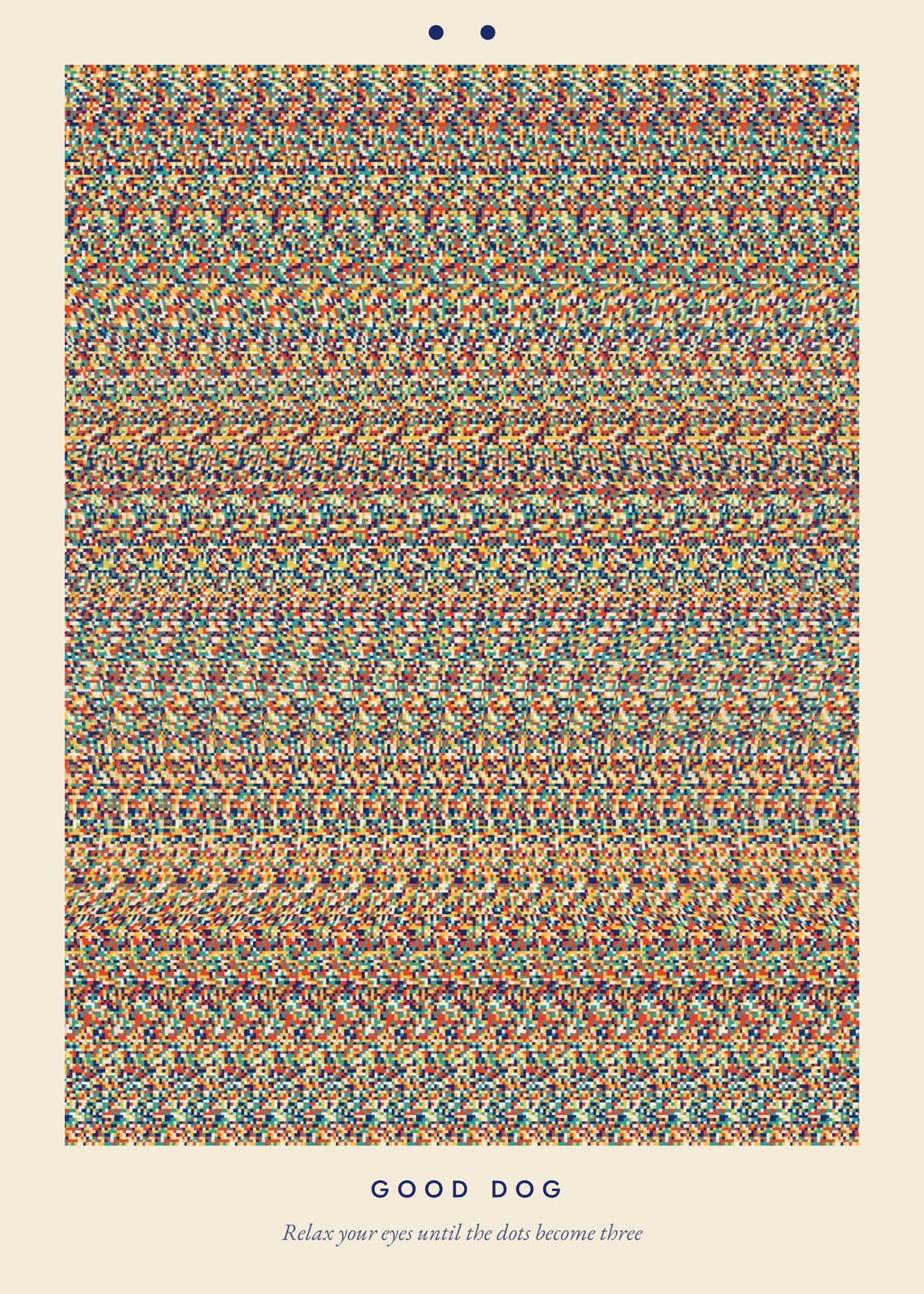
A stereogram hides a picture in a pattern that repeats across the sheet, each repeat shifted a little where the hidden shape stands. Look through the poster, as if at something far behind it, and your eyes match one repeat with the next: the pattern sinks back and the shape floats out in 3D. Hide a word, a name or one of 59 shapes, from a heart to a T-rex, in marbled, mosaic, confetti or TV-static patterns, and download a file ready to print.
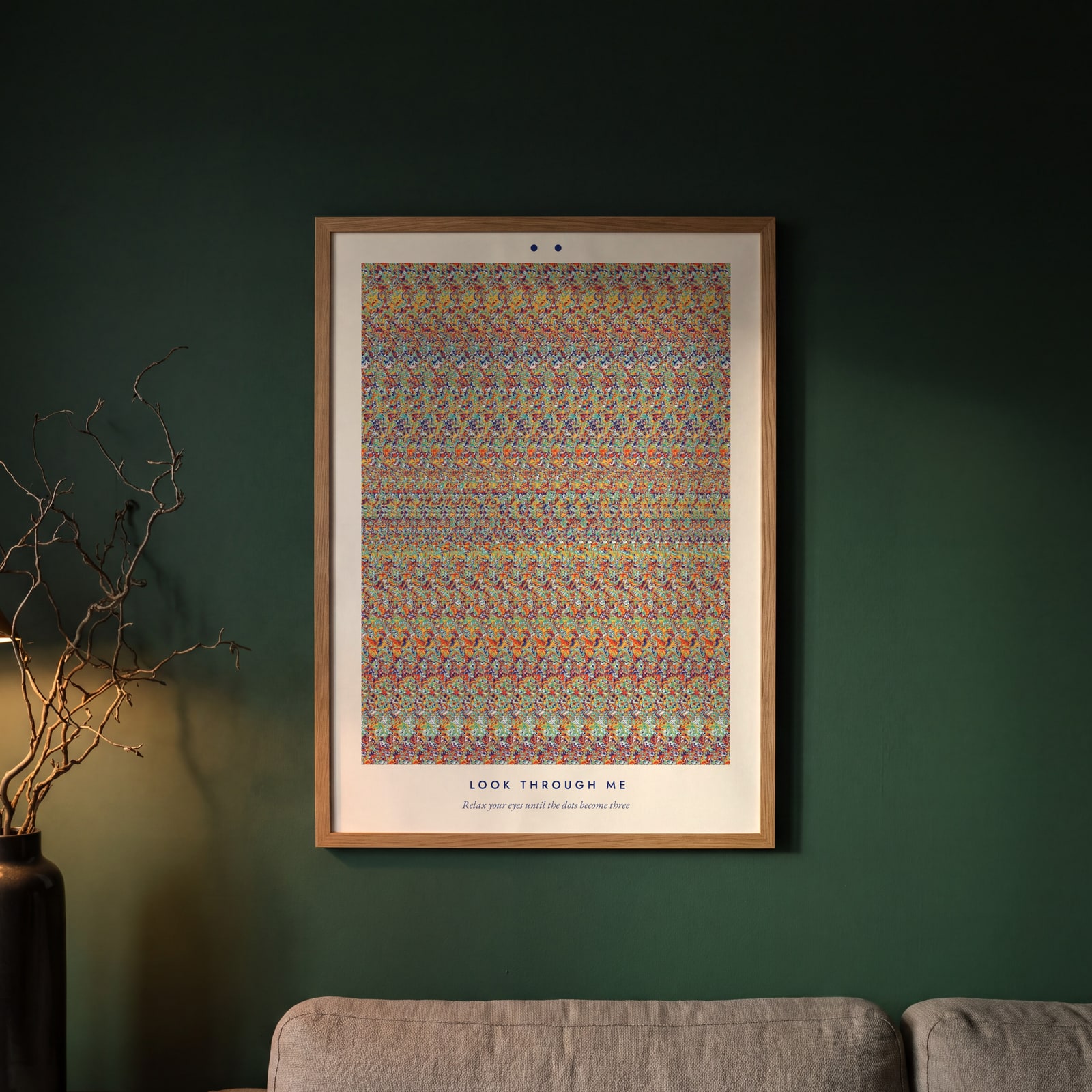
On the wall
A few of them framed at home. Open any one to make it yours.
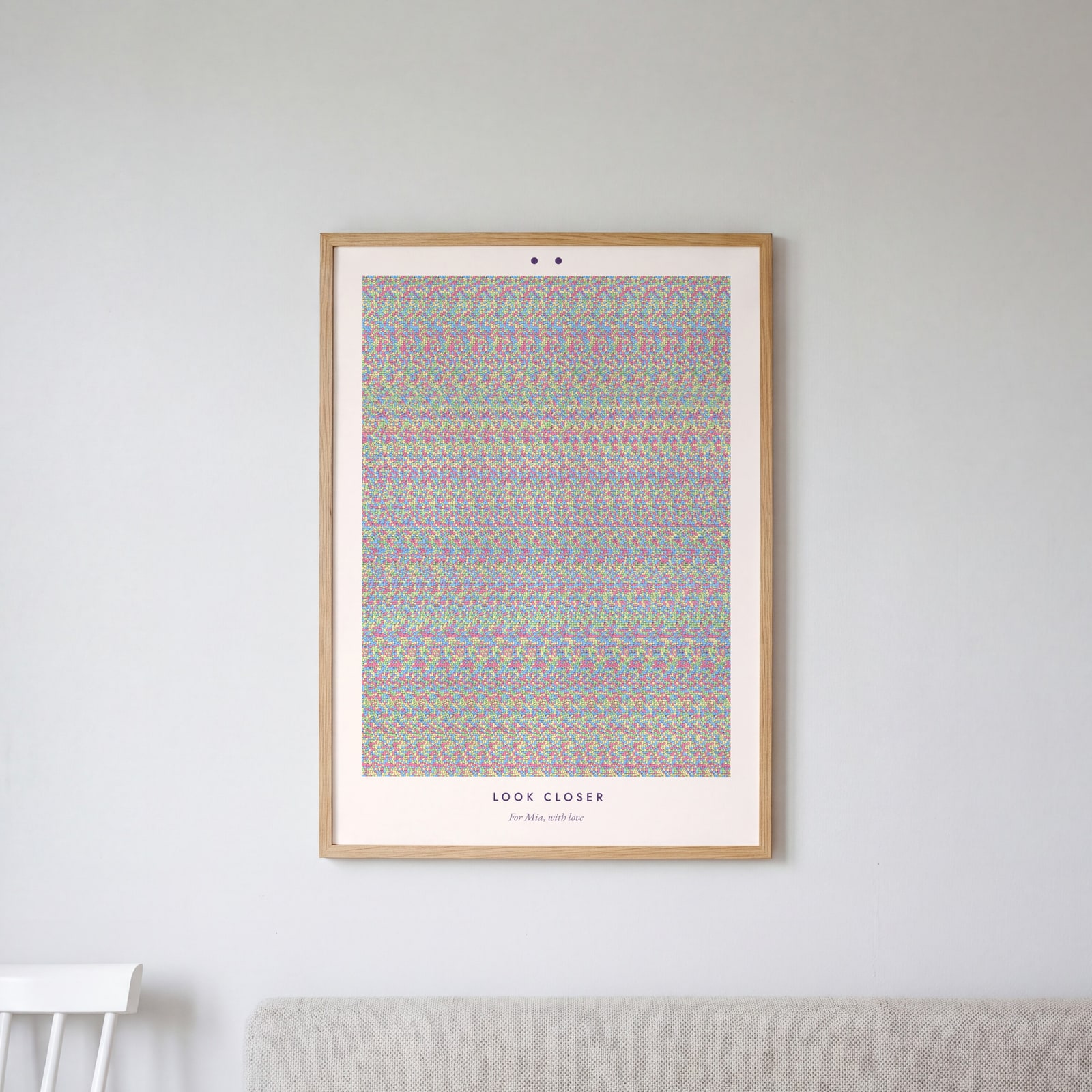
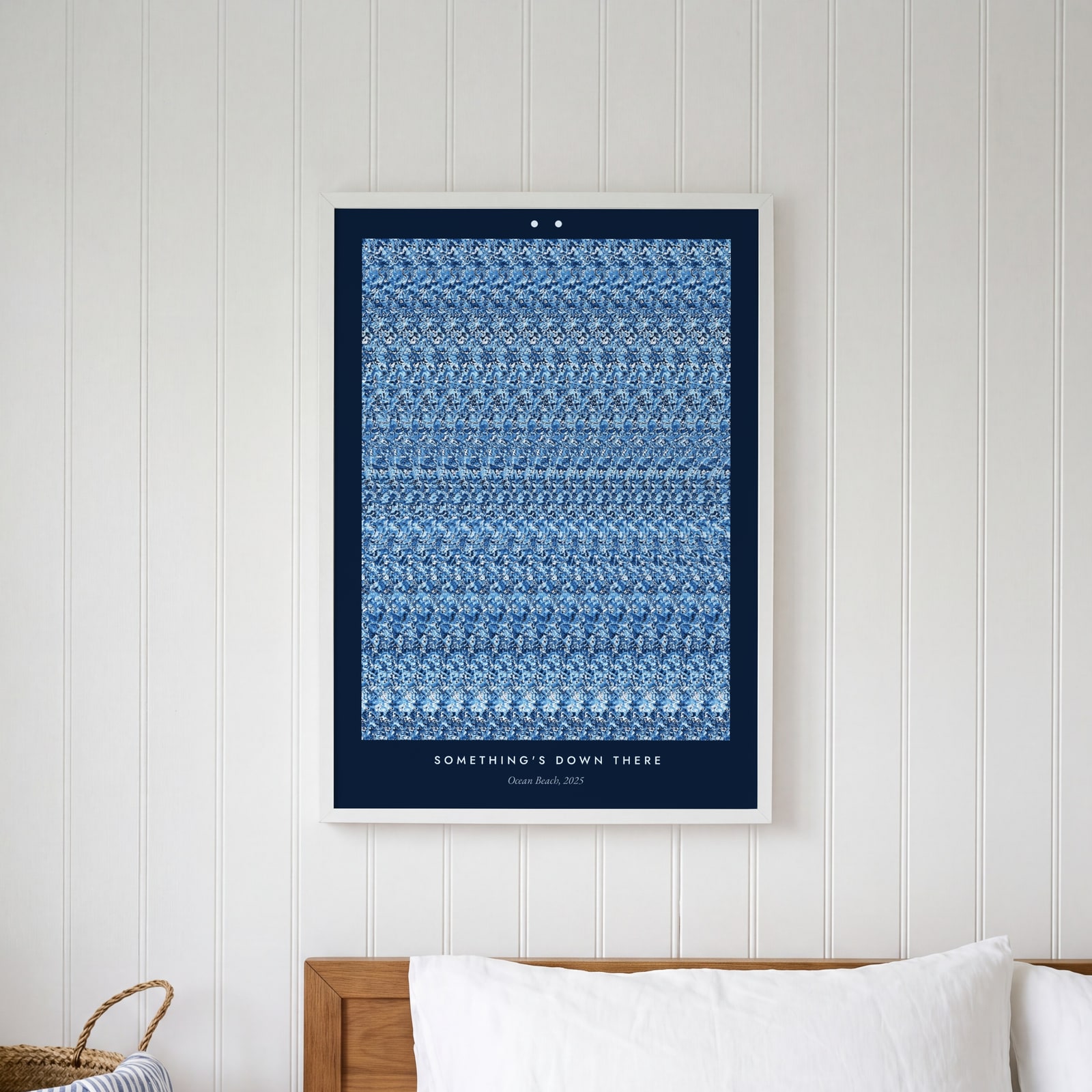
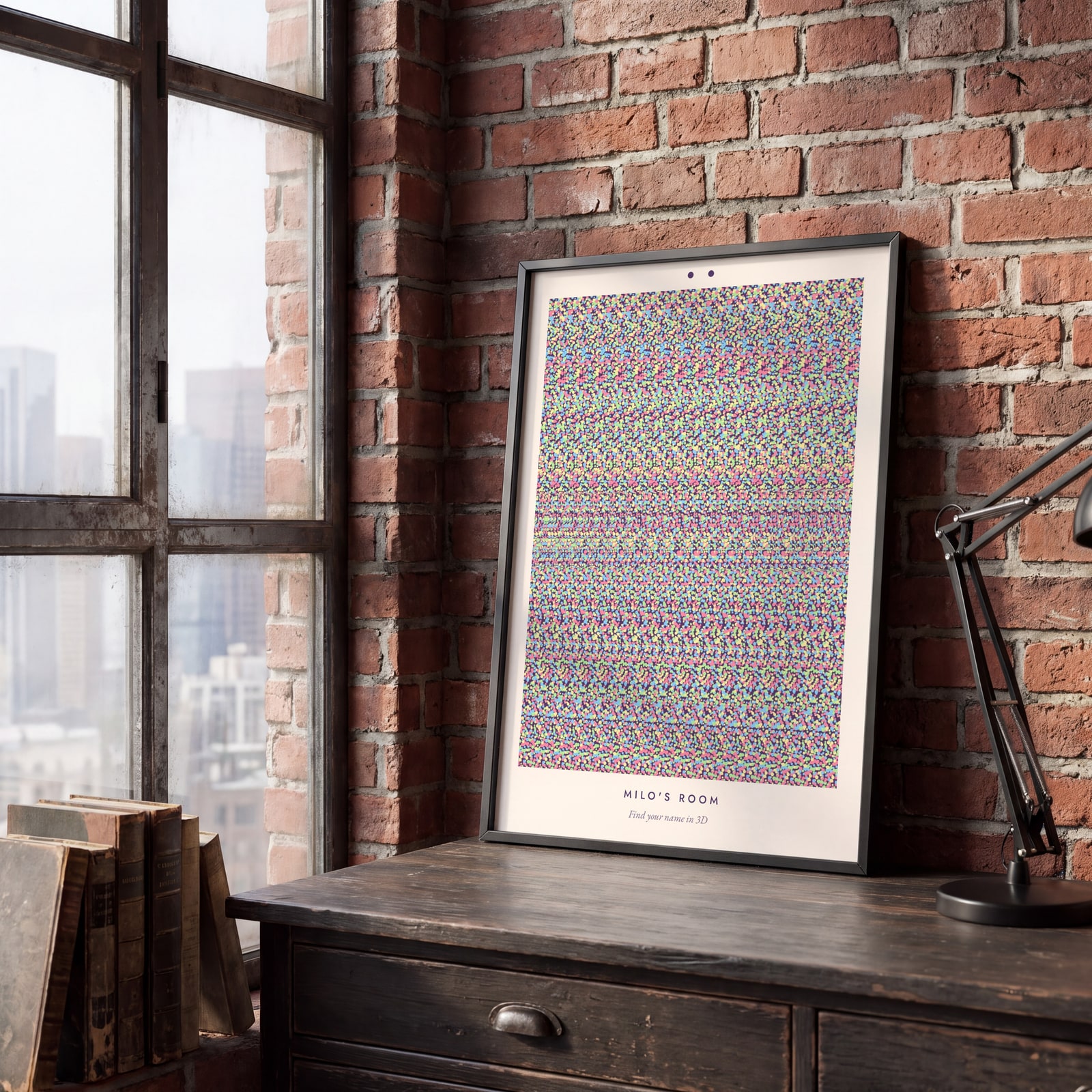
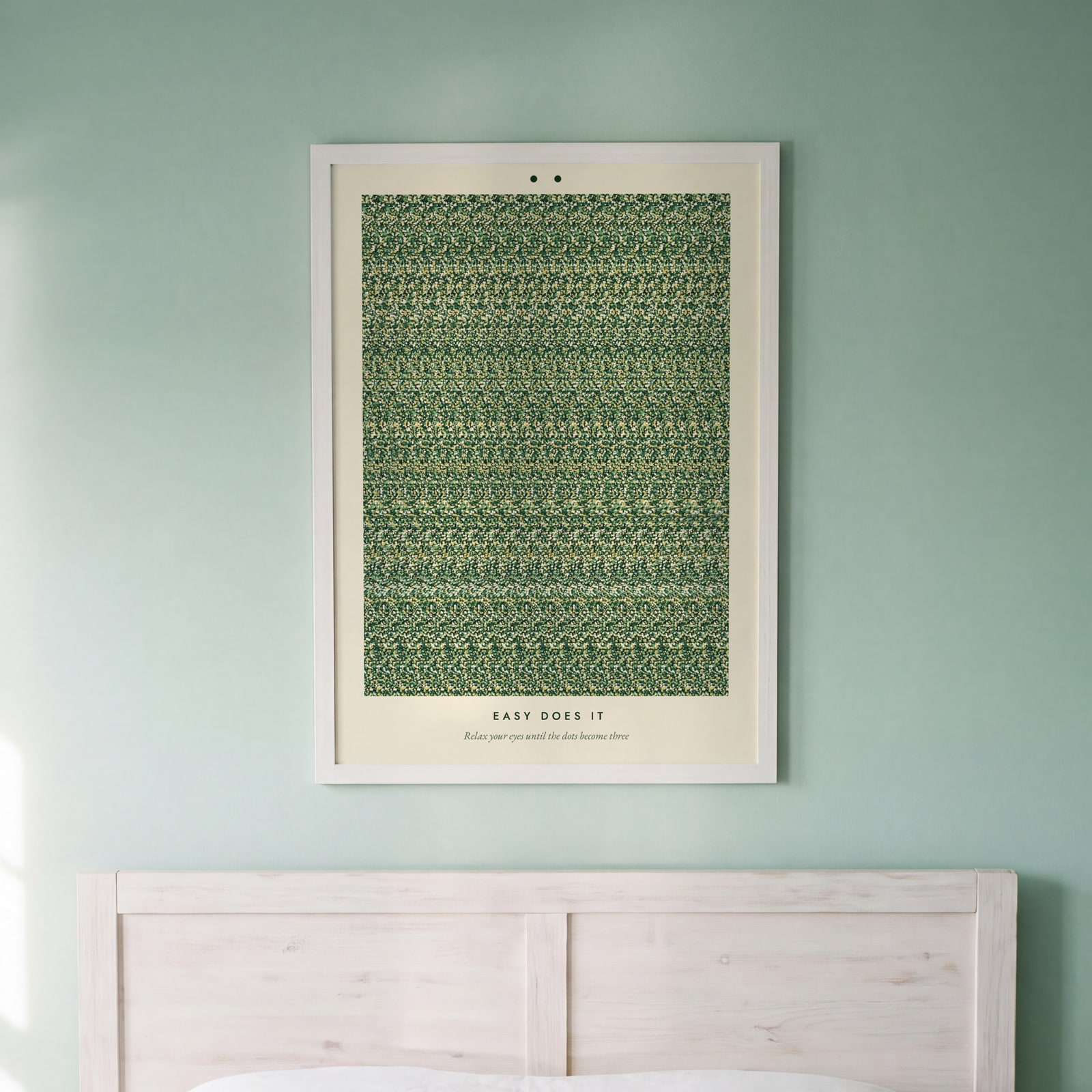
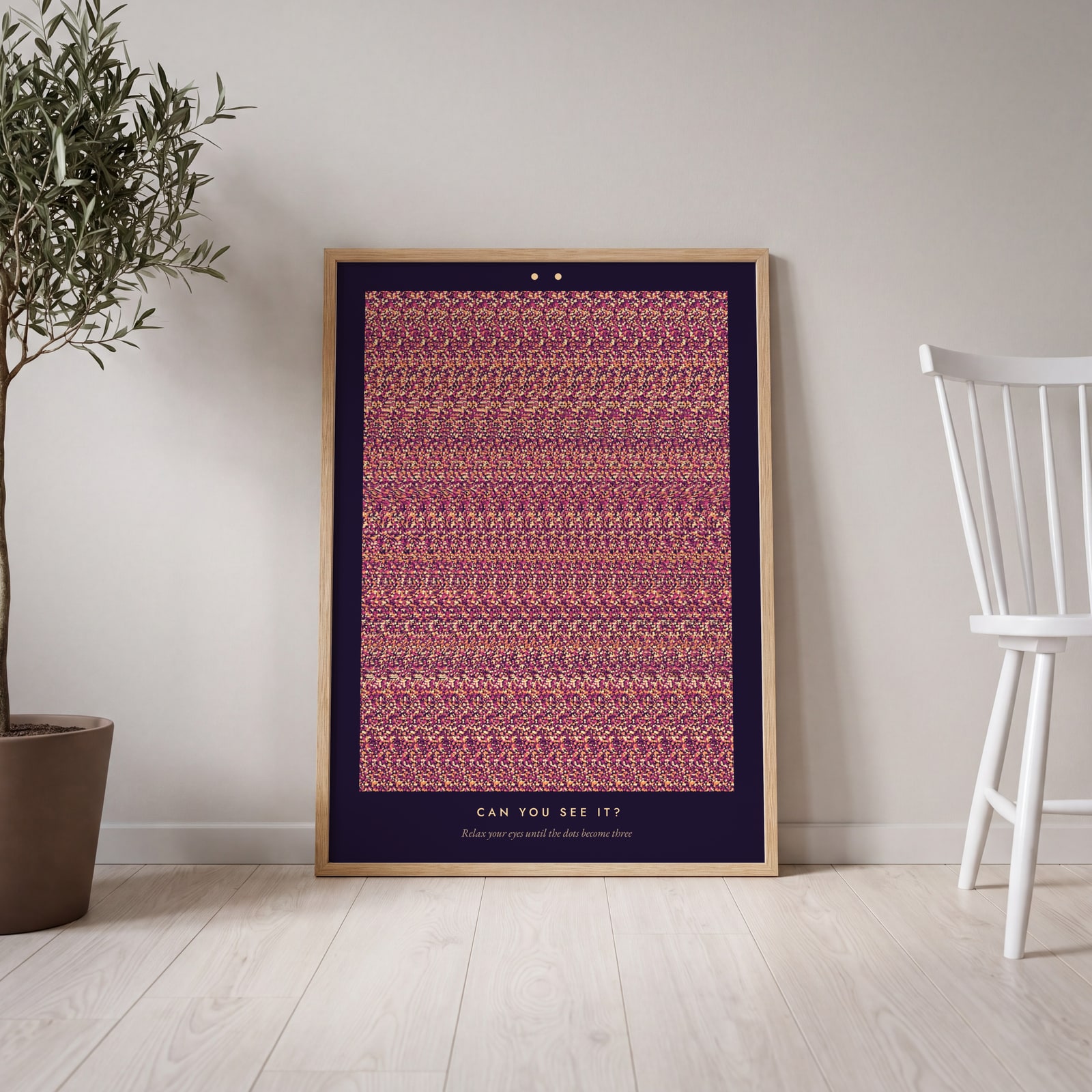
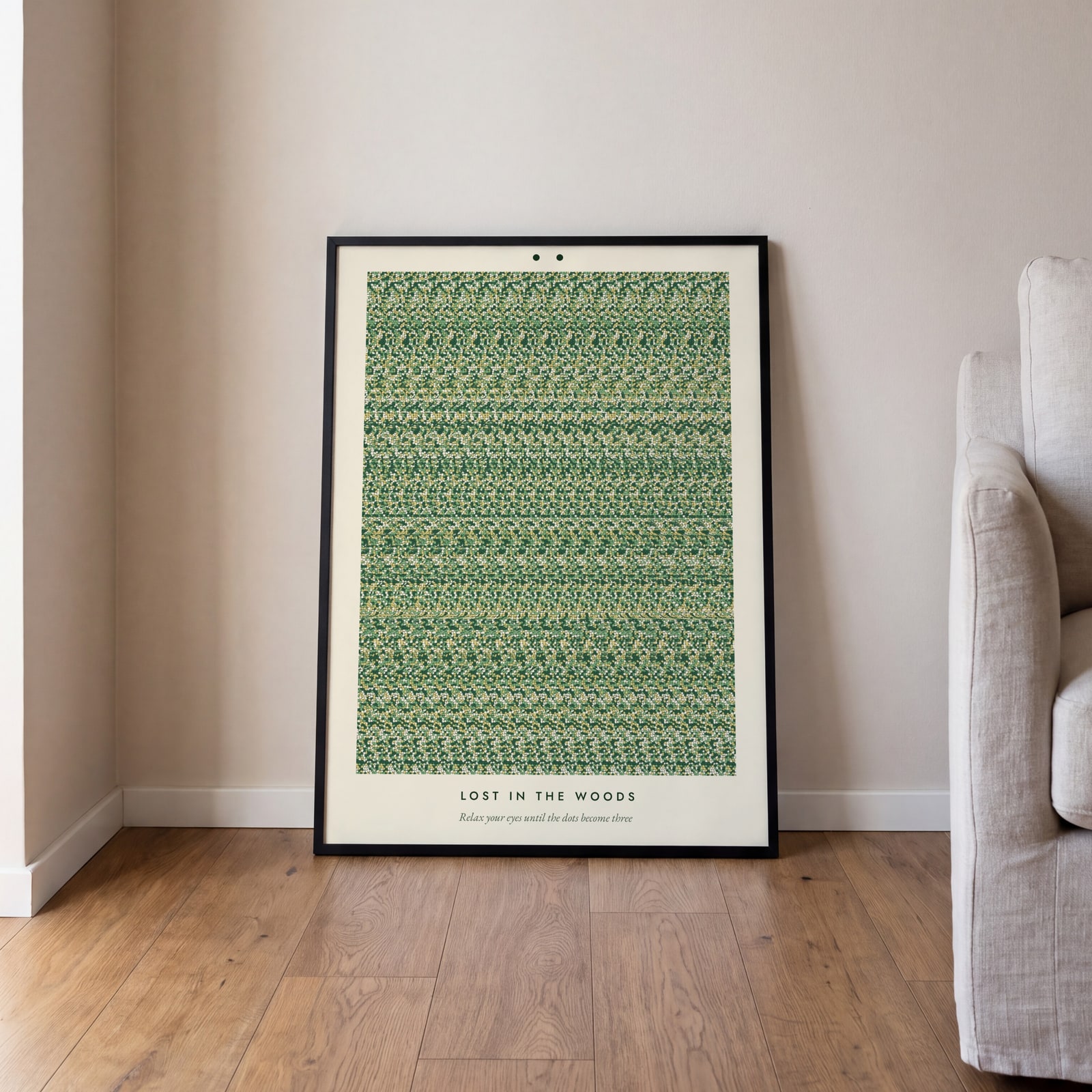
Examples
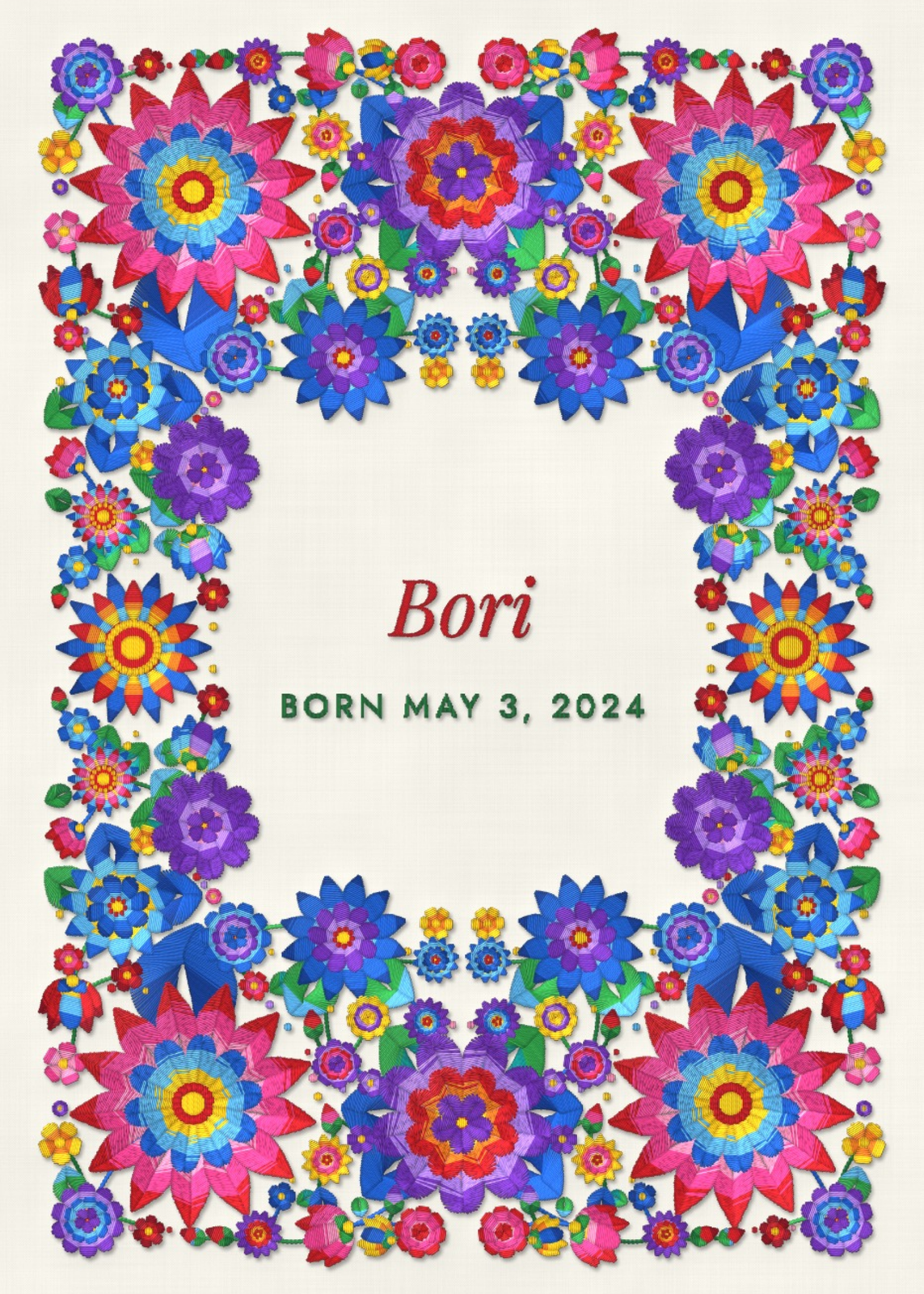
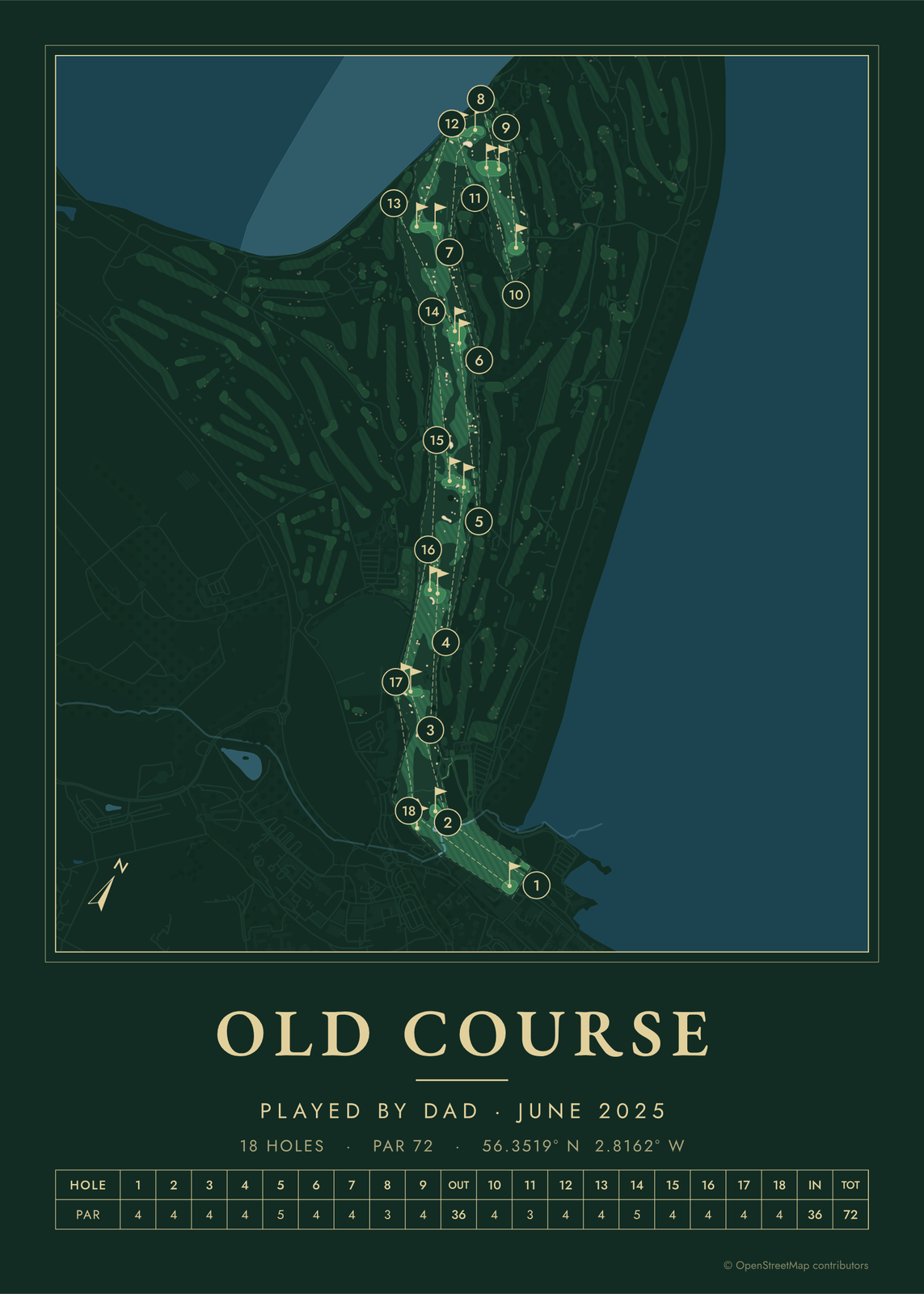
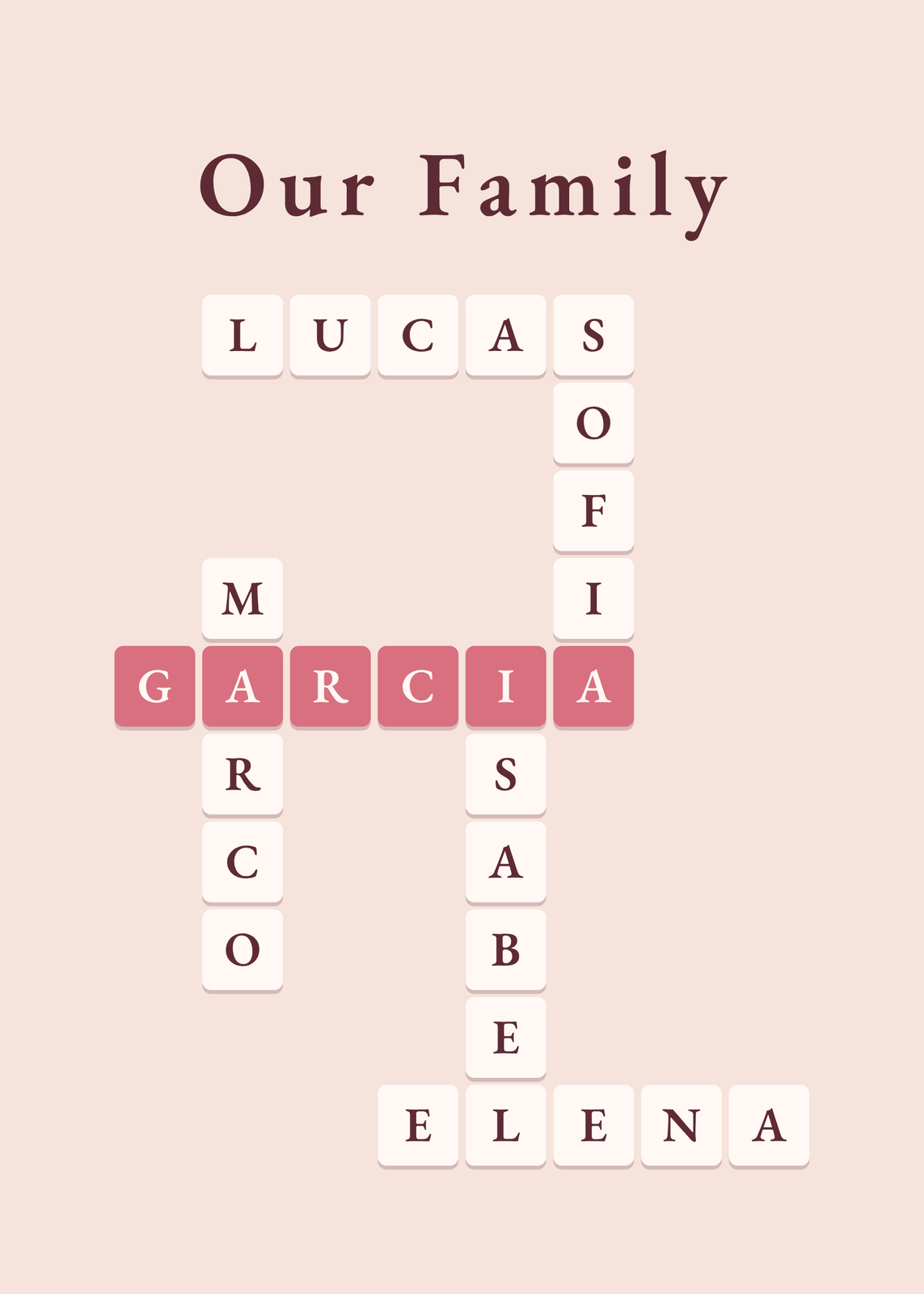
Open any of them to change the words, the place, the date and the style, then download the print file.
Textures
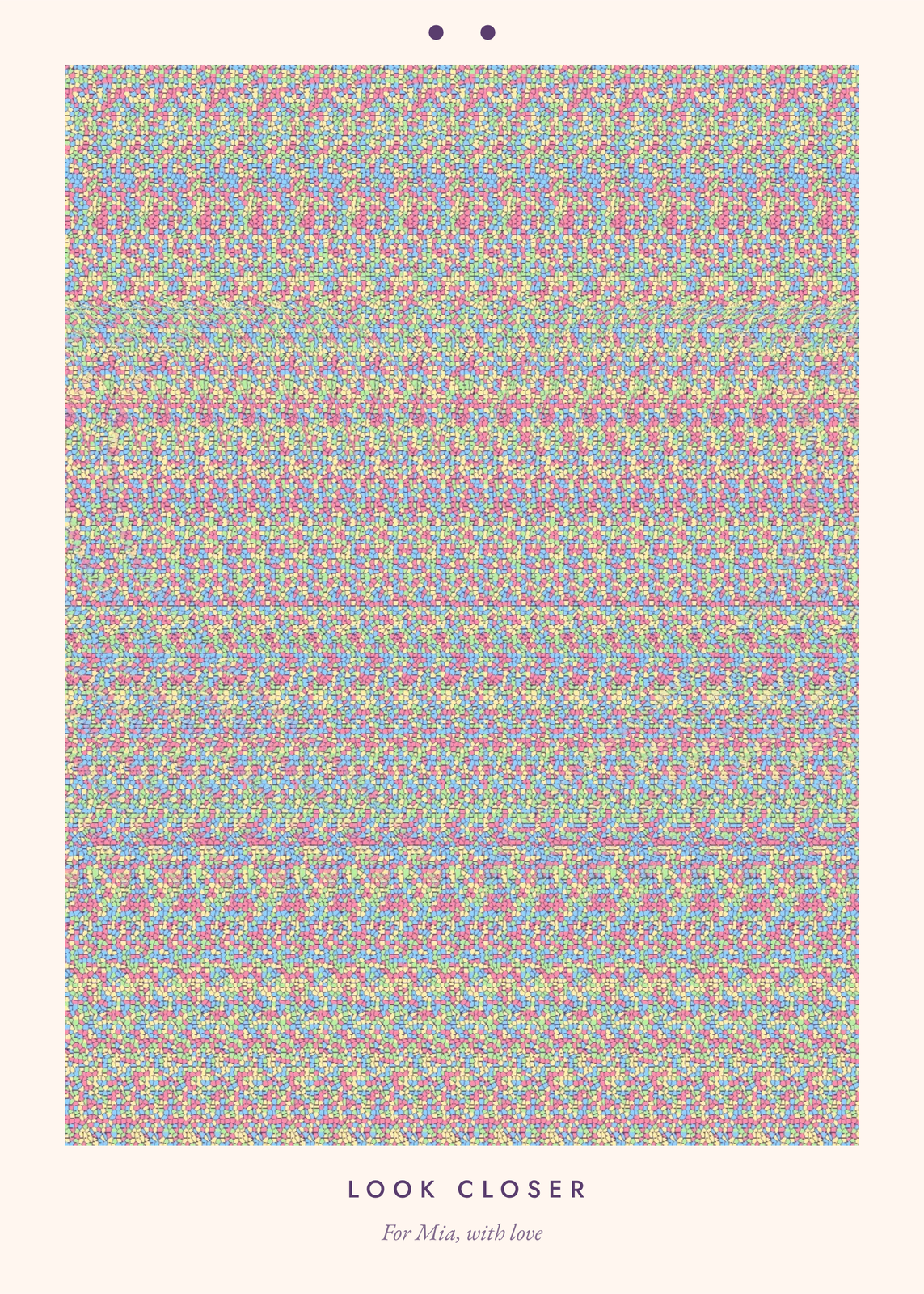
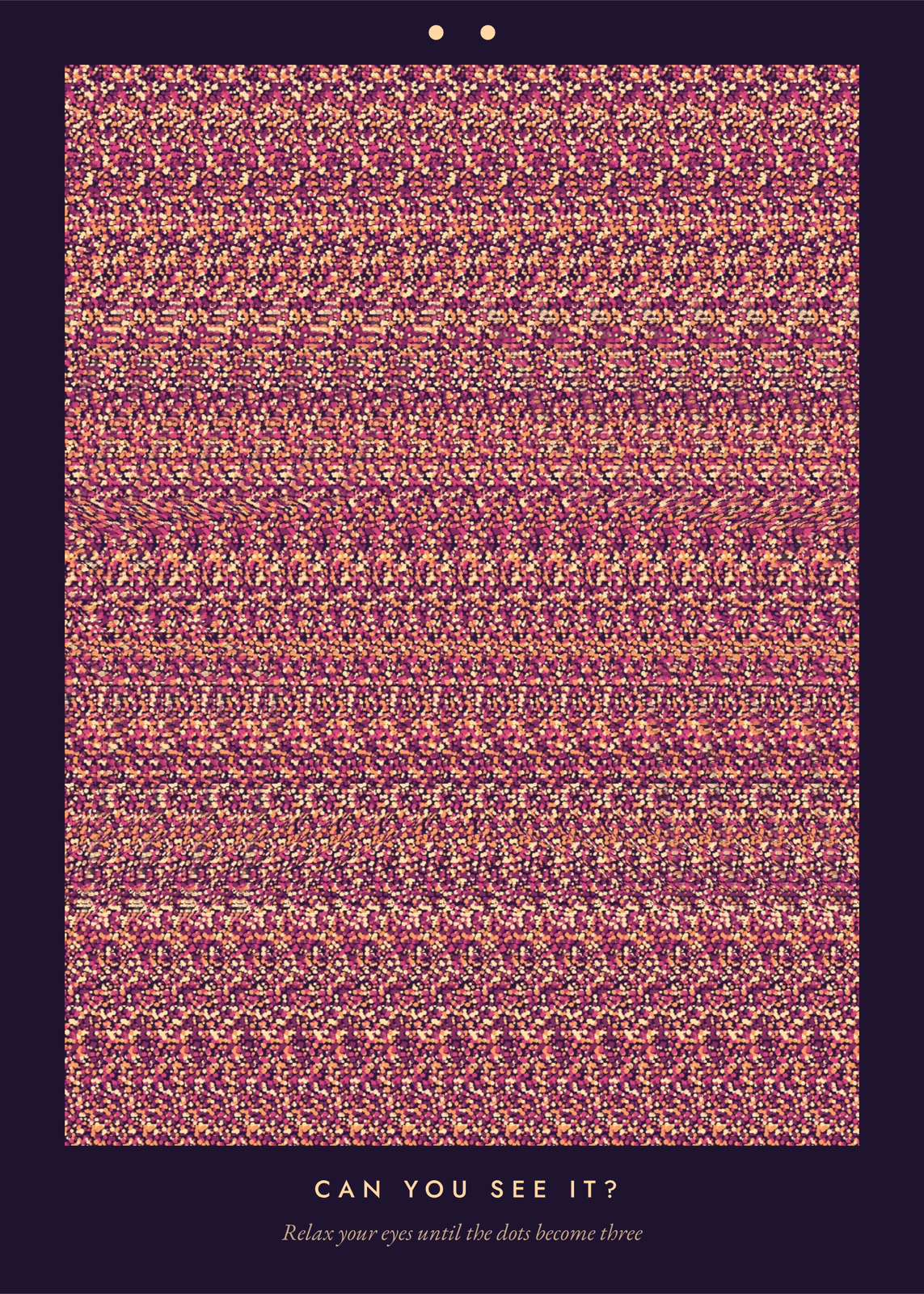
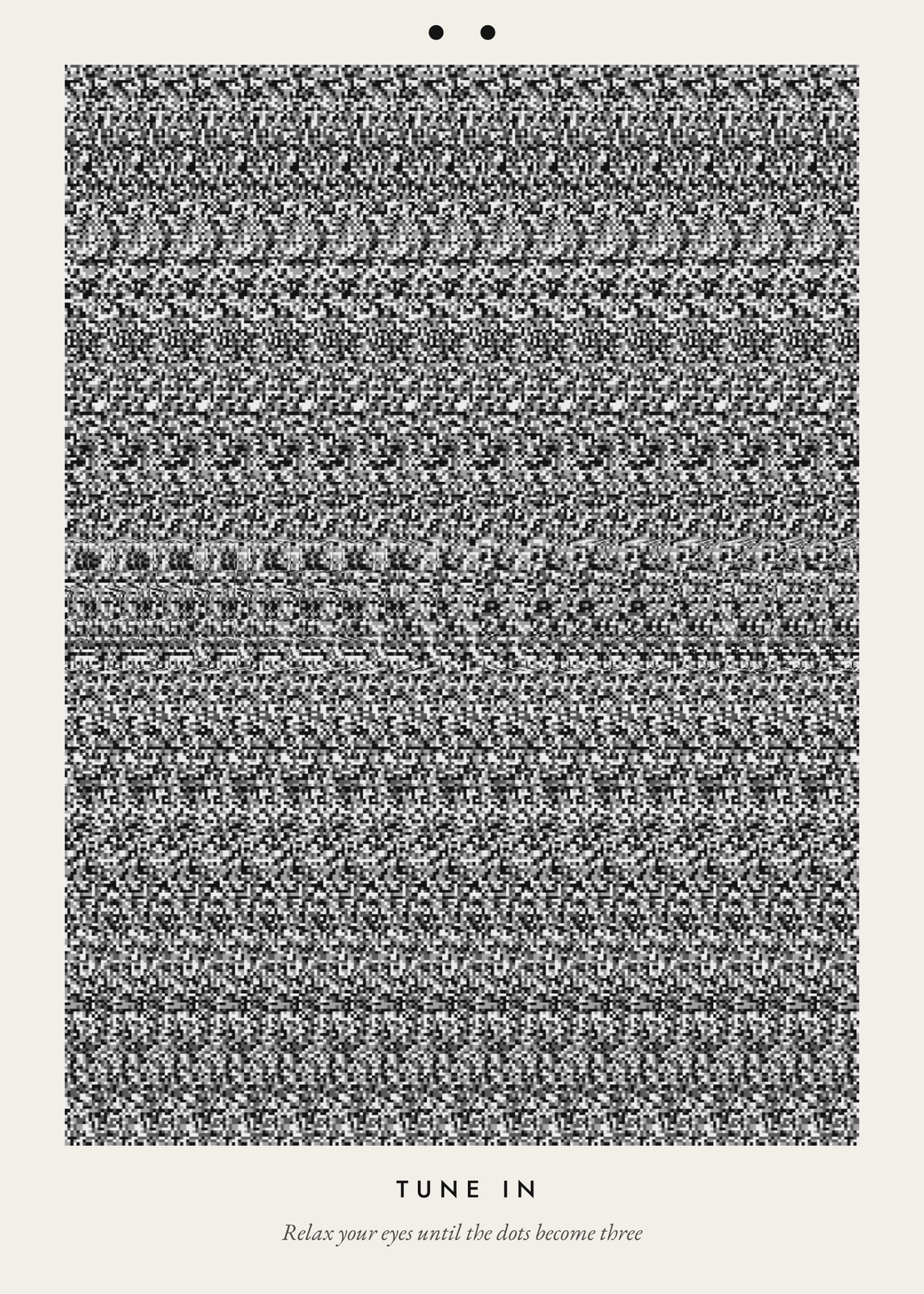
Colors
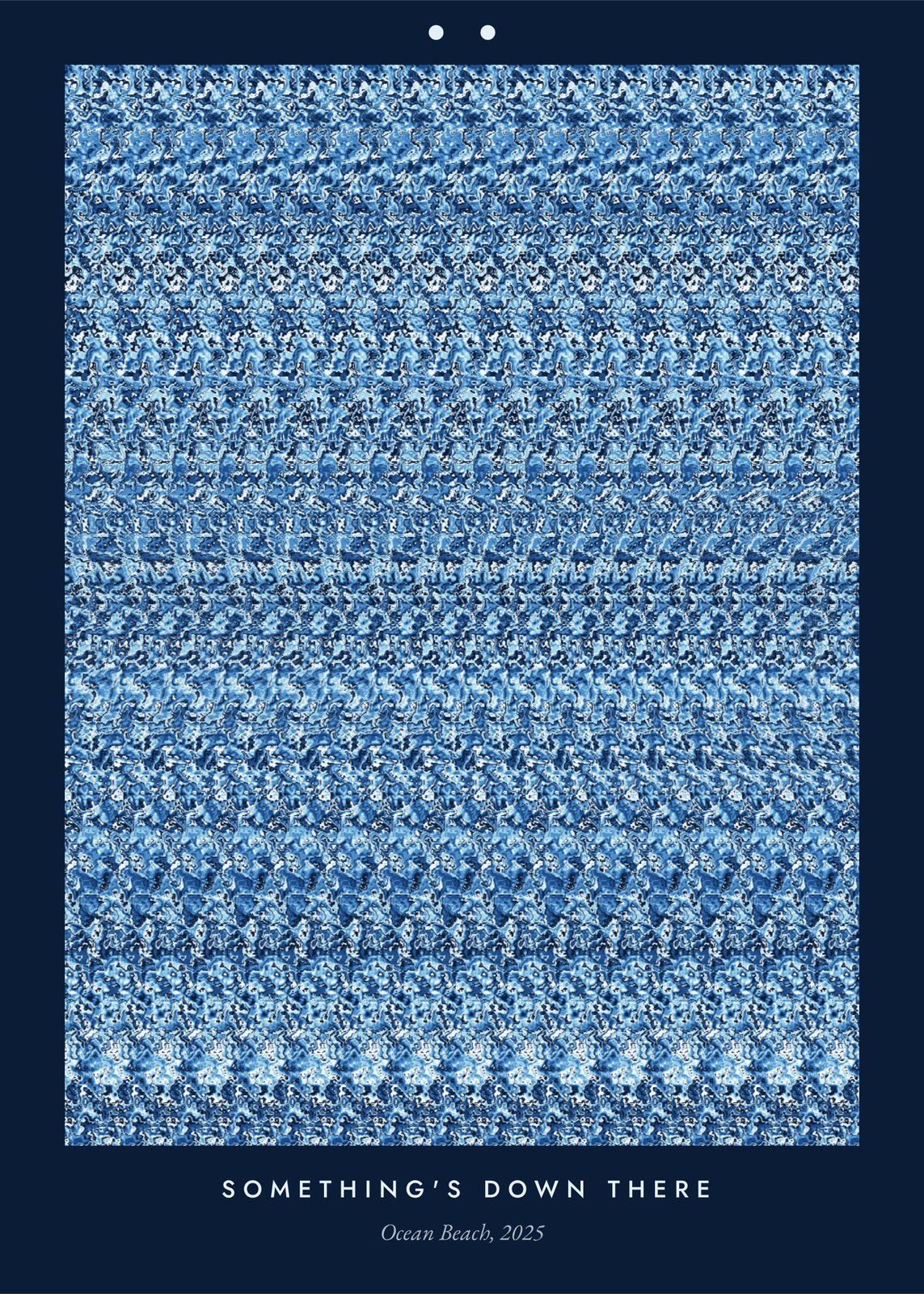
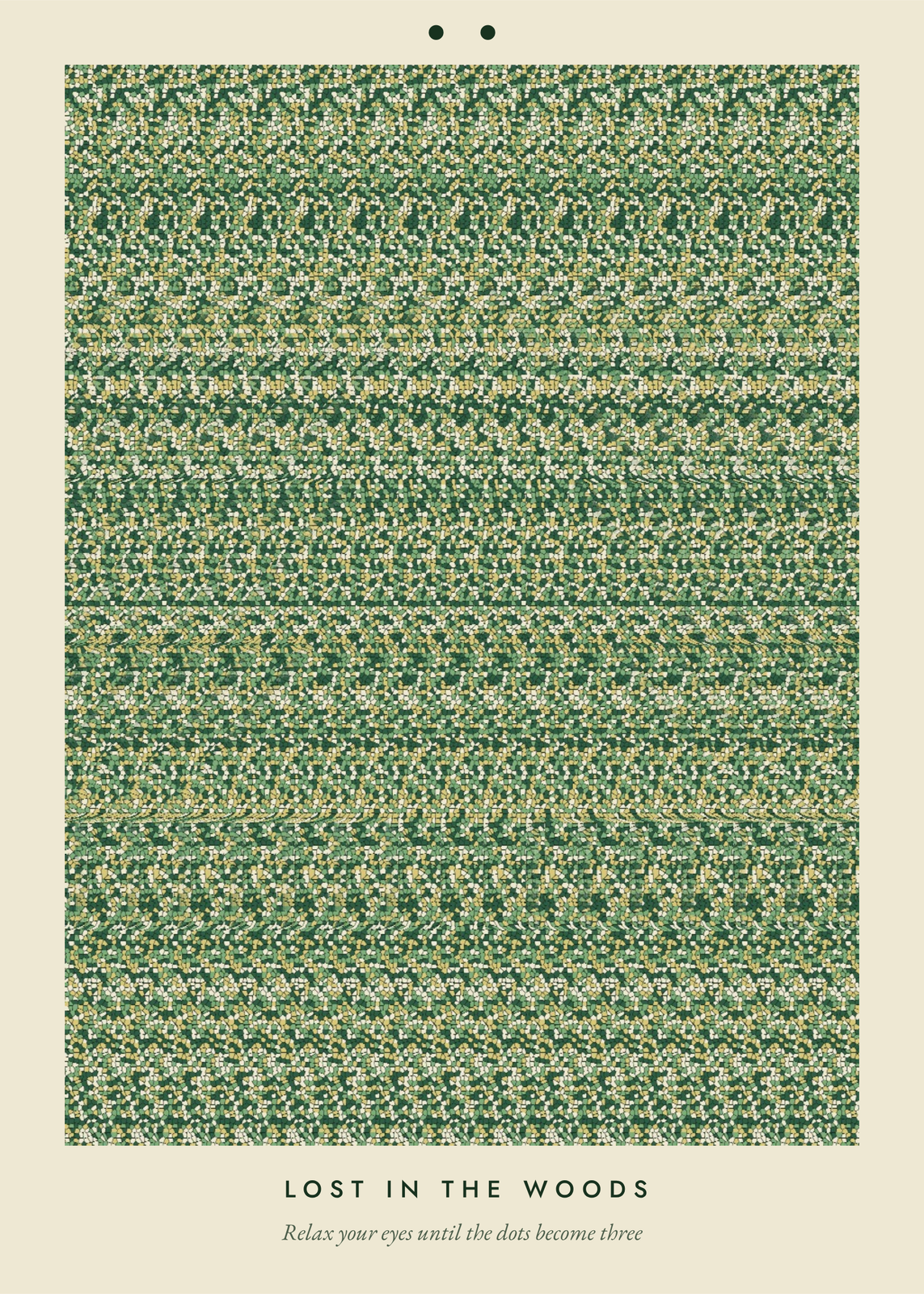
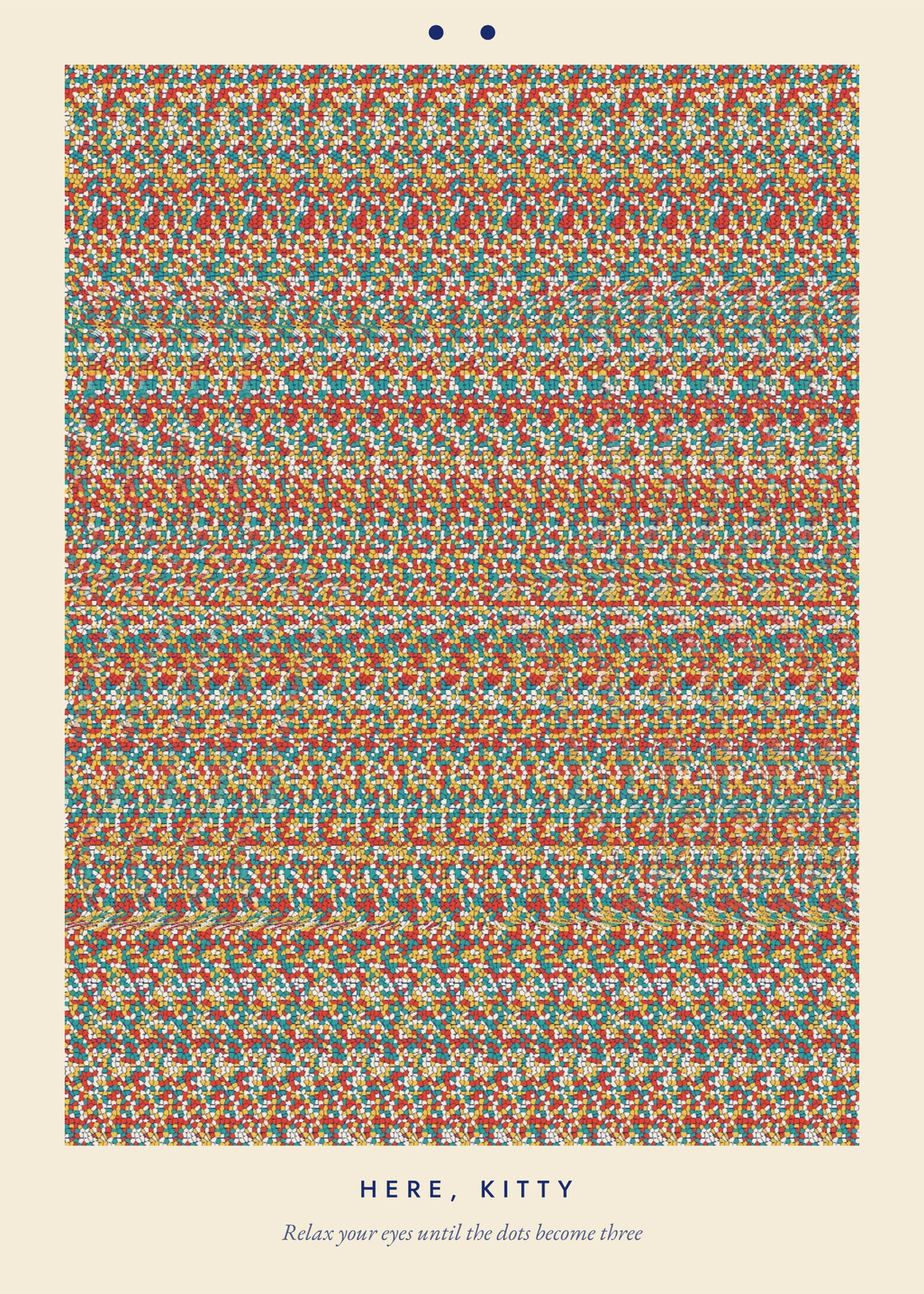
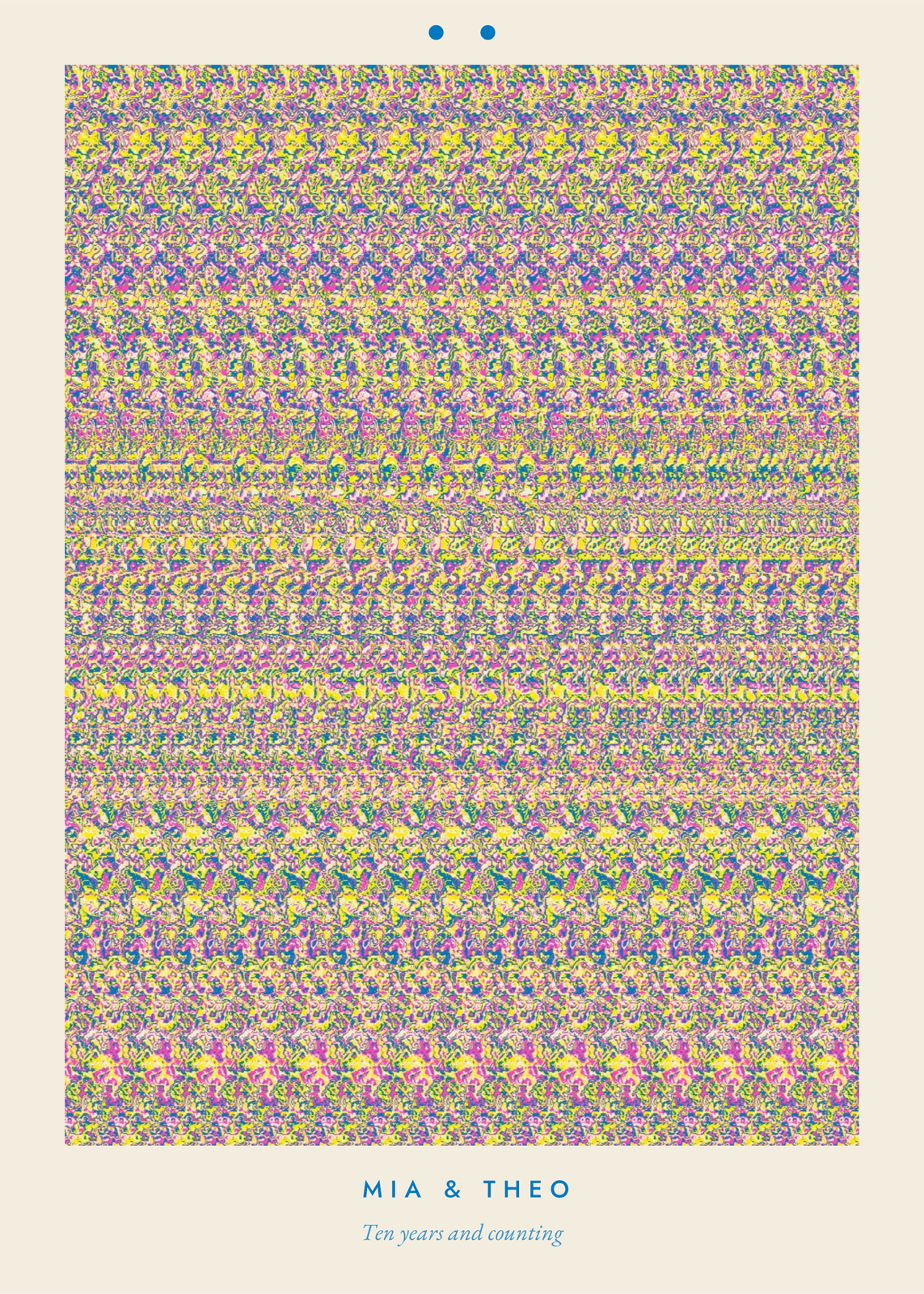
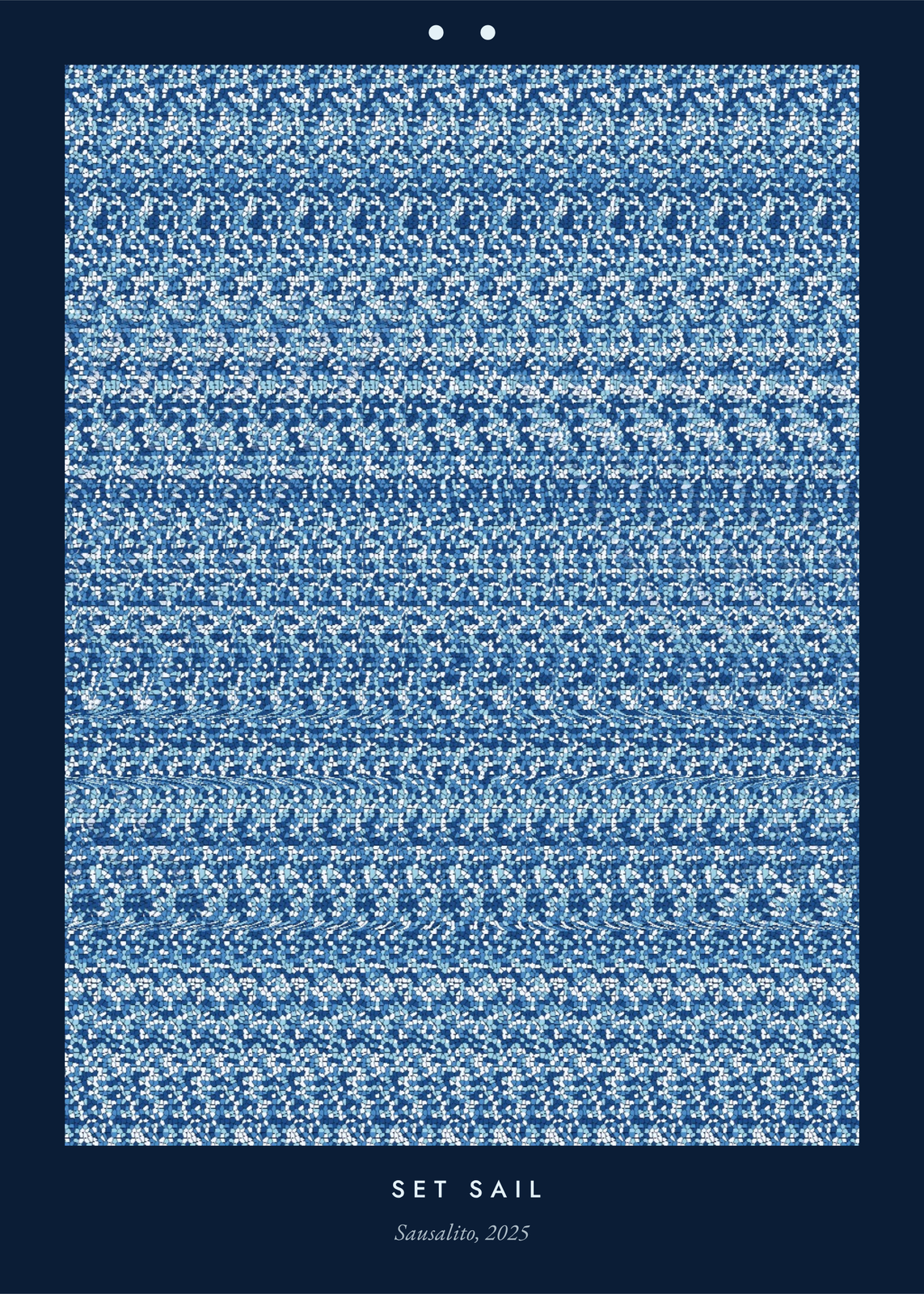
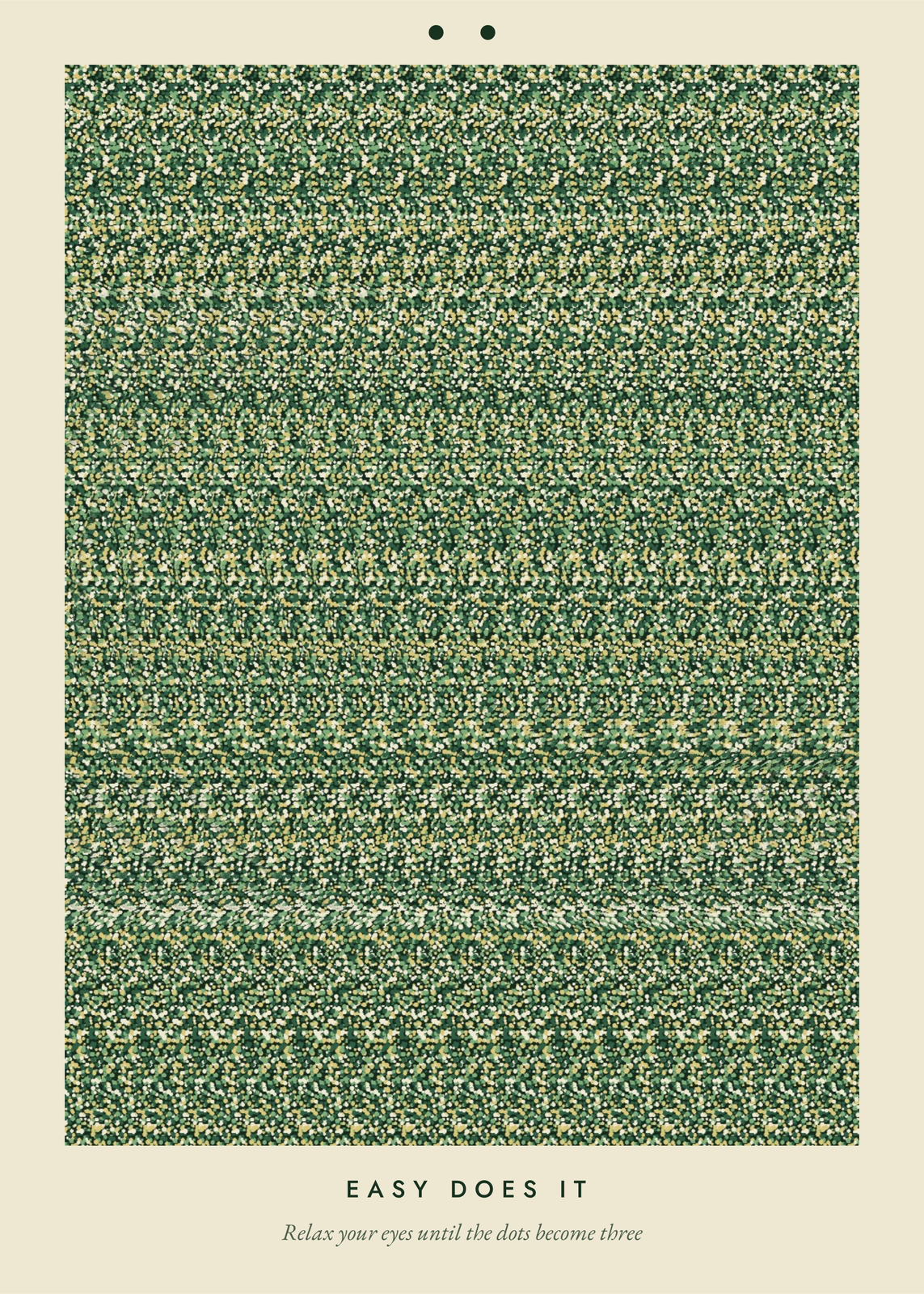
What you can hide
A word or a short phrase, up to 24 characters: a name, “Love you”, “Aloha”. Short, bold words read best, and a space can stack two words on two lines. Or one of 59 shapes in six groups: symbols such as a heart, a star or a paw print; nature, from the sun to a mushroom; things such as a rocket, a sailboat or a mug; animals from a kitten to a unicorn; sea life; and four dinosaurs, a T-rex among them.
Four patterns, seven sets of colors
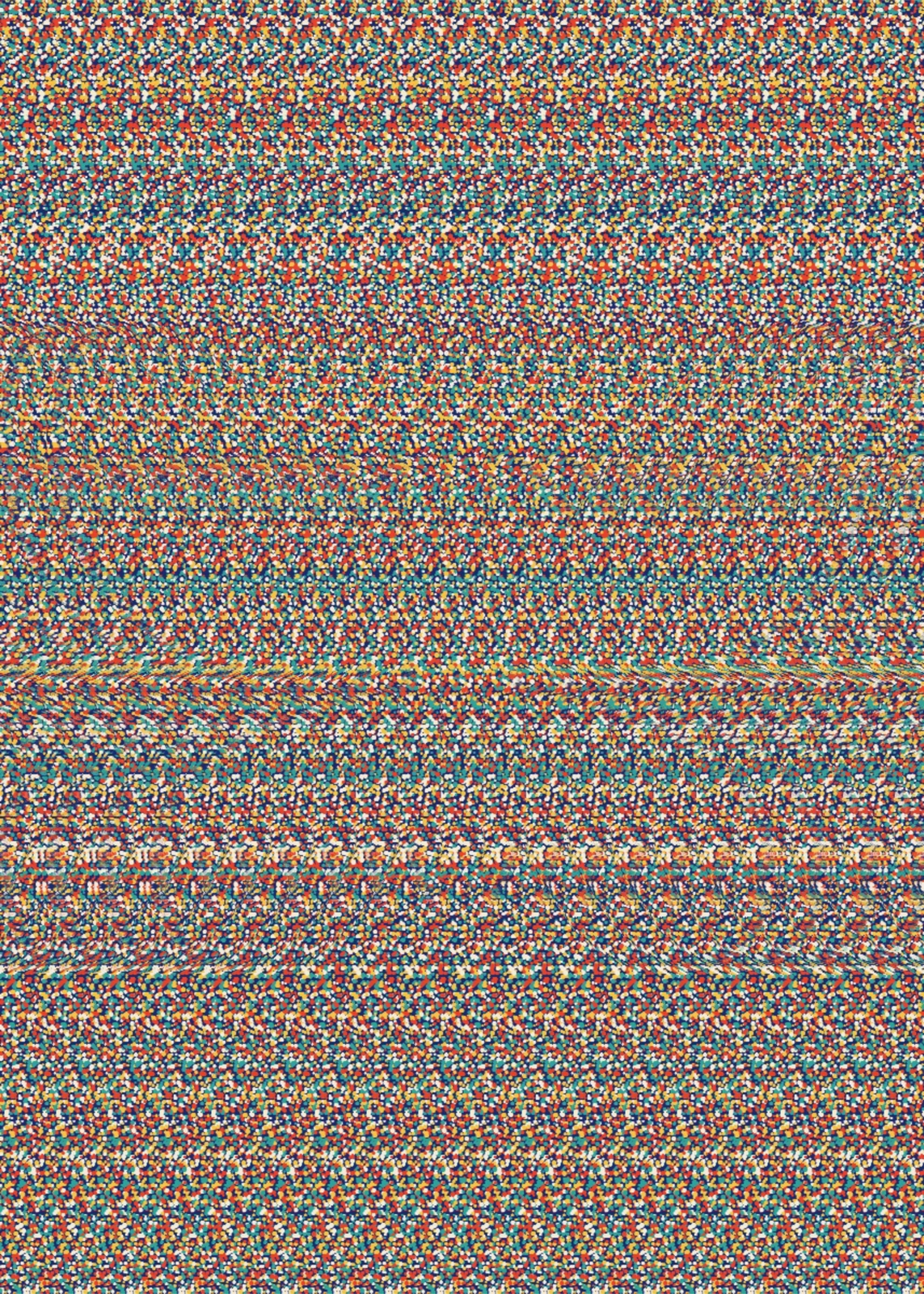
Pick the pattern the picture hides in, then its colors: 90s mall poster, deep water, sunset, forest floor, riso, candy or newsprint, in a fine, medium or coarse grain.
- Marbled: swirls of color, like the posters at the mall in the 1990s.
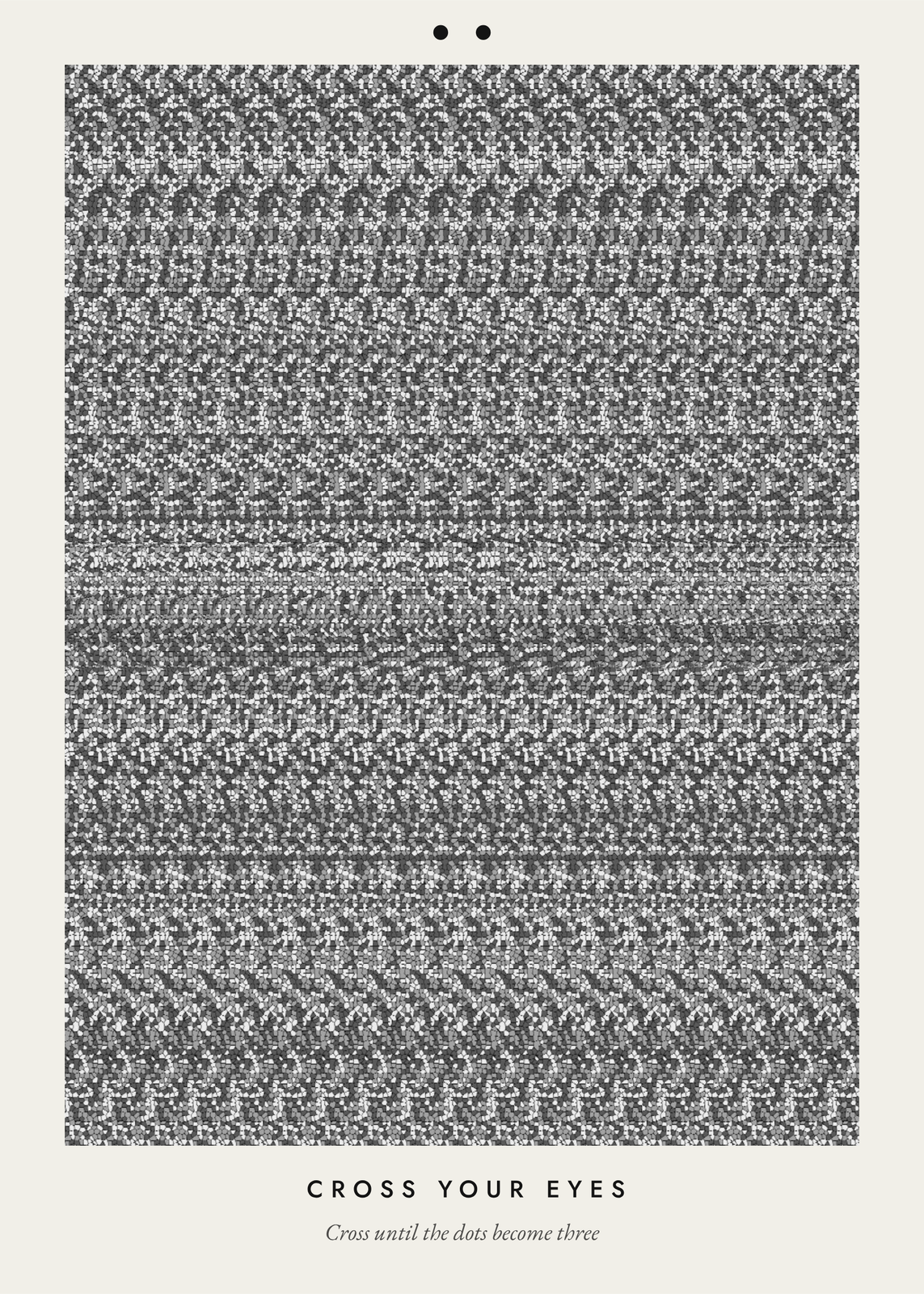
- Mosaic: small tiles set in grout.
- Confetti: dots of color scattered over a plain ground.
- TV static: fine noise, like a set between channels.
How to make a stereogram
- Open the example closest to what you want.
- Type a word, or switch to Shape and pick one from the pictures.
- Pick the depth, the pattern and the colors. Shallow is the easiest to see.
- Write a title and a line under it, or clear them for a poster with no caption.
- Pick the paper size and download a 300 DPI JPEG.
Easier to see, or deeper
Shallow depth is the easiest to see, deep the most striking. The two guide dots above the picture sit one repeat apart, and when you see three of them the picture is there. Under Viewing and details, the pattern's repeat runs from 18 to 34 mm: narrower is easier up close, wider suits a big wall seen from across the room. Rounded edges suit big shapes; keep thin letters flat. A rippled background makes the ground behind the shape swell in gentle waves, and for the few who find it easier to cross their eyes, there's a cross-eyed version.
A stereogram as a gift
A stereogram is a poster people stop at and stare into, so it suits a gift with a secret in it: a child's name on their bedroom wall, “Love you” for an anniversary, a T-rex for a dinosaur fan, a whale for the one who loves the sea. Write the title as a hint, “Can you see it?”, and the subtitle as the answer, or leave them guessing.
Questions
How do I see the 3D picture?
Bring your face close to the poster, so it blurs, and look through it as if at something far behind. Then move back slowly without refocusing. The two dots at the top double into four; when the middle two merge and you see three, the pattern sinks back and the hidden shape floats out in front of it. The first time can take a few minutes; after that it comes quickly. Start with shallow depth, and if looking through never works for you, switch How you look to Cross-eyed, under Viewing and details.
What is a stereogram?
A picture that shows depth to two eyes. This kind, an autostereogram, hides a shape in one repeating pattern with no glasses needed: each repeat is shifted a little where the shape stands, and when your eyes match one repeat with the next, your brain reads the shifts as depth. They came out of vision research and became a craze in the 1990s, on posters and in books.
Is this a Magic Eye poster?
It's the same kind of picture, a single-image stereogram, often called Magic Eye style. Magic Eye is a trademark of Magic Eye Inc. Posterage isn't affiliated with Magic Eye Inc., and the patterns and shapes here are drawn by this maker.
Can everyone see it?
Most people can, with a little practice, but not everyone: it needs both eyes working together, so some people with a lazy eye or poor depth vision never see the shape. Shallow depth and a narrower repeat are the easiest to start with.
What sizes can I print?
US Letter, 8 × 10, 11 × 14, 12 × 16 and 12 × 18 in, A4 and A3, free. You download a 300 DPI JPEG drawn at the size you pick. Larger prints, up to 24 × 36 in, are coming soon.
Related
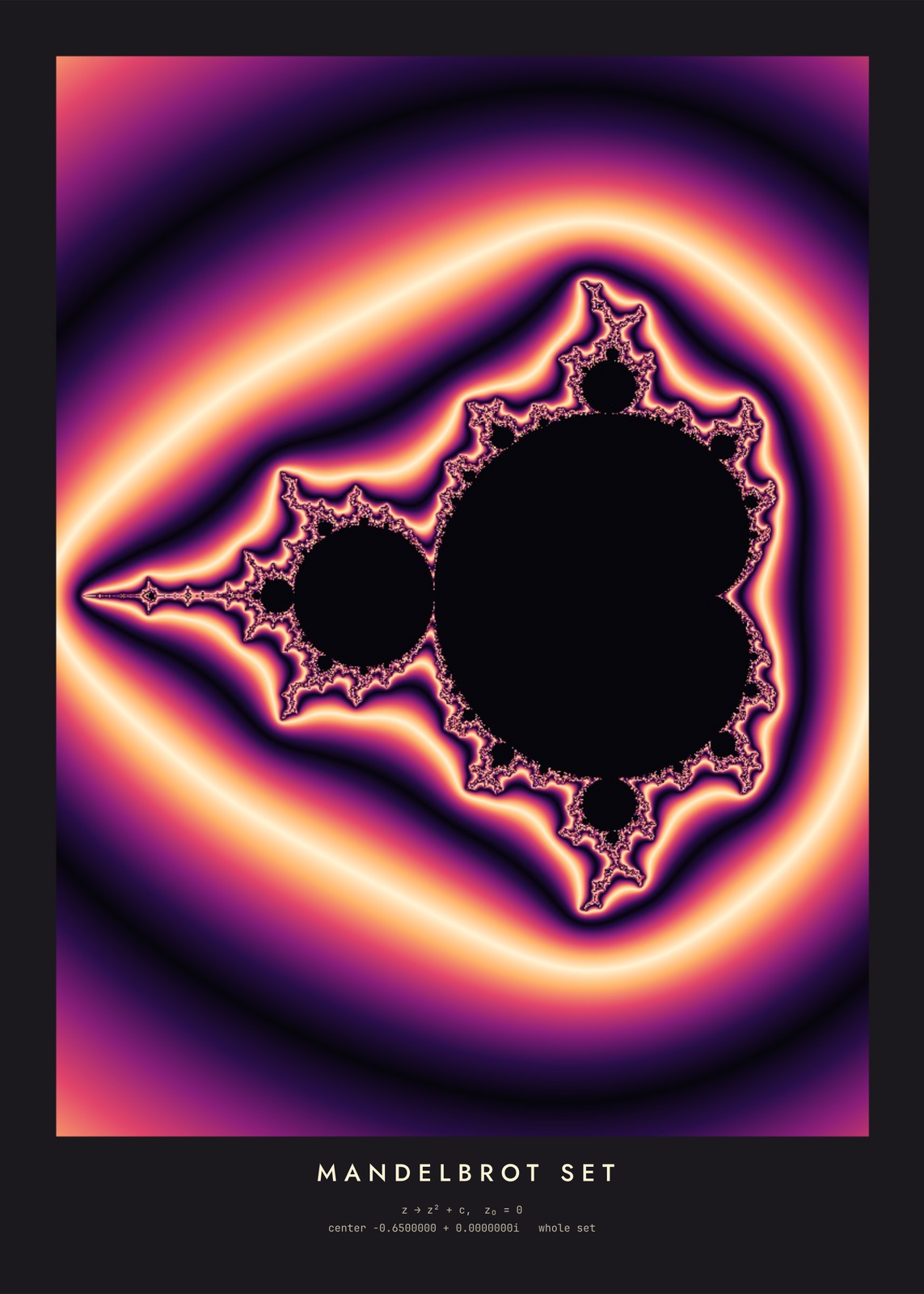
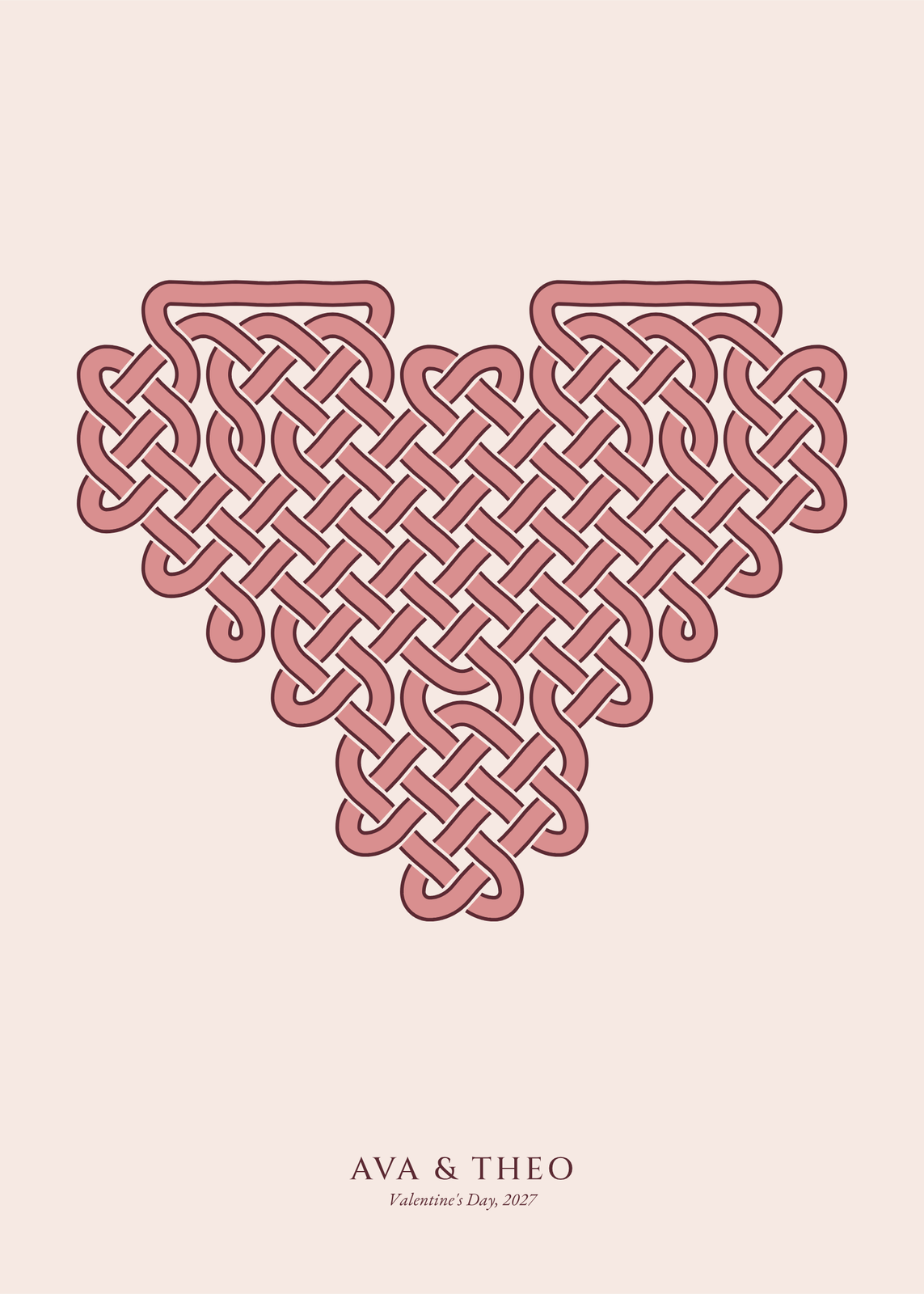
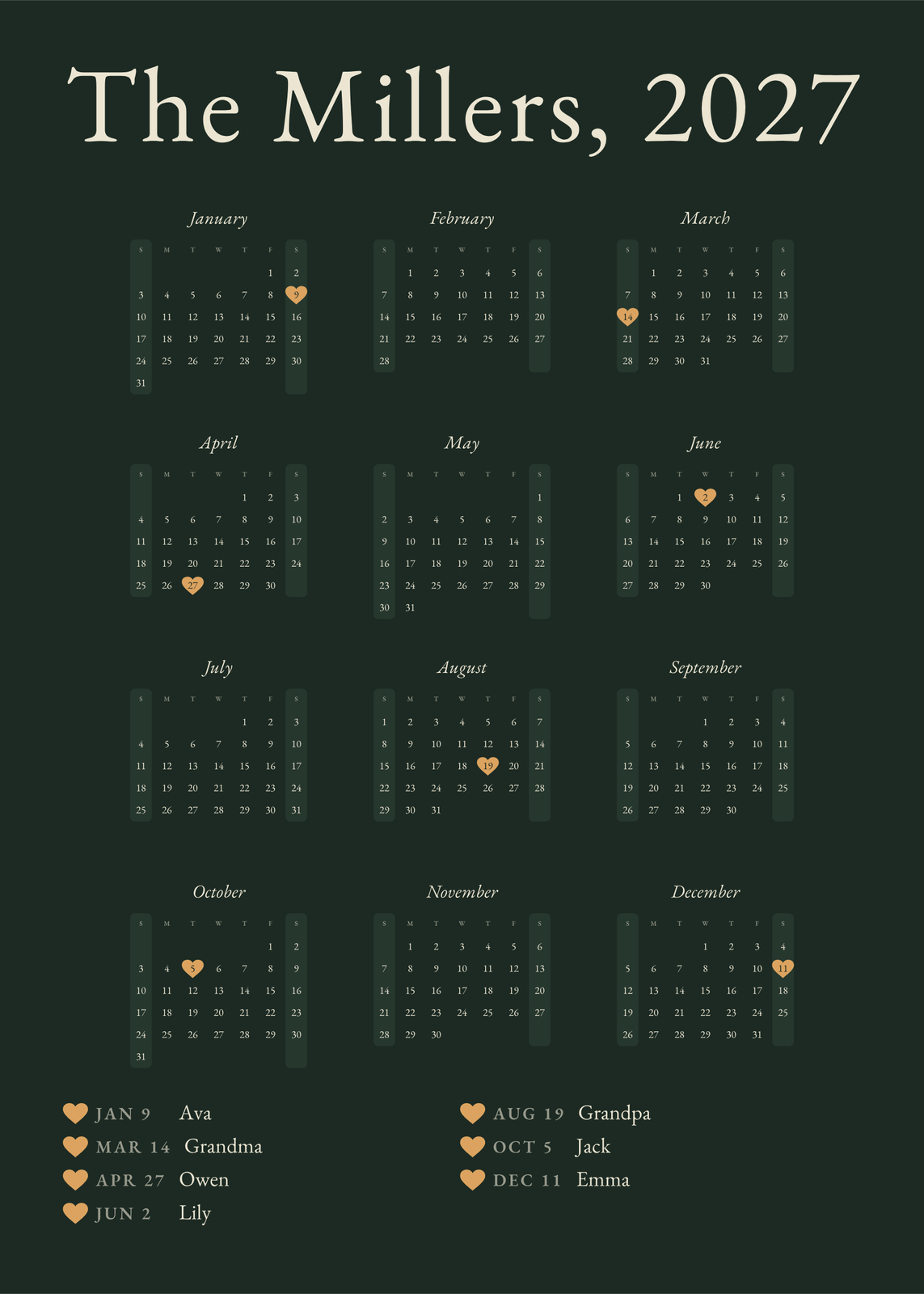
Gift ideas by occasion
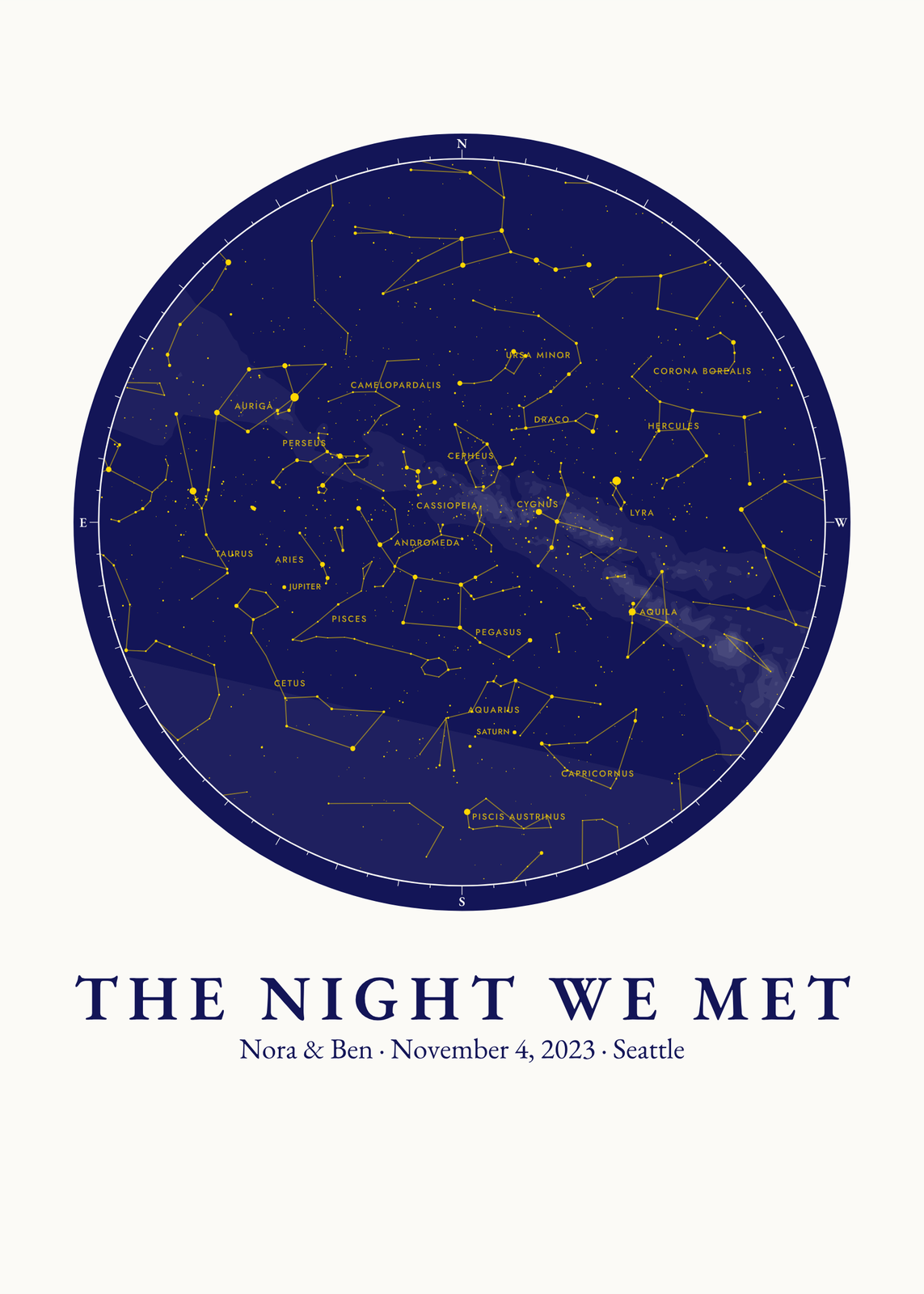
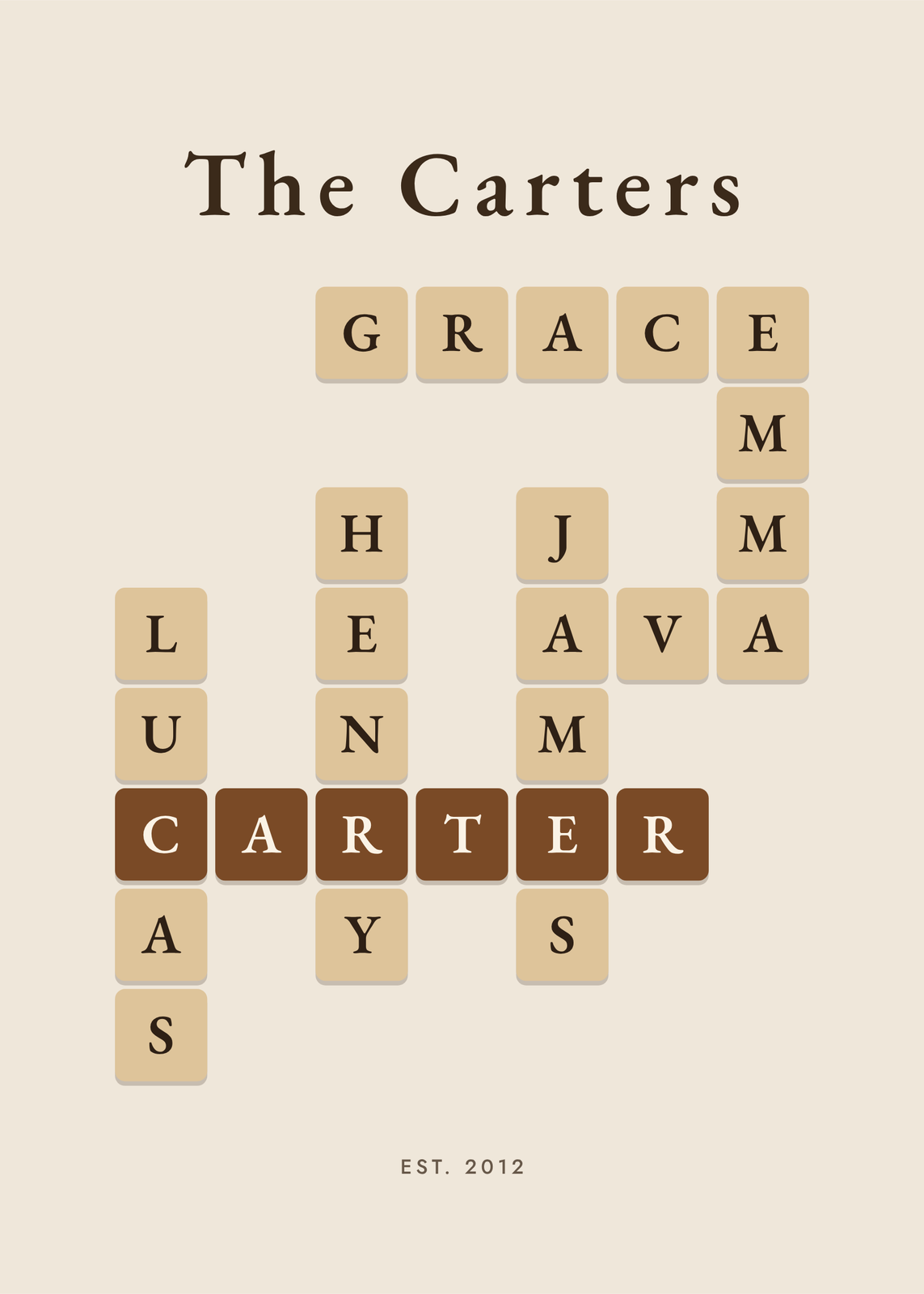
Every example is made with the Posterage generators. Change anything, then download it as a 300 DPI JPEG.