Math posters fractals, chaos and geometry, drawn from the formulas
Every poster here is computed, not drawn by hand: the Mandelbrot set from z → z² + c, the Lorenz attractor from its three equations, a star pattern from lines that leave each tile edge at one angle. Pick the math, the colors and the view, print the formula or the rule small under the picture if you like, and download a file ready to print.
Math art by subject
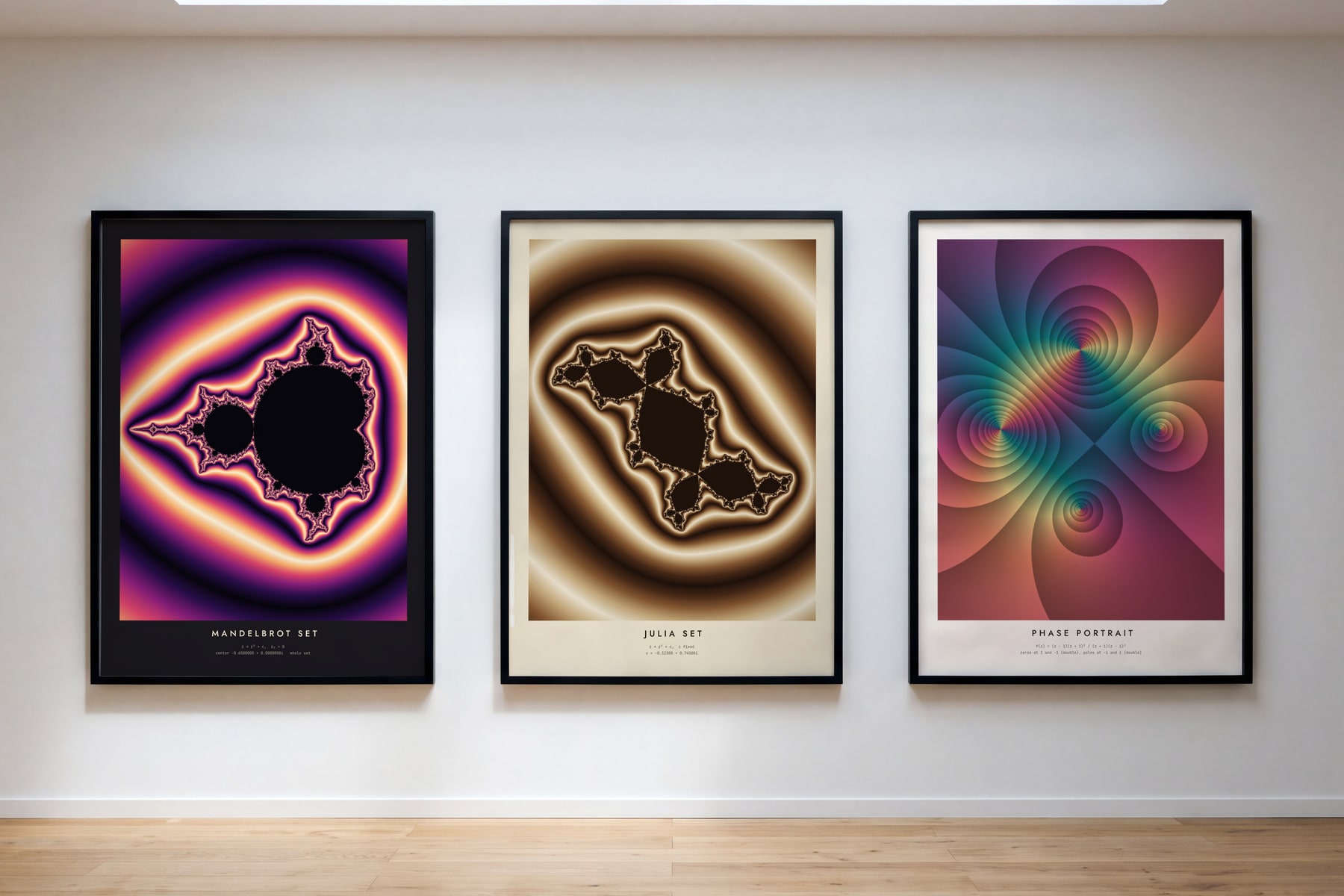
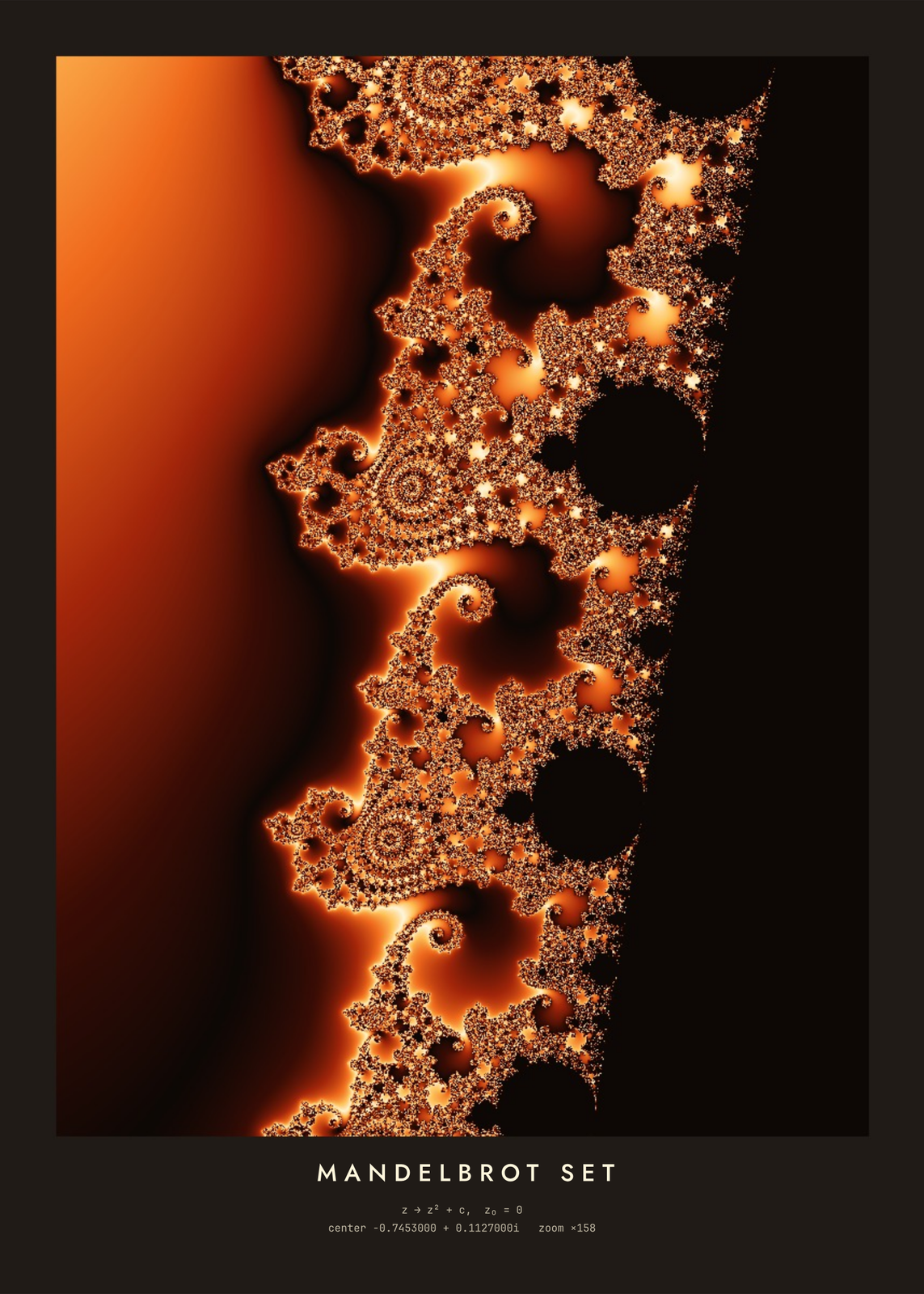 Mandelbrot set postera zoom into its edge, a Julia set or a phase portrait
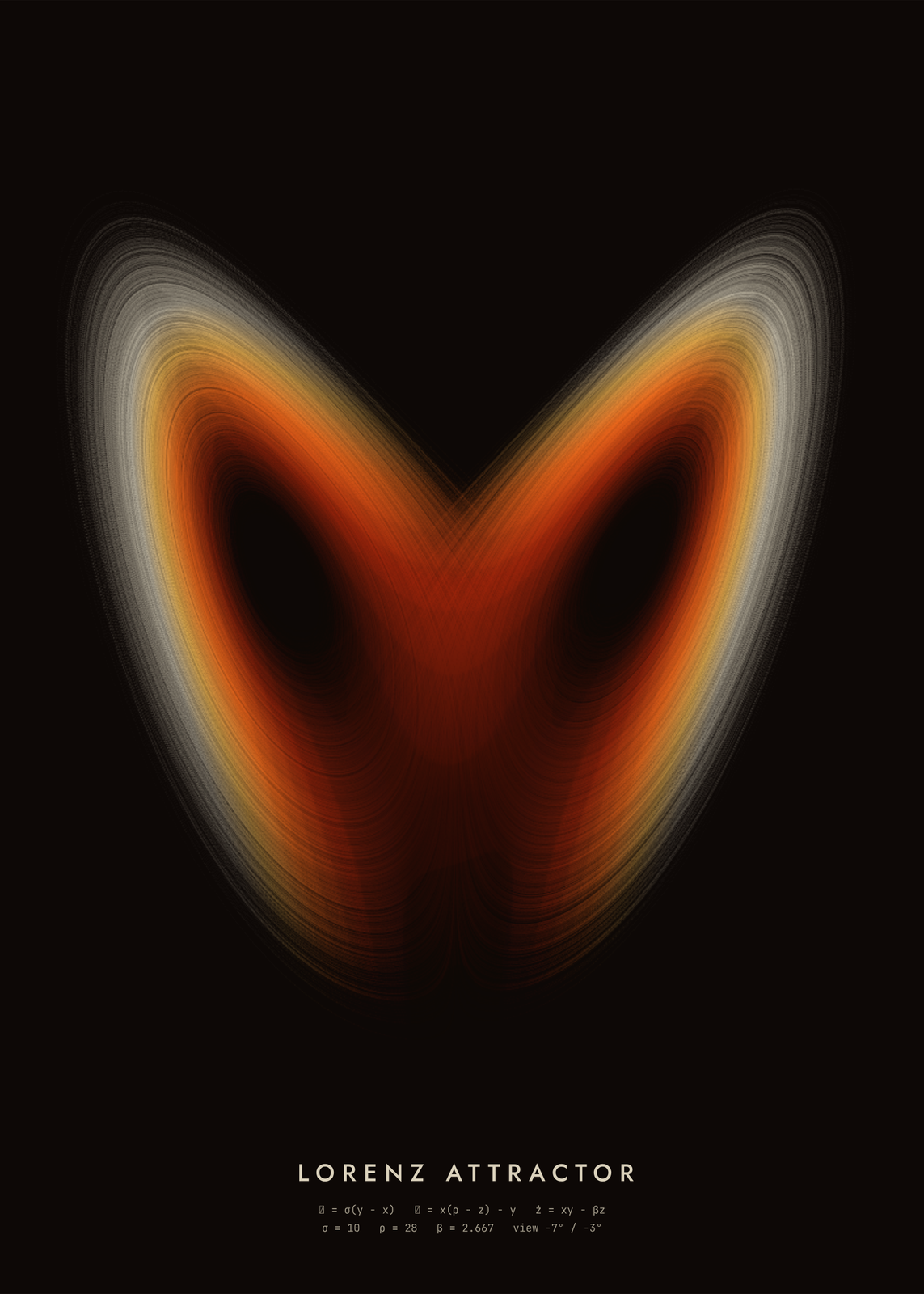 Strange attractor artchaos drawn as millions of points of light
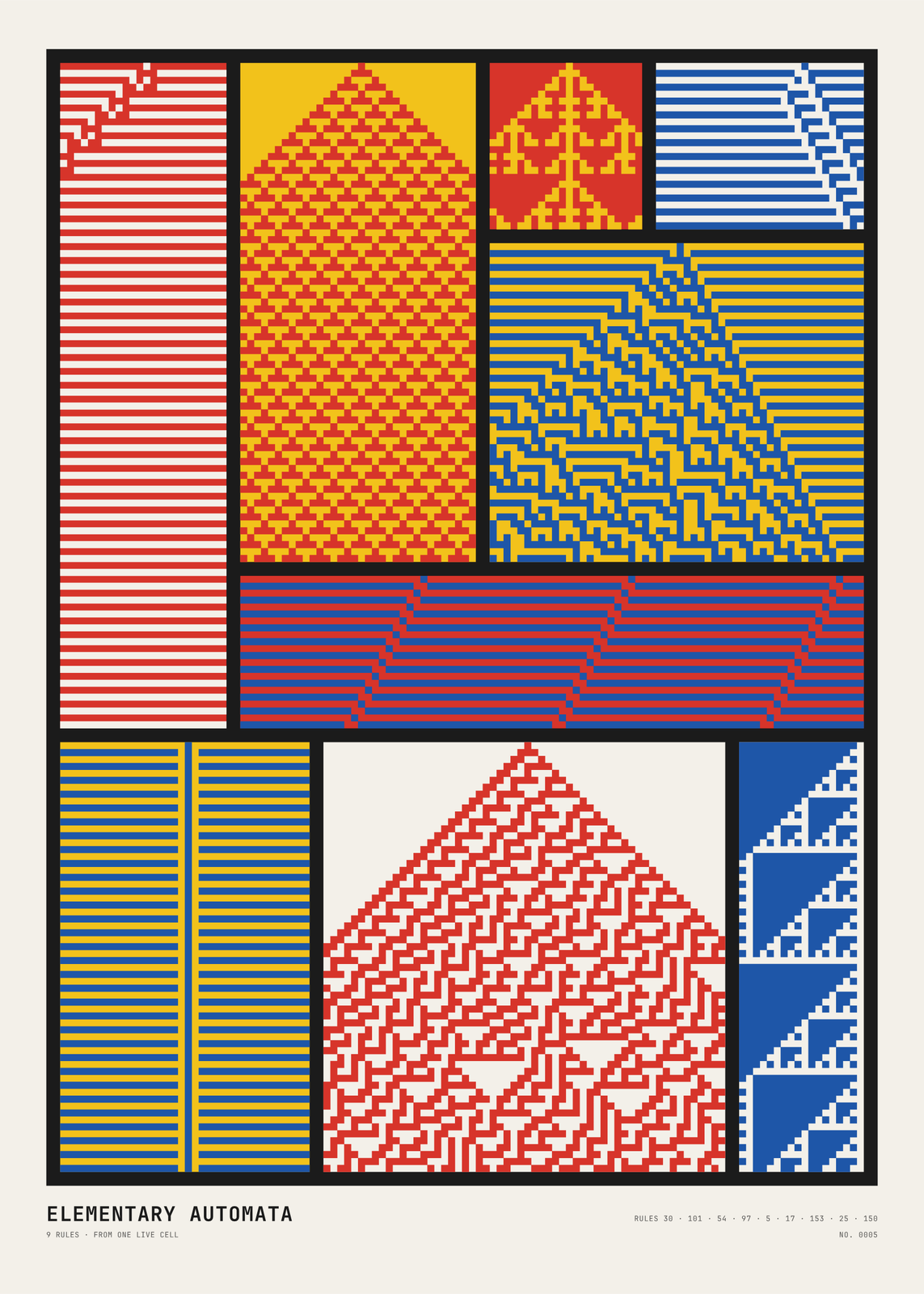 Cellular automata posterelementary rules grown in Mondrian panels
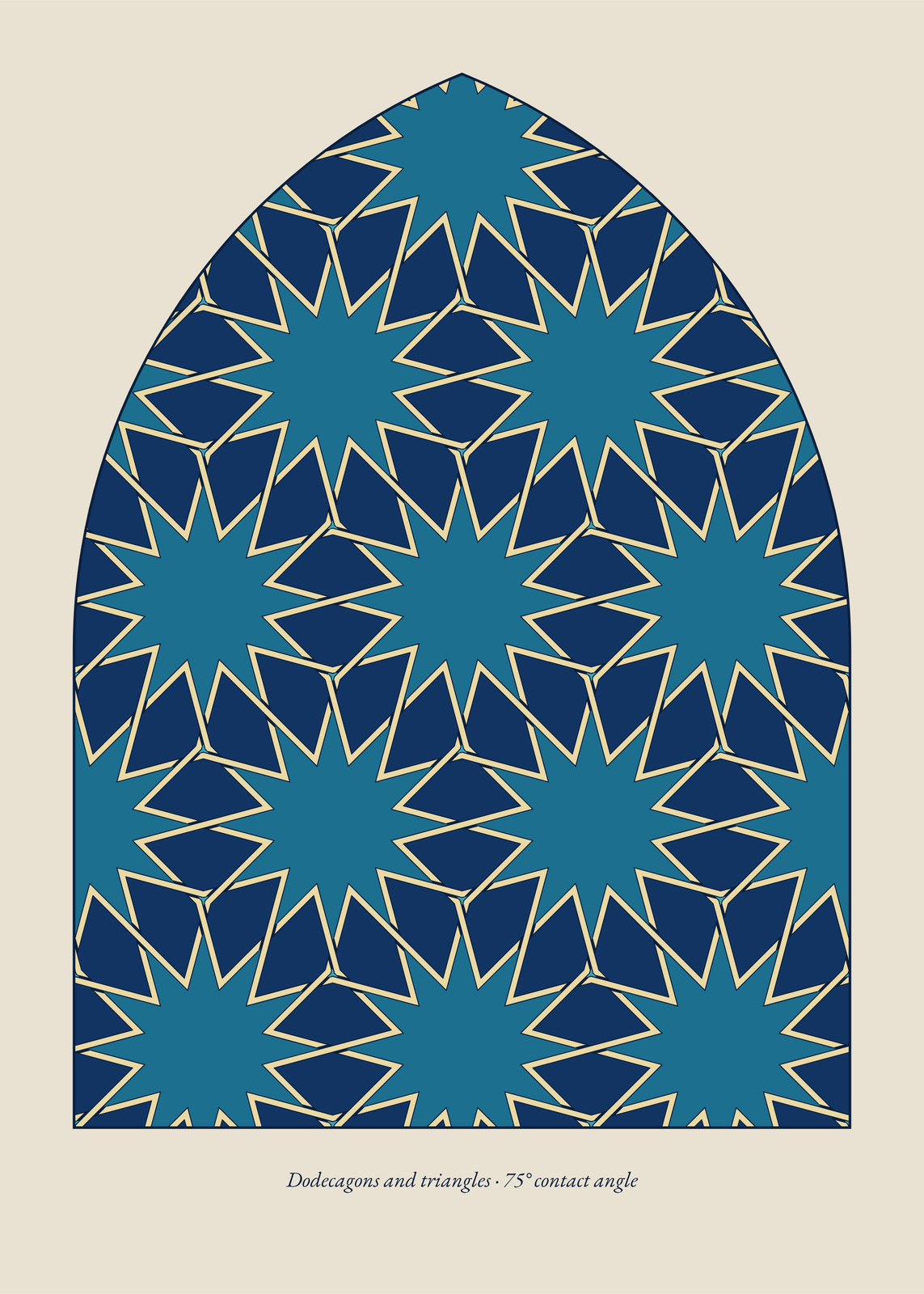 Islamic geometric patternsstar patterns drawn by Hankin's method
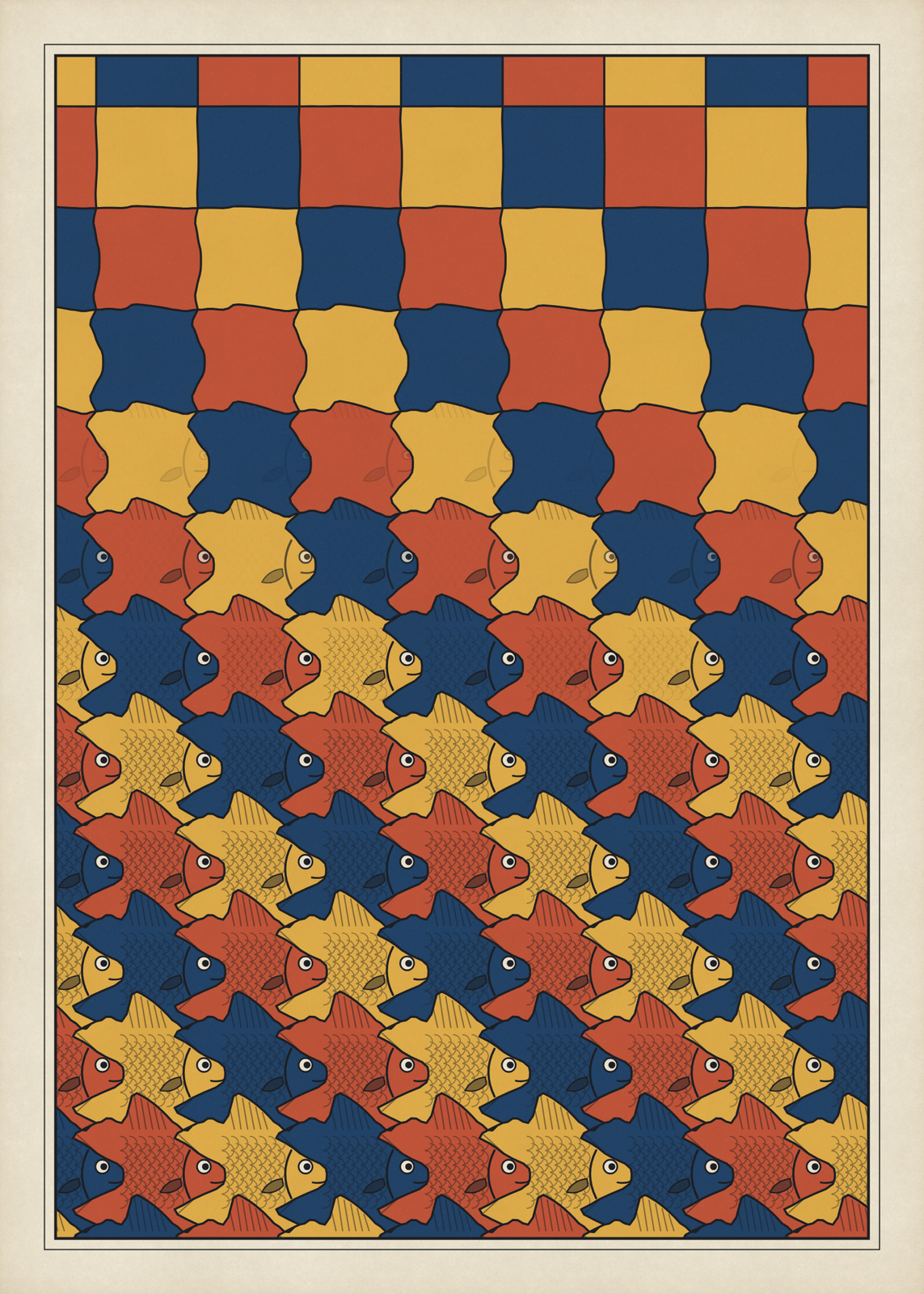 Tessellation artplain tiles that become fish and birds, with no gap at any stage
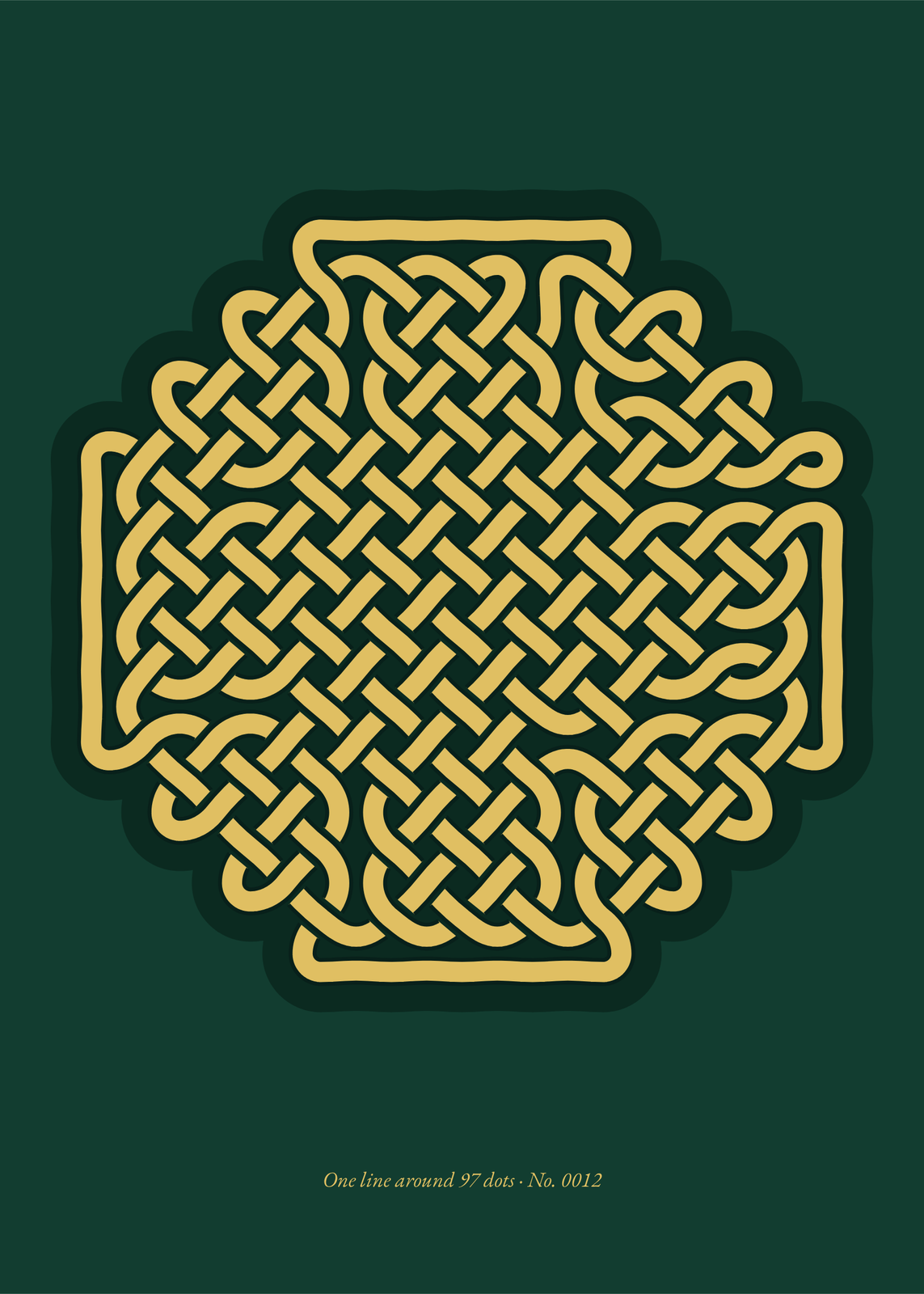 Celtic knot artone line round a grid of dots, over and under
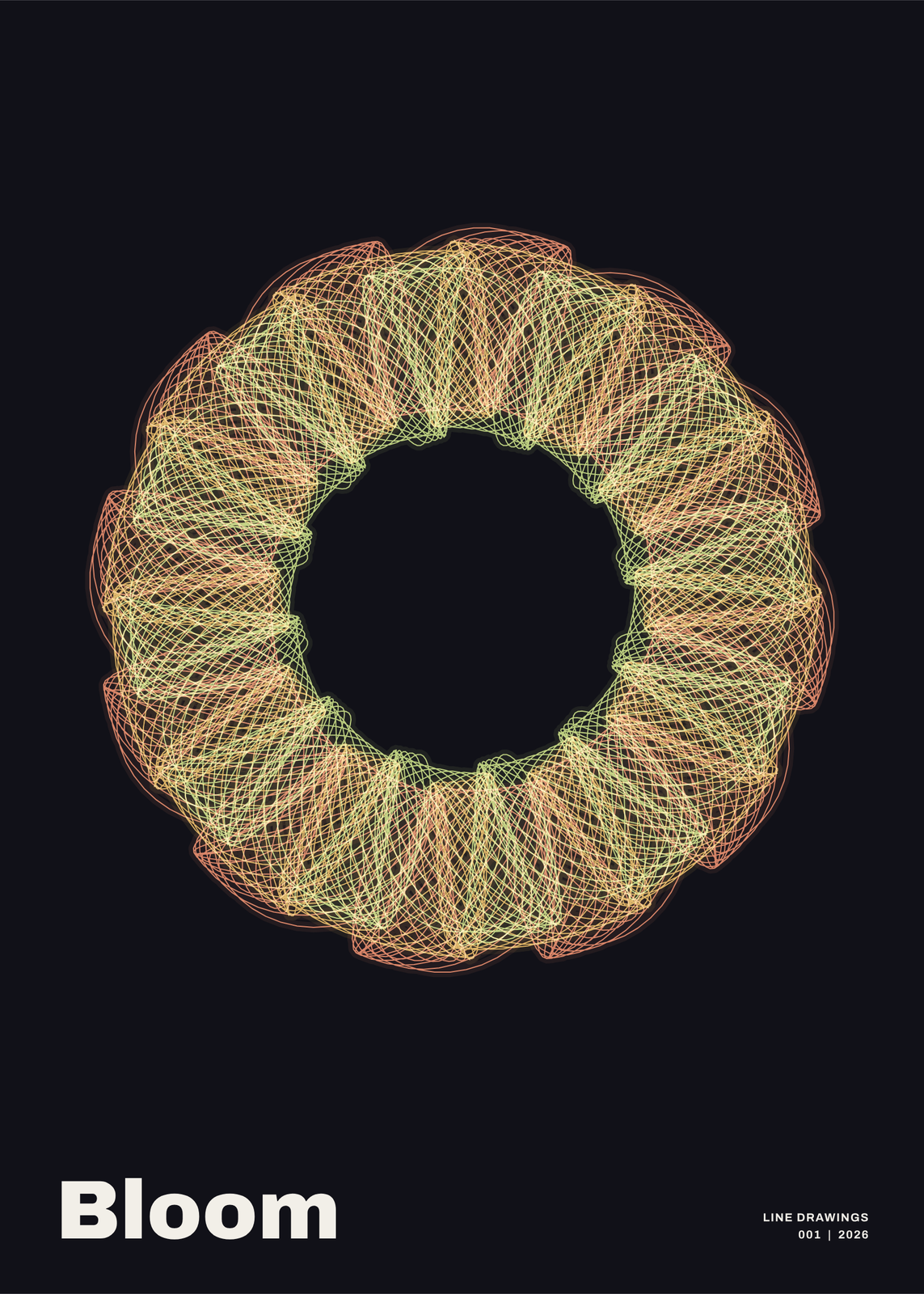 Generative art27 motifs drawn only in pen lines, the way a plotter draws them
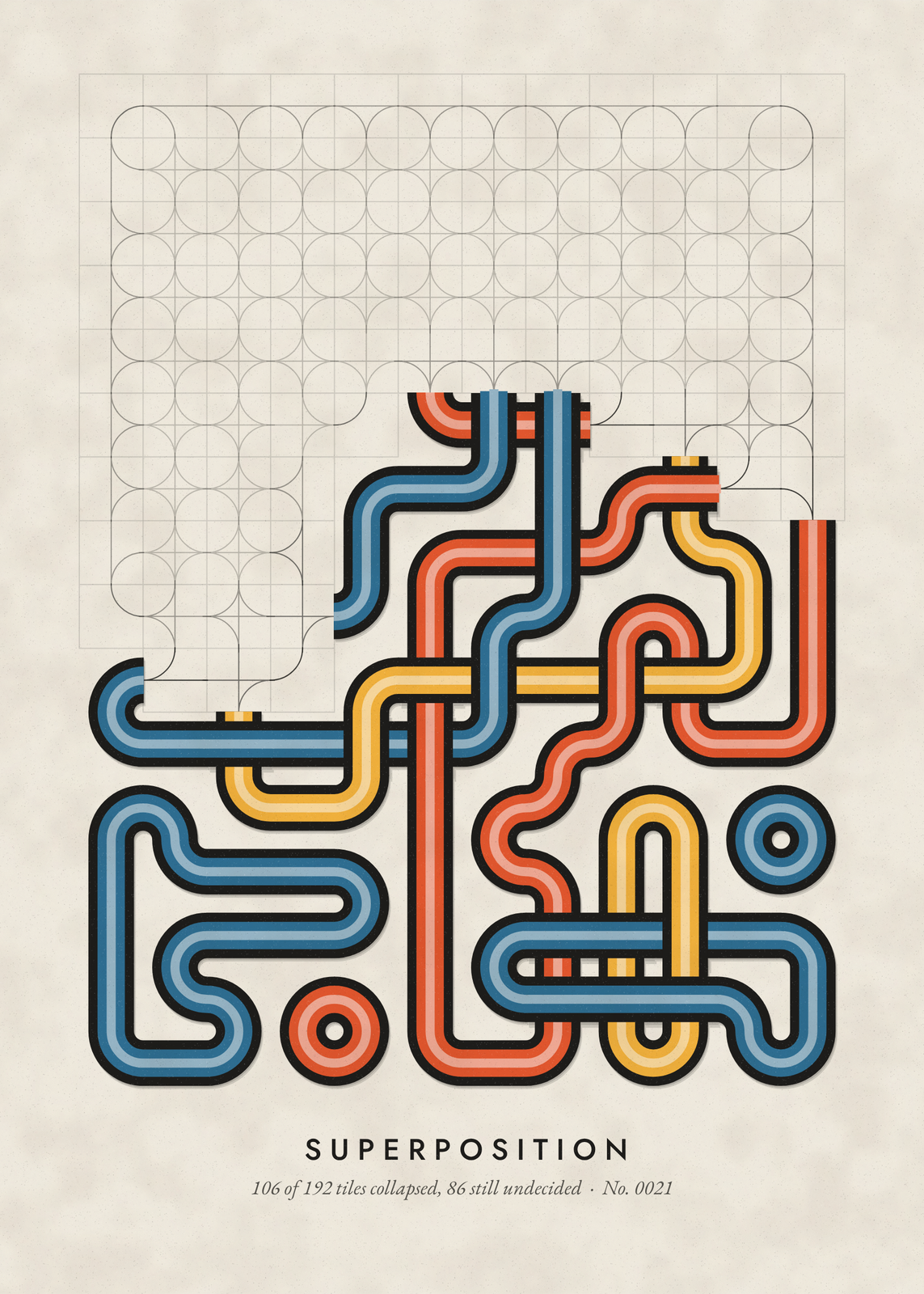 Wave function collapsetiles that must match their neighbors, solved cell by cell until the whole sheet fits
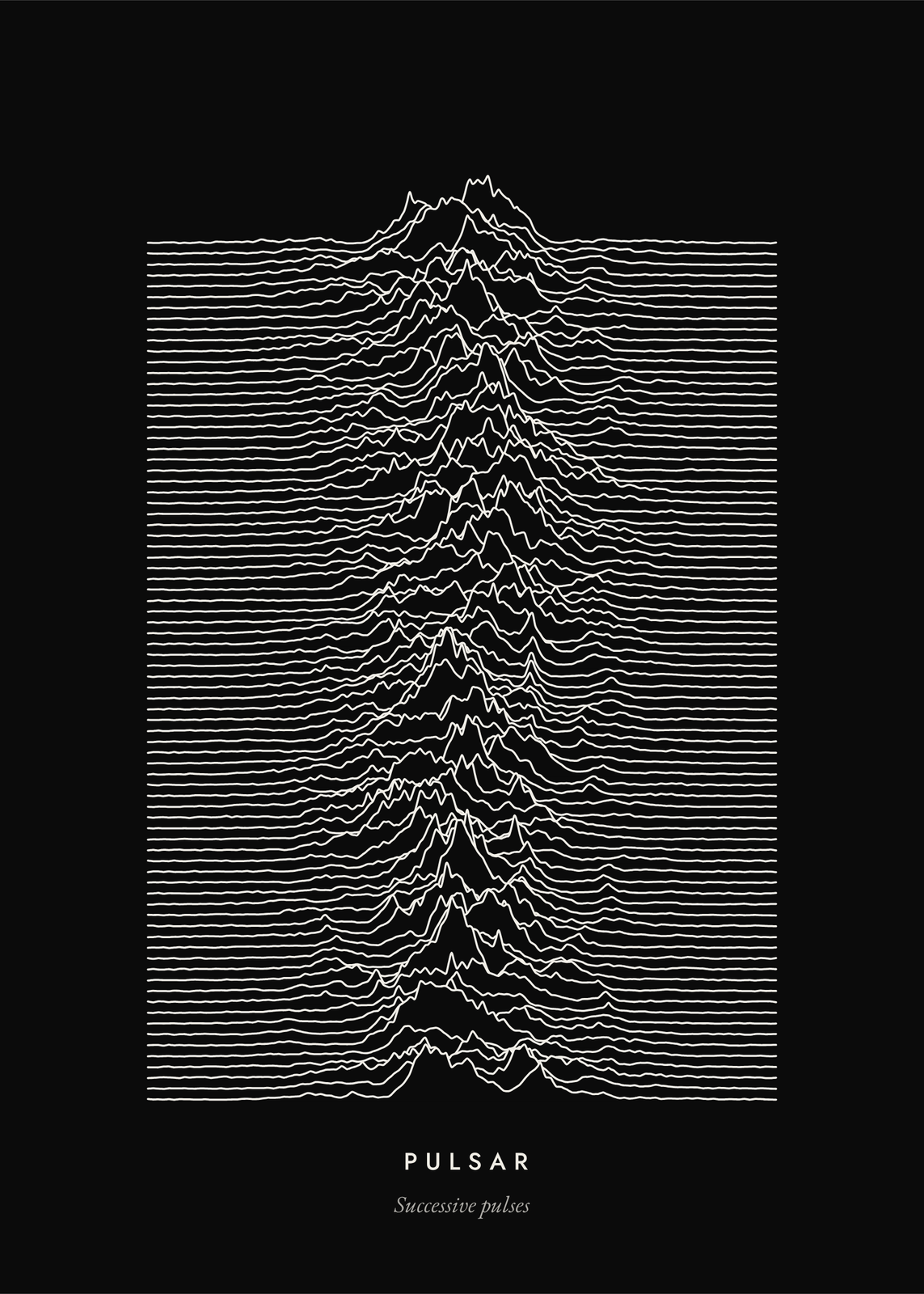 Ridgeline posterstacked signal lines peaking at the center, from noise, a word or your photo
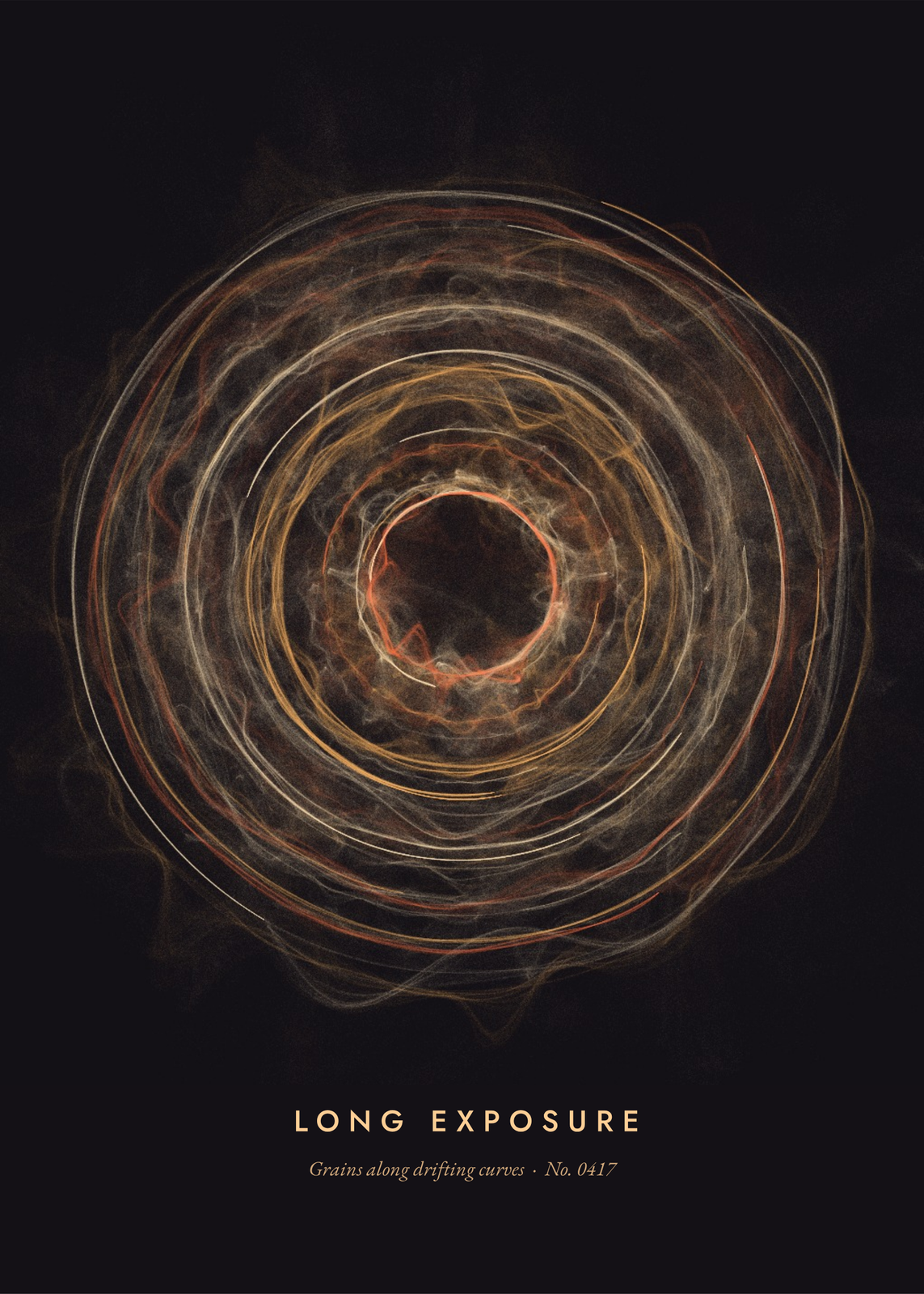 Sand spline artdrifting curves laid down as millions of translucent grains of sand
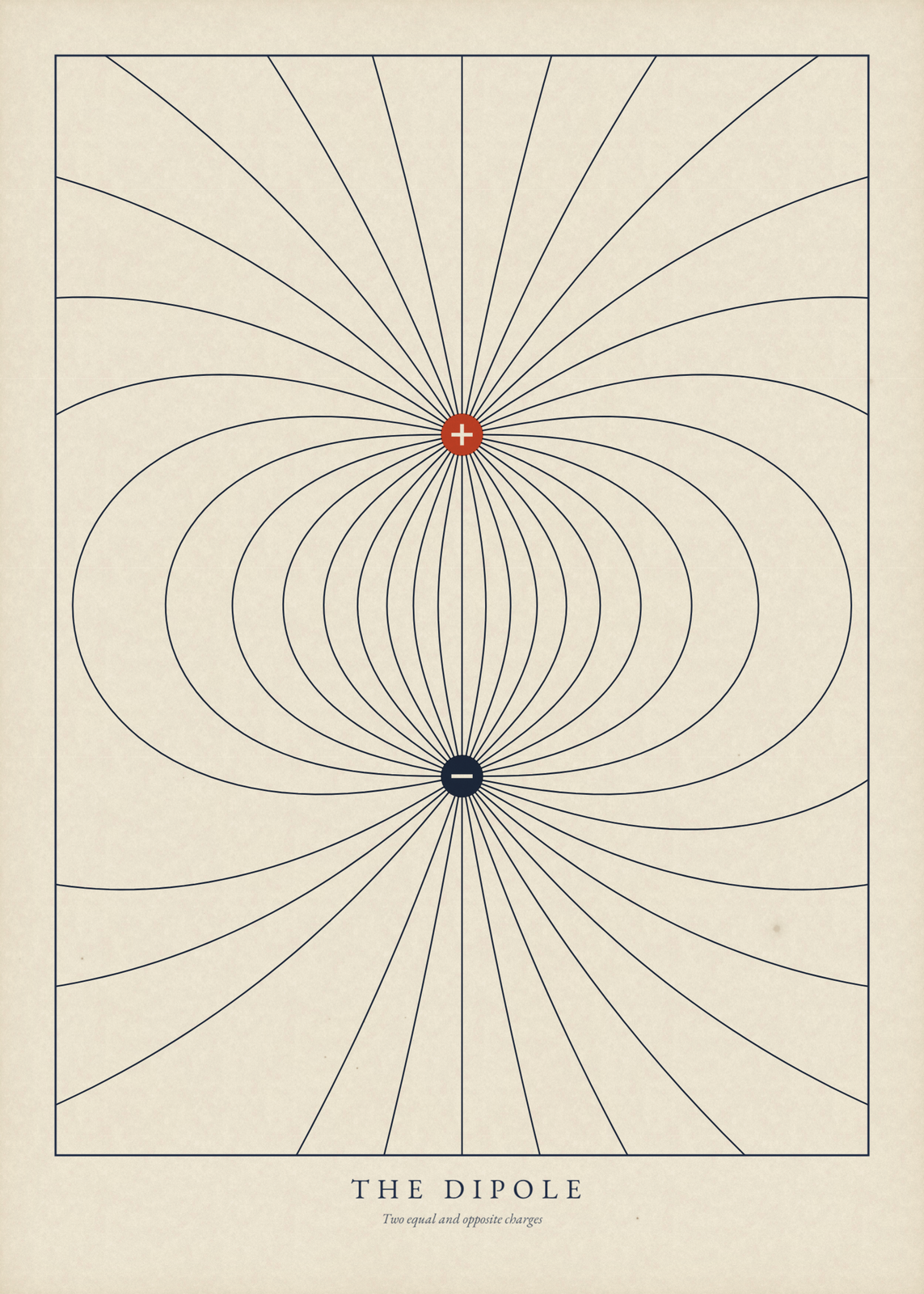 Physics artthe lines of force round charges and magnets, traced from the physics
On the wall
A few of them framed at home. Open any one to make it yours.
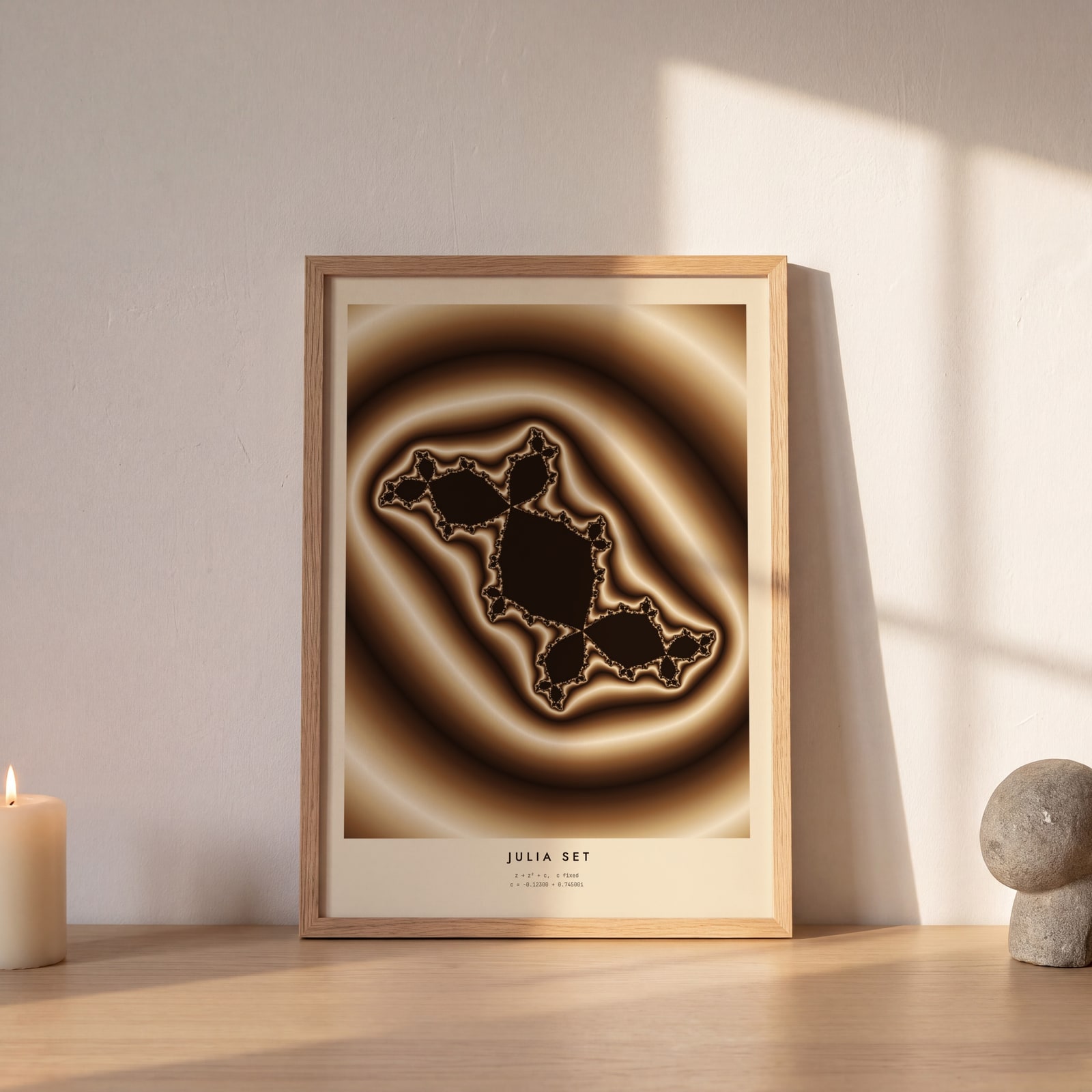 The Julia set for c = −0.123 + 0.745i, known as Douady's rabbitEdit this →
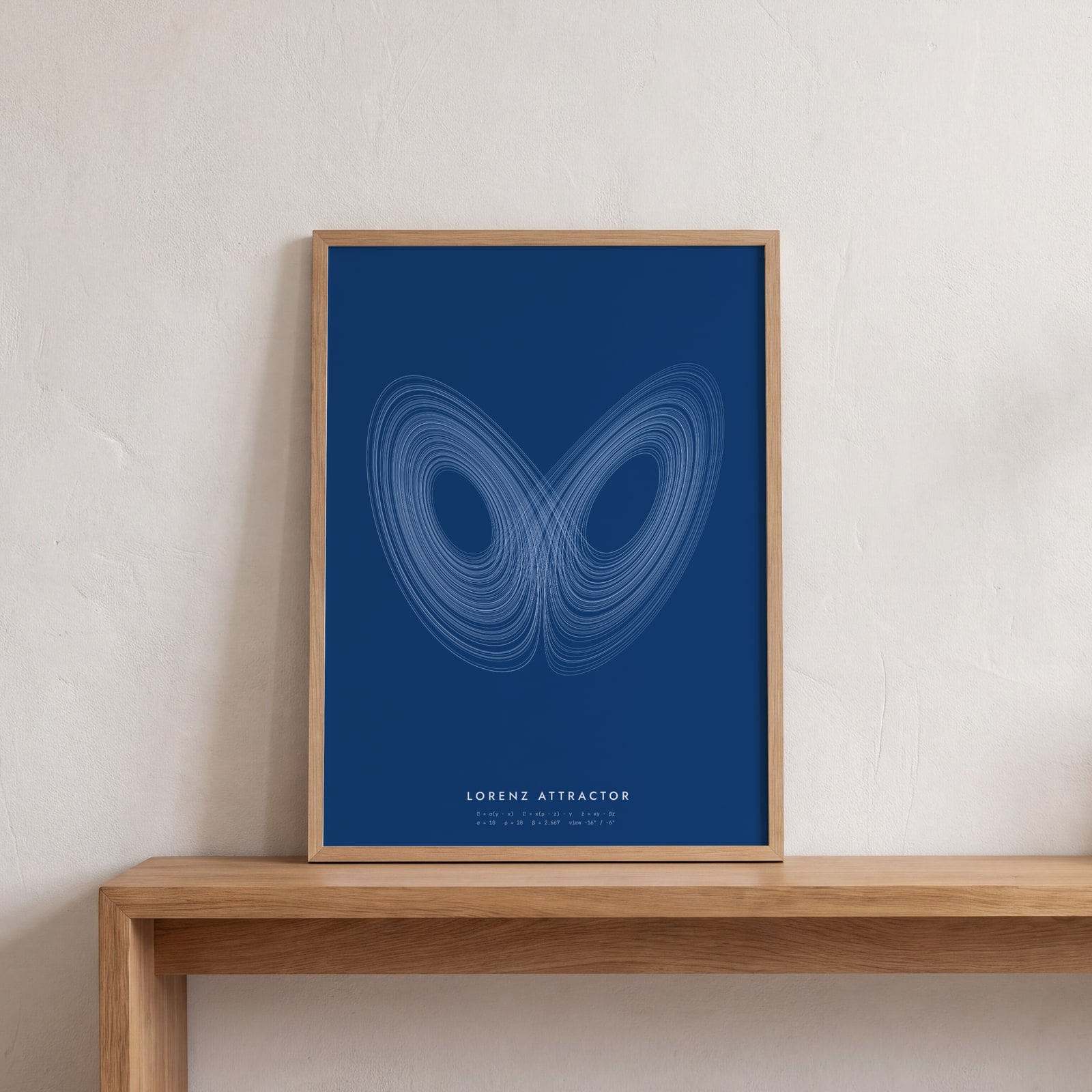 The Lorenz attractor traced in fine pen linesEdit this →
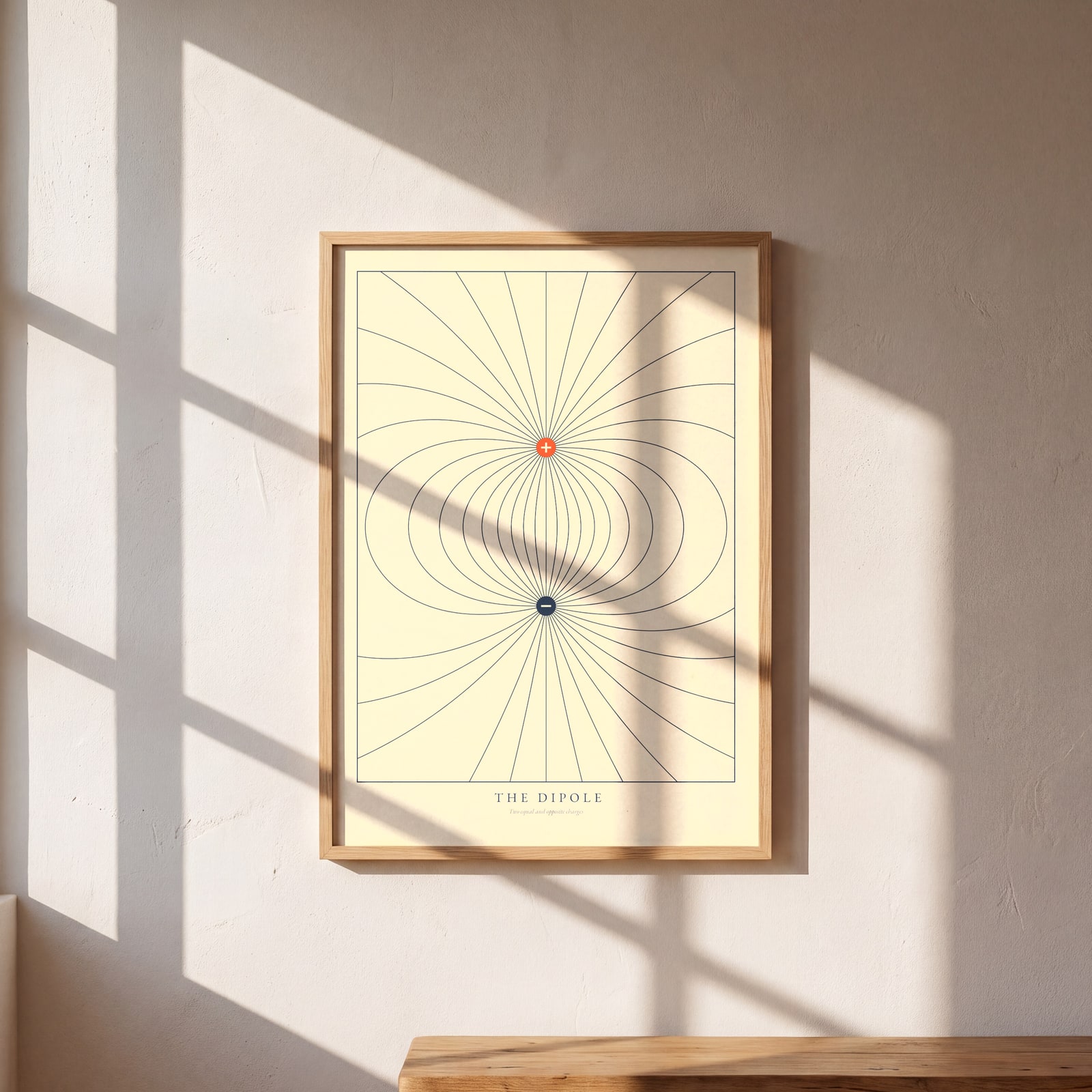 Field lines of an electric dipole in navy, arcing from a red plus charge to a minus one on a cream plateEdit this →
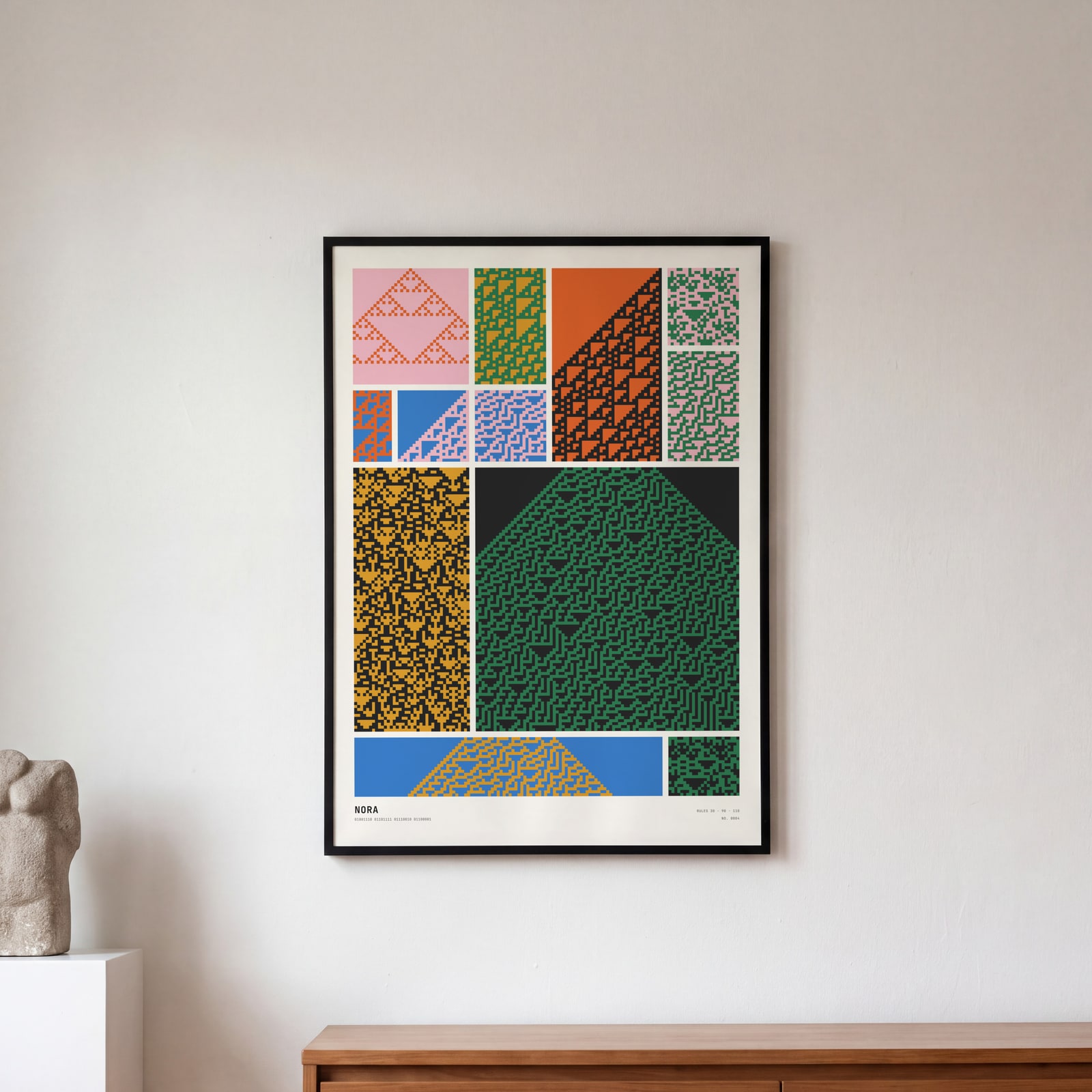 Panels of cellular automata Rules 30, 90 and 110, grown from the name Nora written in bitsEdit this →
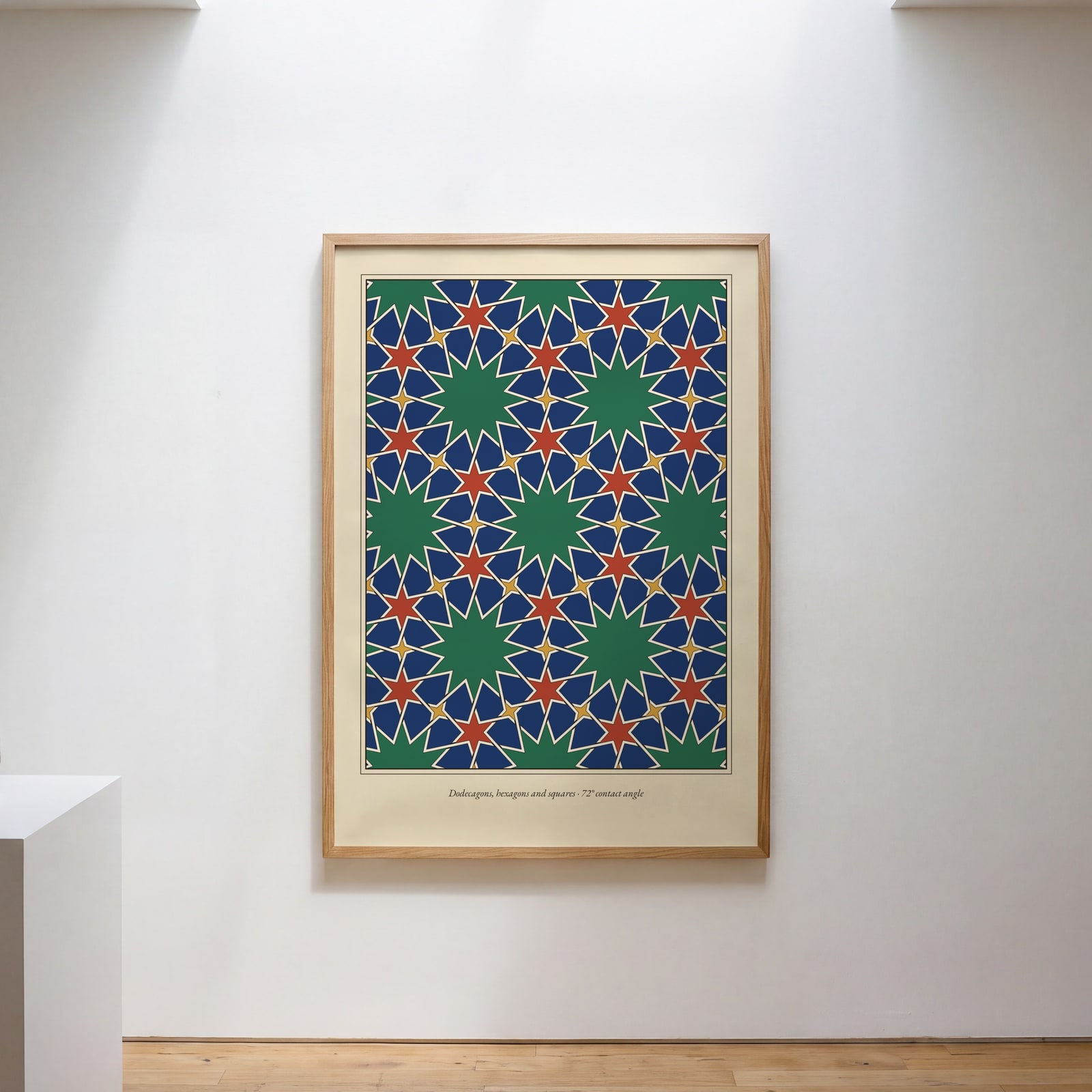 Star pattern drawn by Hankin's method on a tiling of dodecagons, hexagons and squaresEdit this →
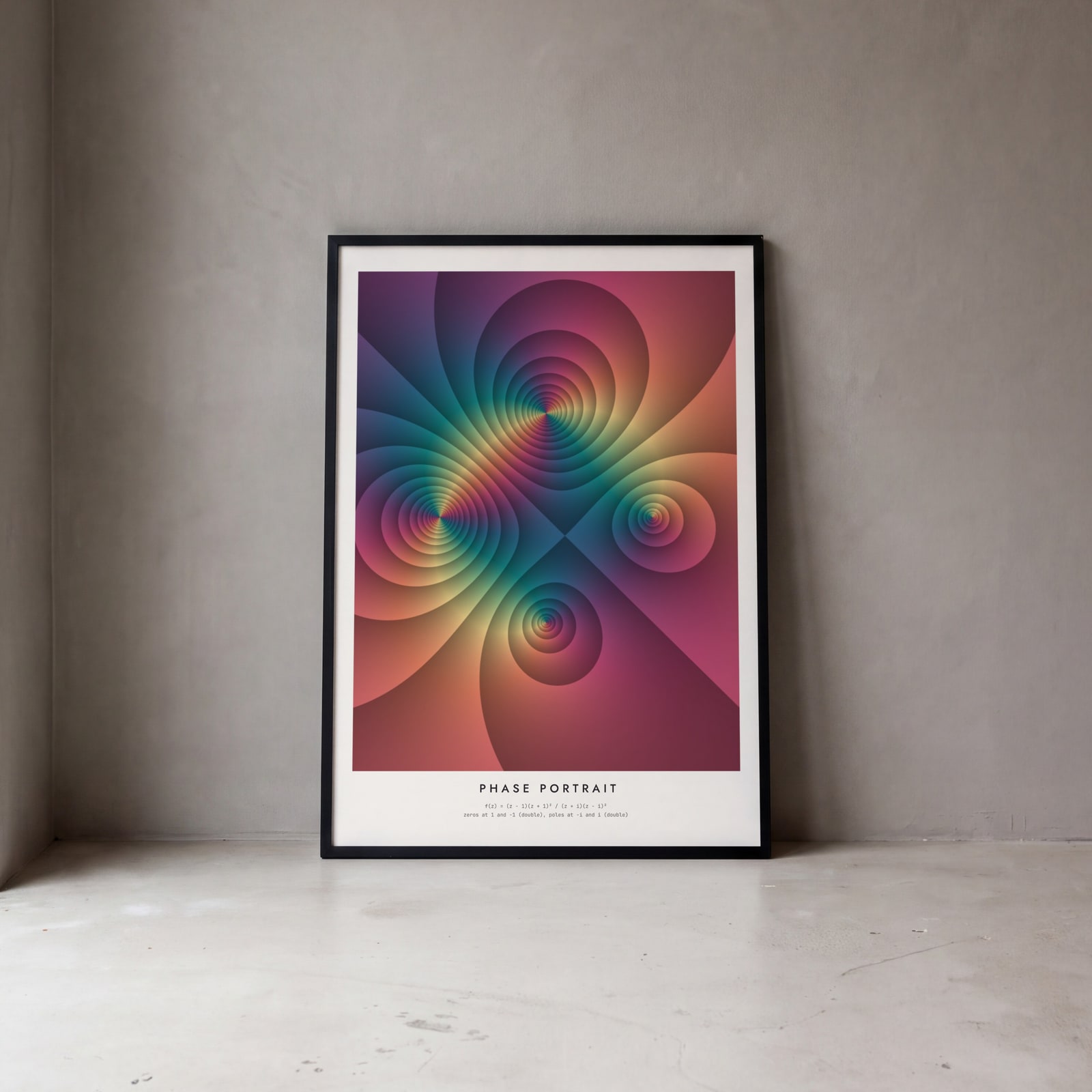 Phase portrait of (z − 1)(z + 1)² / (z + i)(z − i)², every color meeting at a zero or a poleEdit this →
Examples
Open any of them to change the words, the place, the date and the style, then download the print file.
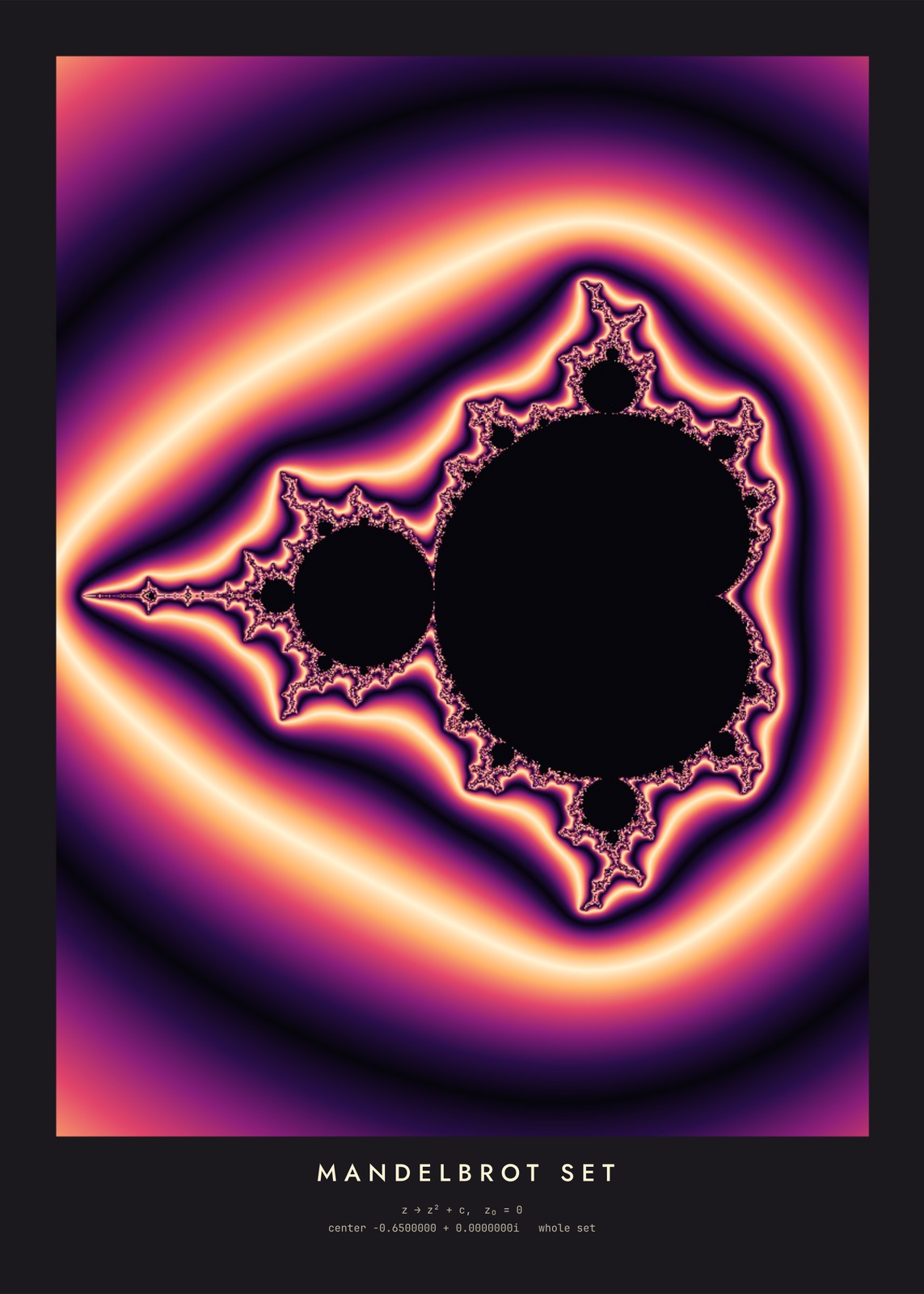 The whole Mandelbrot set ringed in glowing pink and violet bands, with its formula under itEdit this →More mandelbrot set poster →
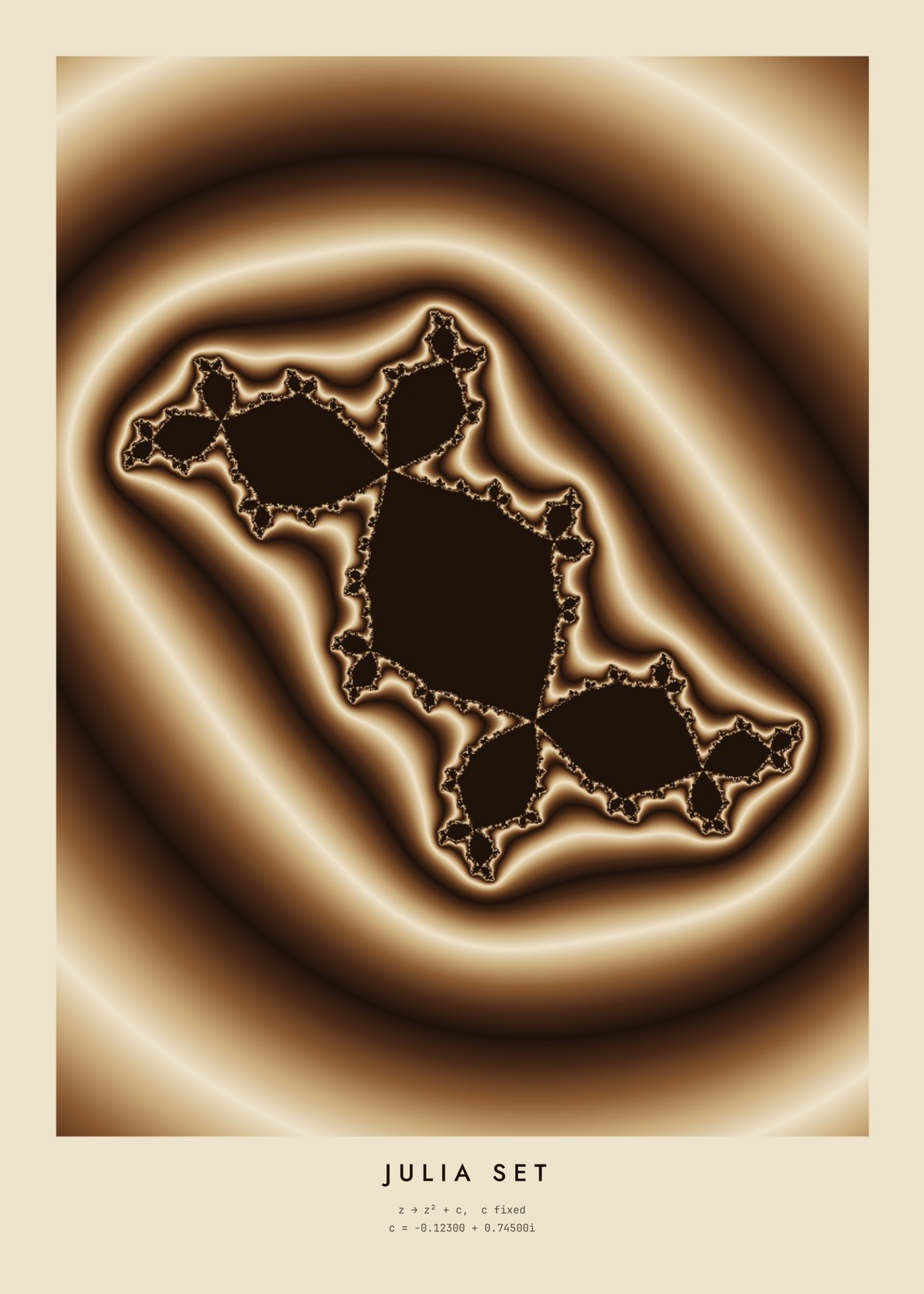 The Julia set for c = −0.123 + 0.745i, known as Douady's rabbitEdit this →More mandelbrot set poster →
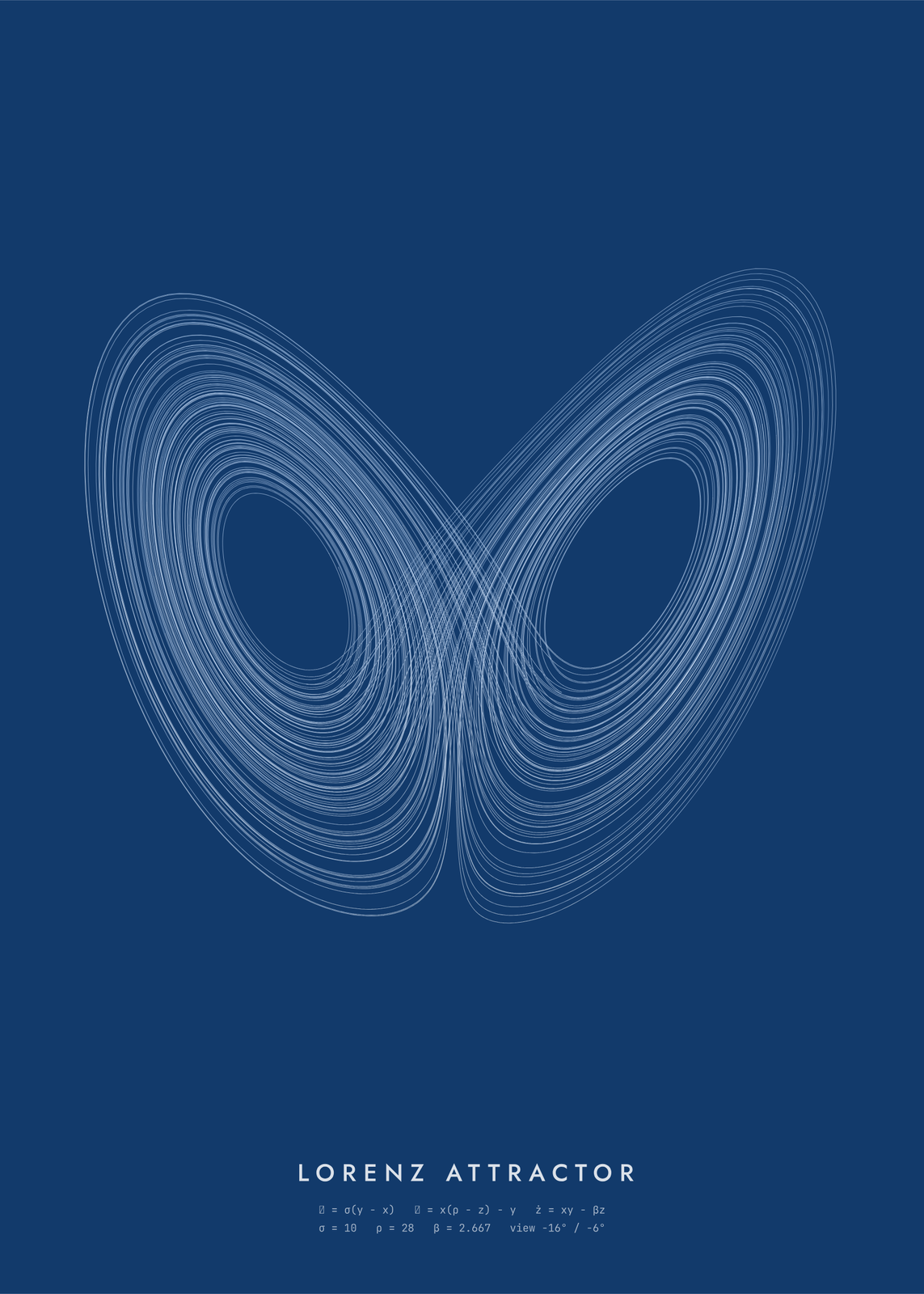 The Lorenz attractor traced in fine pen linesEdit this →More strange attractor art →
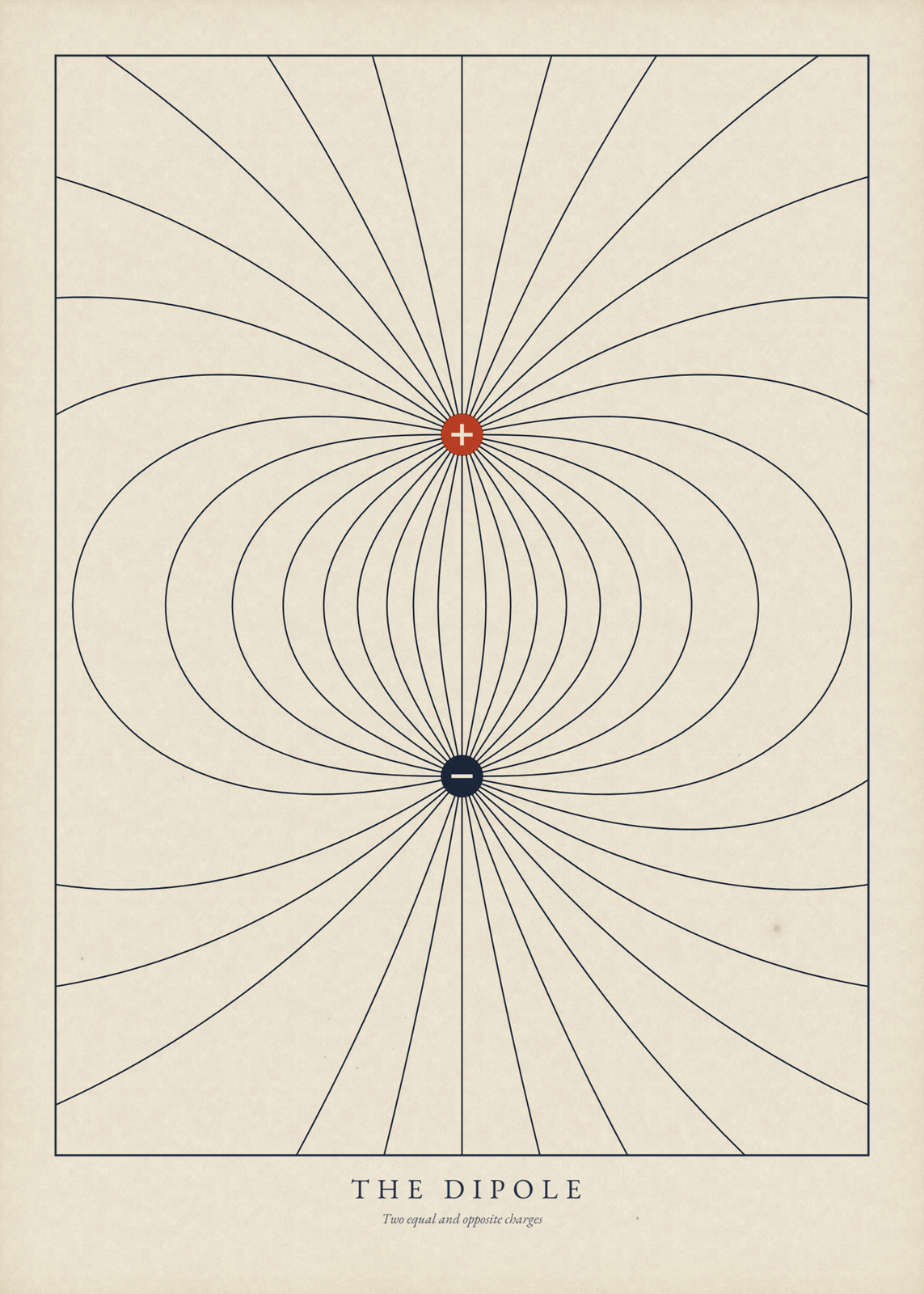 Field lines of an electric dipole in navy, arcing from a red plus charge to a minus one on a cream plateEdit this →More physics art →
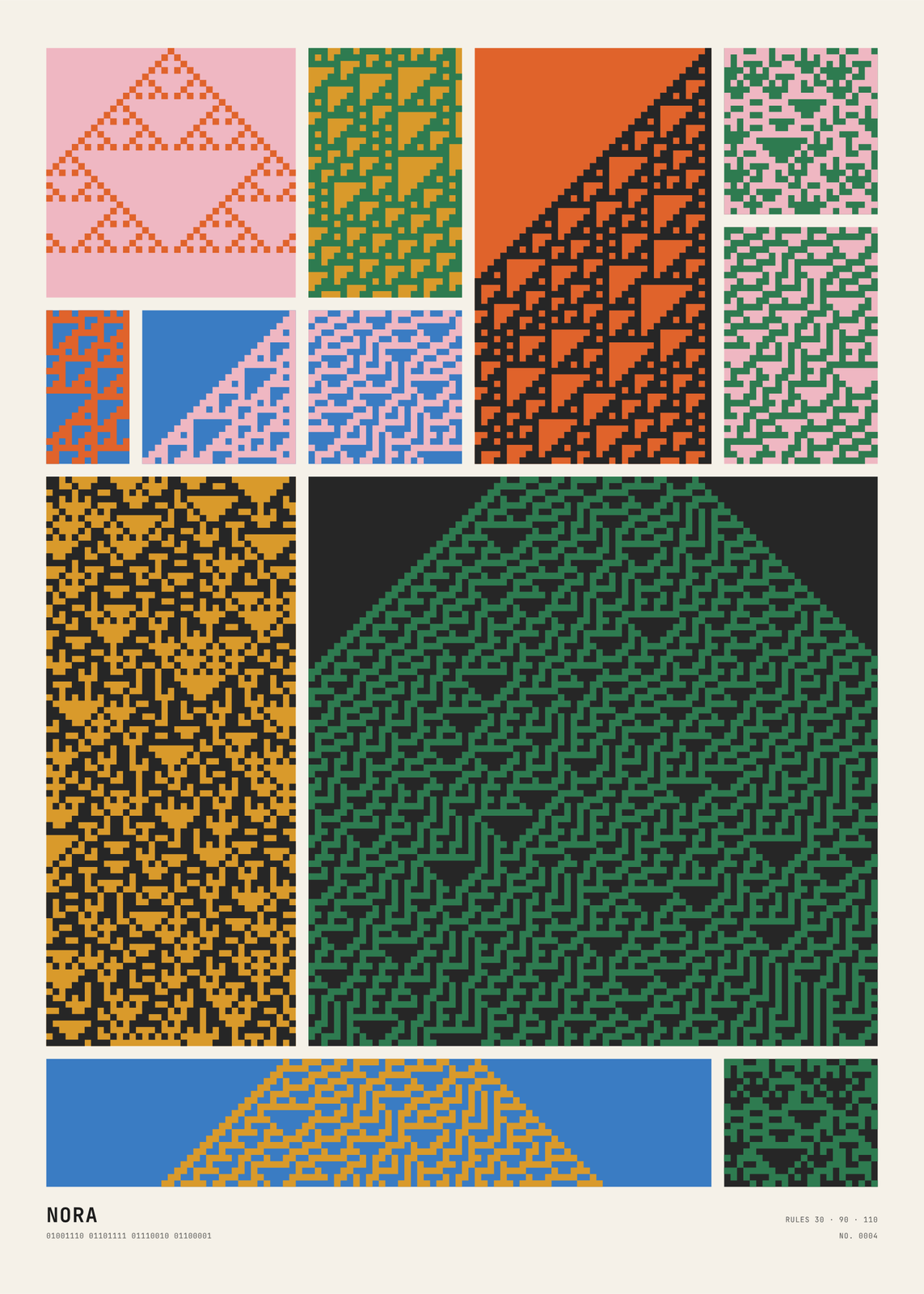 Panels of cellular automata Rules 30, 90 and 110, grown from the name Nora written in bitsEdit this →More cellular automata poster →
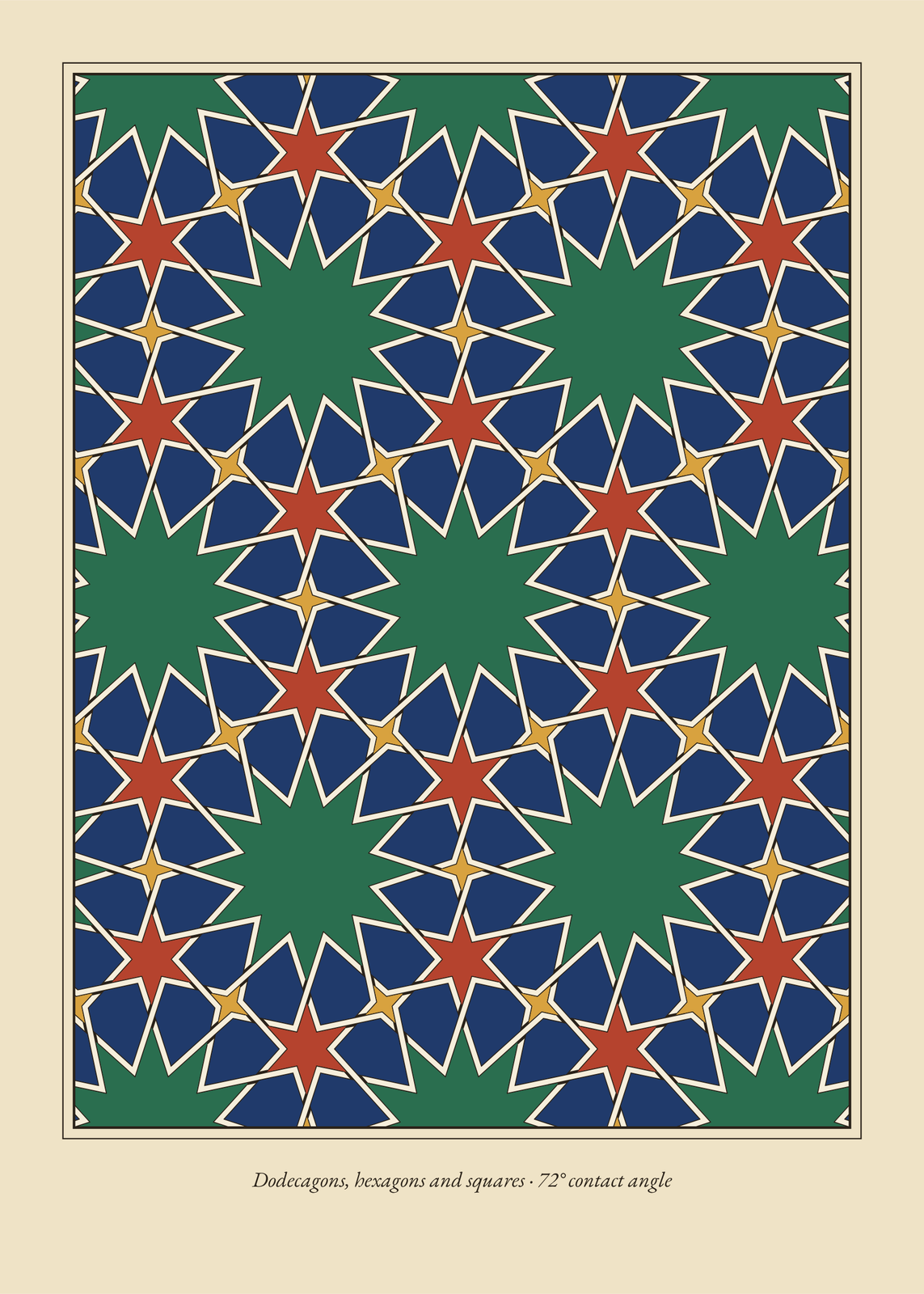 Star pattern drawn by Hankin's method on a tiling of dodecagons, hexagons and squaresEdit this →More islamic geometric patterns →
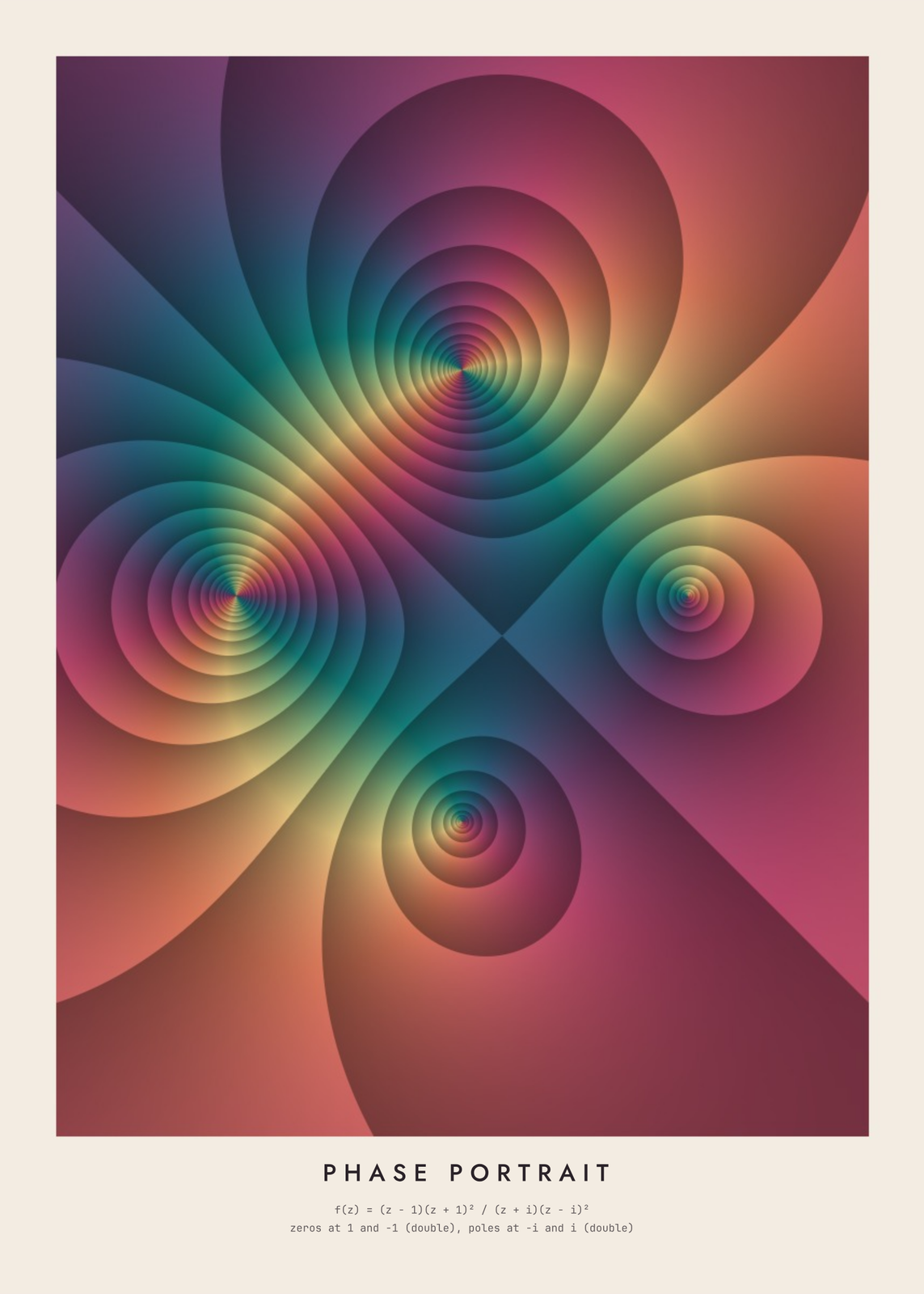 Phase portrait of (z − 1)(z + 1)² / (z + i)(z − i)², every color meeting at a zero or a poleEdit this →More mandelbrot set poster →
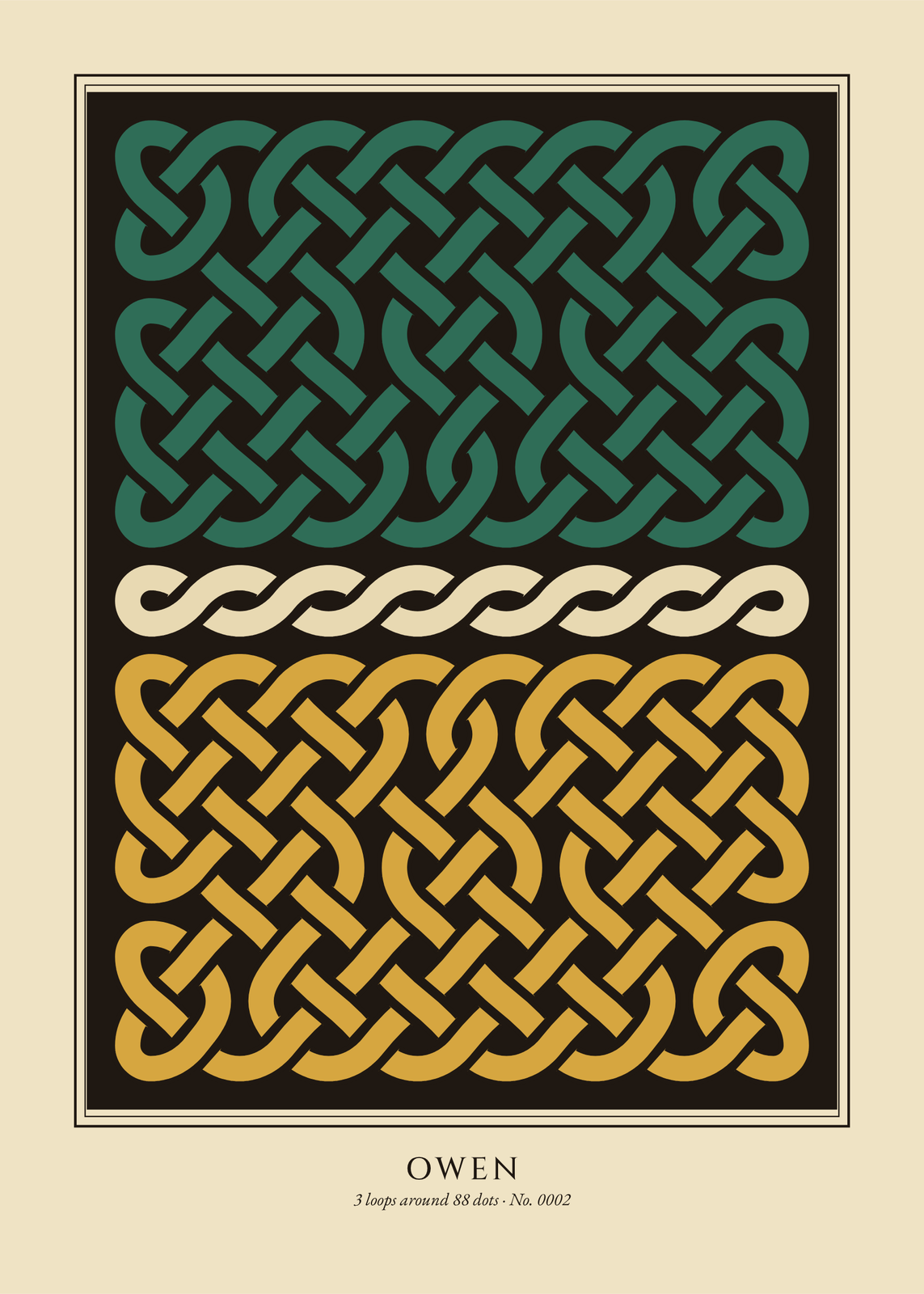 Celtic knot drawn as a mirror curve round a grid of dots, its breaks picked by the name OwenEdit this →More celtic knot art →
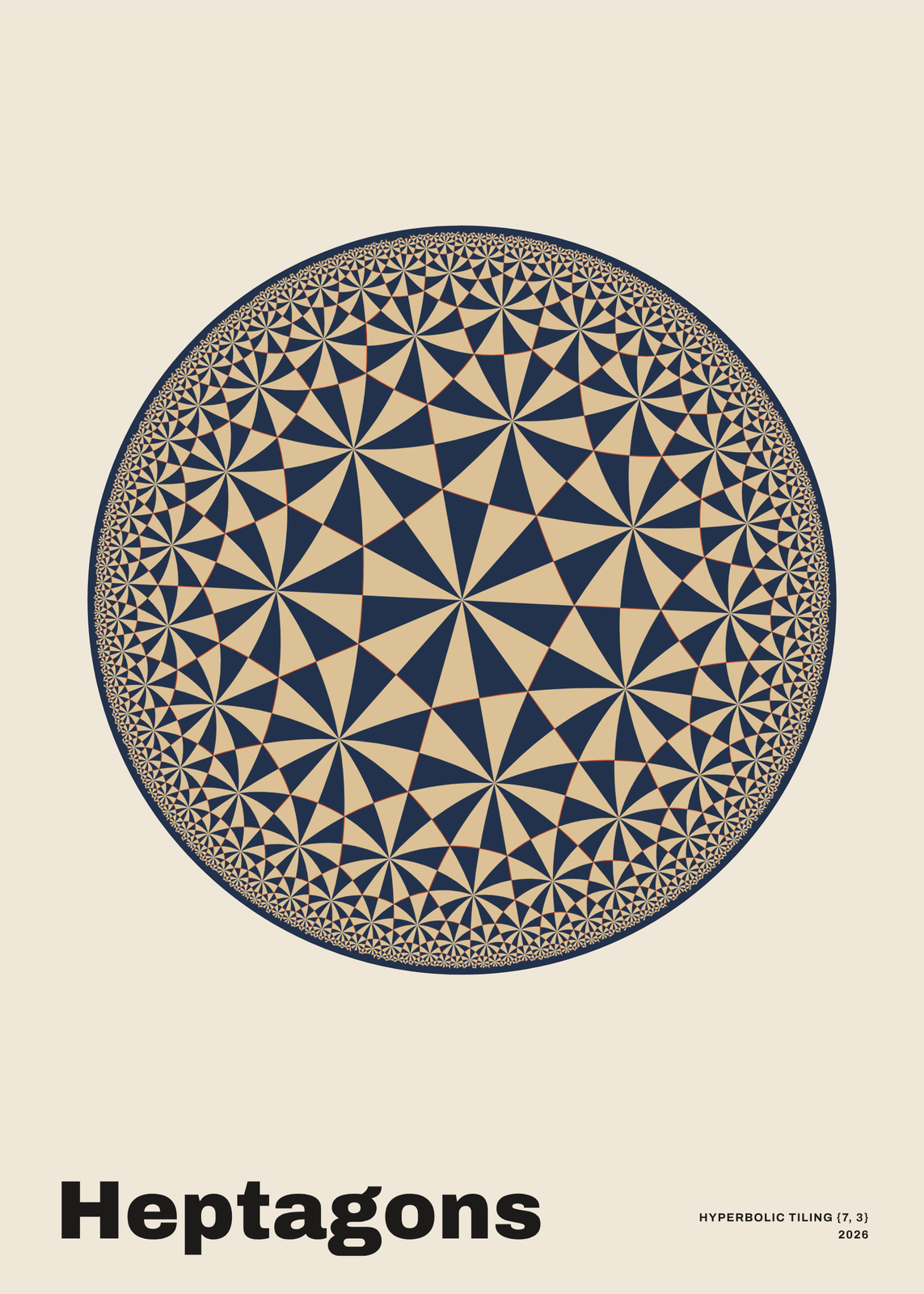 Hyperbolic tiling of heptagons, three at every corner, in the Poincaré discEdit this →More abstract art →
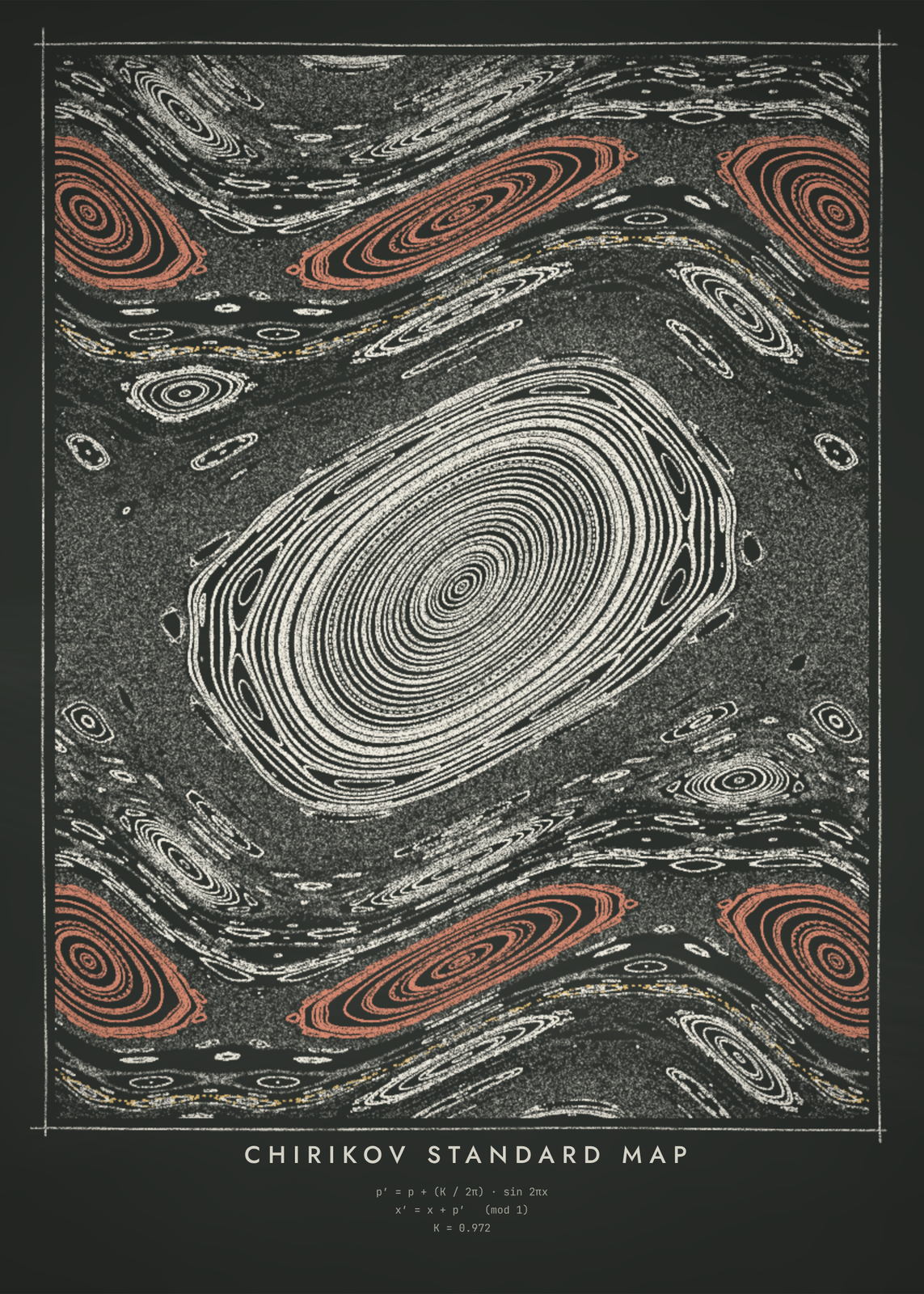 Chirikov's standard map at the critical kick, islands in a chaotic sea, in chalkEdit this →More strange attractor art →
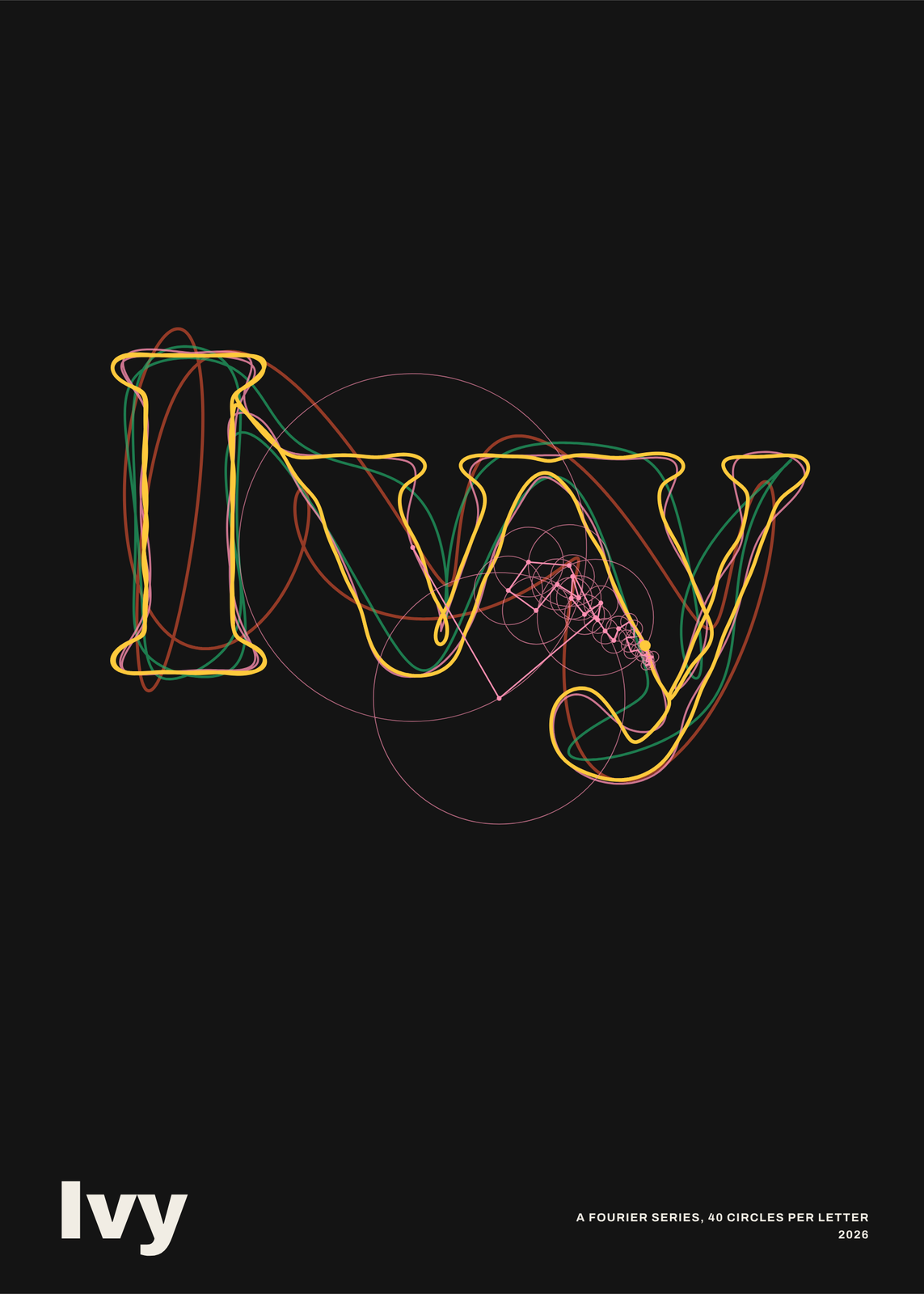 The name Ivy drawn by a chain of turning circles, the terms of its Fourier seriesEdit this →More abstract art →
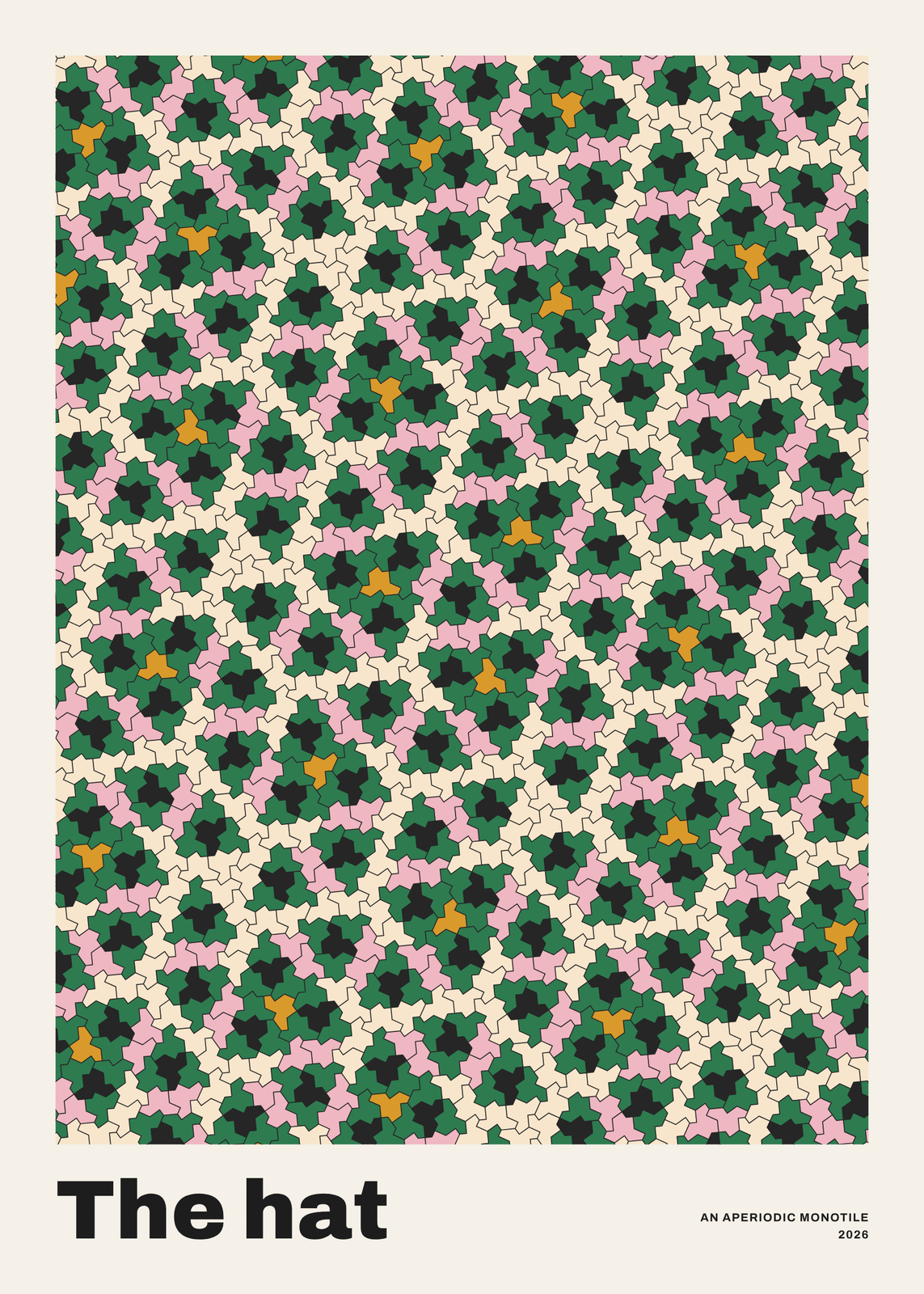 The hat: the single tile, announced in 2023, that covers the plane without ever repeatingEdit this →More abstract art →
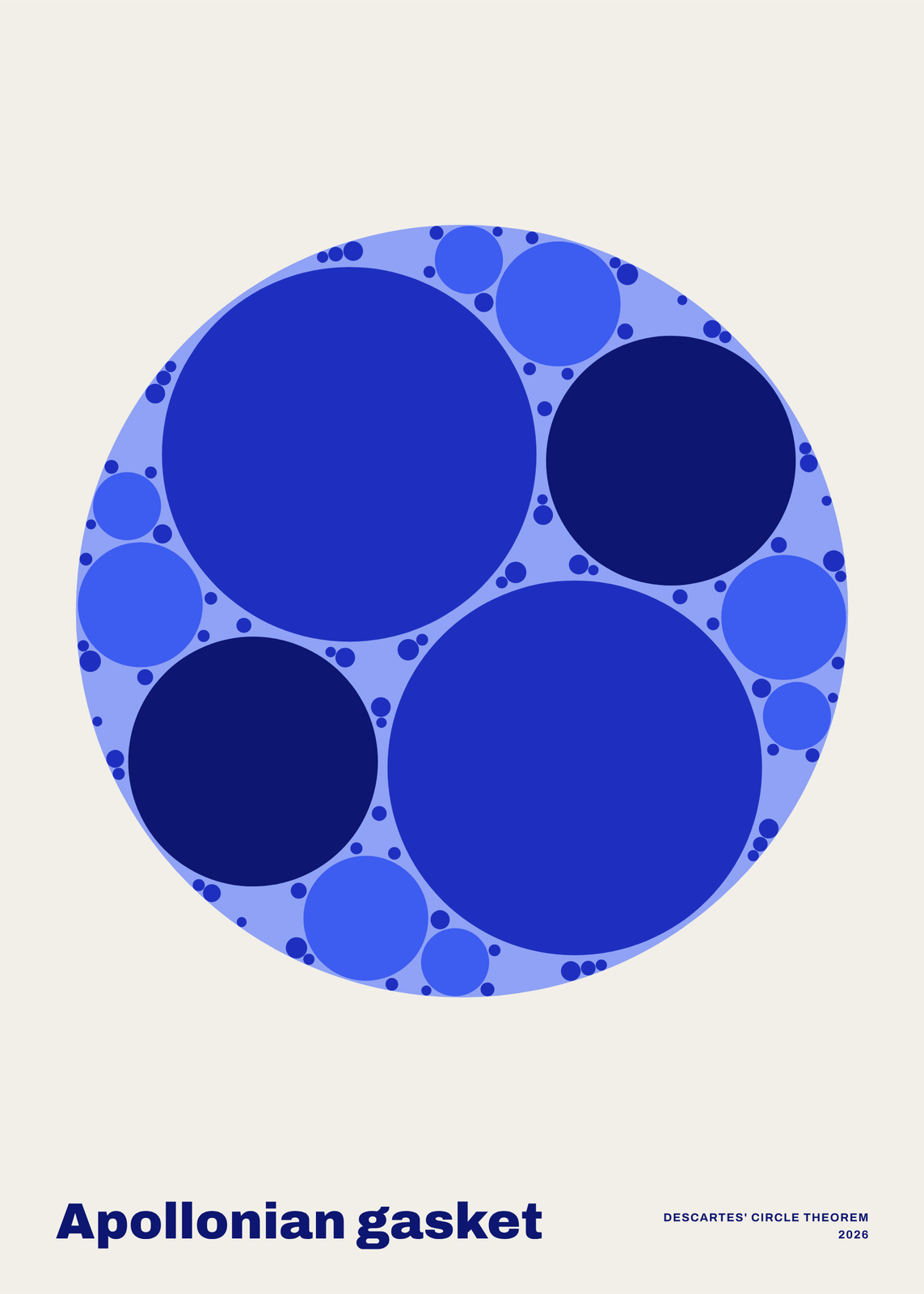 Apollonian gasket: circles inside a circle, each touching three othersEdit this →More abstract art →
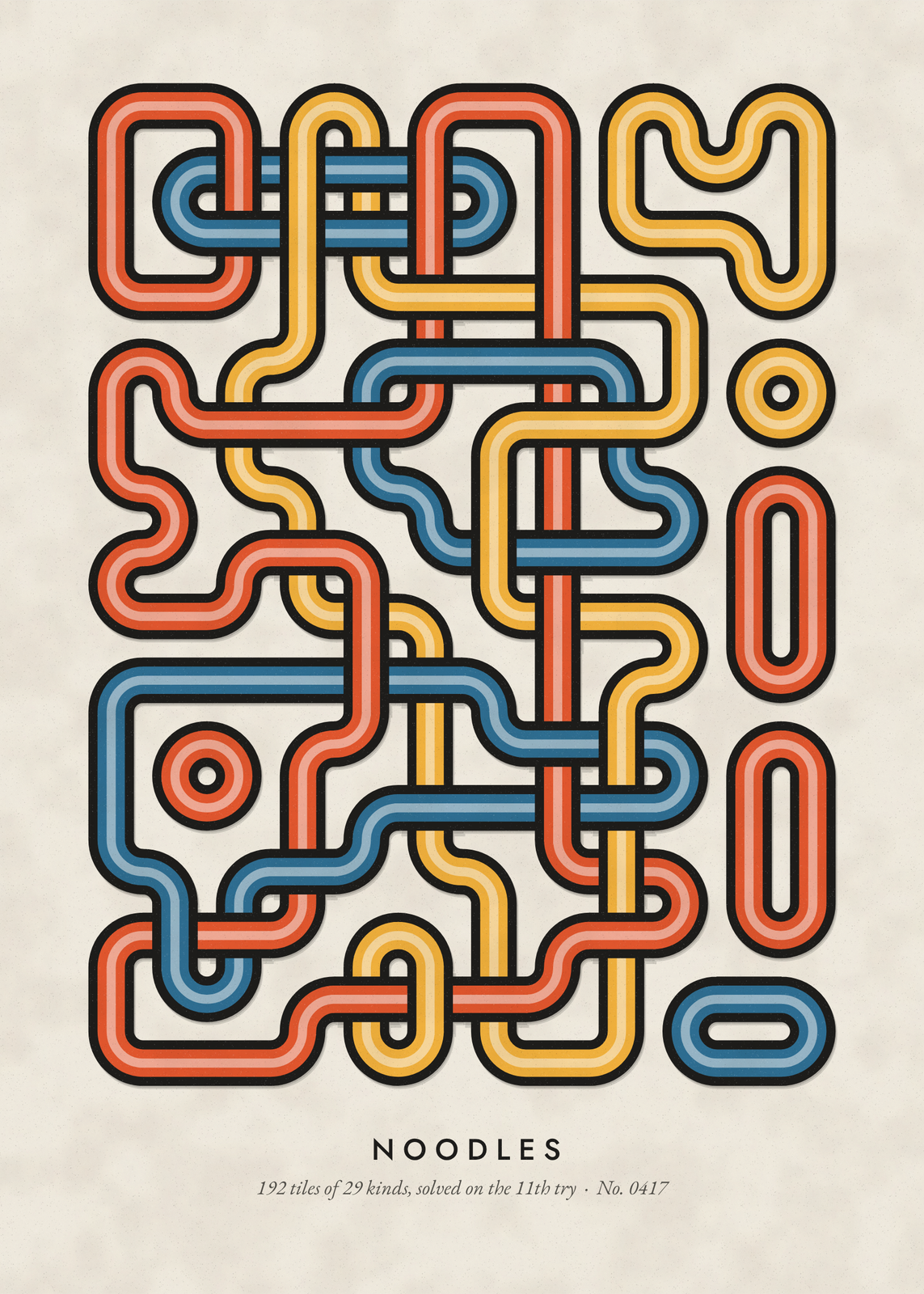 Noodle tiles fitted edge to edge by wave function collapse, in studio colorsEdit this →More wave function collapse →
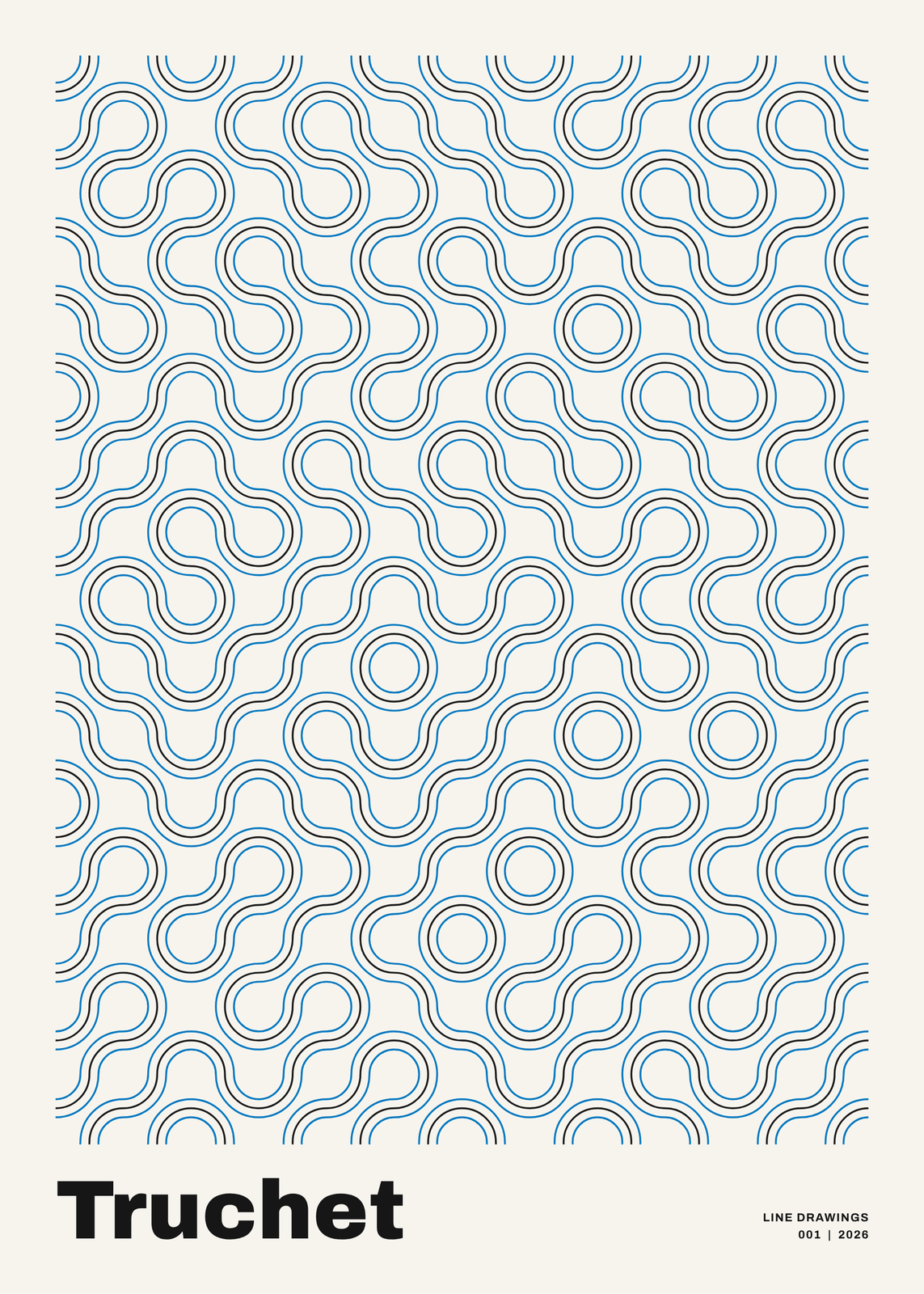 Truchet arcs joined into long winding strands, drawn as pen linesEdit this →More generative art →
More fractals and chaos
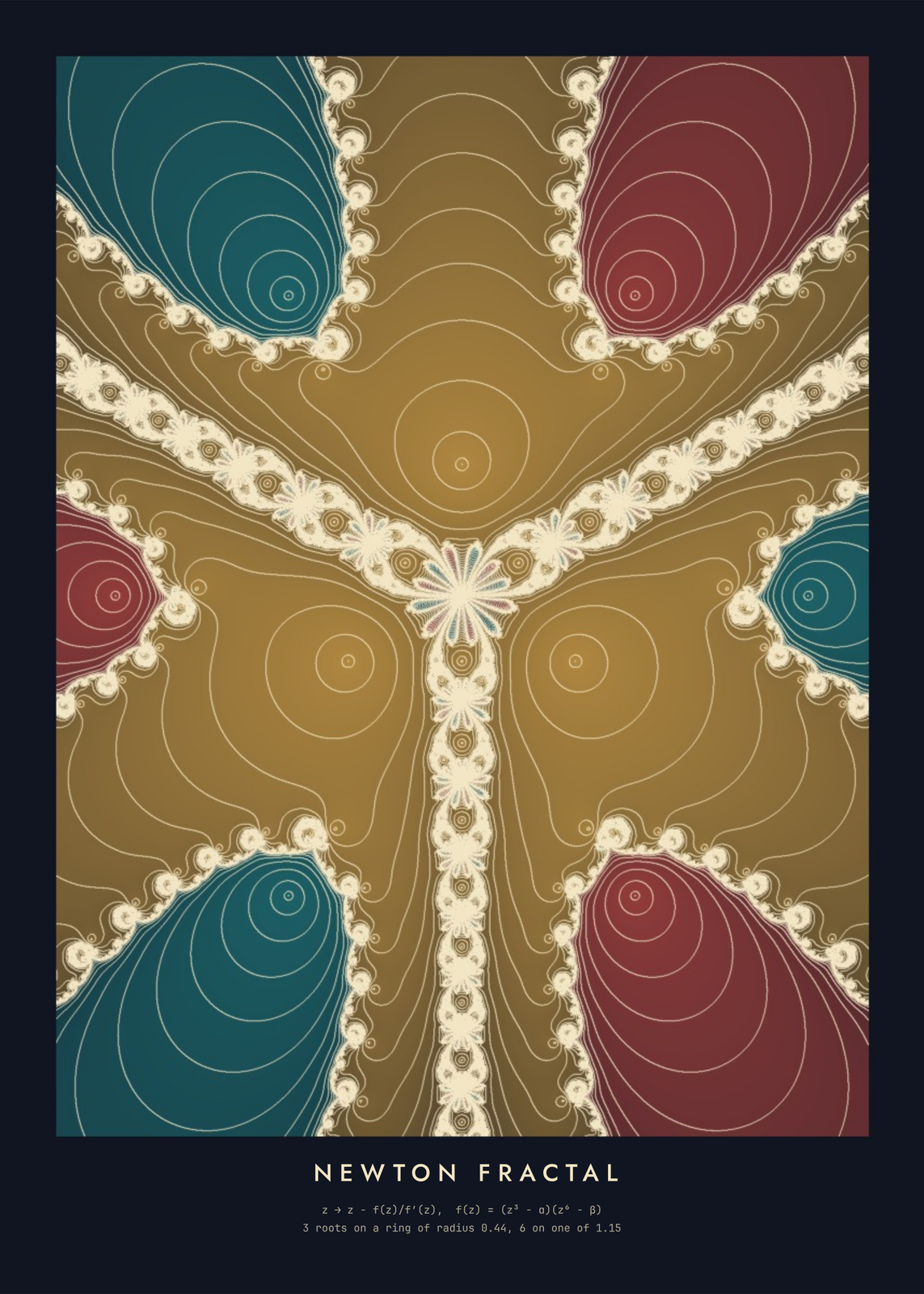 Newton fractal on navy: basins of ochre, teal and red, edged in cream lace where the roots meet, its formula belowEdit this →More mandelbrot set poster →
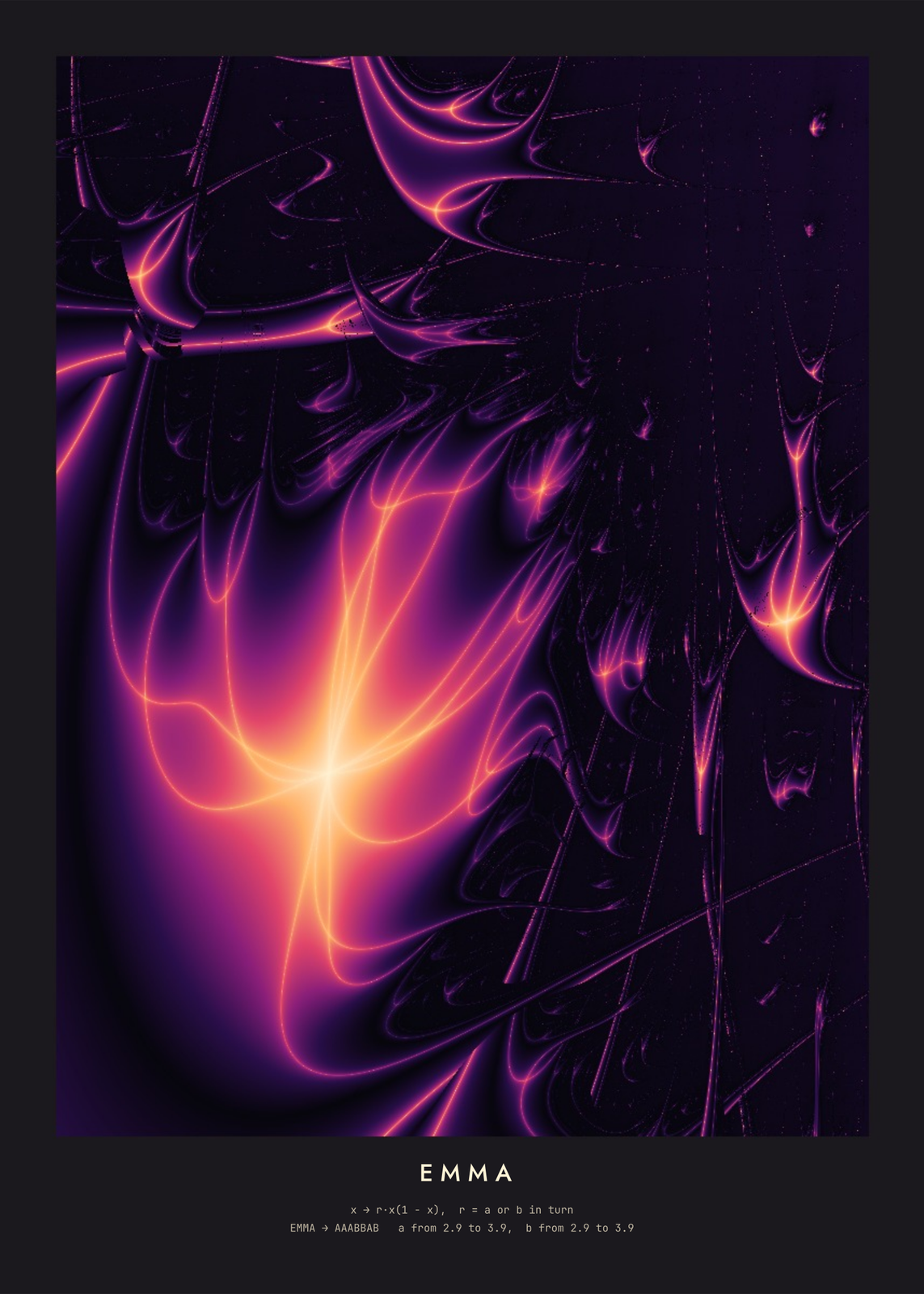 Lyapunov fractal grown from the name Emma: glowing orange and pink veins on deep purple, the name and its A and B sequence belowEdit this →More mandelbrot set poster →
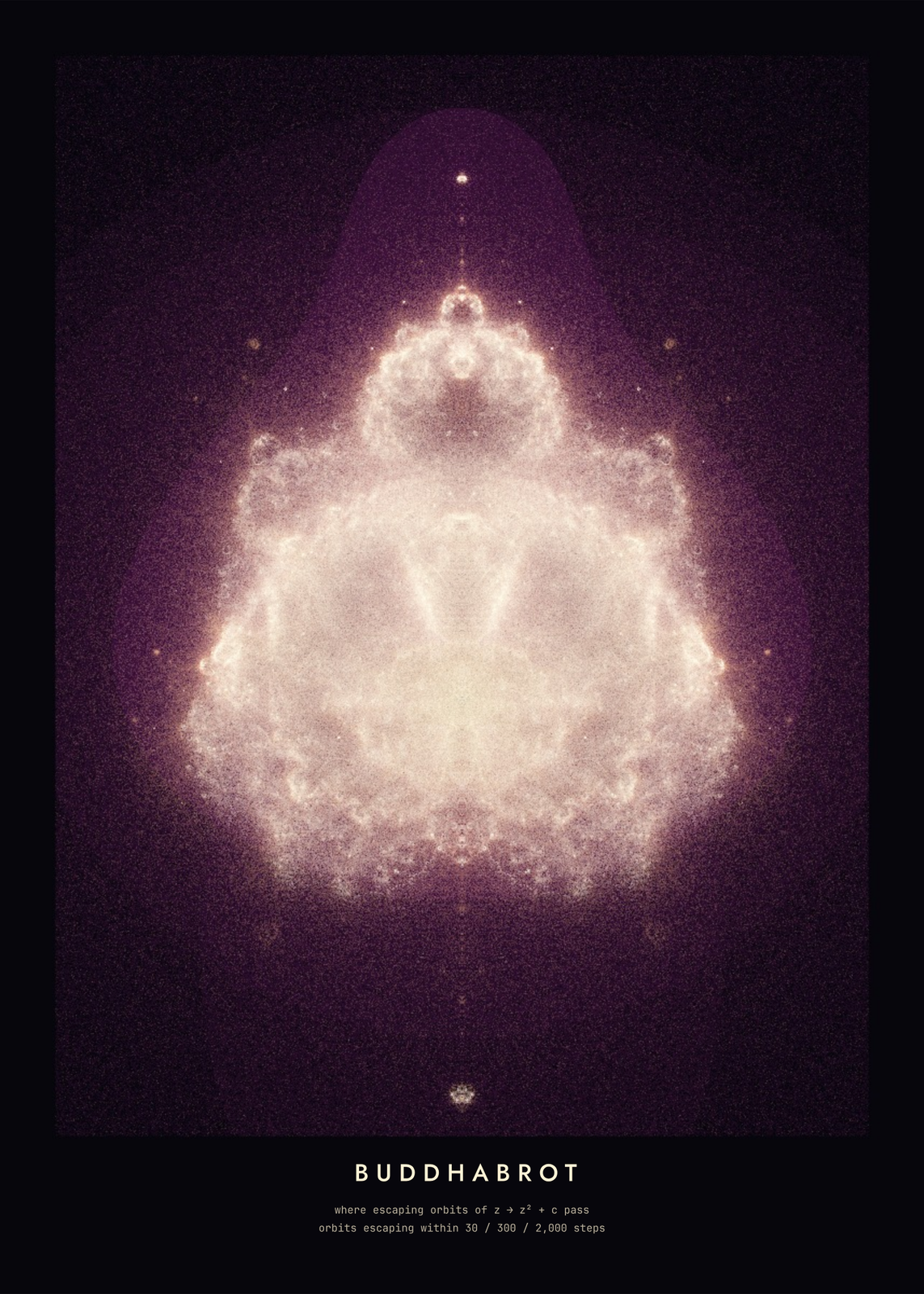 Buddhabrot: the paths of points escaping the Mandelbrot set, glowing pale pink and white on deep plum, captioned with its formulaEdit this →More mandelbrot set poster →
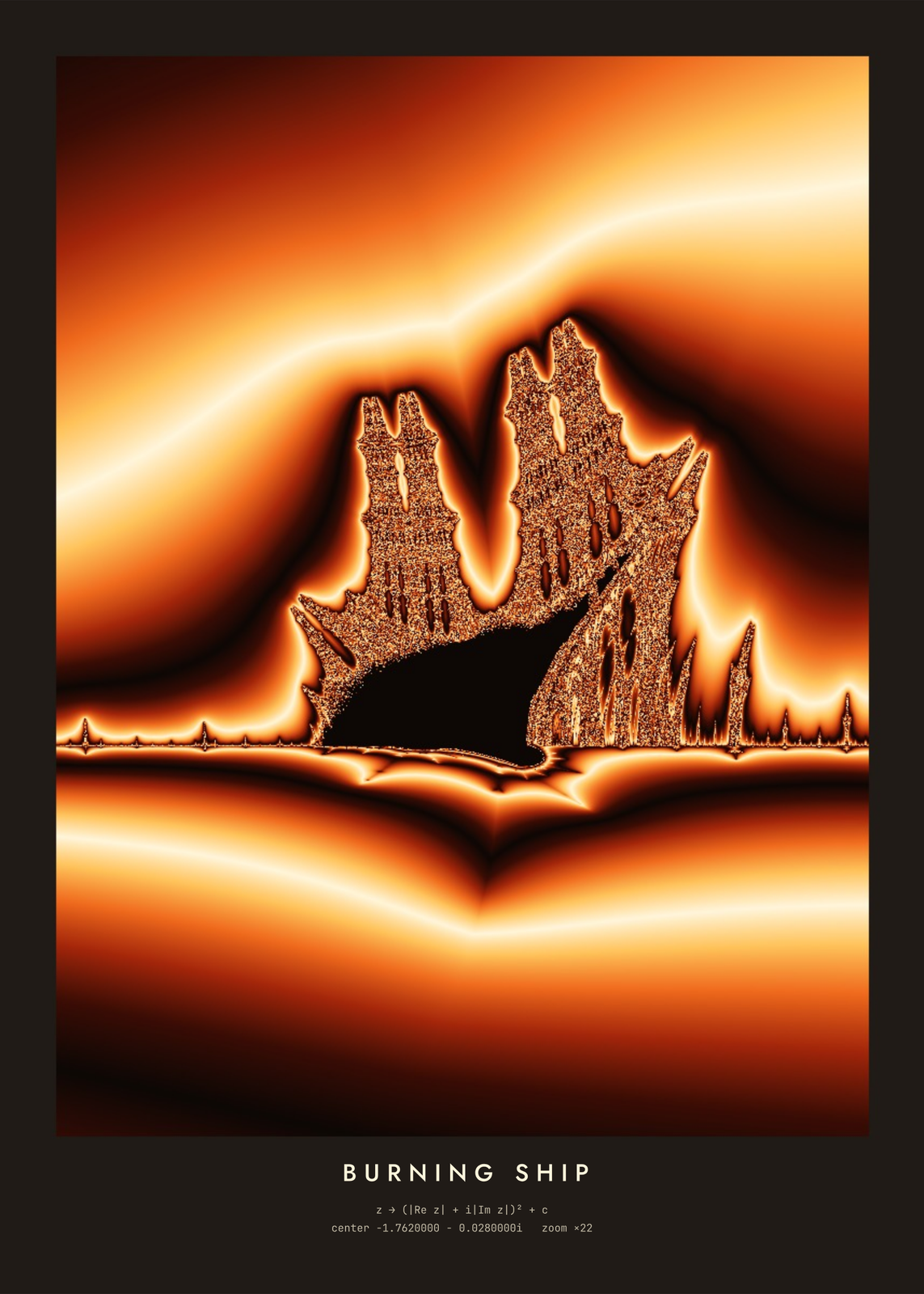 The Burning Ship fractal in bands of orange, black and cream, its jagged hull and masts in the middle, titled Burning ShipEdit this →More mandelbrot set poster →
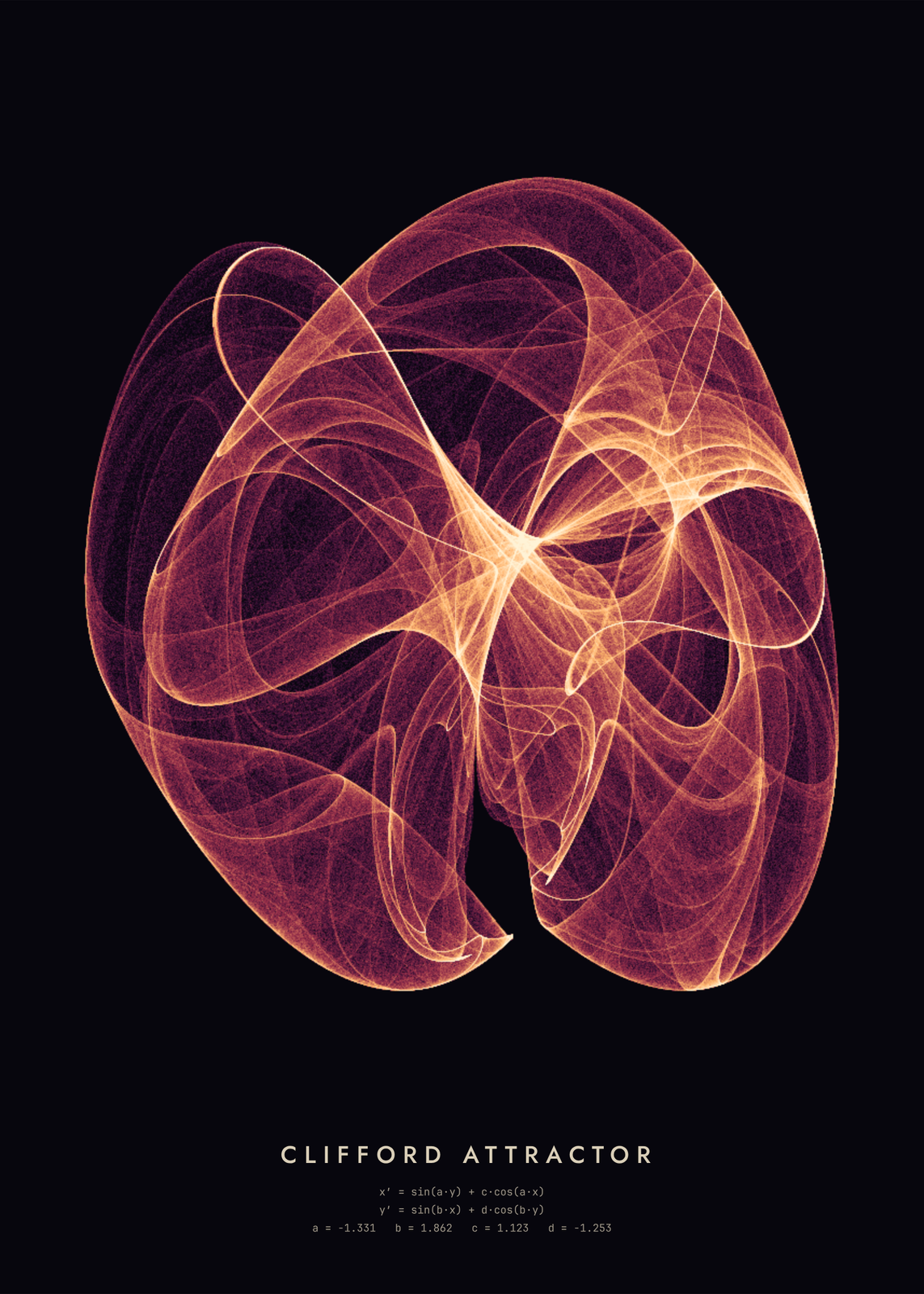 Clifford attractor: millions of points of one map piled into glowing pink and gold folds on black, its equations belowEdit this →More strange attractor art →
Curves a pen plotter draws
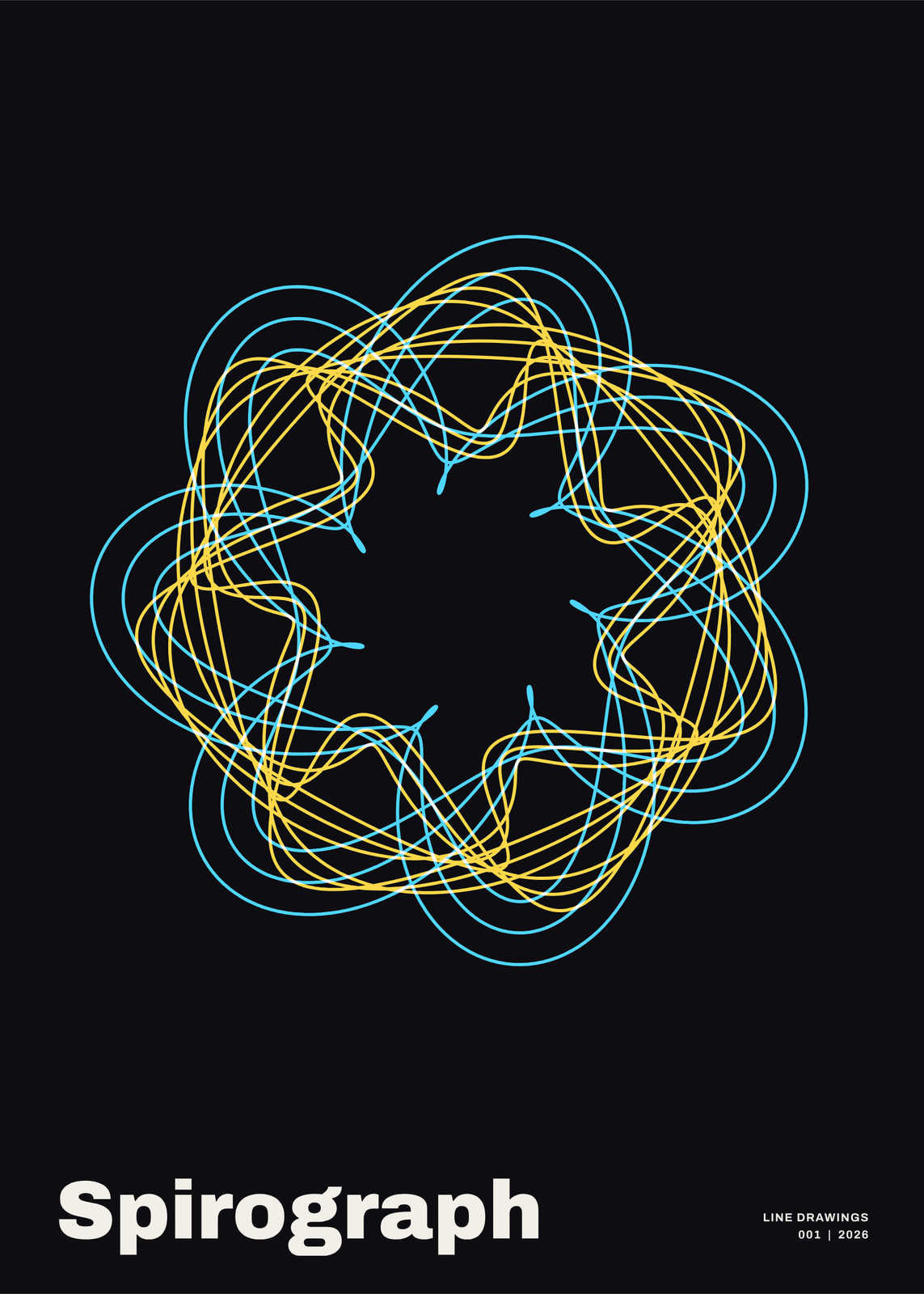 Spirograph rosette of looping blue and gold pen lines on black, titled SpirographEdit this →More generative art →
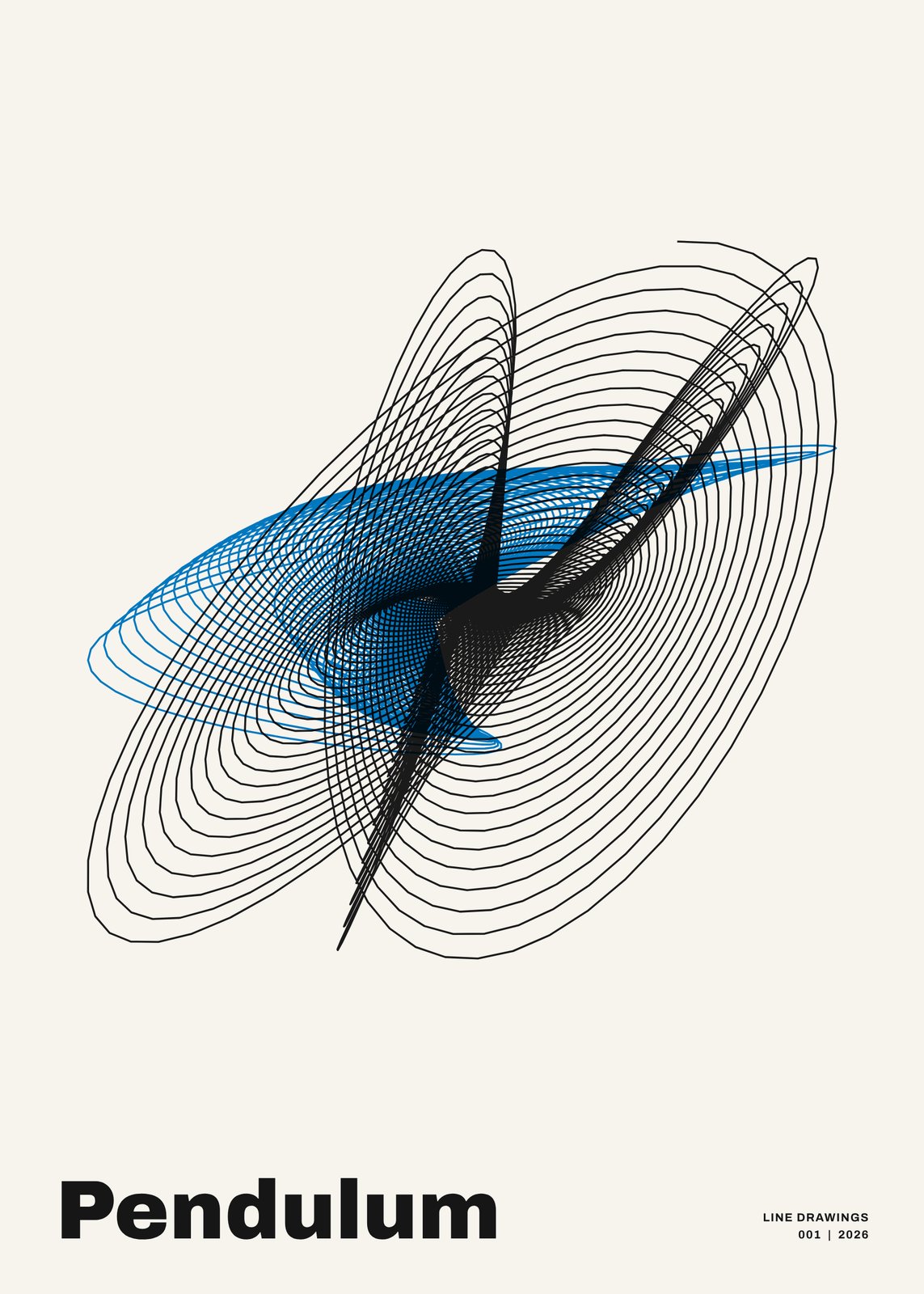 Harmonograph drawing: a swinging pendulum's dying path in nested black and blue ellipses crossing on cream, titled PendulumEdit this →More generative art →
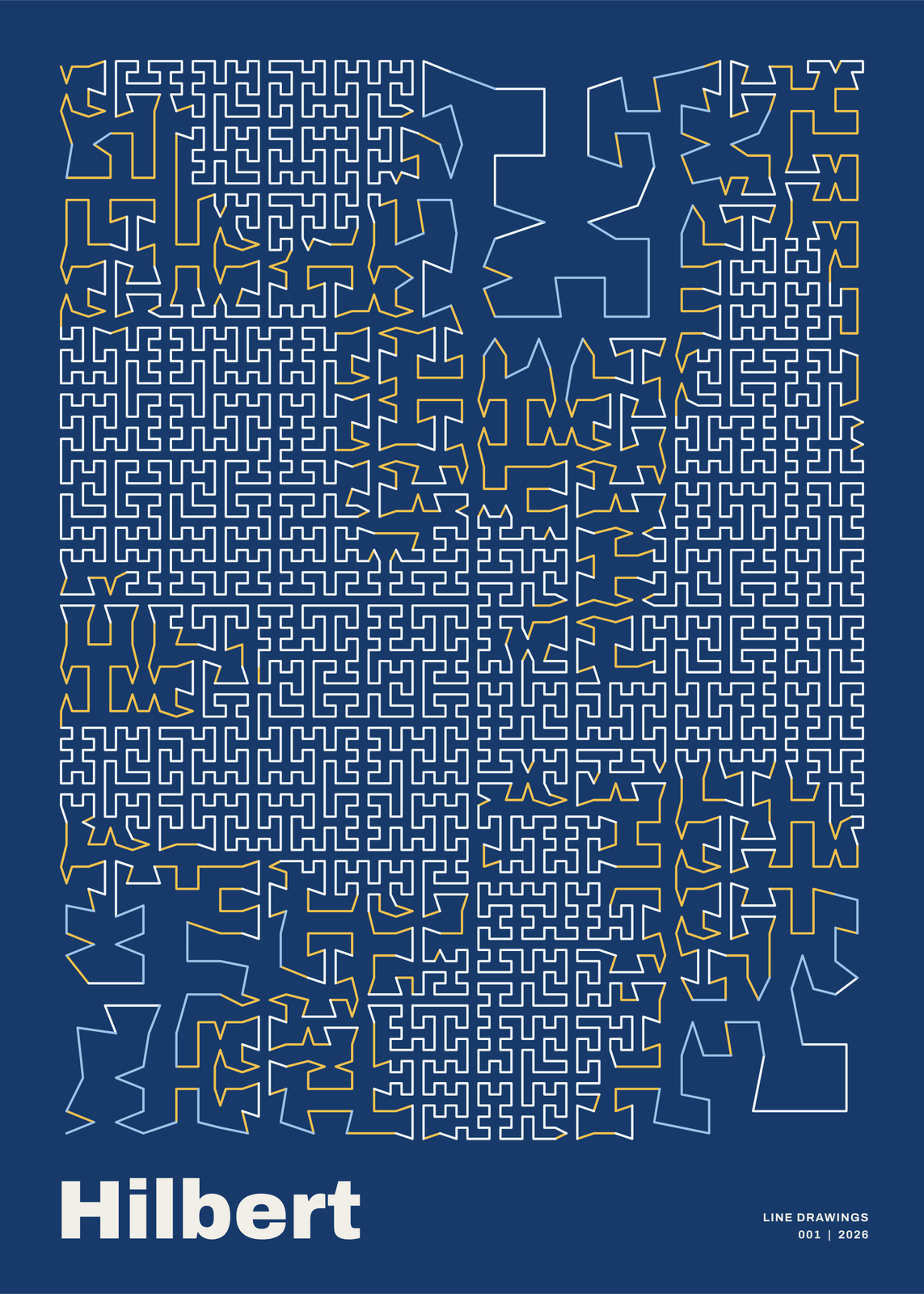 Hilbert curve: one white line folding through every square of a blue sheet, a few runs in gold, titled HilbertEdit this →More generative art →
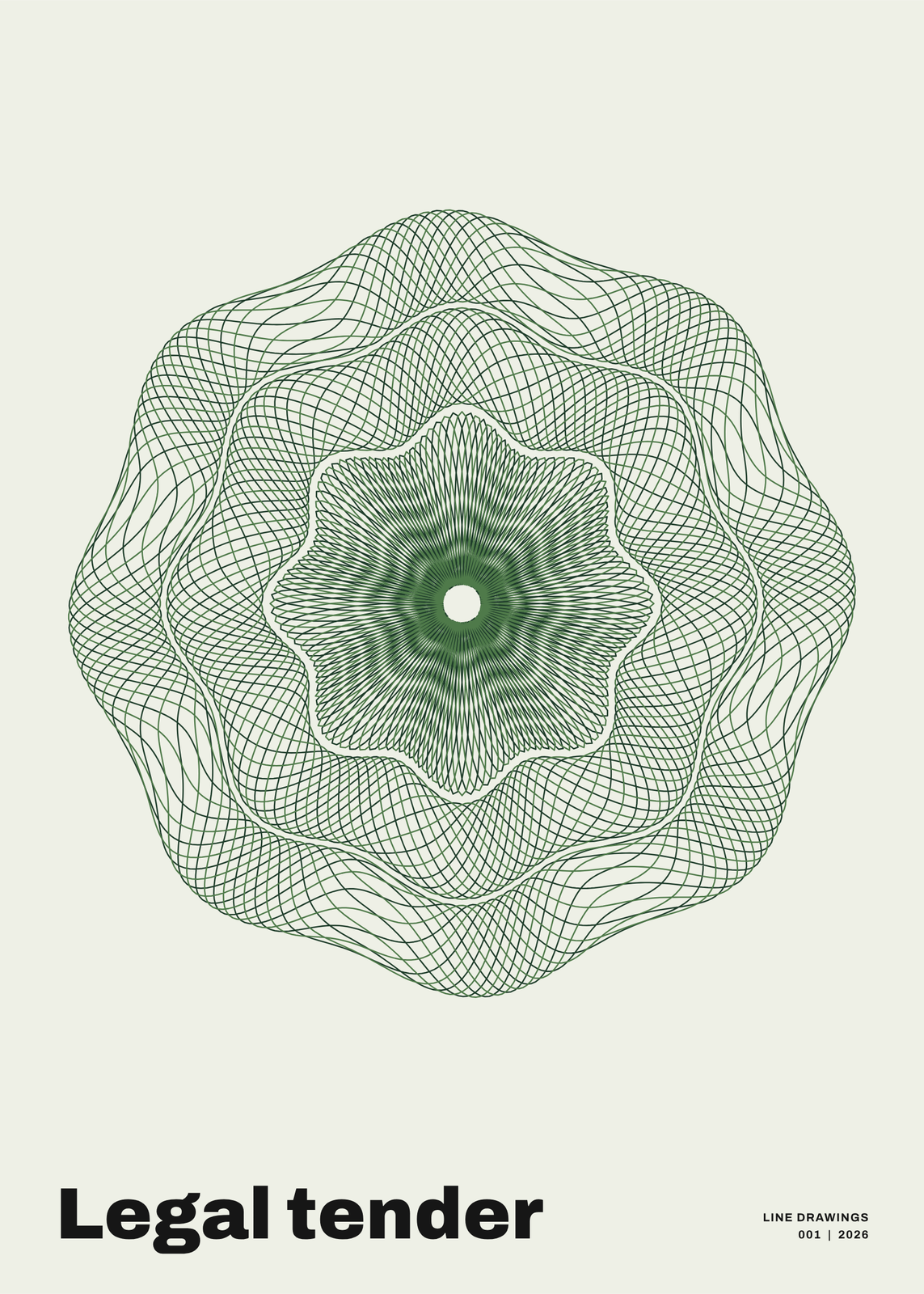 Guilloché rosette like a banknote's: hundreds of fine green wavy rings woven round one center on pale gray, titled Legal tenderEdit this →More generative art →
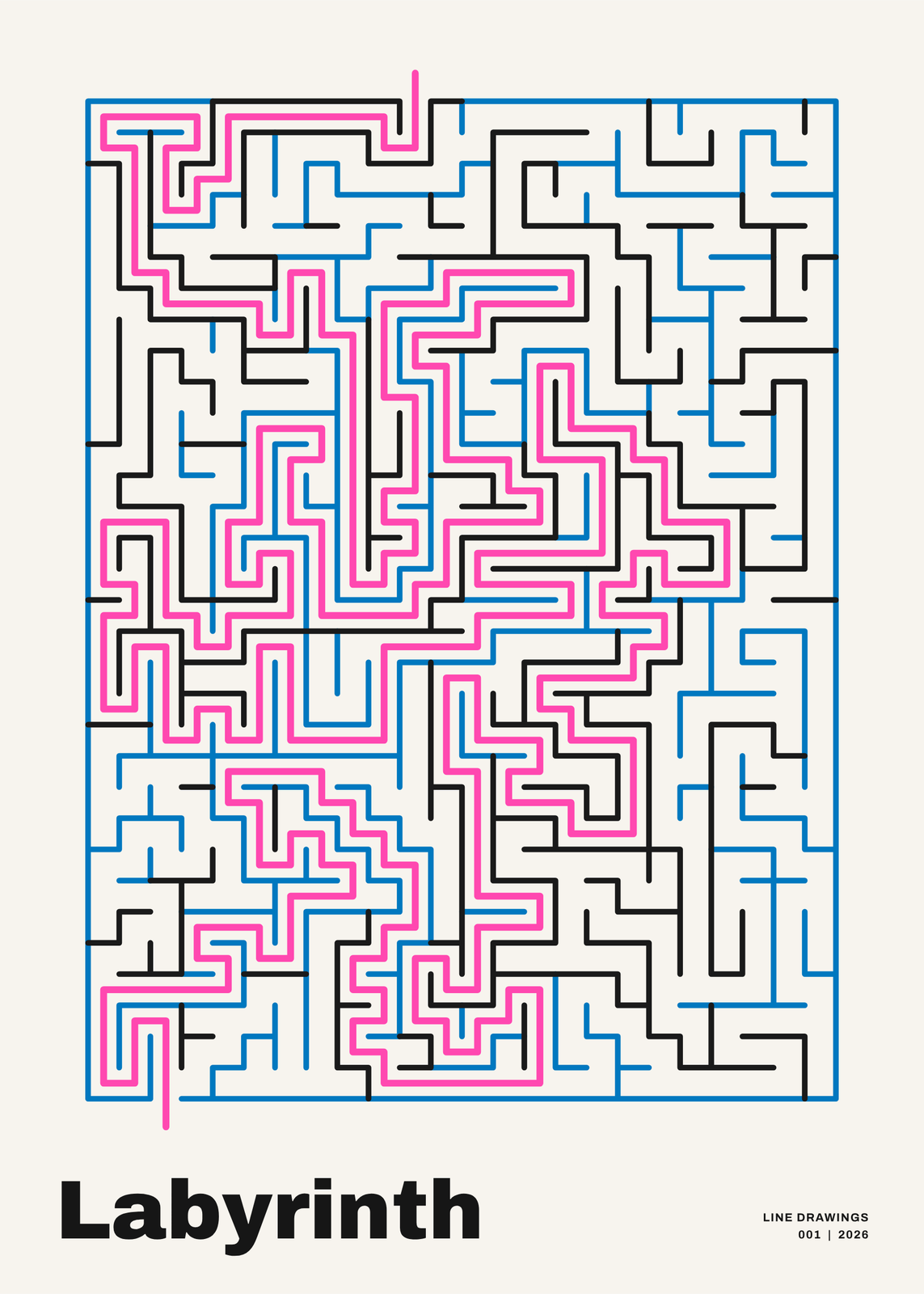 Maze with its solution: black and blue walls on cream, the way through traced in pink, titled LabyrinthEdit this →More generative art →
Growth, signals and drift
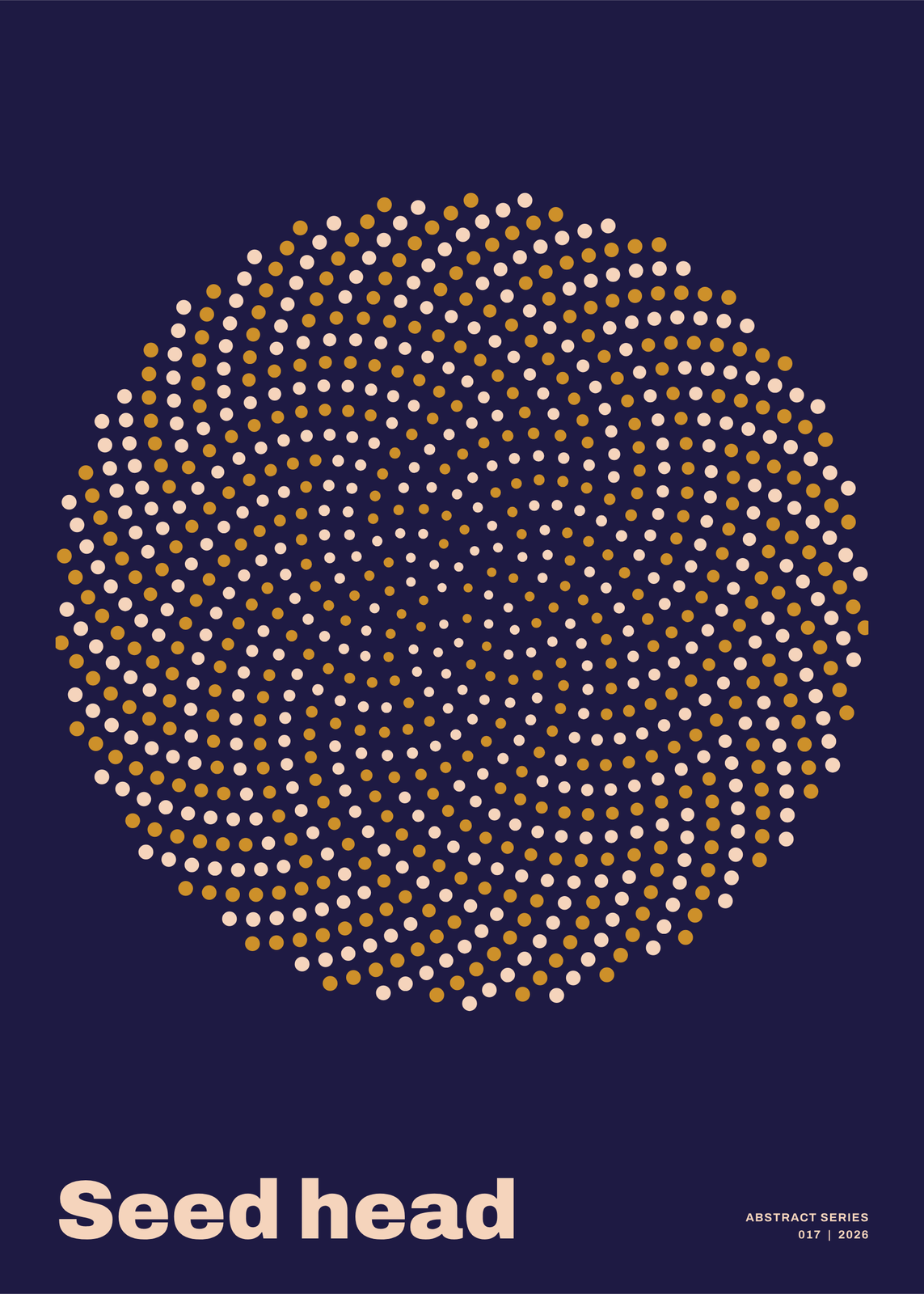 Phyllotaxis: dots set at the golden angle spiral out like a sunflower's seed head, gold and white on indigo, titled Seed headEdit this →More abstract art →
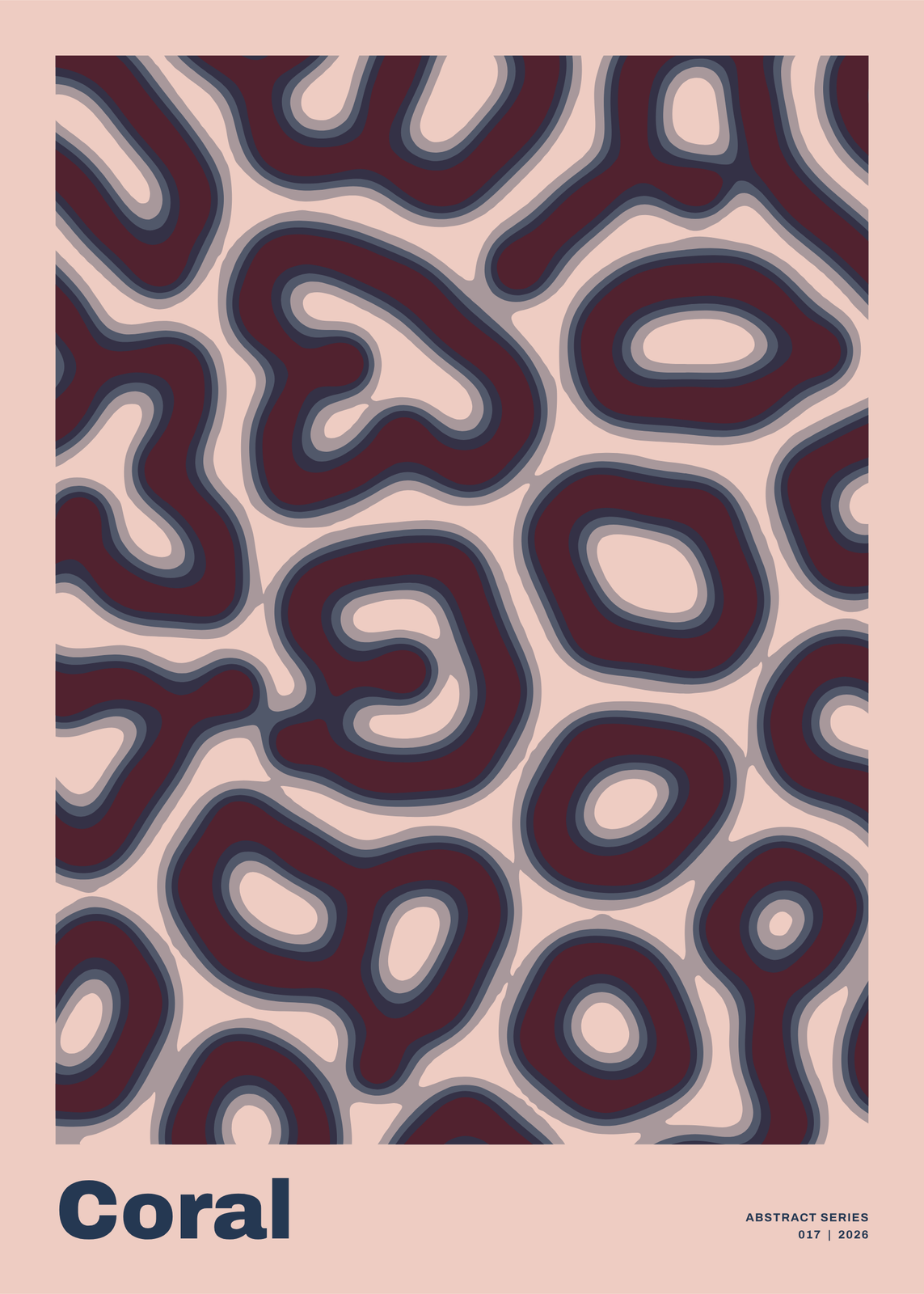 Reaction-diffusion: maroon worm-like stripes edged in slate on pink, the pattern two chemicals make as they spread, titled CoralEdit this →More abstract art →
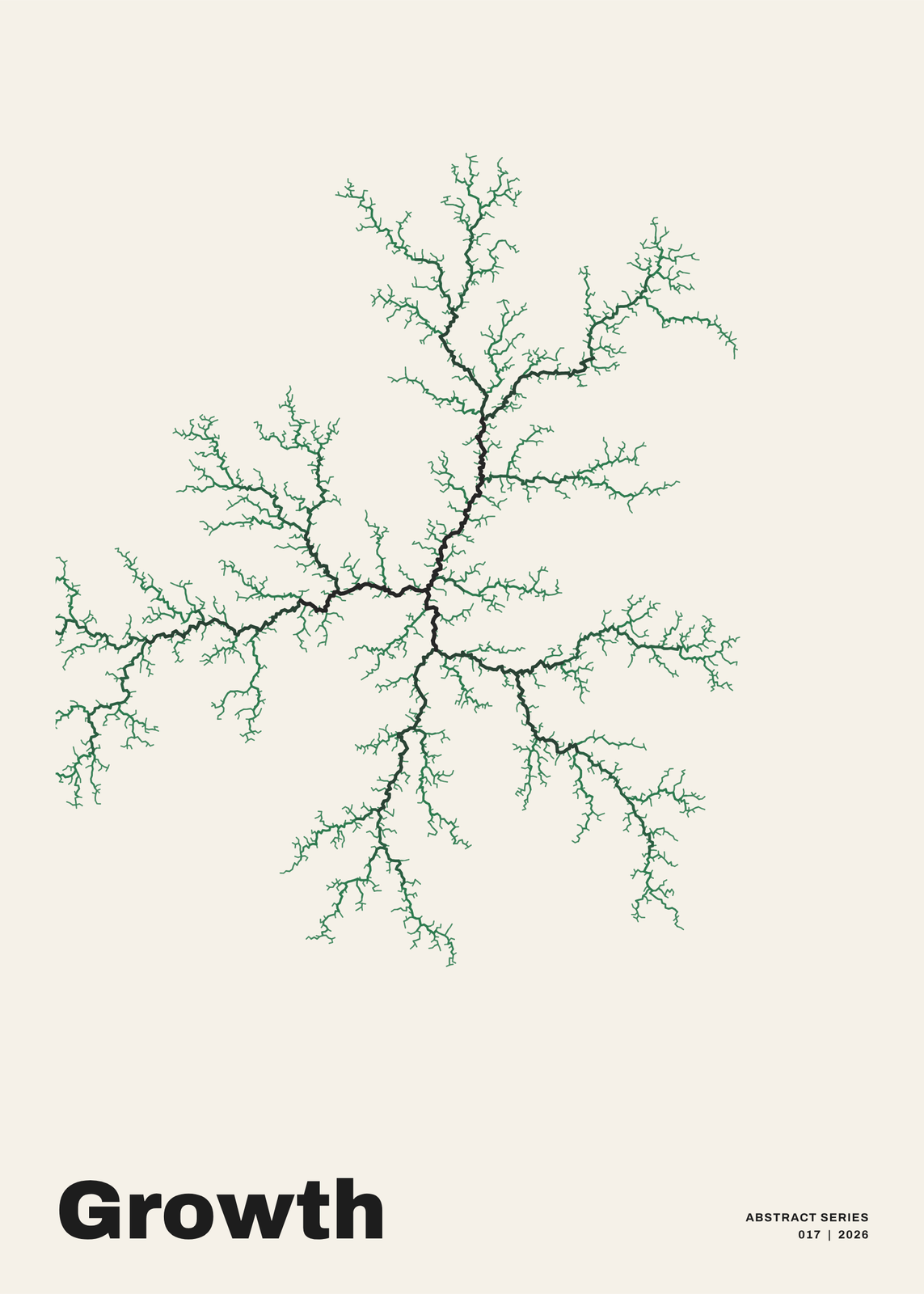 Diffusion-limited aggregation: fine green branches grown from one point, one wandering particle at a time, on cream, titled GrowthEdit this →More abstract art →
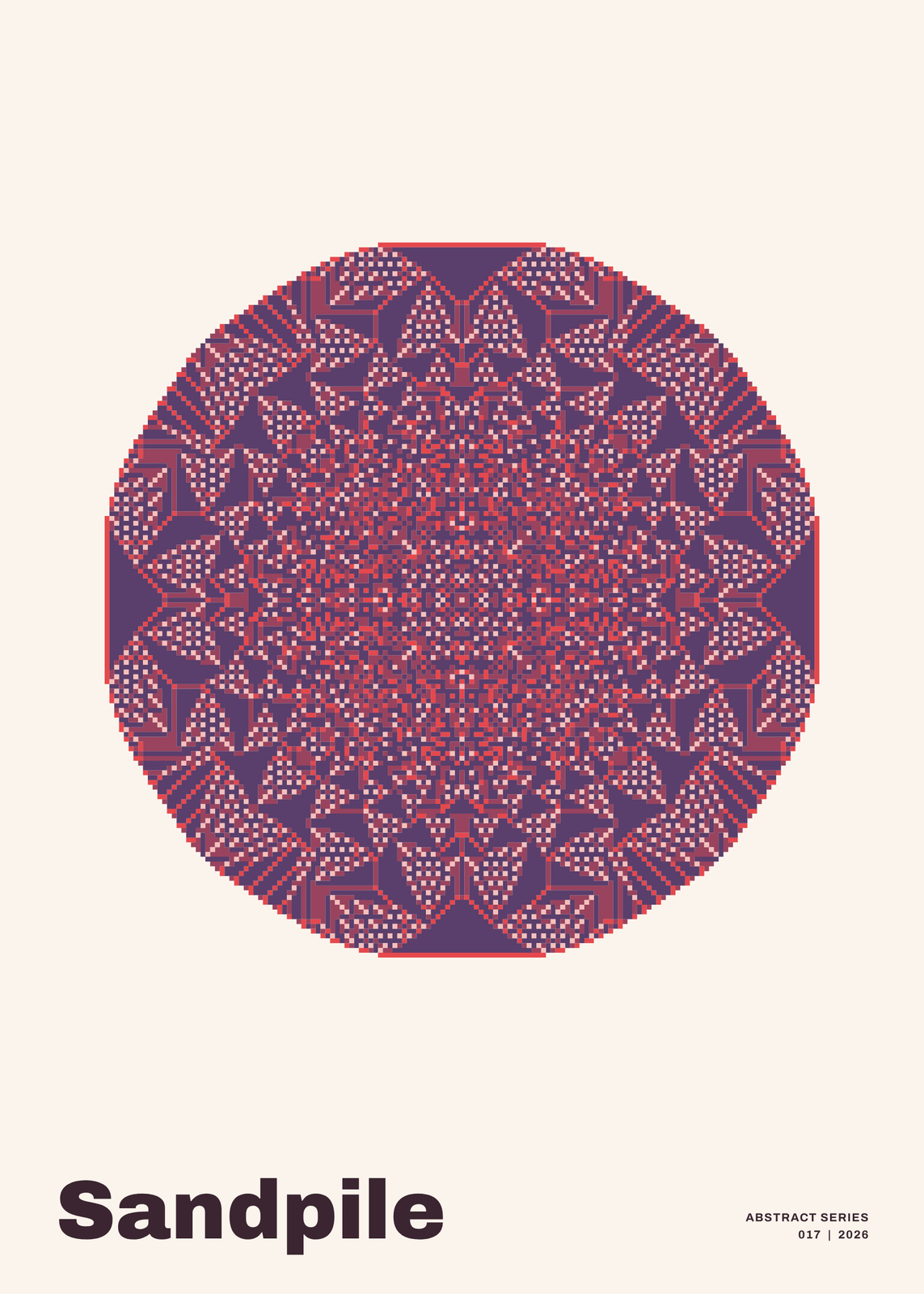 Abelian sandpile: grains toppled from one pile into an octagon of fractal purple and red triangles on blush, titled SandpileEdit this →More abstract art →
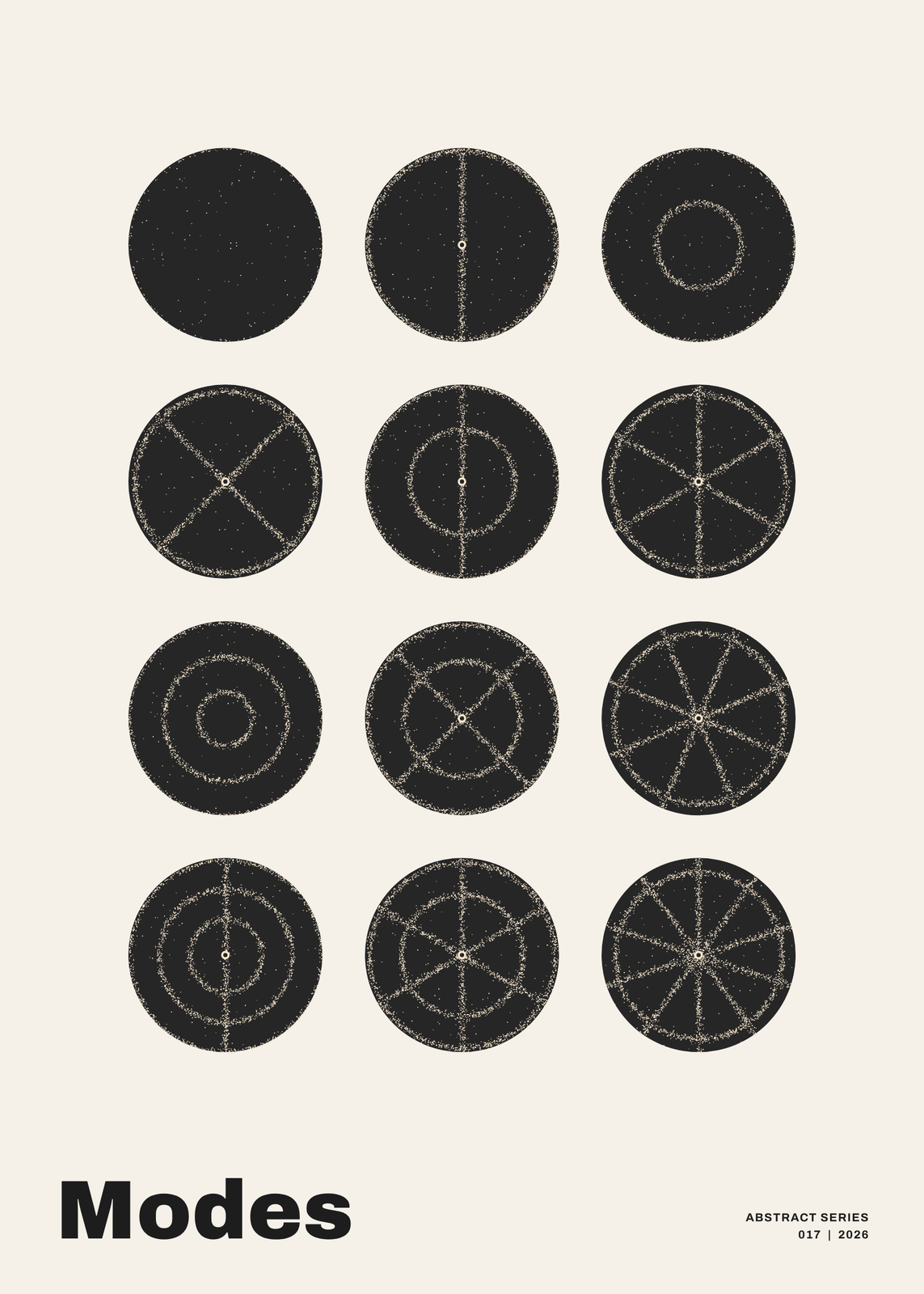 Chart of twelve Chladni figures, sand lines on round black plates in rows of three, each a different mode of vibration, titled Modes, on creamEdit this →More abstract art →
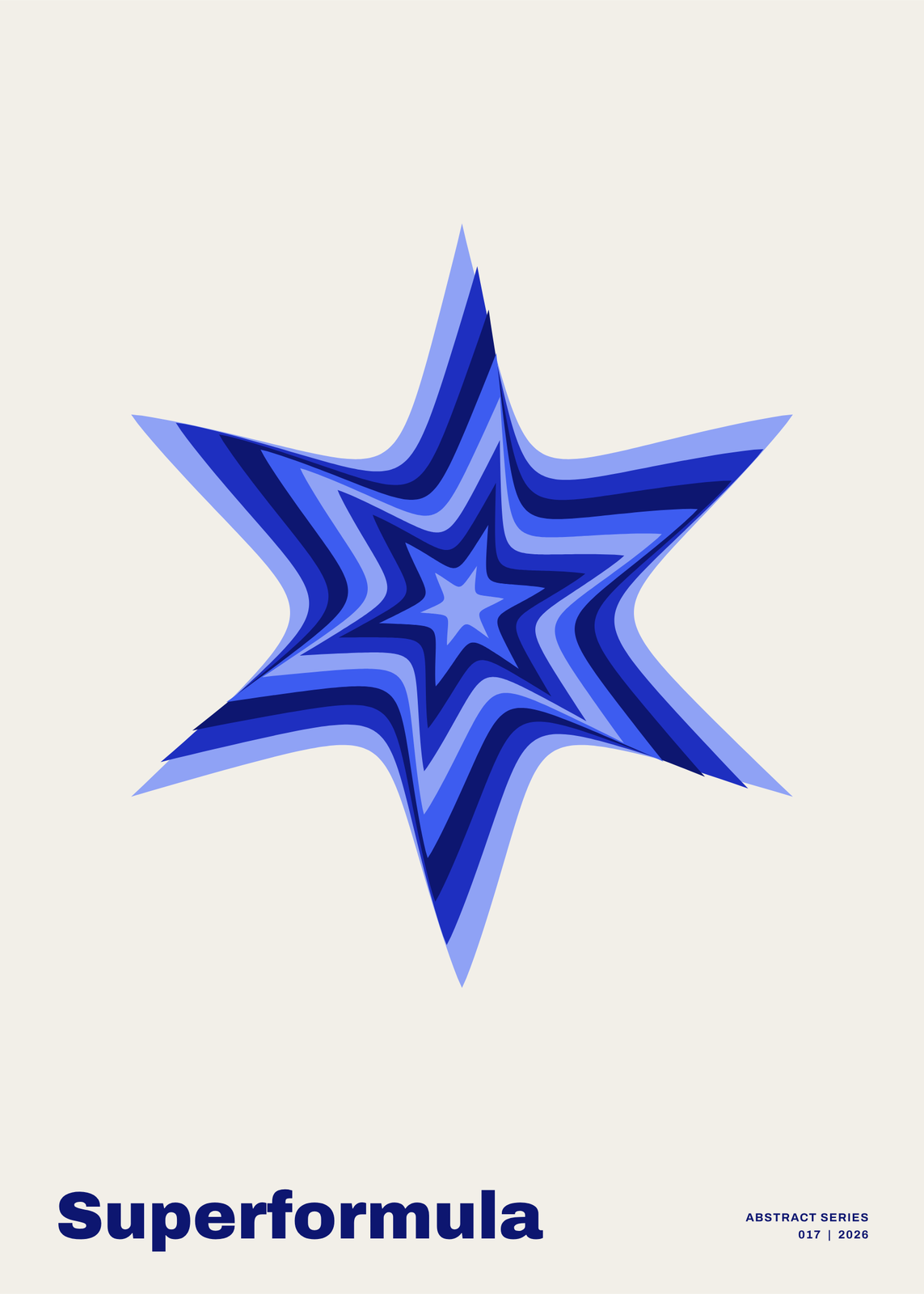 Superformula: a six-pointed star of nested shells in shades of blue on white, every one drawn by one equation, titled SuperformulaEdit this →More abstract art →
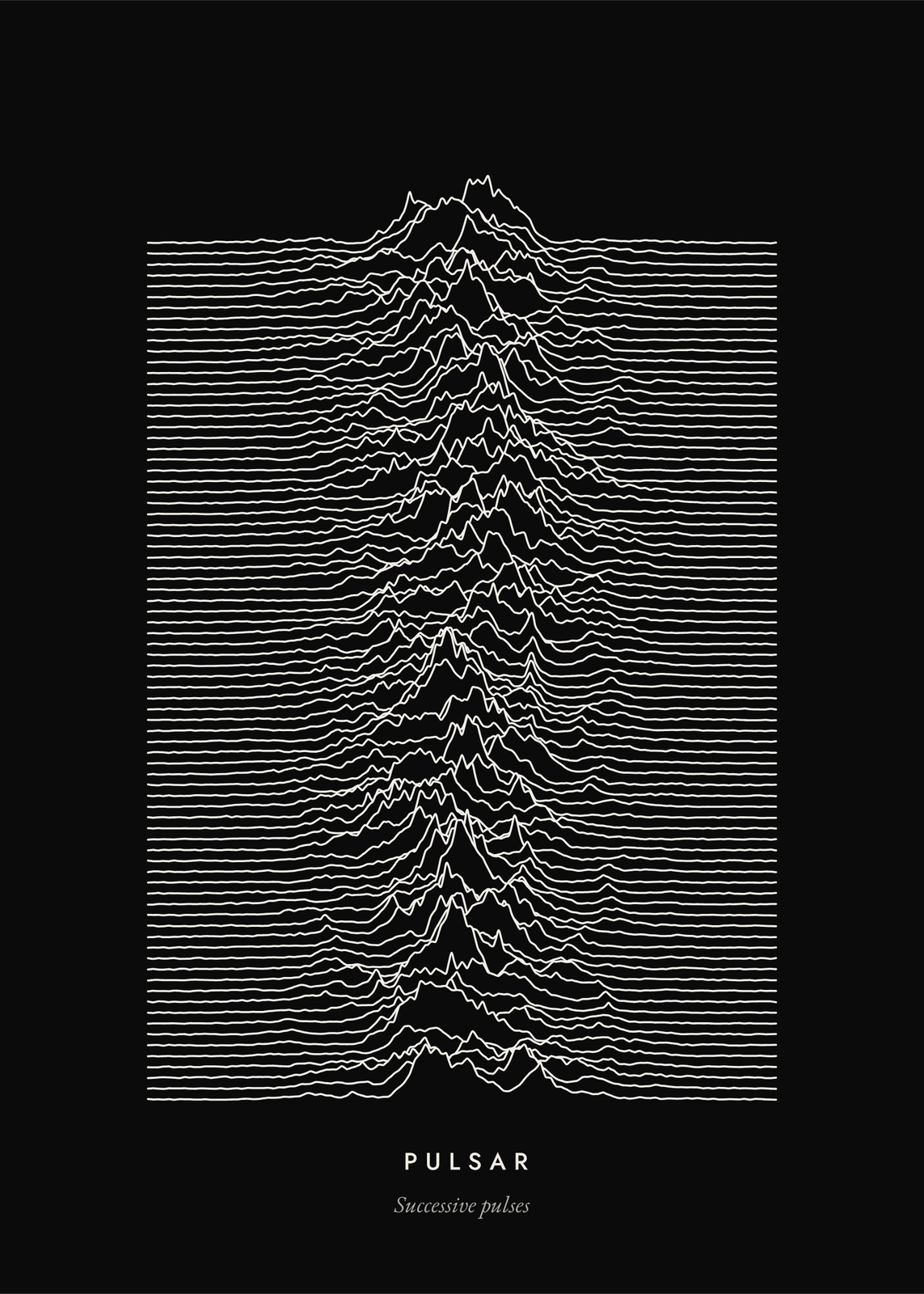 Ridgeline poster: stacked white lines rising into jagged peaks in the middle, like the first pulsar's plotted signal, on black, titled PulsarEdit this →More ridgeline poster →
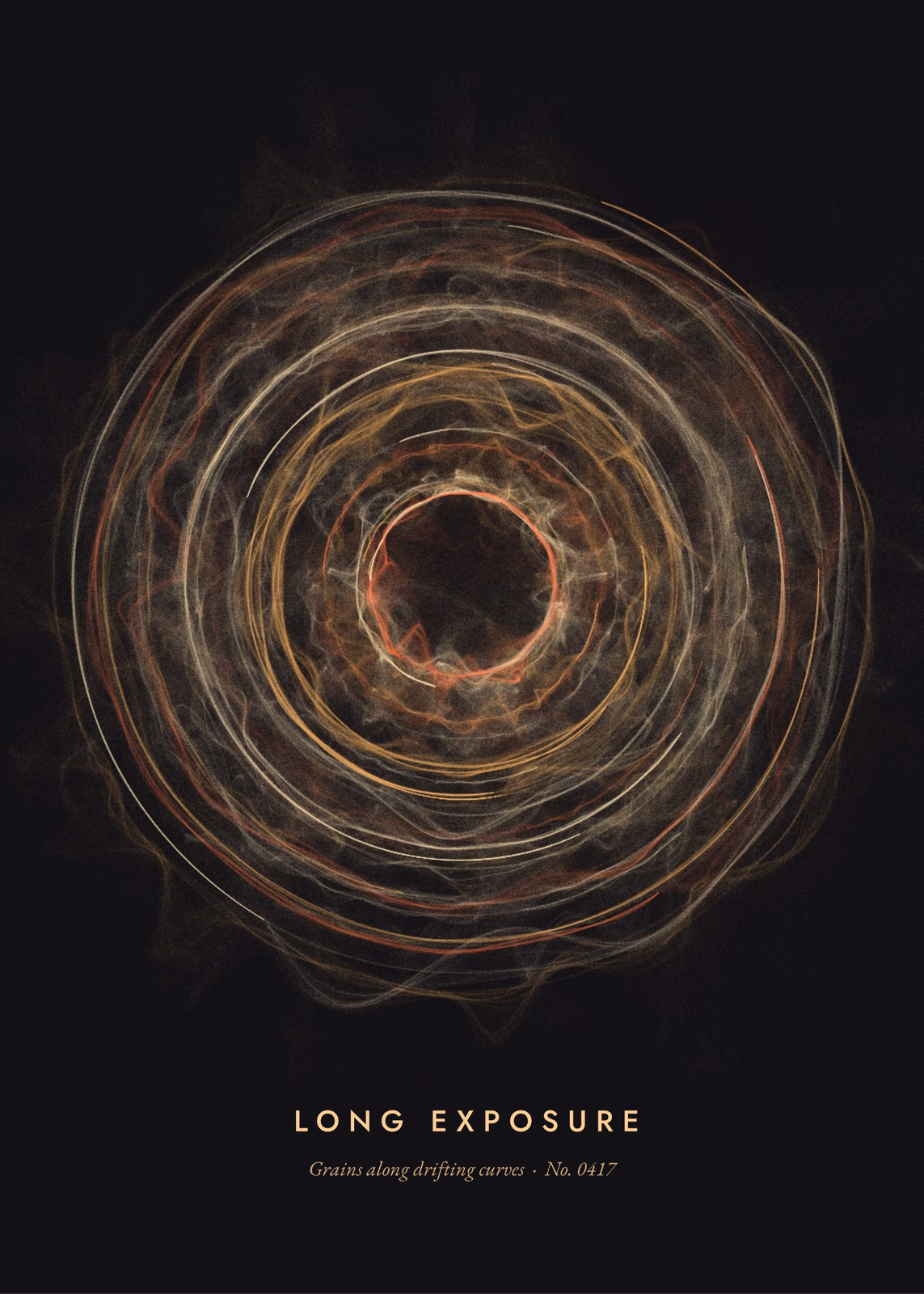 Sand spline: translucent grains dropped along drifting curves into one smoky ring in ember orange on black, titled Long exposureEdit this →More sand spline art →
The math on the posters
- Fractals: the Mandelbrot set (z → z² + c, starting from z = 0), Julia sets (the same map with c held fixed), the Burning Ship, the Buddhabrot, Newton fractals (the basins of Newton's method) and Lyapunov fractals, which can spell a name. From the seed, each poster zooms into a different stretch of the edge or picks a new Julia constant; by hand, you type the center and zoom.
- Phase portraits: a complex function colored by its argument, so every color meets at a zero or a pole. Rational functions, sin(1/z), elliptic functions and the Taylor polynomials of eᶻ.
- Strange attractors: the Lorenz, Aizawa, Thomas and Halvorsen flows, and maps like Clifford's and Peter de Jong's, iterated millions of times. Chirikov's standard map and Hénon's area-preserving map show islands in a chaotic sea.
- Field lines: the lines of force round point charges or a bar magnet, traced from Coulomb's law, with the equipotentials that cross them at right angles.
- Cellular automata: rows of cells grown by Wolfram's elementary rules, numbered 0 to 255. From one live cell, Rule 30 turns chaotic and Rule 90 draws Sierpiński triangles. Rule 110 is Turing complete.
- Islamic star patterns by Hankin's method: from the middle of every tile edge, two lines leave at one contact angle and run until they meet. Eleven tilings, from octagons and squares to Penrose's never-repeating rhombs.
- Knotwork: Celtic knots, kolam and Lunda sand drawings are all mirror curves, one line bounced between mirrors round a grid of dots.
- Wave function collapse: tiles whose edges must match their neighbors', solved cell by cell until the whole sheet fits, as noodles, circuits, islands or mazes.
- Pen-plotter geometry: Truchet tiles, spirographs, harmonographs, guilloche, mazes, moiré and the Hilbert curve, drawn as lines the way a plotter would.
- Signals and sand: Ridgelines stacks noisy lines into peaks like the first pulsar's plot, and Sand Spline drops grains of sand along drifting curves.
- Geometry in the Abstract maker: hyperbolic tilings in the Poincaré disc, Apollonian gaskets, Penrose tilings and the hat monotile, a word drawn by a Fourier series, sunflower phyllotaxis, reaction-diffusion, Chladni figures, sandpiles, coral grown by diffusion-limited aggregation and the superformula.
How to make a math poster
- Open the example closest to what you want.
- Pick the math: the set or the attractor, the rule numbers, the tiling and its contact angle, or the grid of dots.
- Press “Surprise me” until the view looks right, or set it by hand.
- Choose the colors, add a title, and decide whether the formula prints under it.
- Pick the paper size and download a 300 DPI JPEG.
Gifts for math lovers
Match the poster to what they study: a phase portrait for someone in complex analysis, an attractor for dynamics and chaos, a cellular automaton for computer science, a hyperbolic tiling or a star pattern for geometry. The Mandelbrot set suits everyone, including people who only like how it looks.
For a math teacher's classroom, a thesis defense or a graduation, put a name in the title. Automata can write the name in bits as its first row, the knot's breaks follow the name you type, and the Fourier signature draws it with turning circles.
Questions
Is the math real?
Yes. Every poster is computed from its formula: the escape-time iterations of the fractals, the equations of each attractor, the rule numbers of the automata, the tiling and contact angle of a star pattern. Mandelbrot and Attractor can print the formula and the view under the title, Automata the rules, so anyone can check them.
Can I choose the exact view?
Yes. By default each seed finds its own view: a zoom into a busy part of the Mandelbrot set's edge, a Julia set's constant, an attractor's parameters. Switch from “From the seed” to “By hand” to type the center and zoom, the constant c, or the parameters yourself.
Can I put a name on it?
Every maker takes a title. Automata also writes a word in bits, eight to a letter, as the first row its rules grow from. In Knotwork the name you type picks the breaks, so the same name always weaves the same knot.
What sizes can I print?
US Letter, 8 × 10, 11 × 14, 12 × 16 and 12 × 18 in, A4 and A3, free. You download a 300 DPI JPEG drawn at the size you pick. Larger prints, up to 24 × 36 in, are coming soon.
Related
Gift ideas by occasion
Every example is made with the Posterage generators. Change anything, then download it as a 300 DPI JPEG.