Cellular automata poster elementary rules grown in Mondrian panels
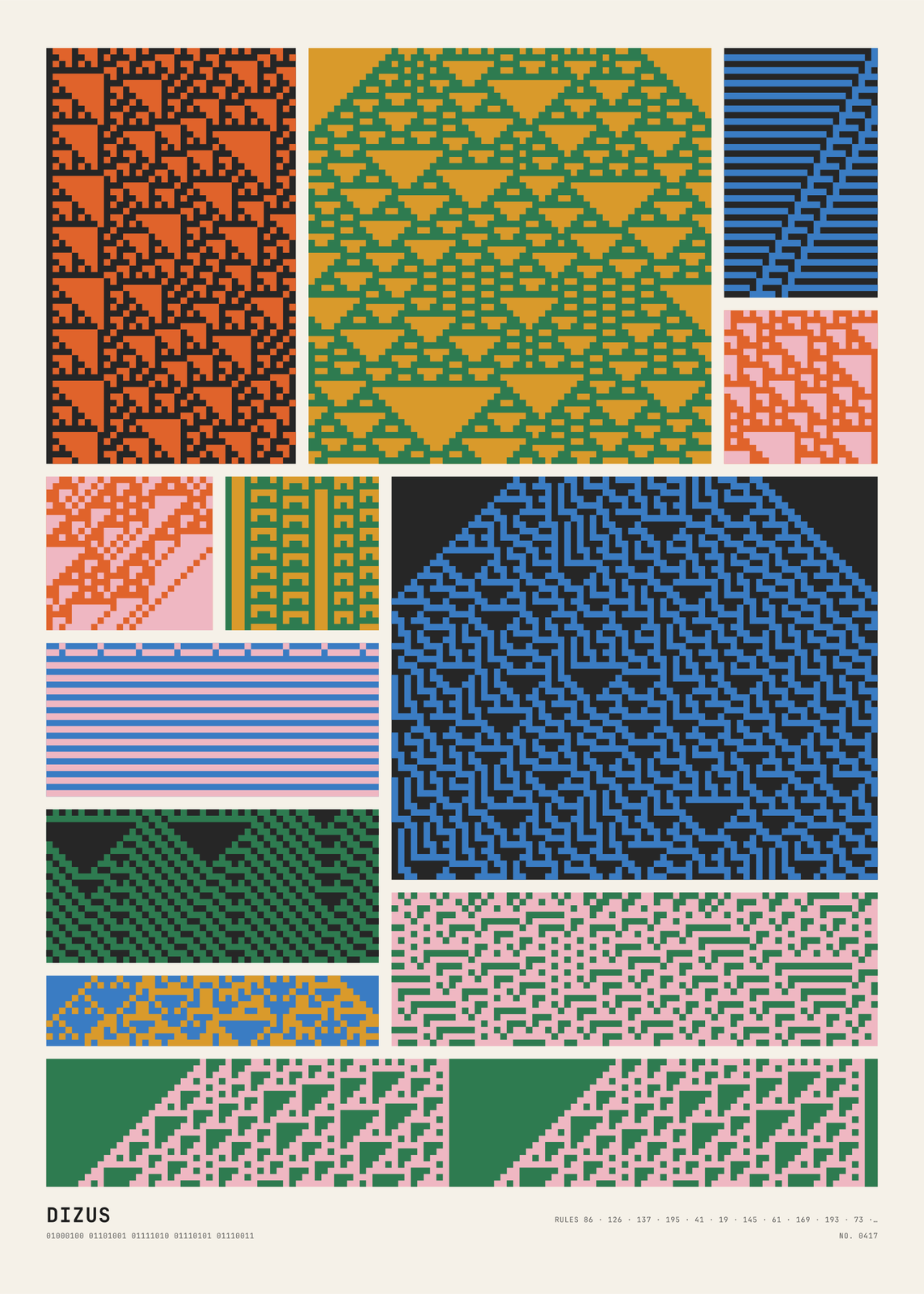
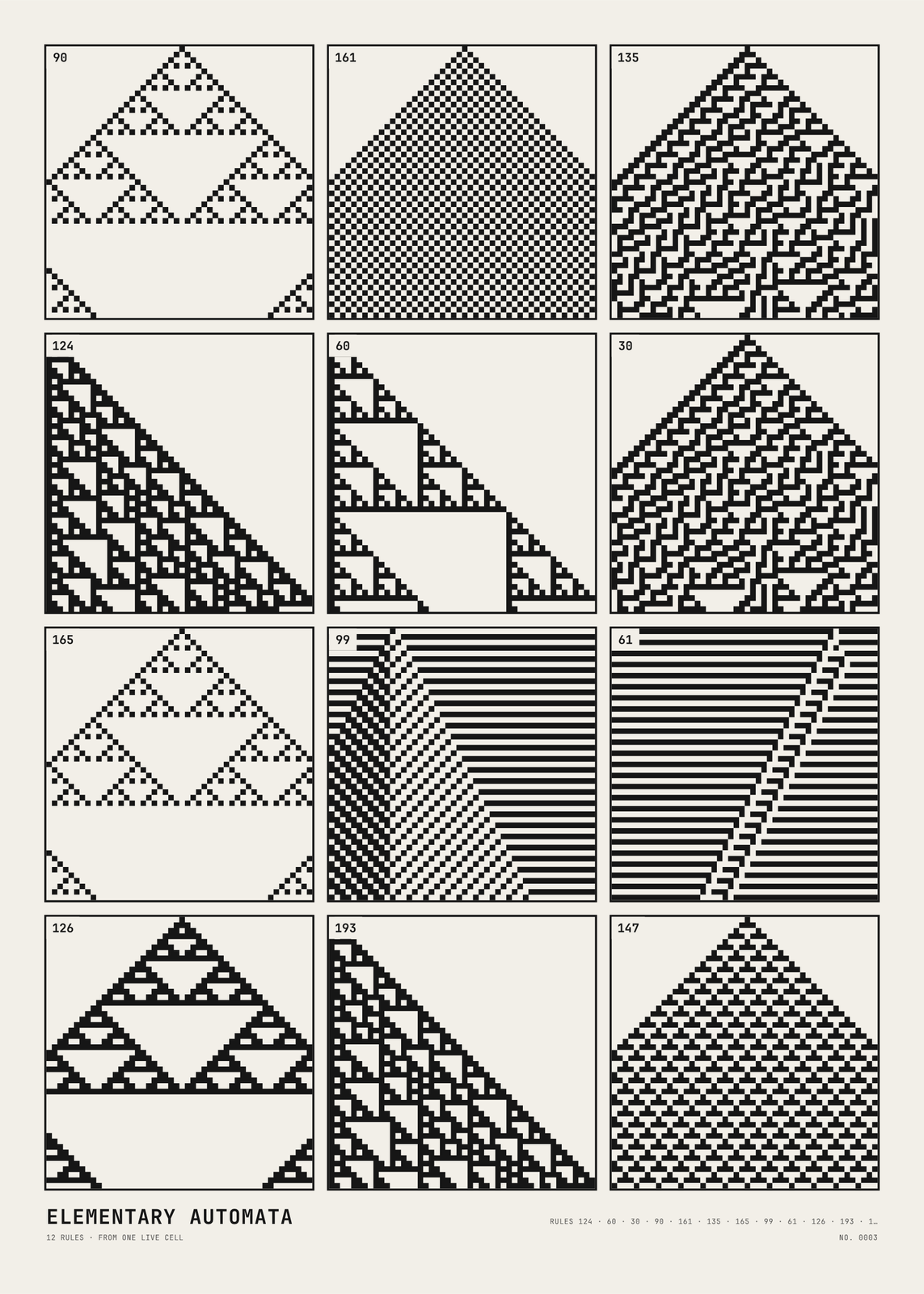
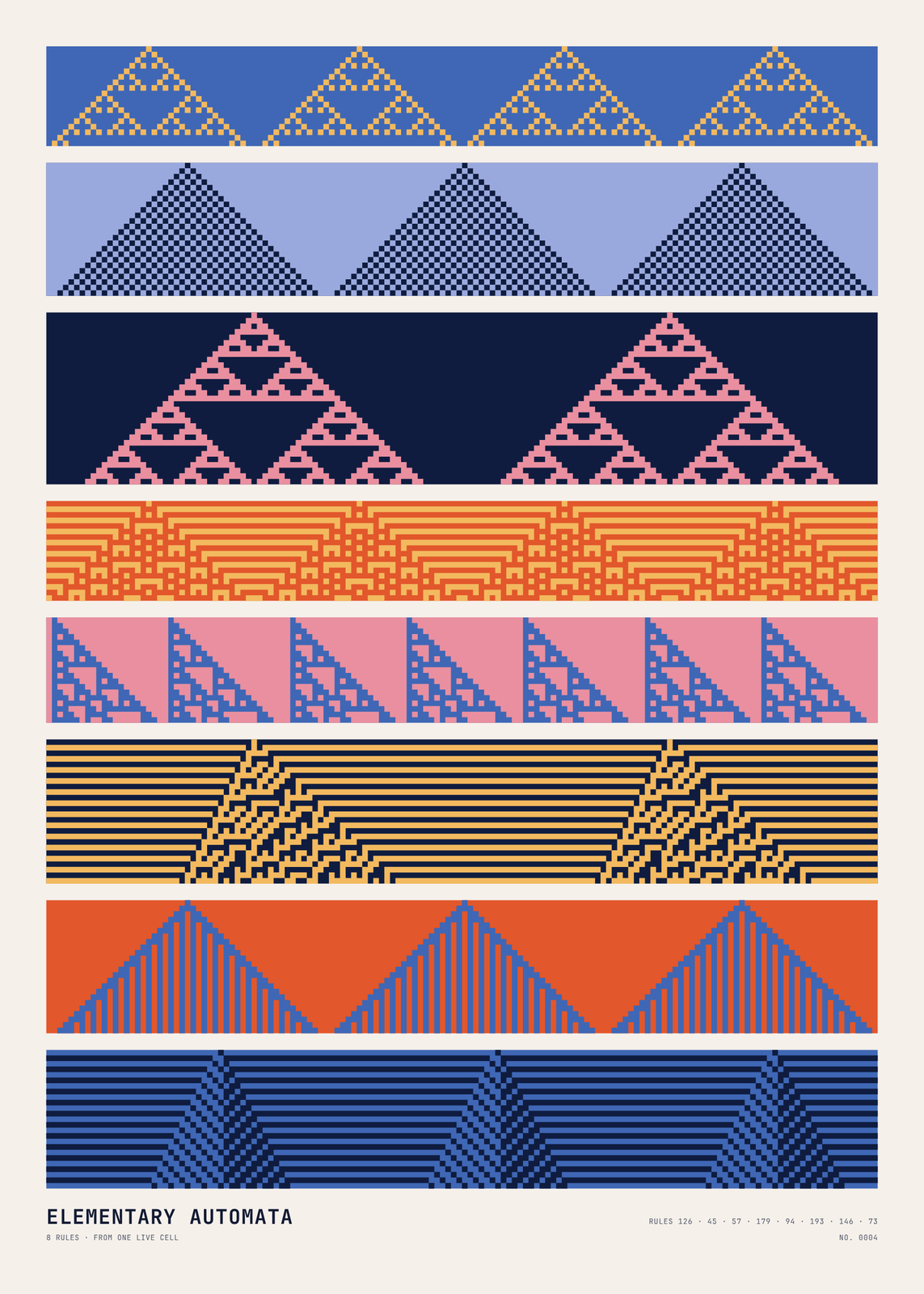
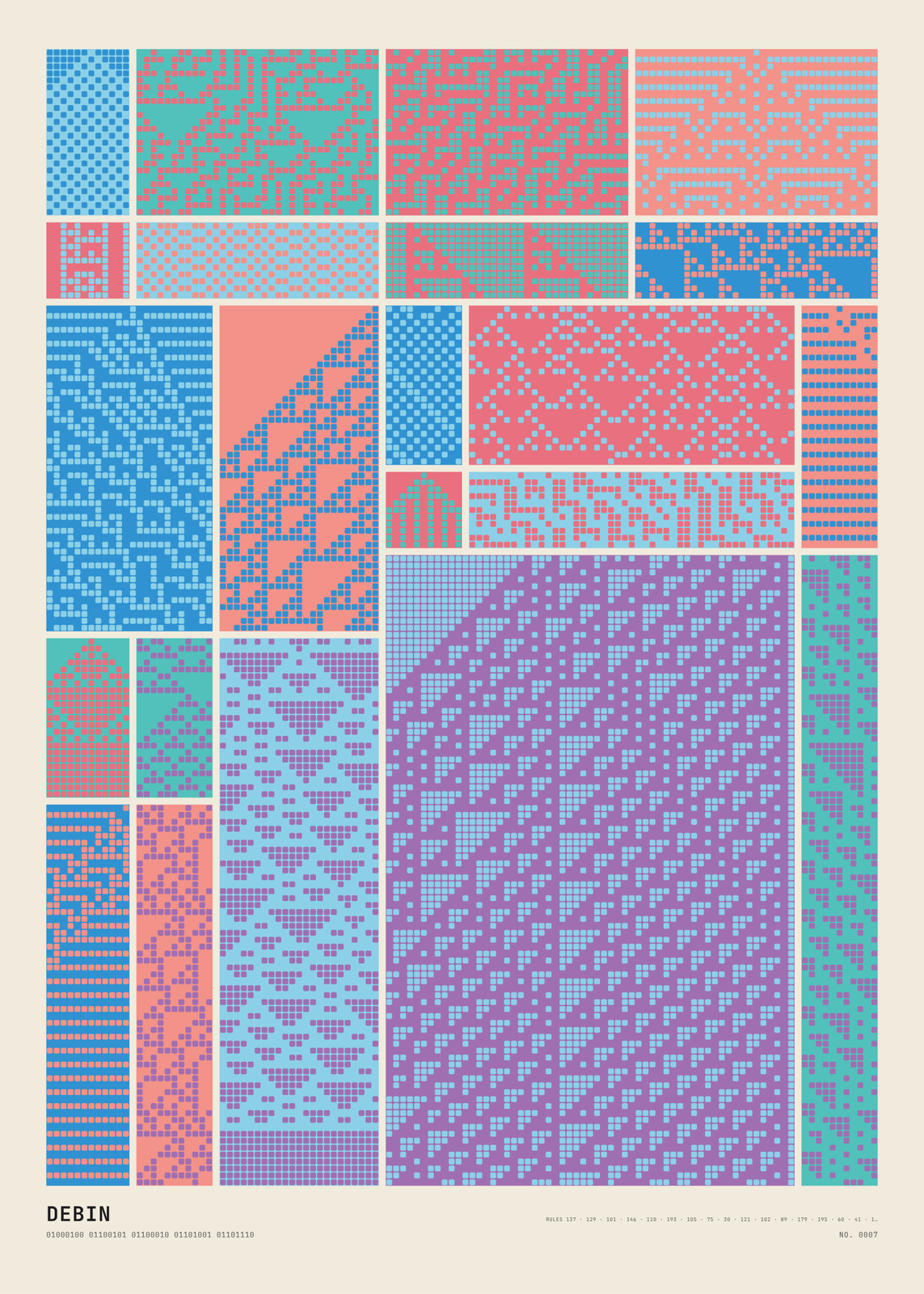
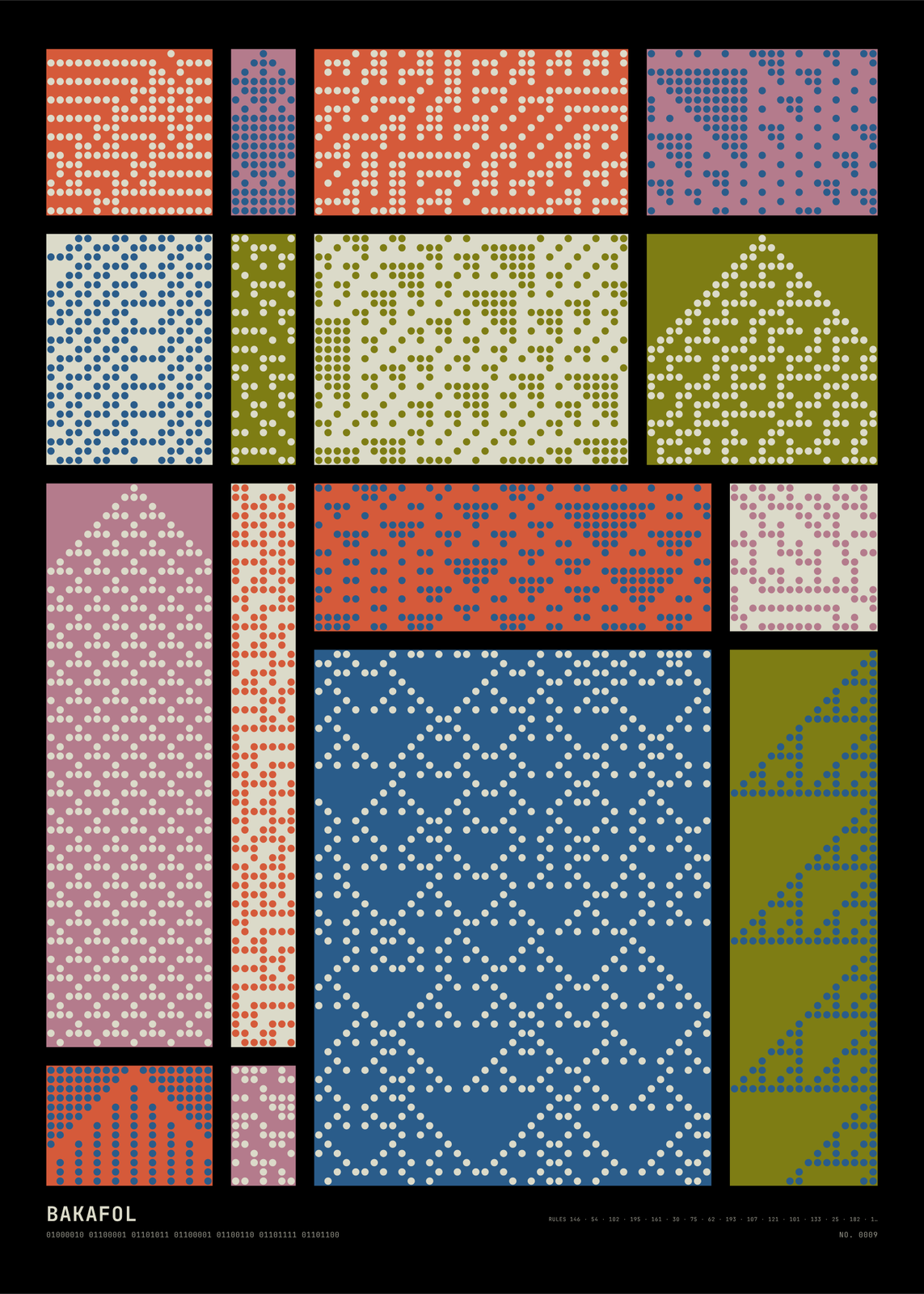
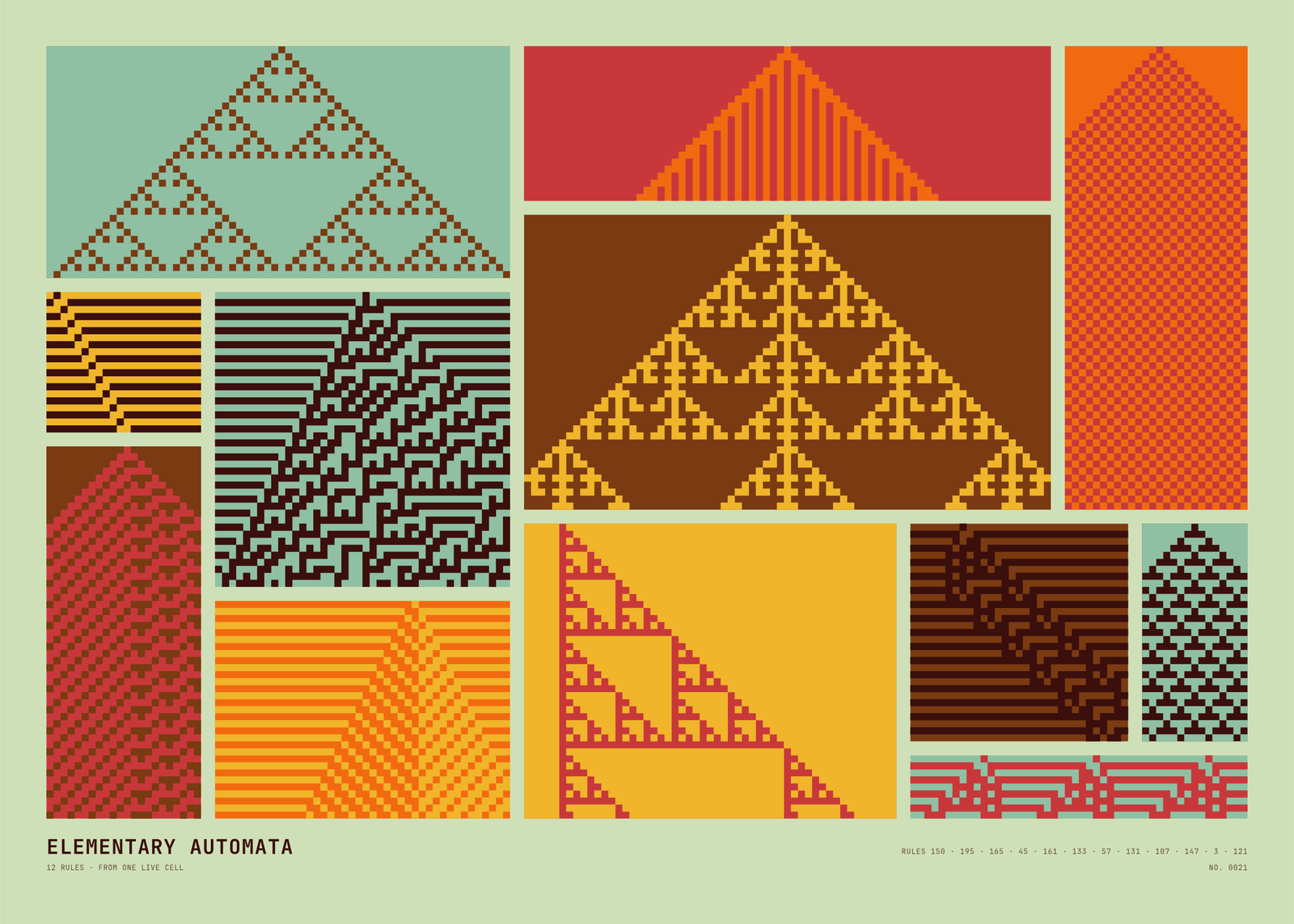
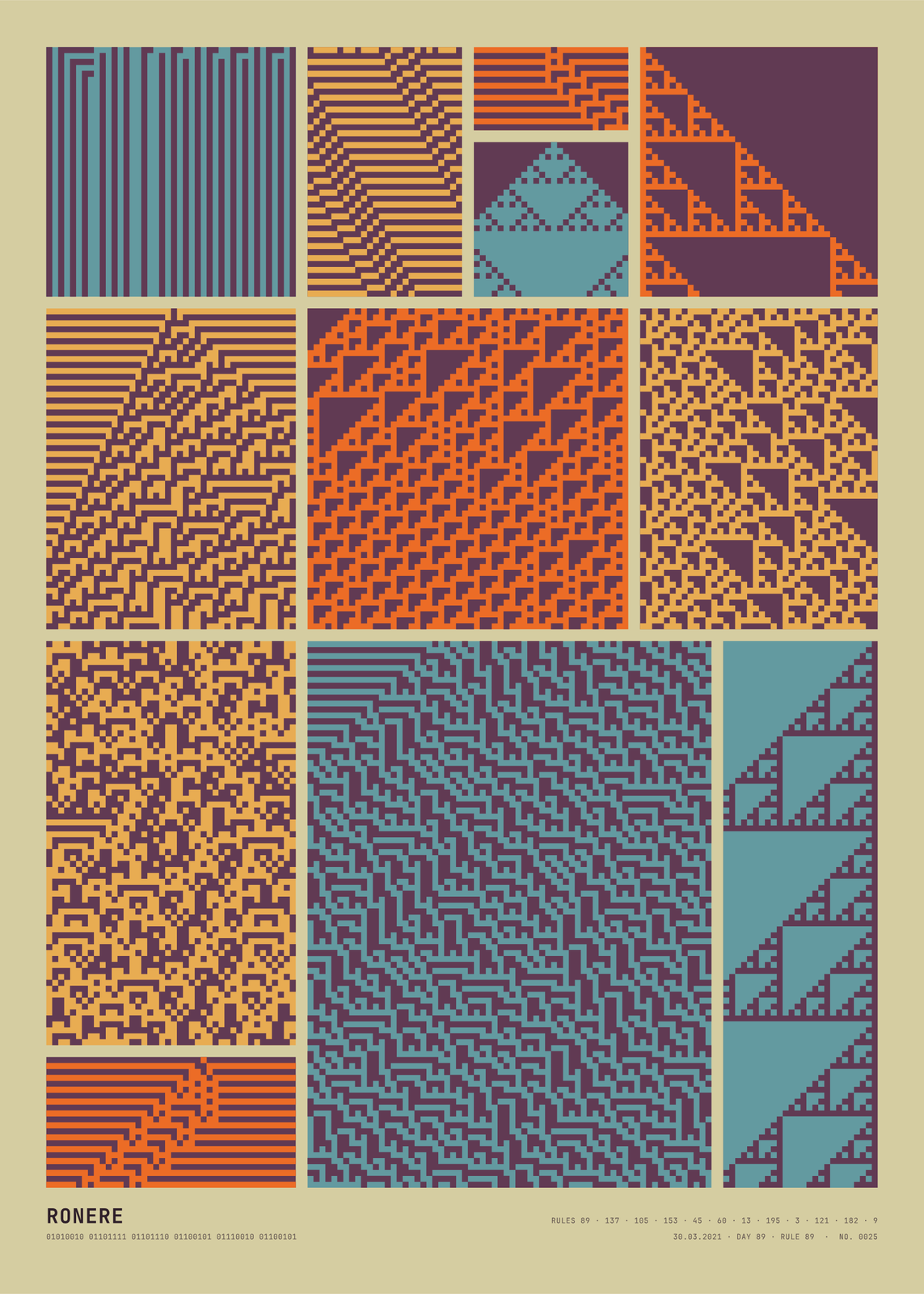
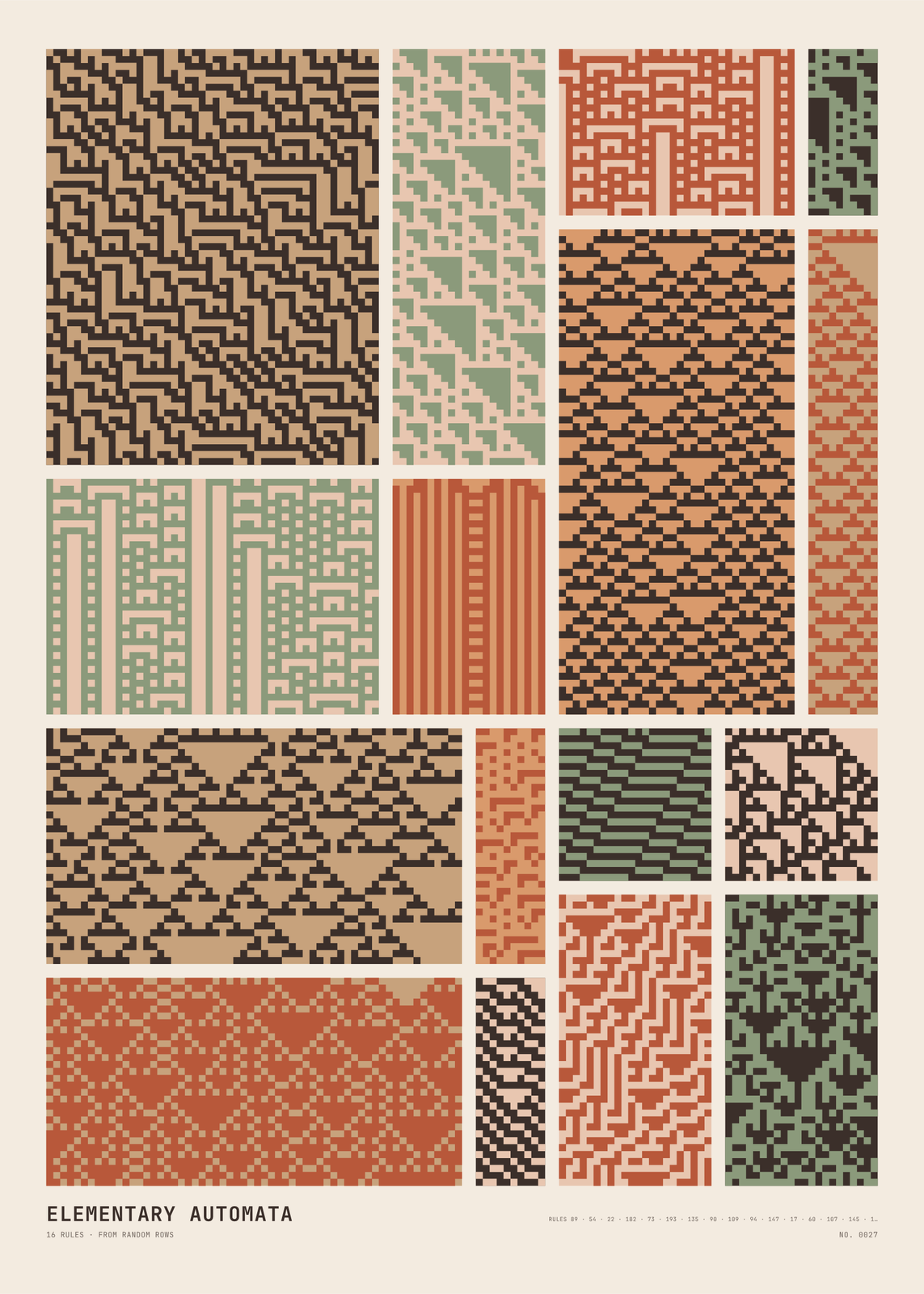
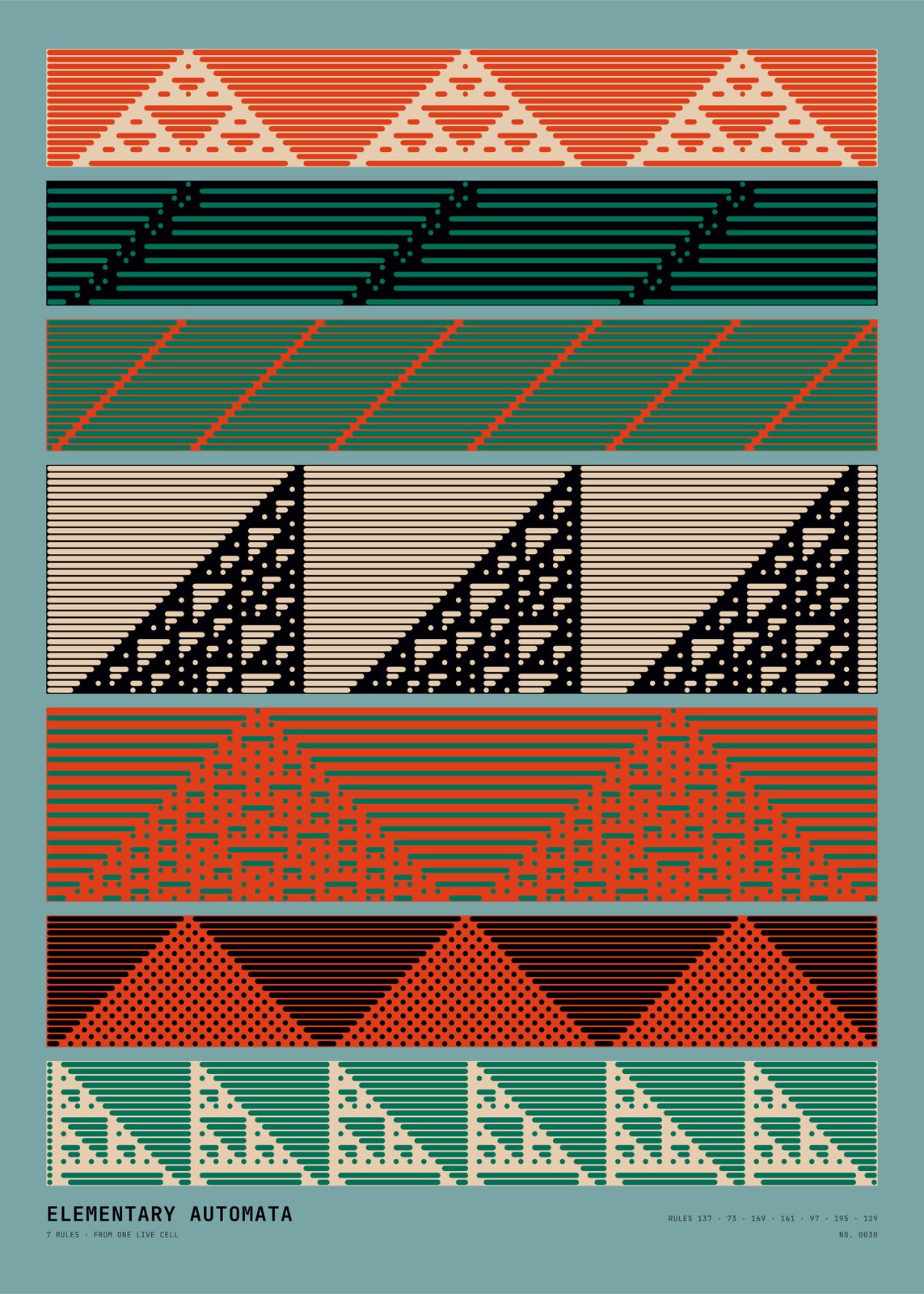
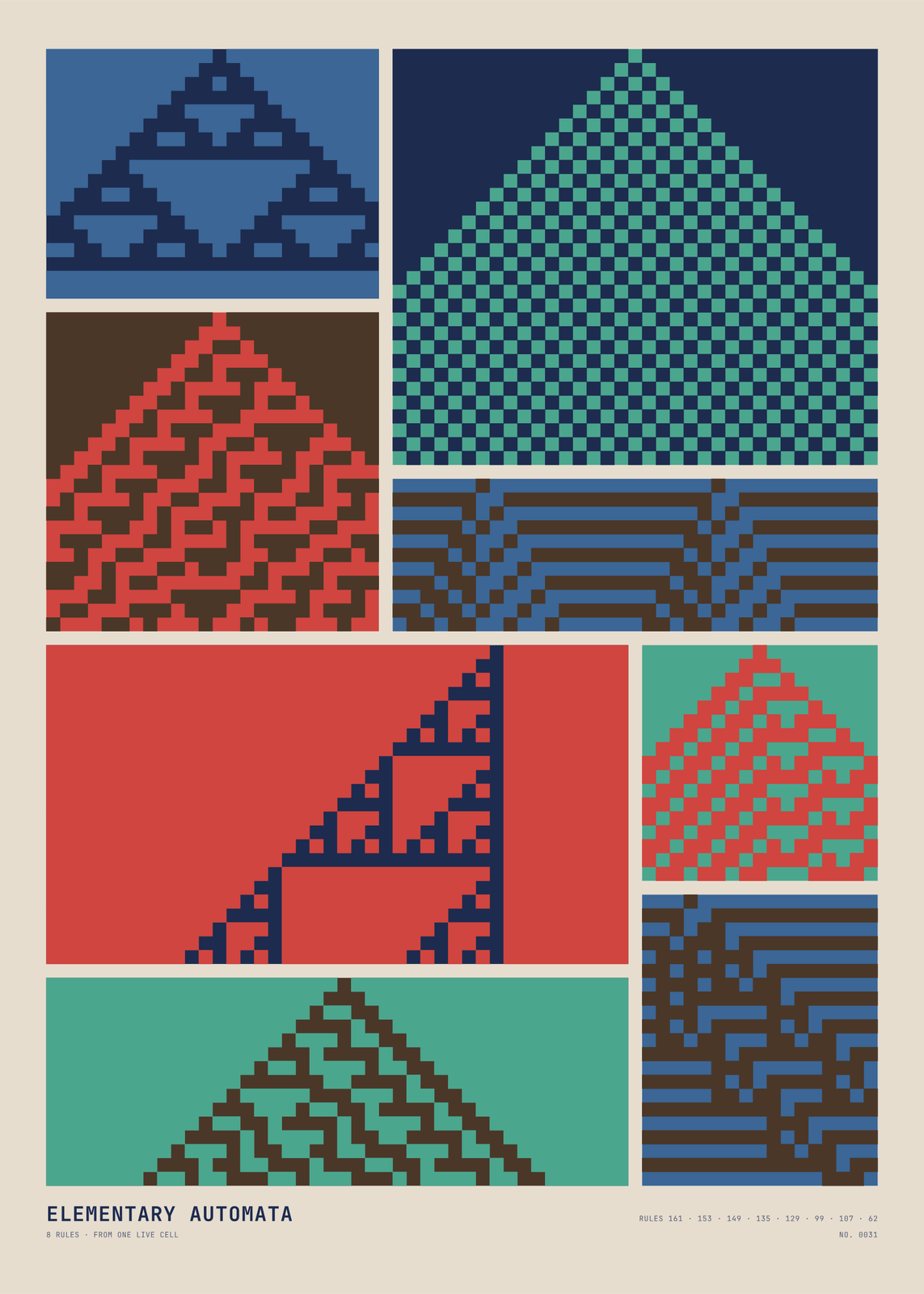
Start with a row of cells, each on or off. Every cell in the next row looks at the three above it and follows a rule: 256 possible rules, numbered 0 to 255. Some die out, some repeat, some never settle. The sheet splits into panels like a Mondrian painting, and each panel grows its own rule in two colors, with a key naming the rules along the foot.
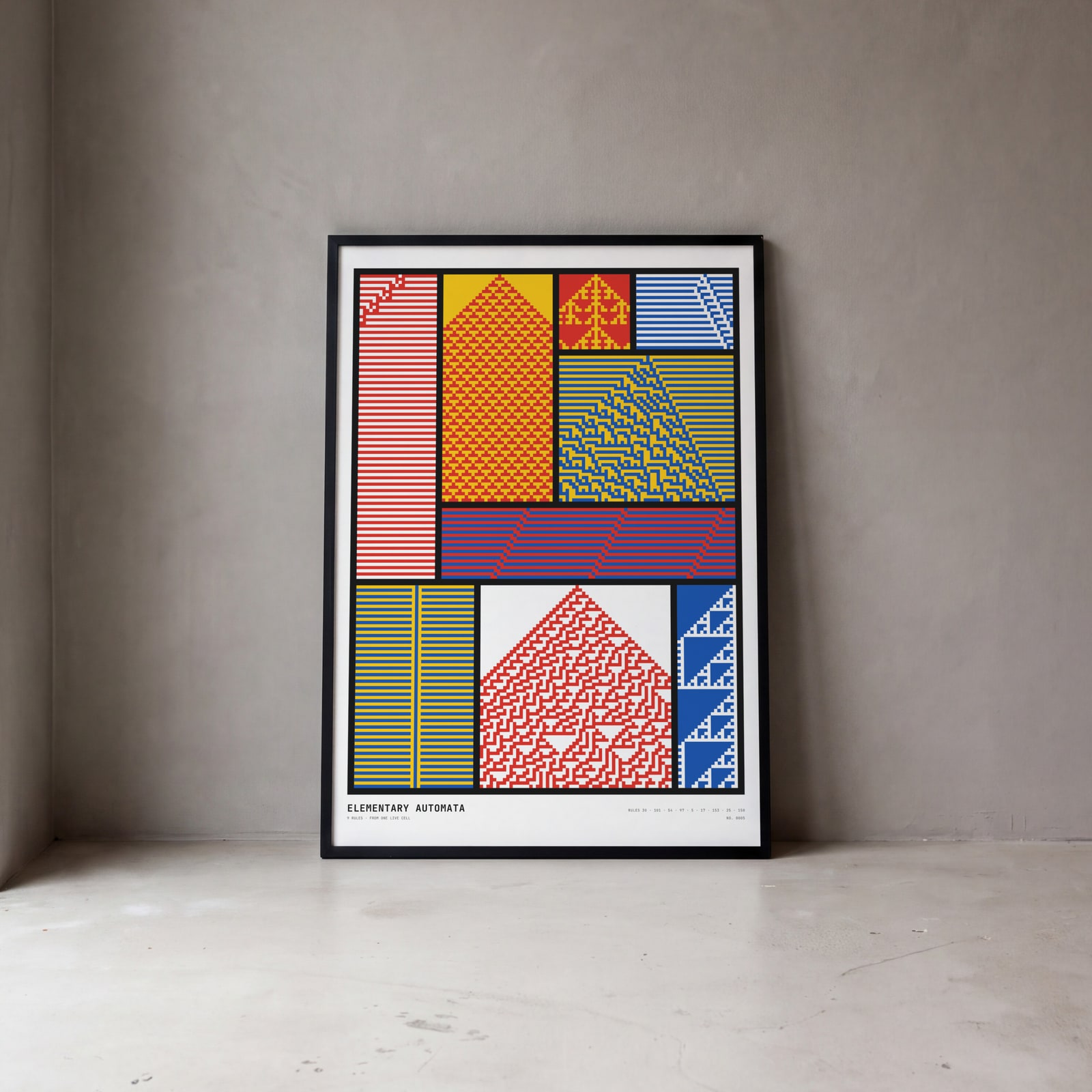
On the wall
A few of them framed at home. Open any one to make it yours.
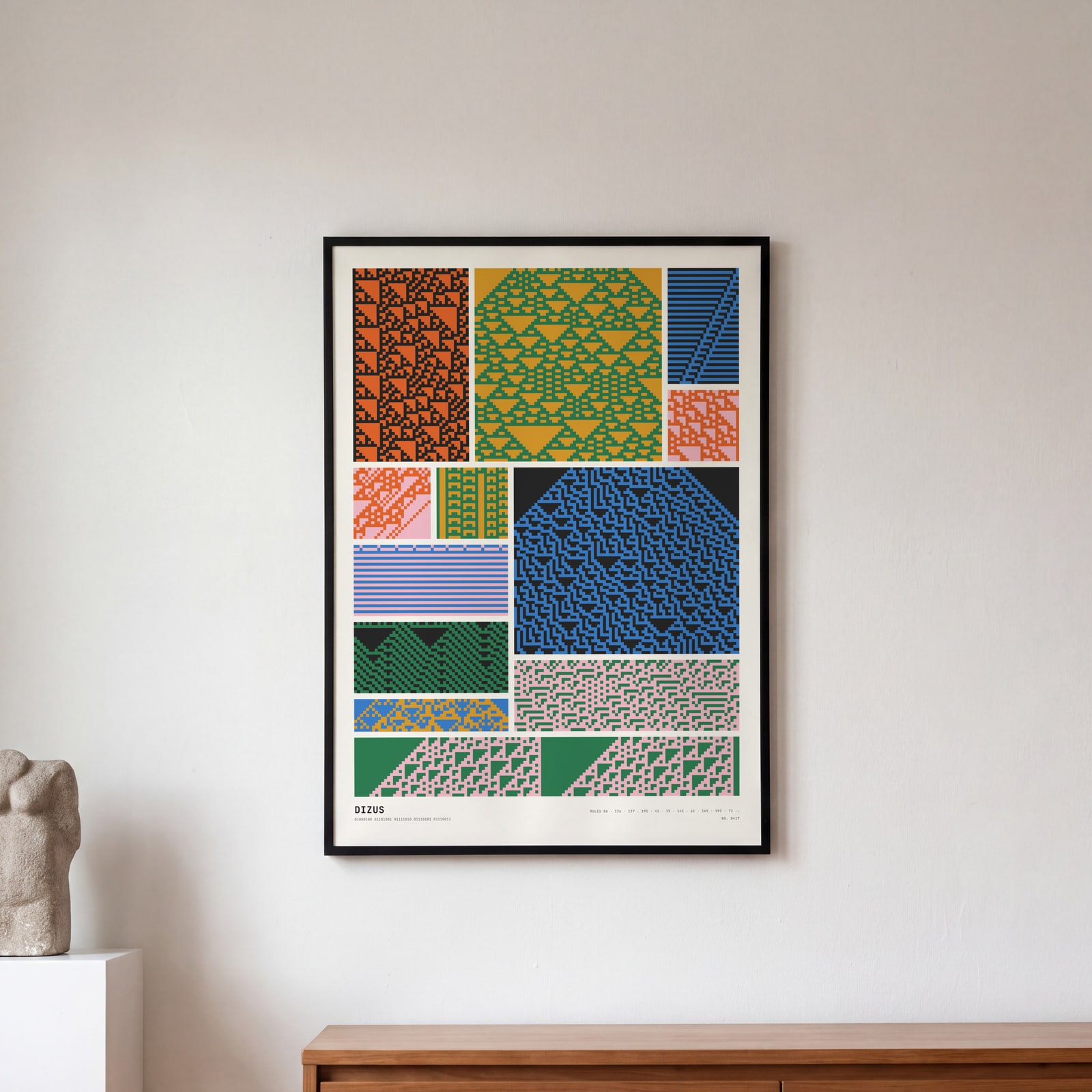
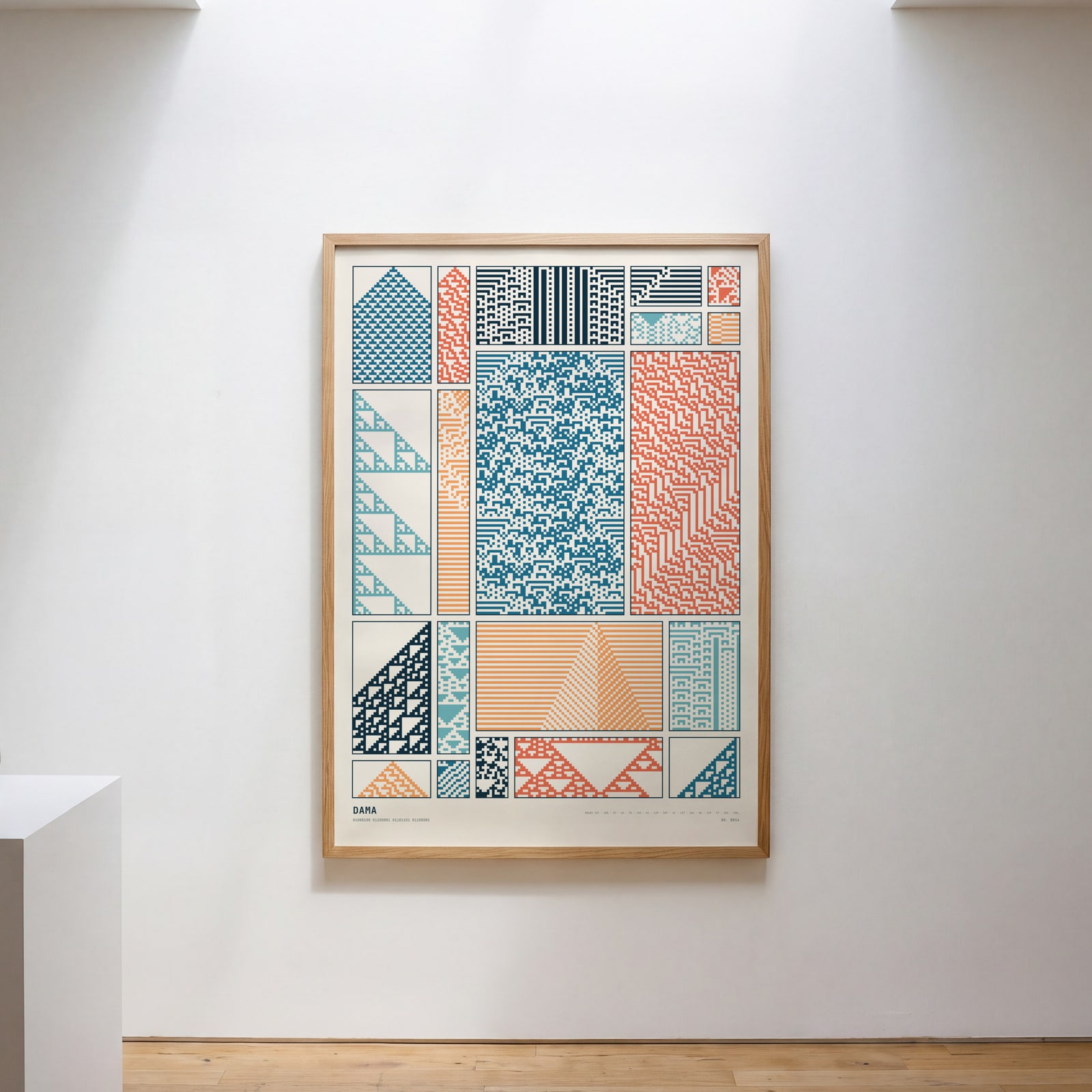
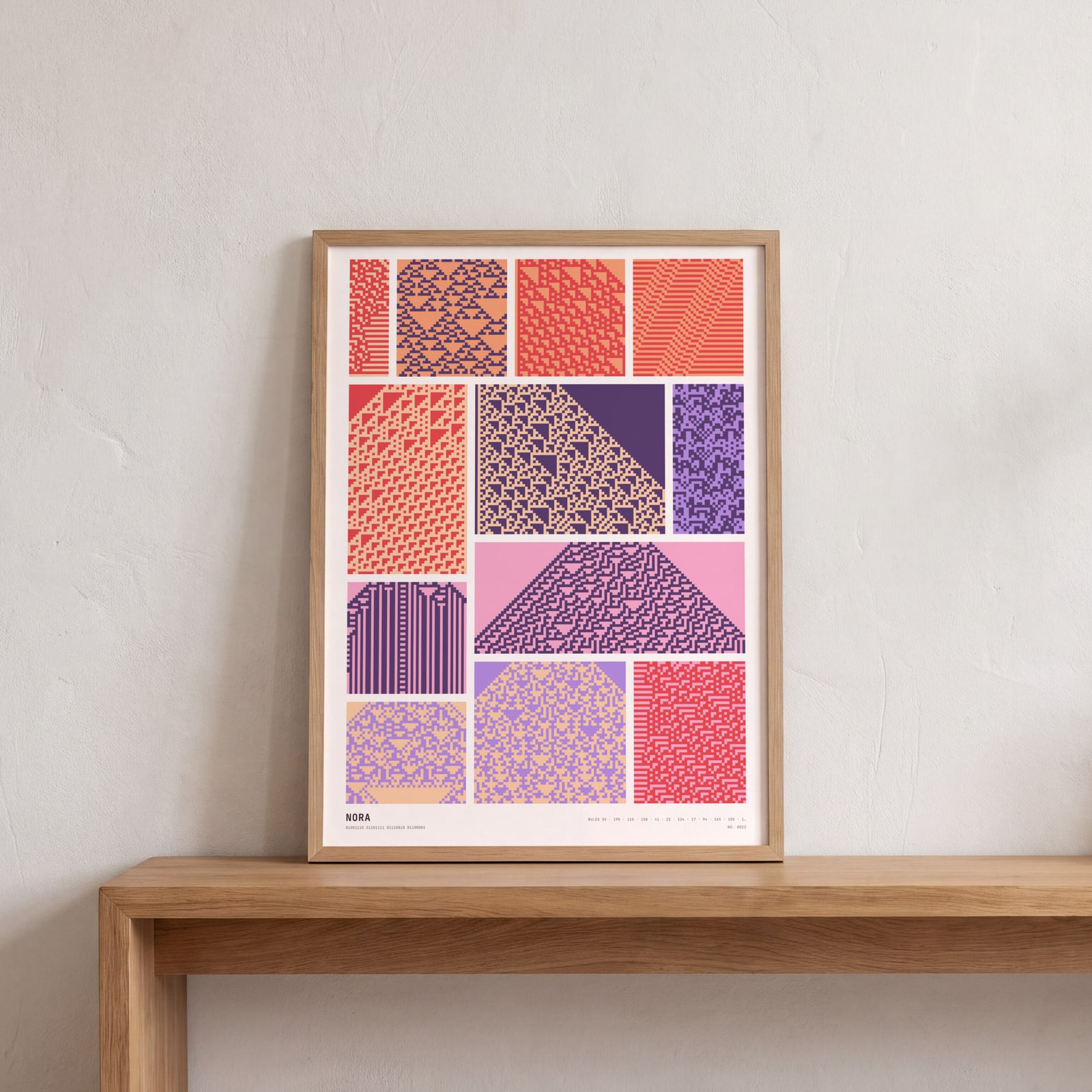
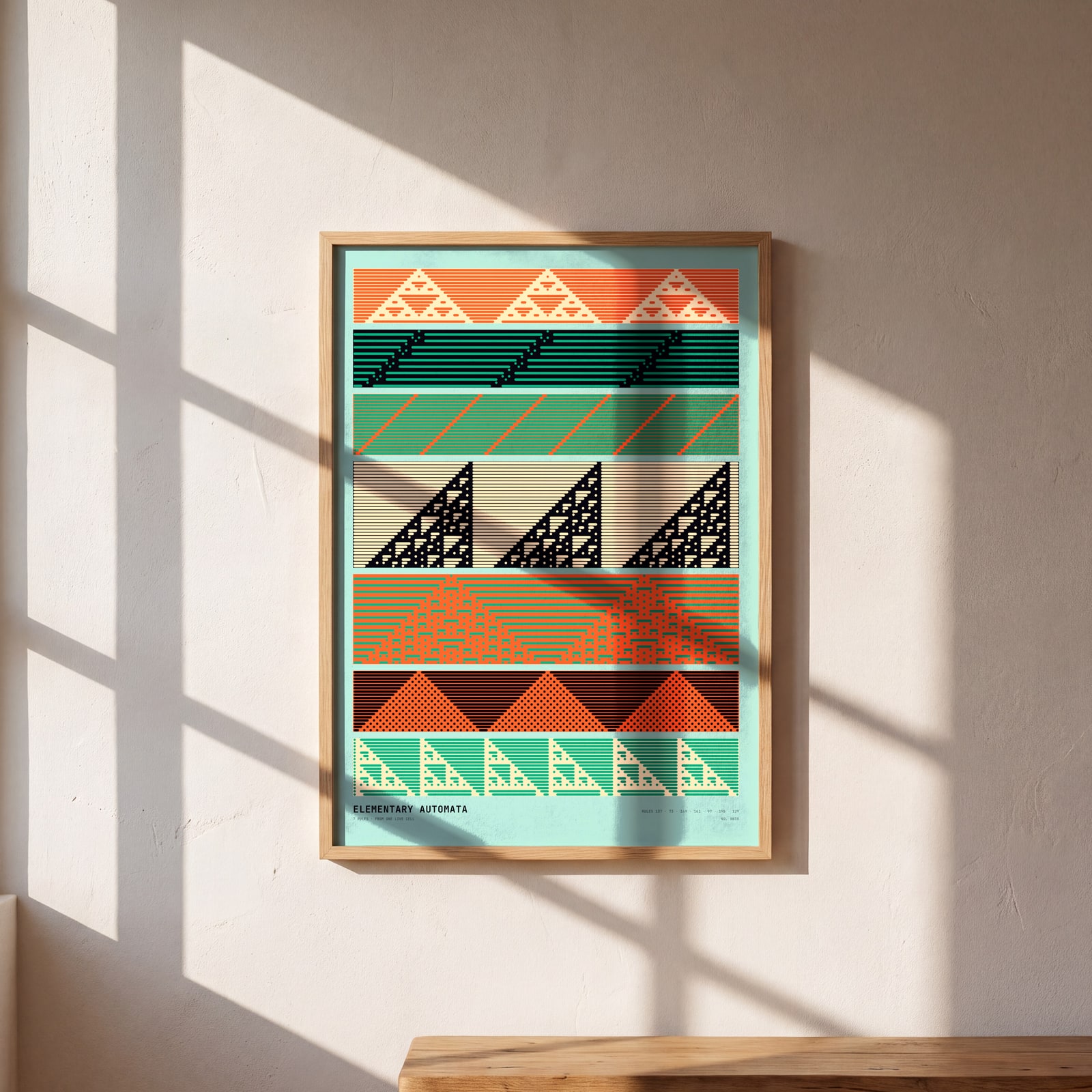
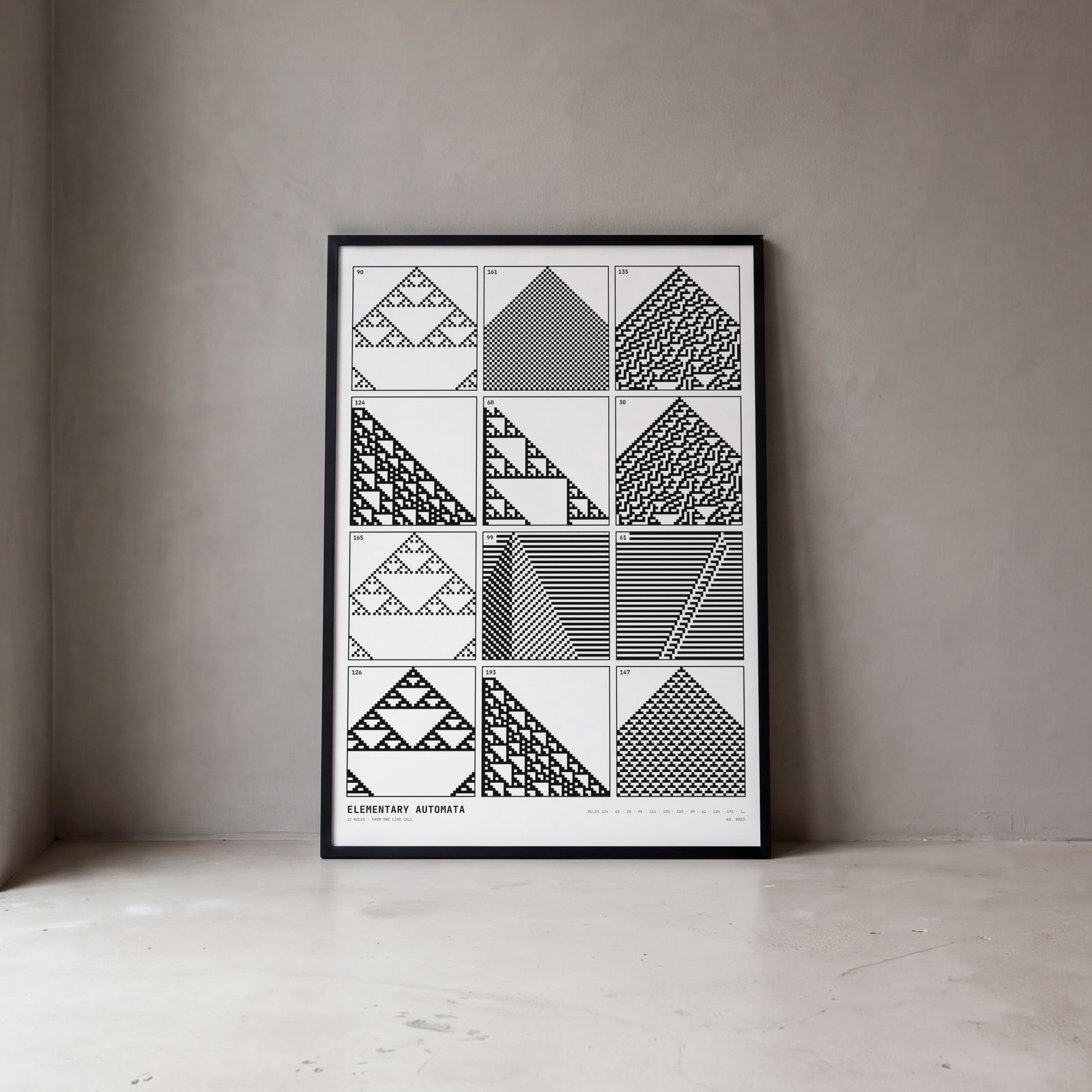
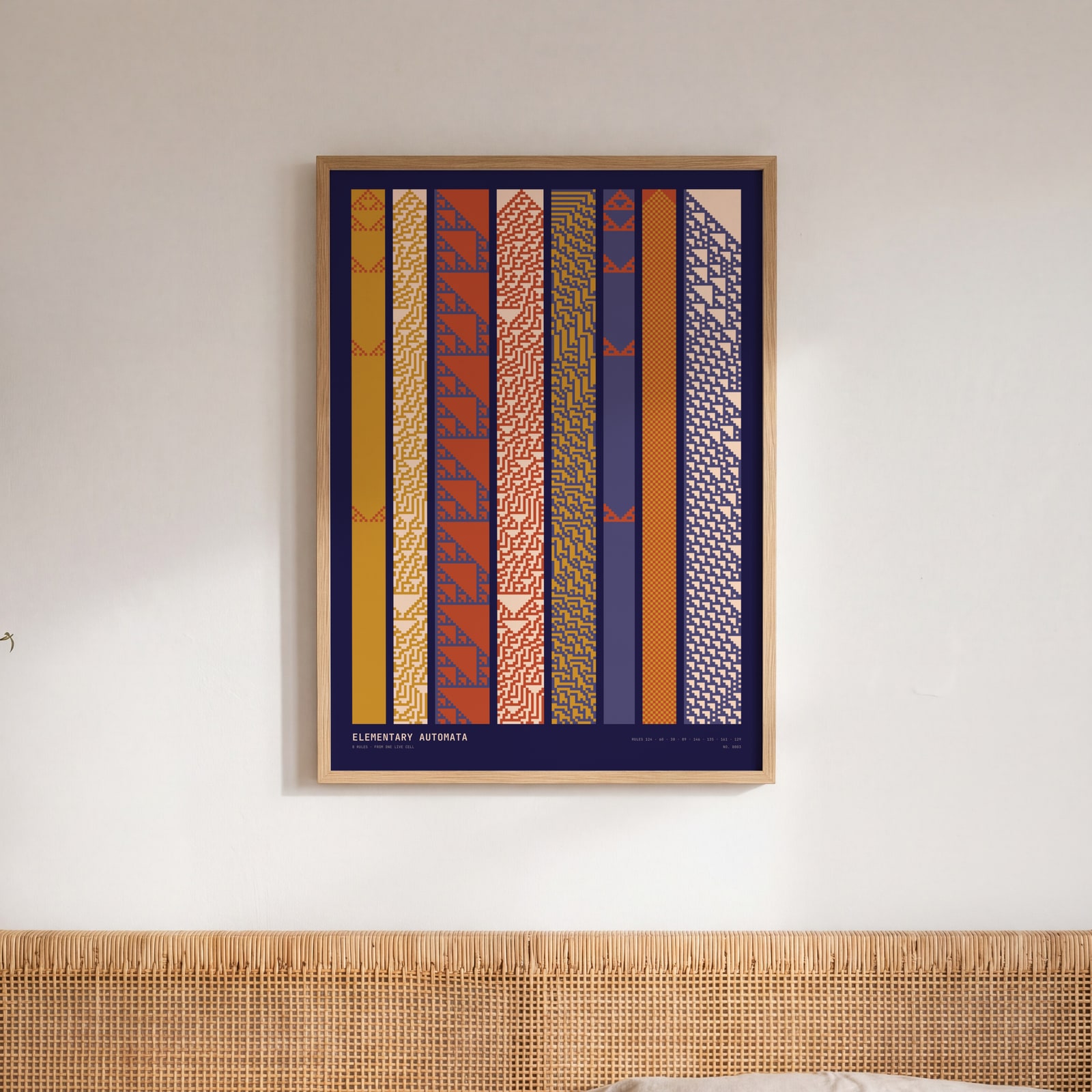
Examples
Open any of them to change the words, the place, the date and the style, then download the print file.
Looks
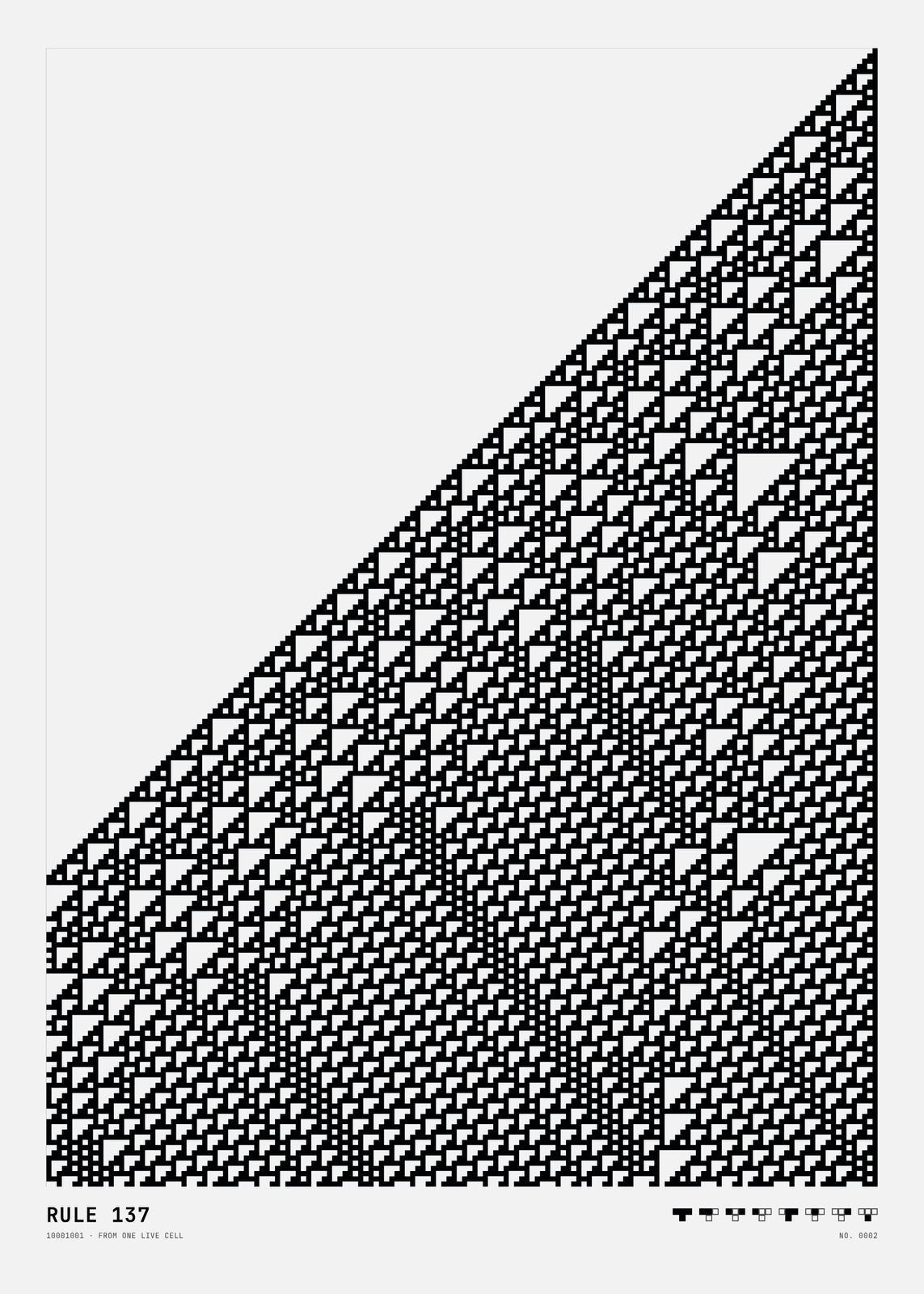
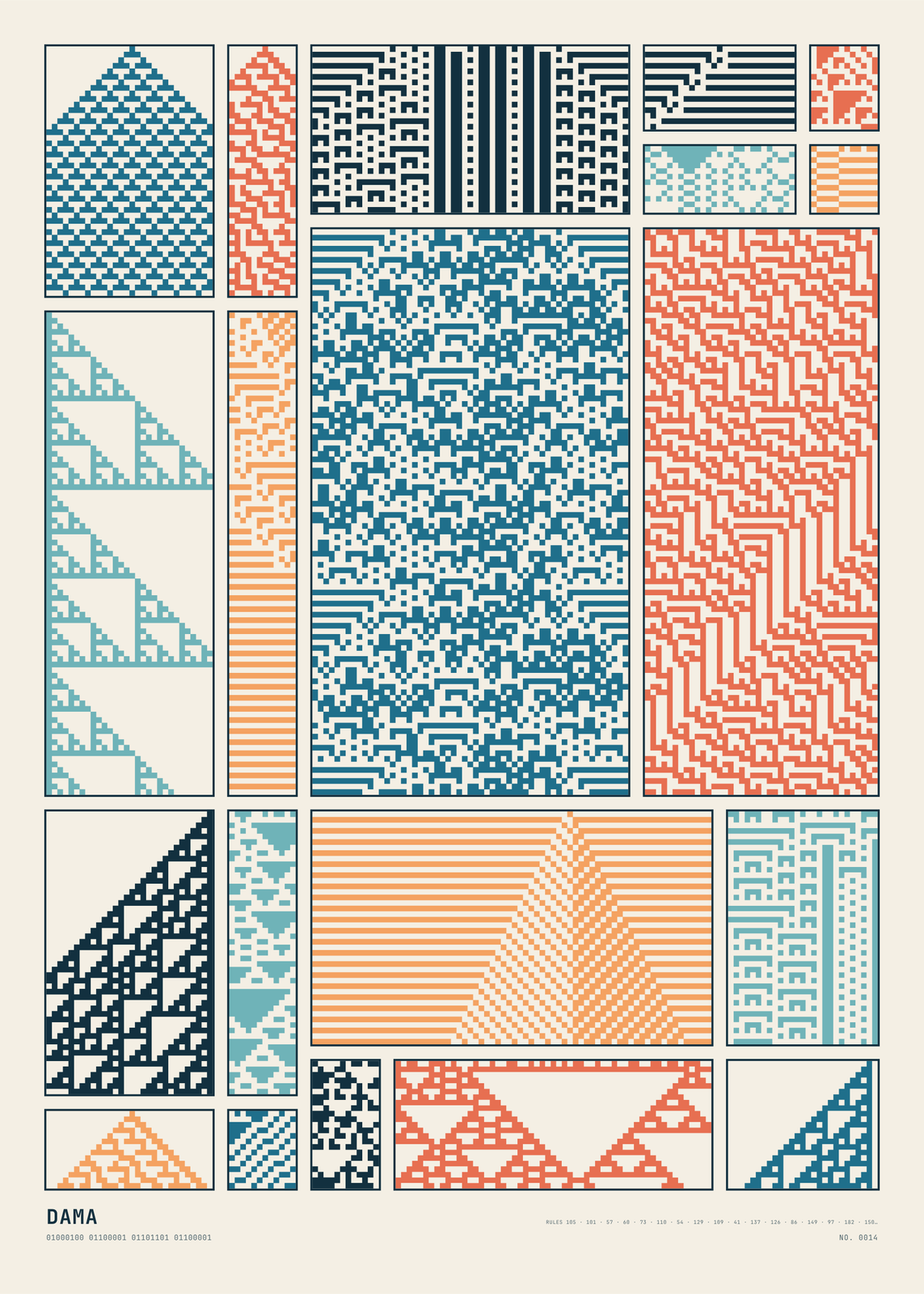
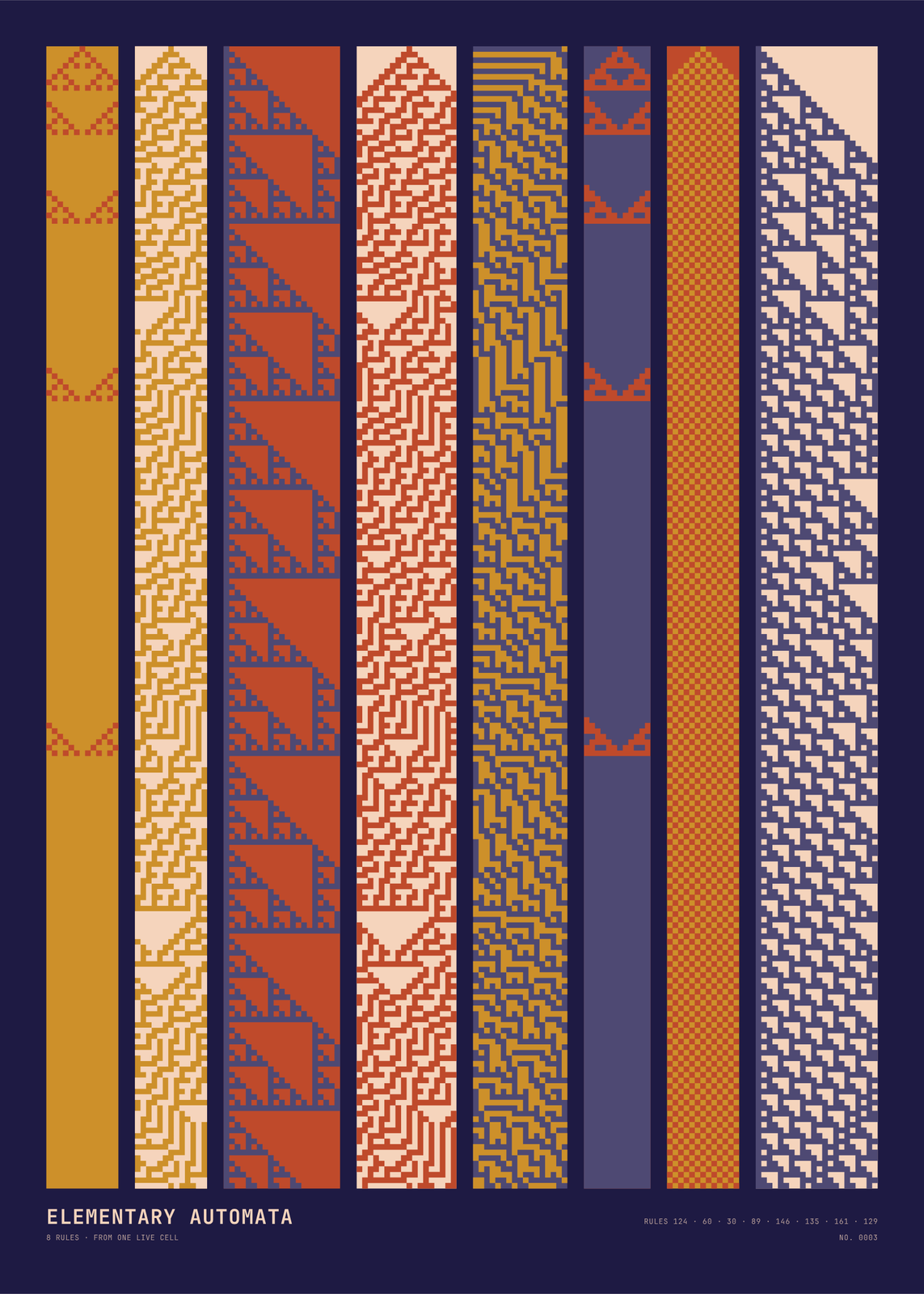
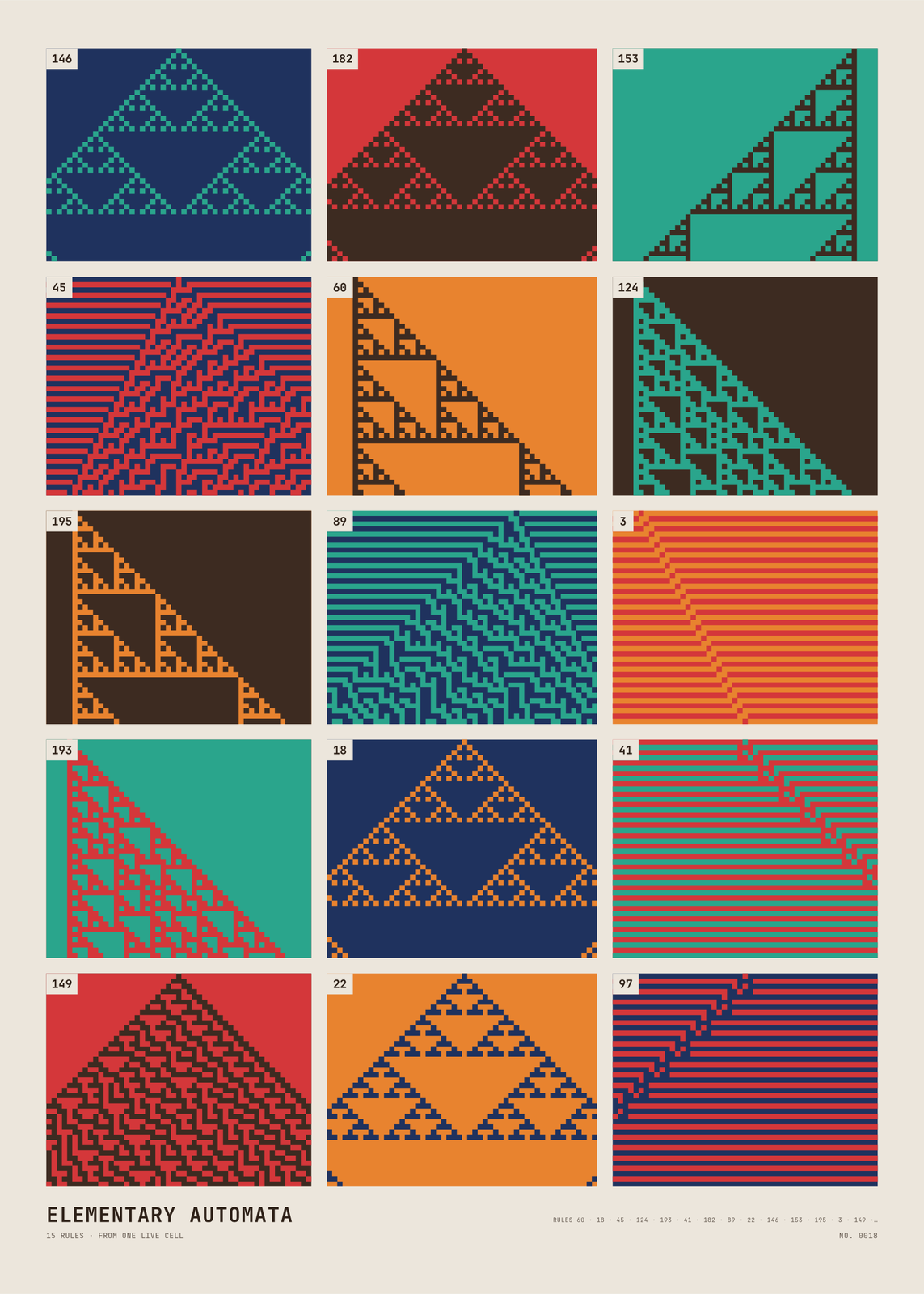
Rules and first rows
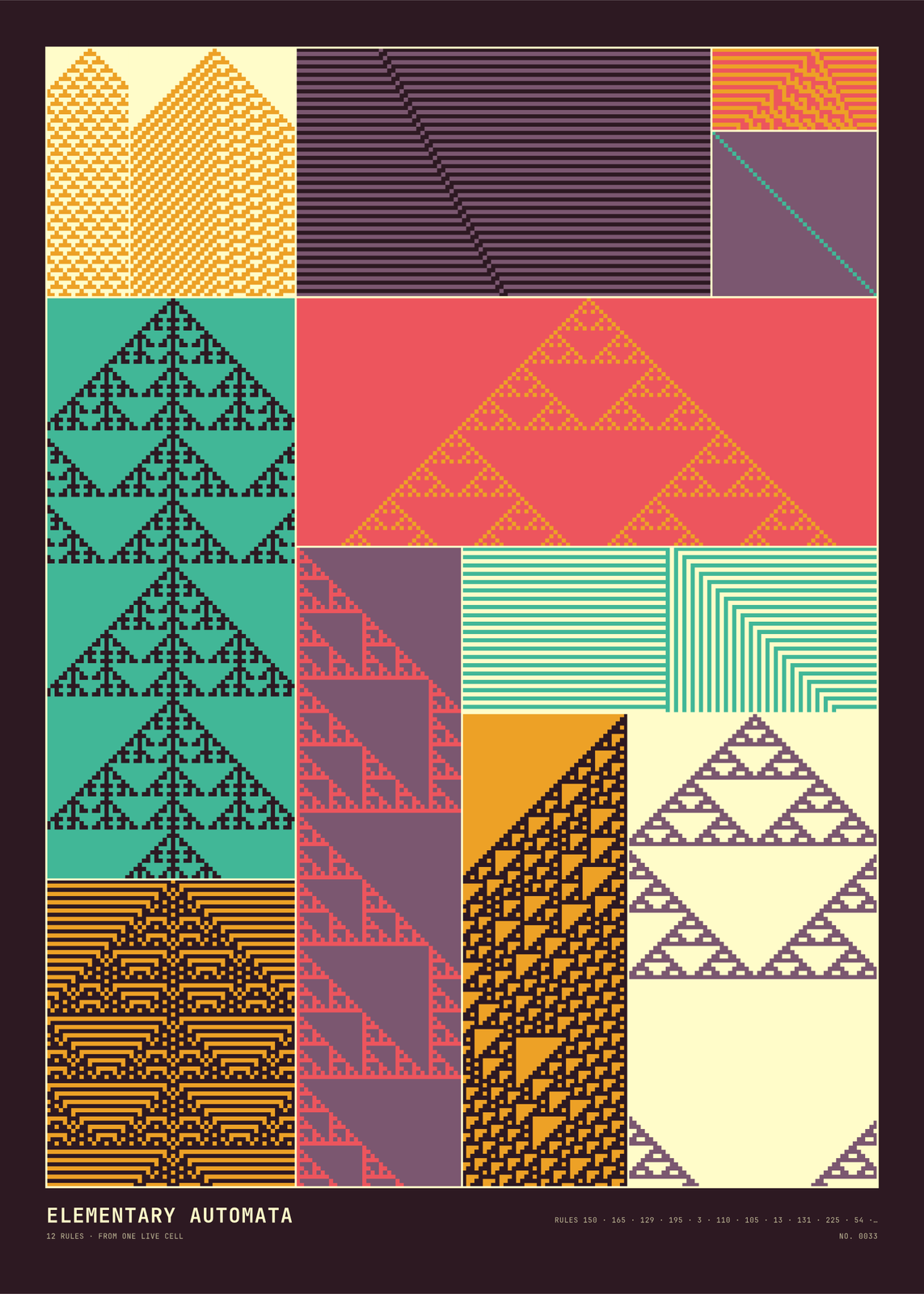
The famous rules
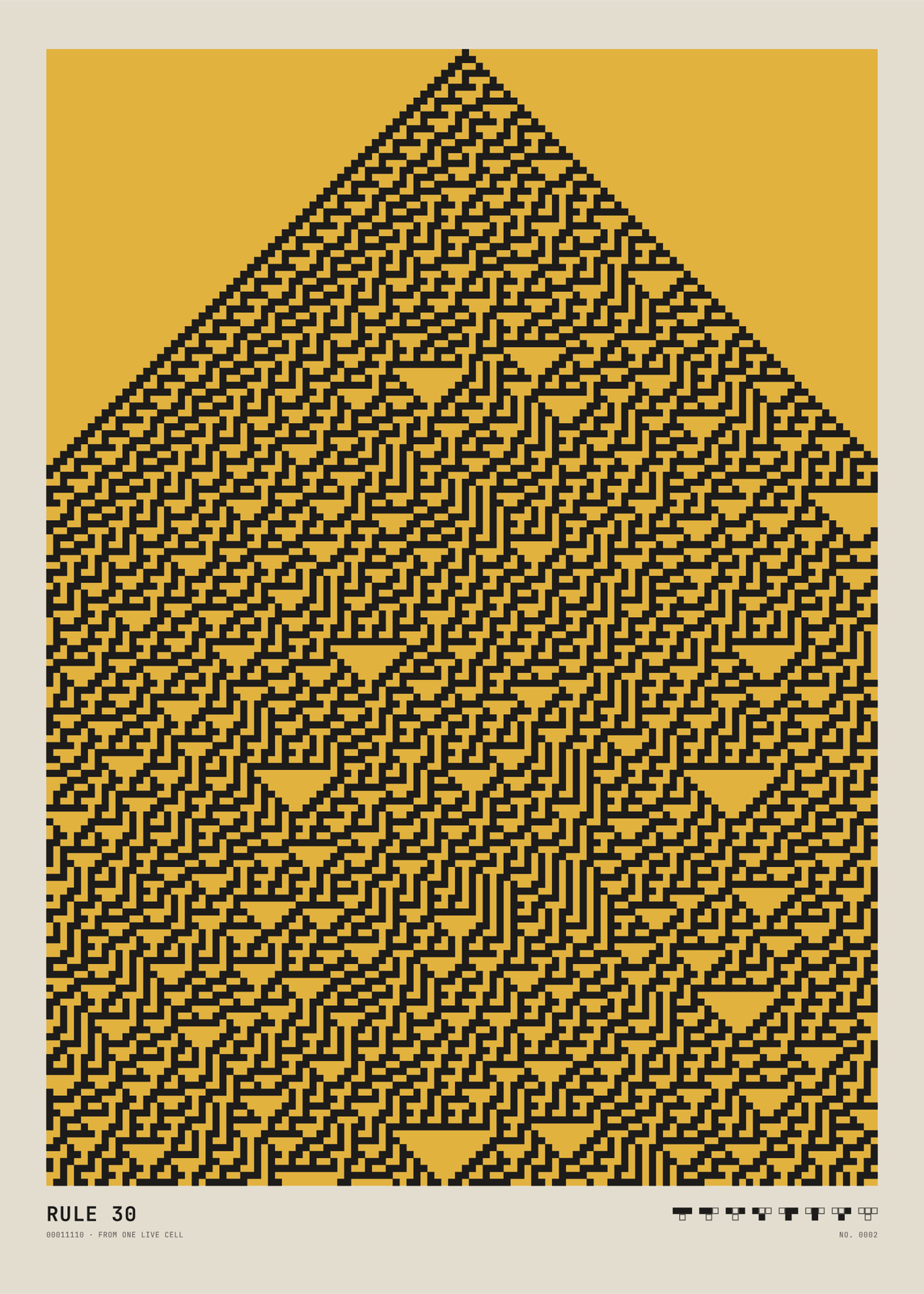
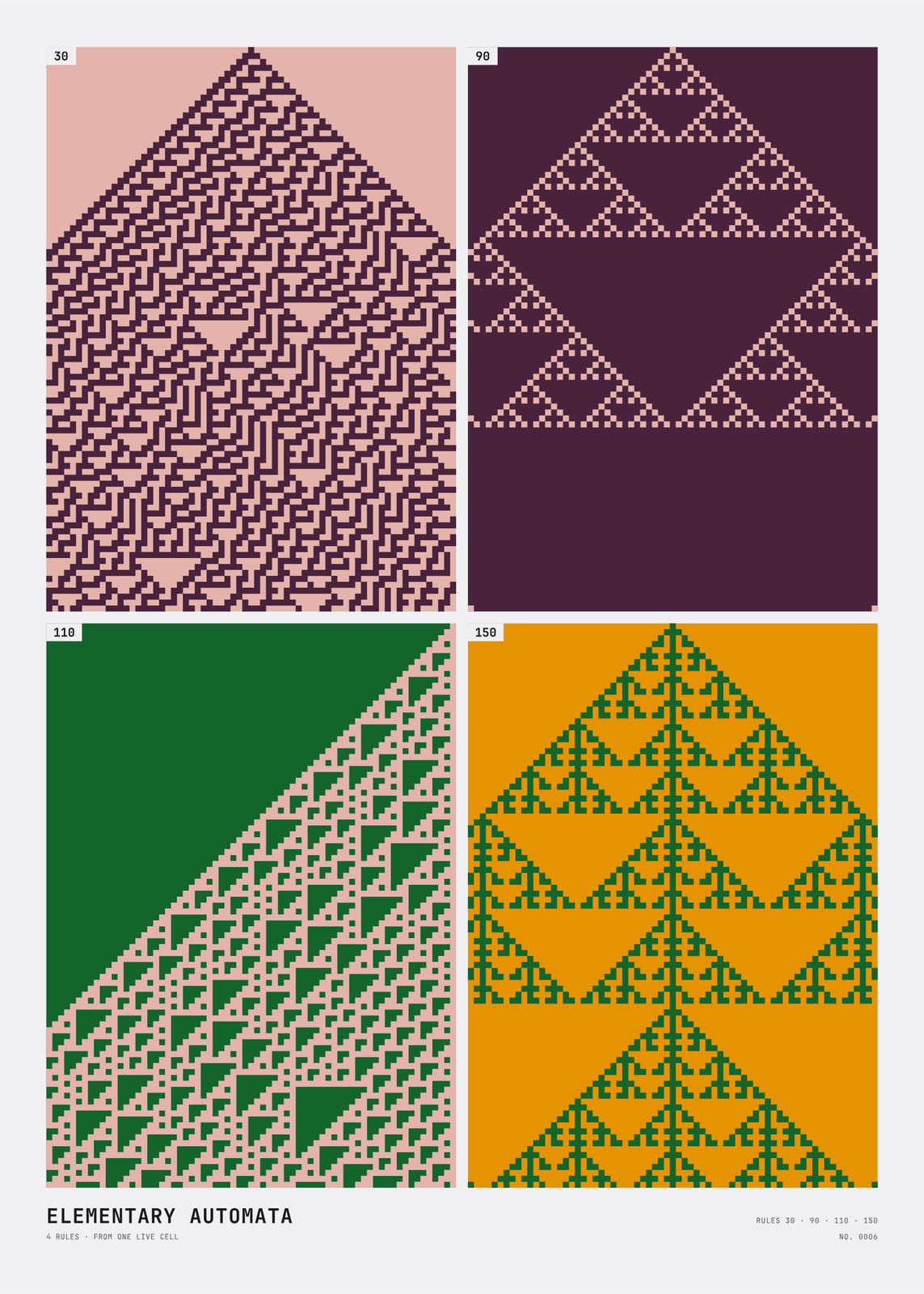
- Rule 30: from a single live cell it turns chaotic, so random that it was used to make random numbers.
- Rule 90: each cell is the XOR of its two neighbors, and one cell grows into Sierpiński triangles.
- Rule 110: gliders that collide and pass through each other. It is Turing complete: in principle, it can compute anything a computer can.
- Rules 150, 184 and the rest: pick your own list, or let the seed deal each panel a rule.
What each panel grows from
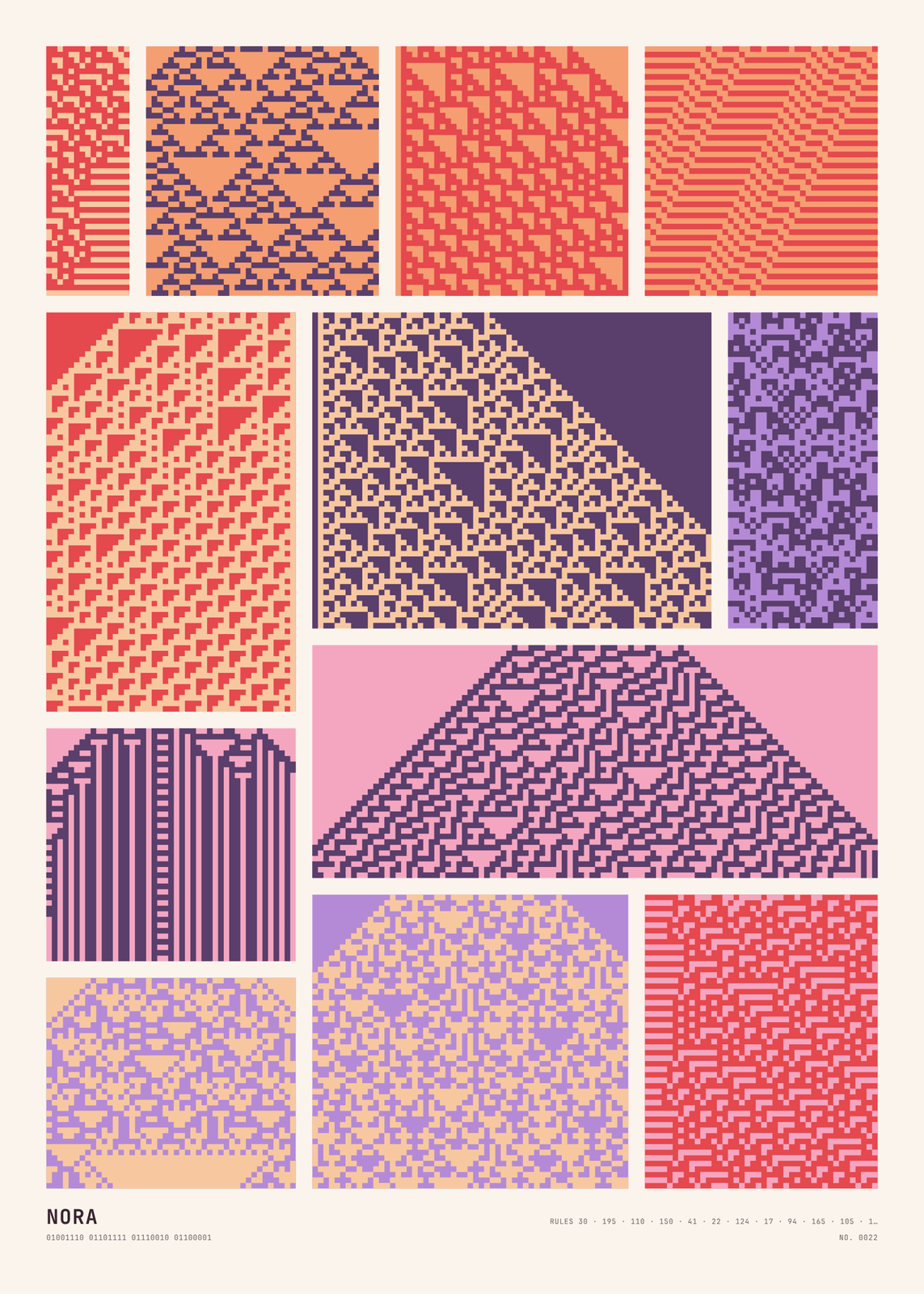
The first row decides everything. Write a word in bits, eight to a letter, and the rules grow from the name; start from one live cell for the classic triangles; or begin with random cells. A mix puts the word in the biggest panel. A date works too: its day of the year picks the biggest panel's rule, so January 30 runs Rule 30.
Looks and panels
Start from a look: a gallery of panels in mid-century colors, a specimen sheet with each rule numbered, De Stijl with black bars, friezes, a quilt, night dots or one big panel. Then split the sheet as a Mondrian, a cross, columns, bands or a grid, and draw the cells as squares, rounded squares, dots or runs.
Questions
What is an elementary cellular automaton?
A row of cells, each on or off, that grows down the page one row at a time. Each new cell looks at the three cells above it, and the rule number, read in binary, says what each of the eight possible patterns makes. Stephen Wolfram numbered the 256 rules in the 1980s.
Can I choose the rules?
Yes. Set Rules to “Your list” and type the numbers, from 0 to 255; the panels take them in turn, the biggest first. Turn on “Rule numbers” for a small tab in each panel's corner.
How does a name become the first row?
Each letter is written as eight bits, so Nora is 32 cells, on for 1 and off for 0. The rules grow the pattern from there, so a name always grows the same picture. The caption prints the word and its bits.
What sizes can I print?
US Letter, 8 × 10, 11 × 14, 12 × 16 and 12 × 18 in, A4 and A3, free. You download a 300 DPI JPEG drawn at the size you pick. Larger prints, up to 24 × 36 in, are coming soon.
Related
Gift ideas by occasion
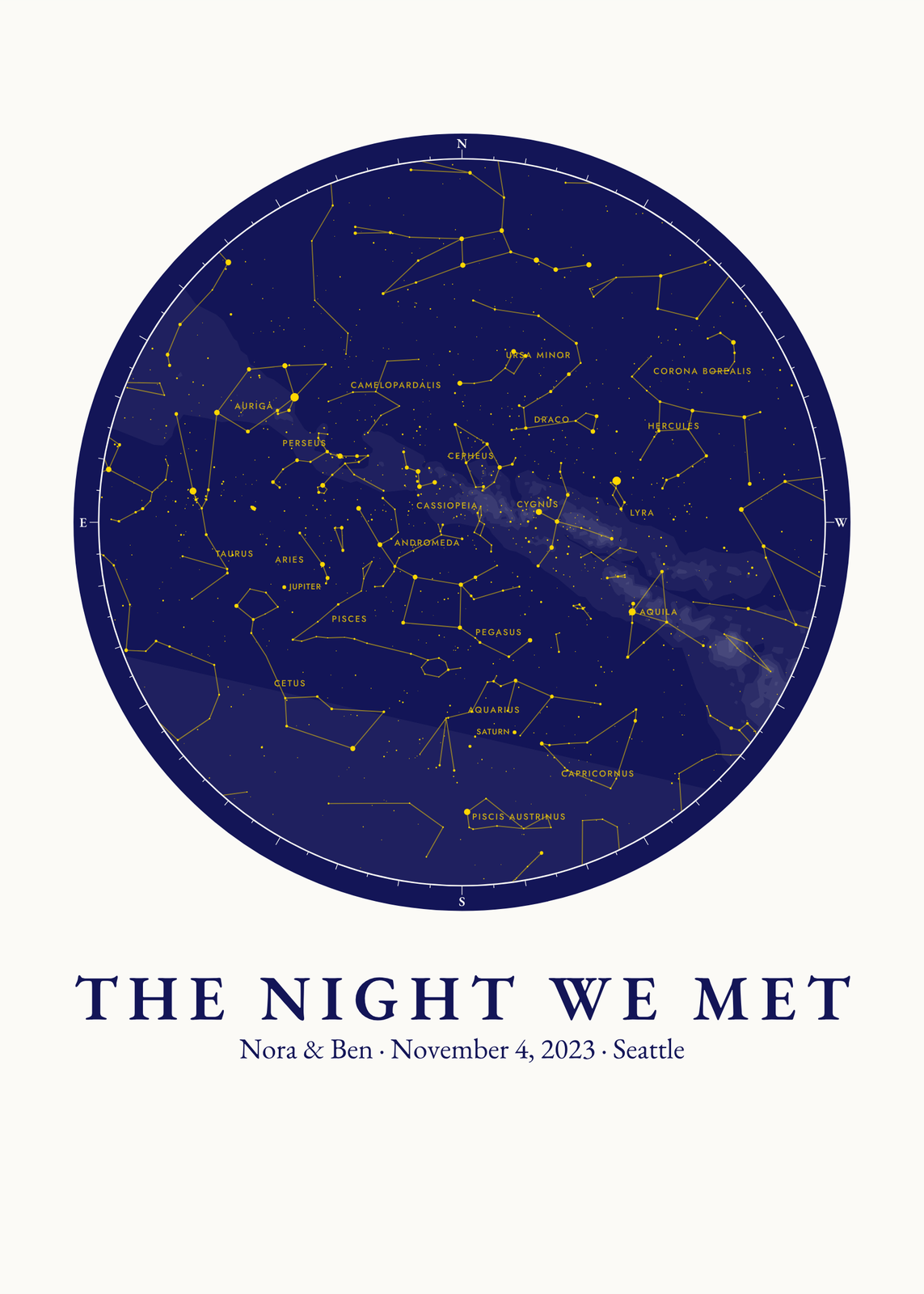
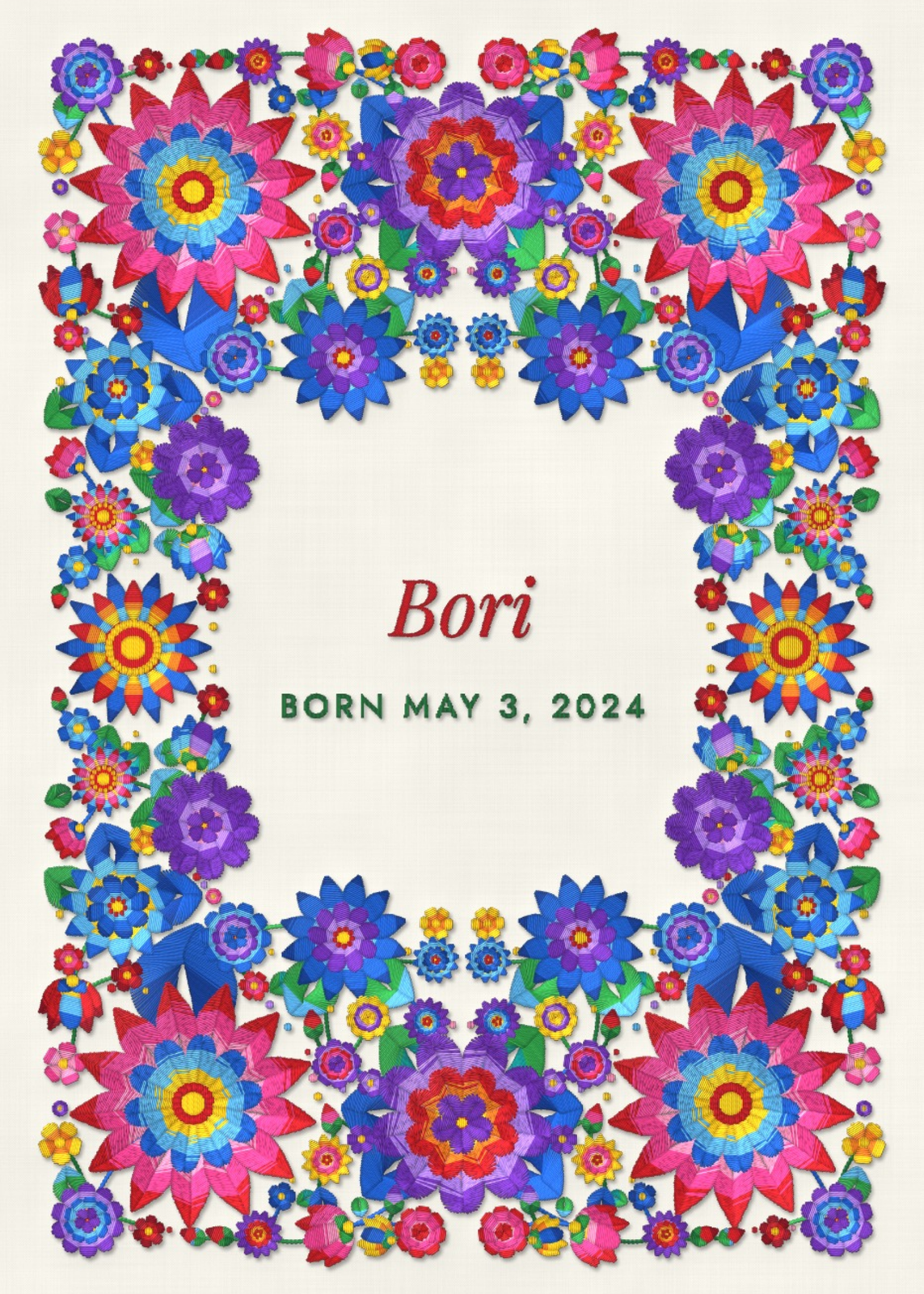
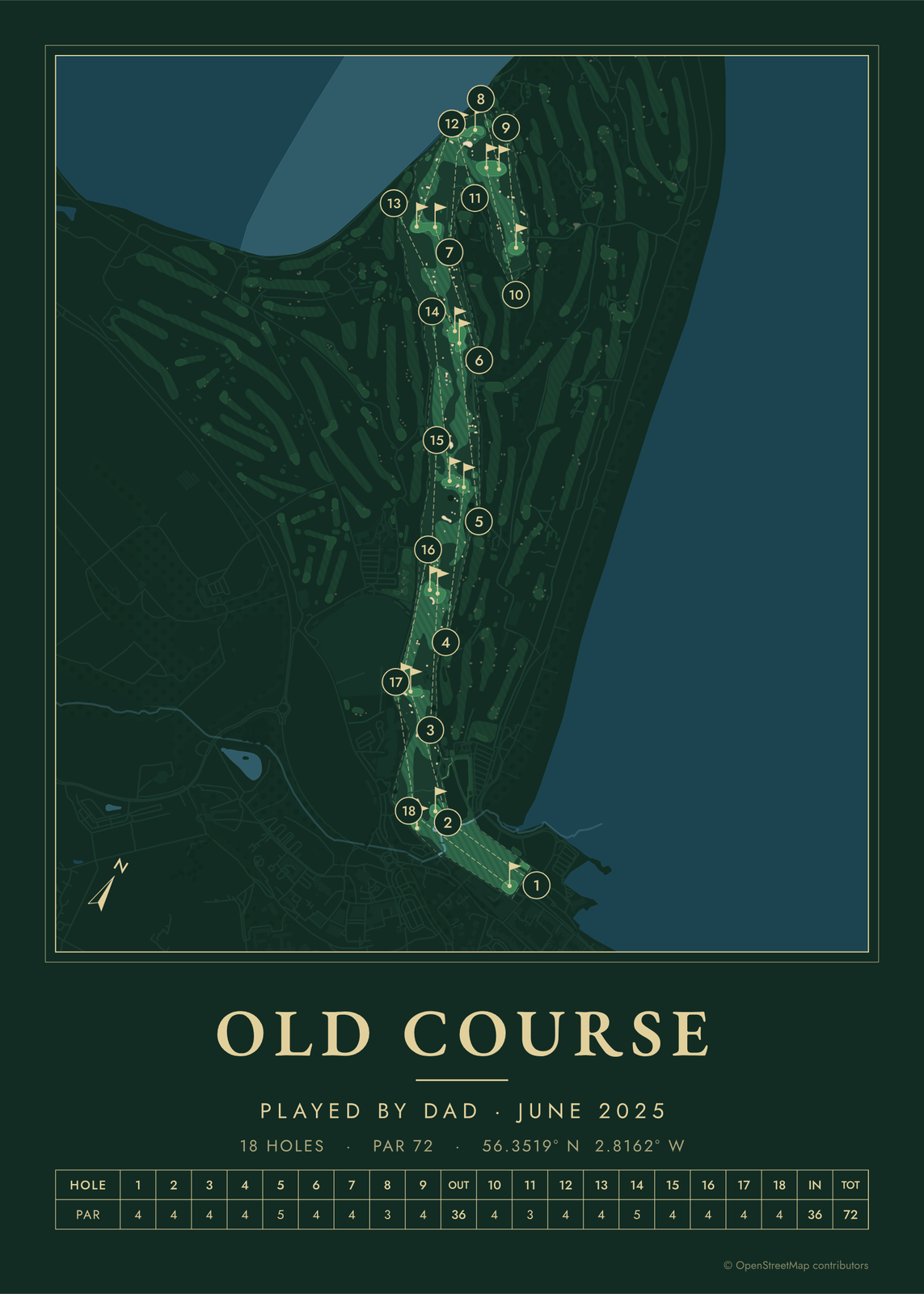
Every example is made with the Posterage generators. Change anything, then download it as a 300 DPI JPEG.