Strange attractor art chaos drawn as millions of points of light
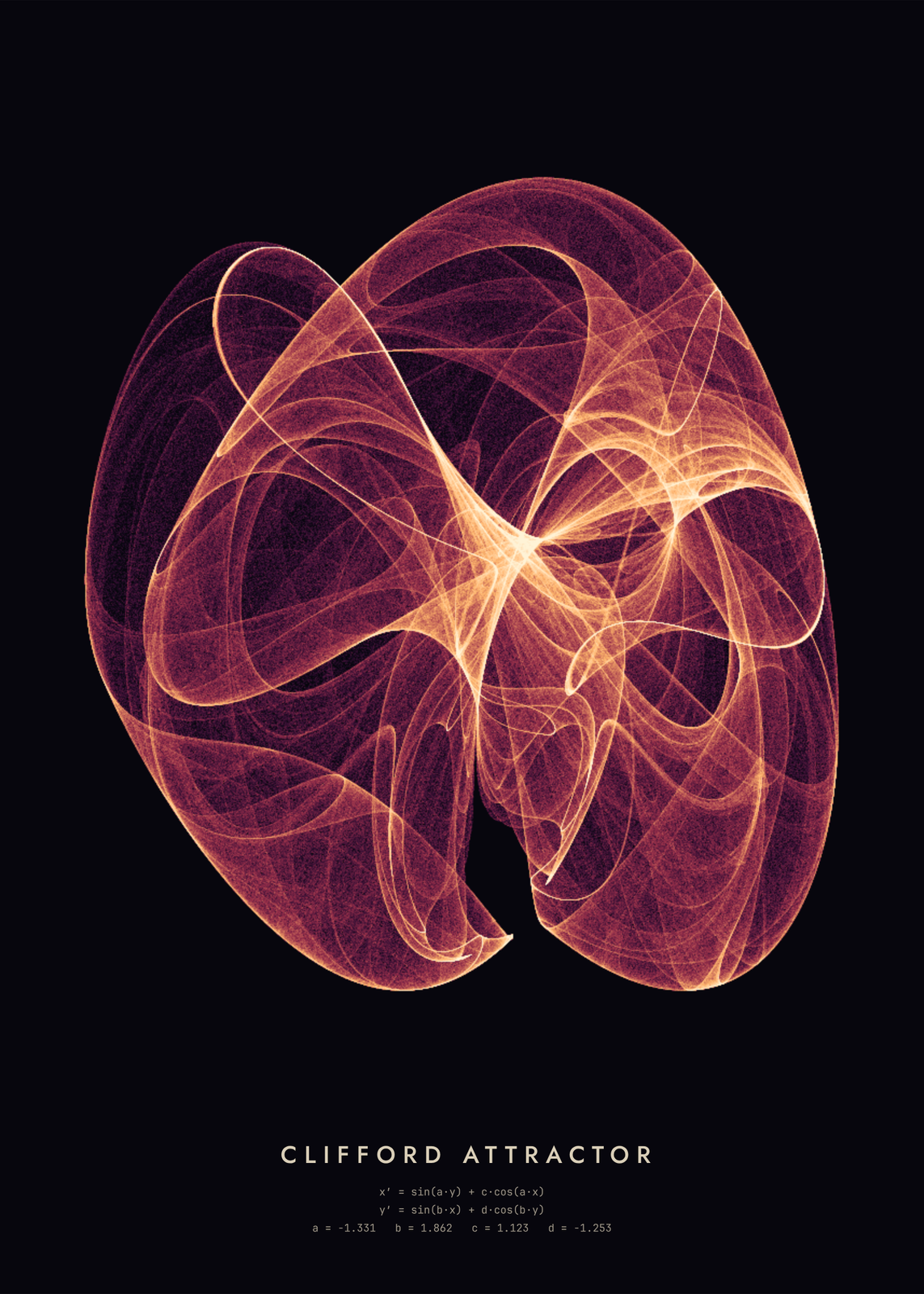
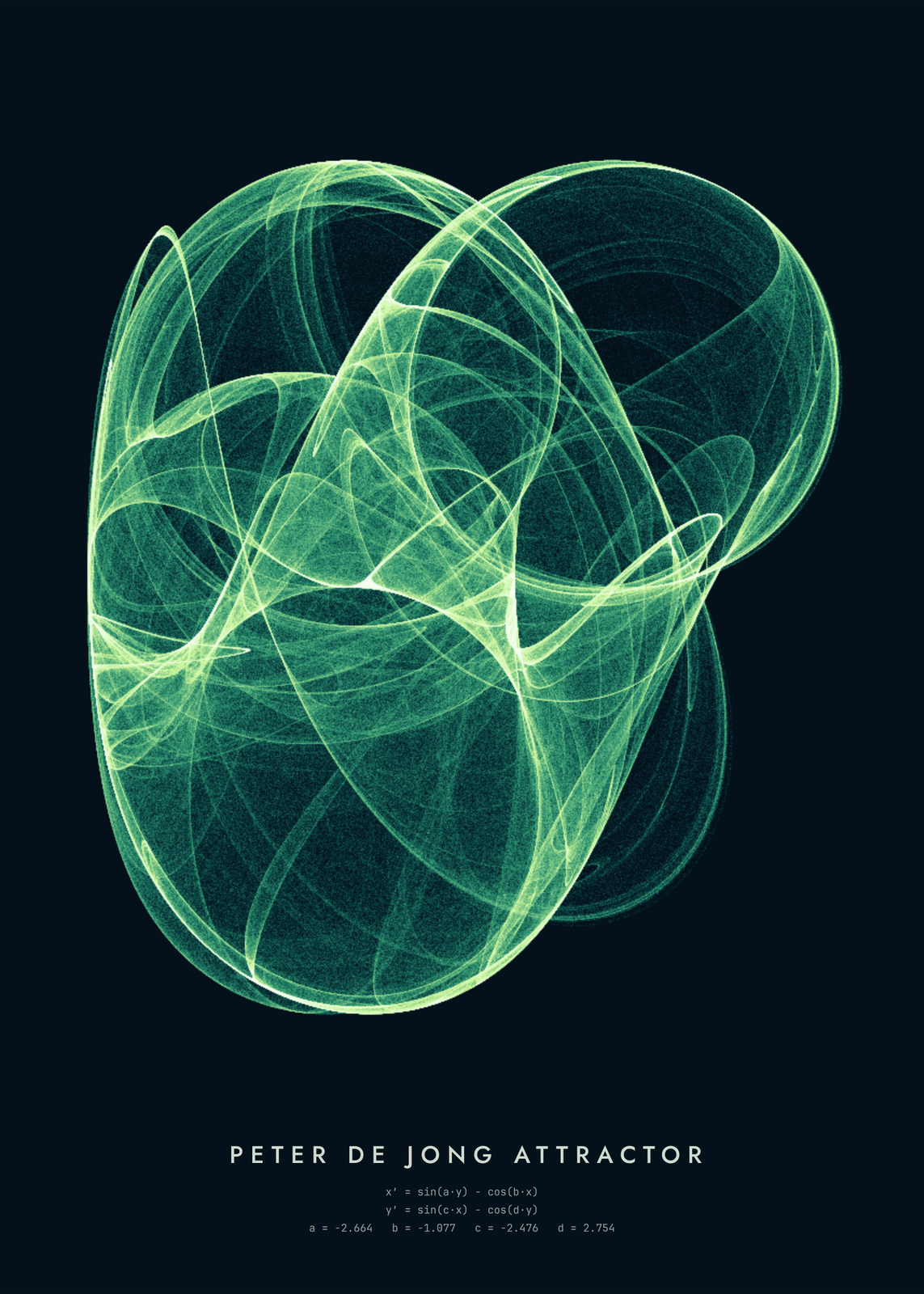
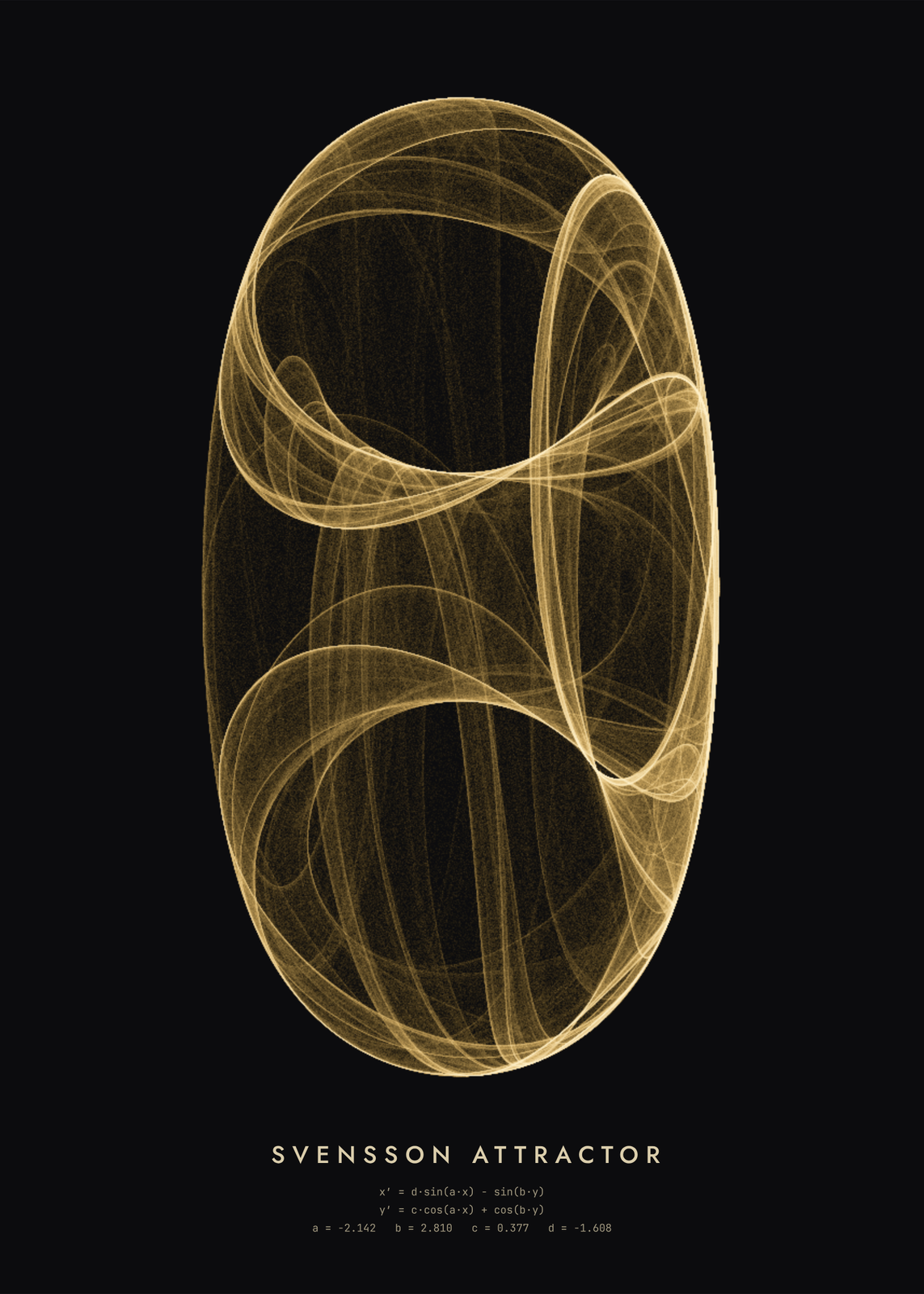
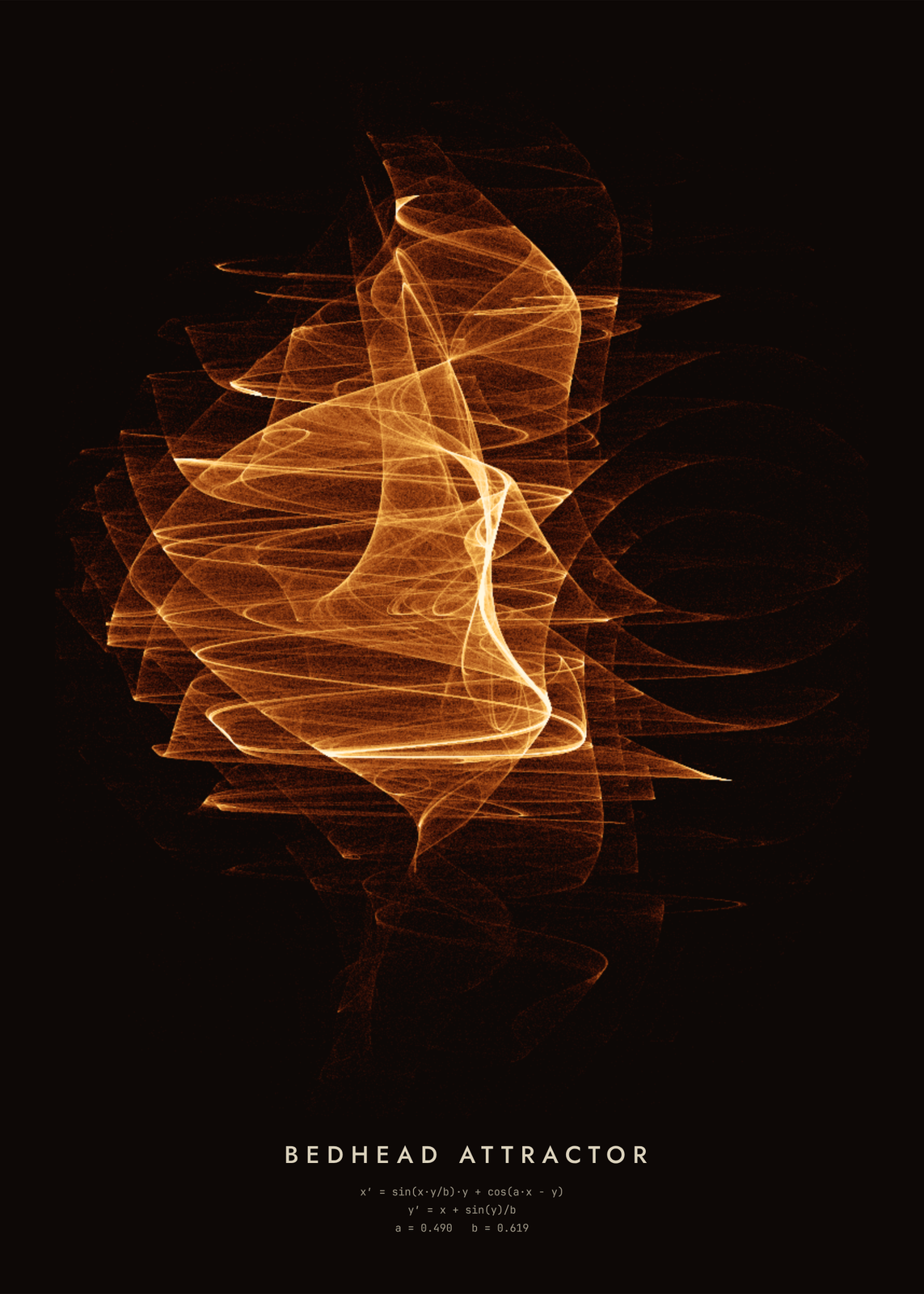
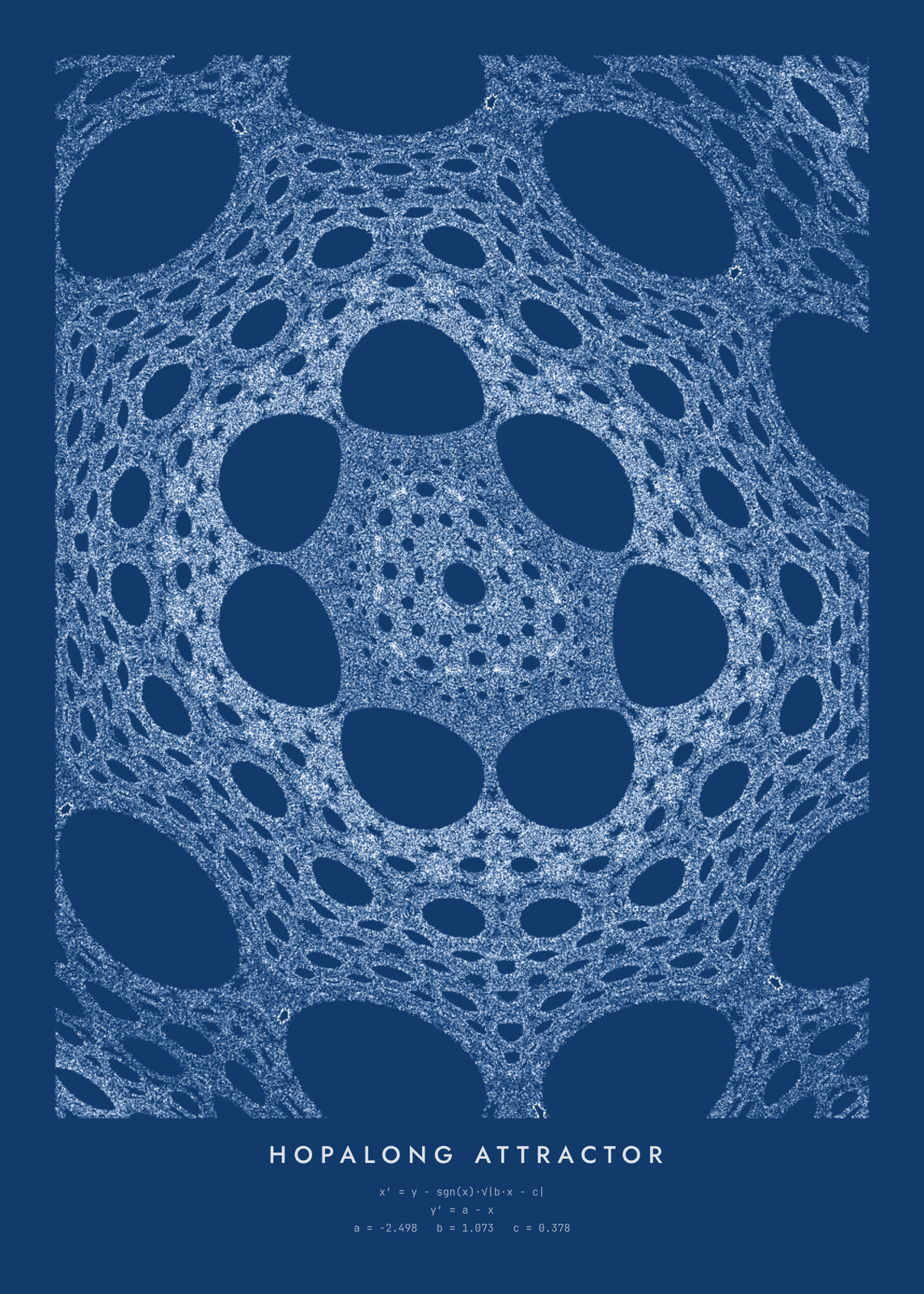
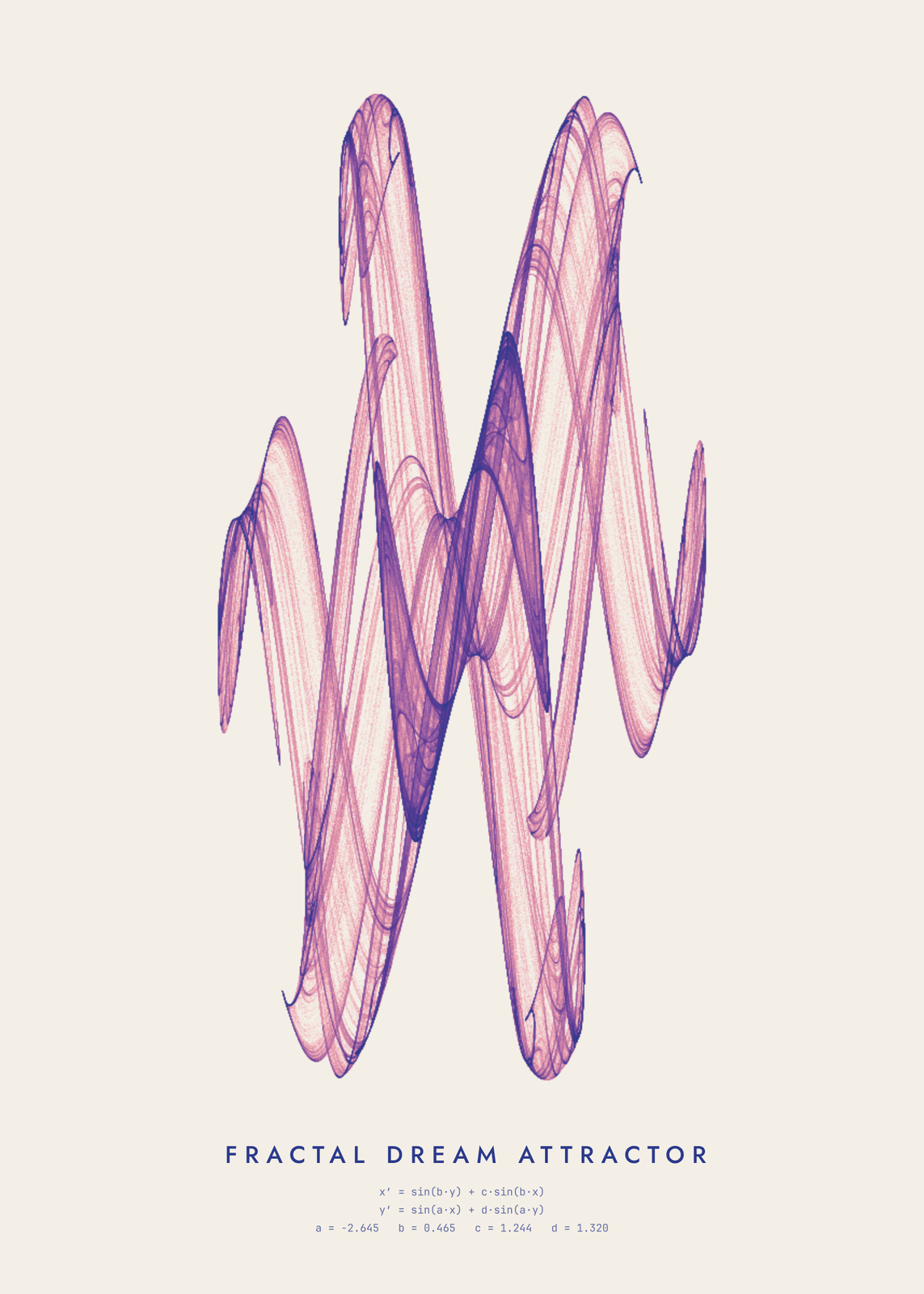
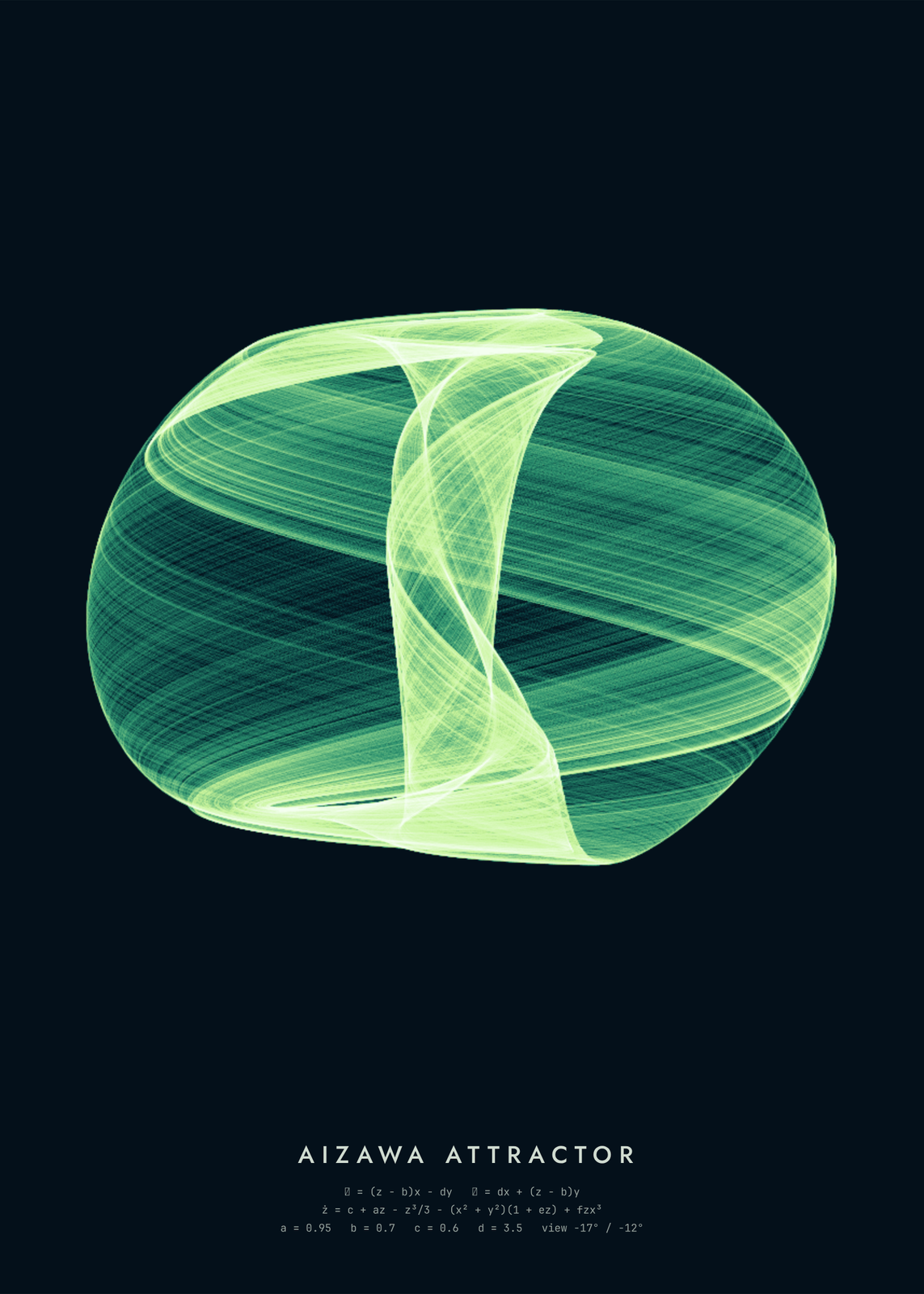
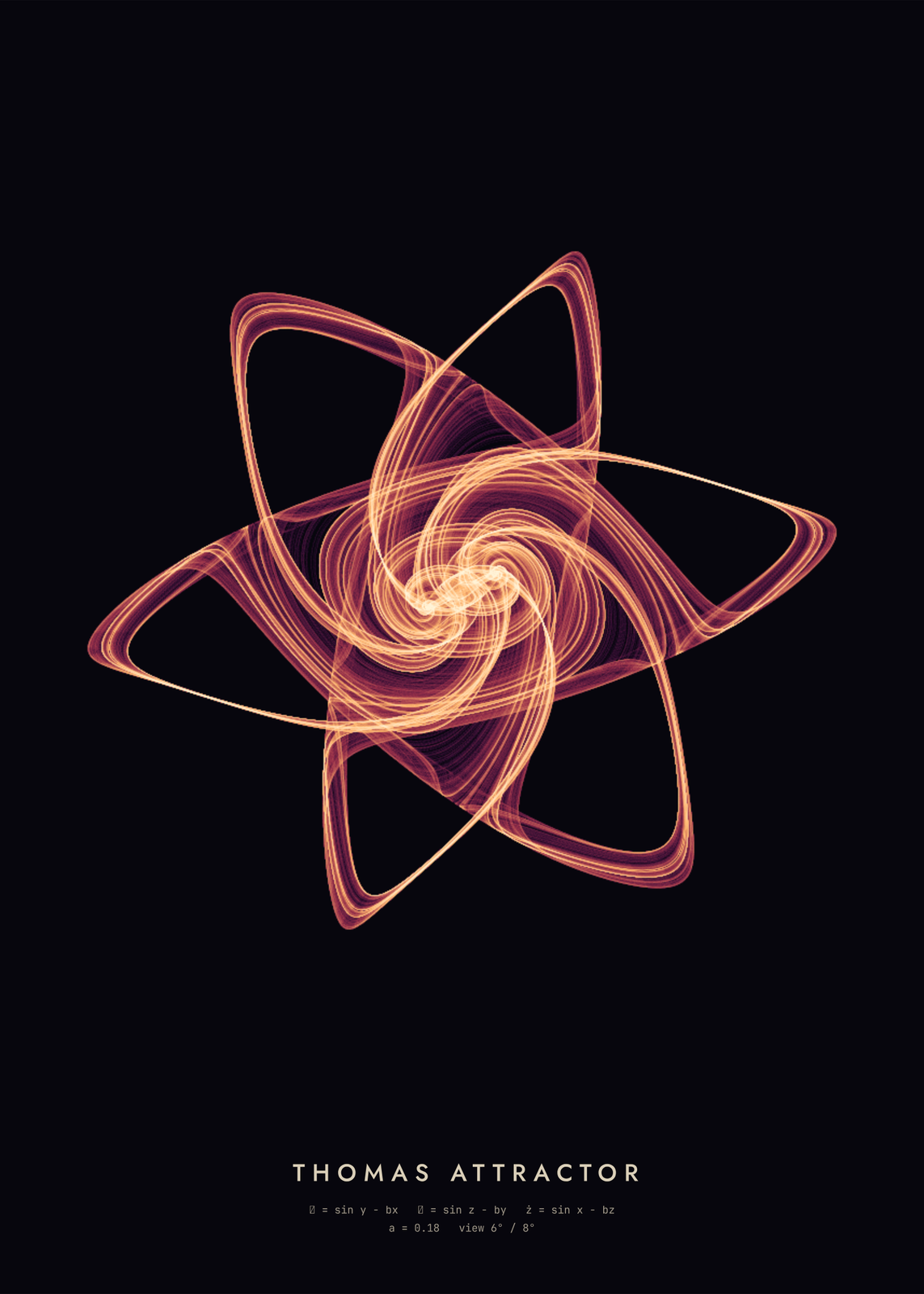
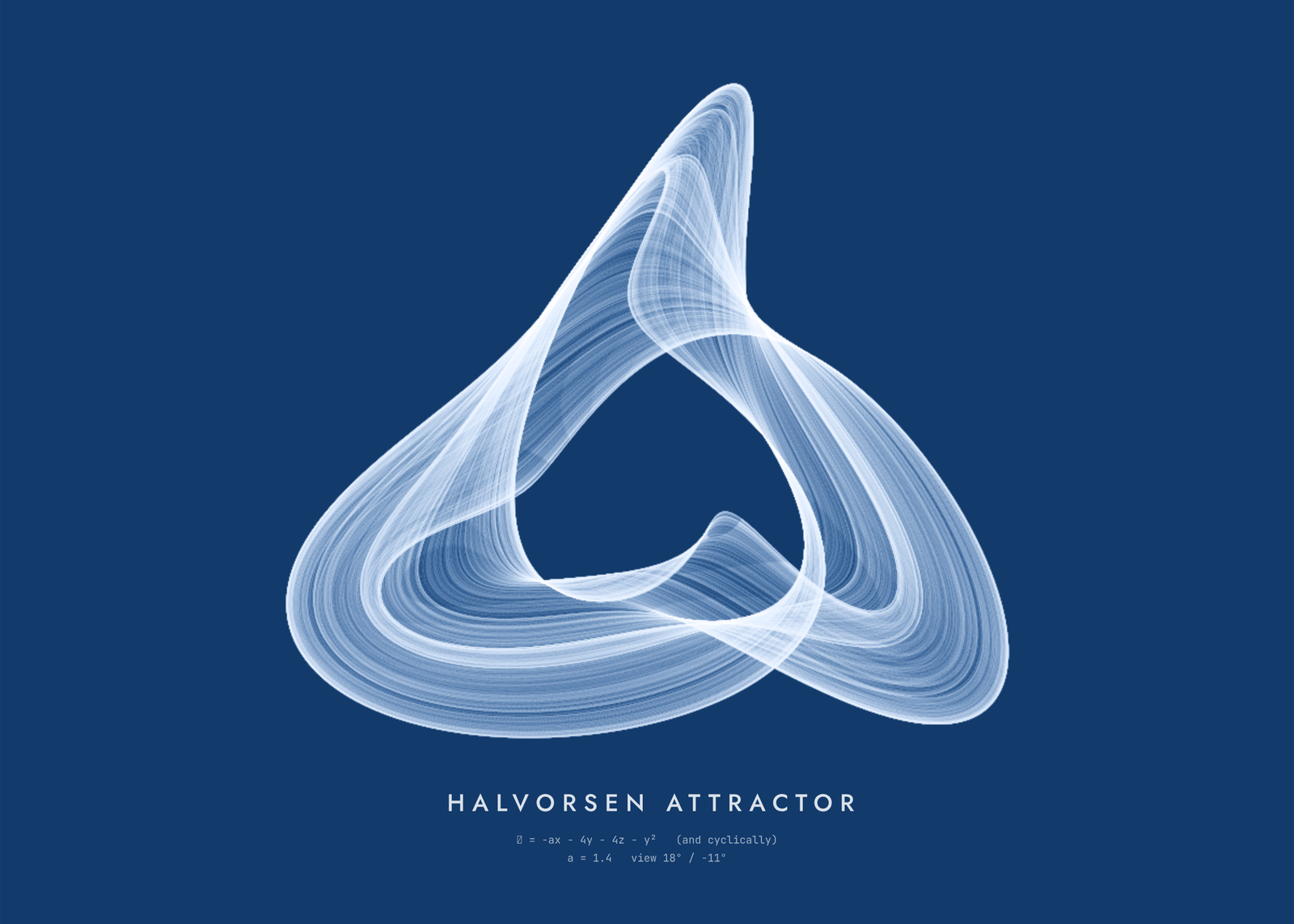
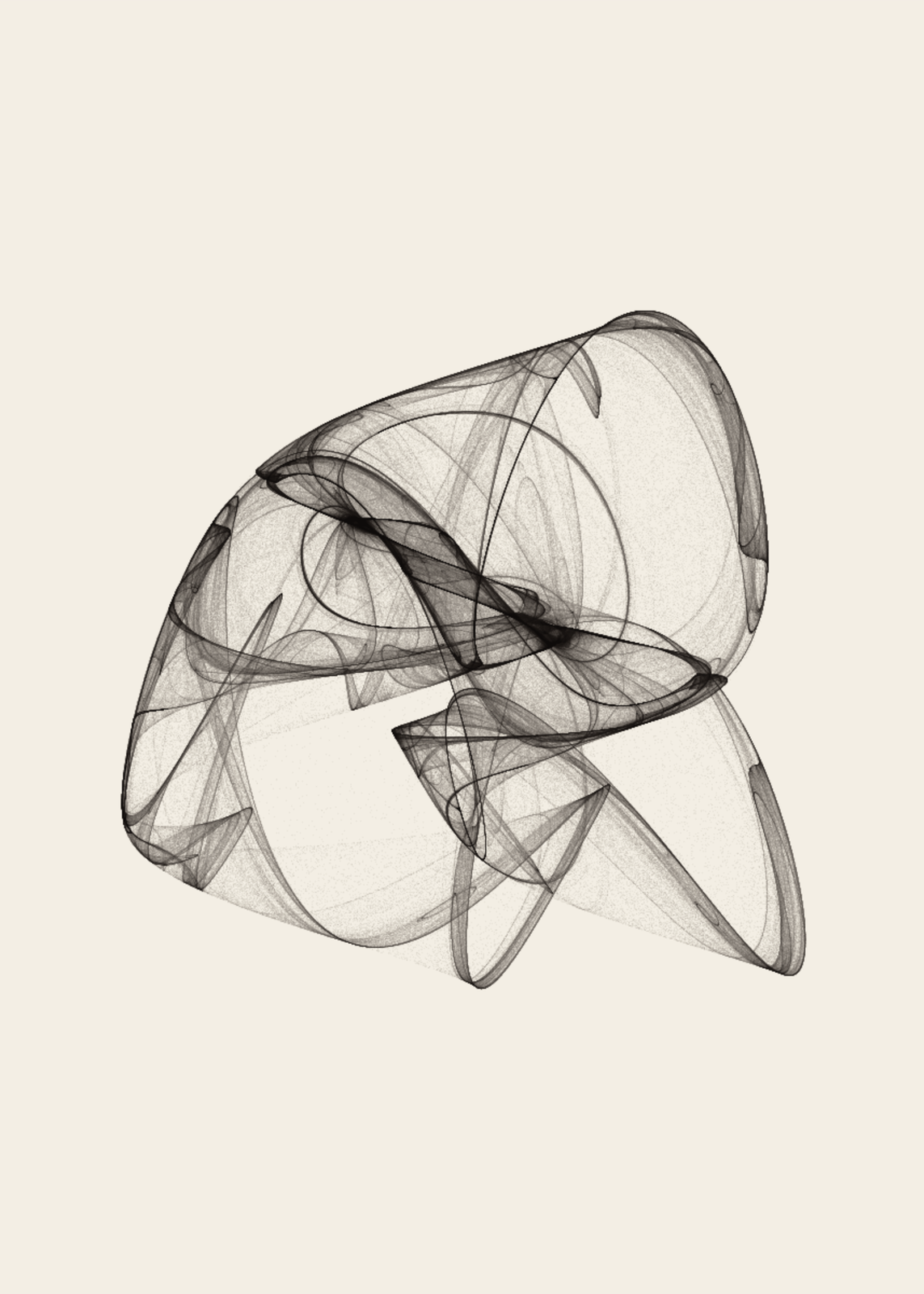
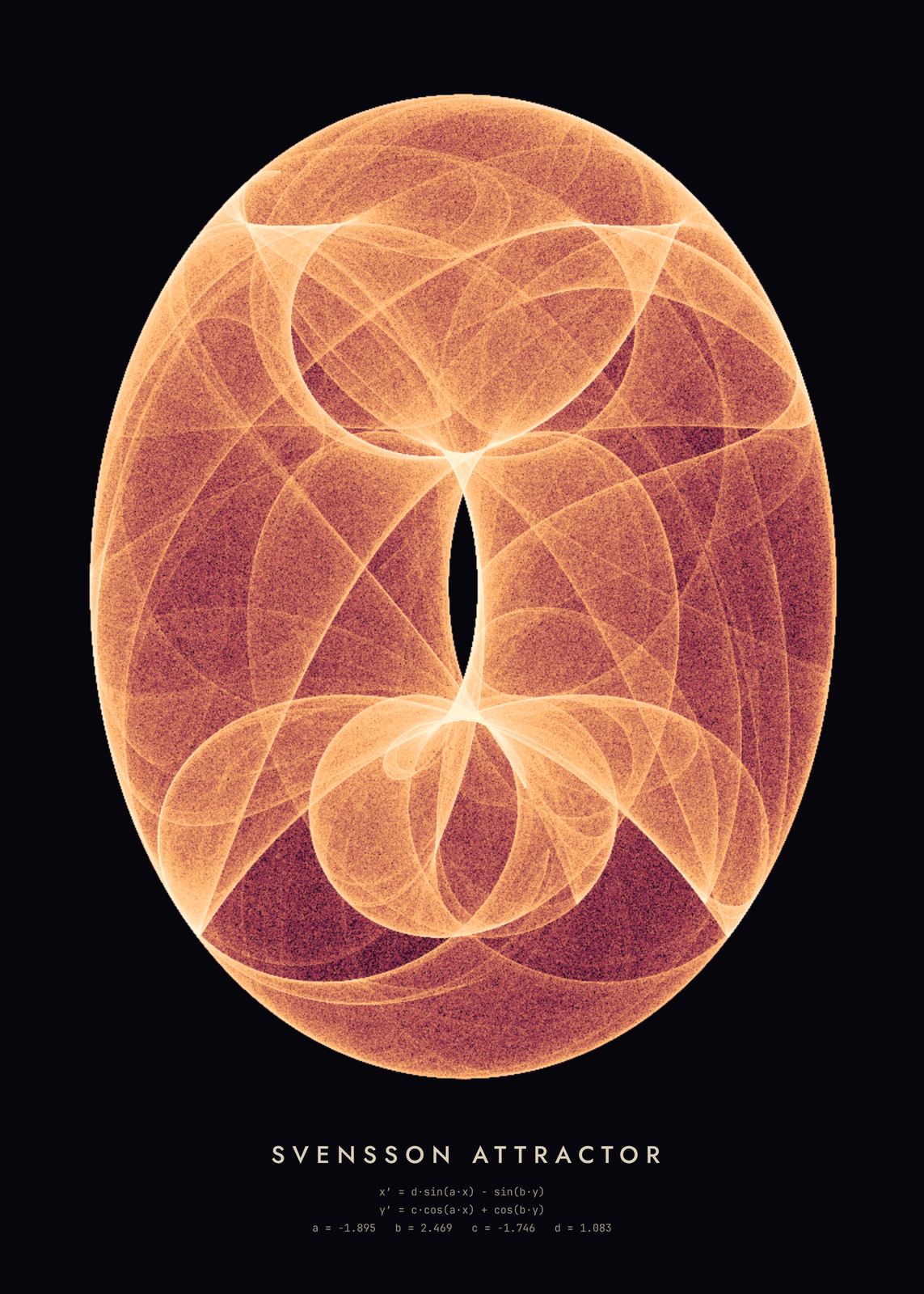
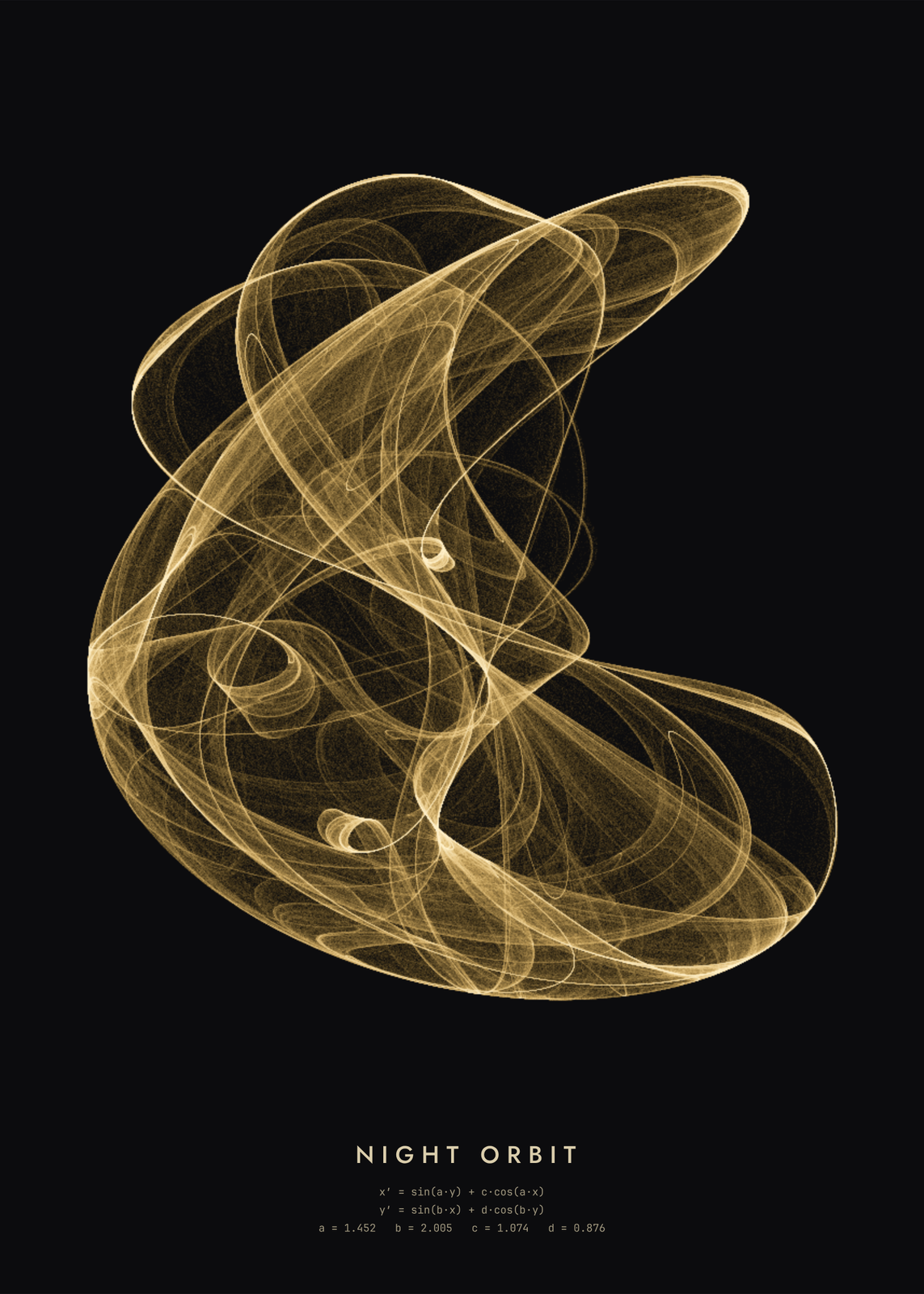
A strange attractor is where a chaotic system ends up: run the equations long enough and the points settle onto one shape, yet never repeat. Iterate a map millions of times and the points pile up as light; follow a flow and it traces a line. Each seed searches for its own chaotic form, the equations and parameters print under the title, and you pick the colors.
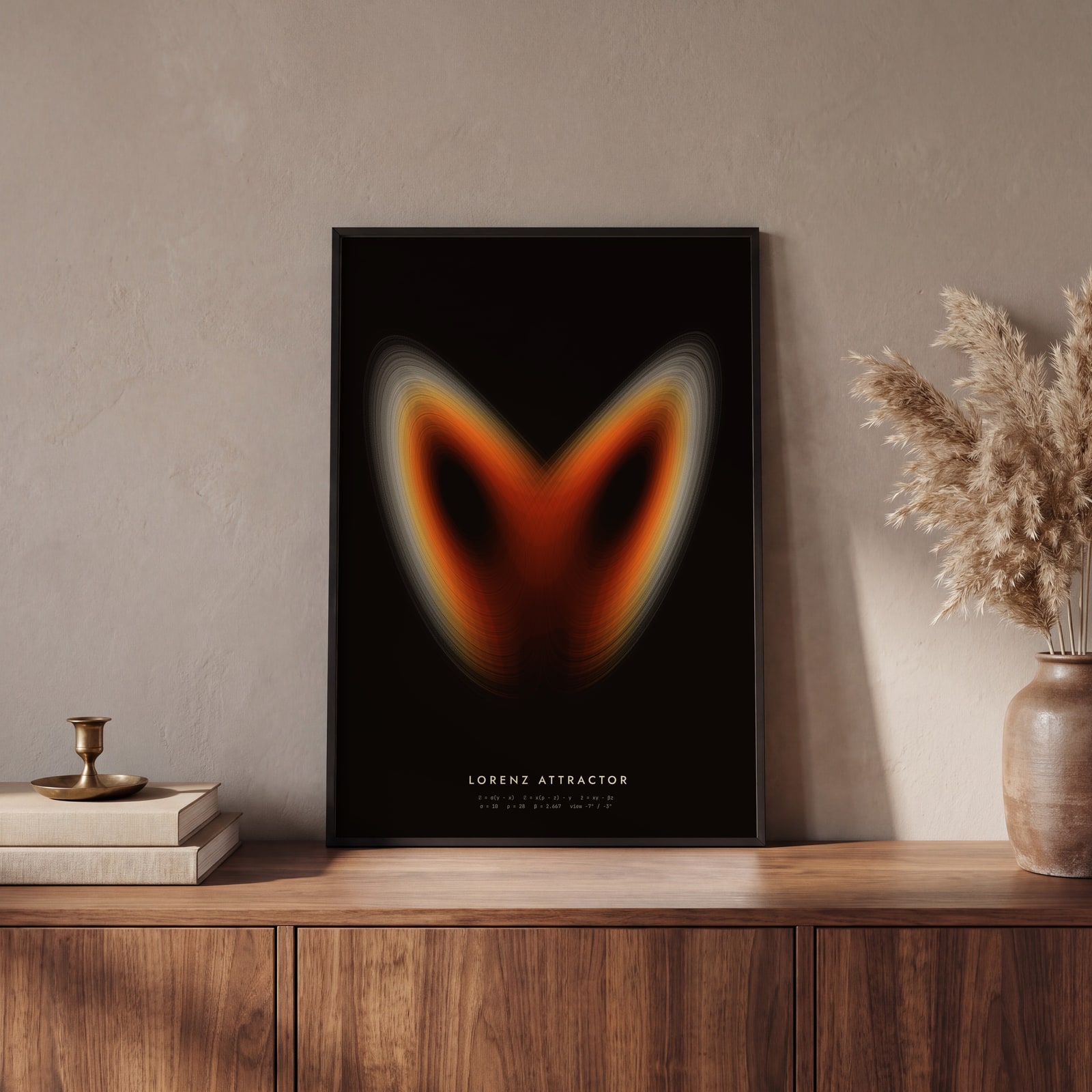
On the wall
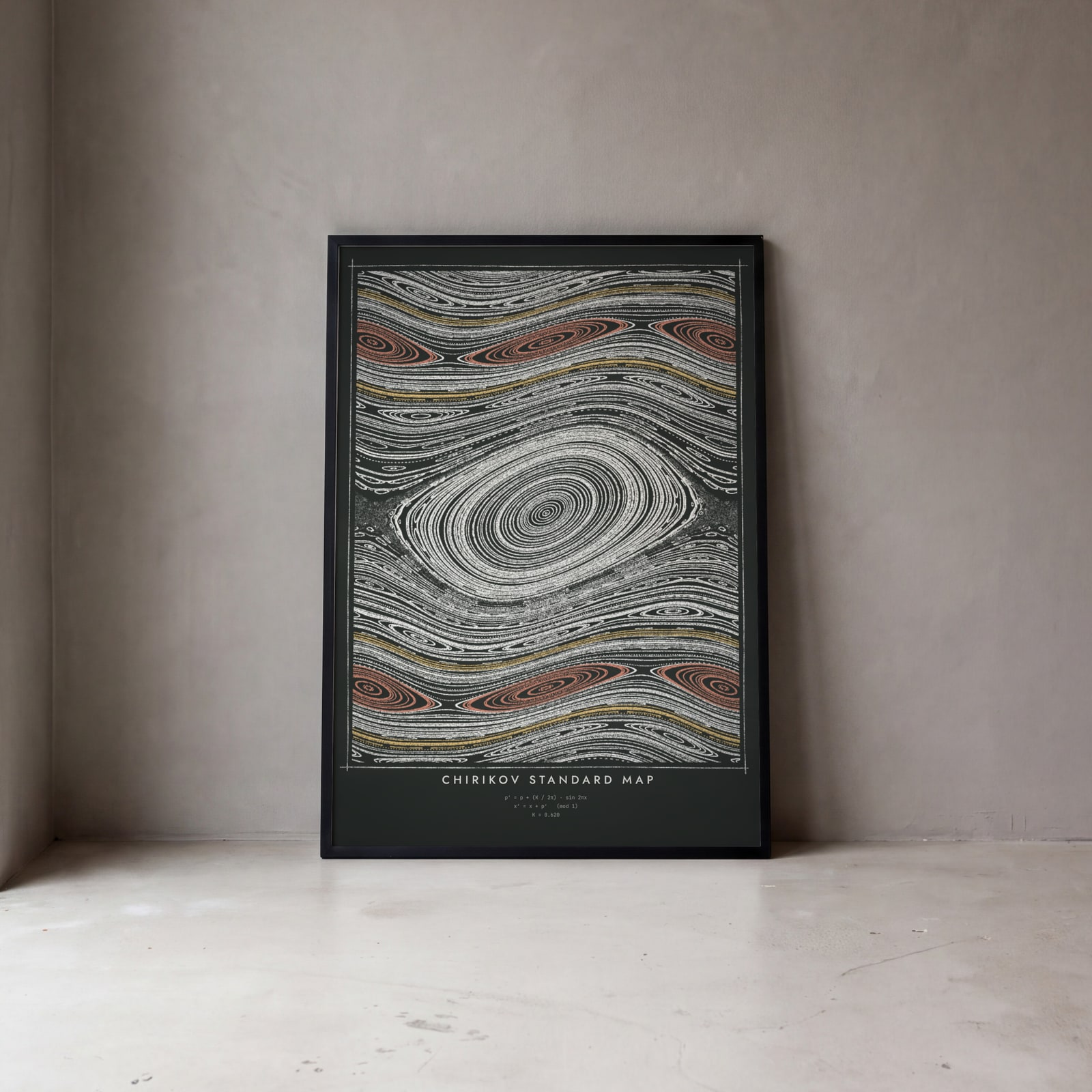
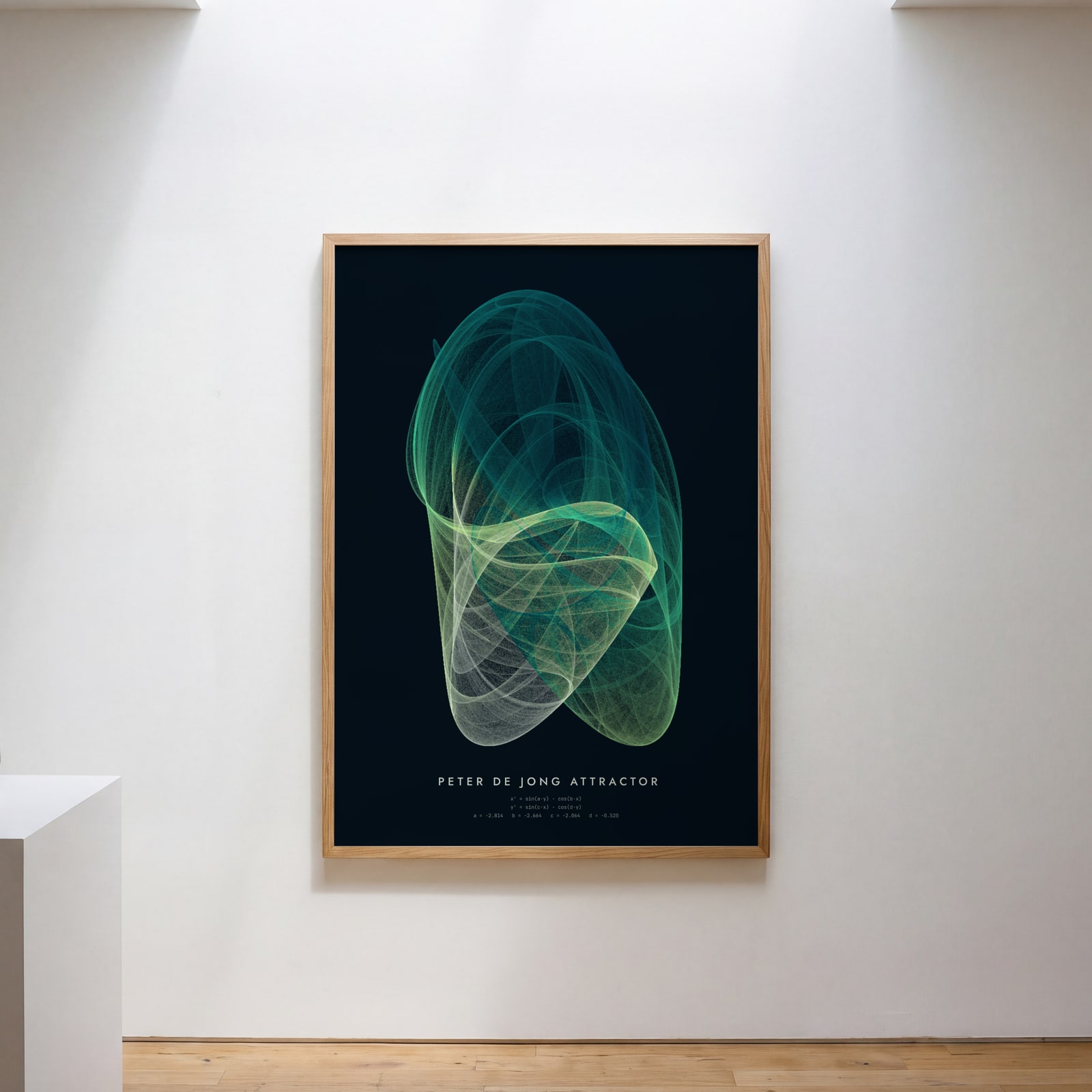
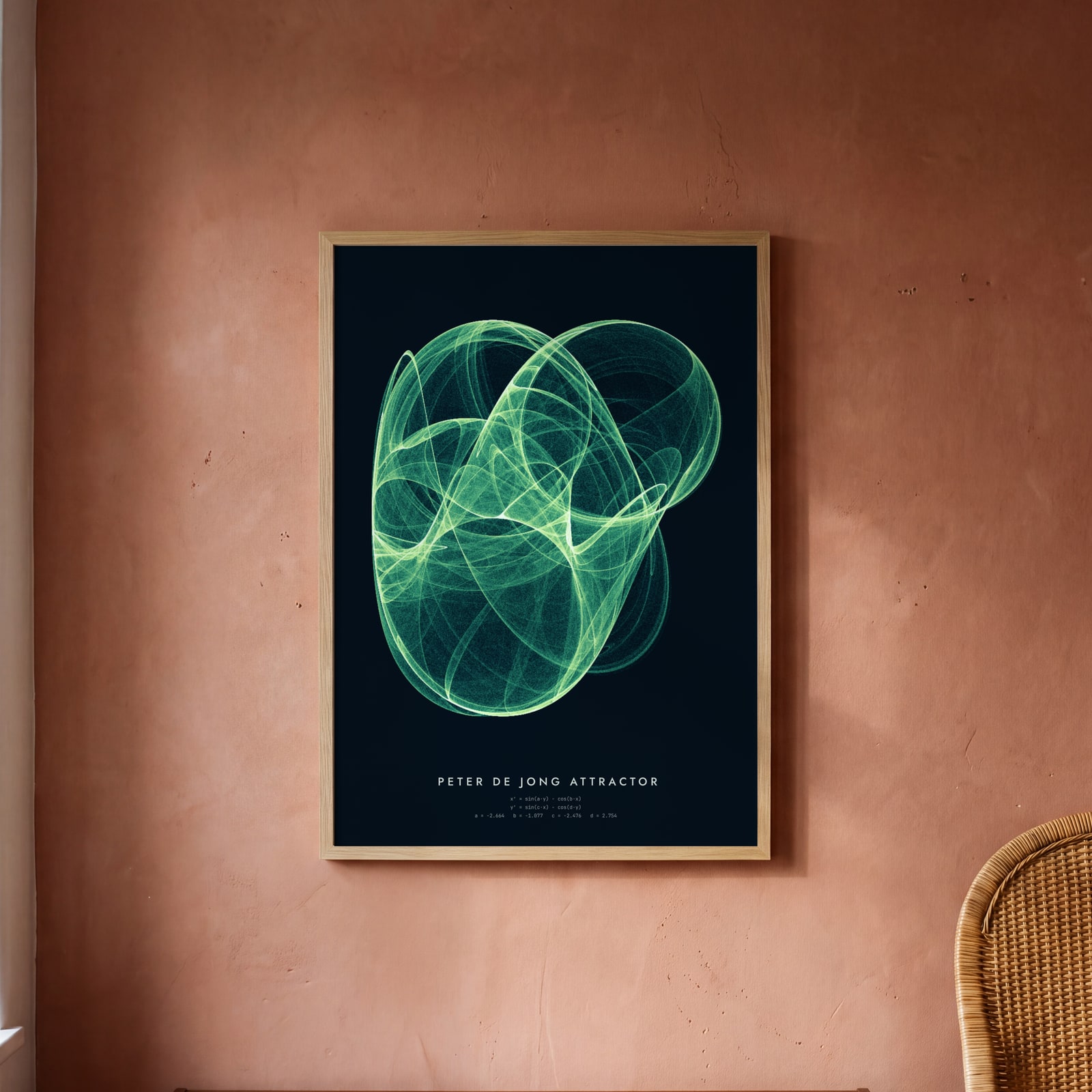
A few of them framed at home. Open any one to make it yours.
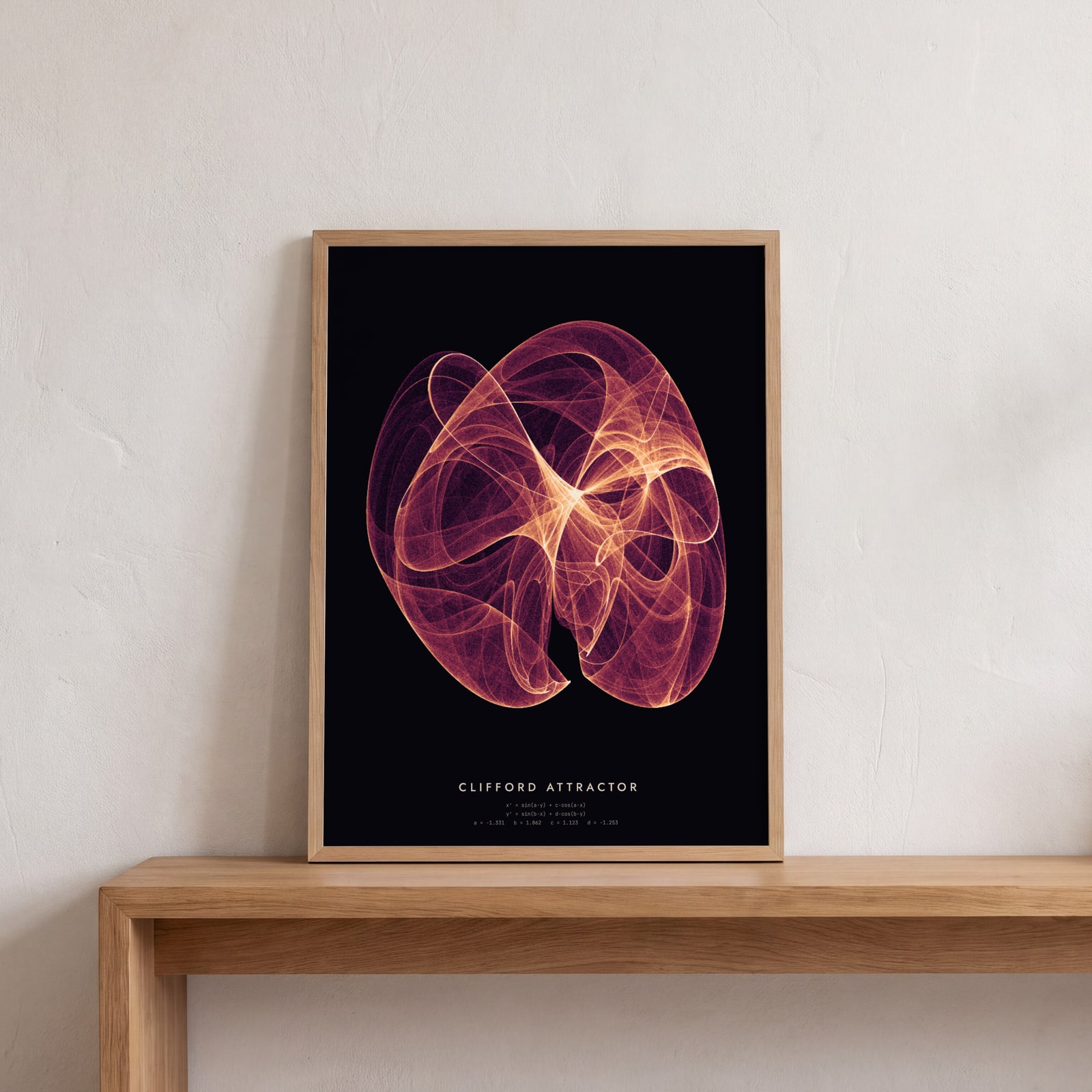
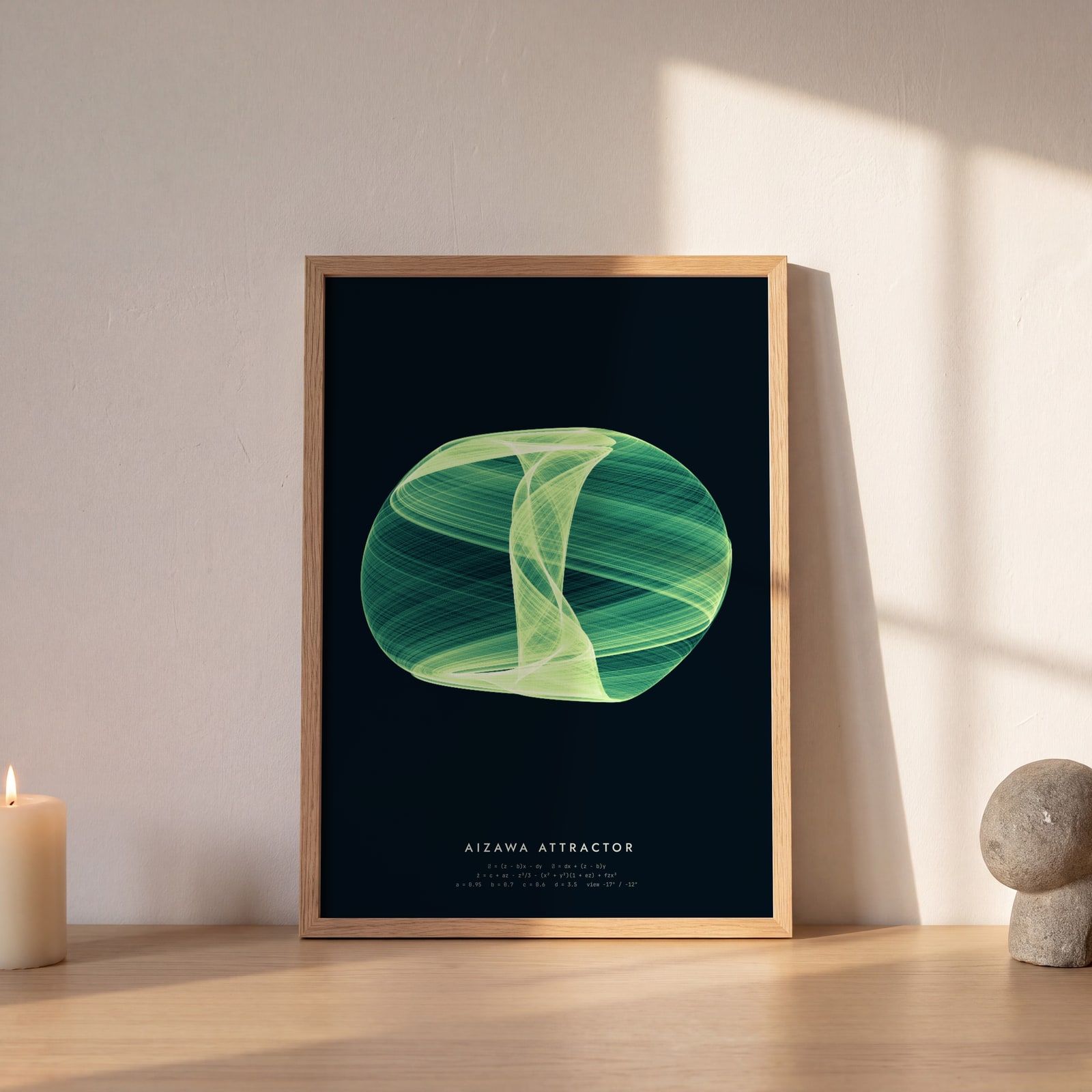
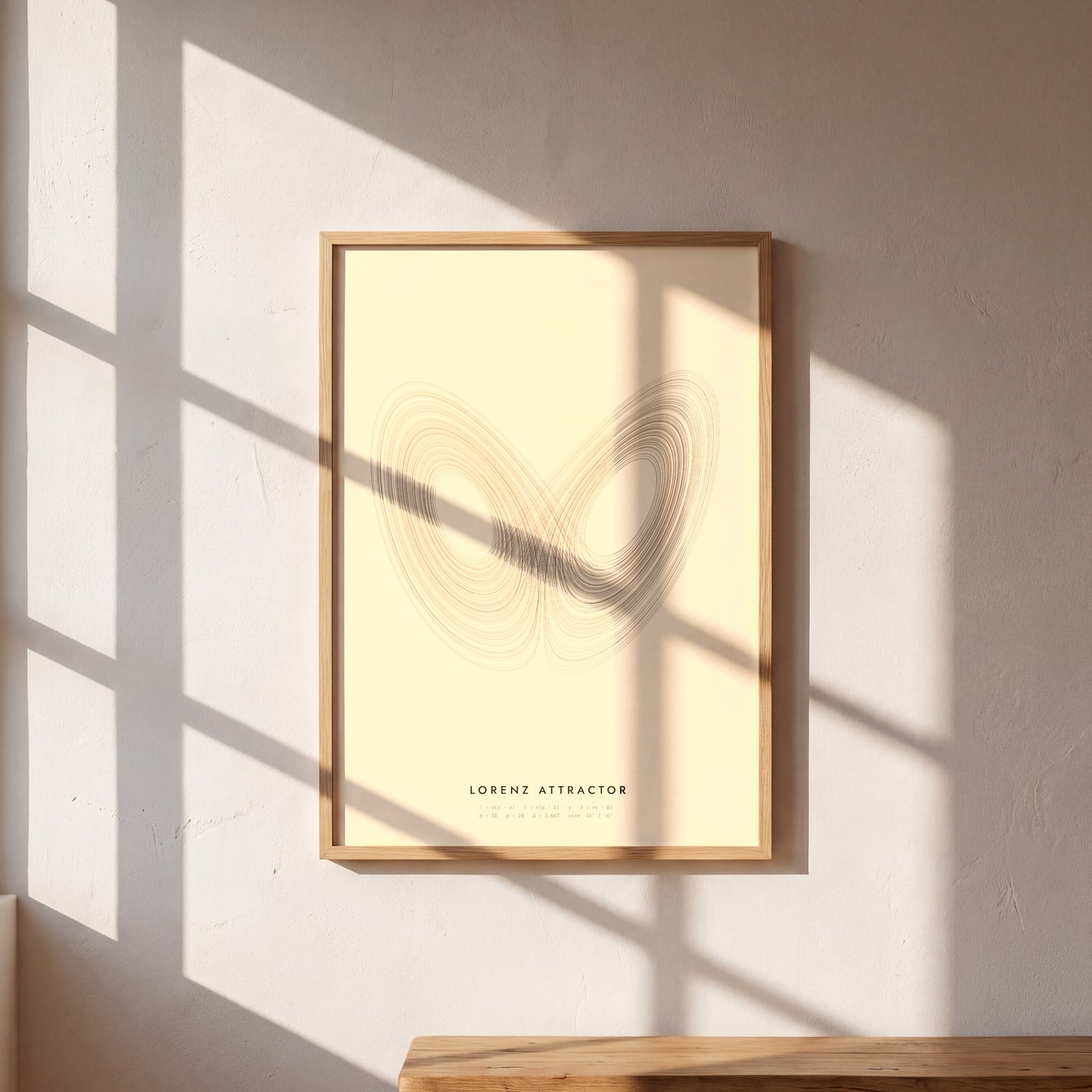
Examples
Open any of them to change the words, the place, the date and the style, then download the print file.
Maps
Pen lines
Area-preserving maps in chalk
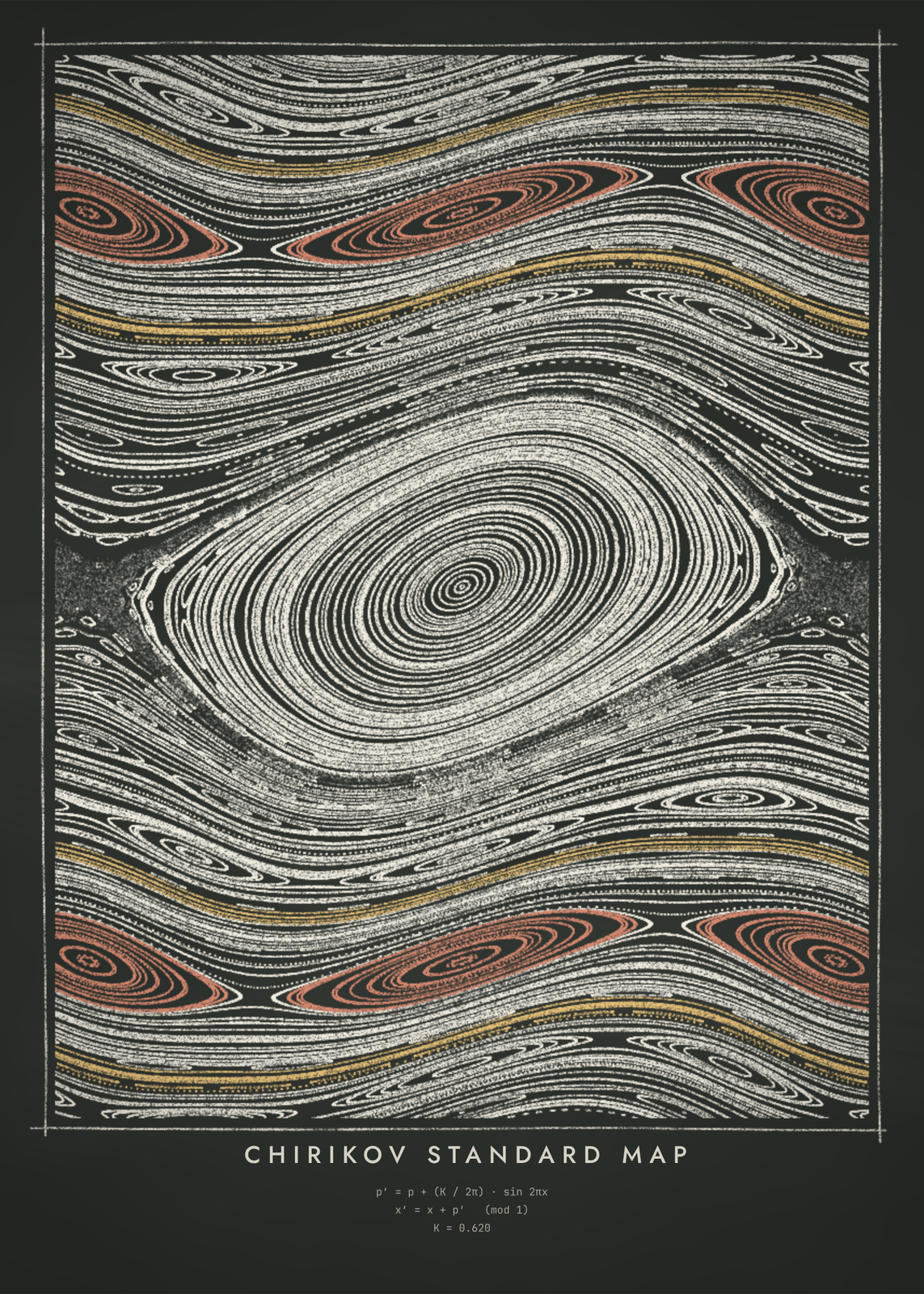 A light kick: curves across the torusEdit this →
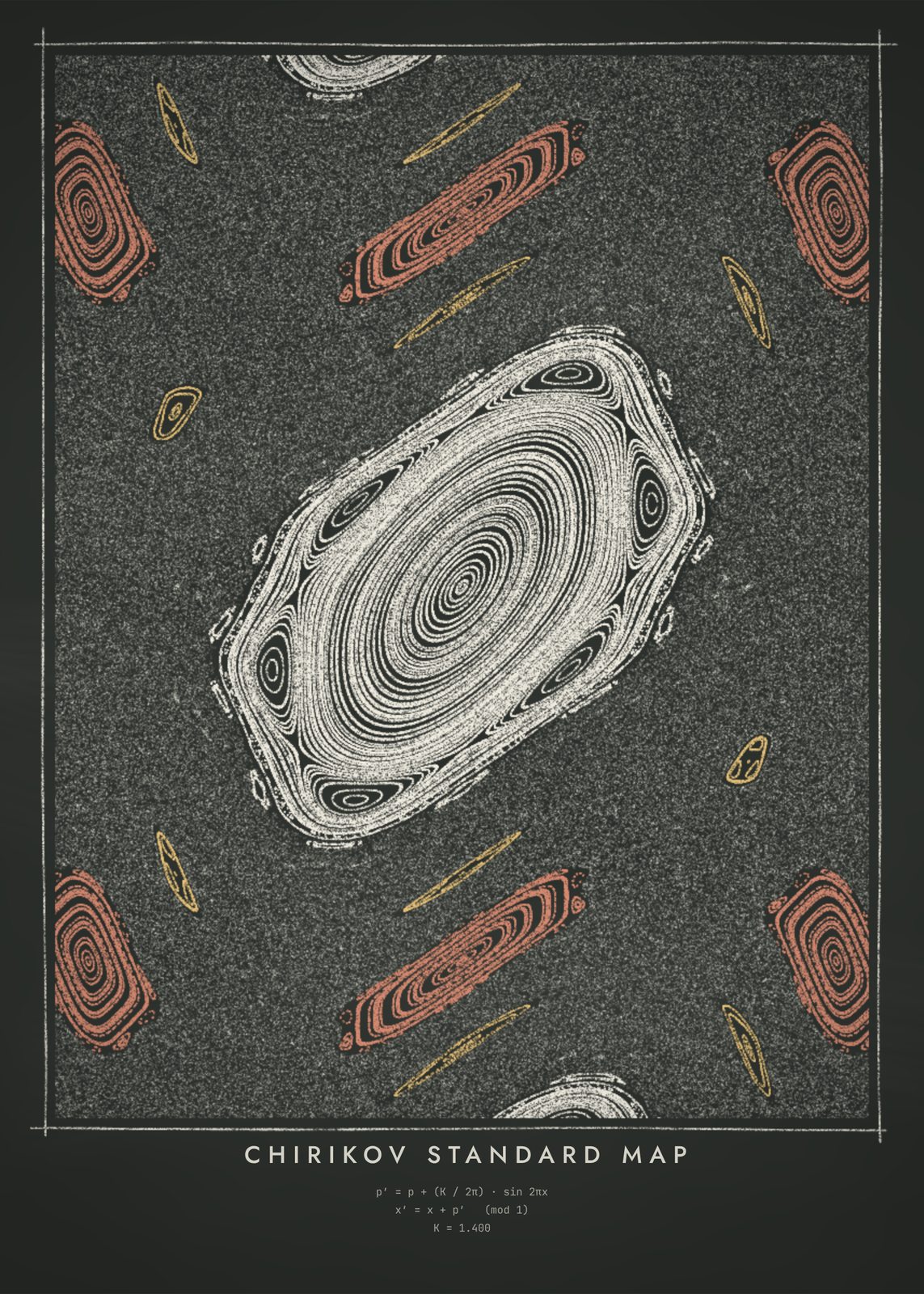 A hard kick: islands in a chaotic seaEdit this →
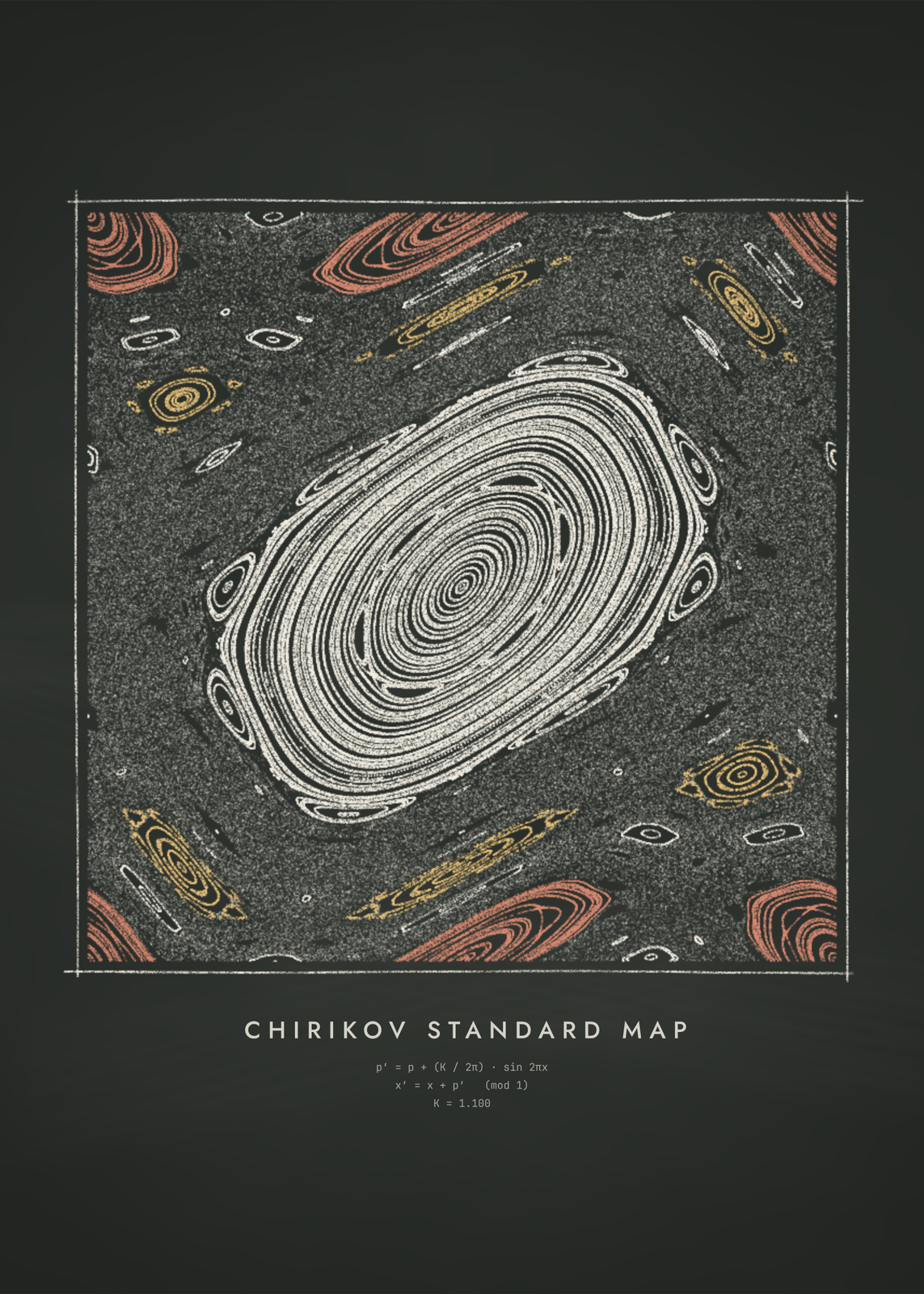 One square of the torus, framedEdit this →
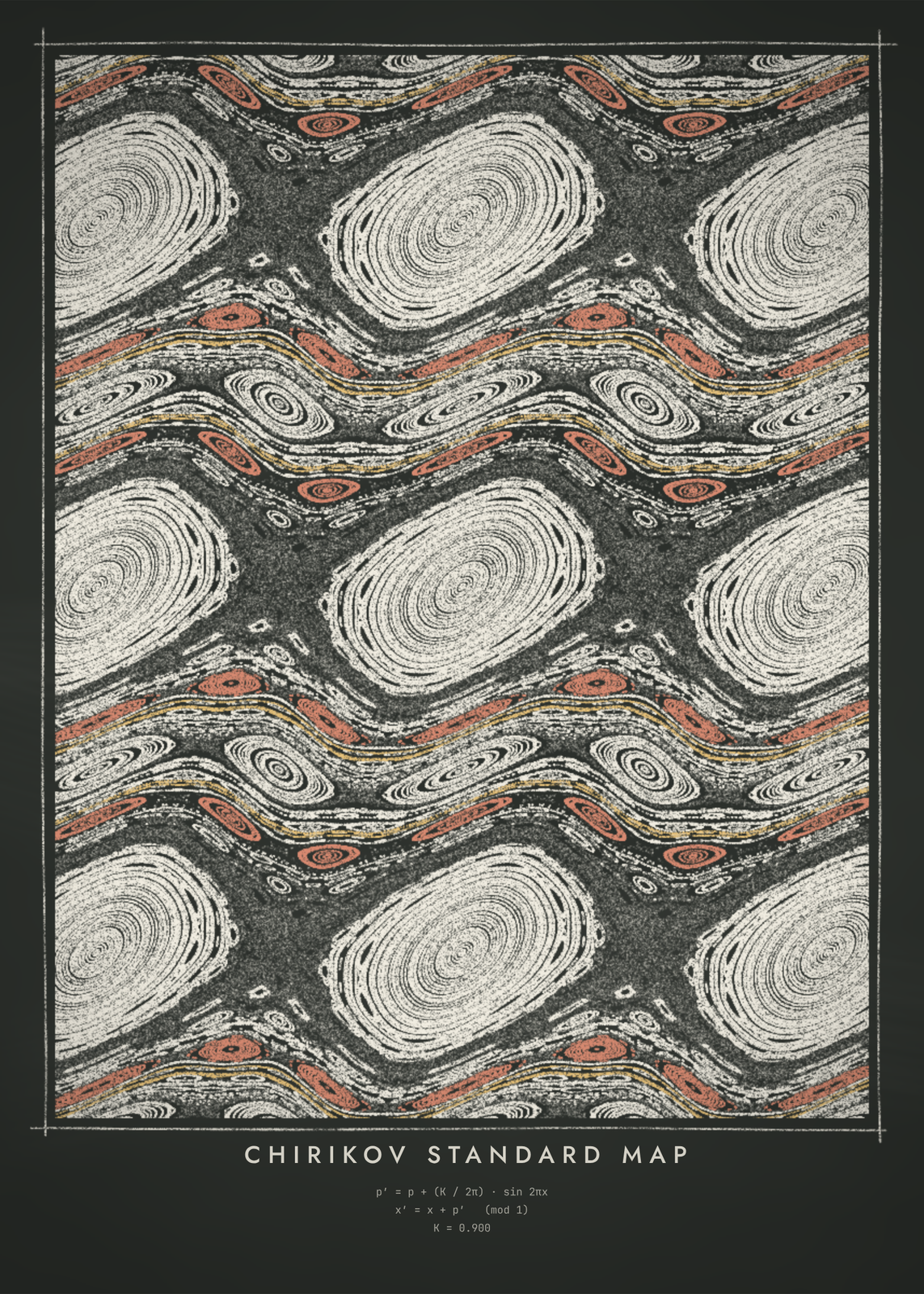 The torus repeatedEdit this →
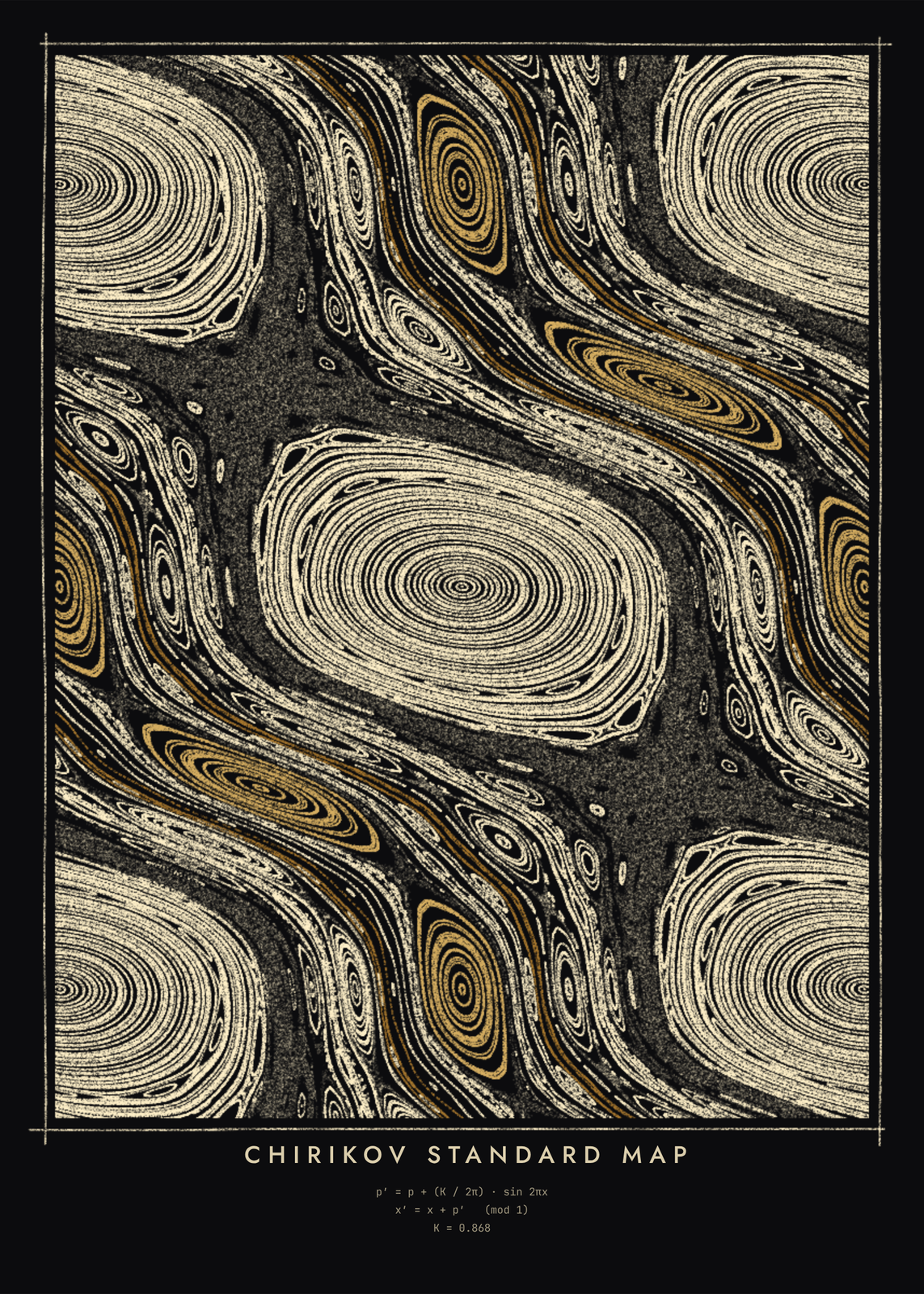 Gold leaf, turnedEdit this →
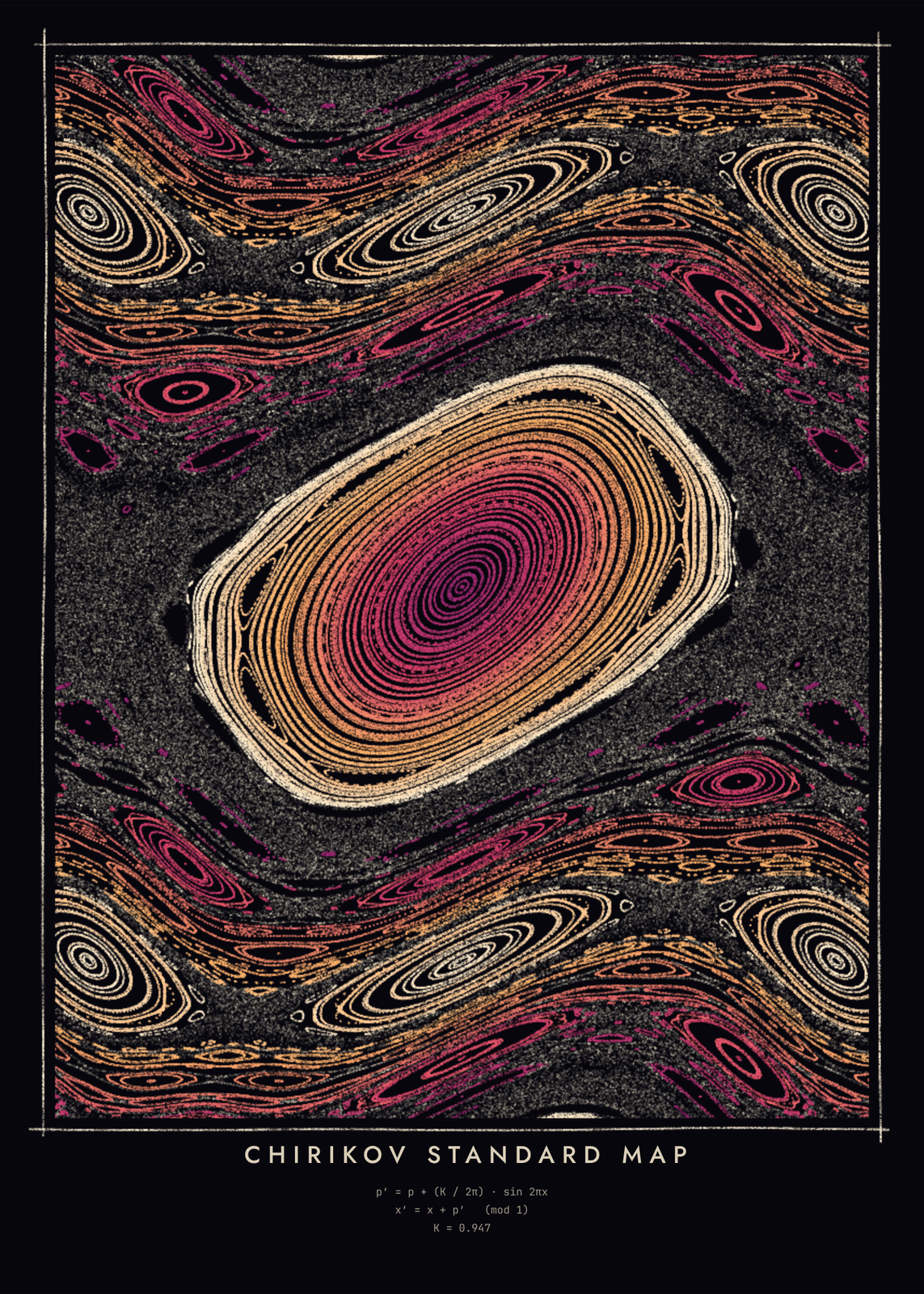 Colored by windingEdit this →
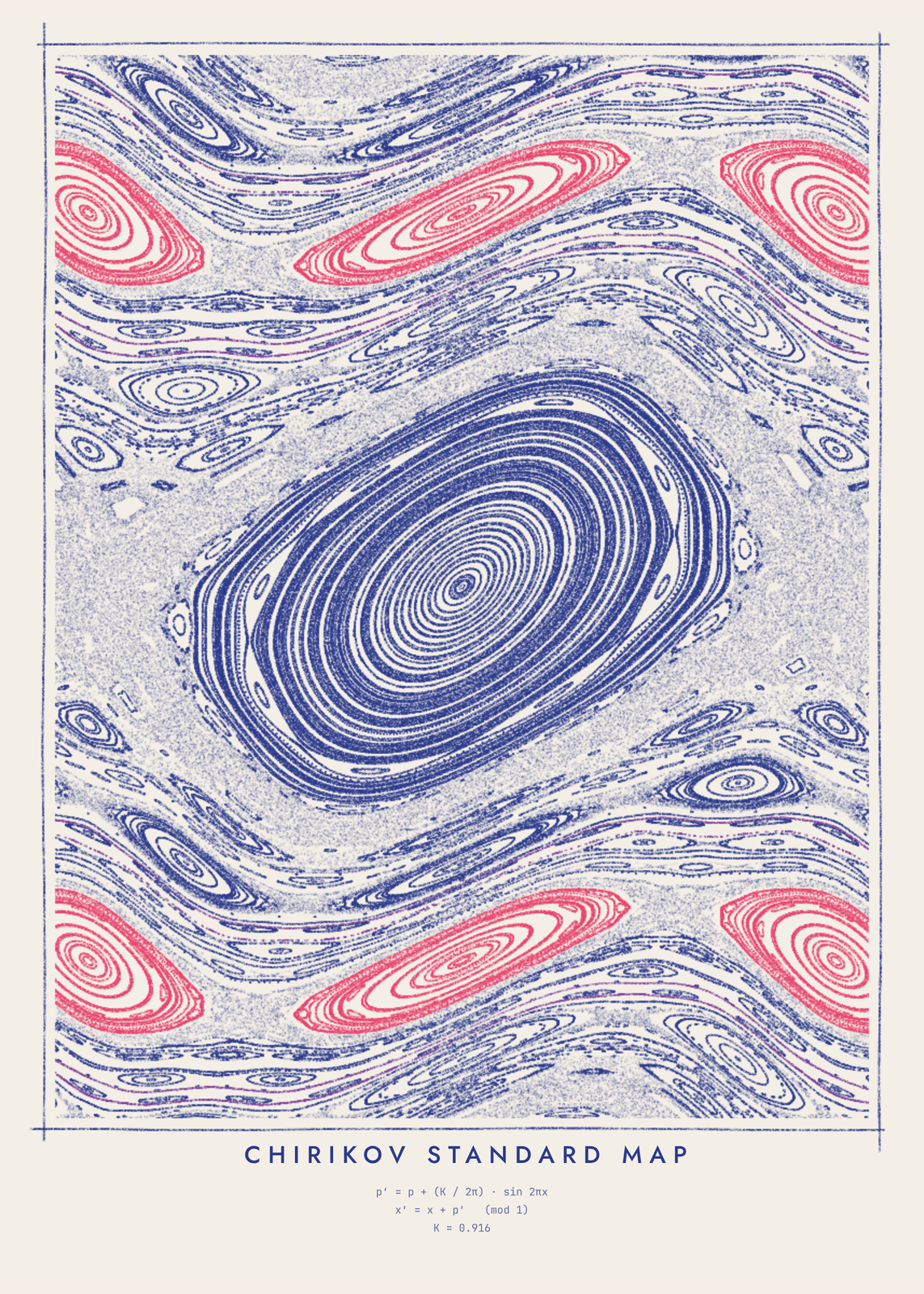 Riso islandsEdit this →
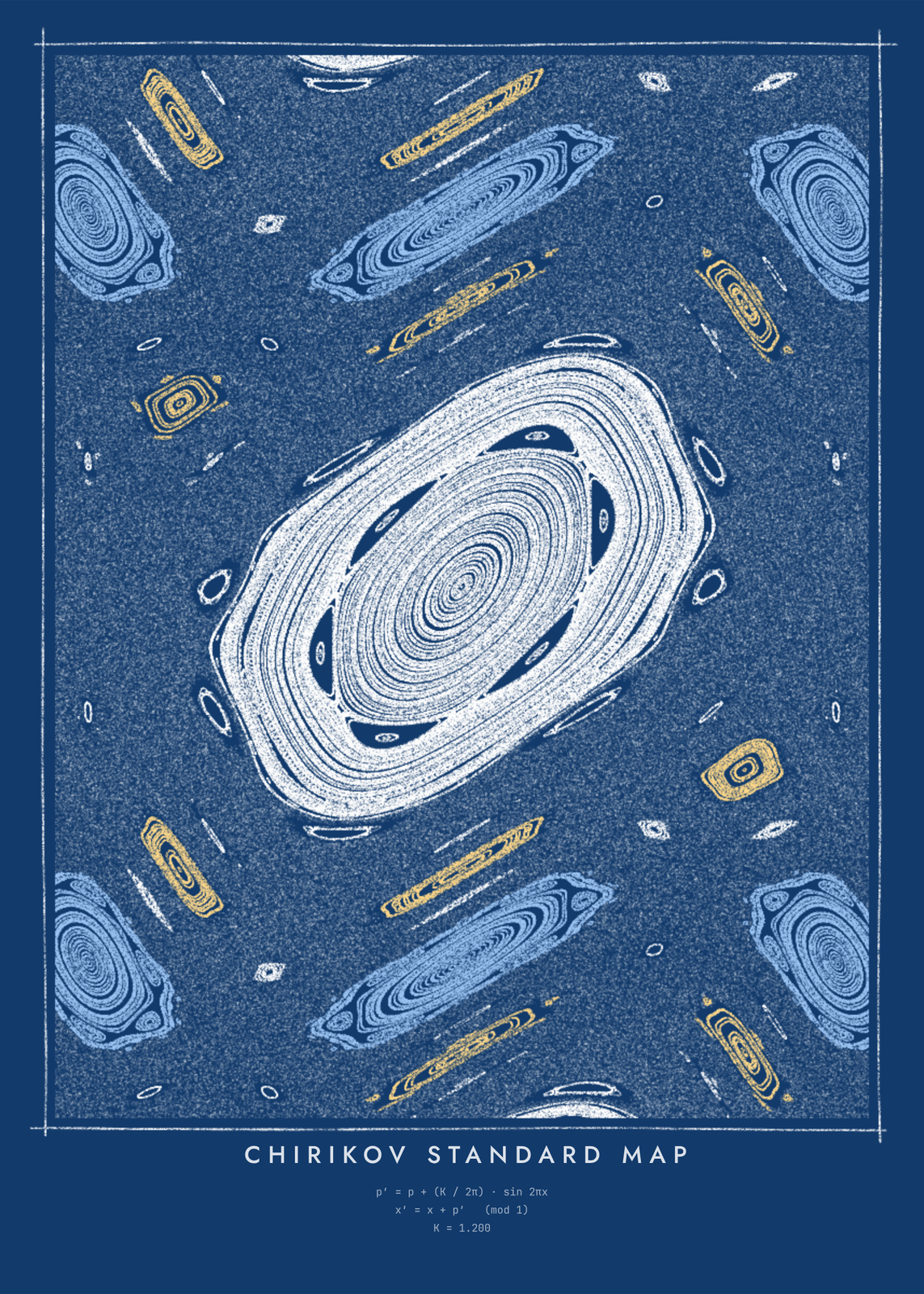 Blueprint, fine linesEdit this →
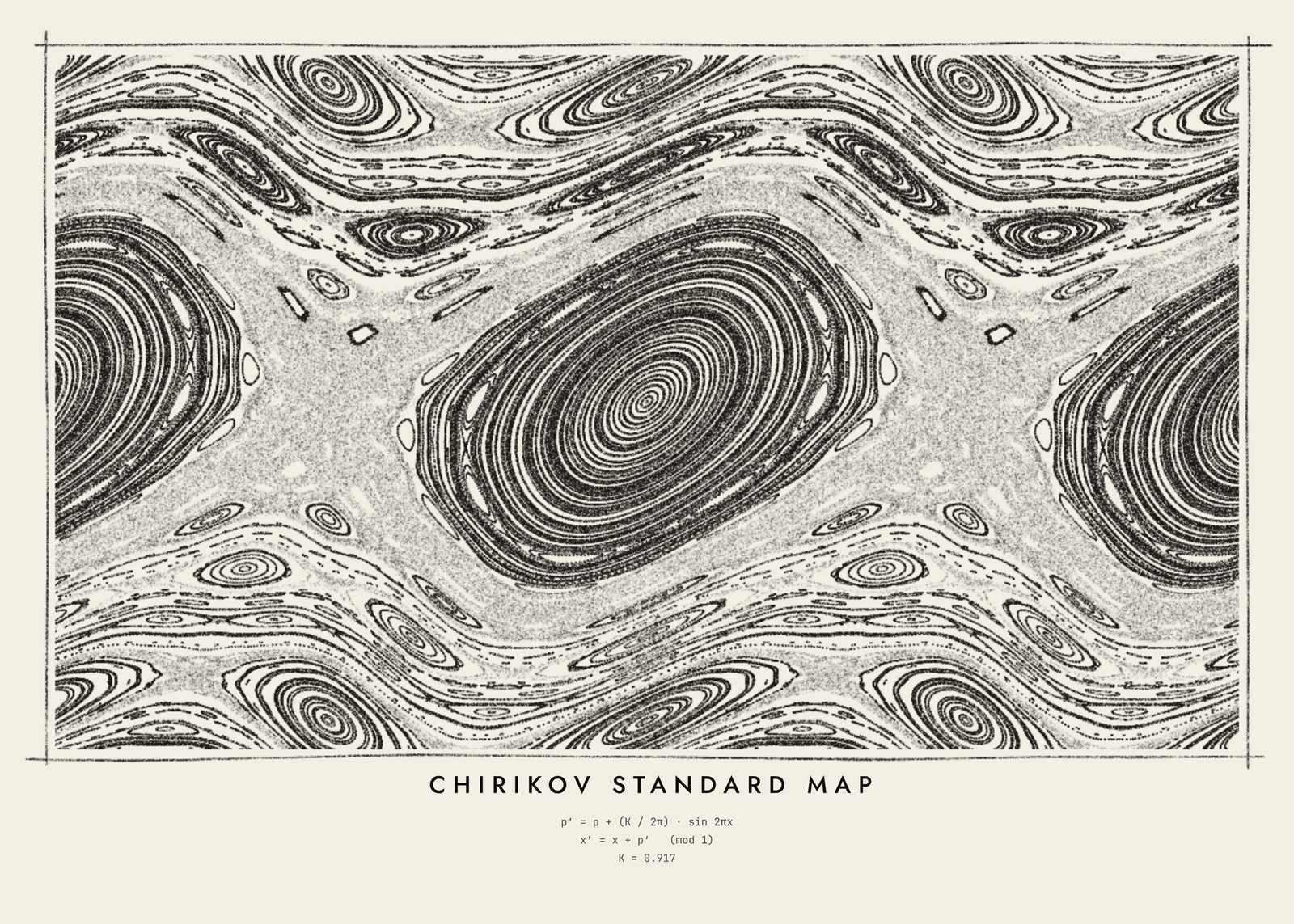 Ink in one color, landscapeEdit this →
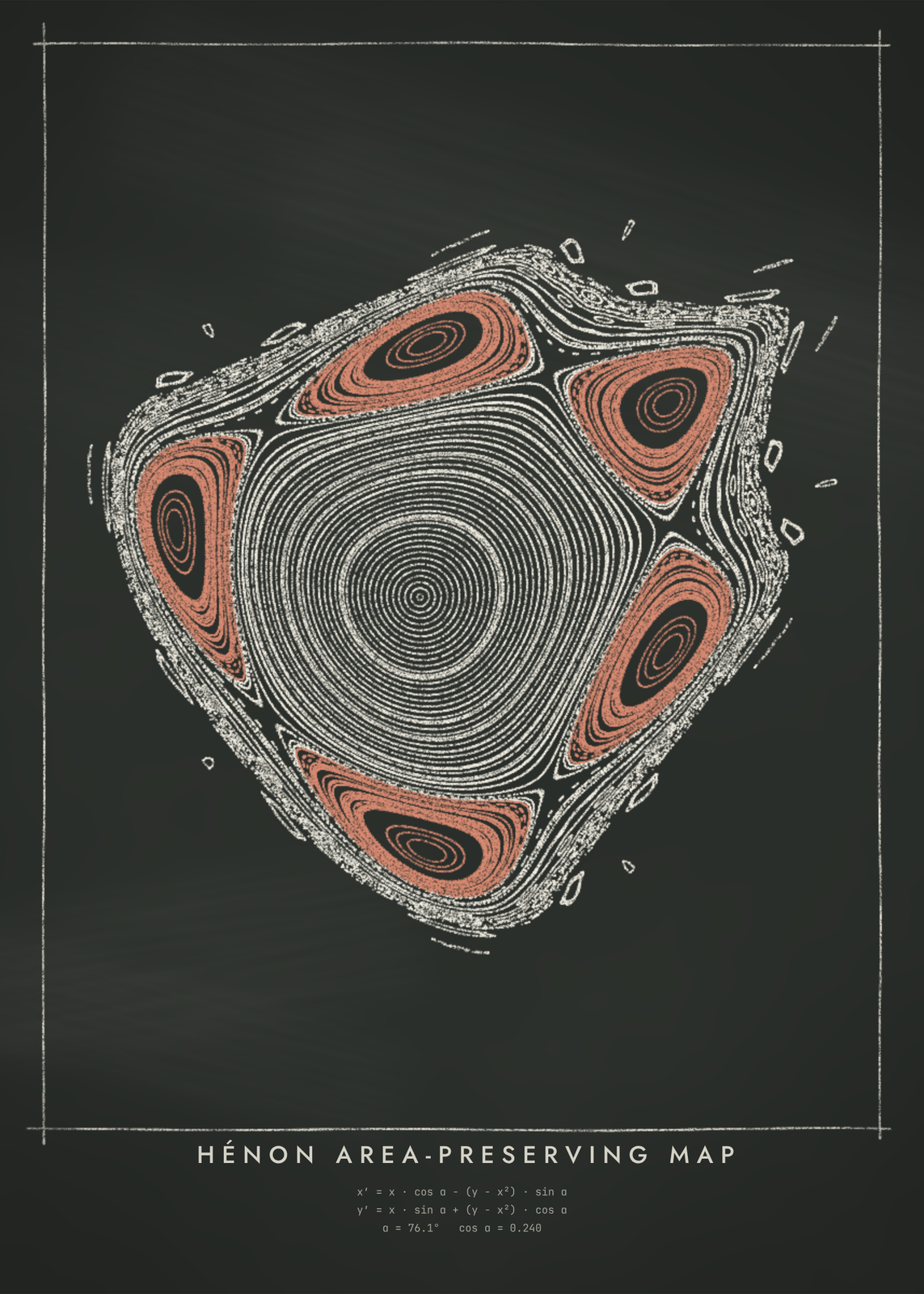 Hénon's five islandsEdit this →
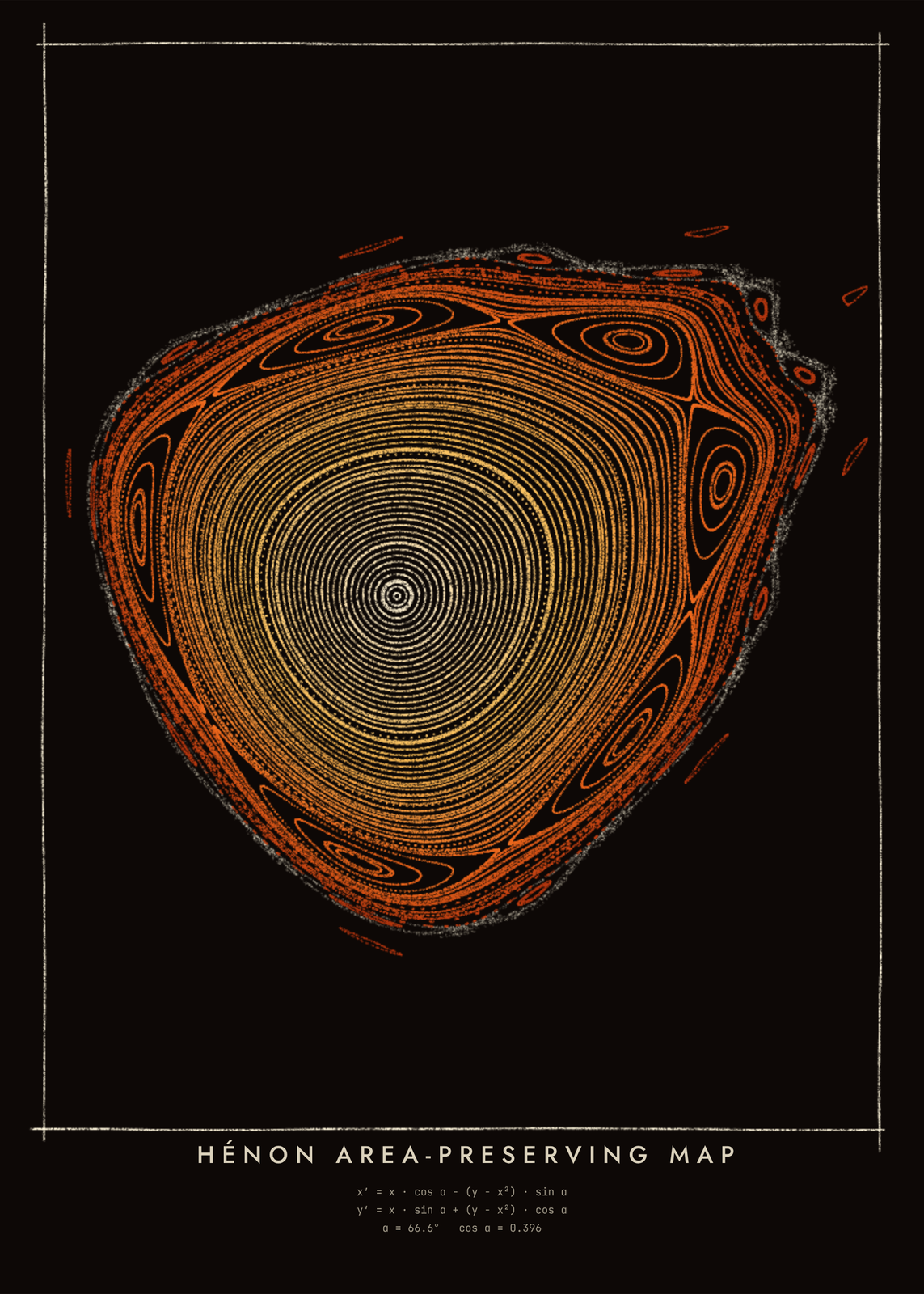 Hénon by windingEdit this →
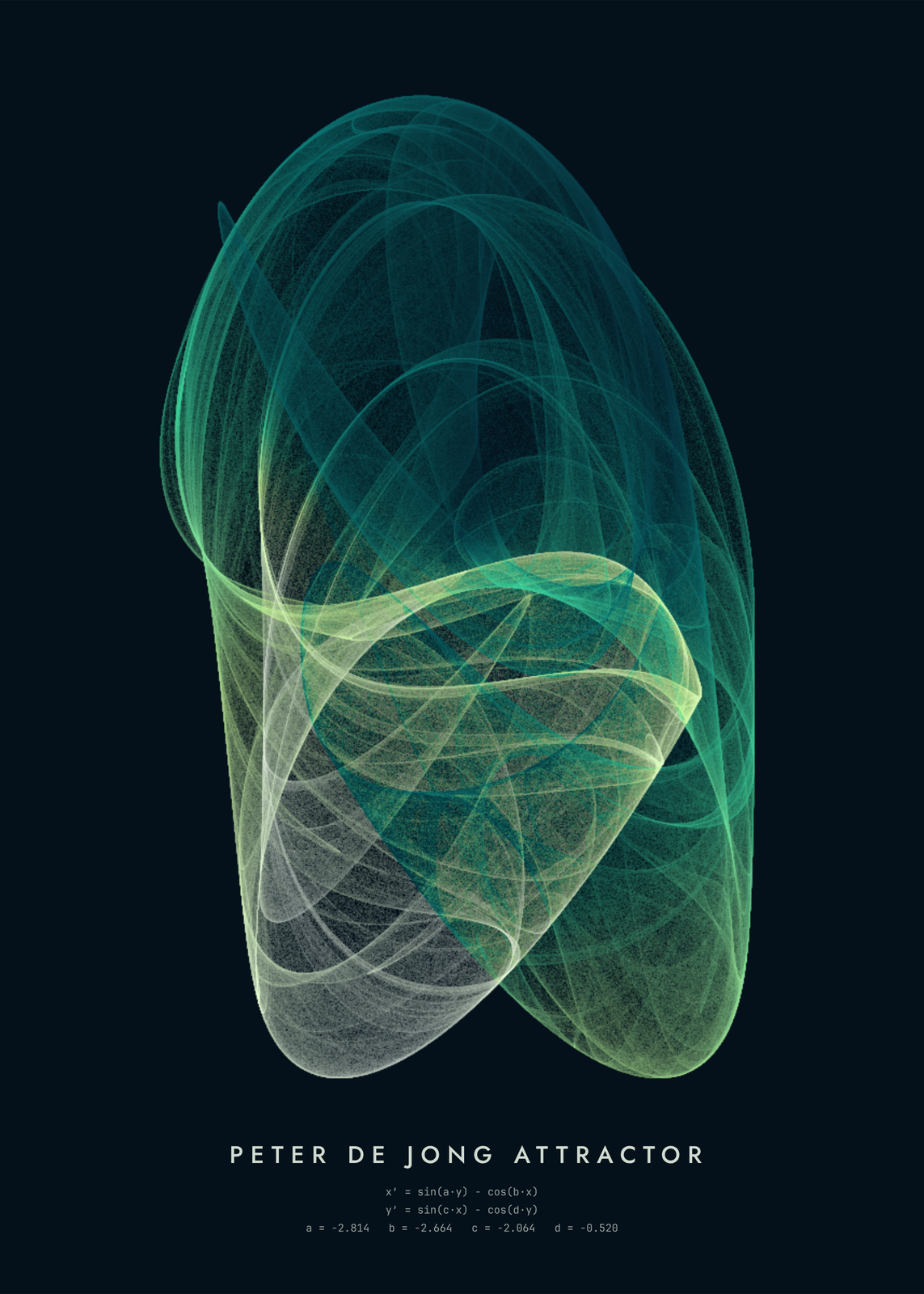
Maps, flows and islands
- Maps jump from point to point: Clifford, Peter de Jong, Svensson, Bedhead, Hopalong and Fractal dream, each a pair of short formulas with a few numbers (a, b, c, d) that the seed picks. Millions of points pile up into a glowing form.
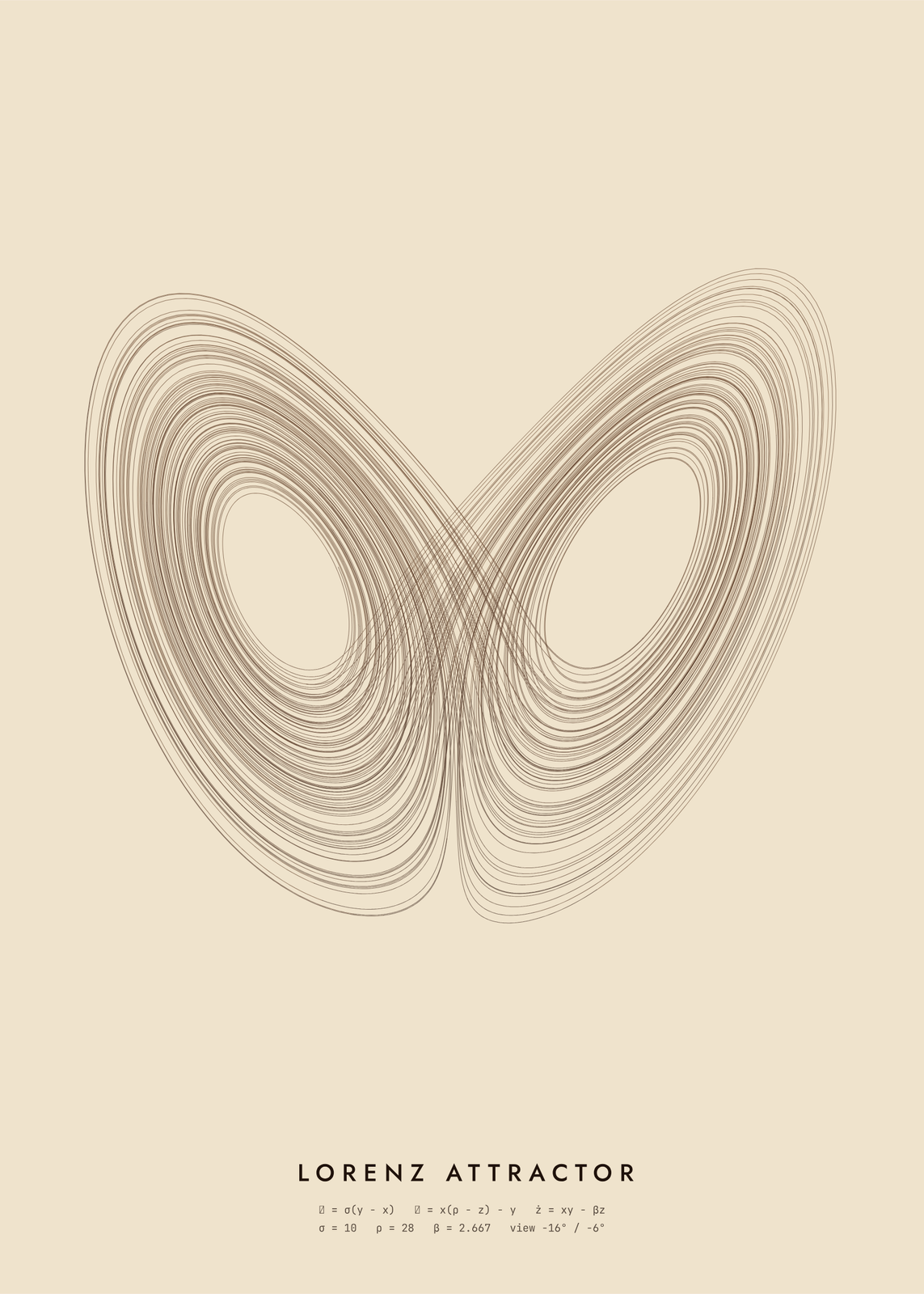
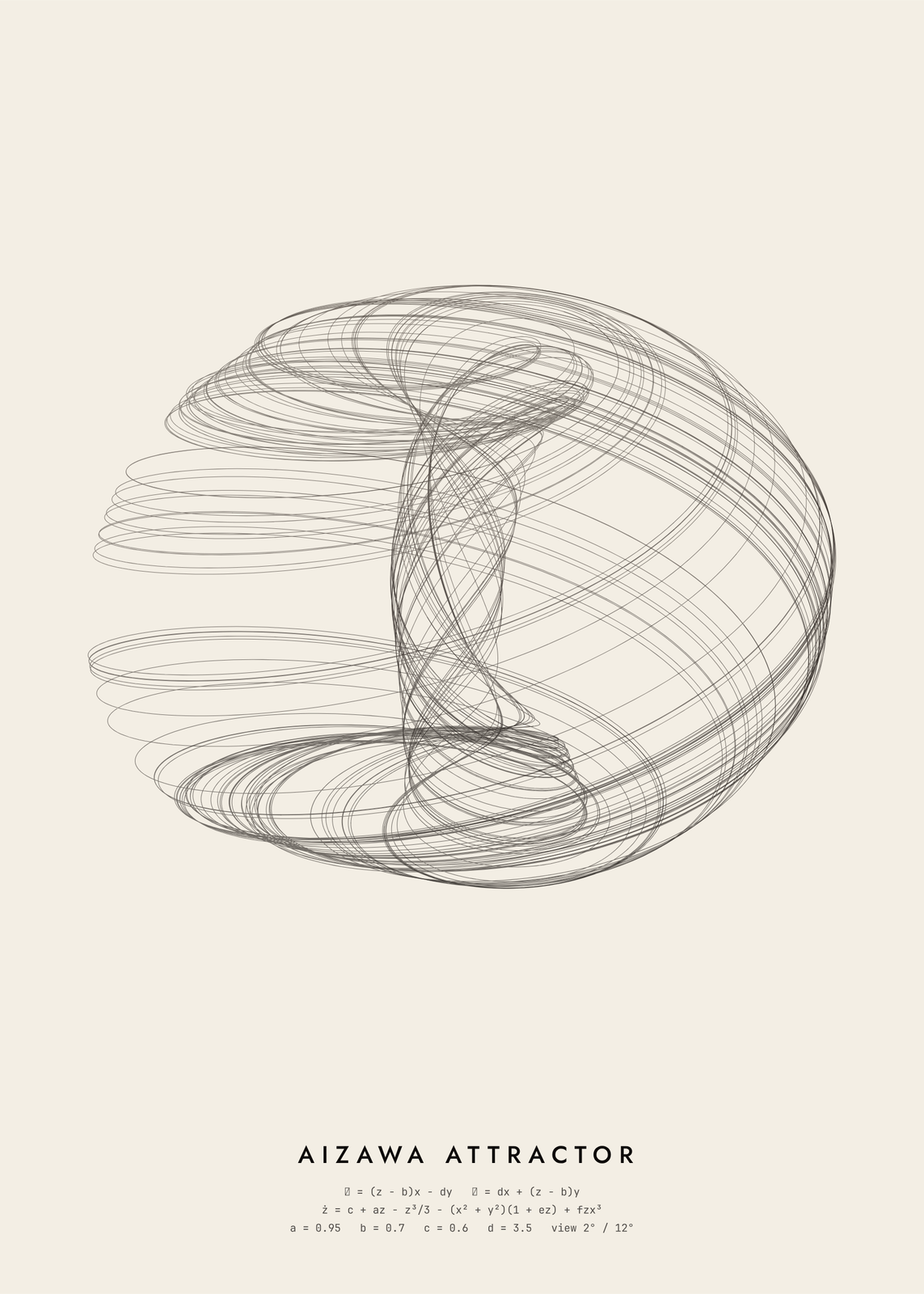
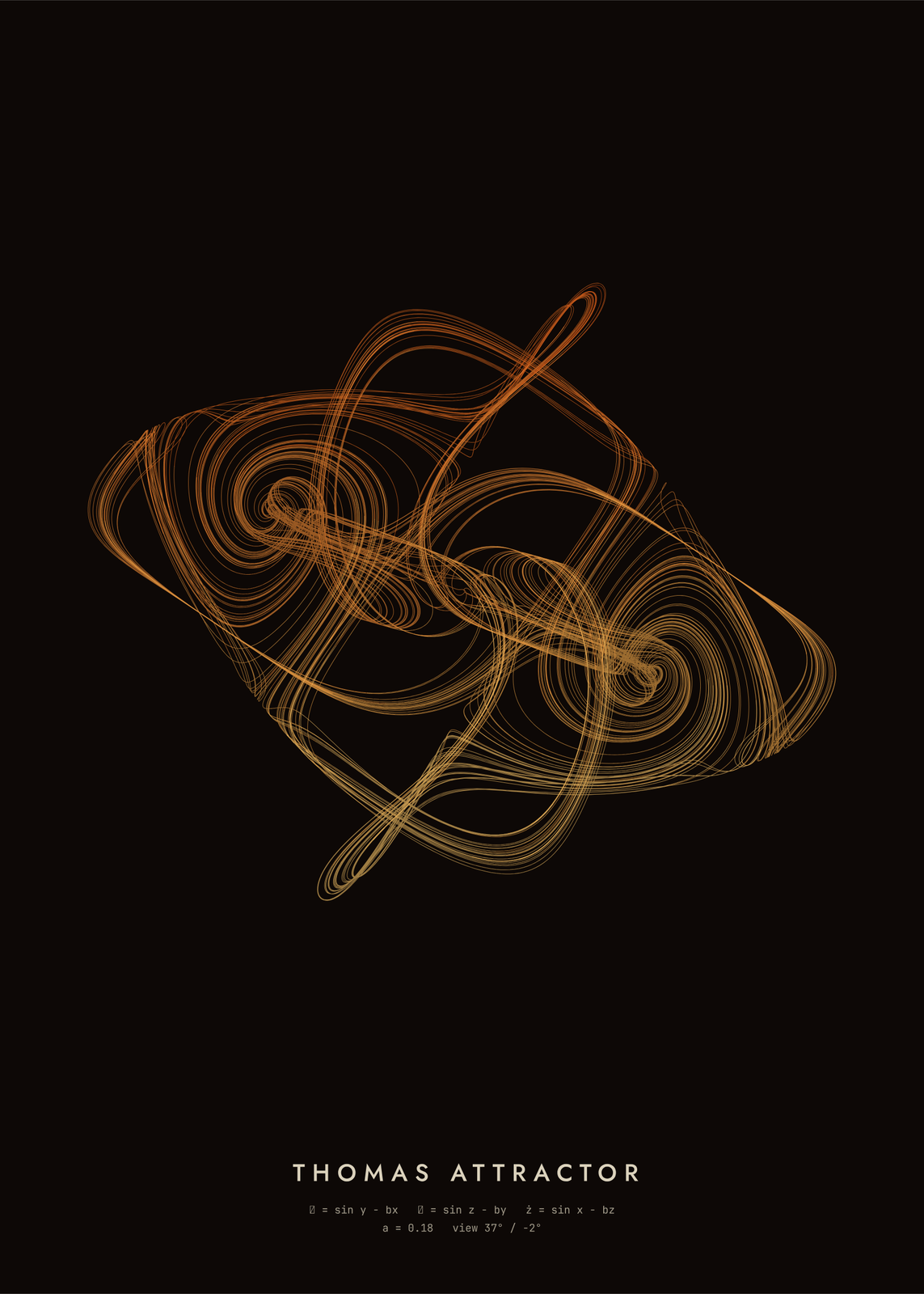
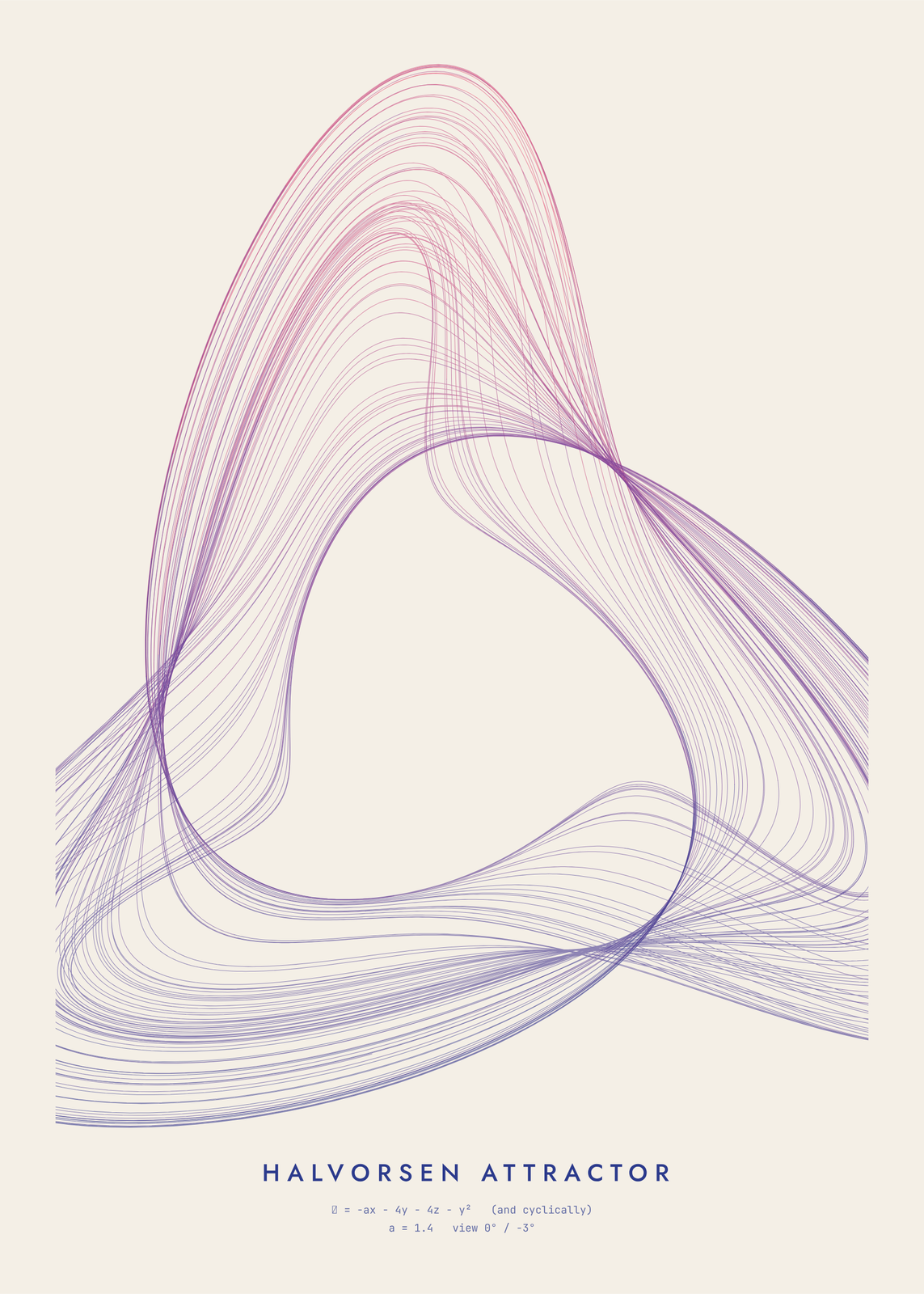
- Flows move smoothly through space: Lorenz, Aizawa, Thomas and Halvorsen, three equations each, drawn as points of light or traced as pen lines. Turn and tilt the view to see them from any side.
- Area-preserving maps never settle onto one shape. Chirikov's standard map and Hénon's map show curves, chains of islands and the chaotic sea between them, drawn in chalk.
Light, lines or chalk
In Glow, the points build up like a long exposure: color them by how dense they gather, how fast the system moves or which way it heads, and set the exposure. Lines traces a flow as pen strokes, and offers a plotter file.
The standard map takes a kick K. Below 0.972 a last curve still crosses the torus; past it the chaotic sea joins up. Color its orbits by the biggest islands or by how fast each one winds, repeat the torus across the sheet, or show one square of it, framed.
Gifts for physicists and engineers
The Lorenz attractor came out of a weather model in 1963 and gave chaos theory its butterfly. Print it for someone in physics, meteorology or engineering, with the equations underneath and a name in the title.
Questions
What is a strange attractor?
The shape a chaotic system's path is drawn to. Every orbit ends up on it, but two orbits that start side by side soon drift apart, so the path never repeats. That is why the shape has fine, layered detail.
Can I set the parameters myself?
Yes. Switch “Form” from “From the seed” to “By hand” to type a map's a, b, c and d, or a standard map's kick. From the seed, each seed searches until it finds a chaotic form.
Are the equations printed on it?
By default, yes: the equations and the parameters sit small under the title. Turn off “Equations” for the picture alone, or the caption for no text at all.
What sizes can I print?
US Letter, 8 × 10, 11 × 14, 12 × 16 and 12 × 18 in, A4 and A3, free. You download a 300 DPI JPEG drawn at the size you pick. Larger prints, up to 24 × 36 in, are coming soon.
Related
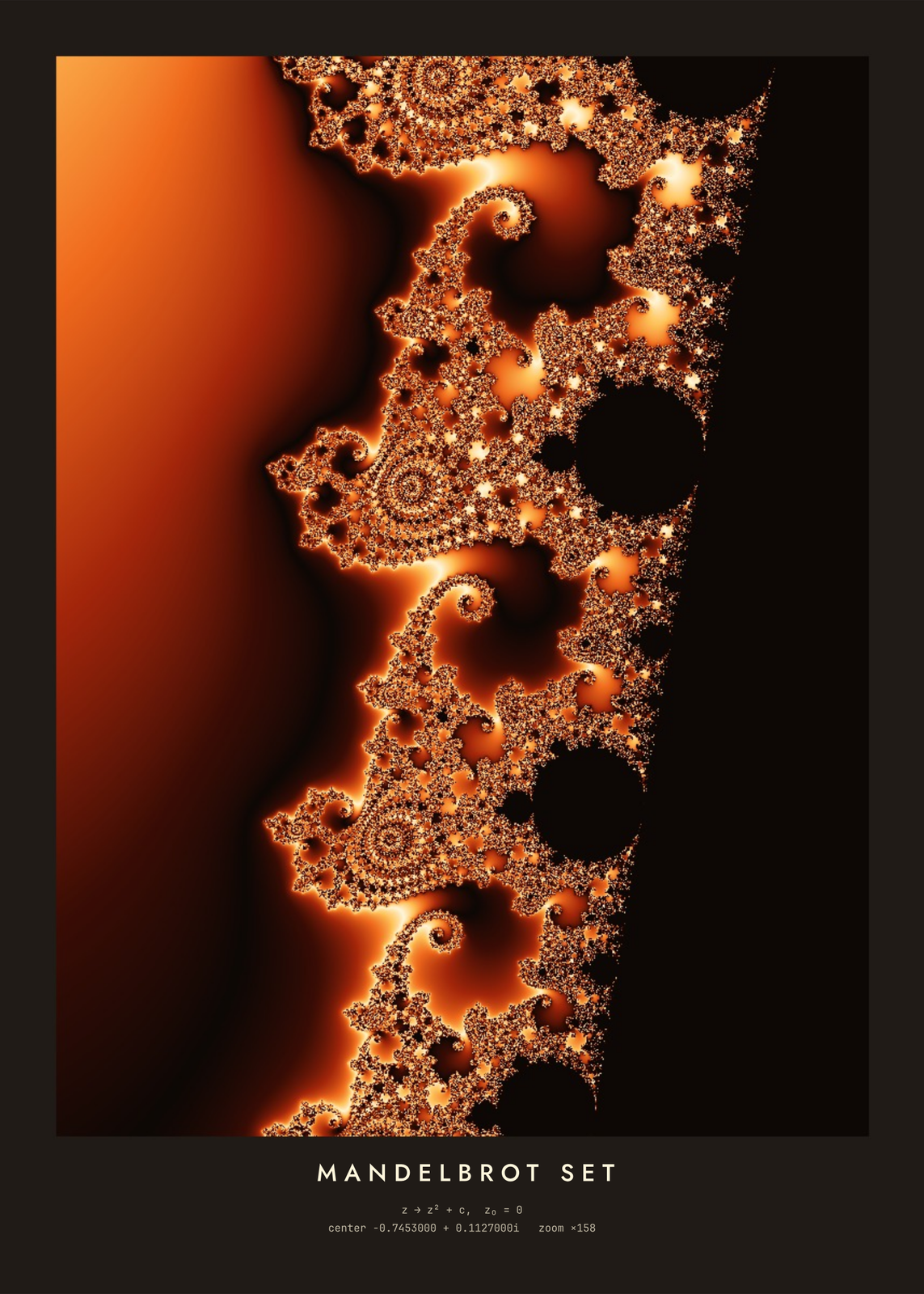
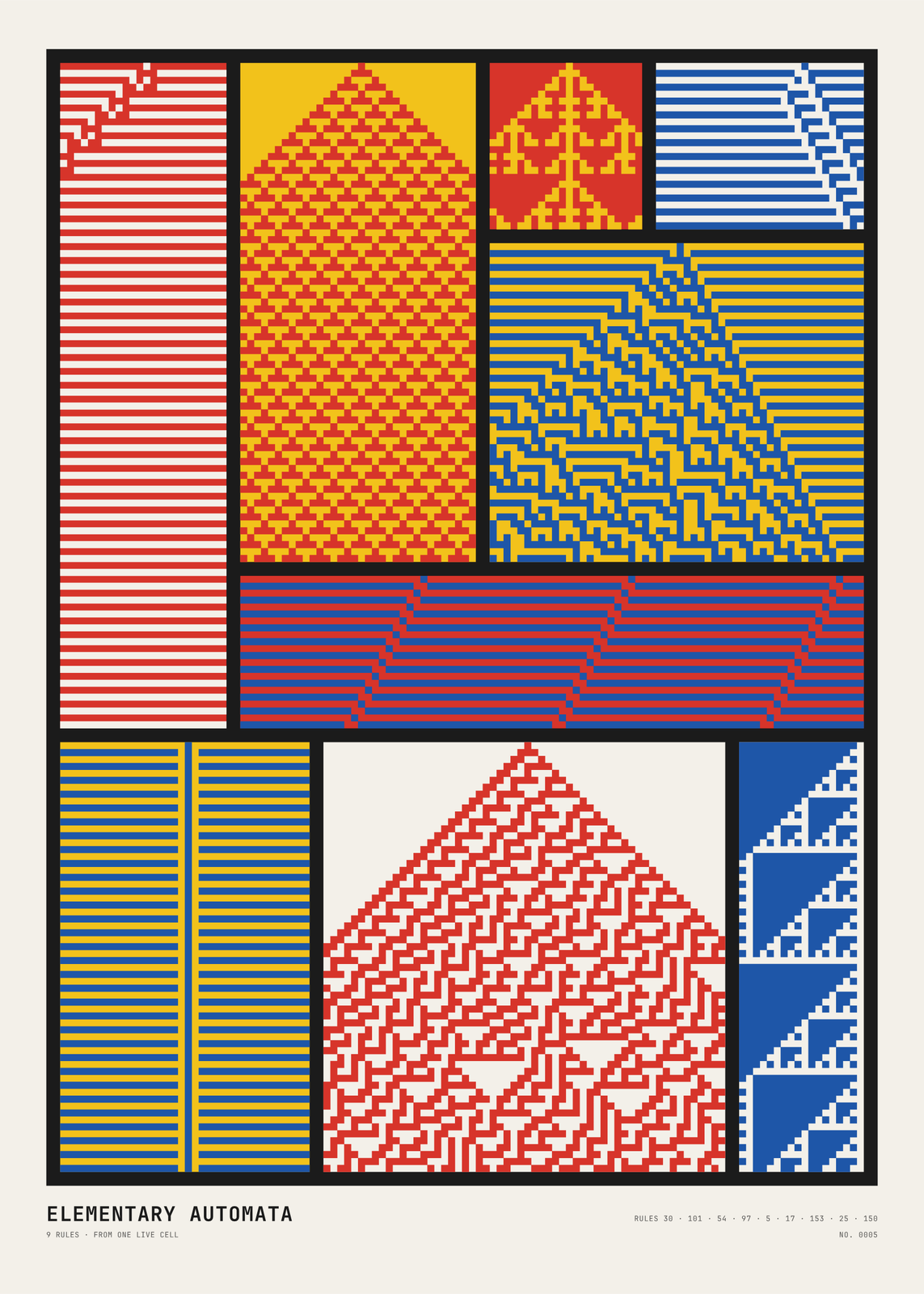
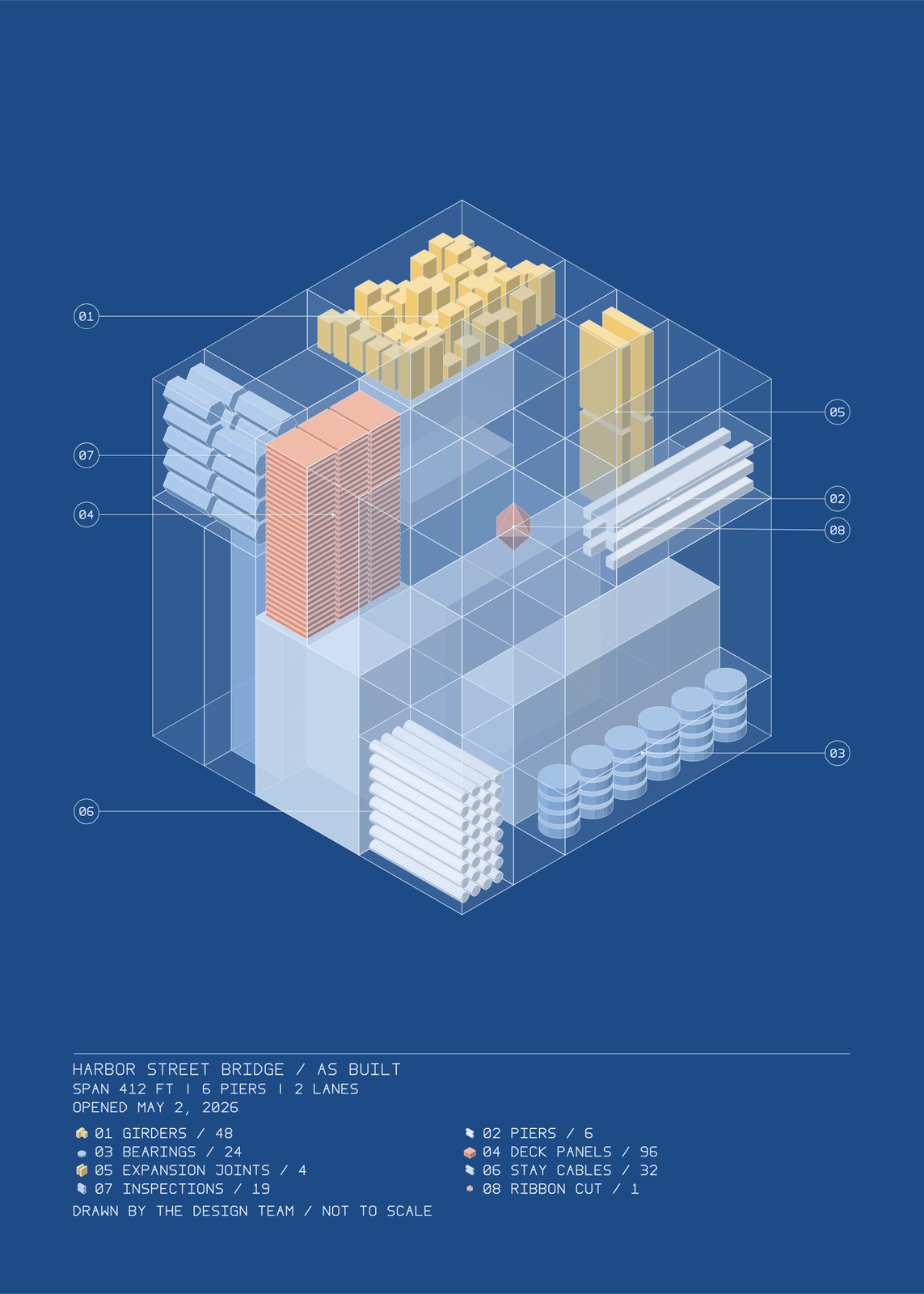
Gift ideas by occasion
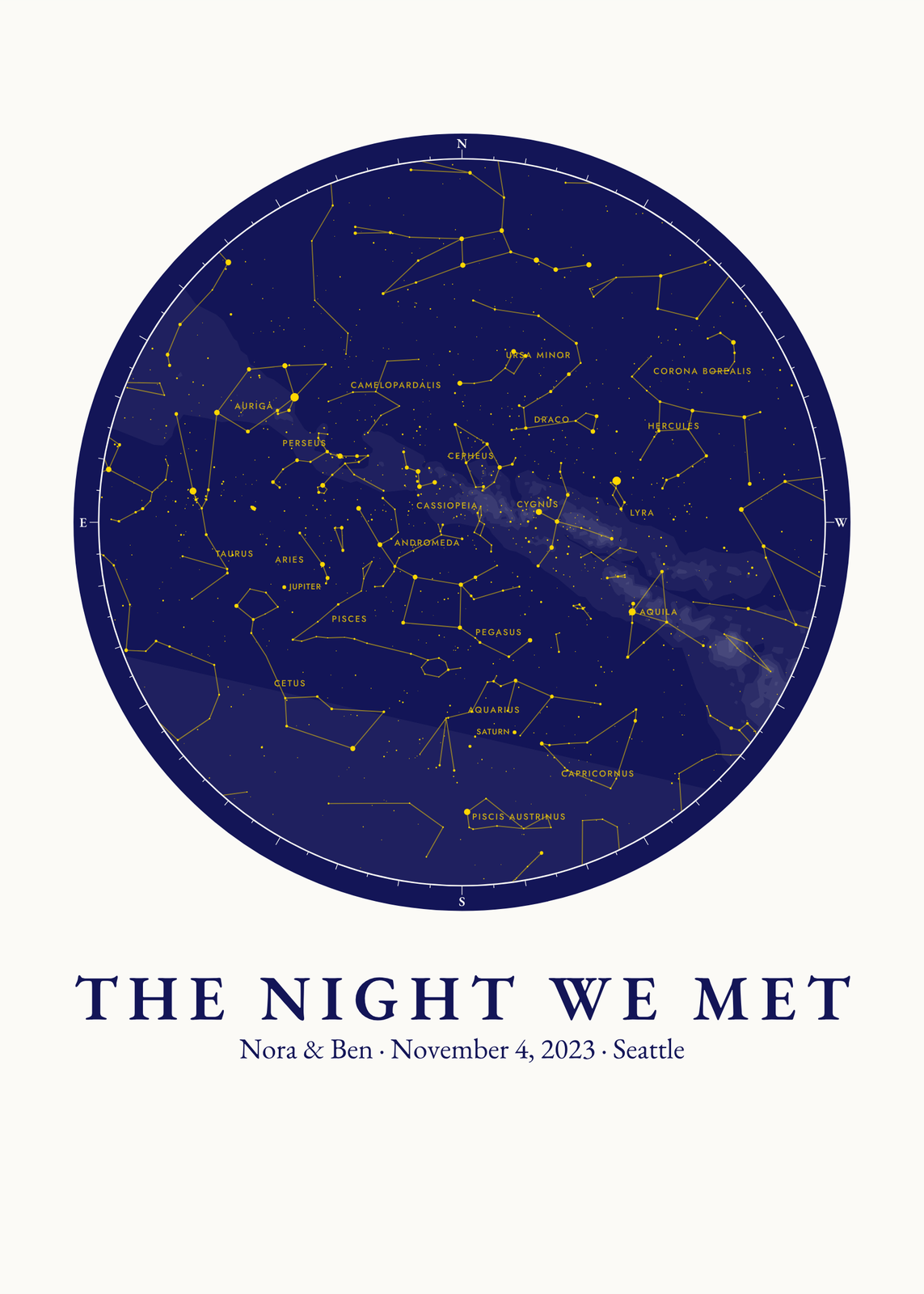
Every example is made with the Posterage generators. Change anything, then download it as a 300 DPI JPEG.