Hilma af Klint art petal blooms and spirals on pastel grounds, rainbow altarpieces and mirrored halves, composed new in her manner
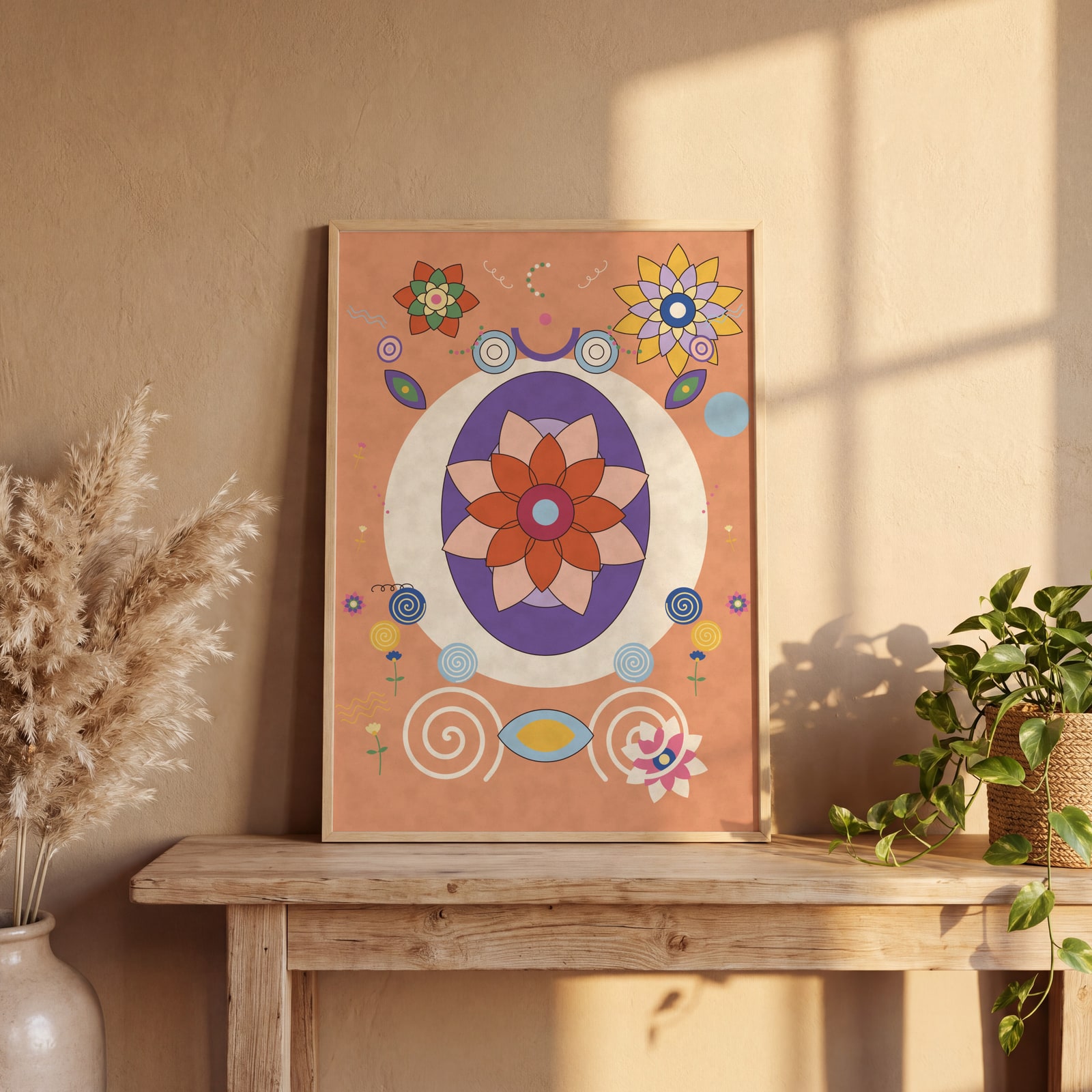
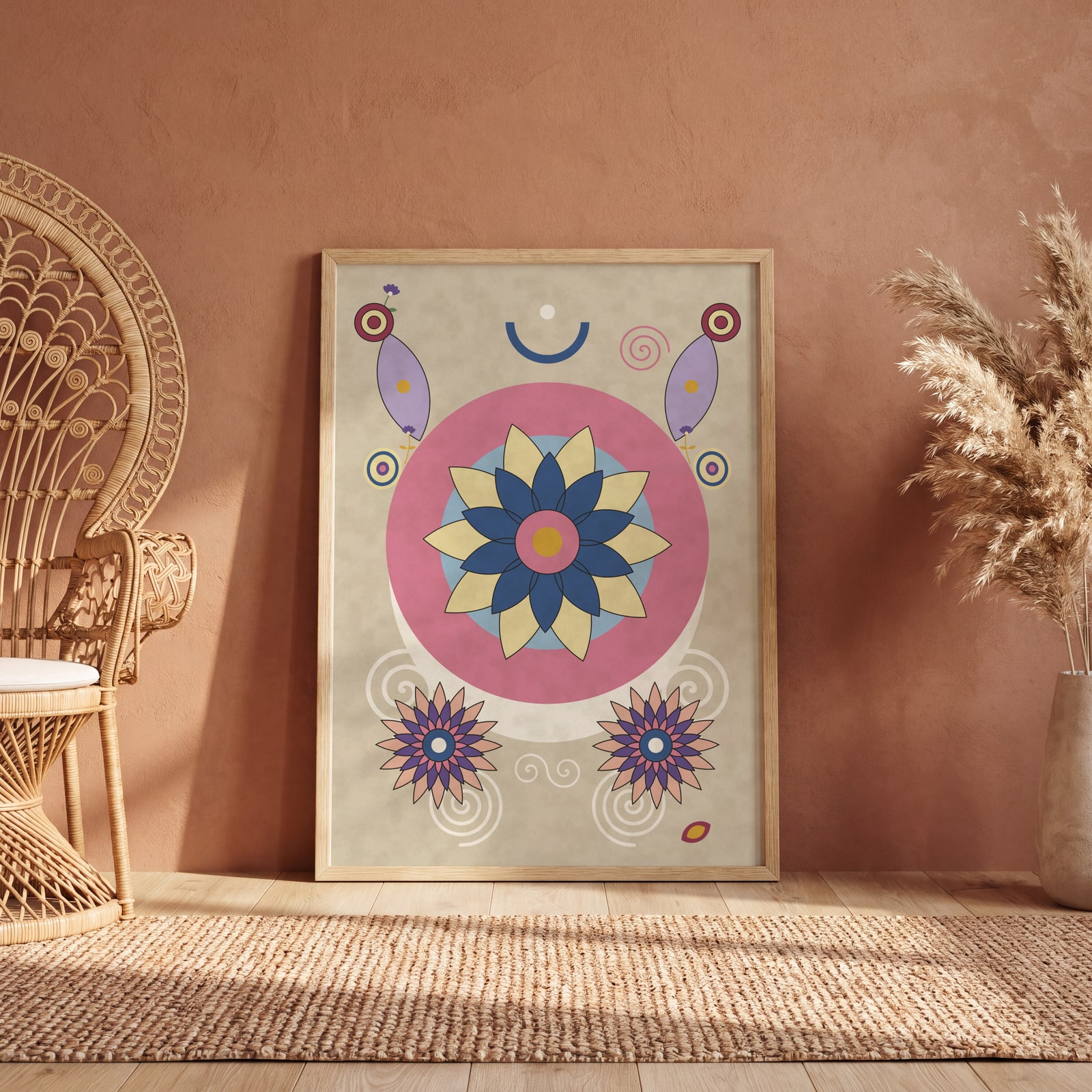
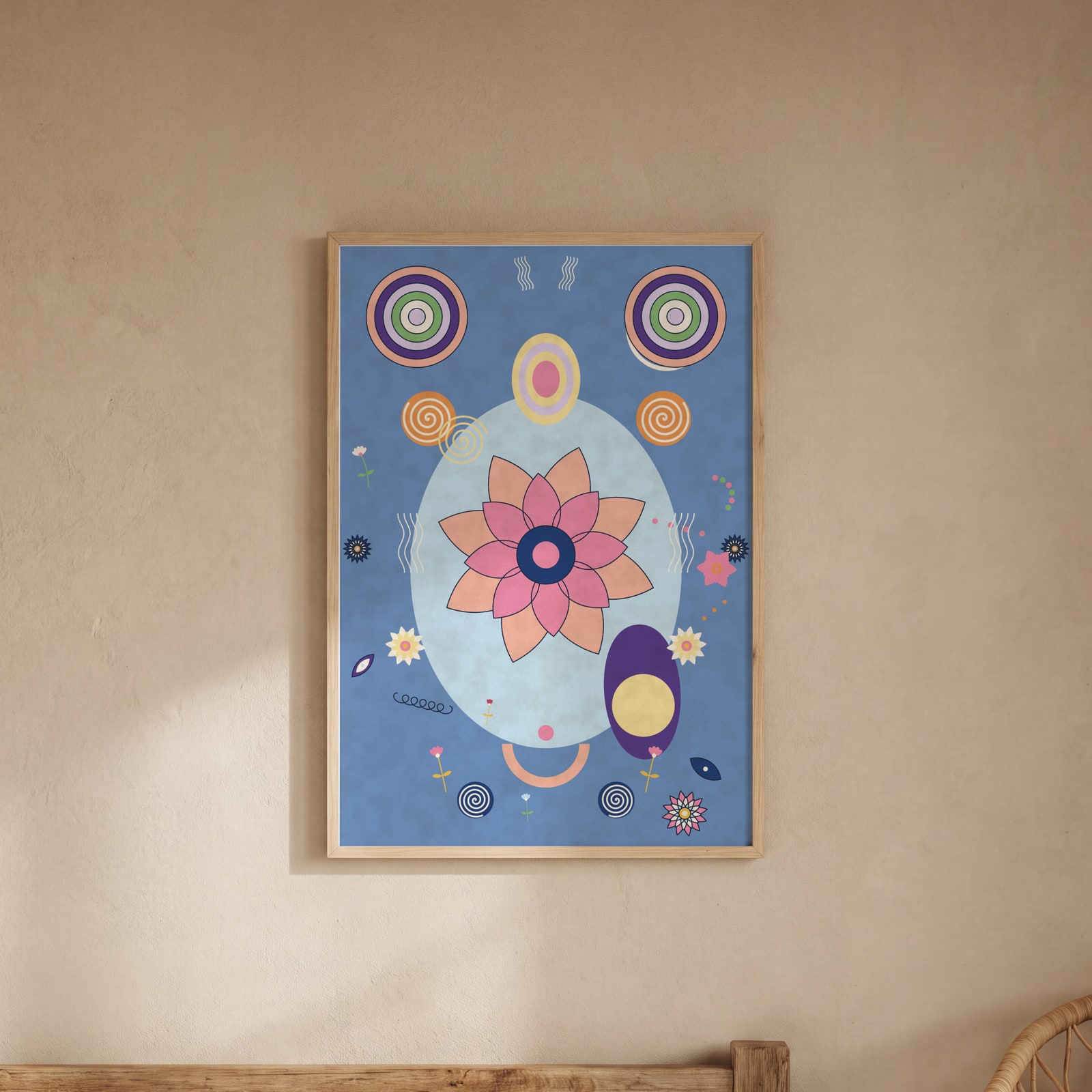
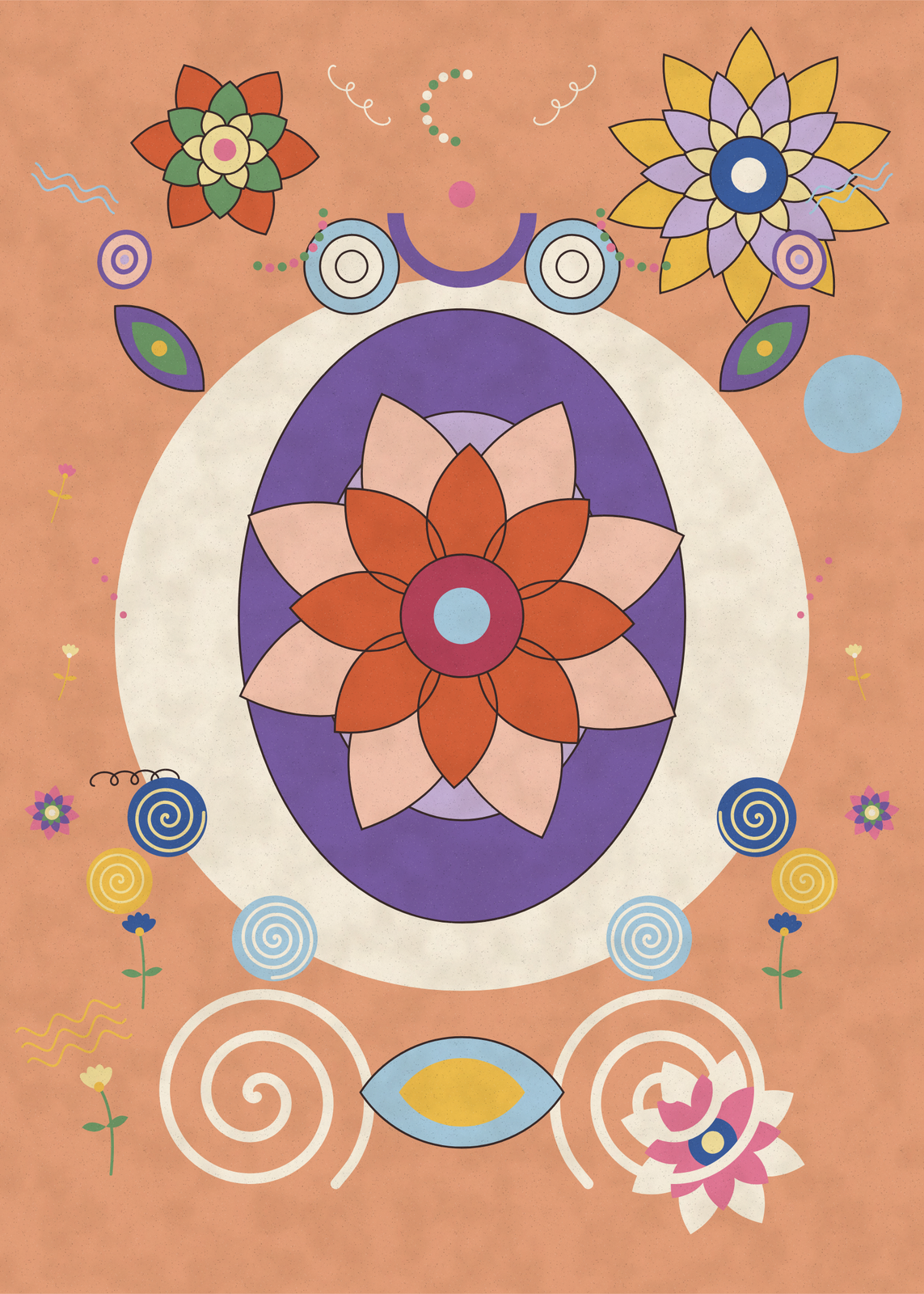
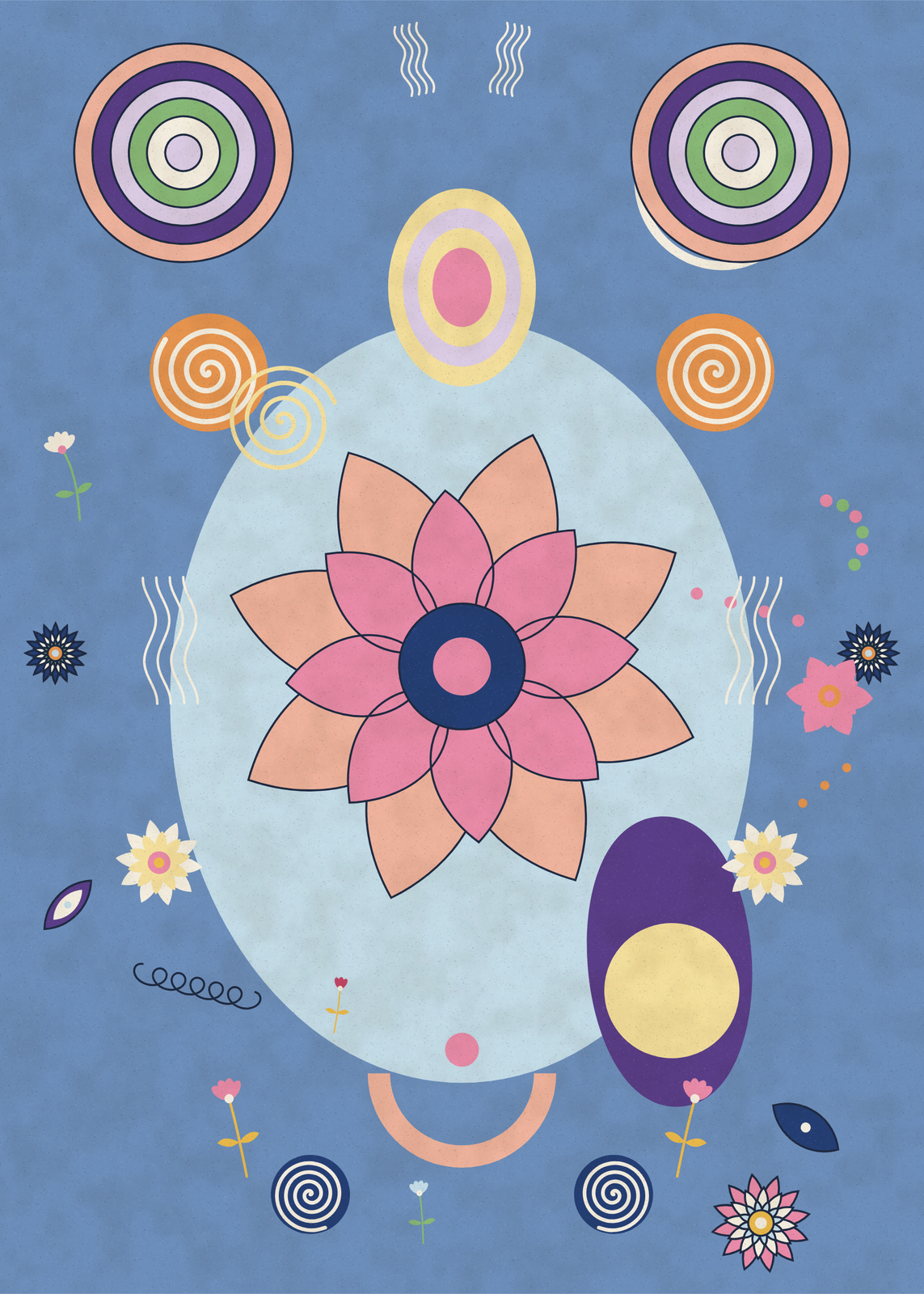
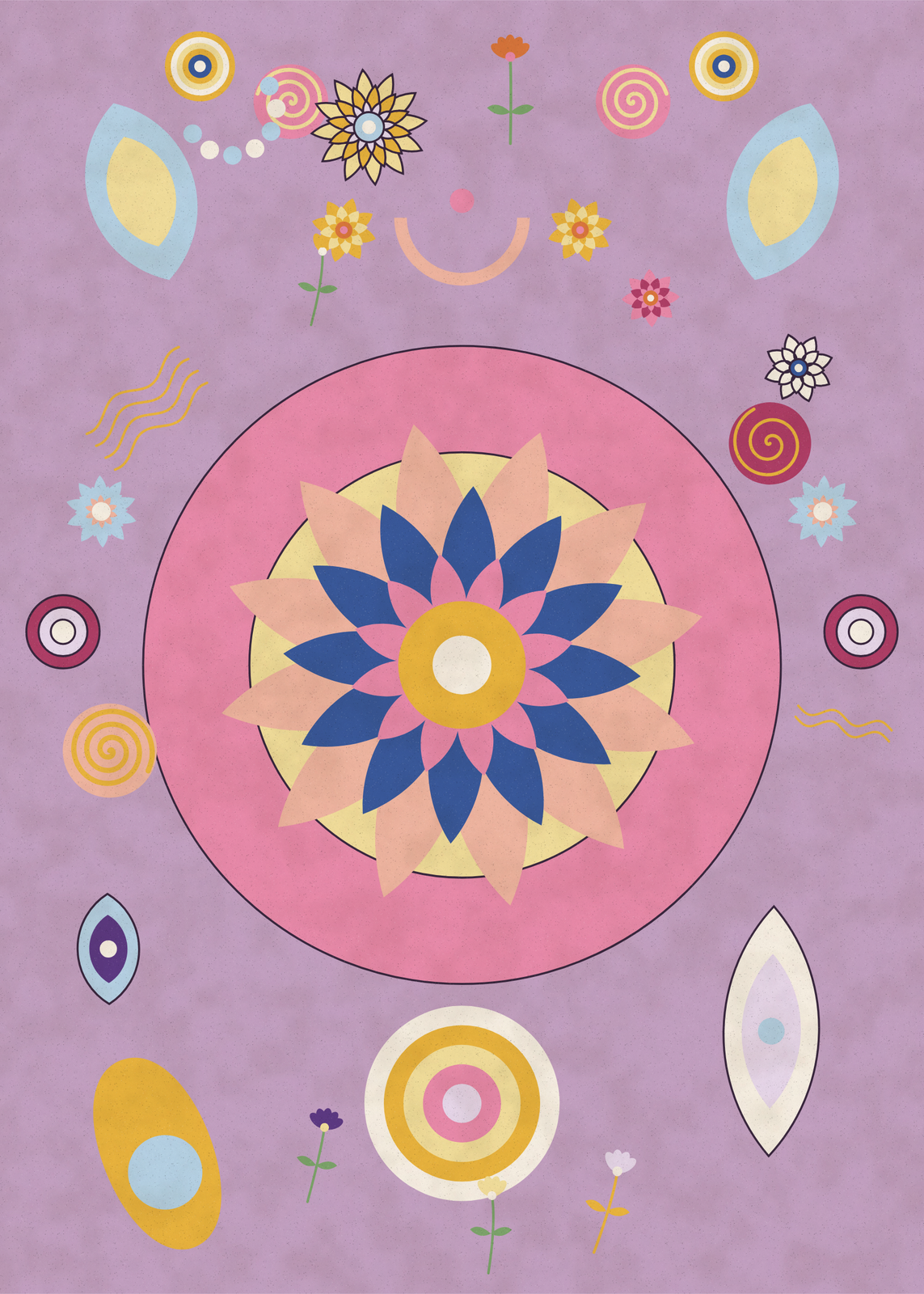
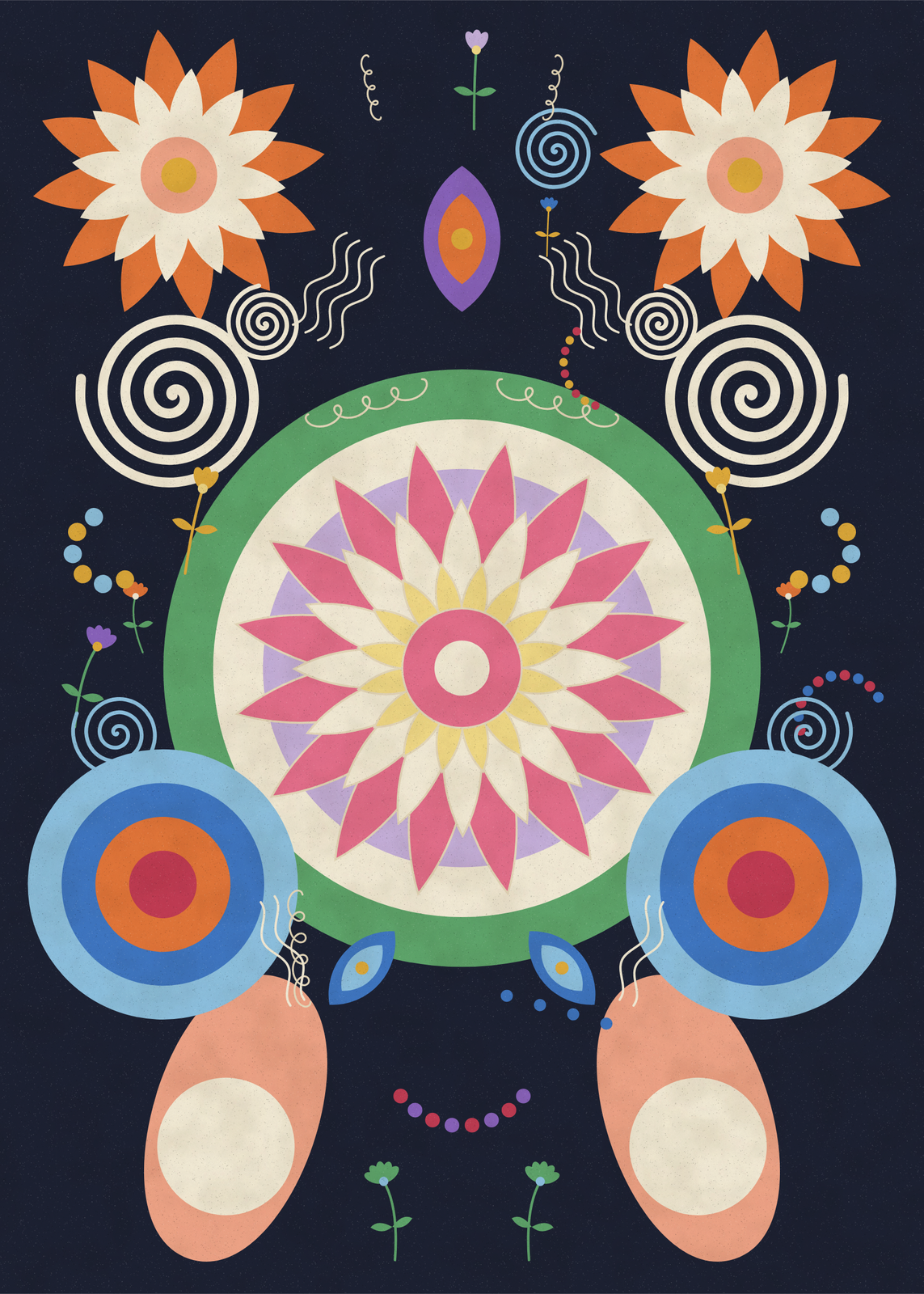
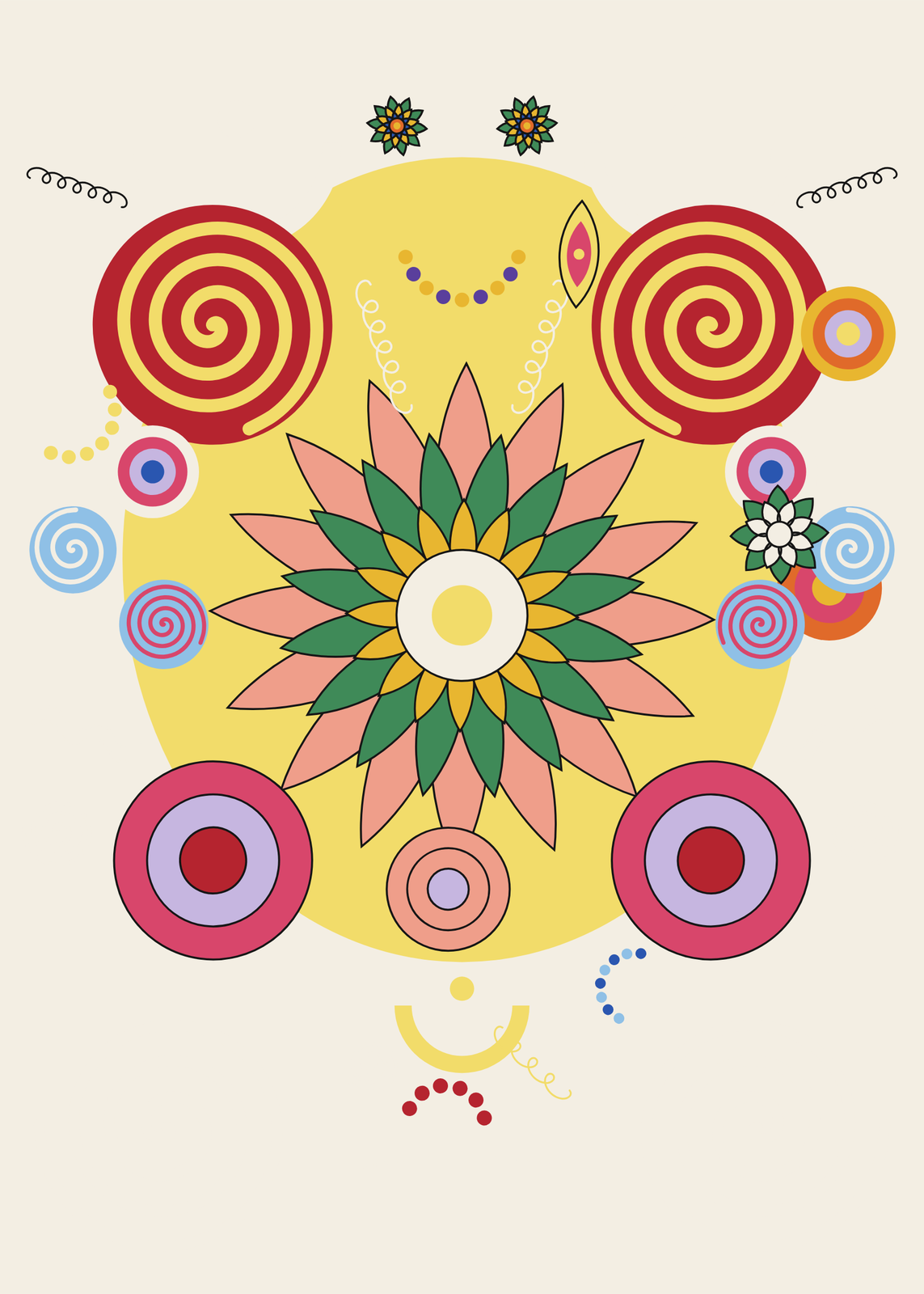
Each poster is a new picture in the manner of Hilma af Klint's temple paintings: a petal rosette or a target of rings at the middle of a pastel ground, spirals, lenses and eggs mirrored about it, and around them buds on stems, strings of beads and loops that look like handwriting but never form a letter. Nothing is traced from her paintings. The seed composes every one, so each print is its own.
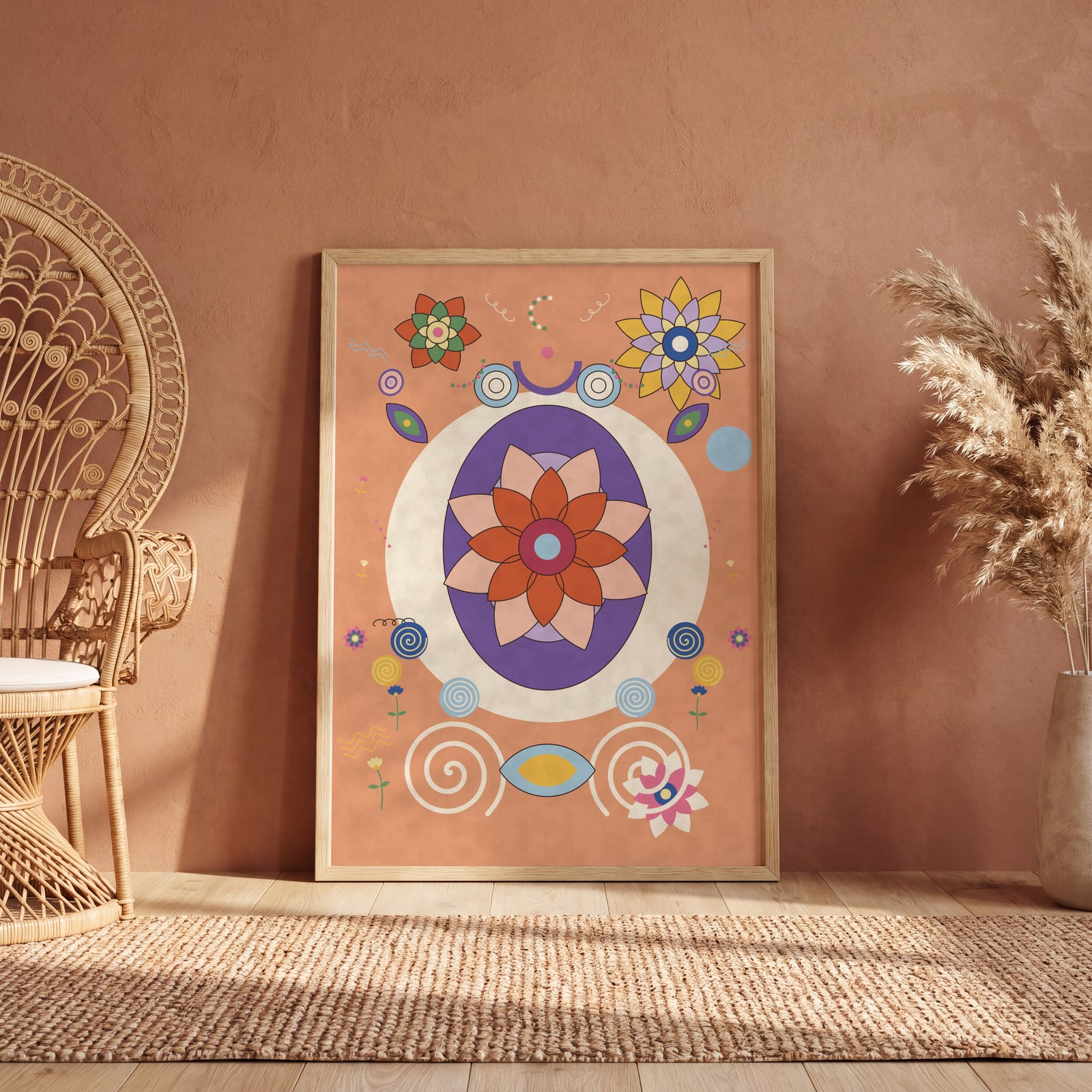
On the wall
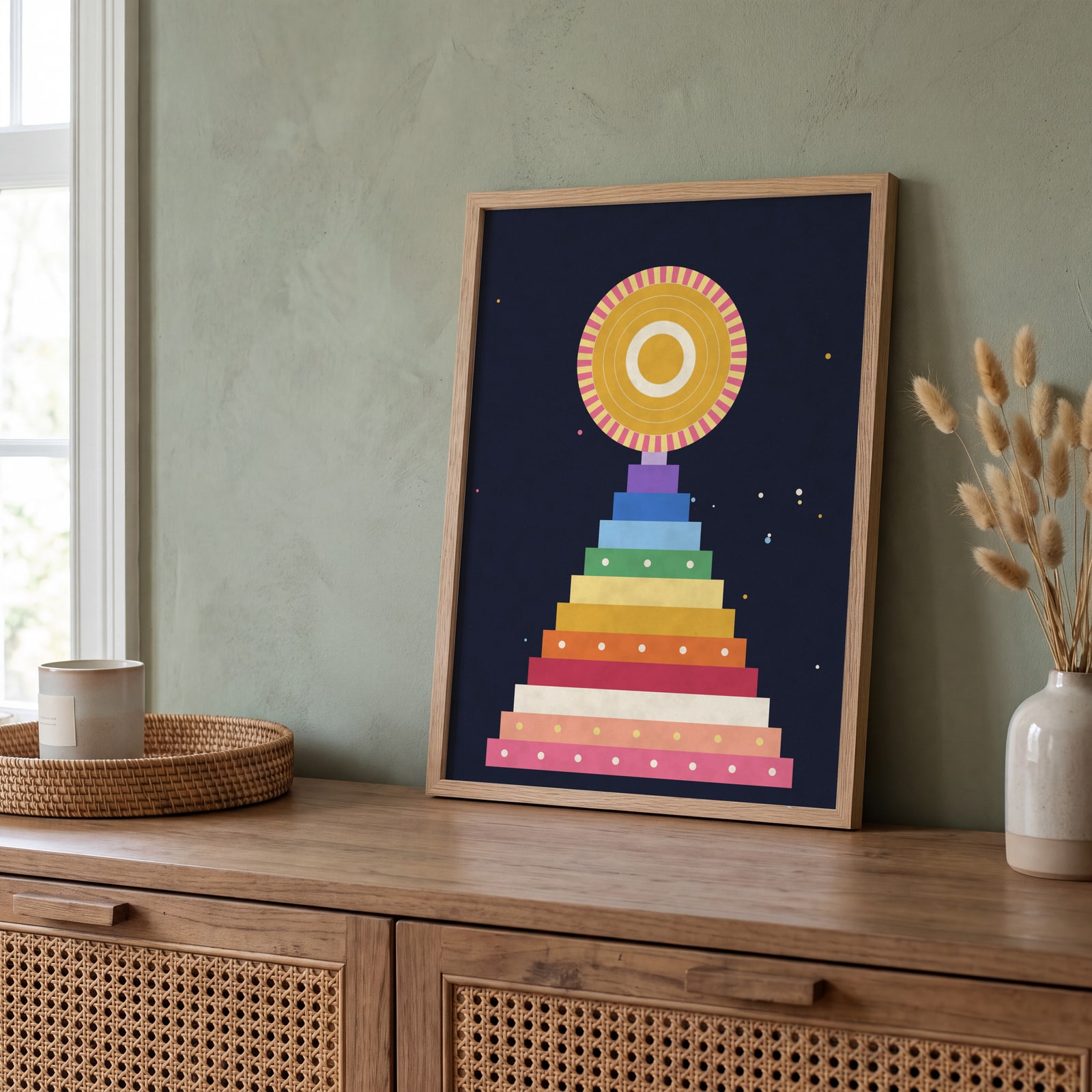
A few of them framed at home. Open any one to make it yours.
Examples
Open any of them to change the words, the place, the date and the style, then download the print file.
Bloom
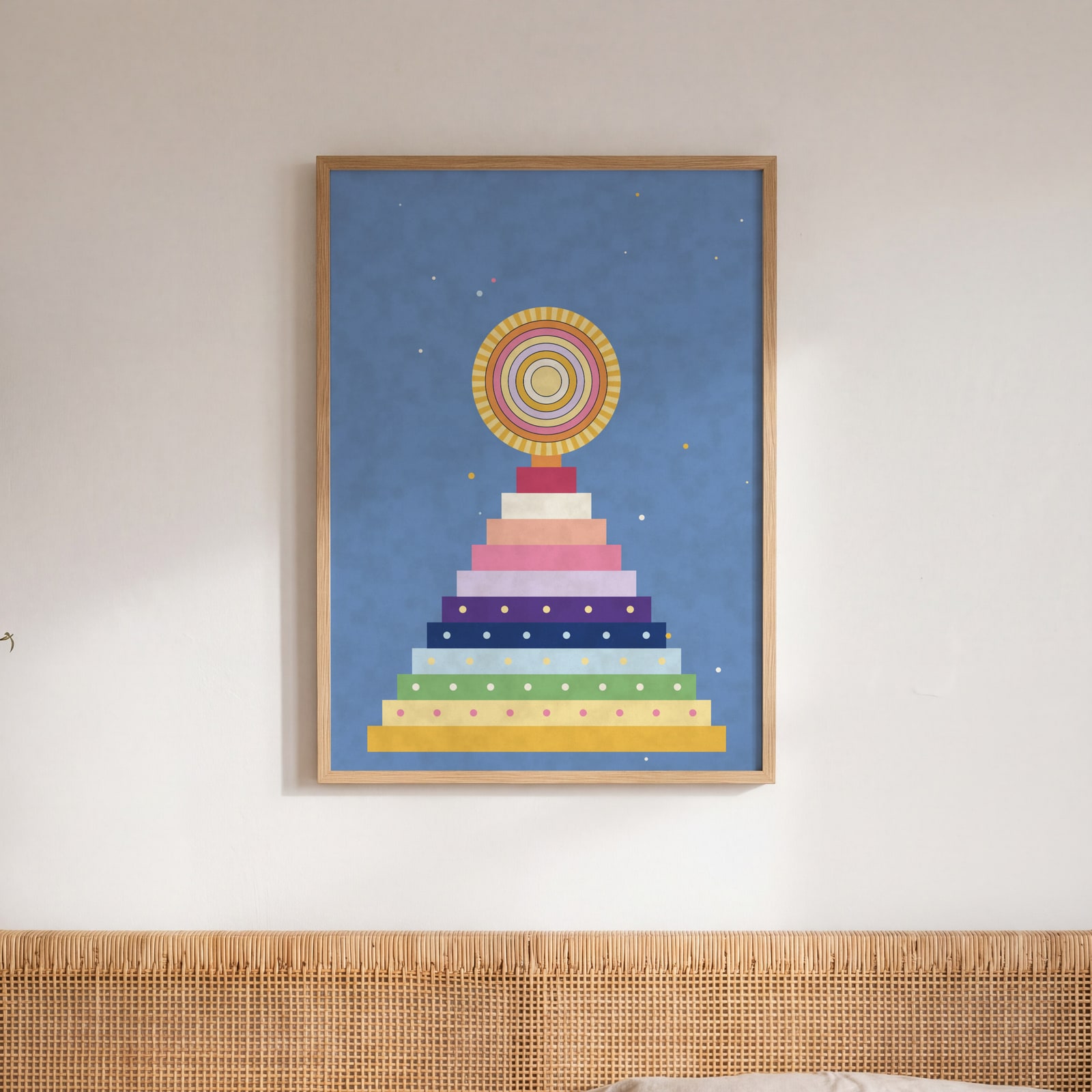
Altarpiece

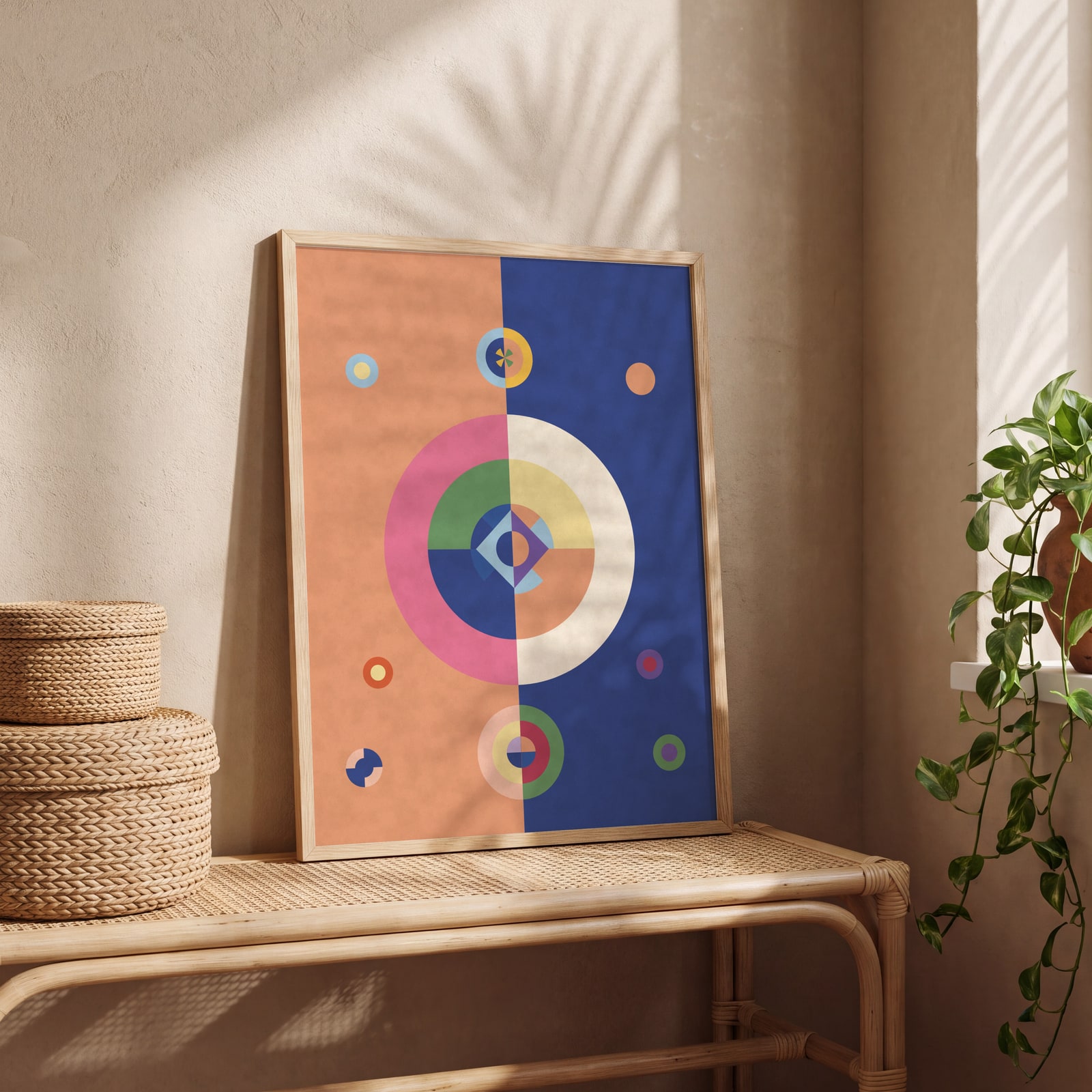
Halves
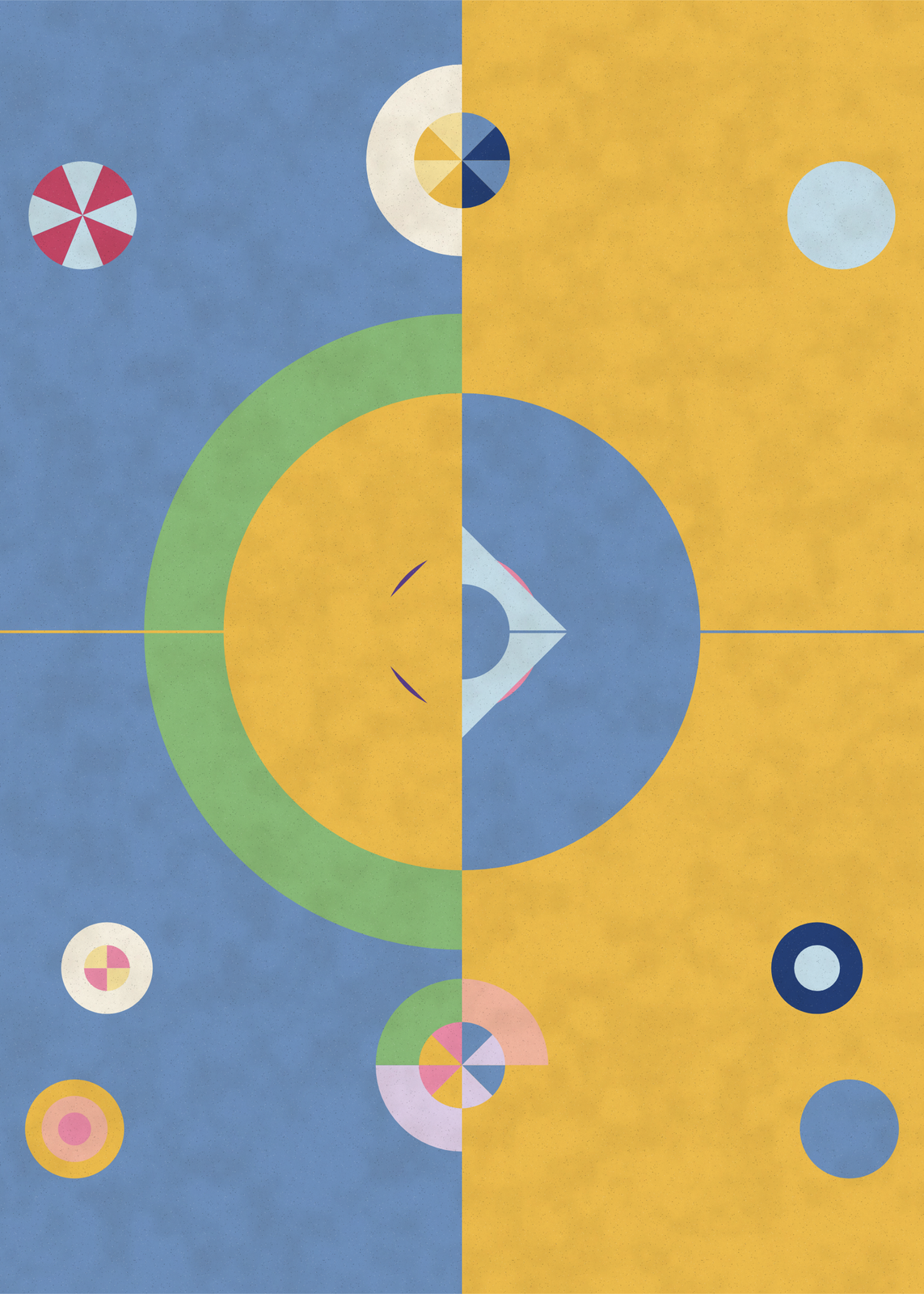
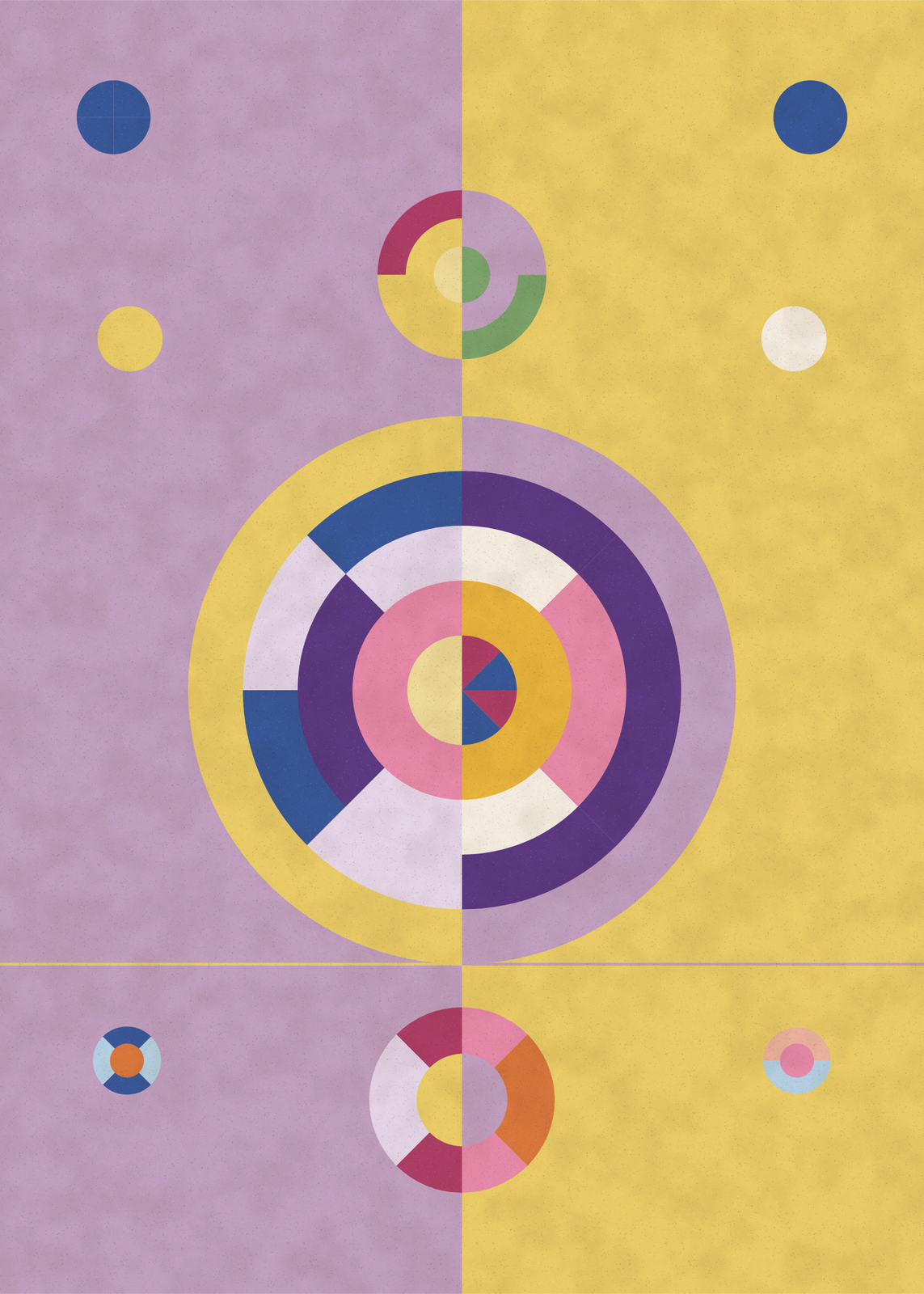
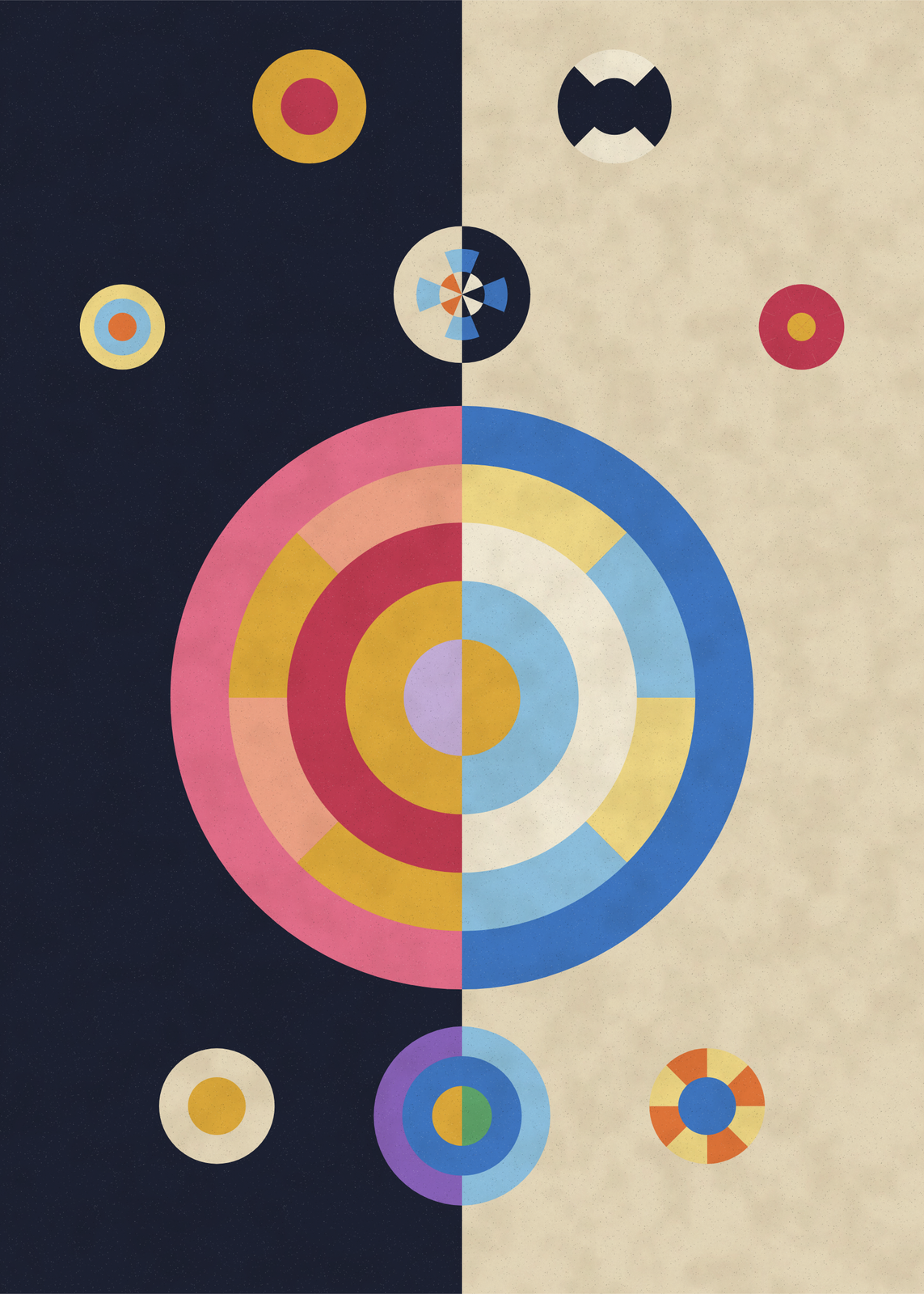
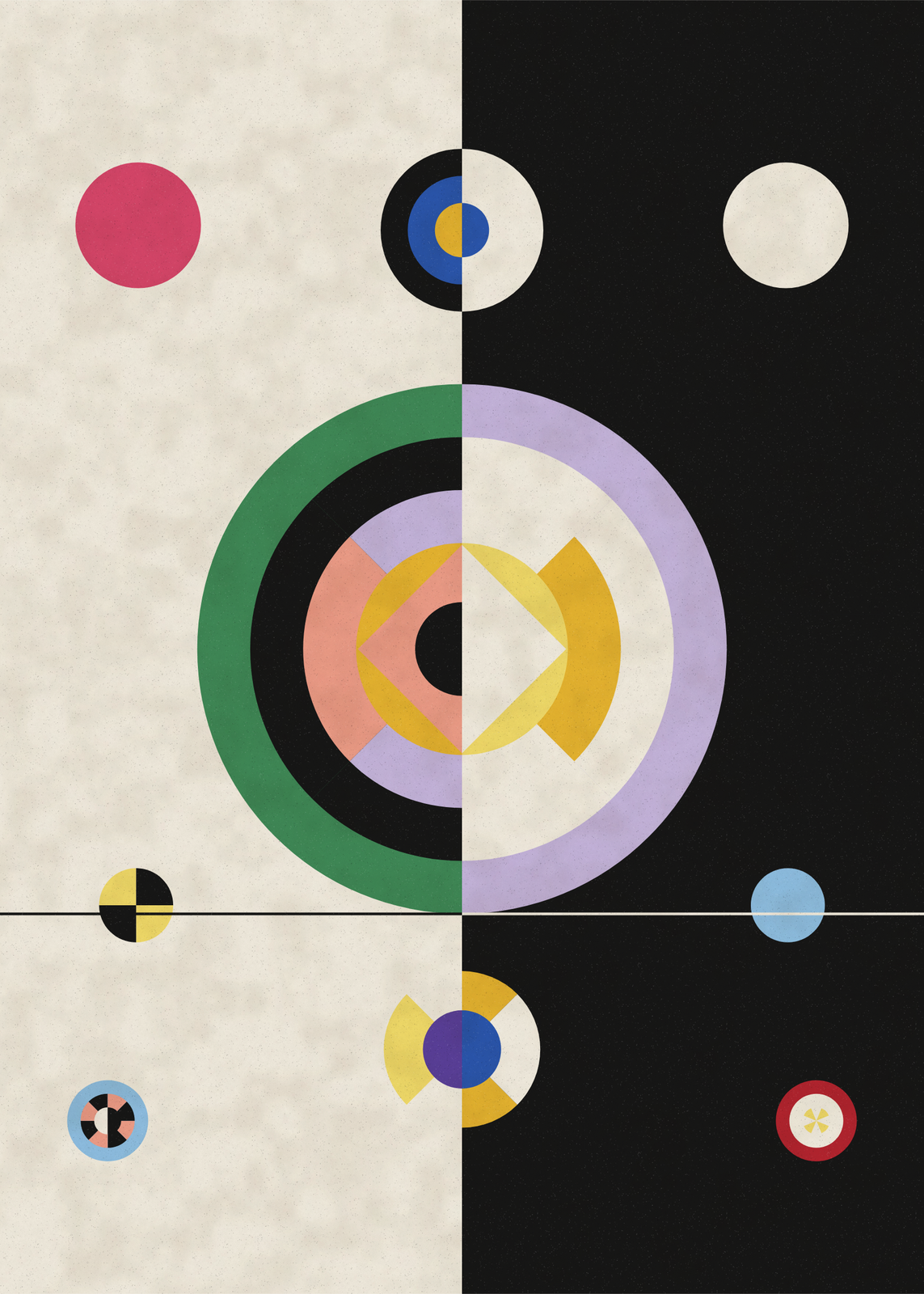
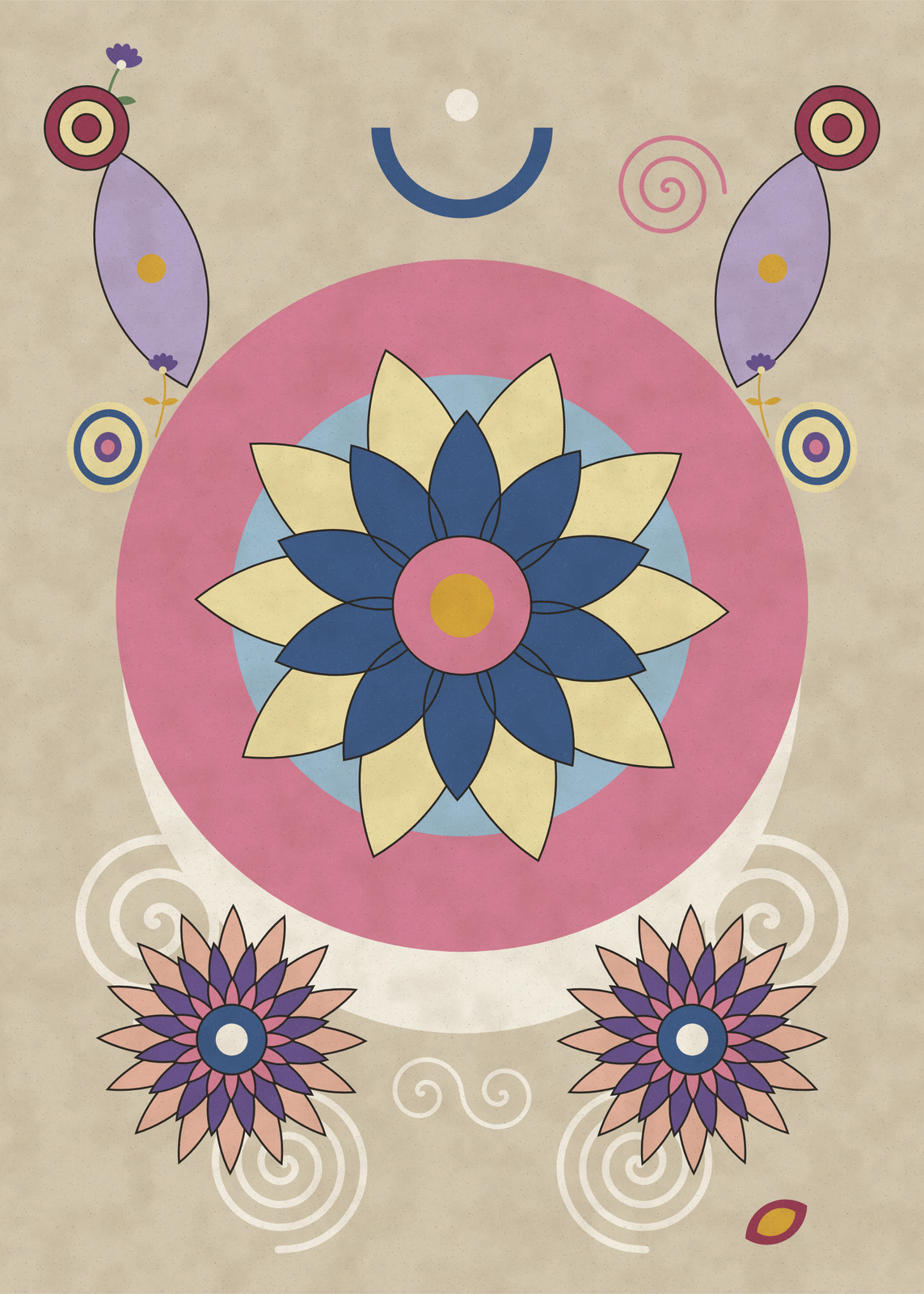
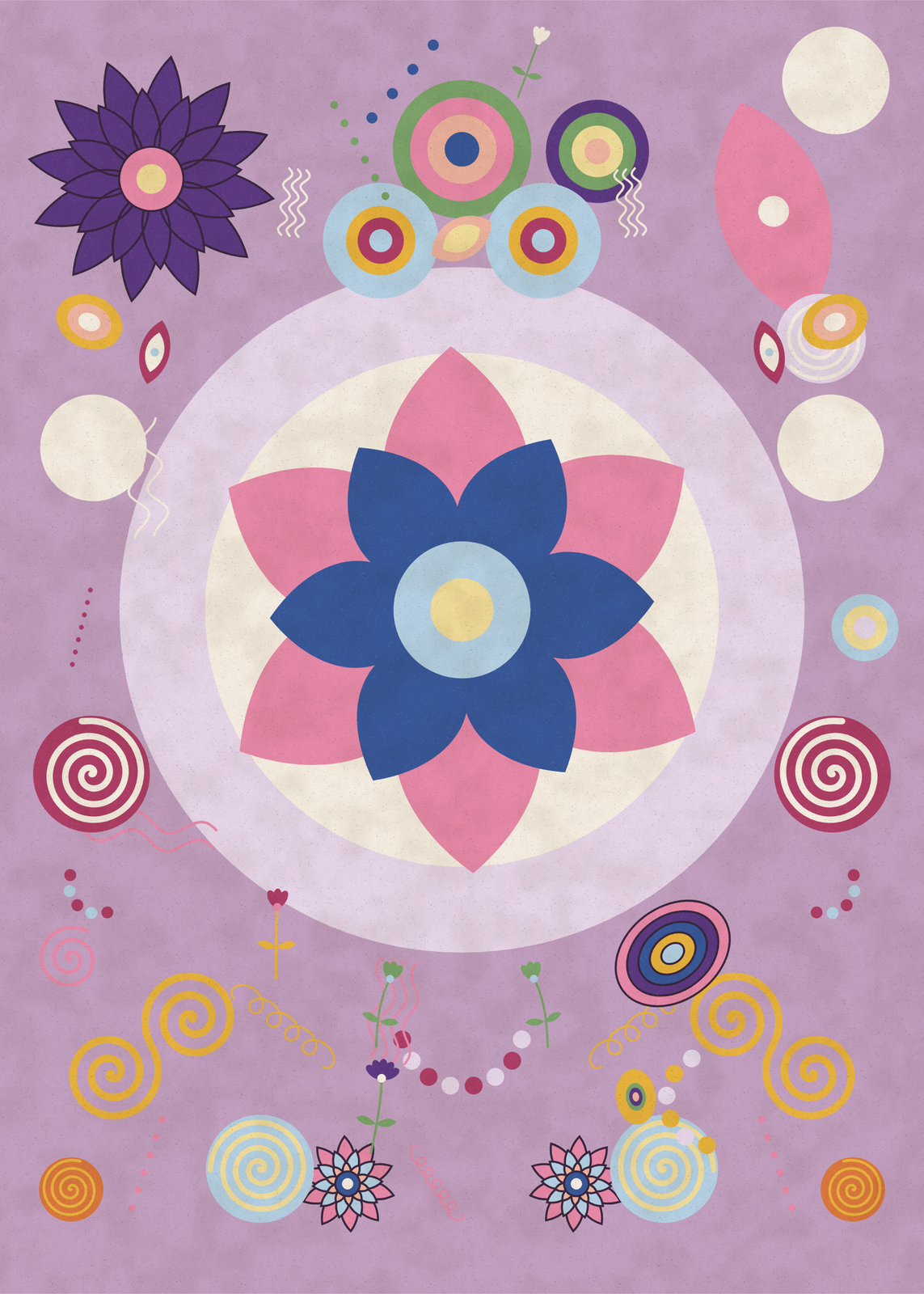
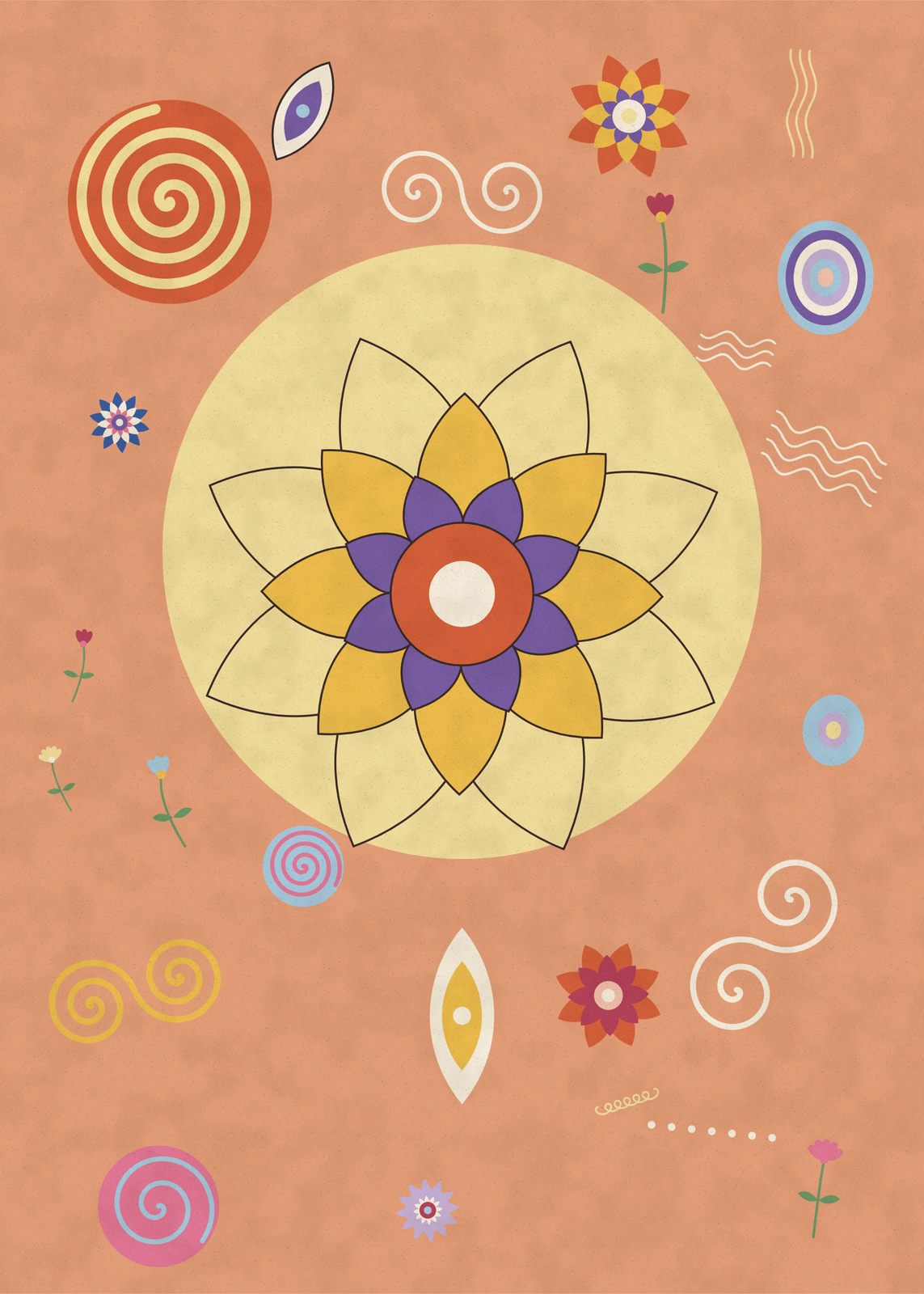
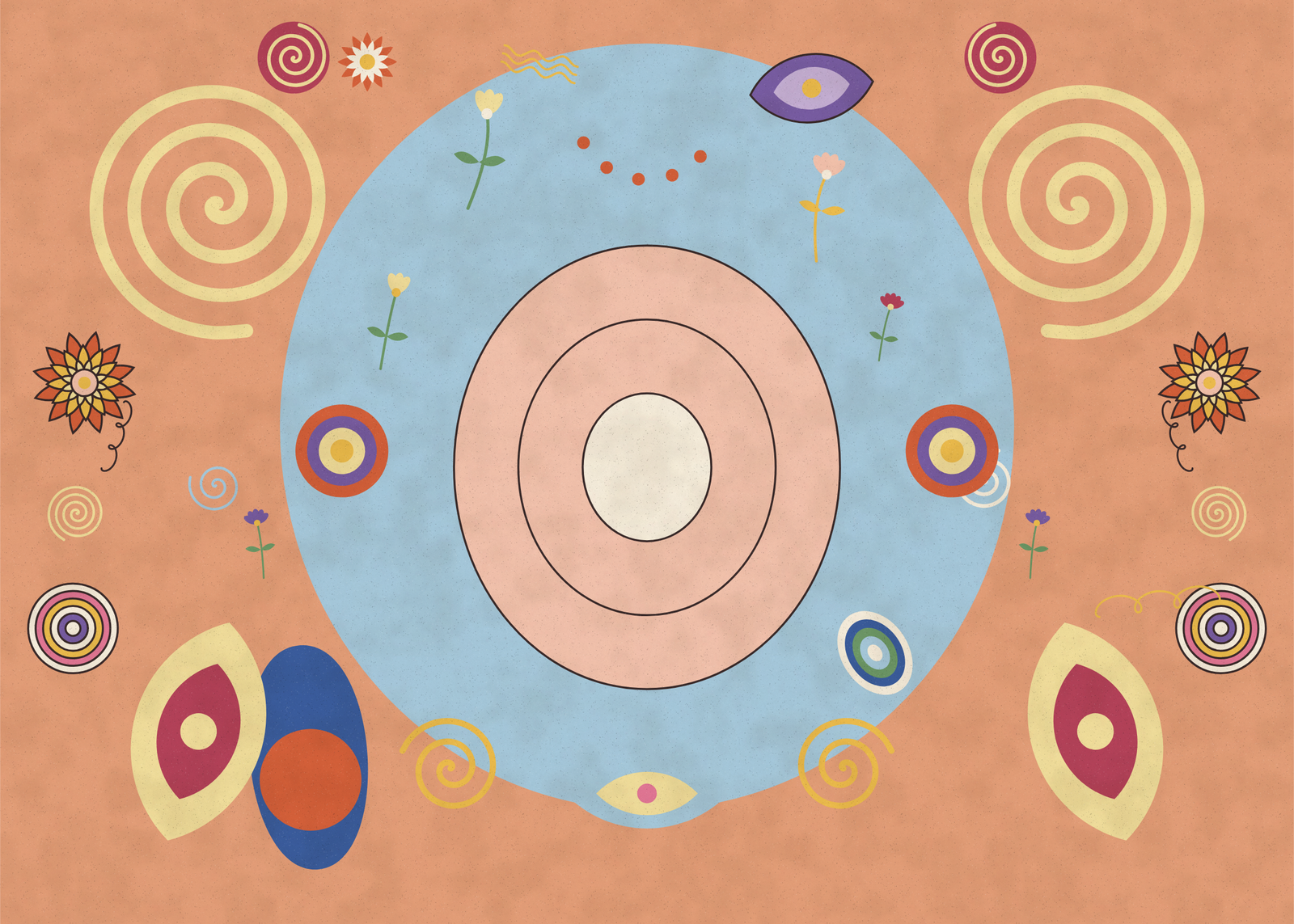
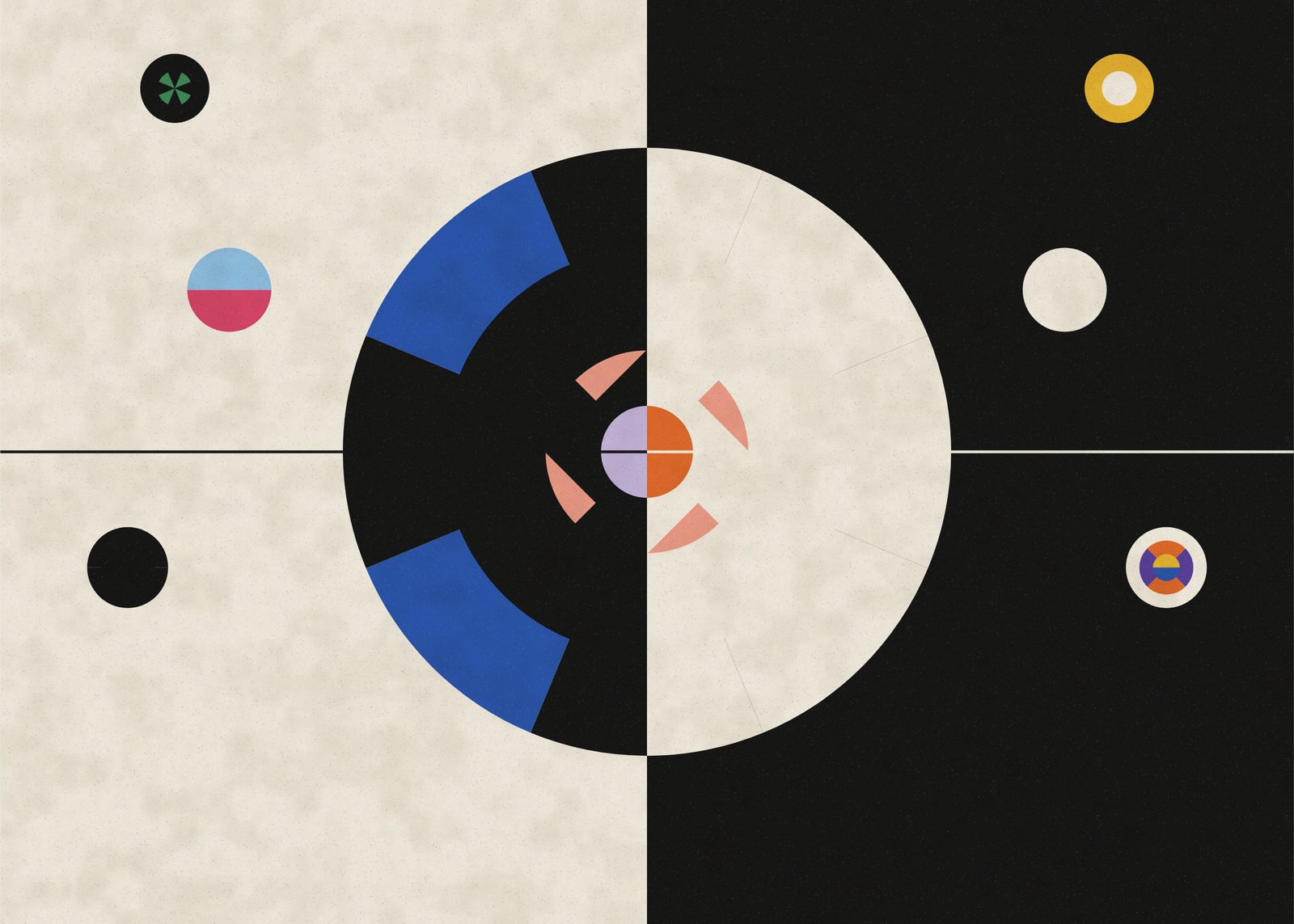
The paintings for the temple
Hilma af Klint (1862–1944) trained at the Royal Academy of Fine Arts in Stockholm and made her living from landscapes and portraits. From 1906 she also painted a long cycle of abstract pictures she called the Paintings for the Temple: The Ten Largest (1907), tall tempera paintings of the four ages of life, and, by 1915, the Swan series and three altarpieces. She seldom showed this work and left word that it should wait twenty years after her death.
Bloom, Altarpiece or Halves
Bloom follows The Ten Largest: a big rosette, rings or both at the middle, often over a pastel oval, three or four spirals, lenses or eggs round it and small forms in the room left over. Symmetry sets how many come in mirrored pairs, from free to fully mirrored.
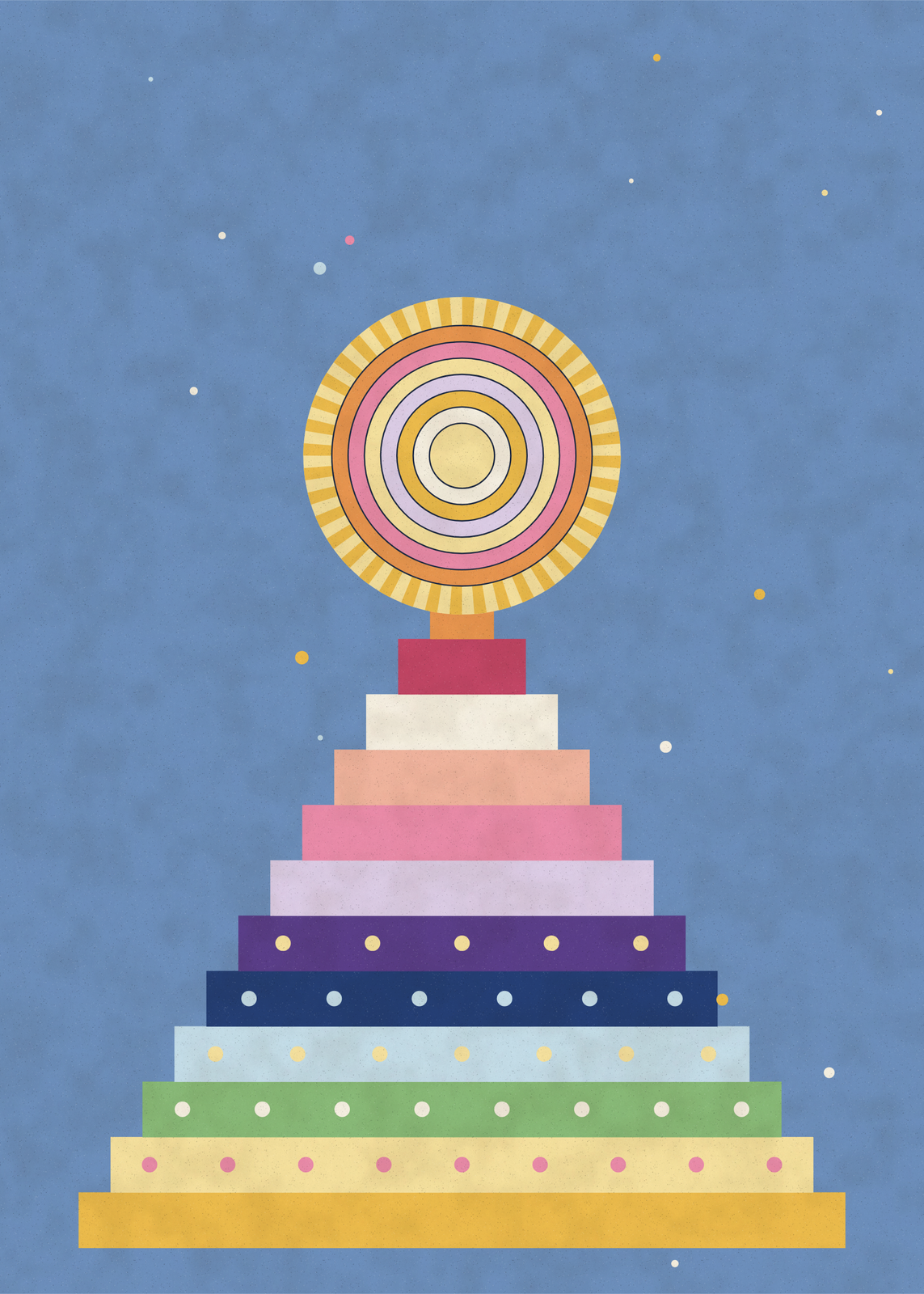
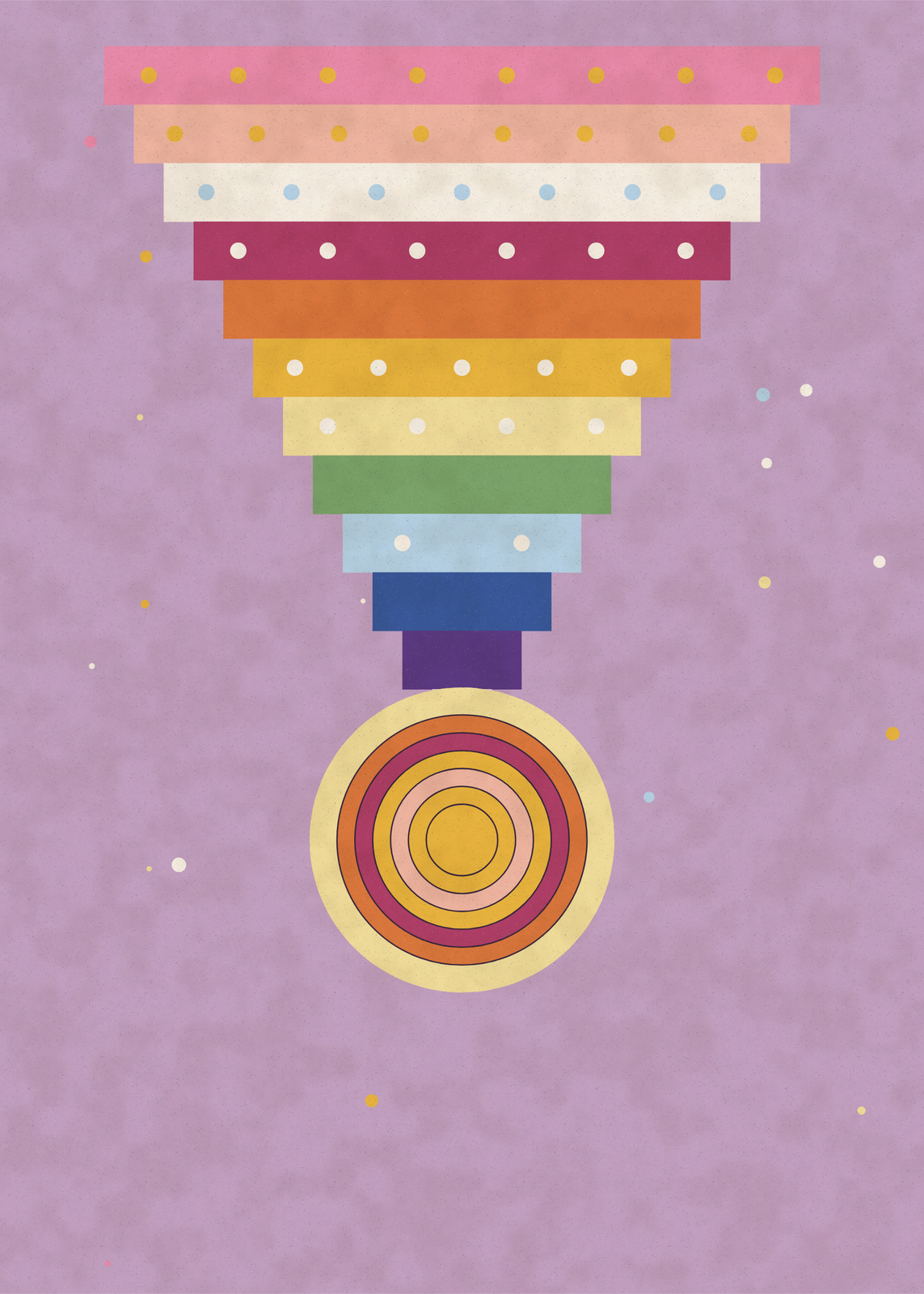
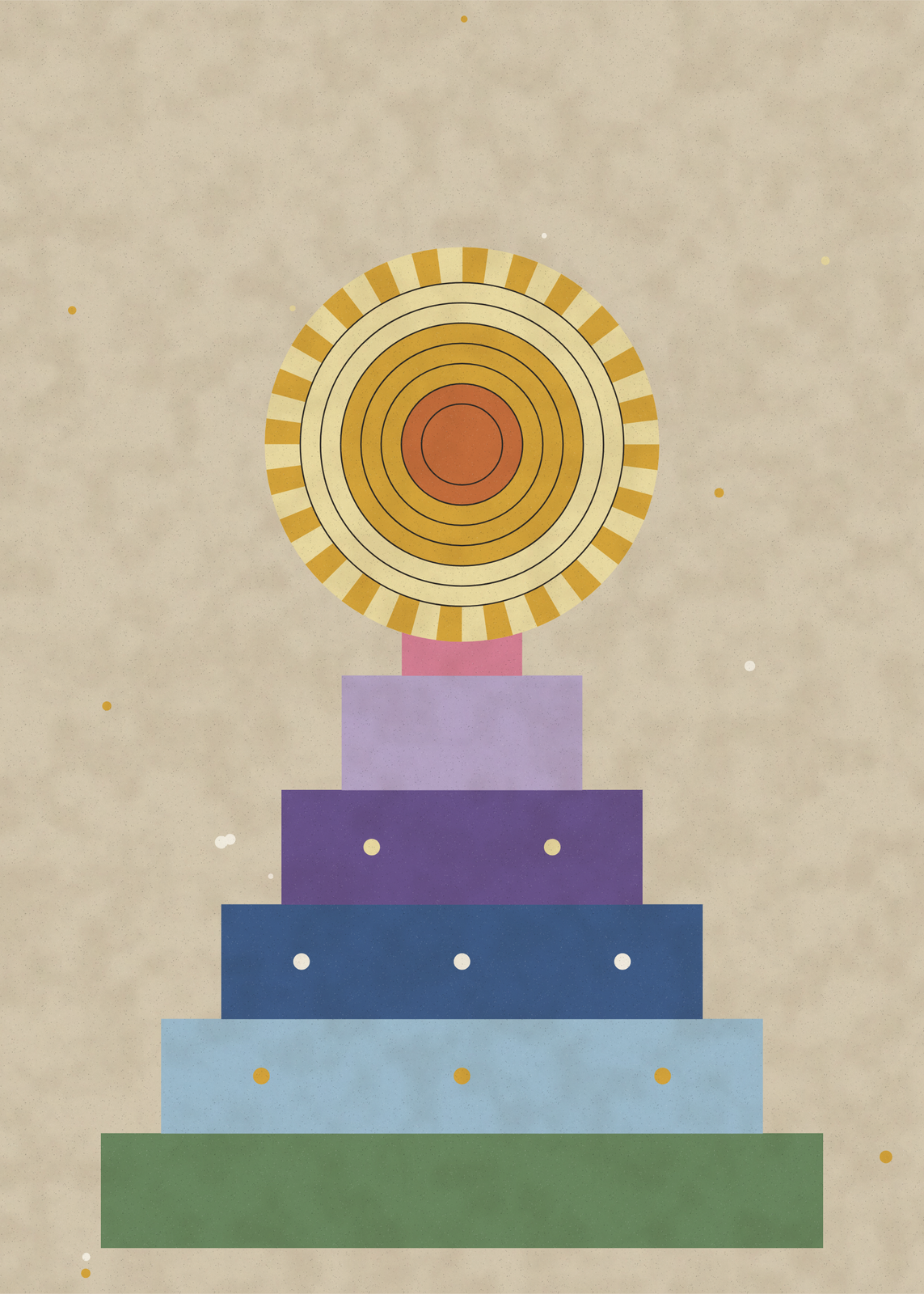
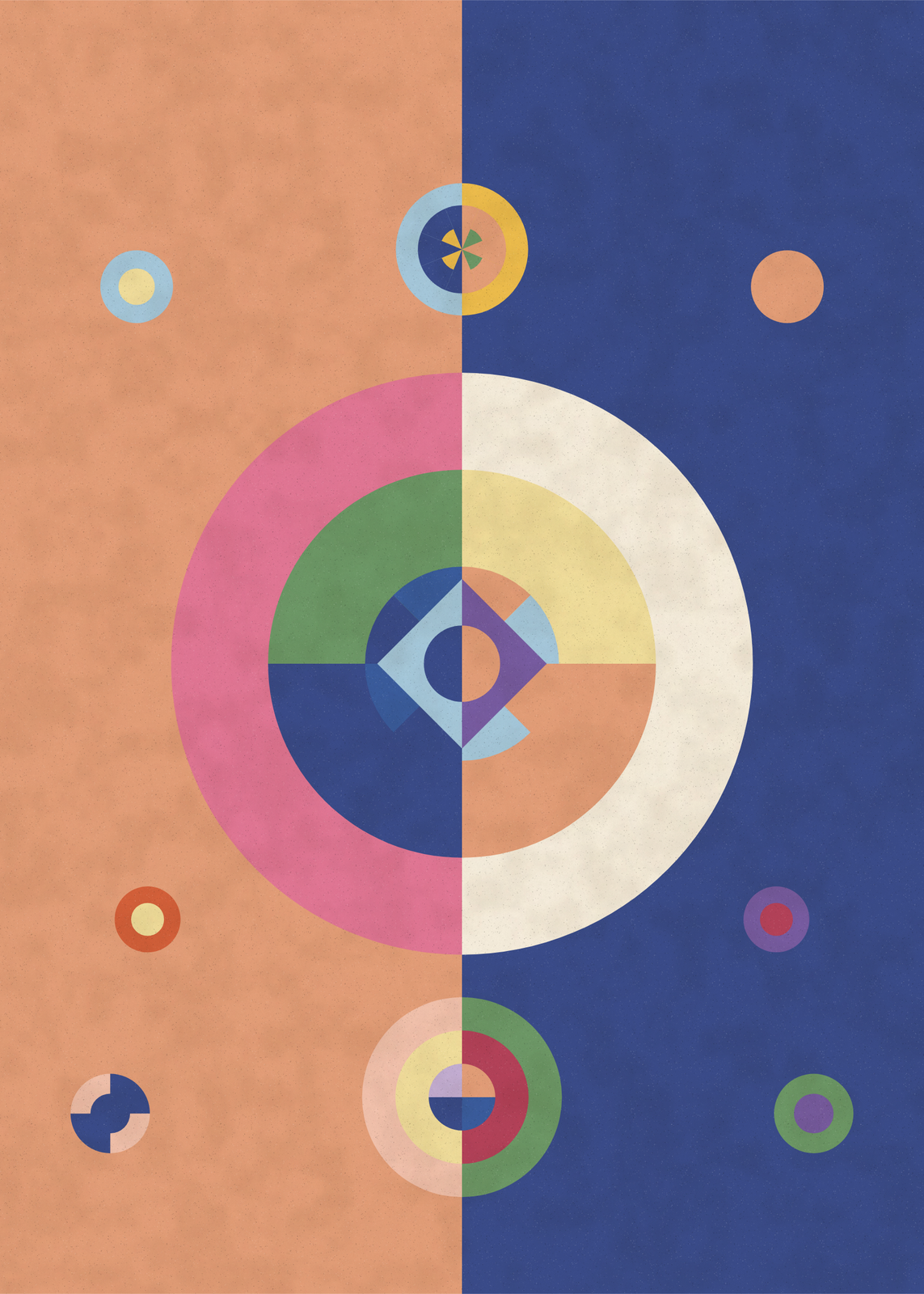
Altarpiece builds a stepped pyramid of bands in rainbow order, dotted along each step, under a sun of rings edged in rays; now and then the pyramid hangs from the top over the sun. Halves, after the Swan series, splits the ground down the middle and paints every shape twice, each half in the other's colors.
Grounds and paper
Four palettes take their grounds from the ages of The Ten Largest: Childhood blue, Youth salmon, Adulthood lilac and Old age beige. Altar sets the forms on night blue and Swan on cream and black. Each holds the same twelve roles, so changing it repaints the picture without moving a form. Paper grain is the default, after her tempera on paper; canvas weave and flat color are the others.
Questions
Is this a real Hilma af Klint?
No. Each poster is a new picture composed from a seed in the manner of her abstract paintings. It doesn't reproduce, trace or copy any of her works.
Which of her paintings is it modeled on?
Bloom on The Ten Largest, Altarpiece on the three altarpieces of 1915 and Halves on the Swan series. The palettes are named for the grounds of those series.
Is there writing on it?
No. Some small forms are loops that look like handwriting, as in her paintings, but they are drawn never to form a letter, so nothing on the sheet can be read.
Can I make it calmer?
Lower Small forms to clear away the buds, beads, loops and dots, or pick Altarpiece, which keeps to a pyramid, a sun and a scatter of stars.
What sizes can I print?
US Letter, 8 × 10, 11 × 14, 12 × 16 and 12 × 18 in, A4 and A3, free. You download a 300 DPI JPEG drawn at the size you pick. Larger prints, up to 24 × 36 in, are coming soon.
Related
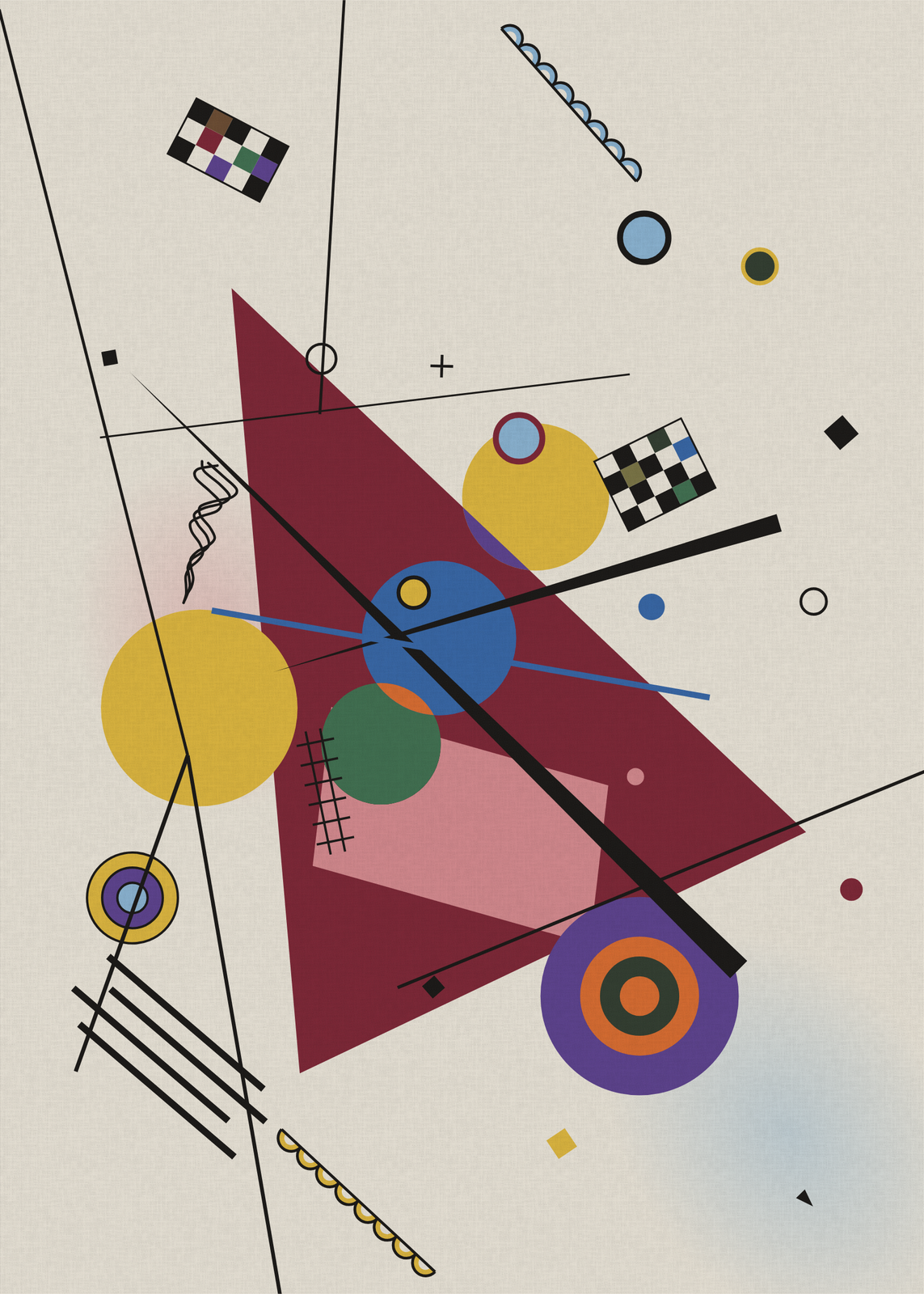 Modern artnew pictures after Matisse, Mondrian, Kandinsky, Klee and more
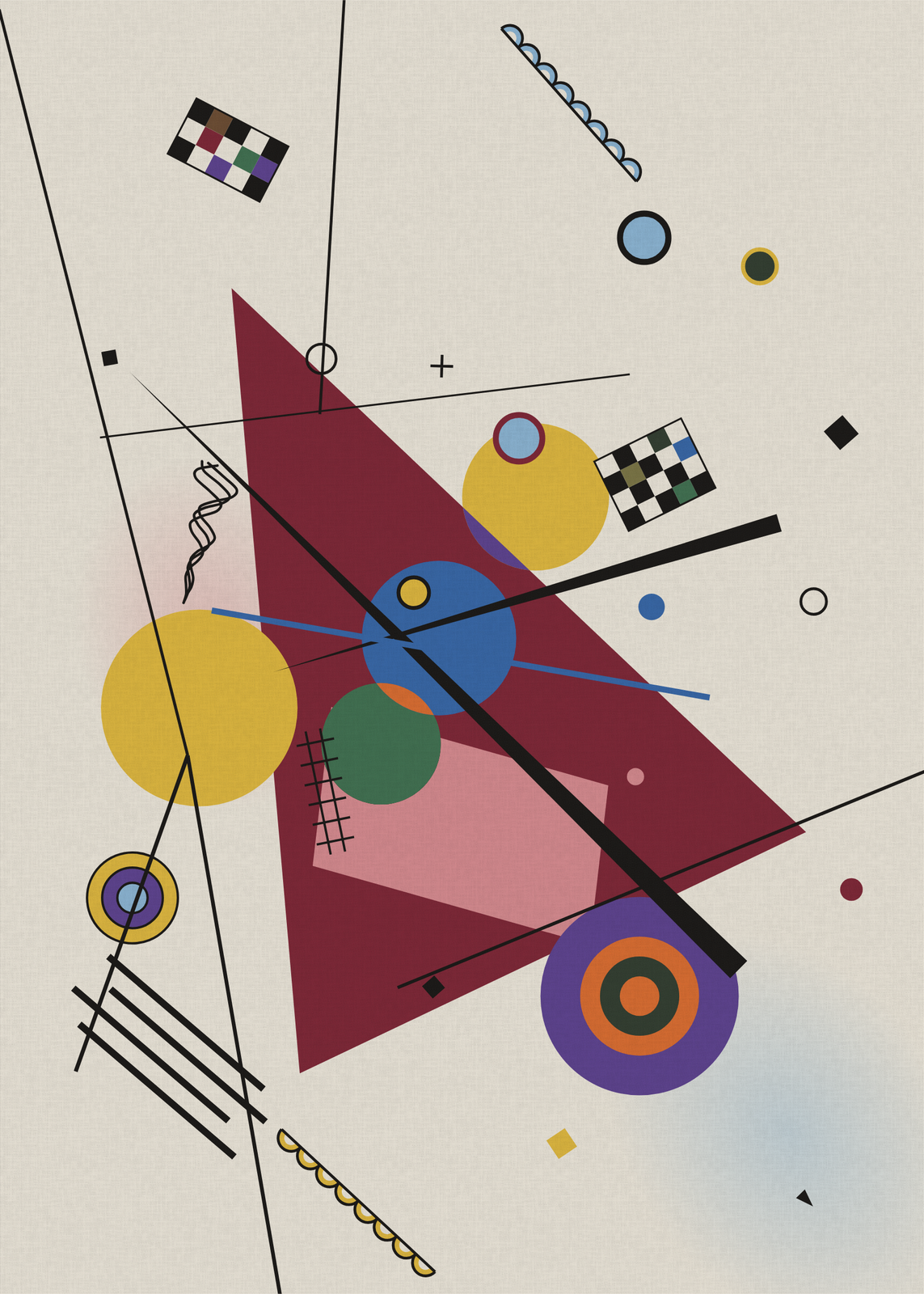 Kandinsky arthalo circles, tilted triangles and black spears, composed new in the manner of his Bauhaus years
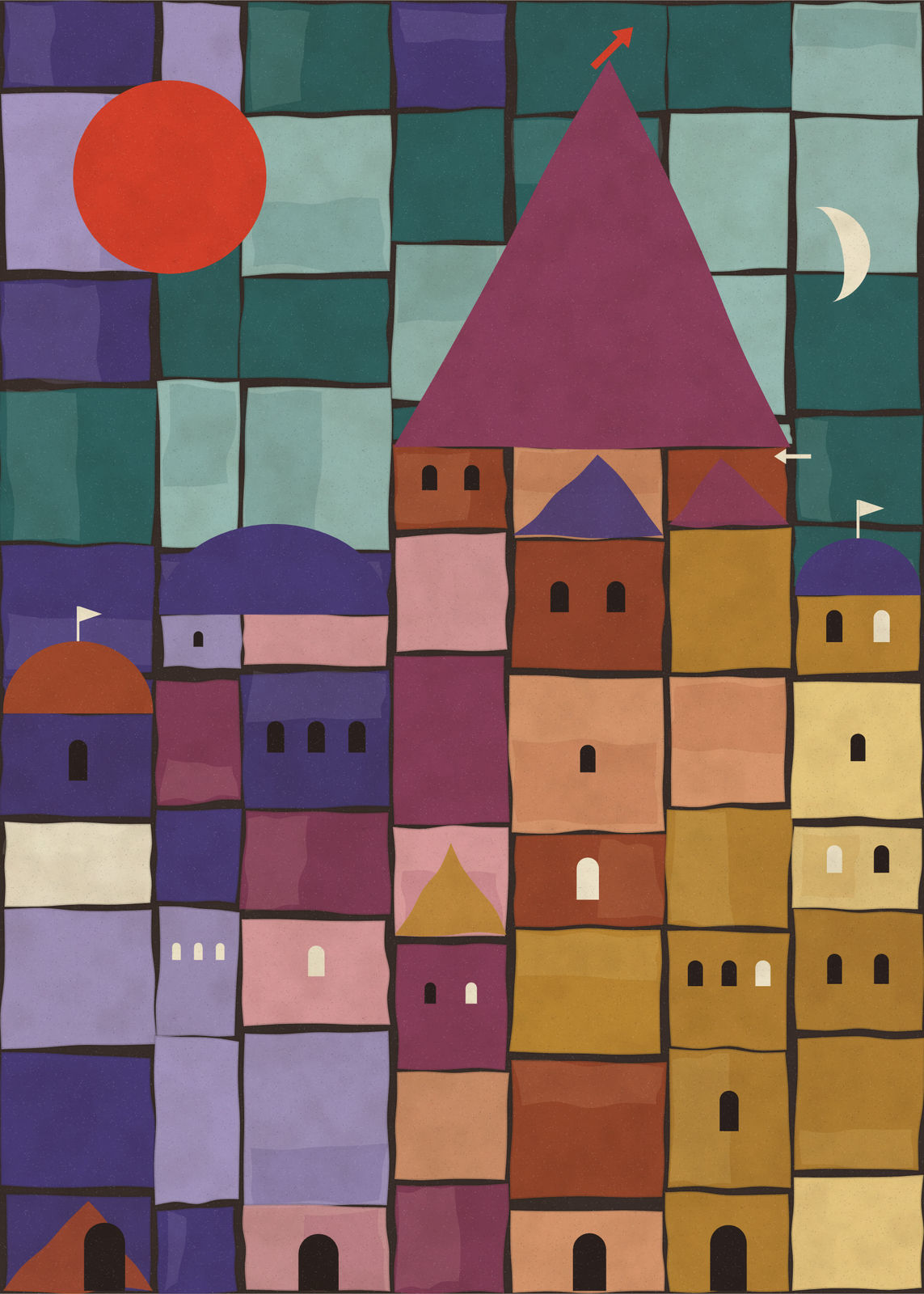 Paul Klee artmagic squares, a town of towers under the sun and shimmering dots, composed new in his manner
 Boho wall artmade-up cloth, printed down to the thread
 Mandala arta new mandala design with every seed, drawn ring by ring
 Circle artdot tunnels, halftone suns and starbursts on a round panel, in two flat inks
Gift ideas by occasion
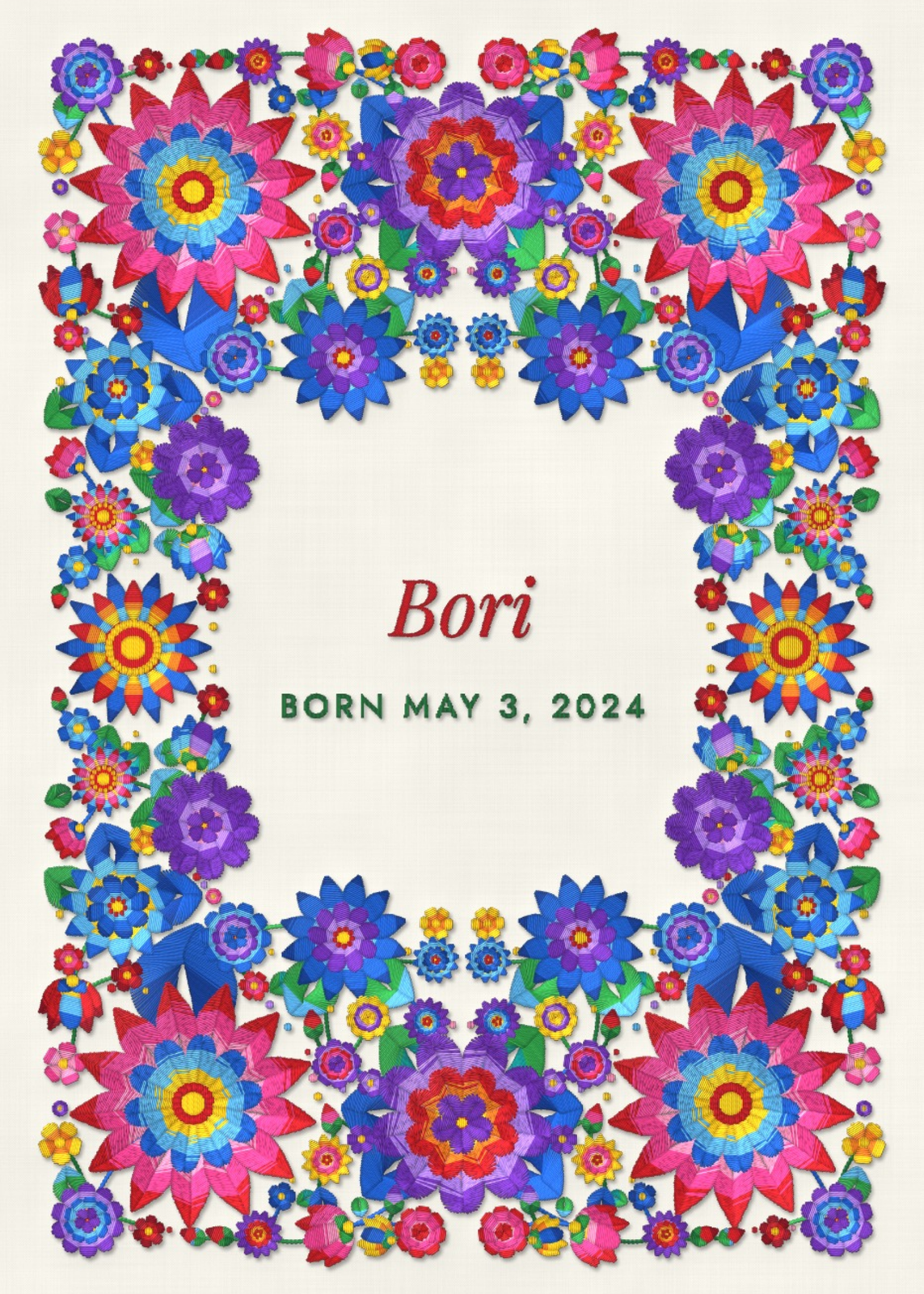
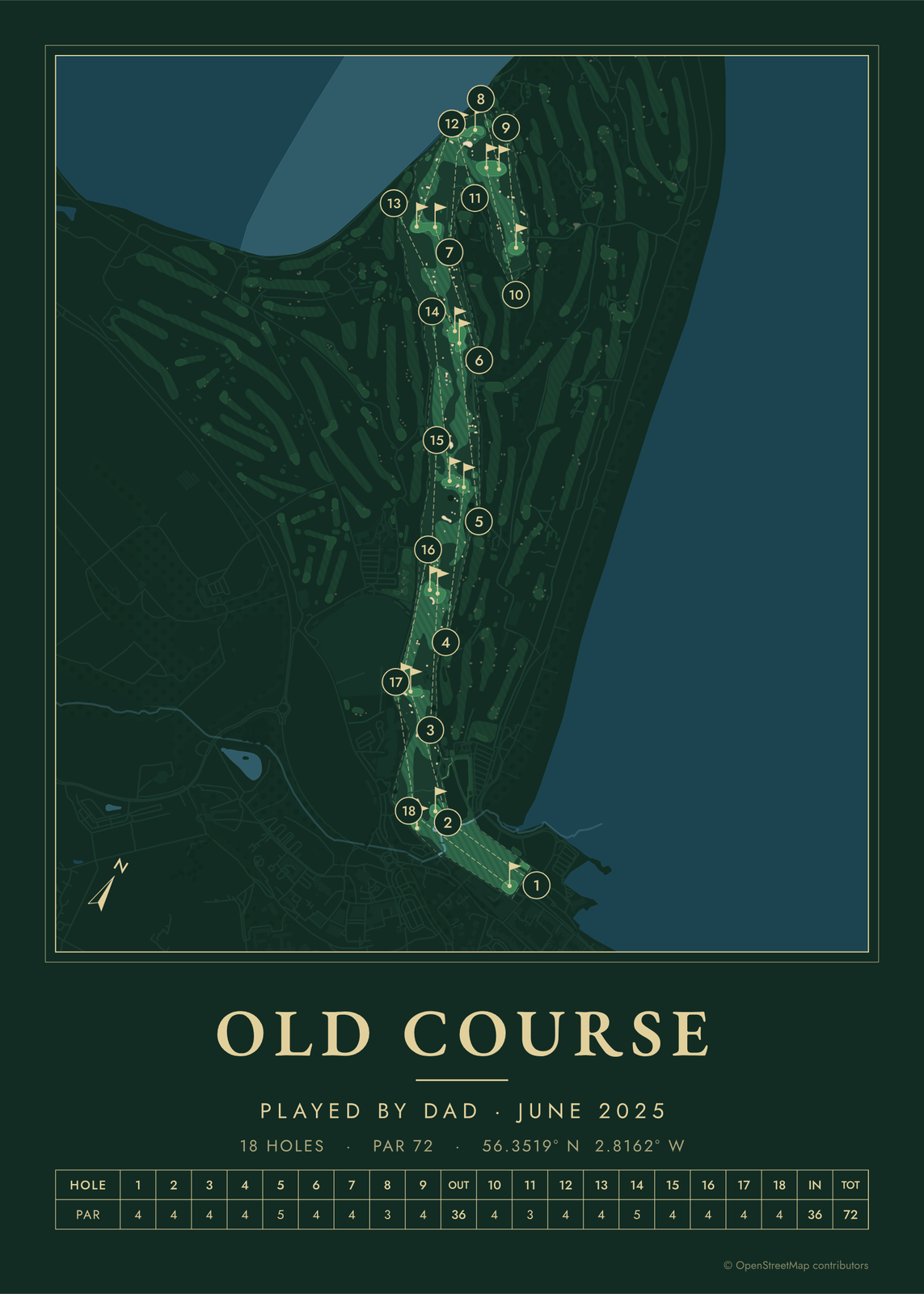
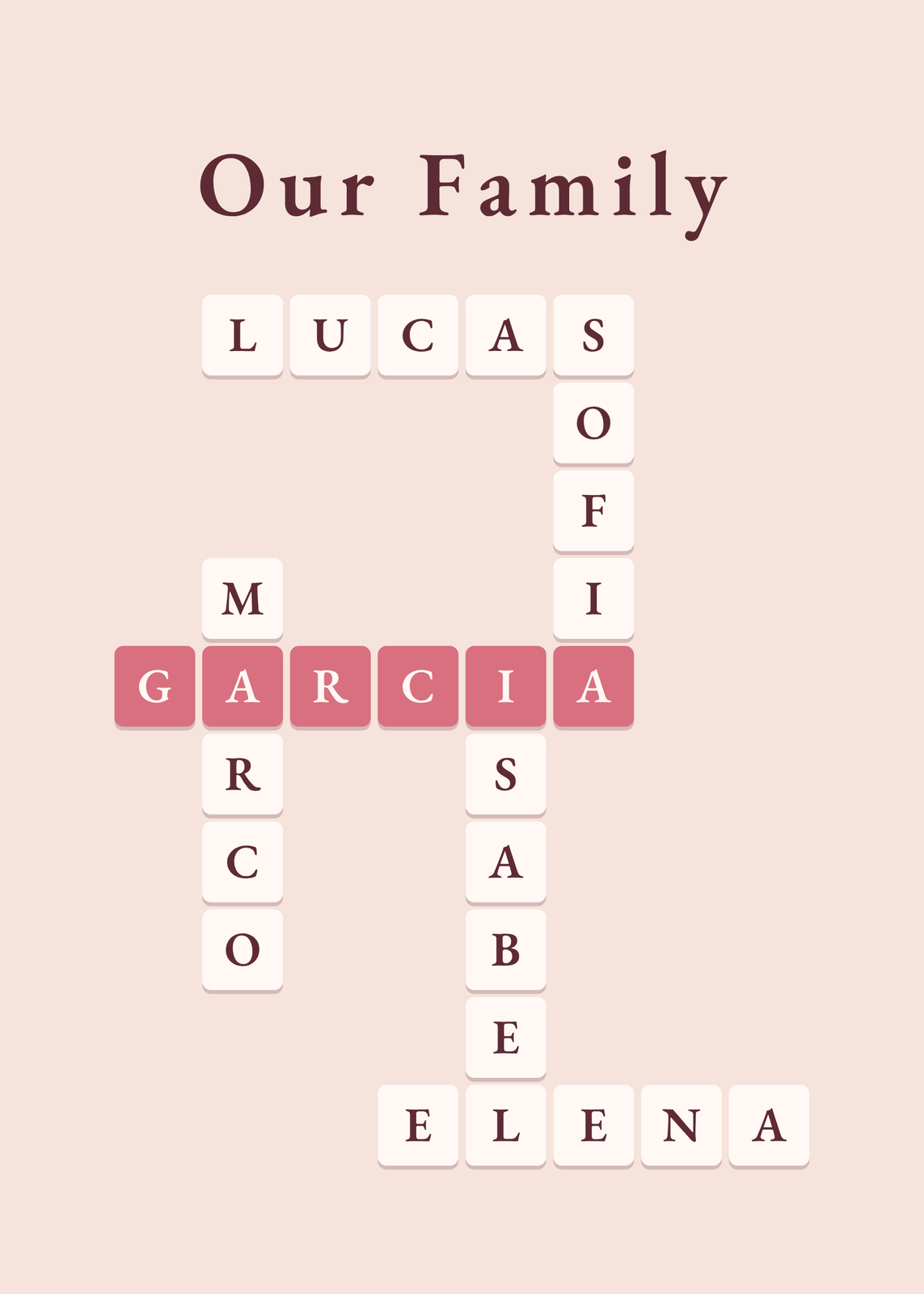
Every example is made with the Posterage generators. Change anything, then download it as a 300 DPI JPEG.