Kandinsky art halo circles, tilted triangles and black spears, composed new in the manner of his Bauhaus years
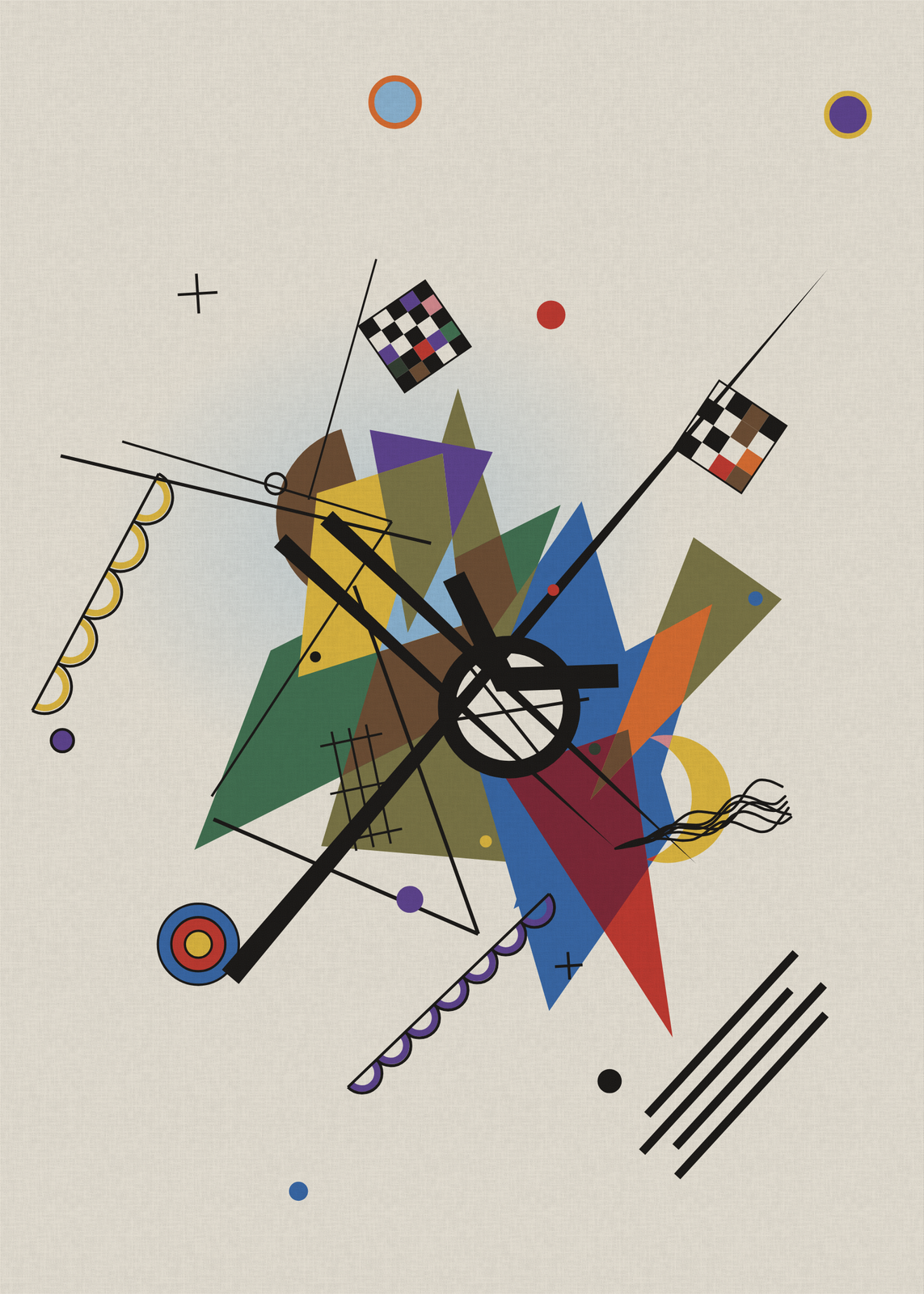
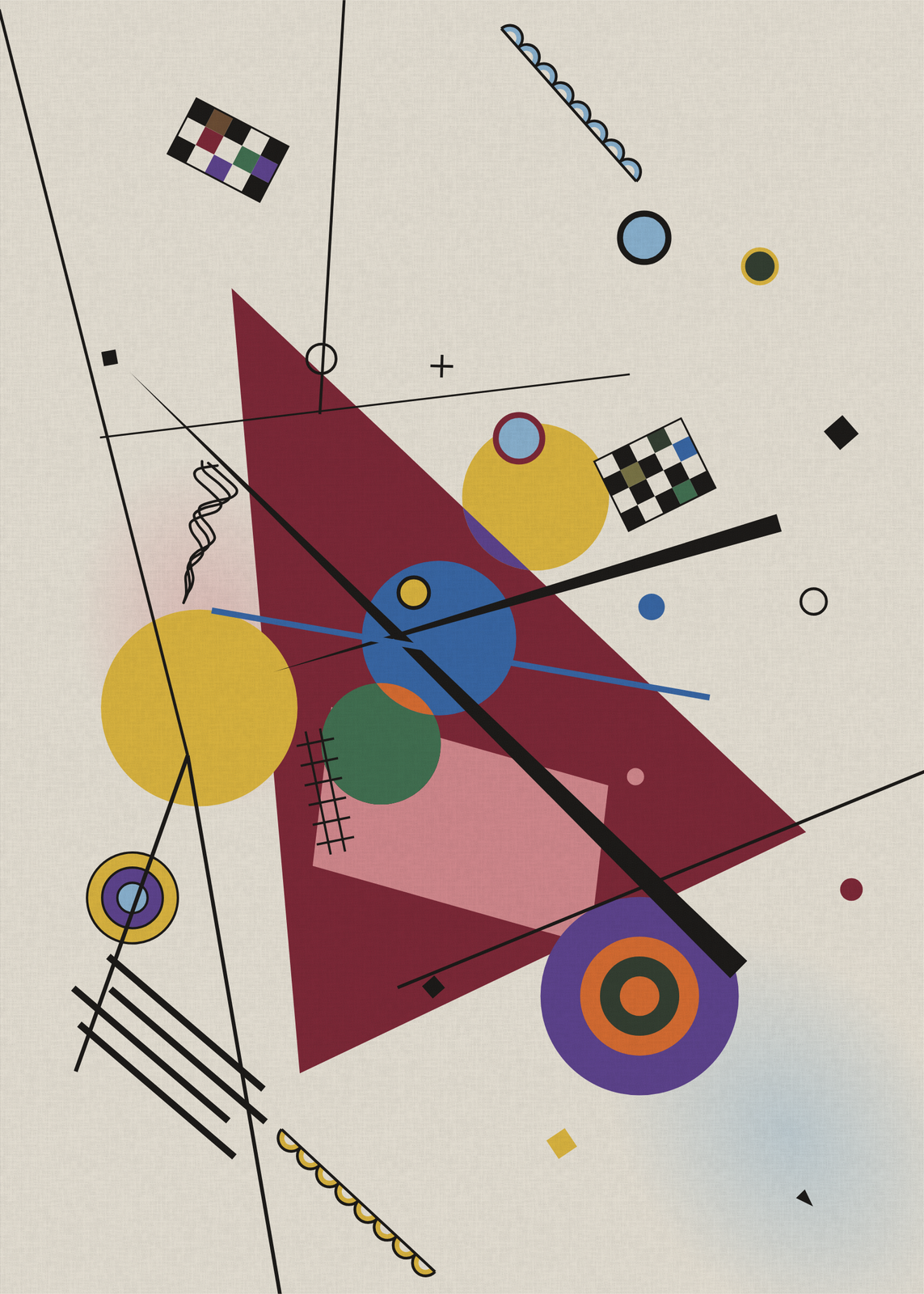
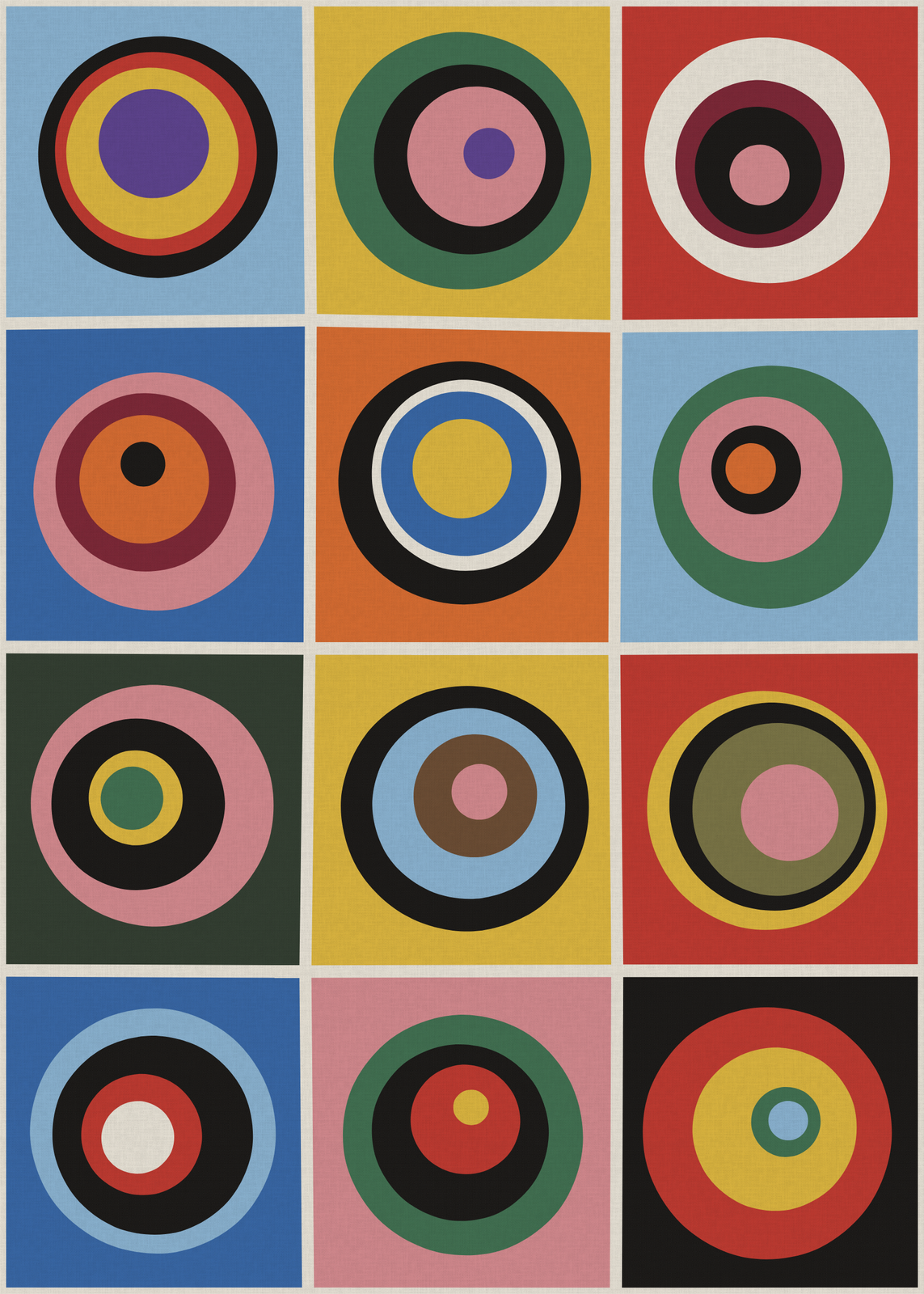
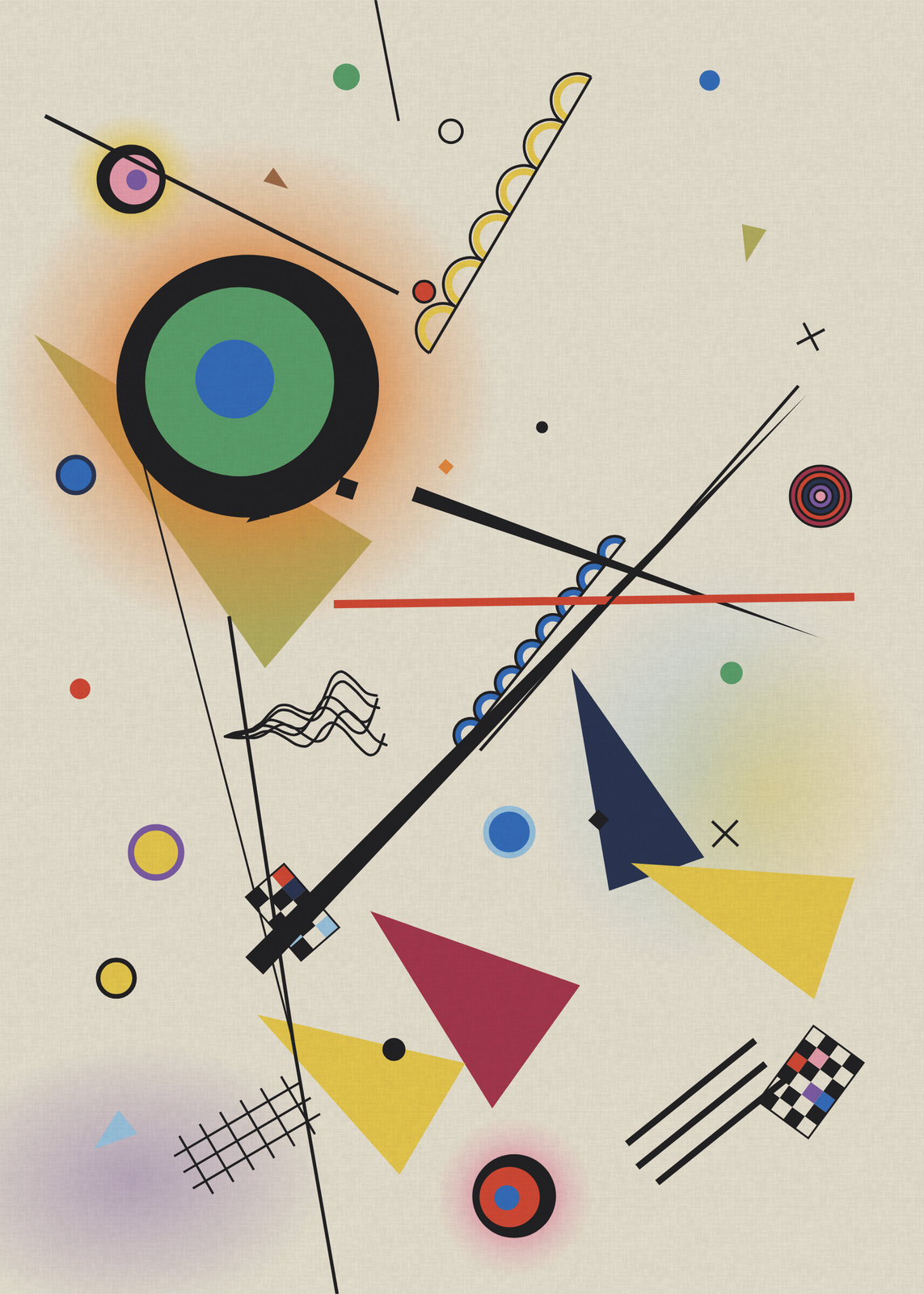
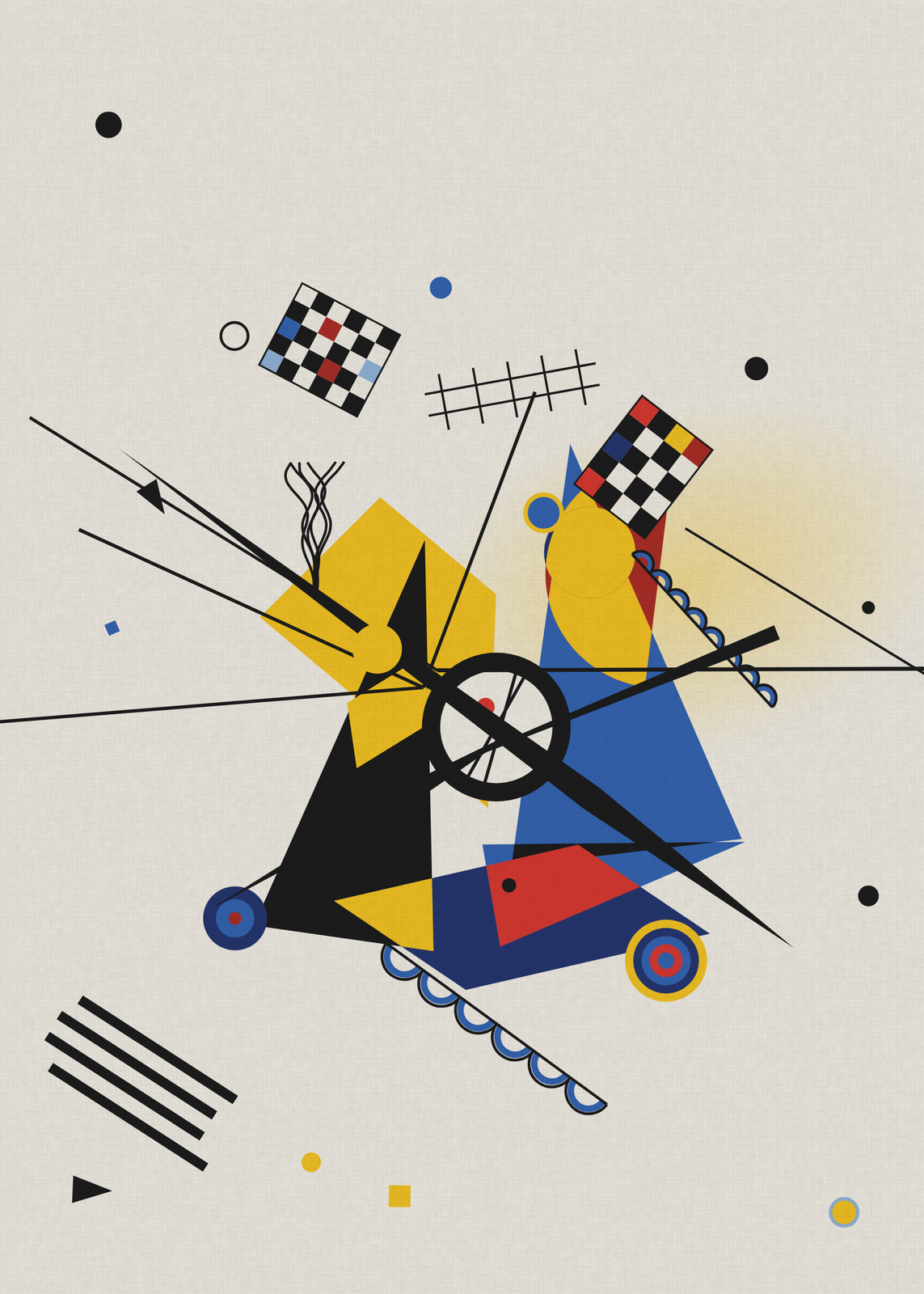
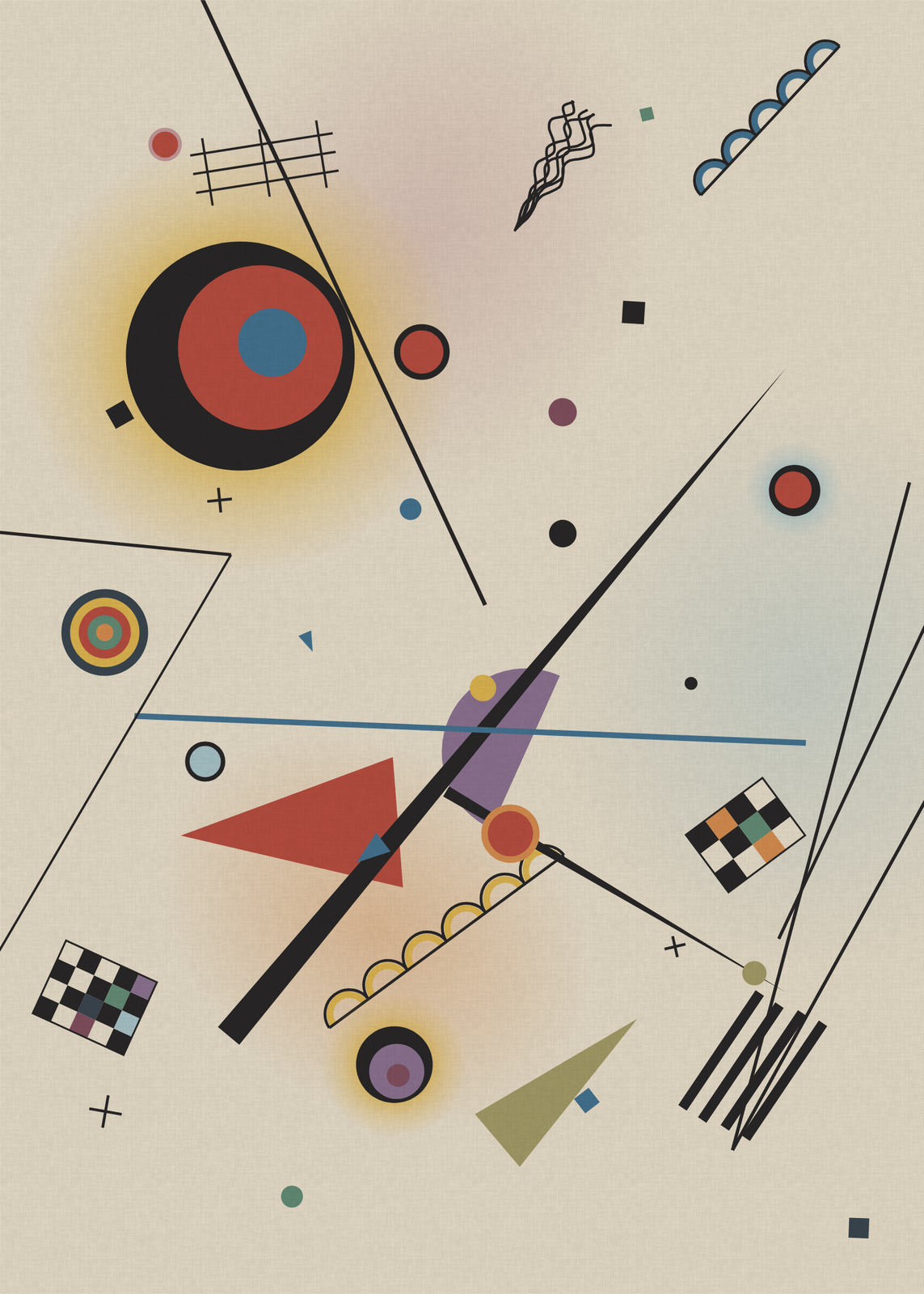
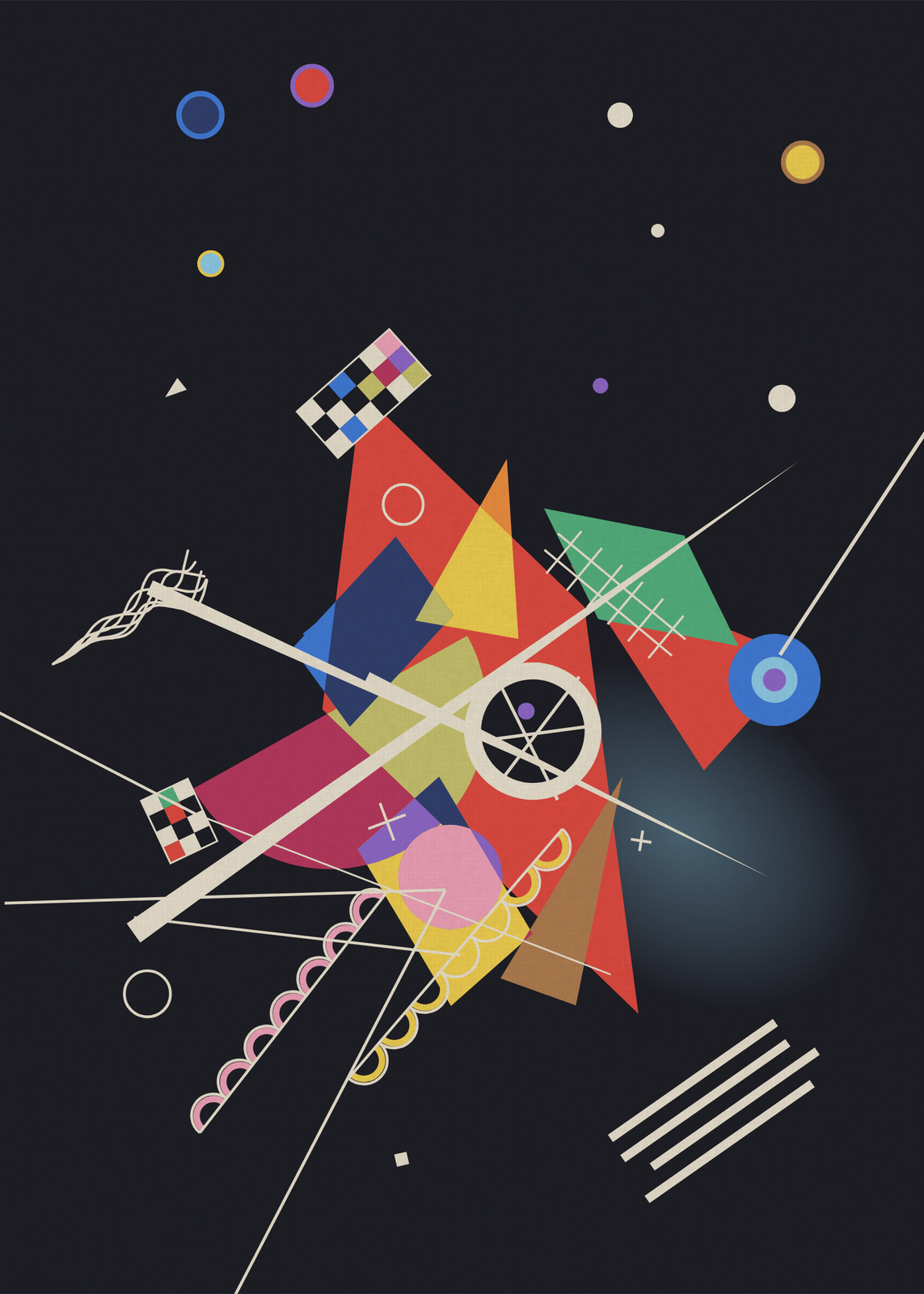
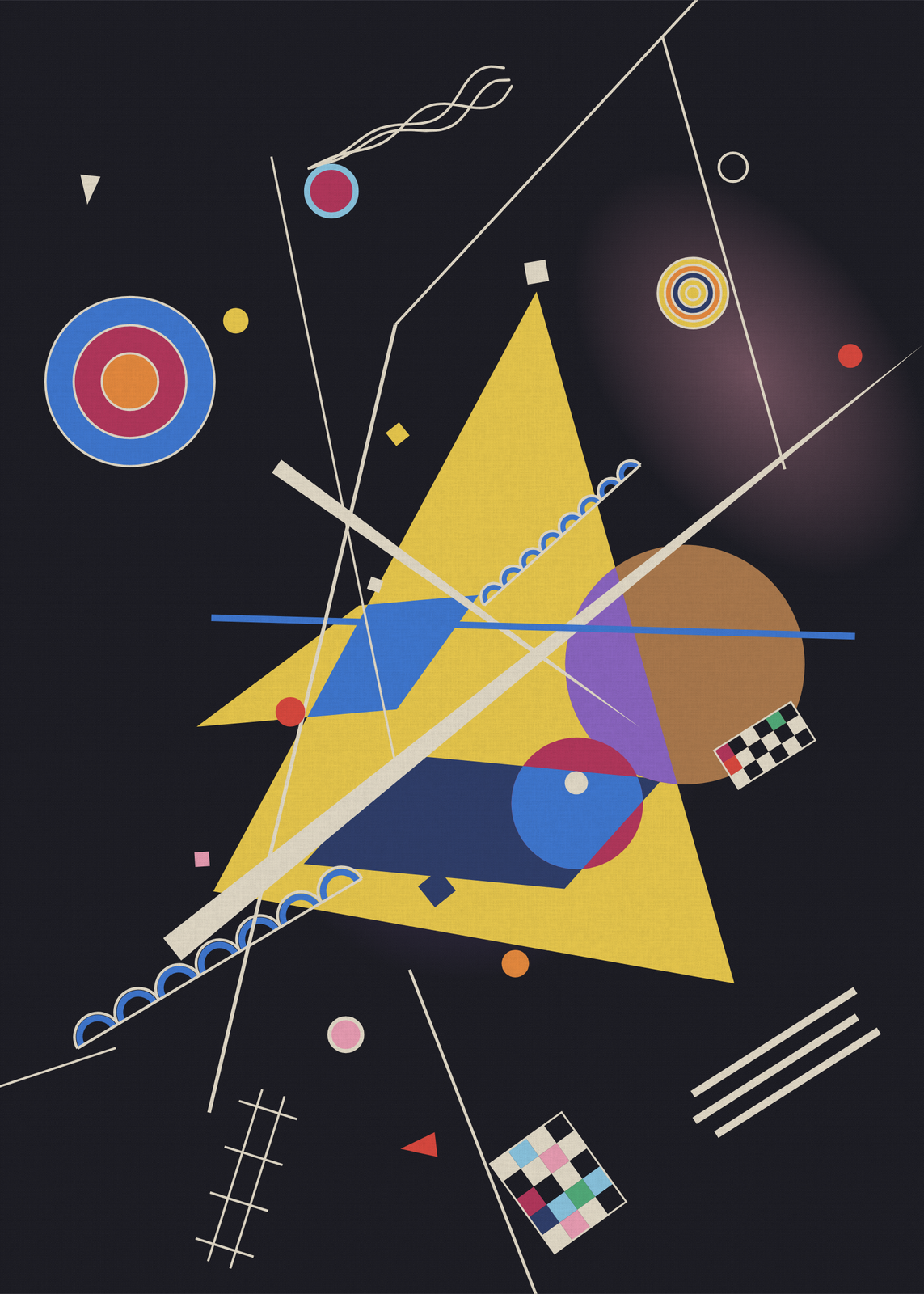
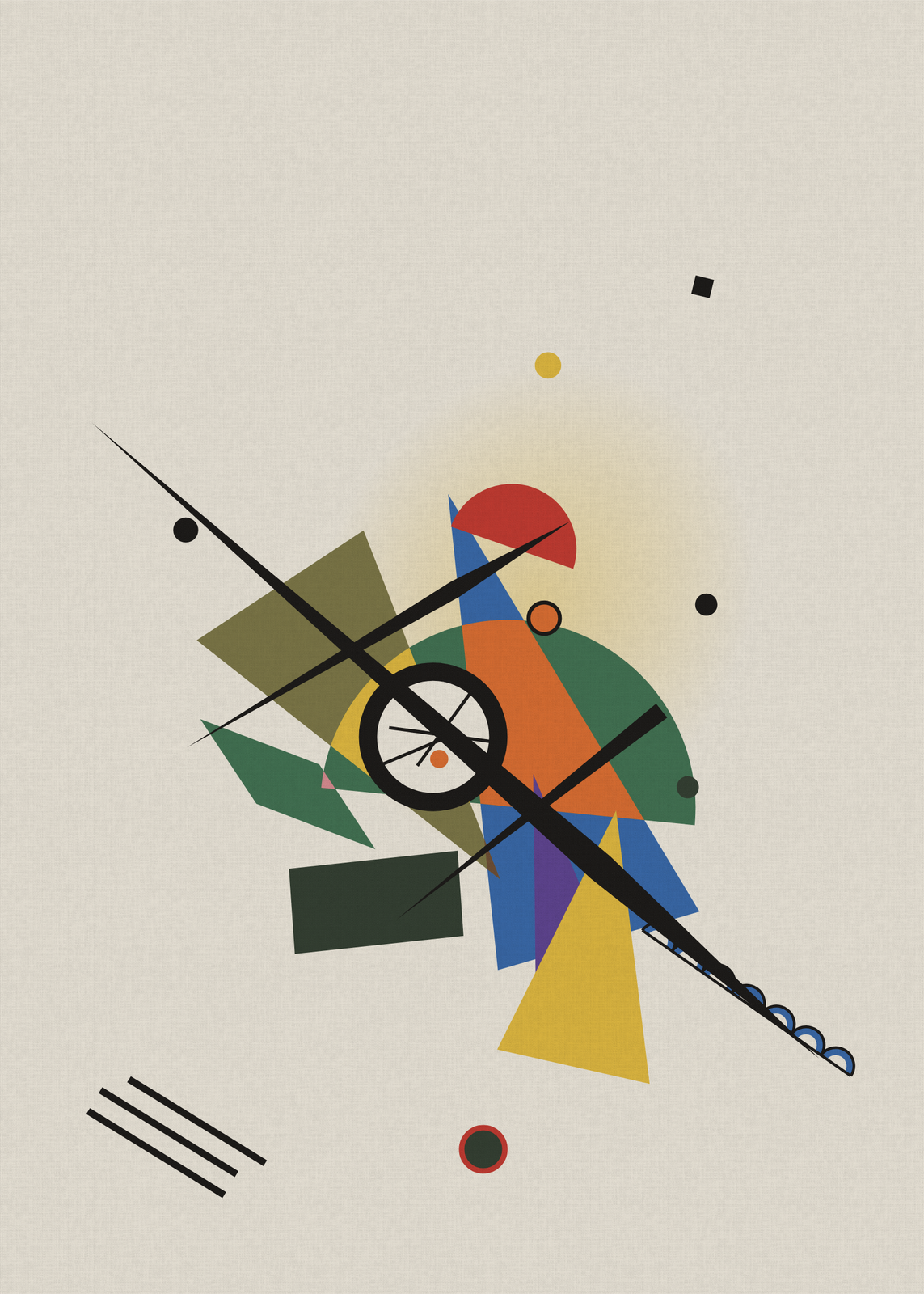
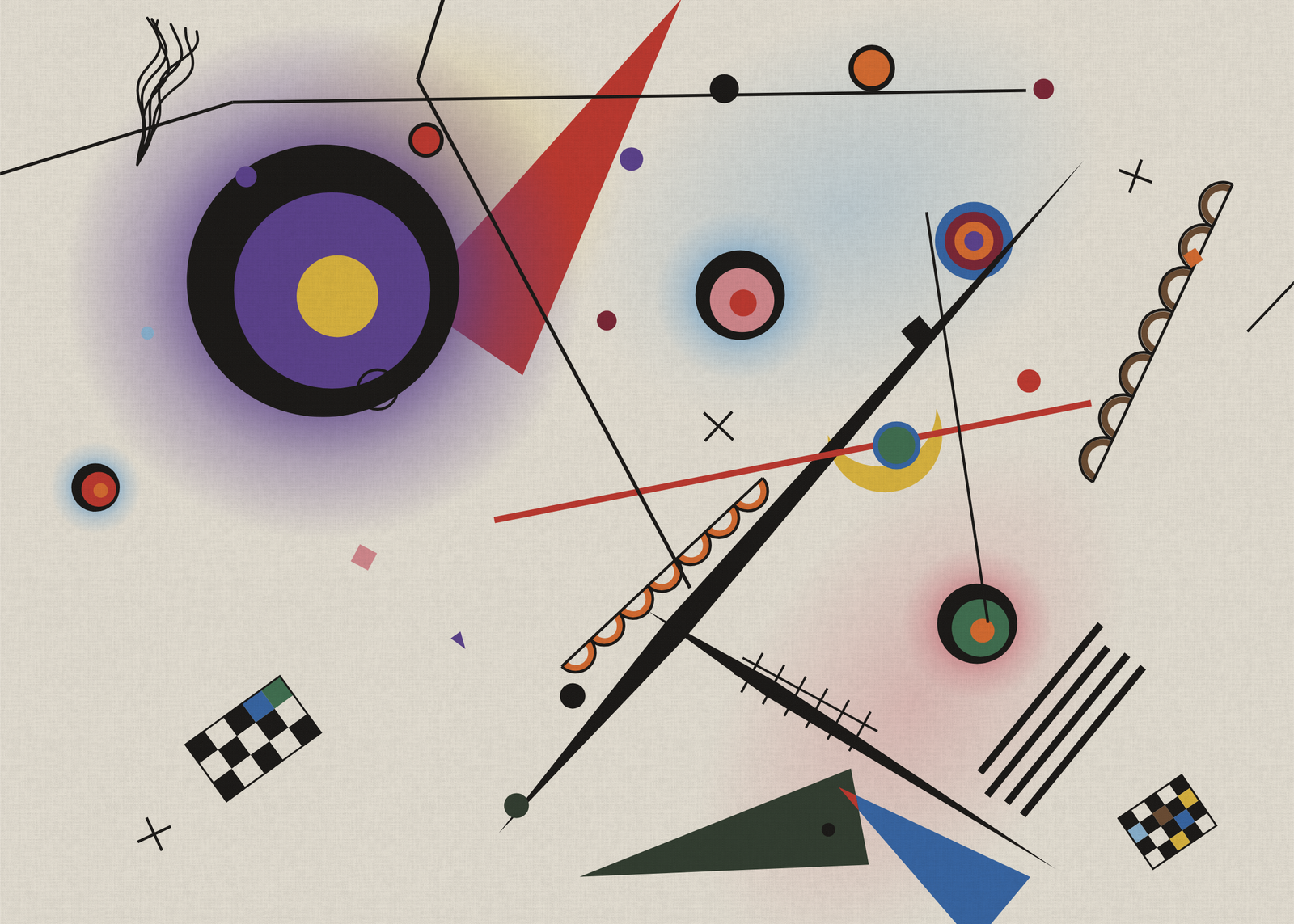
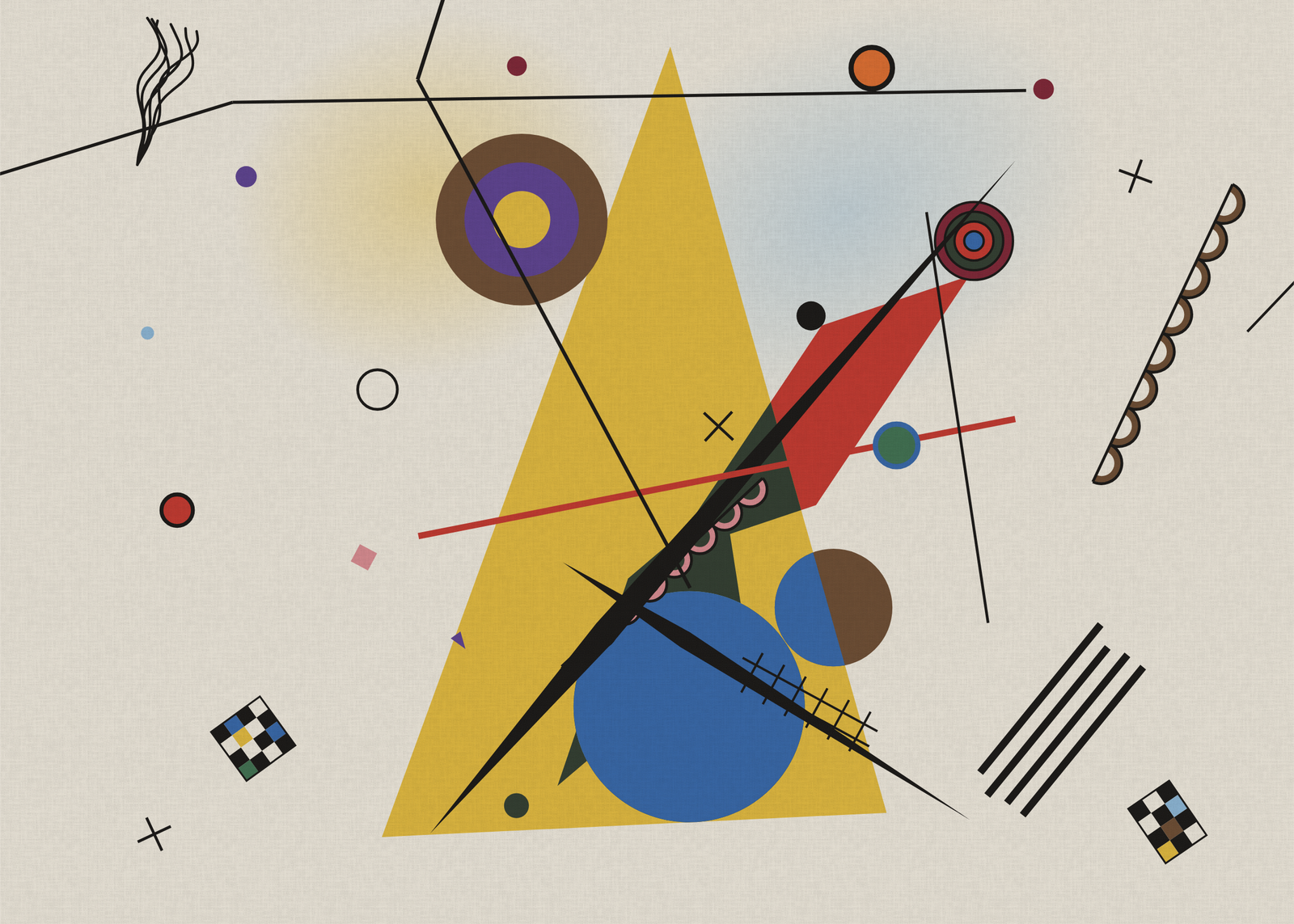
Each poster is a new composition in the geometric manner Wassily Kandinsky worked in at the Bauhaus: tilted planes that take a third color where they cross, a circle in a soft halo, targets of rings, small checkerboards, black spears thick at one end and thin lines running across the field, all leaning along one diagonal. Two more layouts take other sides of his geometry: Rings, squares of concentric circles after his 1913 color study, and Points, a made-up piece of music laid out in points and lines as in his book Point and Line to Plane. Nothing is traced from his paintings. The seed composes every sheet, so no two come out alike.
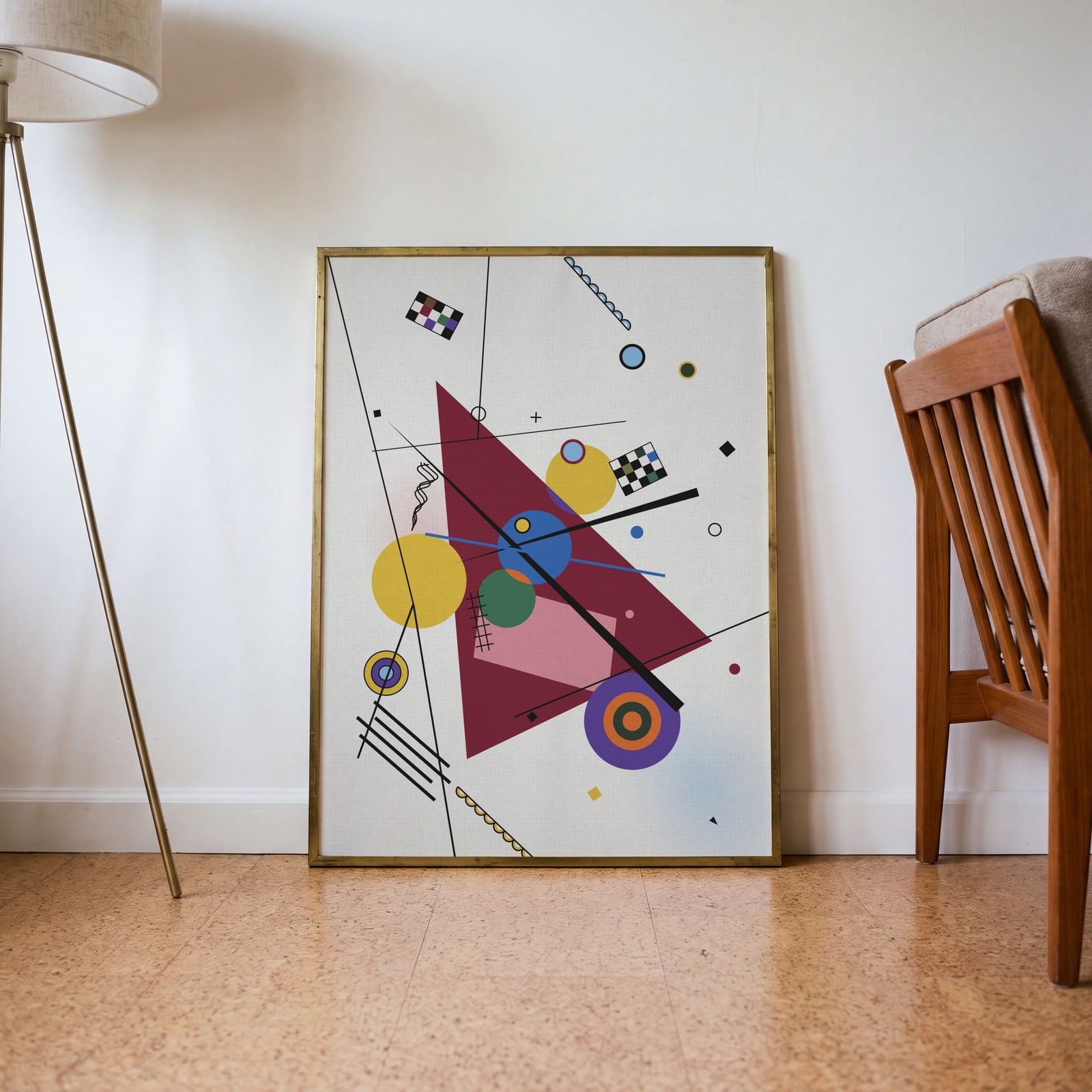
On the wall
A few of them framed at home. Open any one to make it yours.
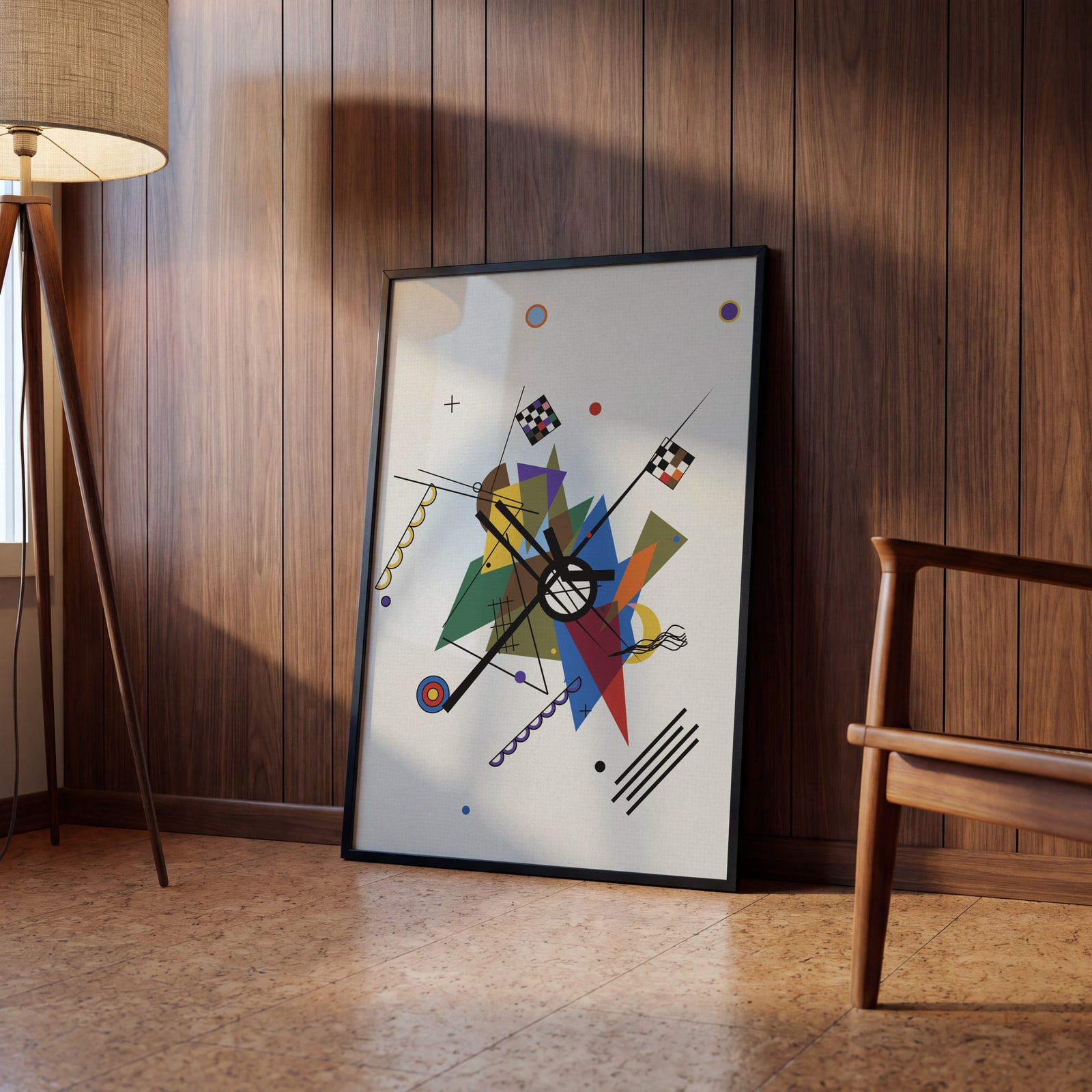
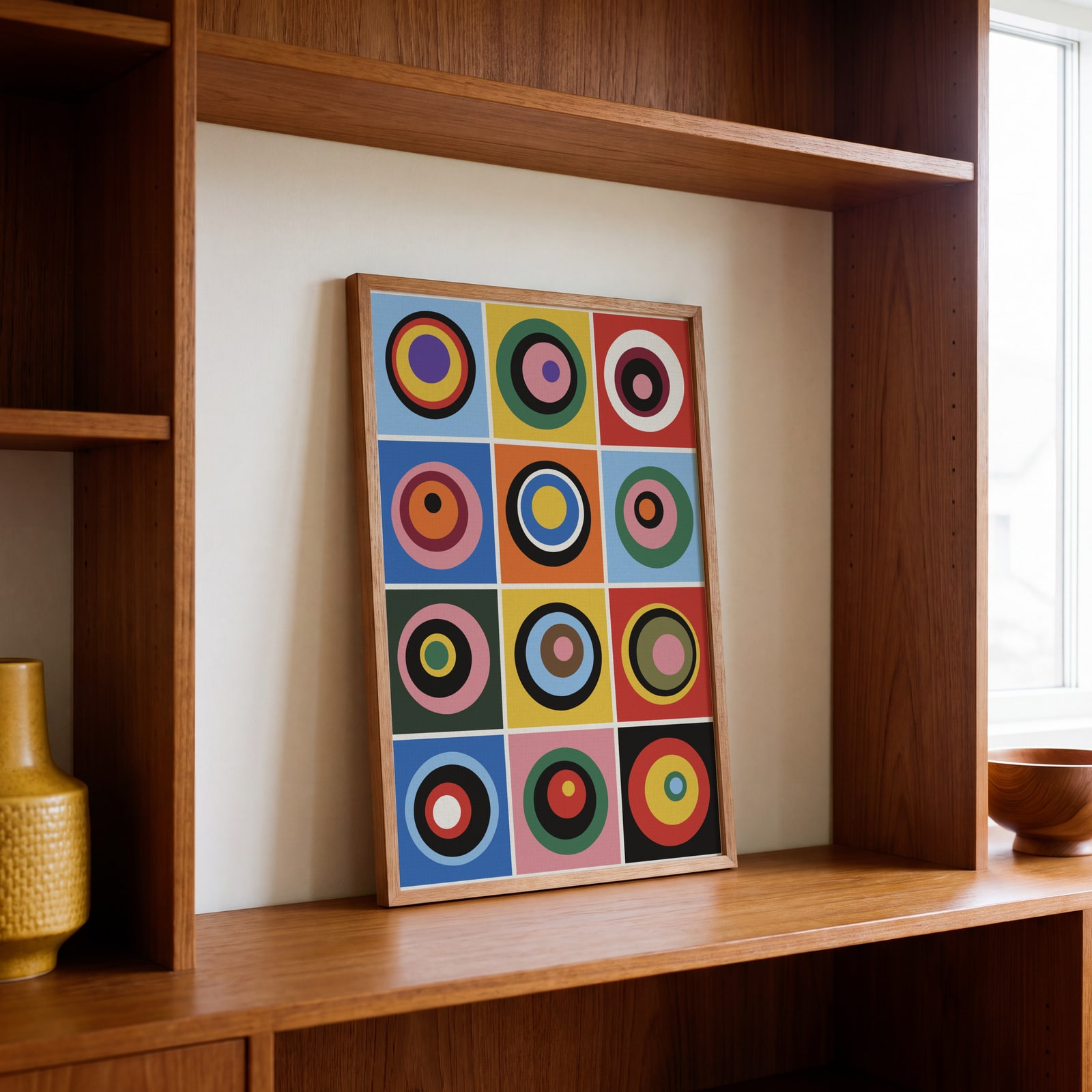
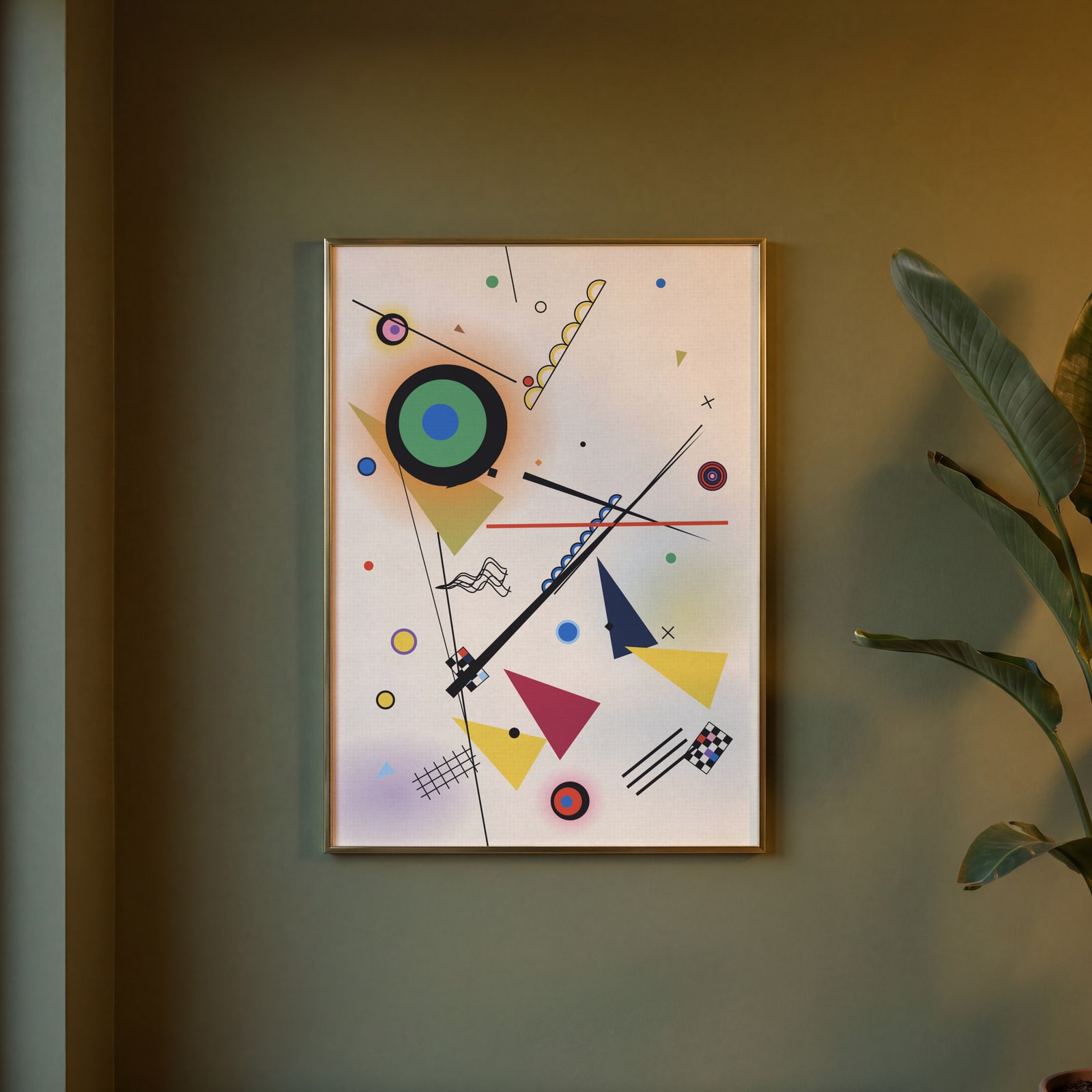
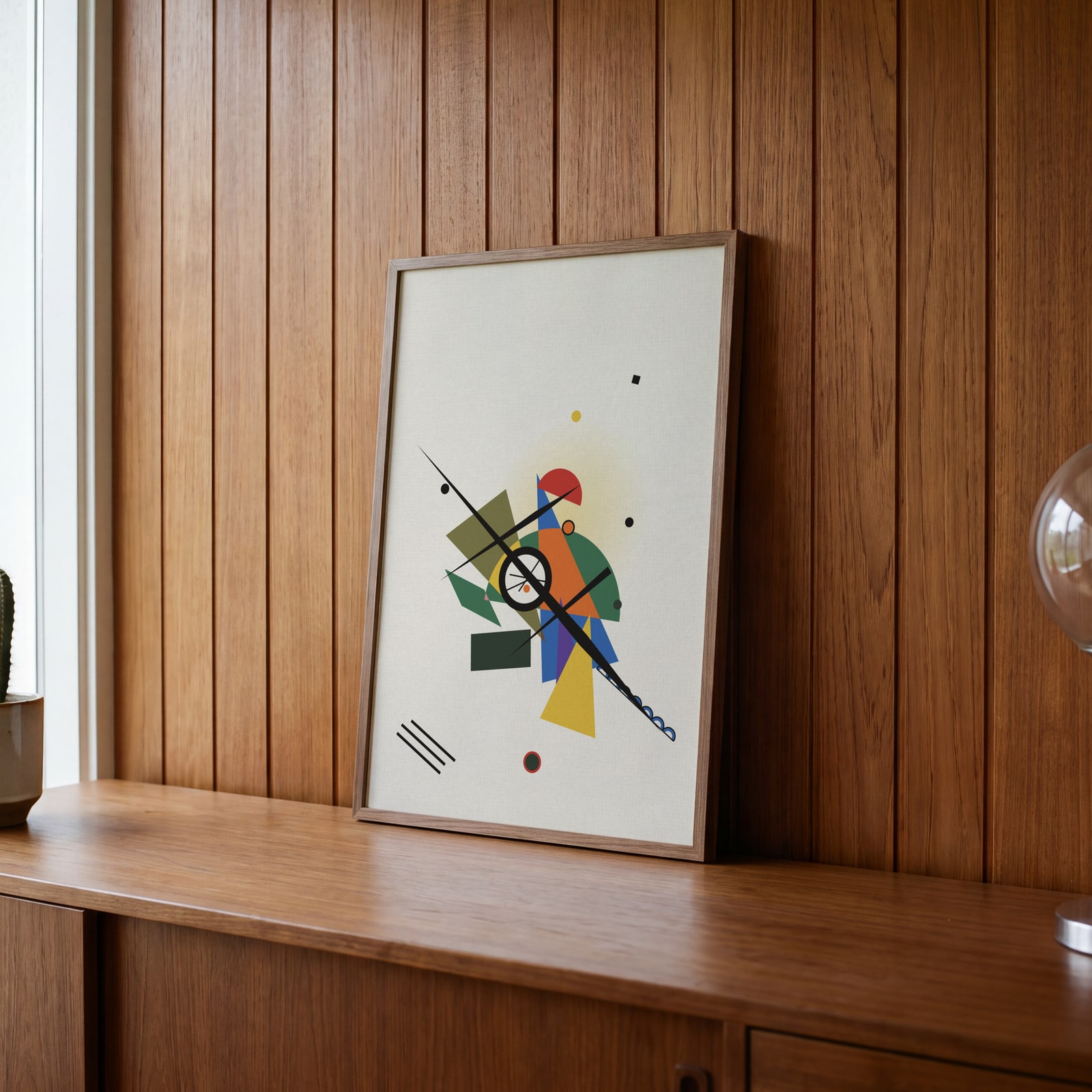
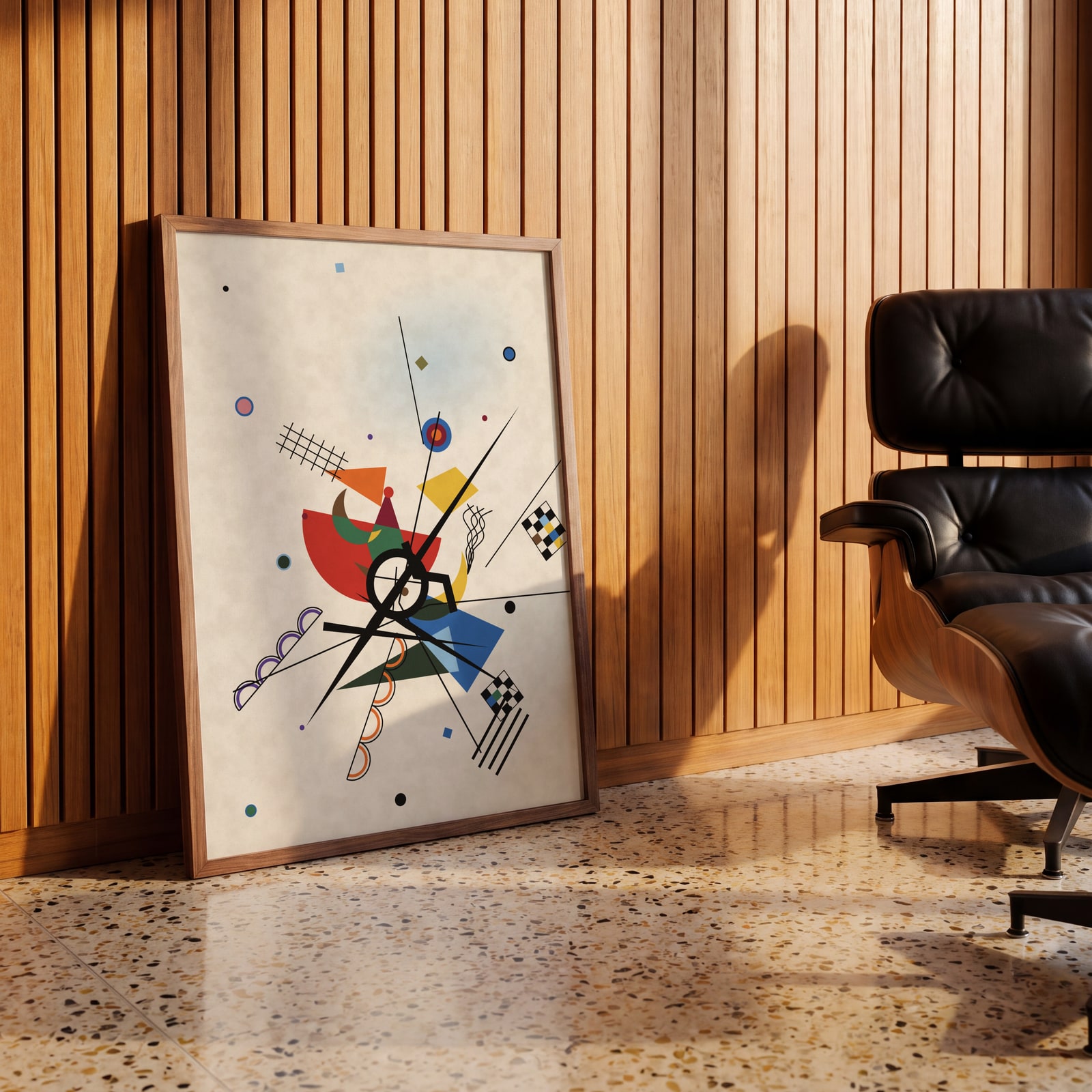
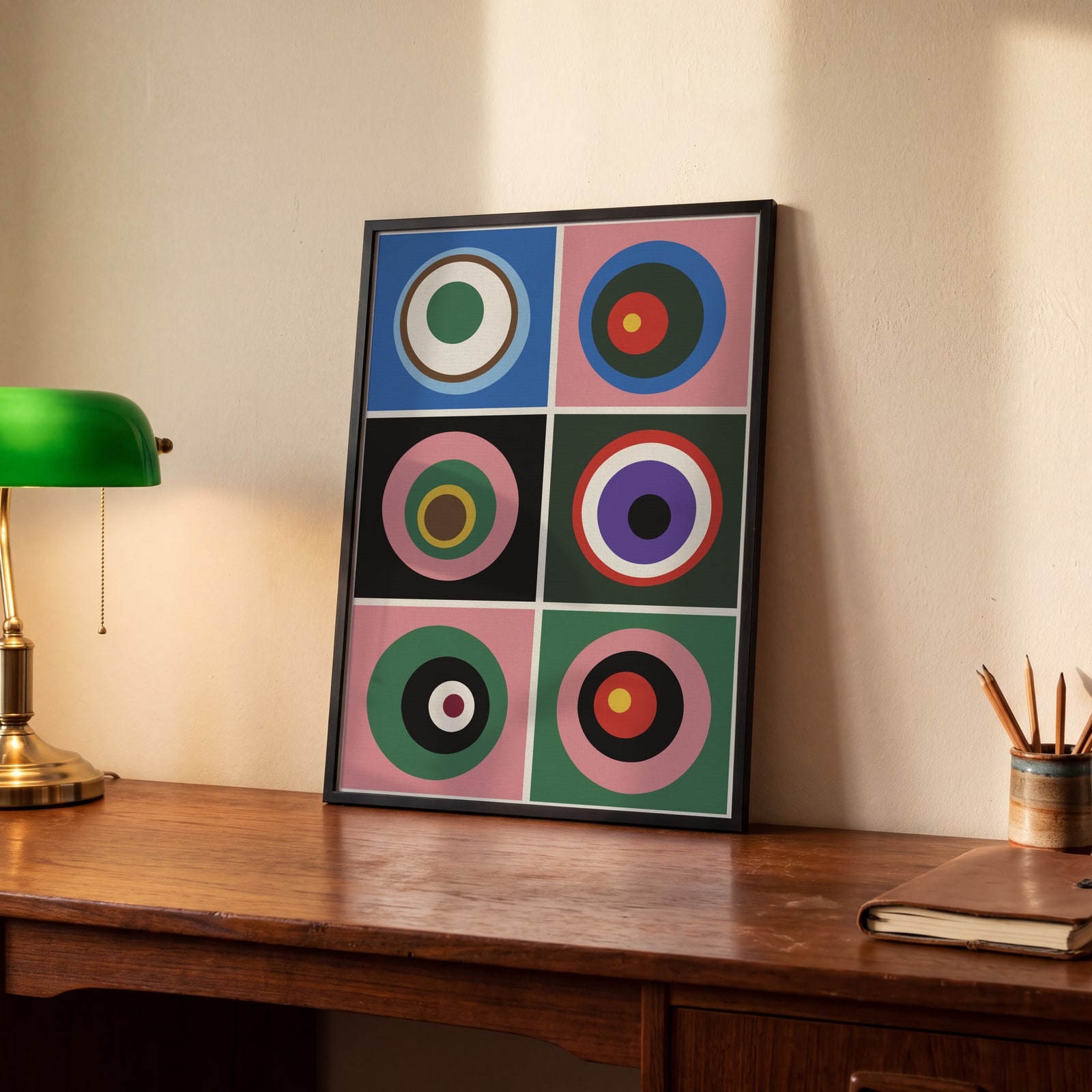
Examples
Open any of them to change the words, the place, the date and the style, then download the print file.
Knot, Open or Peak
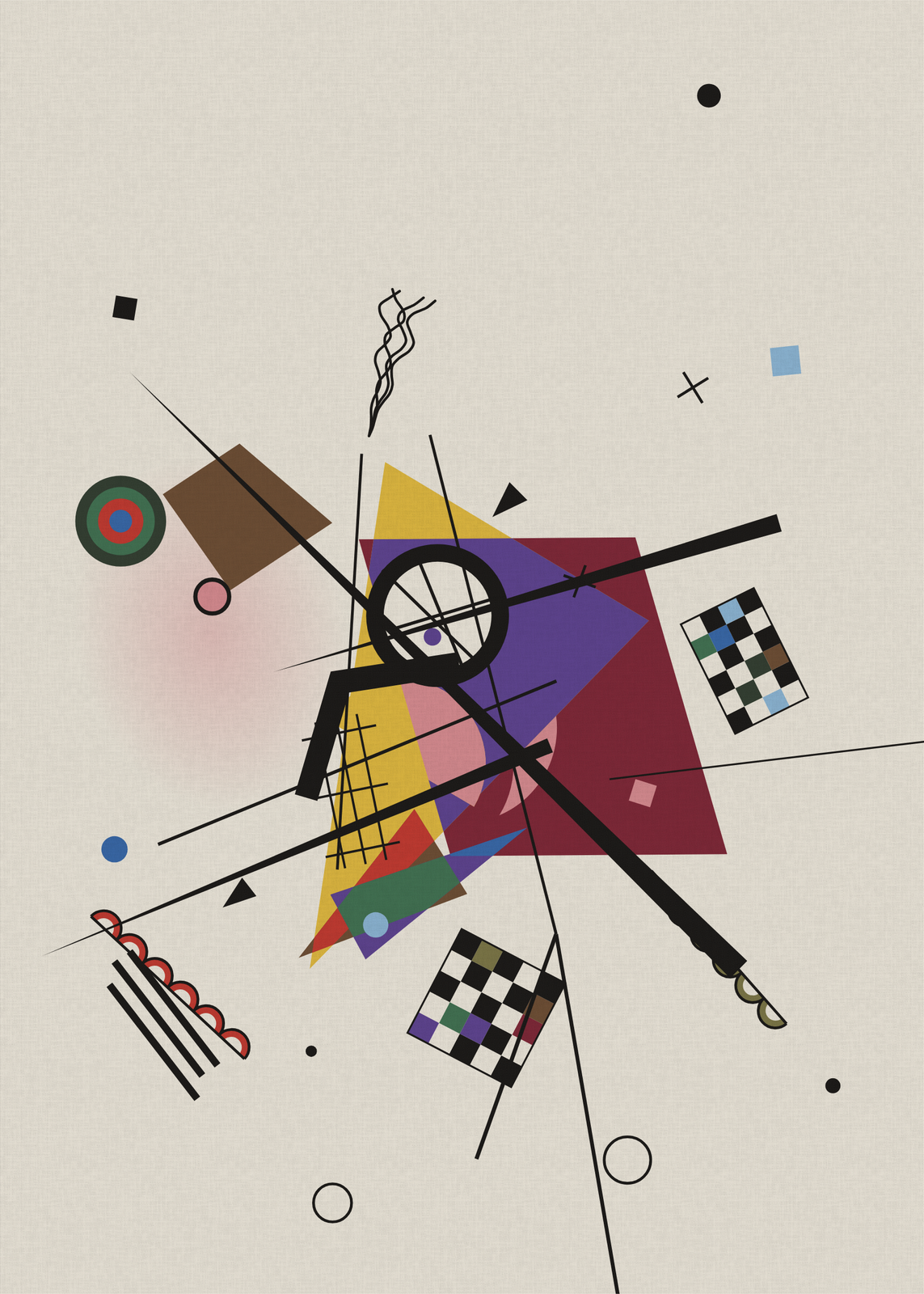
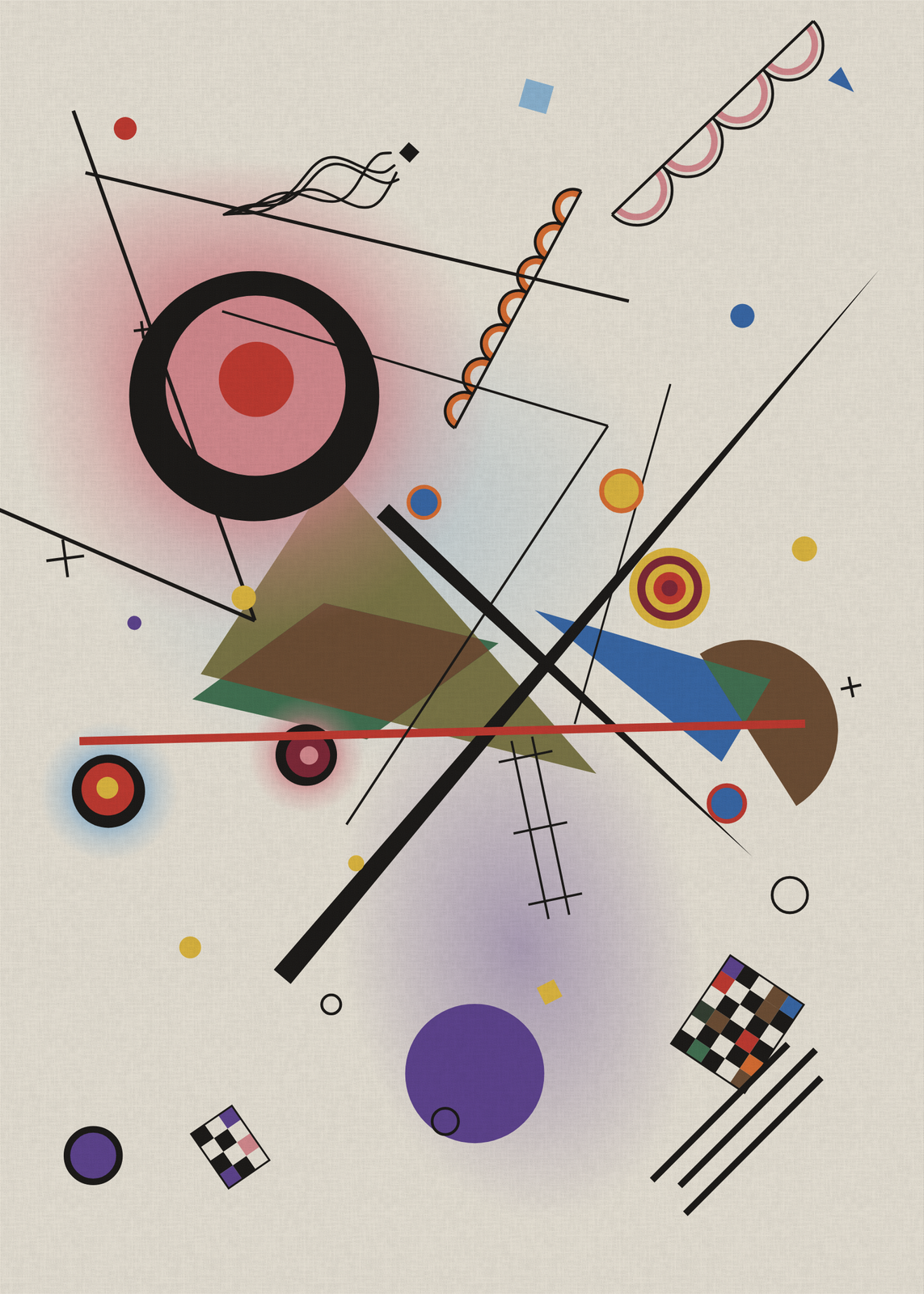
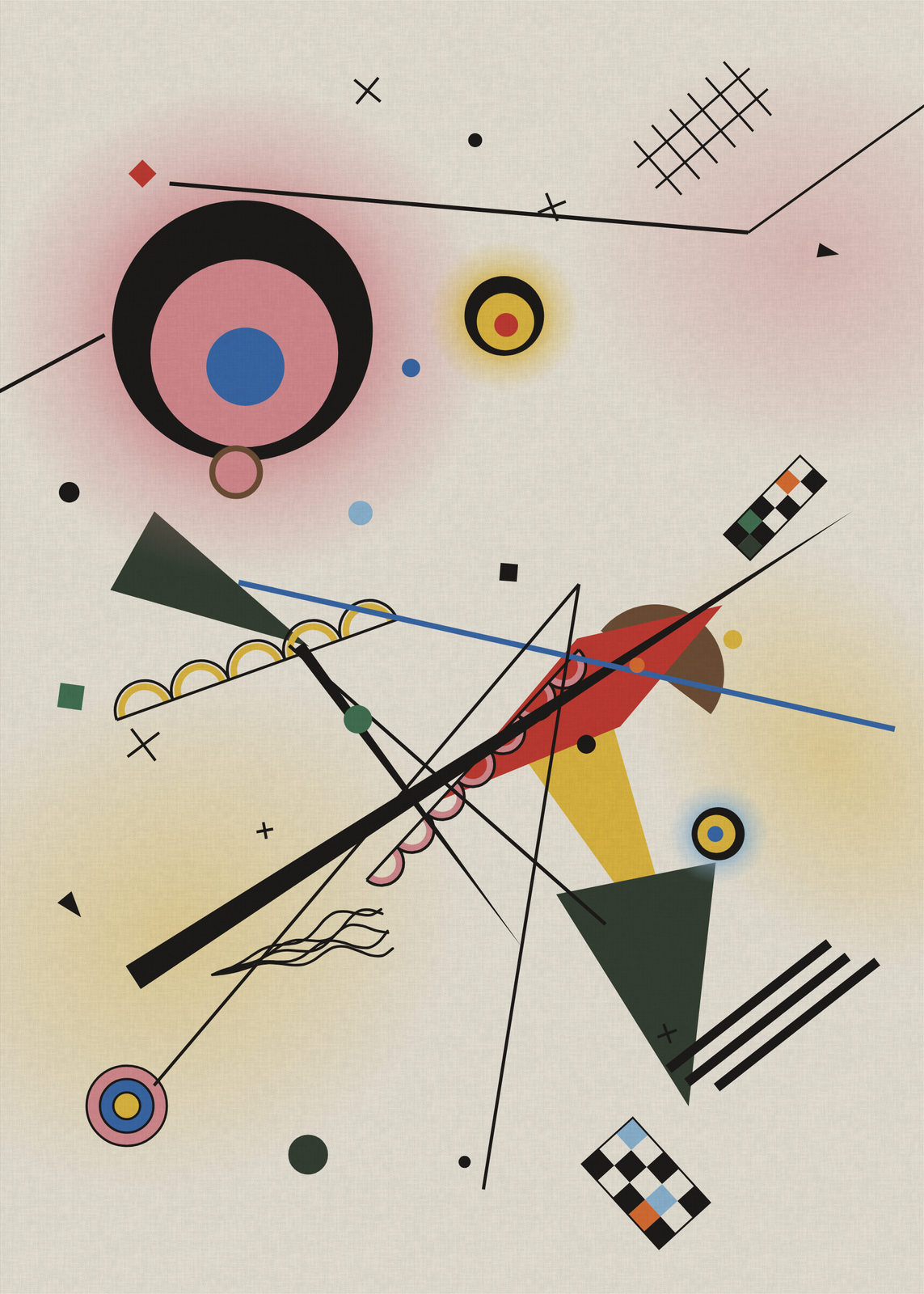
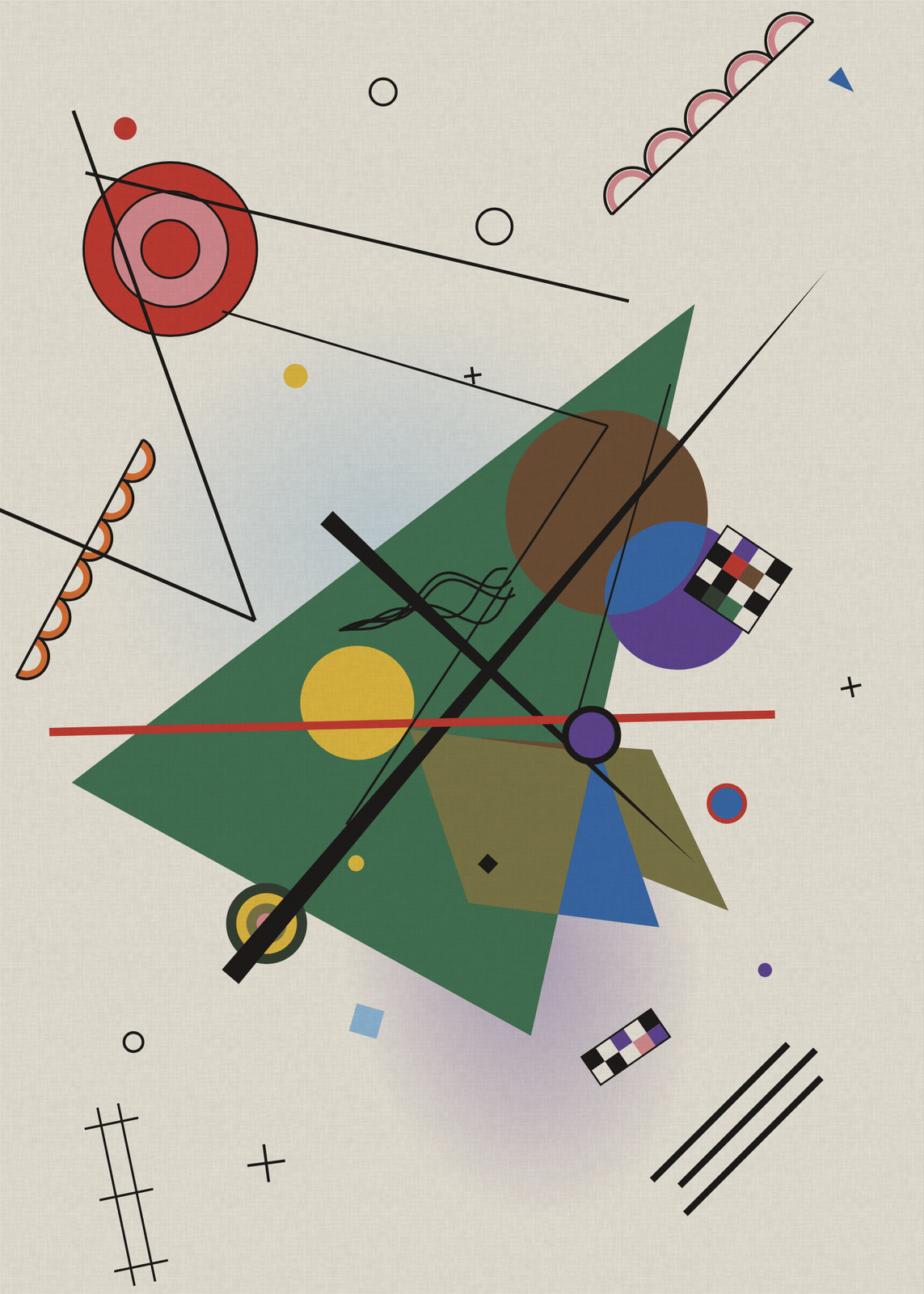
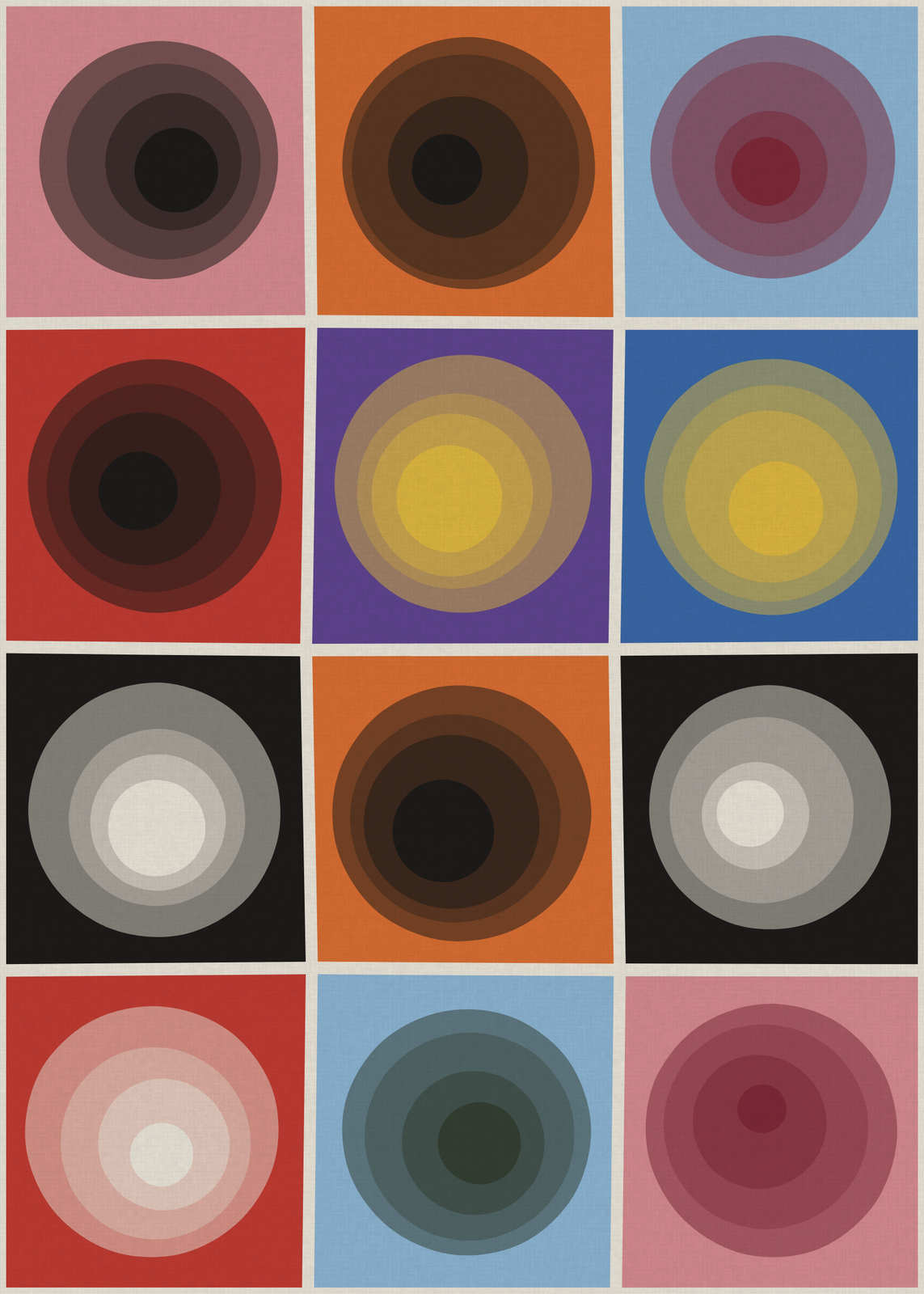
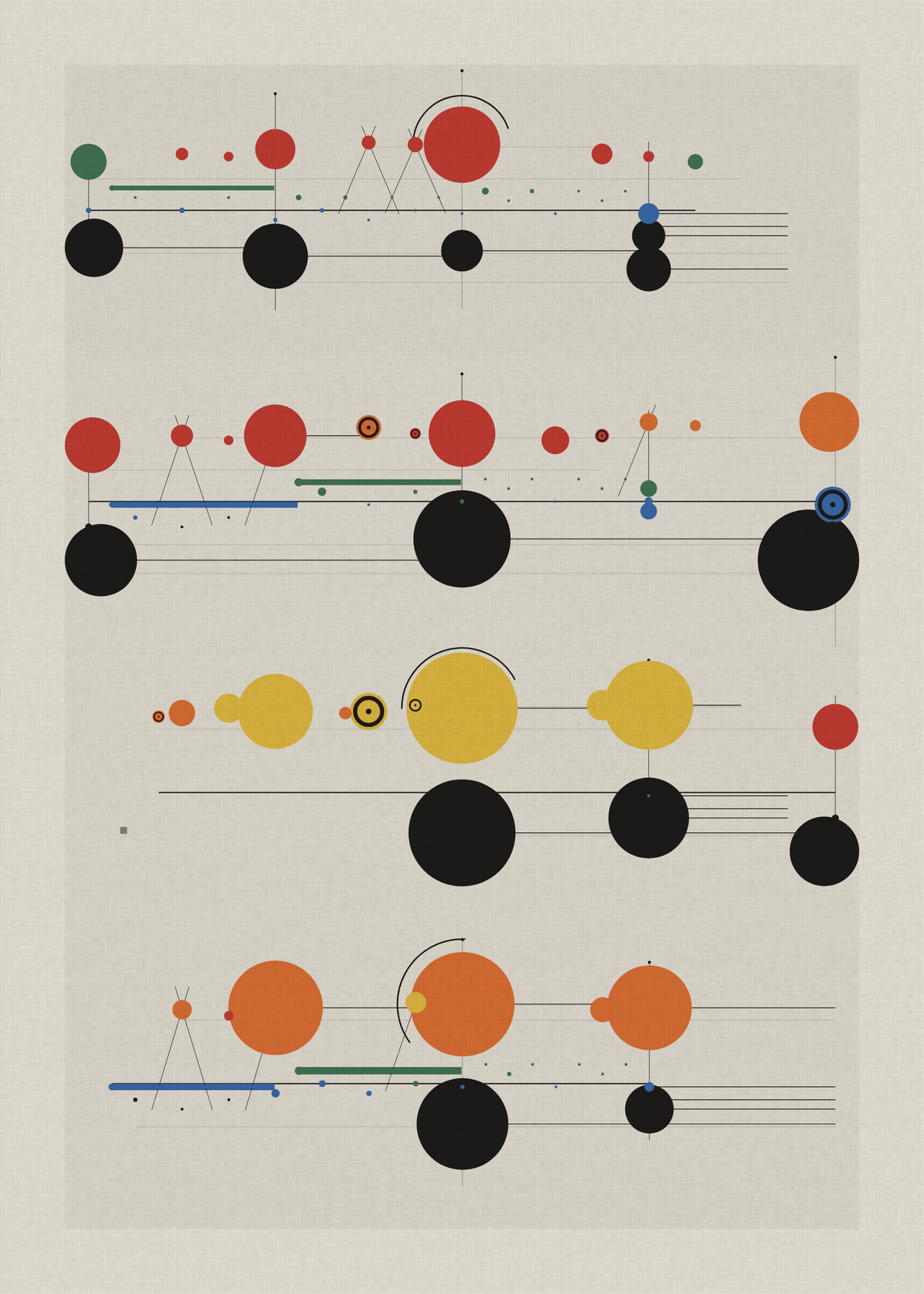
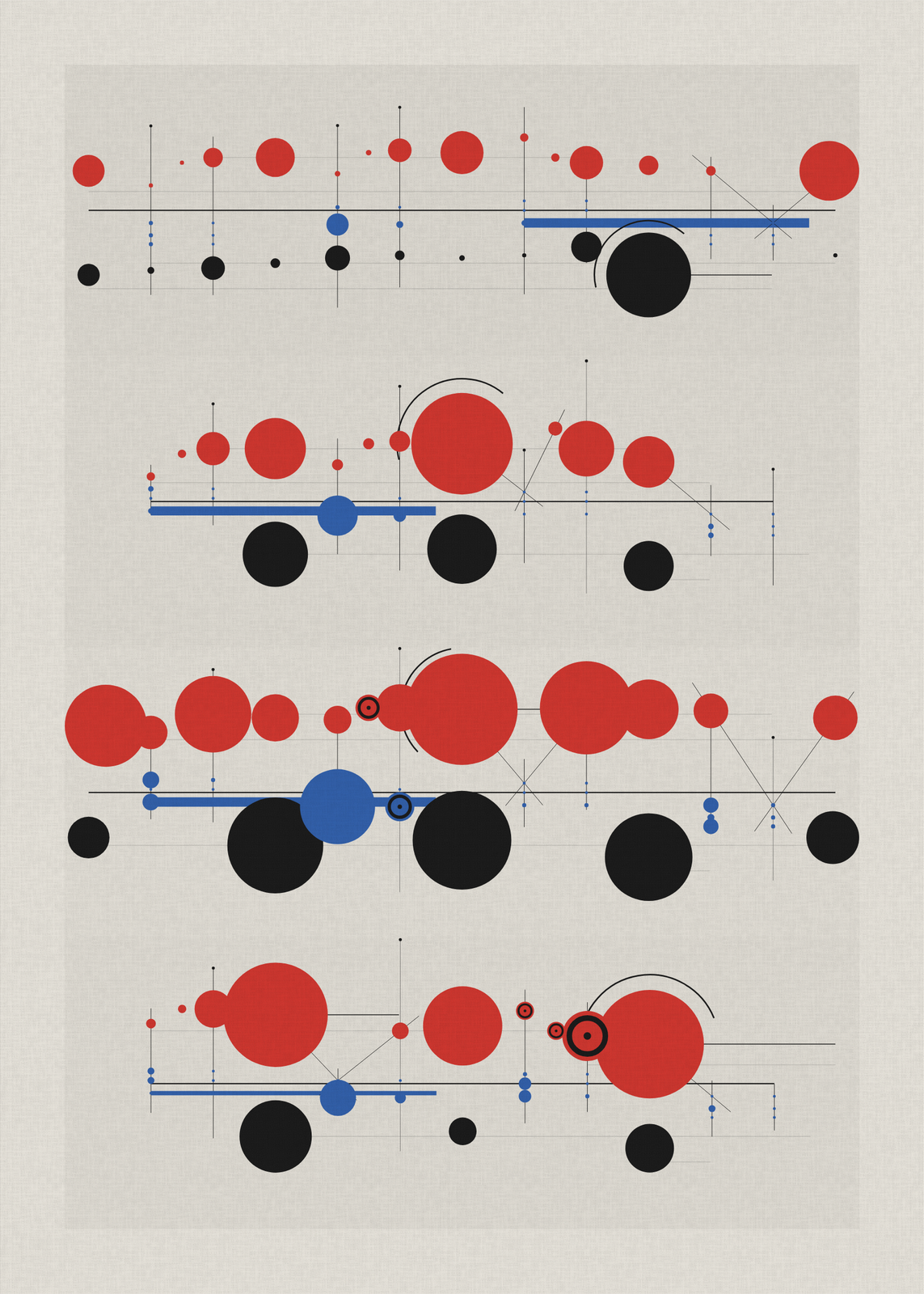
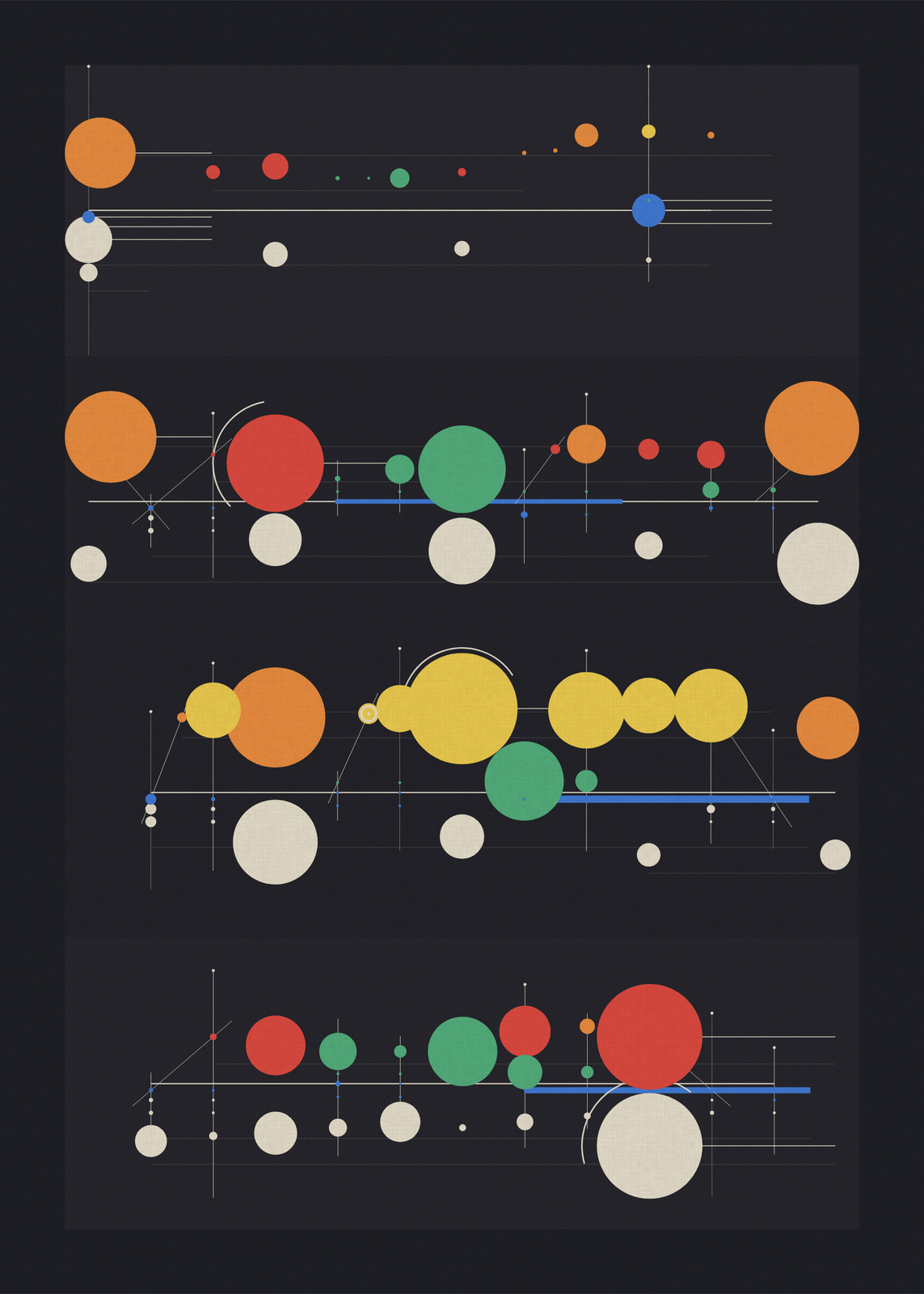
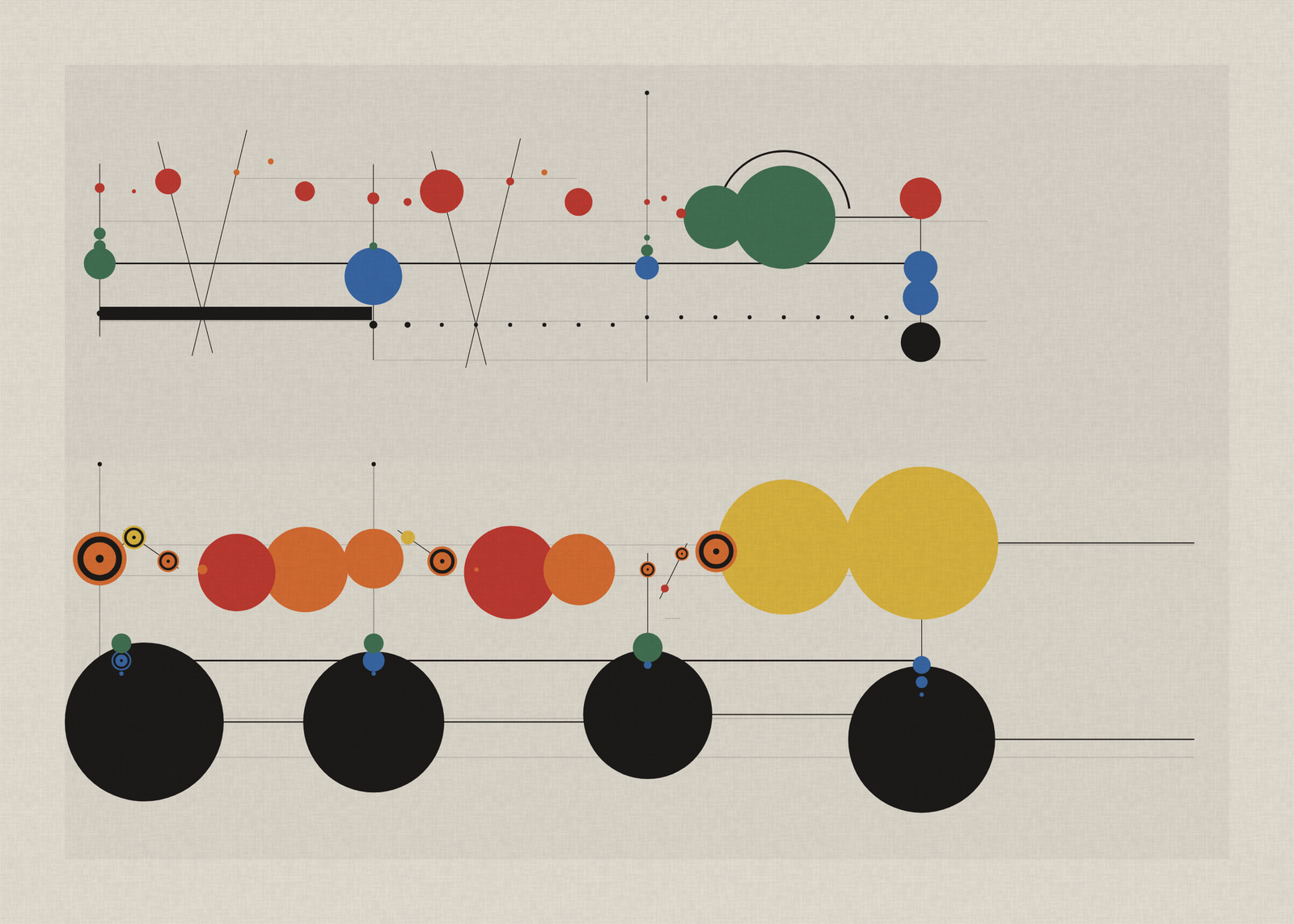
Rings or Points
Colors
Sparse or busy
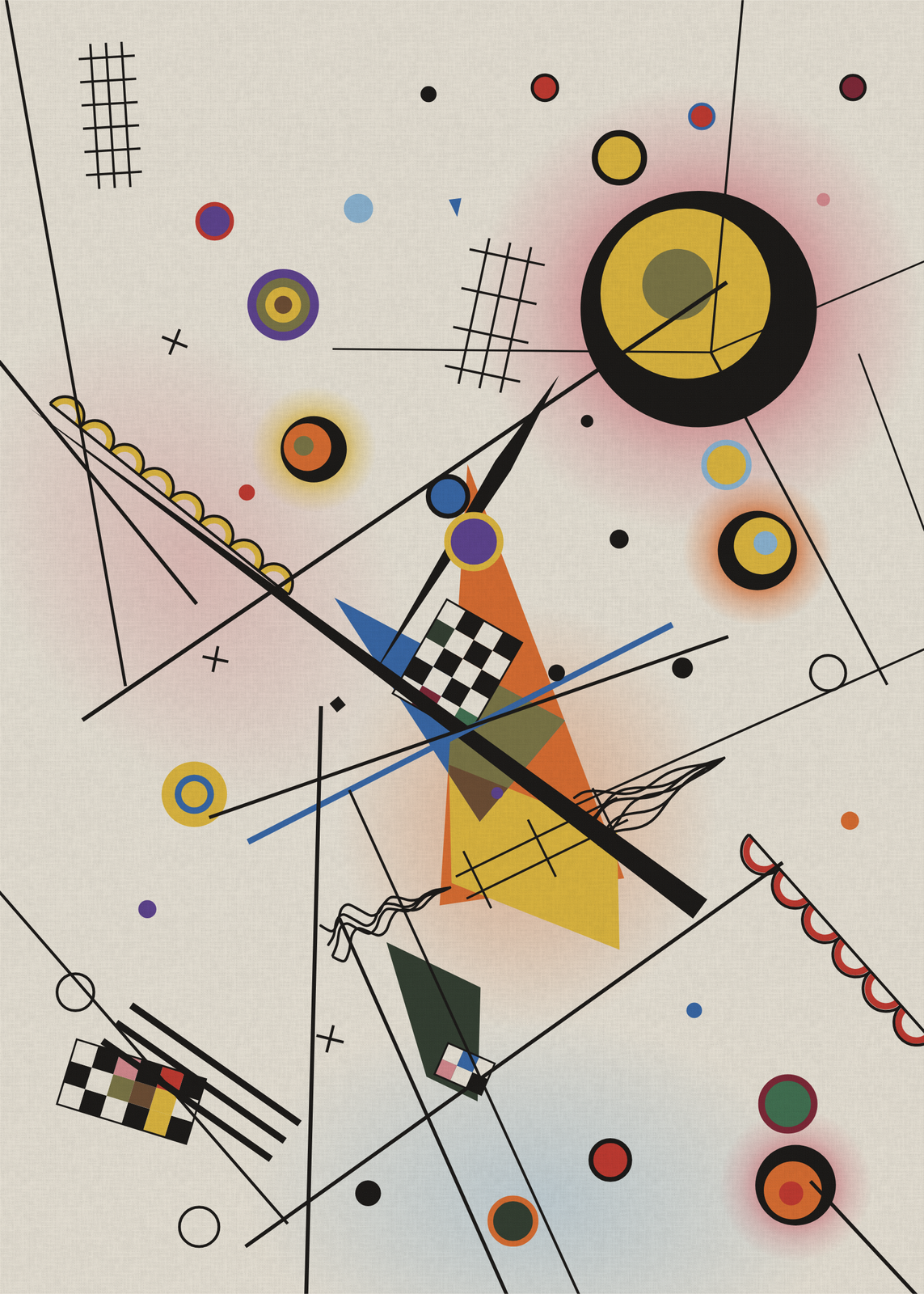
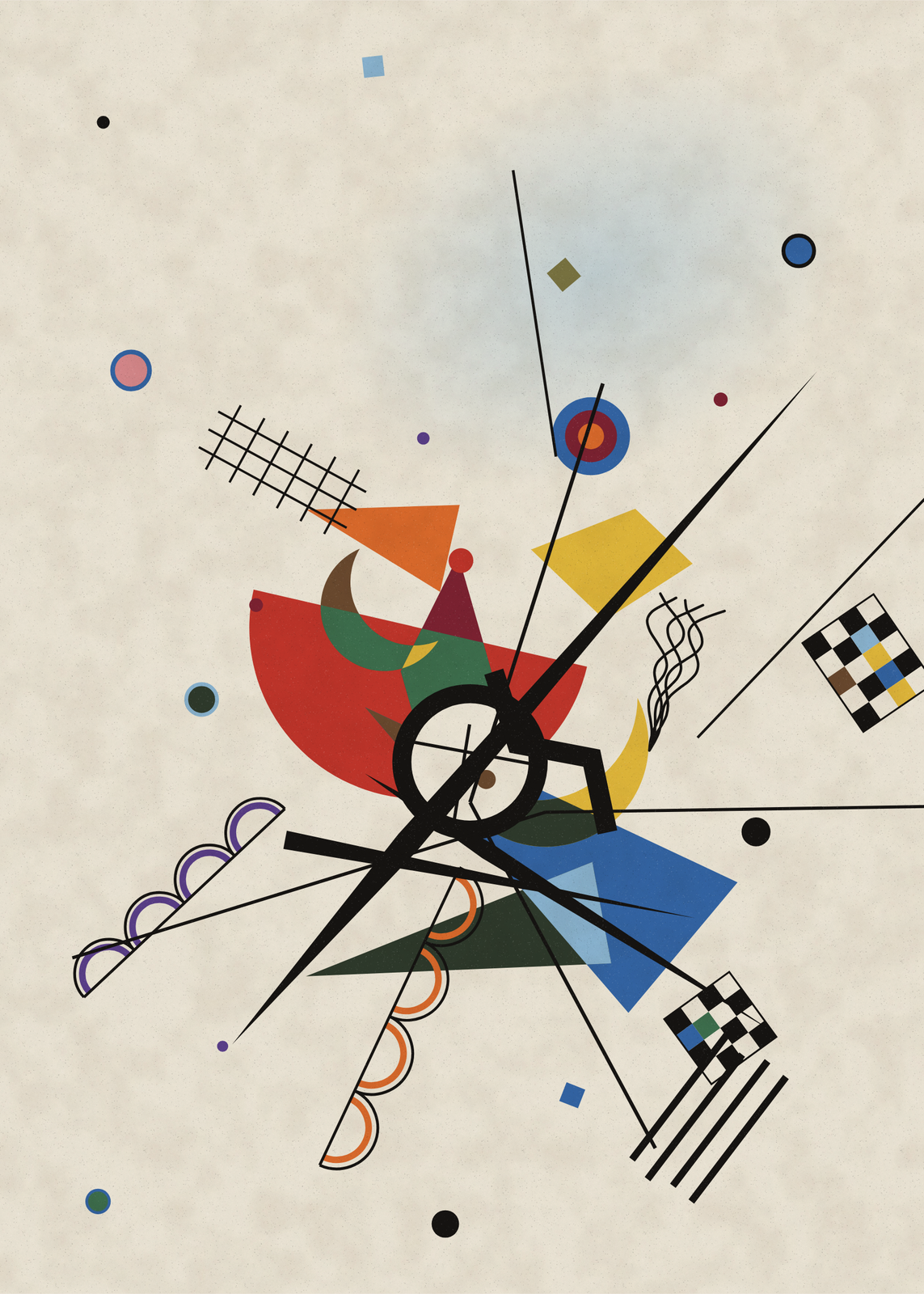
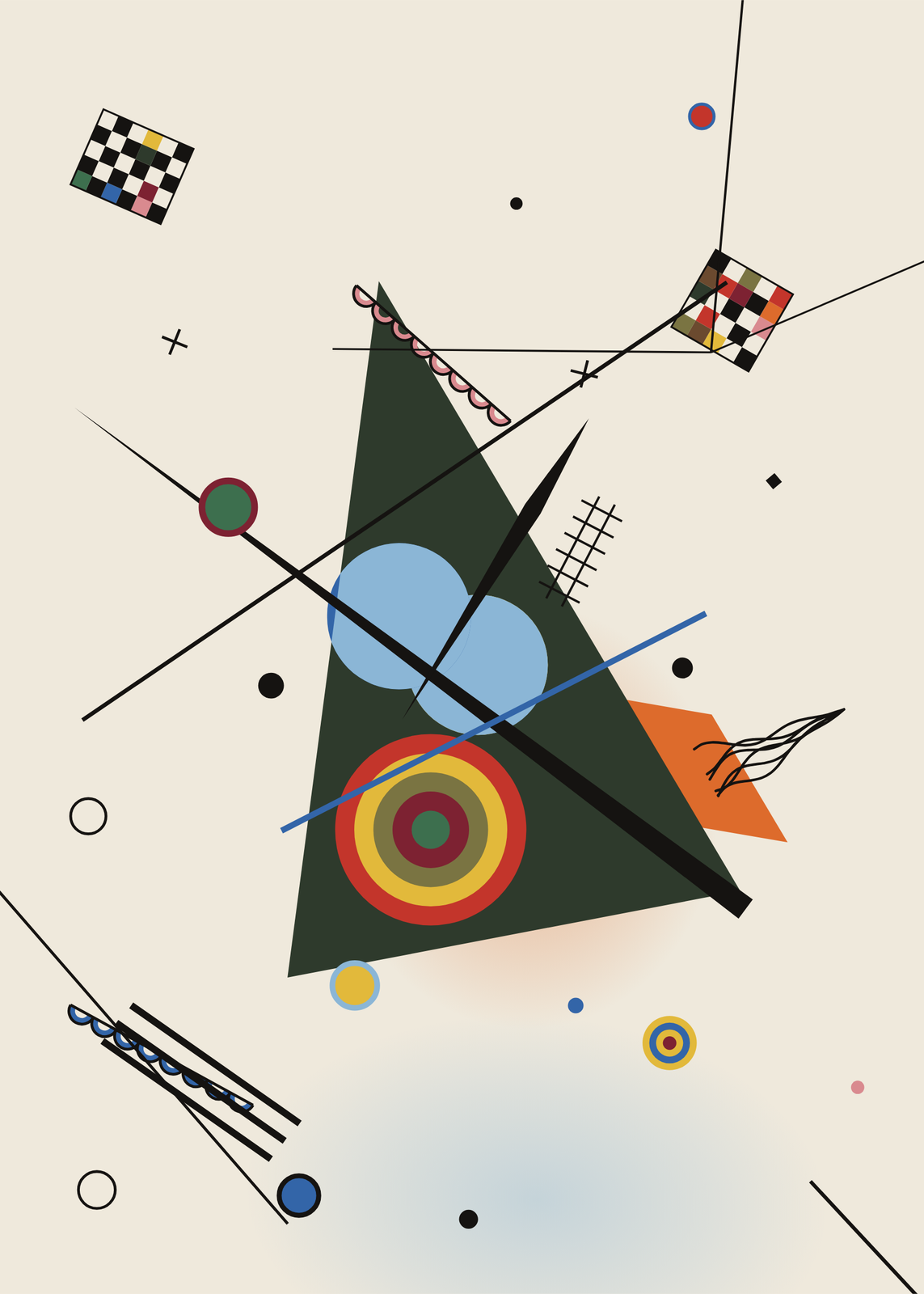
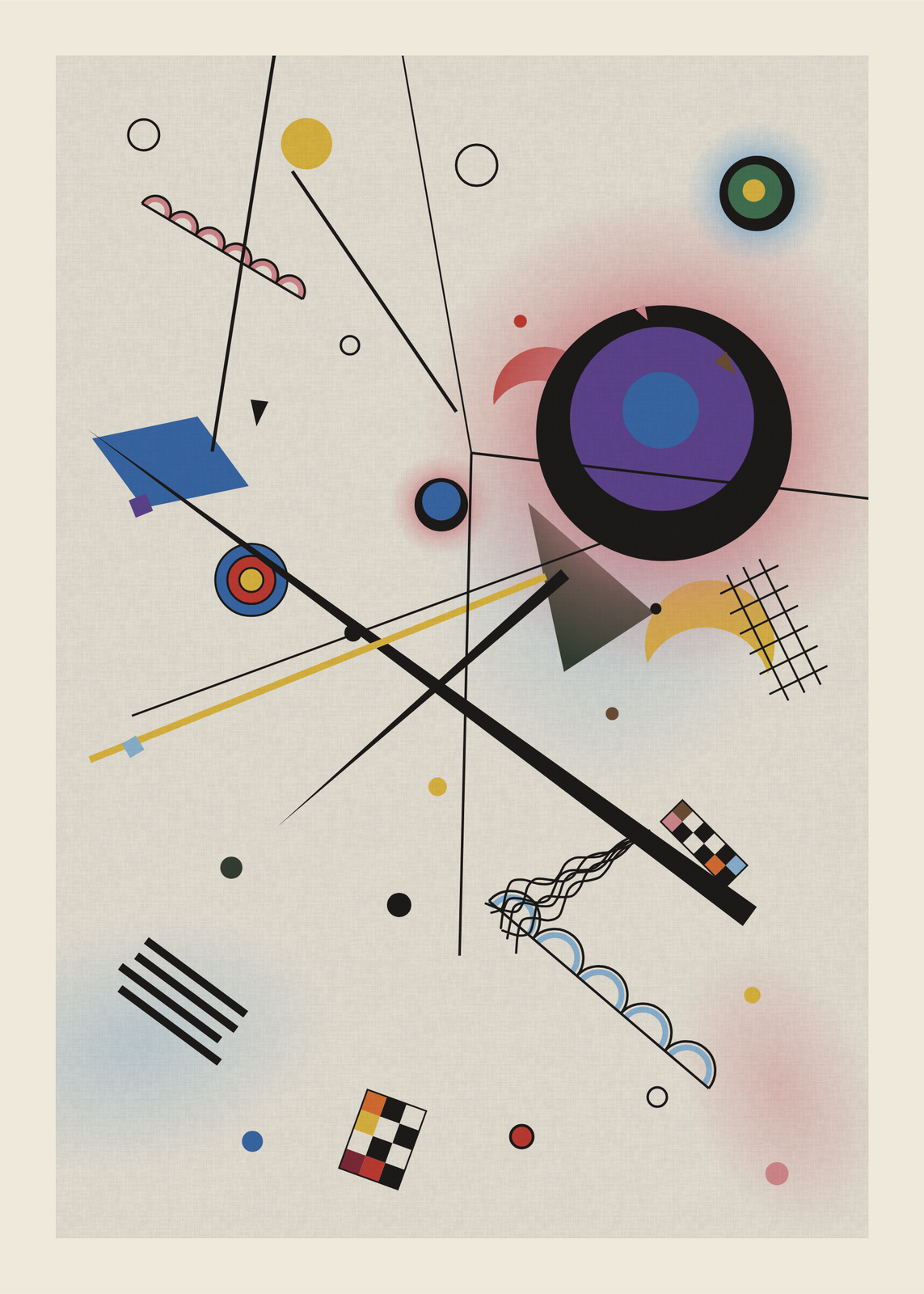
Kandinsky at the Bauhaus
Kandinsky taught at the Bauhaus from 1922 until it closed in 1933. In those years his painting, once loose and stormy, settled into geometry: circles, triangles, checkers and straight lines set against each other. Composition VIII and On White II, both from 1923, are two of the best known from that turn. Knot, Open and Peak work from that vocabulary, not from his earlier improvisations.
Knot, Open or Peak
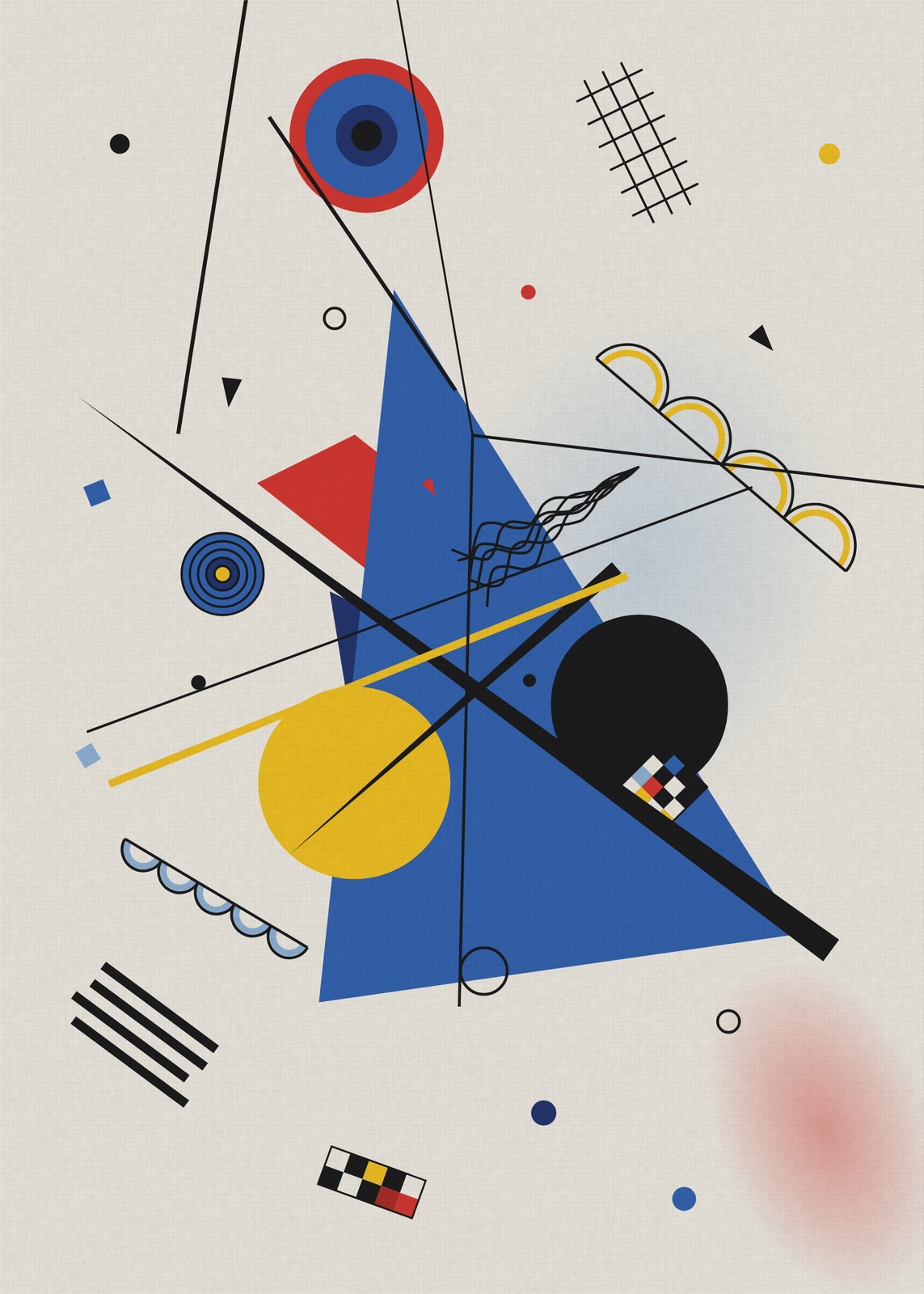
Knot packs overlapping planes into one knot round a heavy ring, crossed by black spears. Open lifts a big halo circle to one side and spreads a few planes and many fine lines across the field. Peak sets one great tilted triangle at the center, with slabs behind its base and discs over its edges.
In all three the forms lean along a main axis, lower left to upper right or its mirror. Where two planes cross, more often than not the overlap is painted again in a third color, as in Composition VIII; turn Overlap colors off for plain stacked planes. Small forms and Lines make the sheet sparser or busier around the big shapes.
Rings or Points
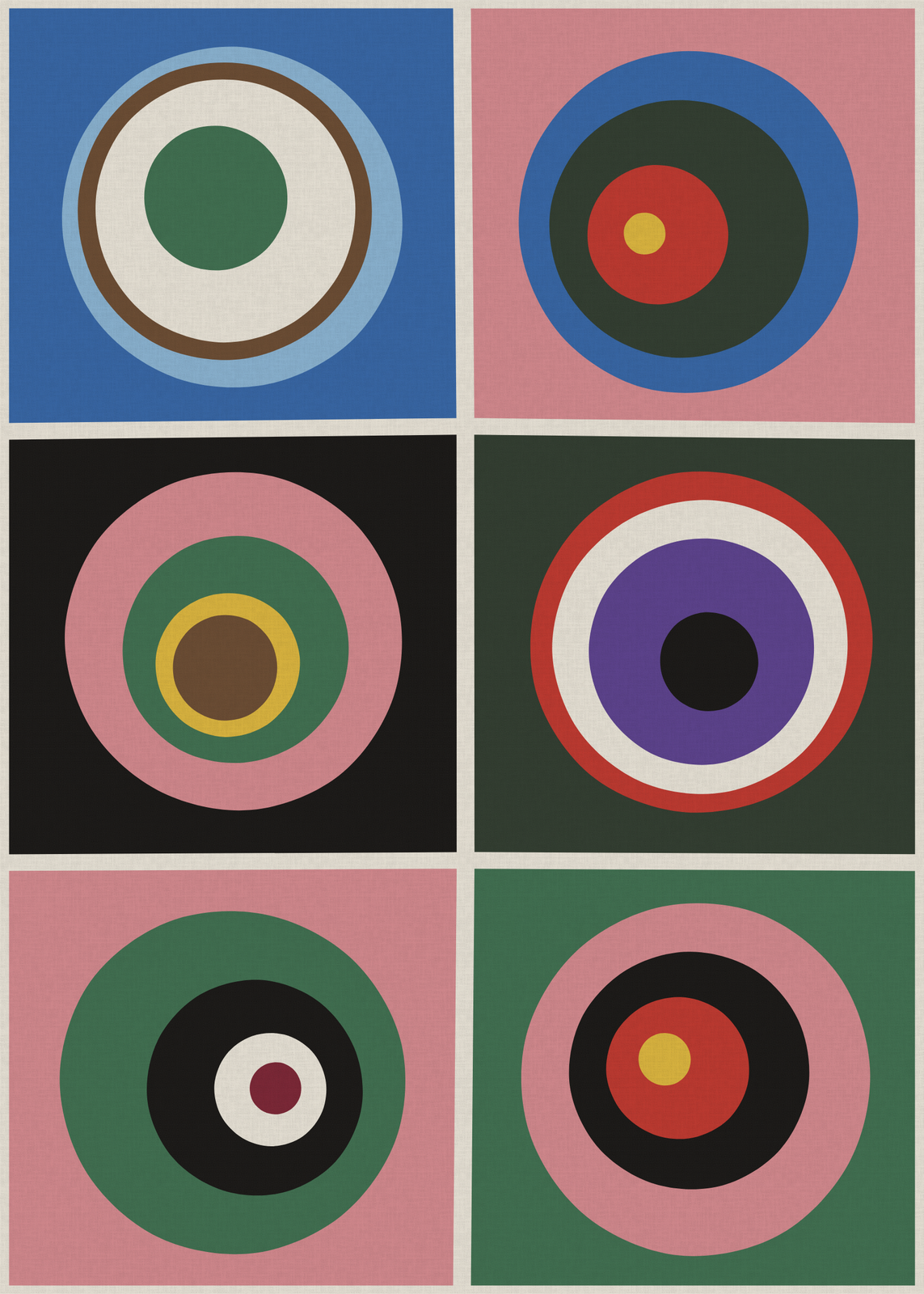
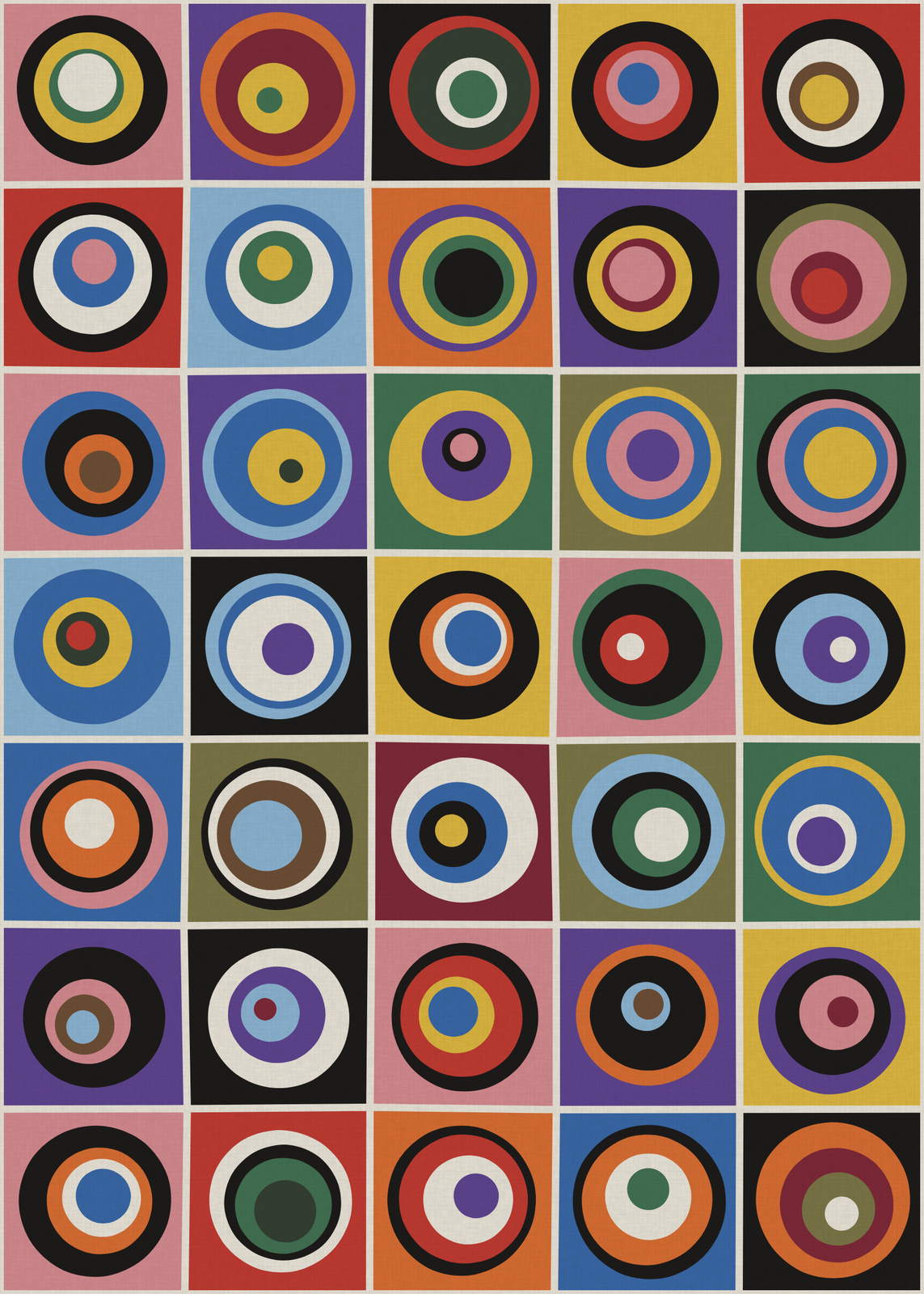
Rings follows Squares with Concentric Circles, the color study he painted in 1913: a grid of squares, each a flat ground holding concentric circles that drift a little off center, every edge a little loose, as if by hand. Ring colors sets how they meet: Clashing gives each ring one of the strongest contrasts with the one around it, Mixed any paint that differs, Tonal steps from the ground toward one far color.
Points follows Point and Line to Plane, his Bauhaus book of 1926, where he drew the opening of Beethoven's Fifth as points. Here the seed writes a made-up piece, lyrical, dance, storm or chorale, and lays it out in wide bands: its heaviest moments as big discs, long notes as rules, chords as verticals and leaps as diagonals, colored by pitch or by voice.
Colors and finish
Every palette holds twelve paints in the same order, so switching colors repaints the same composition and never moves a form. Night puts the paints on a dark ground and draws the lines in cream. The finish lays a canvas weave or a paper grain over the whole picture, or leaves the color flat; the forms themselves are drawn as shapes, so edges and hairlines stay sharp at any print size.
Questions
Is this a real Kandinsky?
No. Each poster is a new picture composed from a seed in the manner of his geometric paintings and studies. It doesn't reproduce, trace or copy any of his works.
Which of his paintings is it modeled on?
Knot, Open and Peak on the geometric ones from the 1920s, such as Composition VIII and On White II: planes that change color where they overlap, circles in halos, checkerboards and long black lines. Rings on Squares with Concentric Circles (1913) and Points on the diagrams in Point and Line to Plane (1926). None paints his earlier, looser Improvisations.
Will mine look like the examples?
Only with the same seed and settings. Each seed composes a new arrangement; the layout, colors and sliders shape it. Click an example to start from it.
Is it printed on canvas?
It's a picture you download and print. The Canvas finish draws a woven texture into it, so the paint seems to sit on canvas; Paper gives a grainy sheet instead and Flat plain color.
What sizes can I print?
US Letter, 8 × 10, 11 × 14, 12 × 16 and 12 × 18 in, A4 and A3, free. You download a 300 DPI JPEG drawn at the size you pick. Larger prints, up to 24 × 36 in, are coming soon.
Related
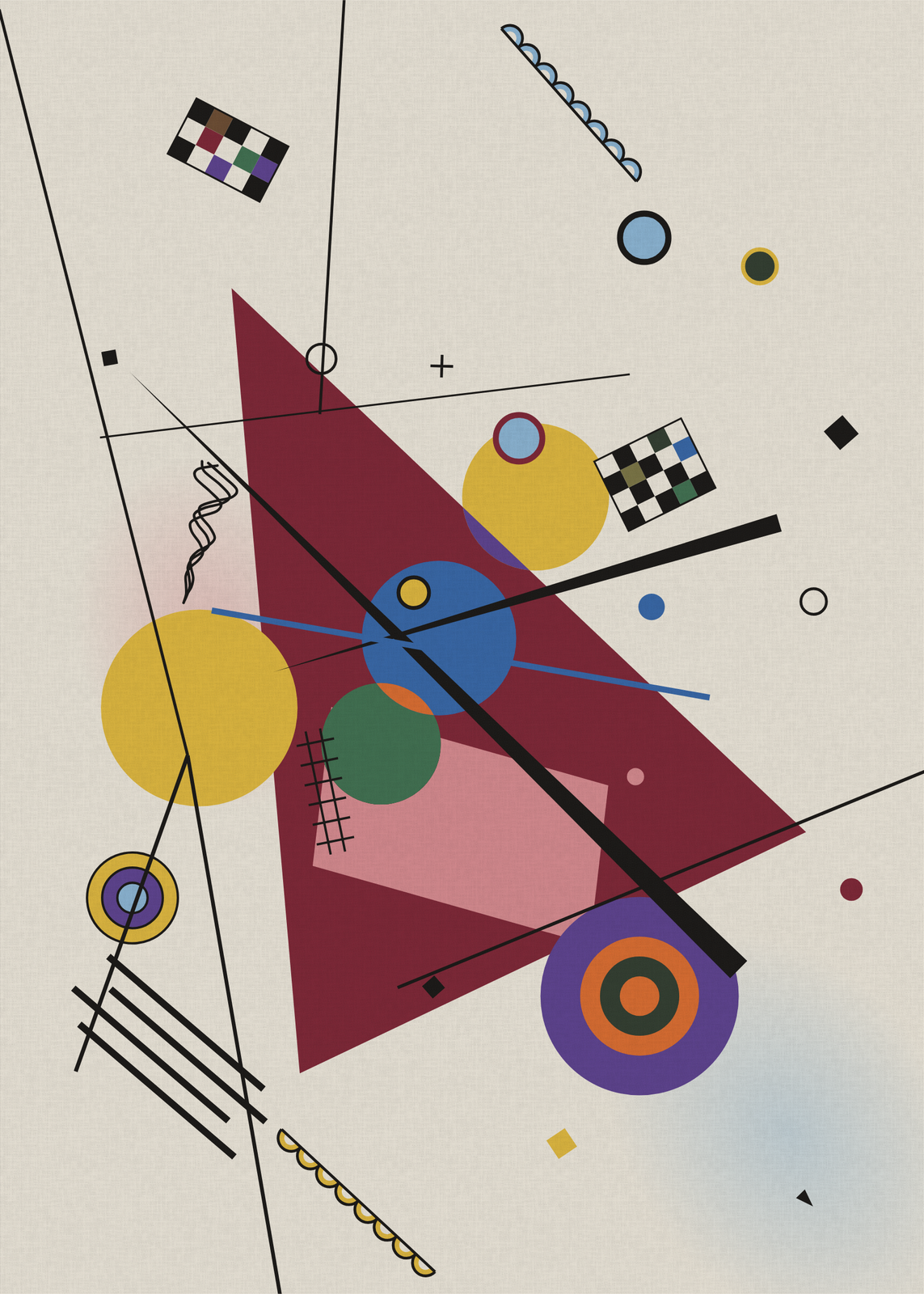 Modern artnew pictures after Matisse, Mondrian, Kandinsky, Klee and more
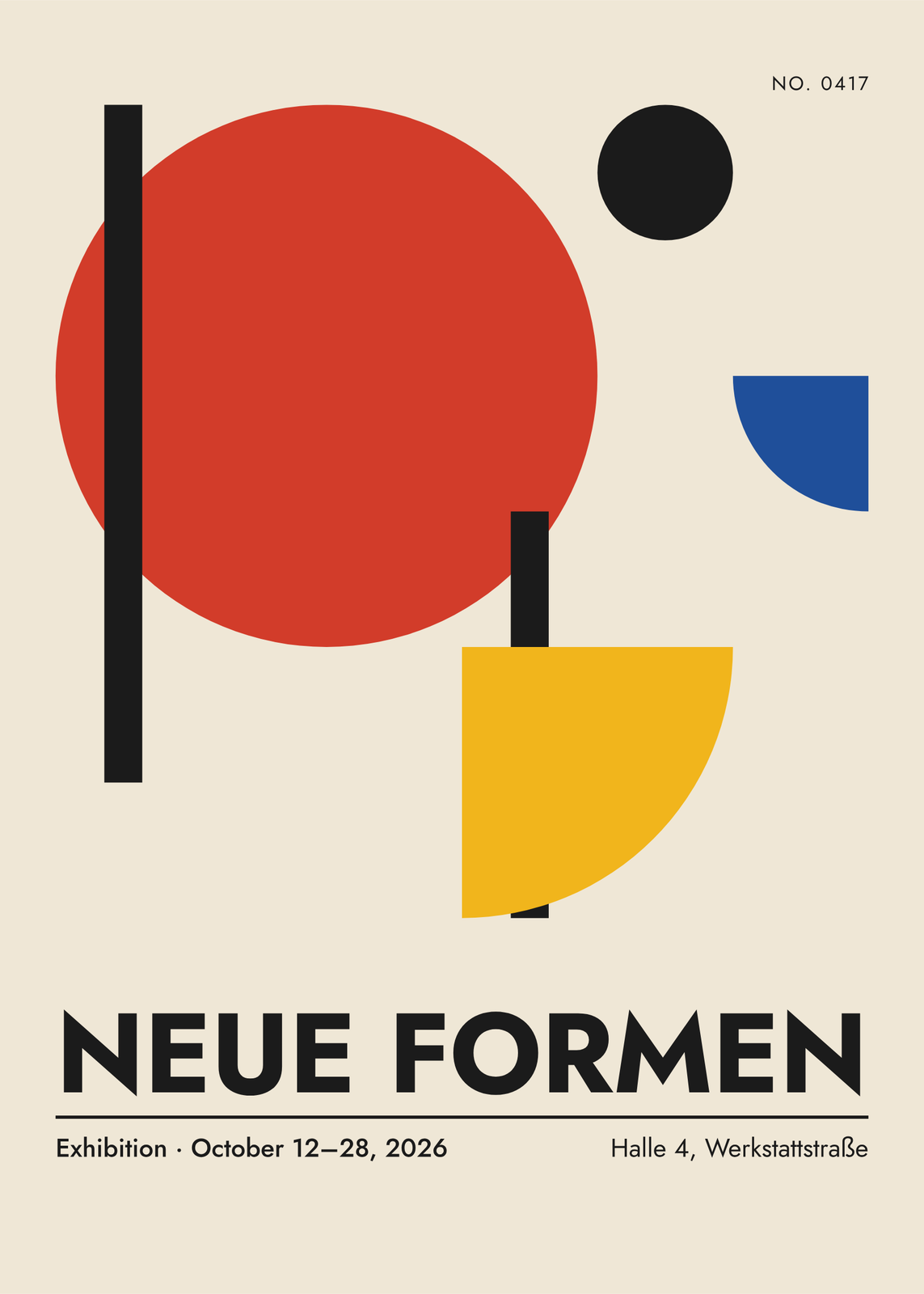 Bauhaus art and postersprimary shapes composed for you, then yours to drag, turn and recolor
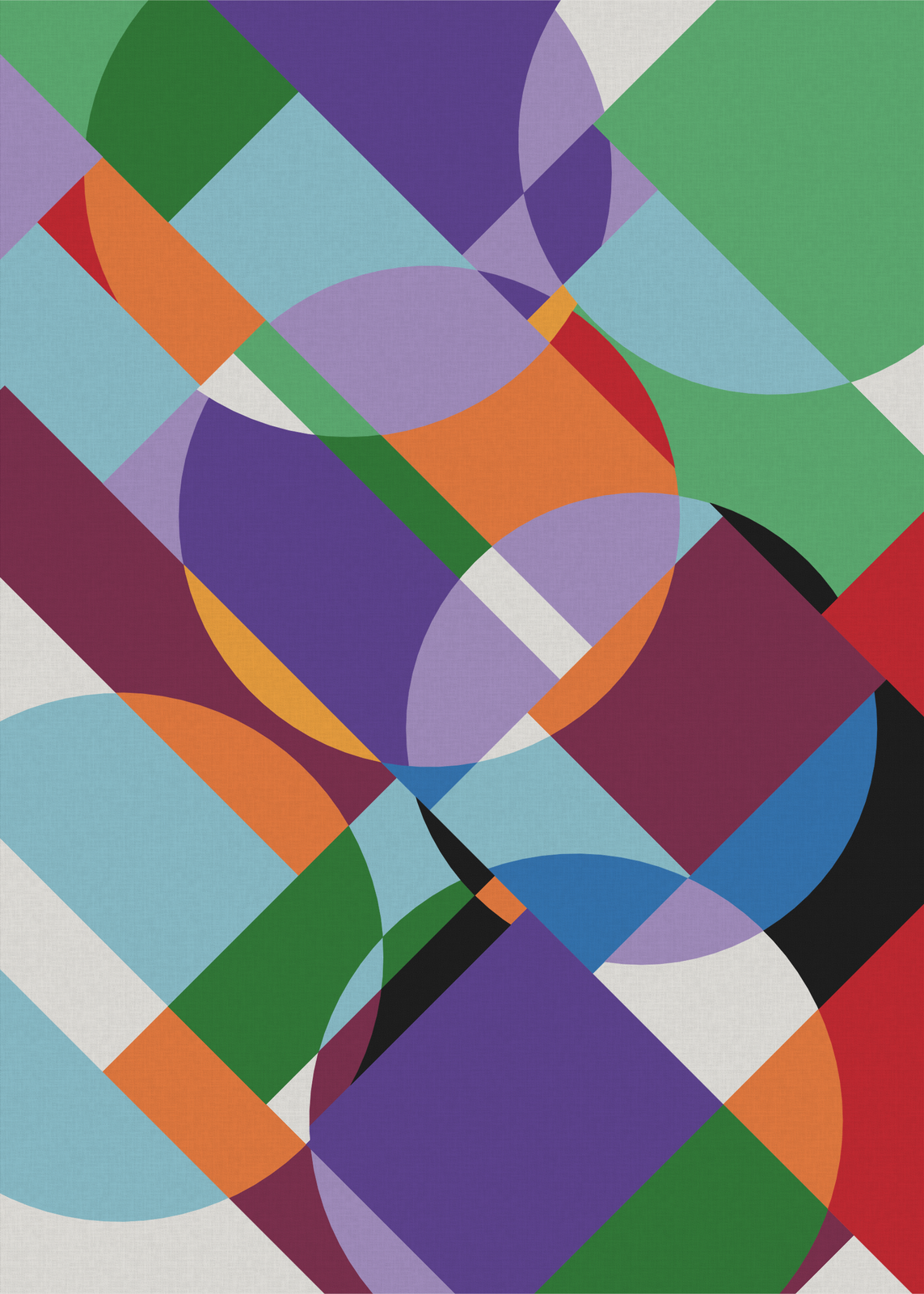 Geometric artbands, grids, circles and stars, every shape one flat color
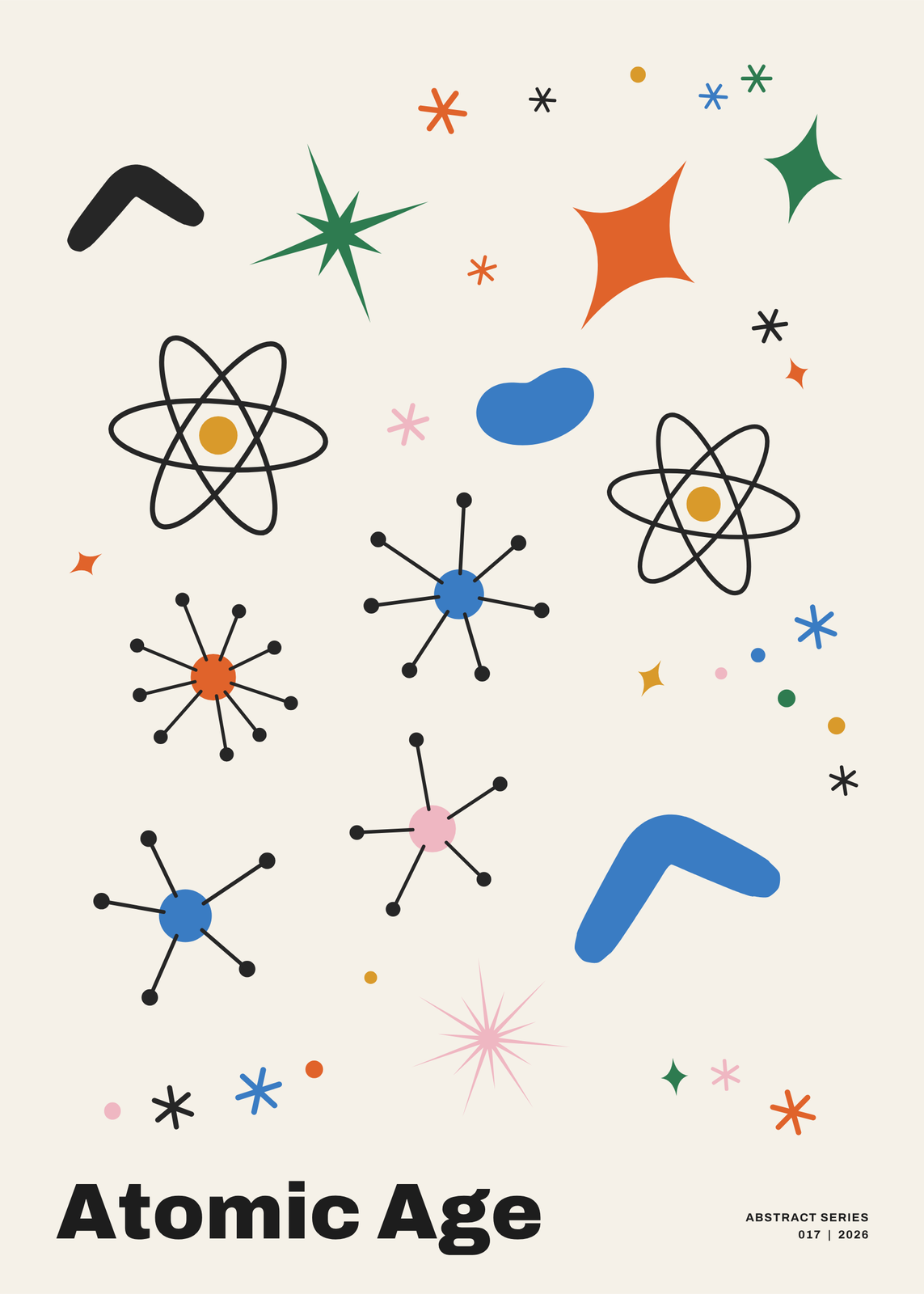 Mid century modern artatomic starbursts, boomerangs, mobiles and sunset stripes in period colors
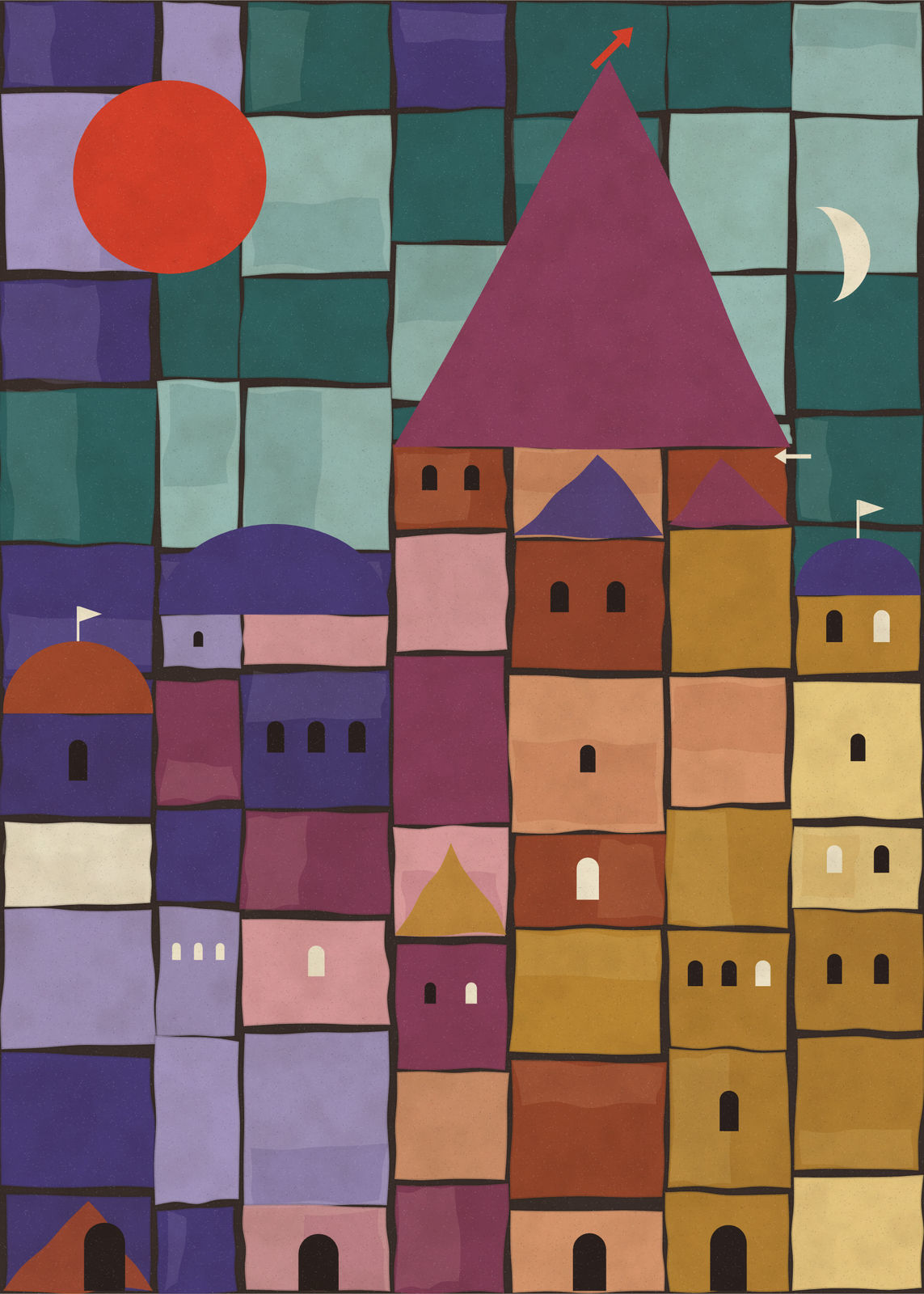 Paul Klee artmagic squares, a town of towers under the sun and shimmering dots, composed new in his manner
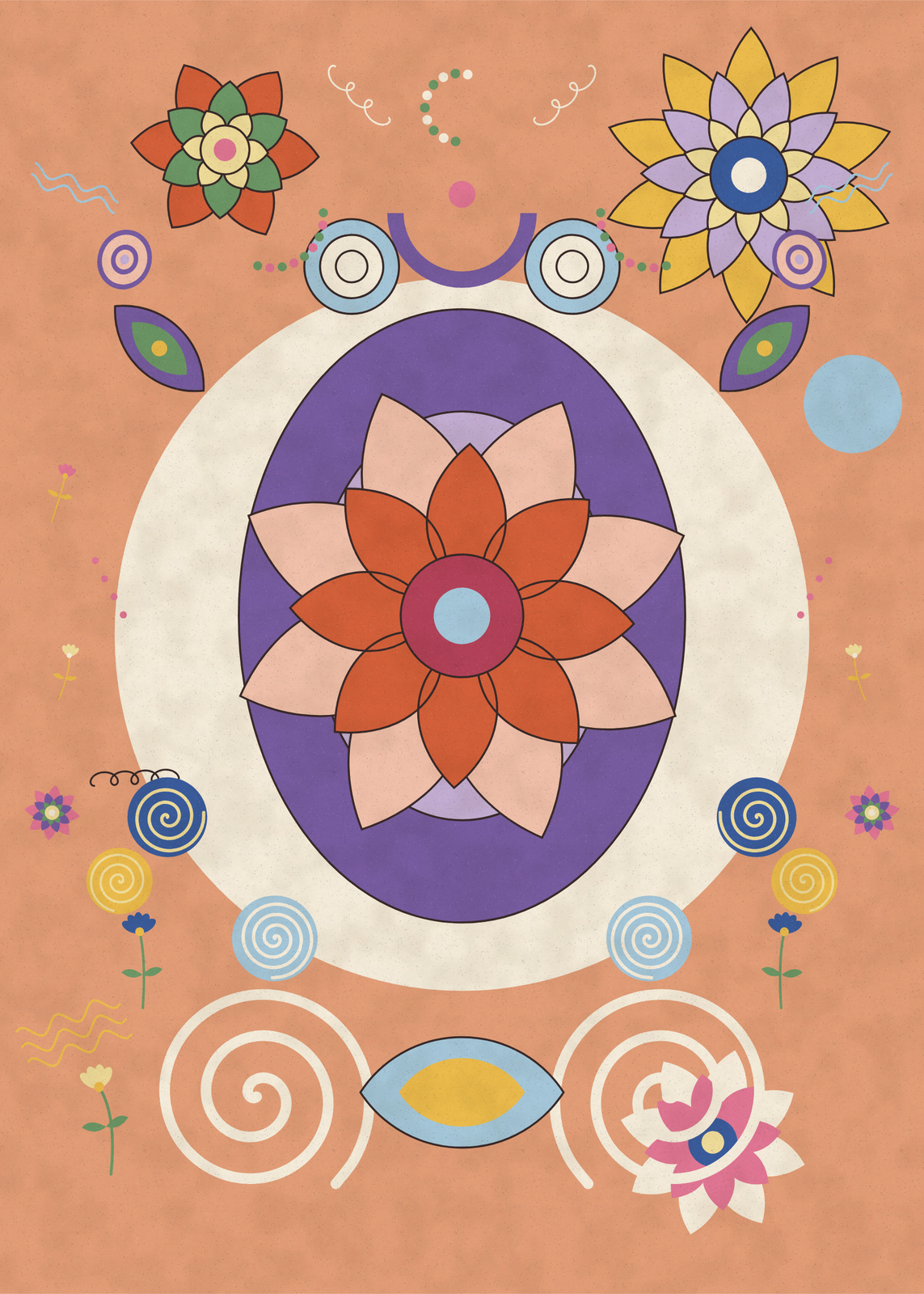 Hilma af Klint artpetal blooms and spirals on pastel grounds, rainbow altarpieces and mirrored halves, composed new in her manner
Gift ideas by occasion
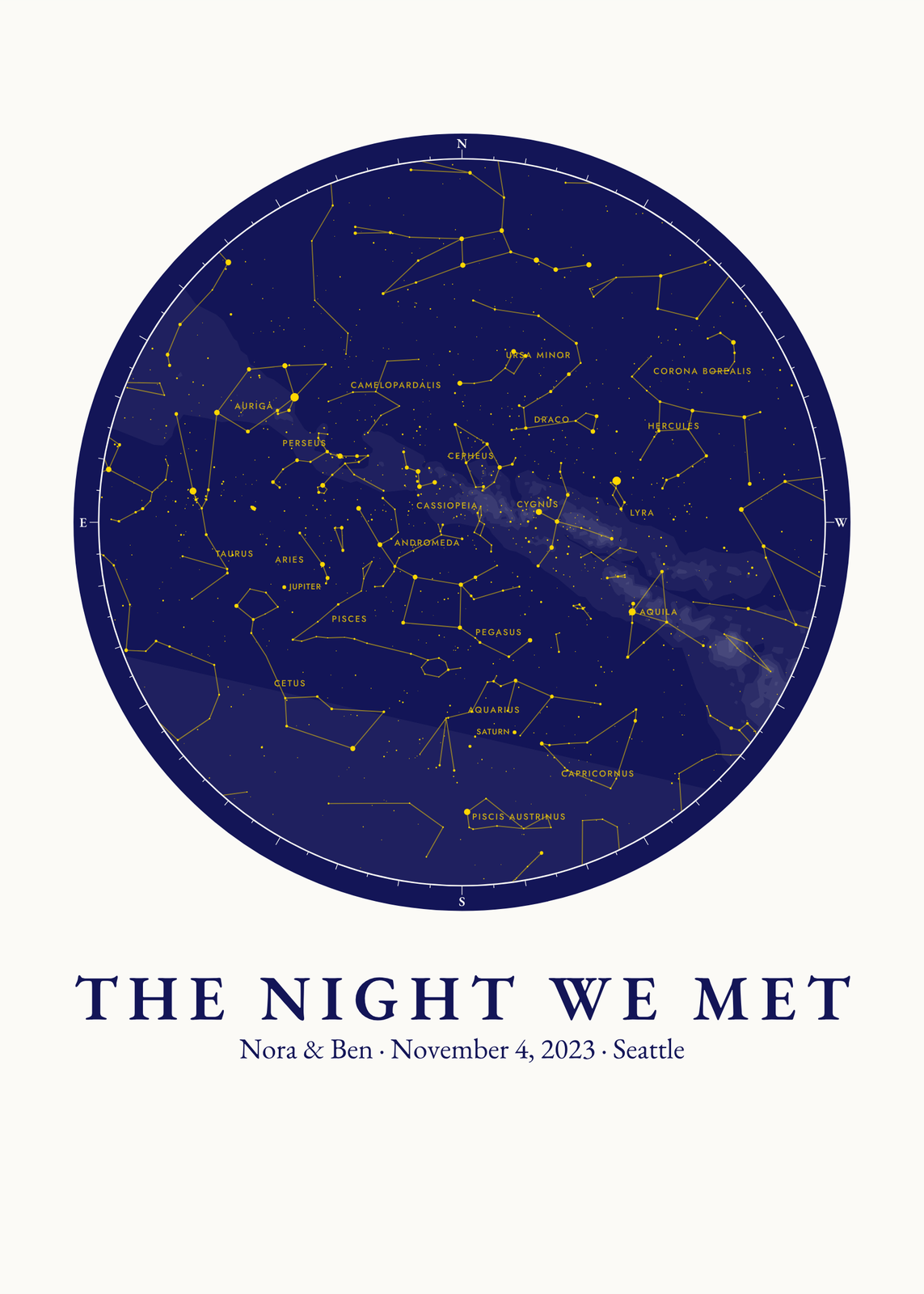
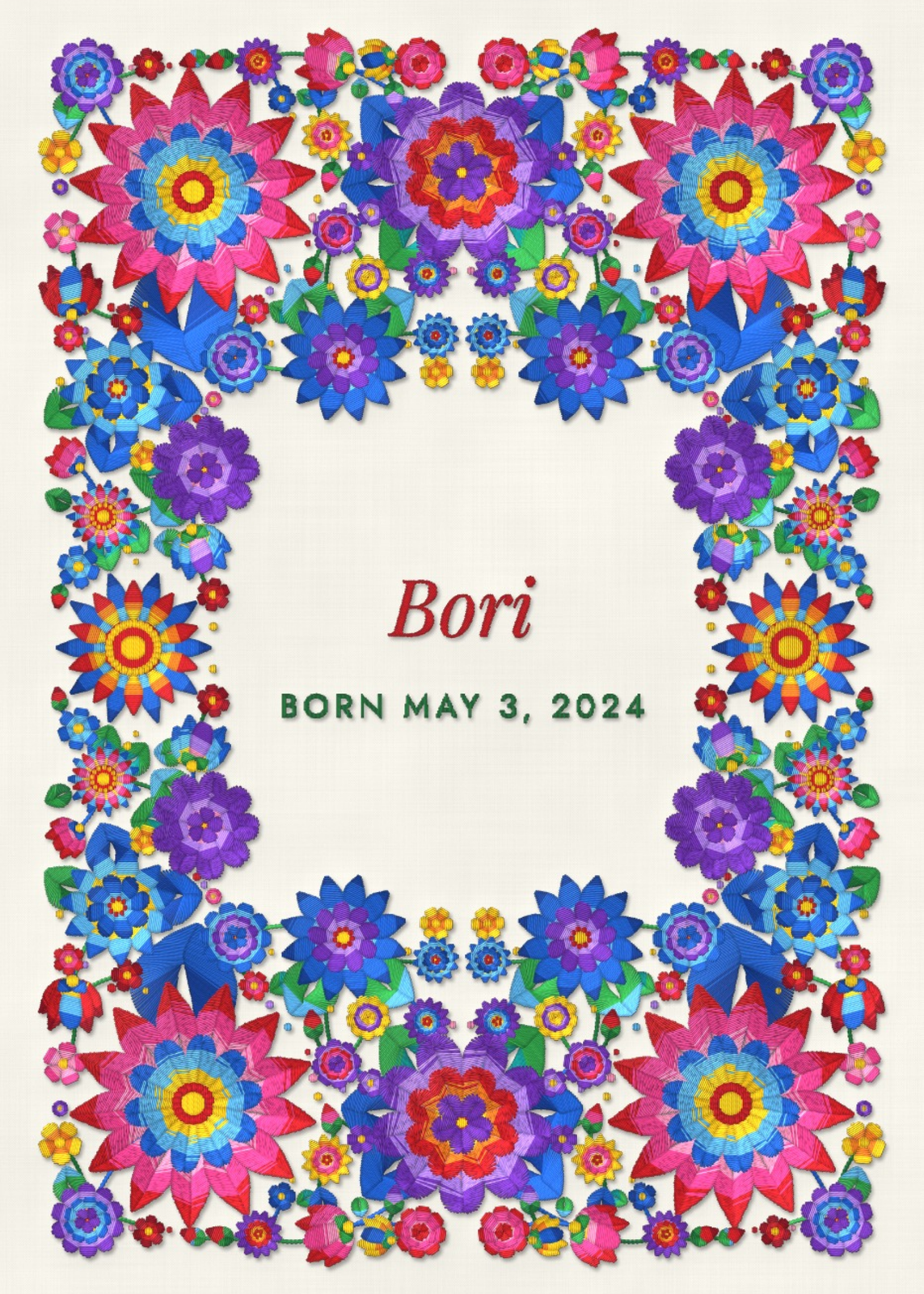
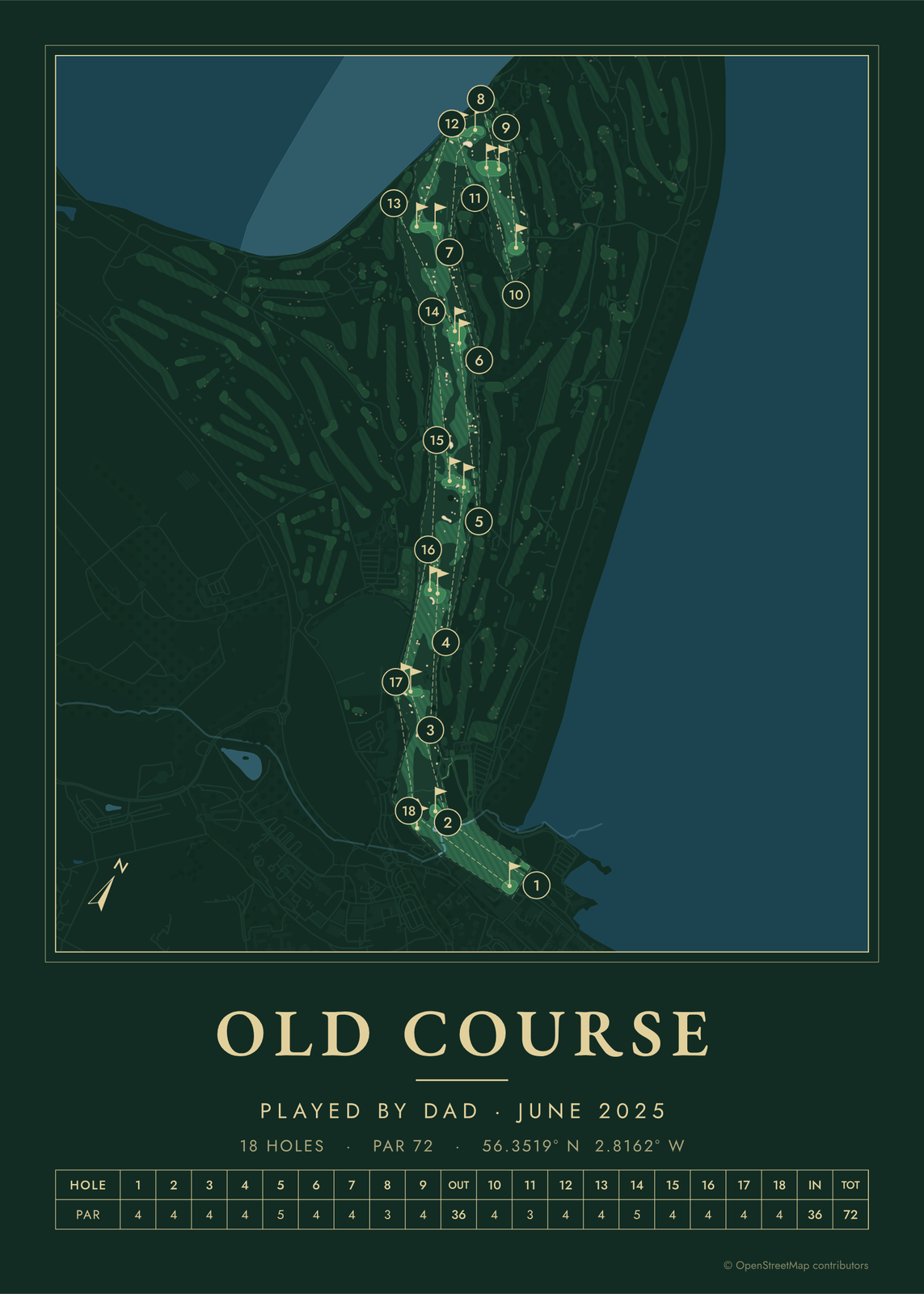
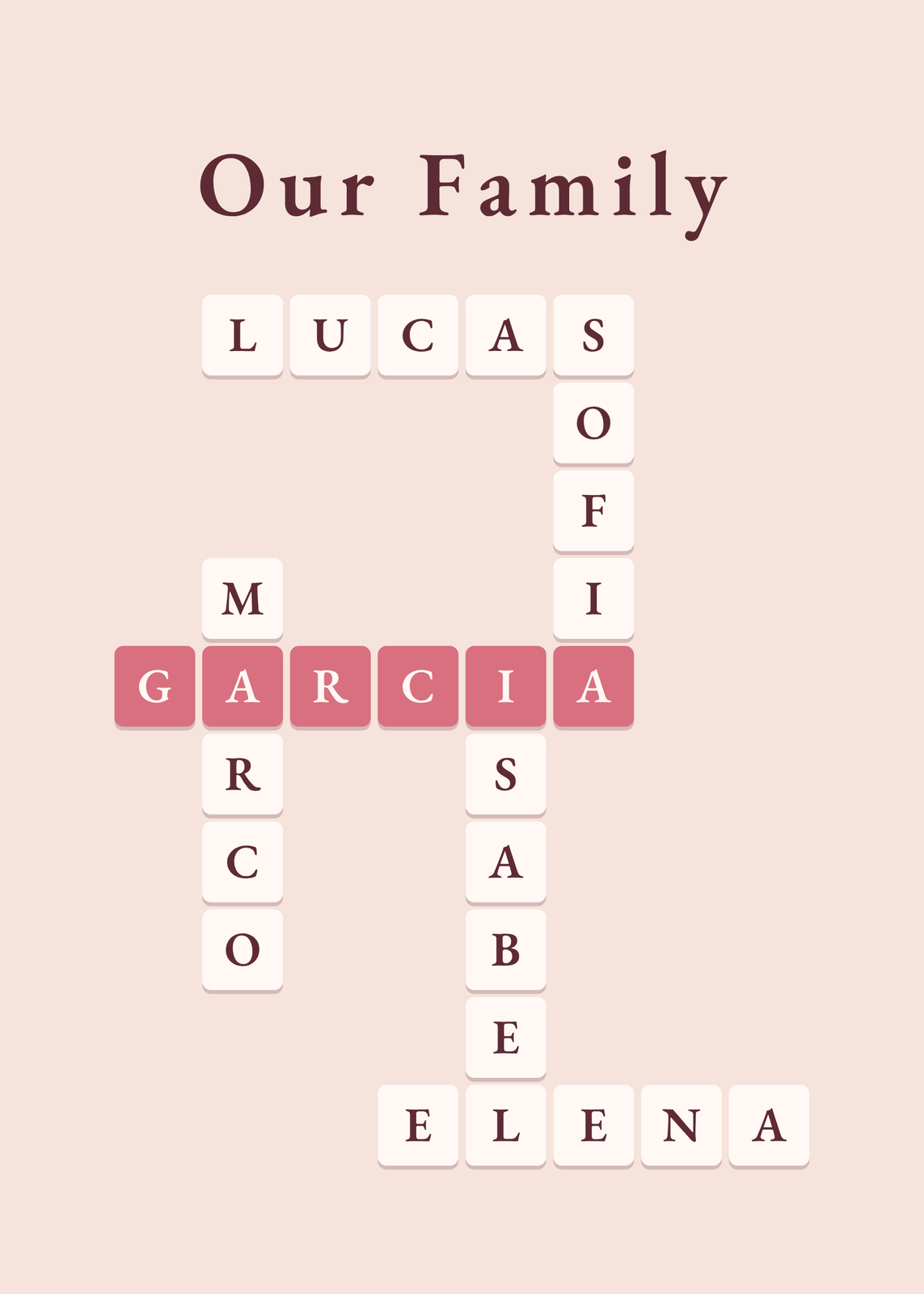
Every example is made with the Posterage generators. Change anything, then download it as a 300 DPI JPEG.