Paul Klee art magic squares, a town of towers under the sun and shimmering dots, composed new in his manner
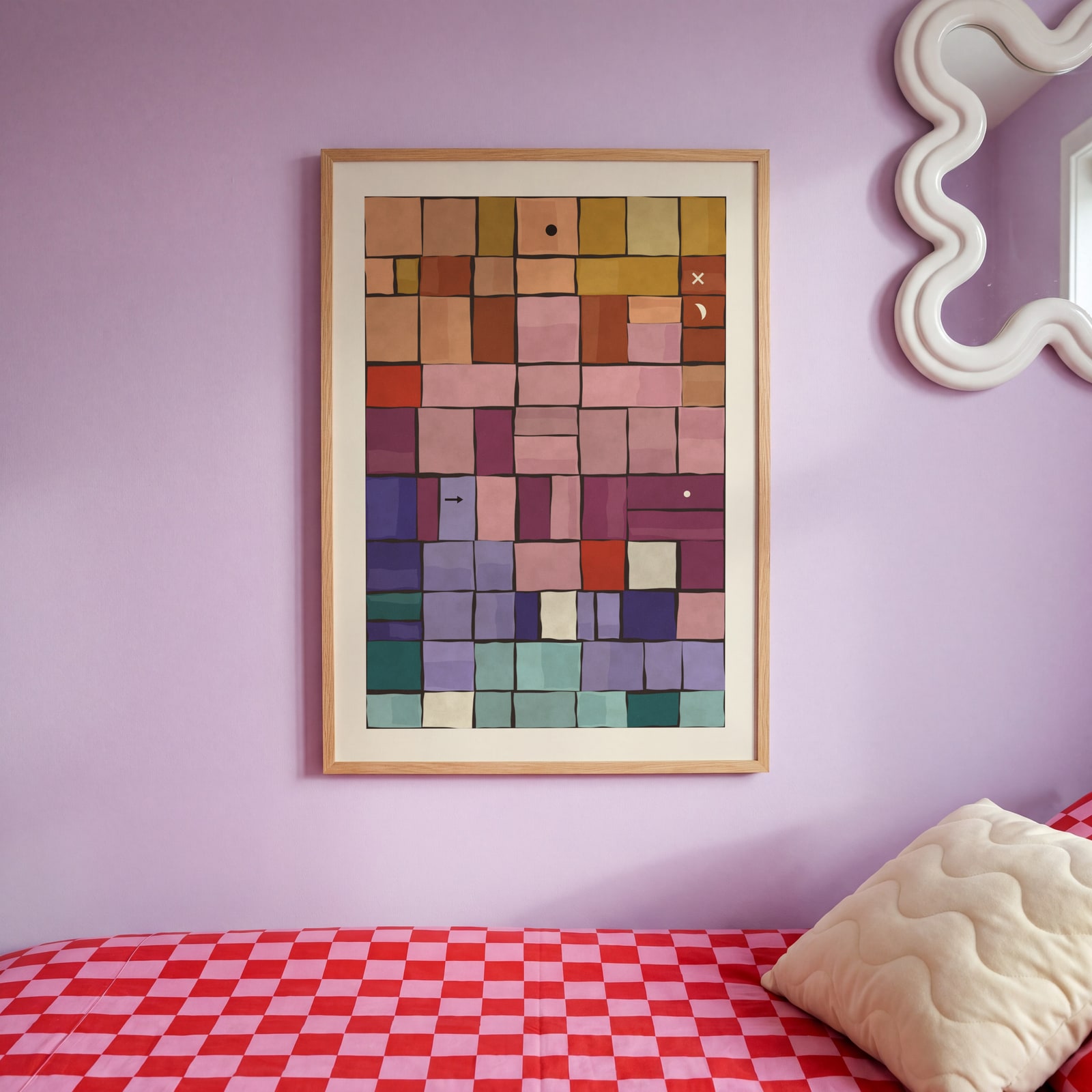
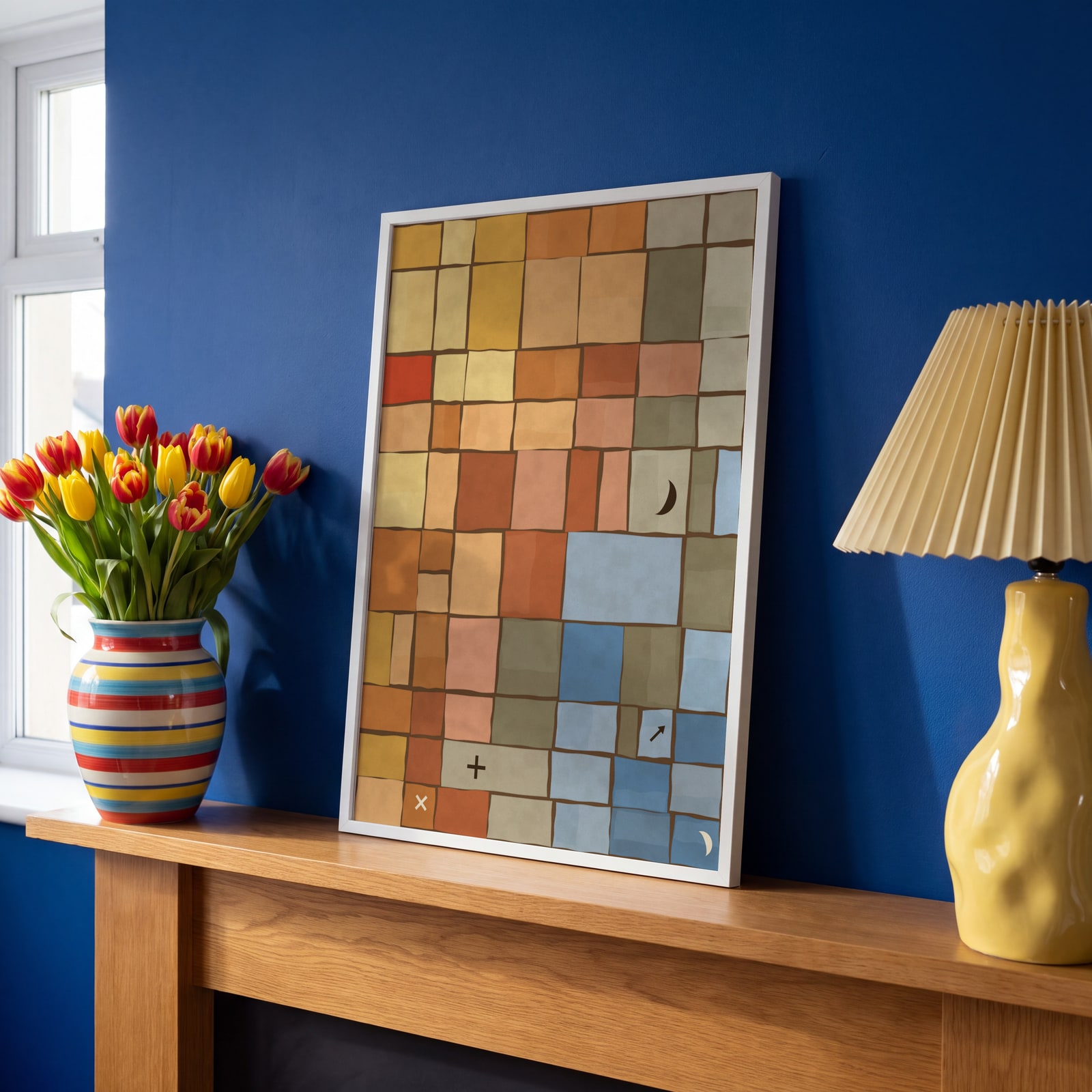
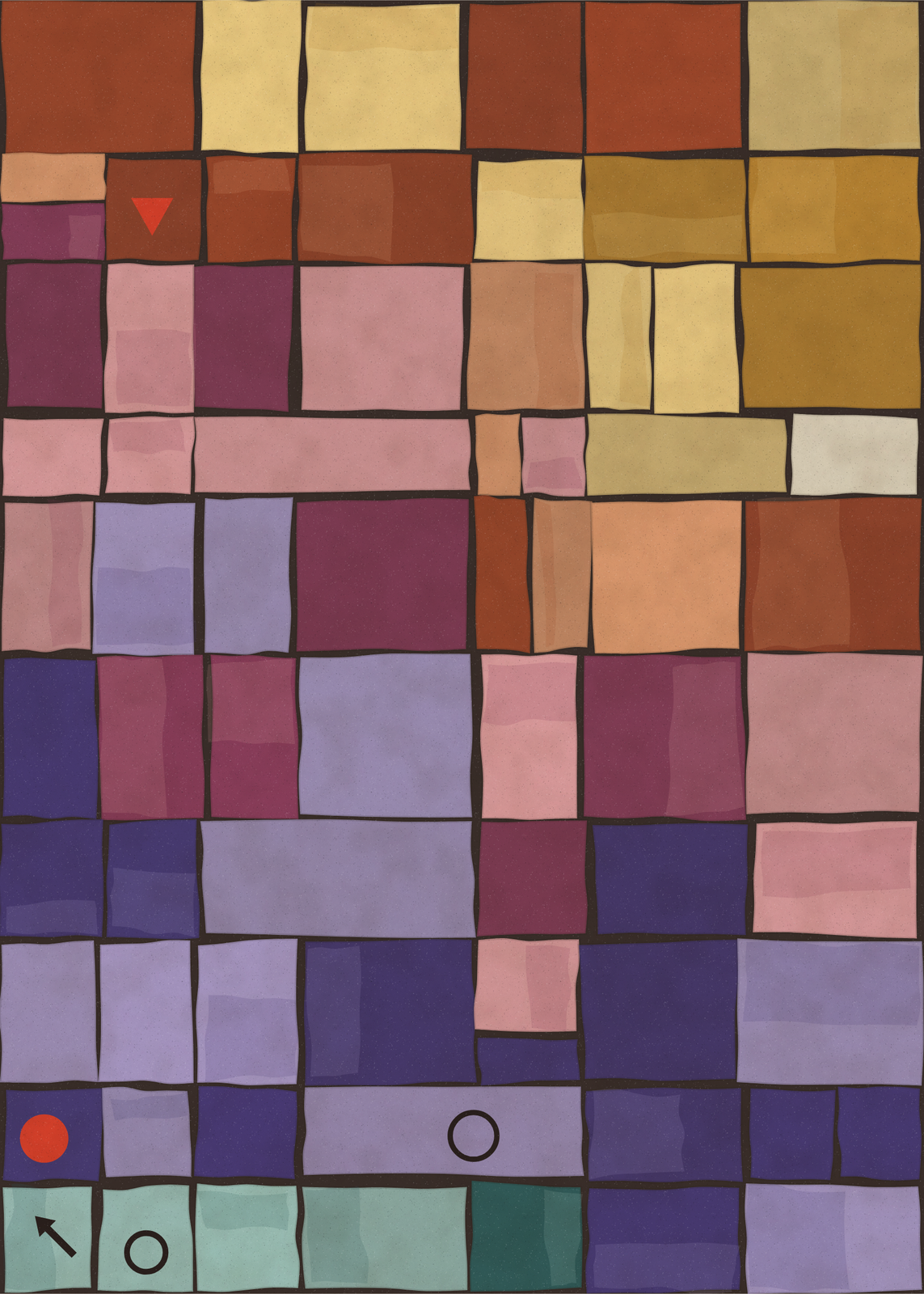
Each poster is a new picture in the manner of Paul Klee's Bauhaus years. The seed lays out rows of hand-painted cells, none quite square, with a dark ground showing in the seams, and lets their color drift slowly from a warm end to a cool one, light and deep cells alternating like a checkerboard that doesn't quite hold. Small signs sit in the roomier cells: a disc, a crescent, an arrow, a cross. Nothing is traced from his paintings, and every seed paints a different one.
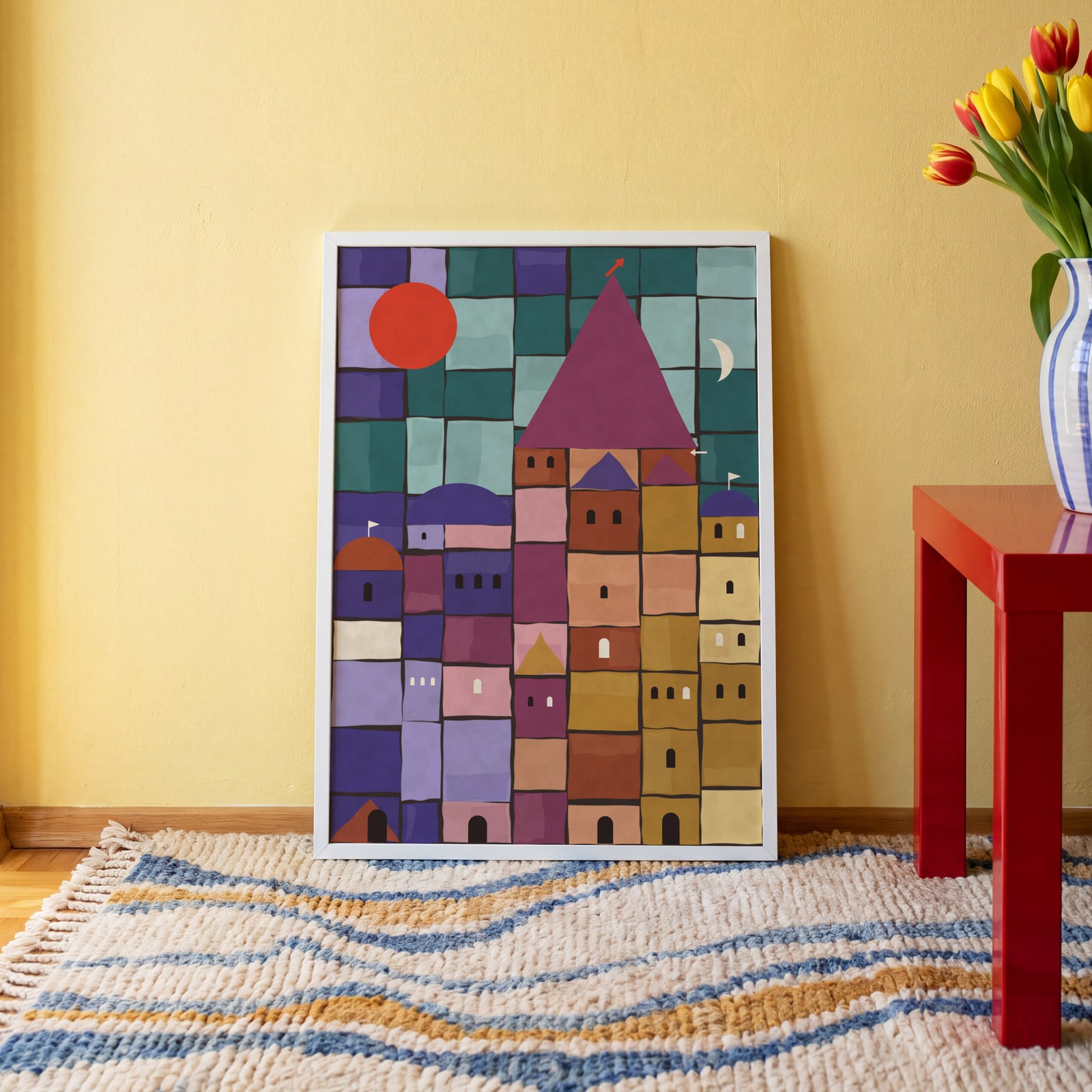
On the wall
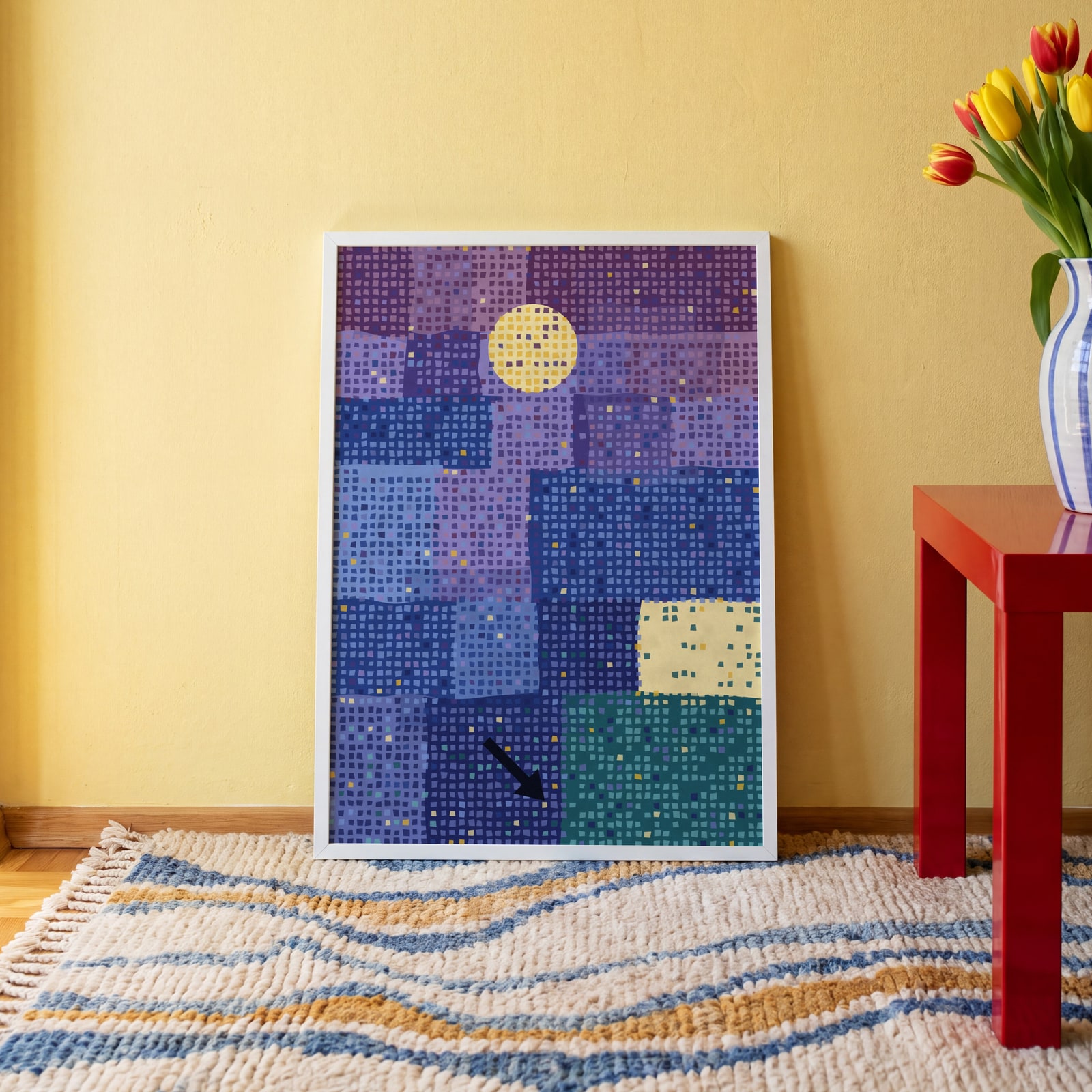
A few of them framed at home. Open any one to make it yours.
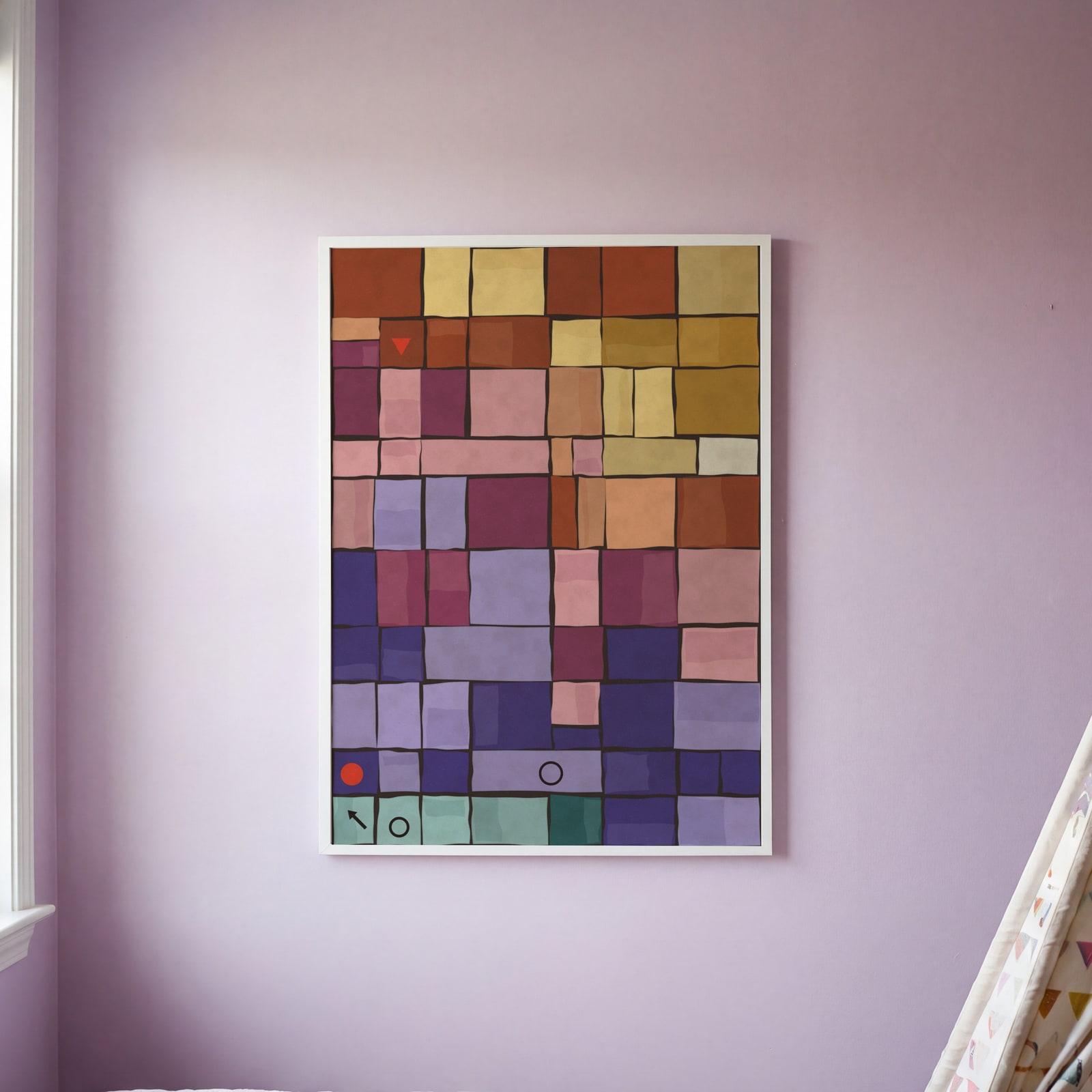
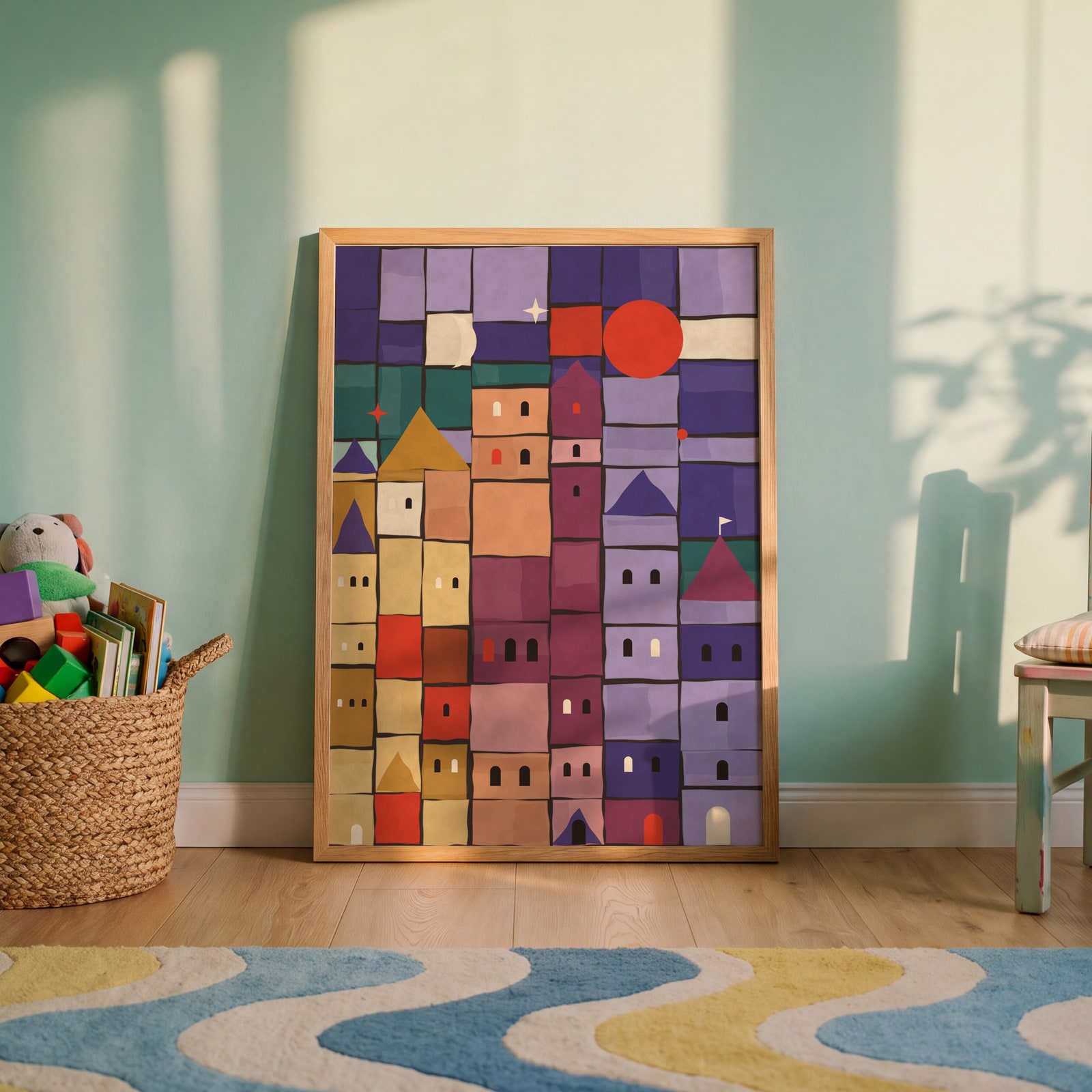
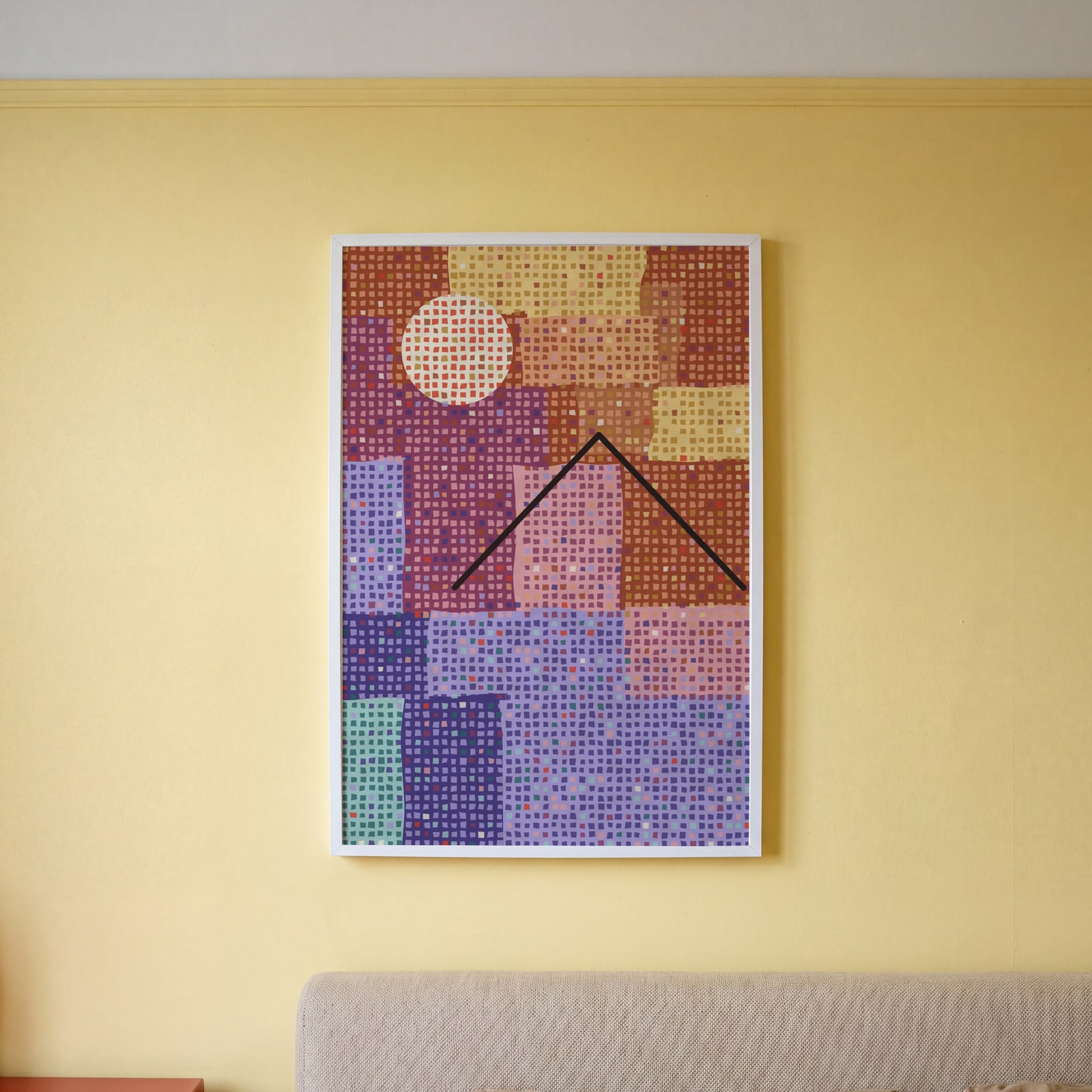
Examples
Open any of them to change the words, the place, the date and the style, then download the print file.
Magic squares
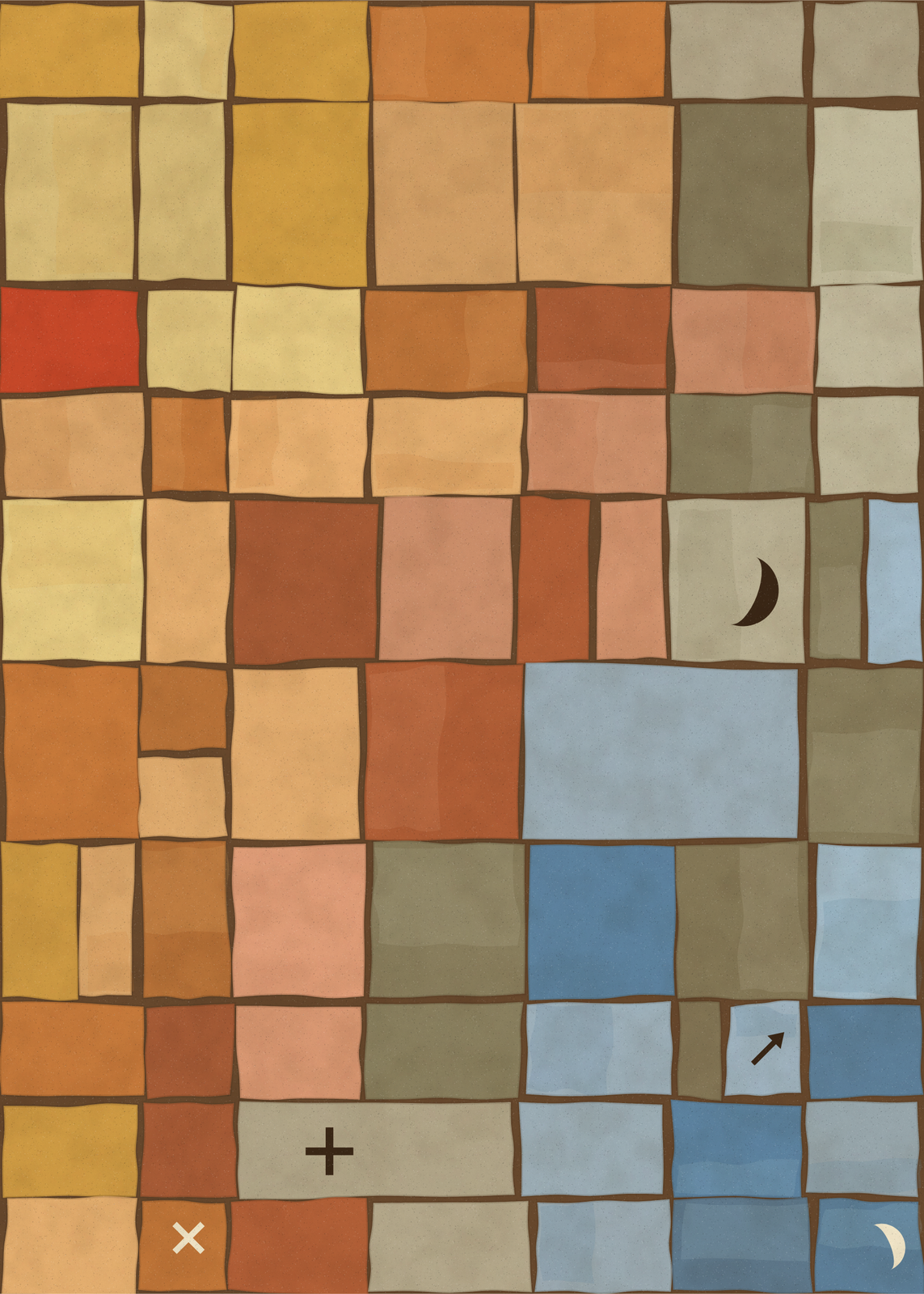
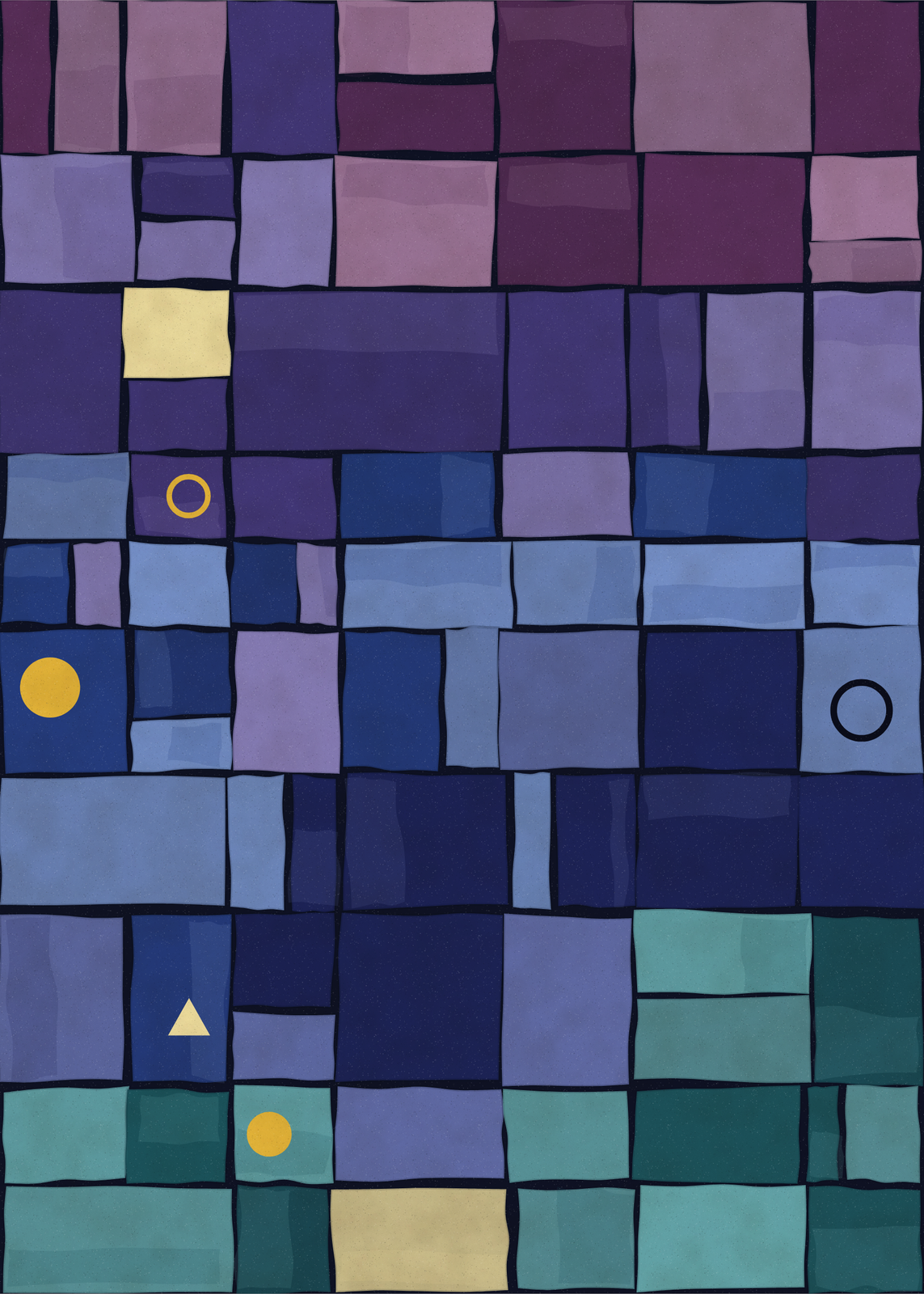
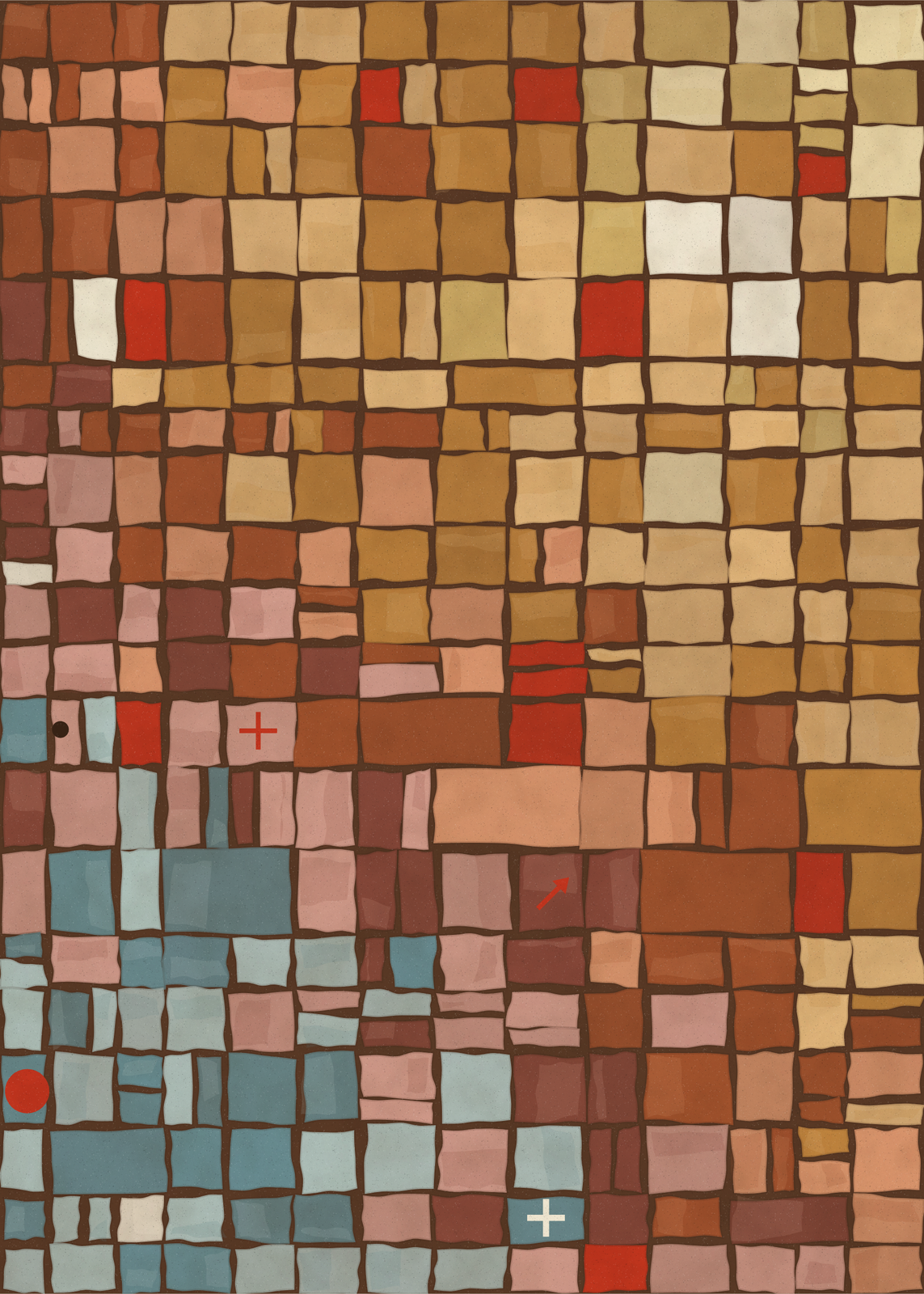
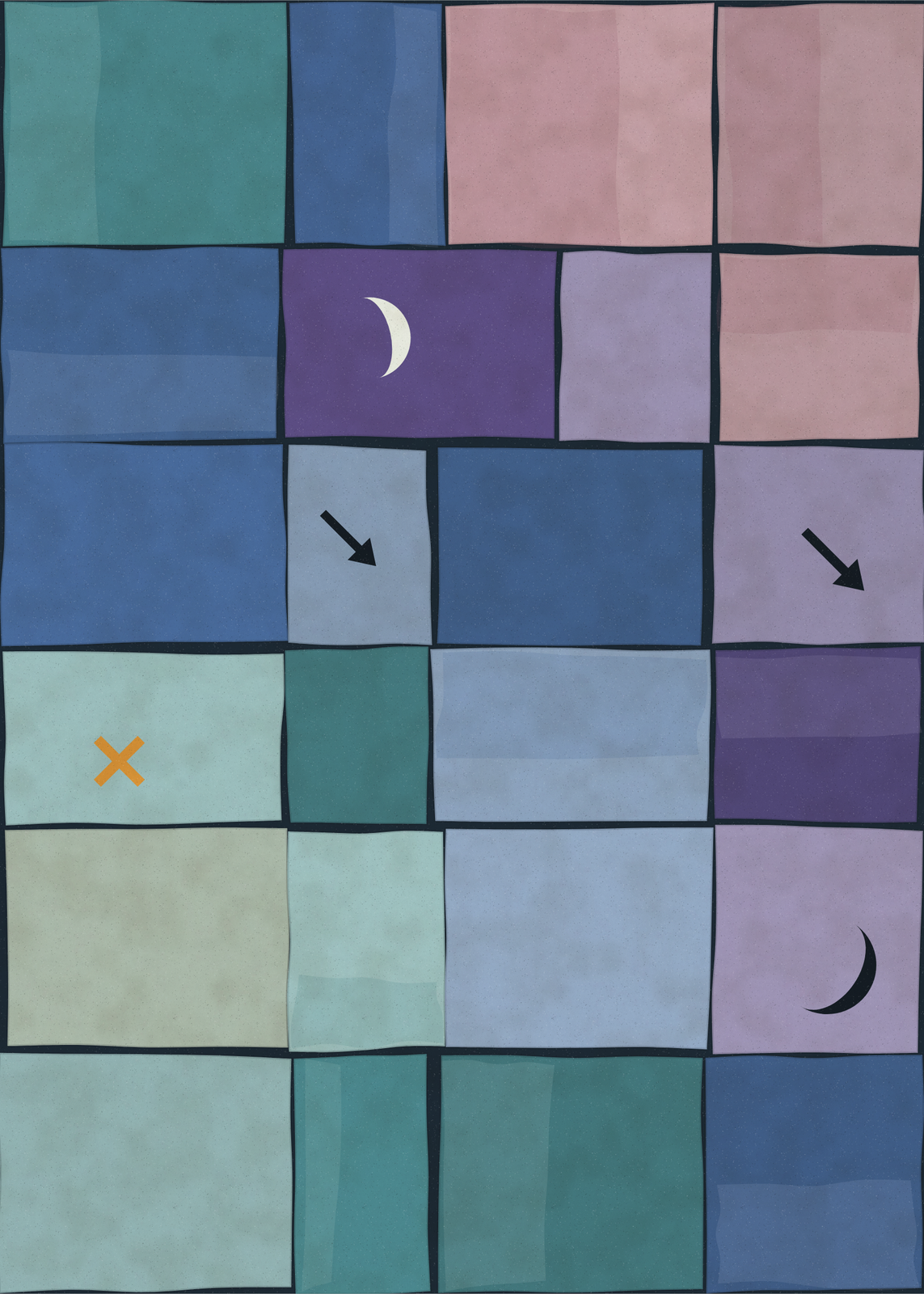
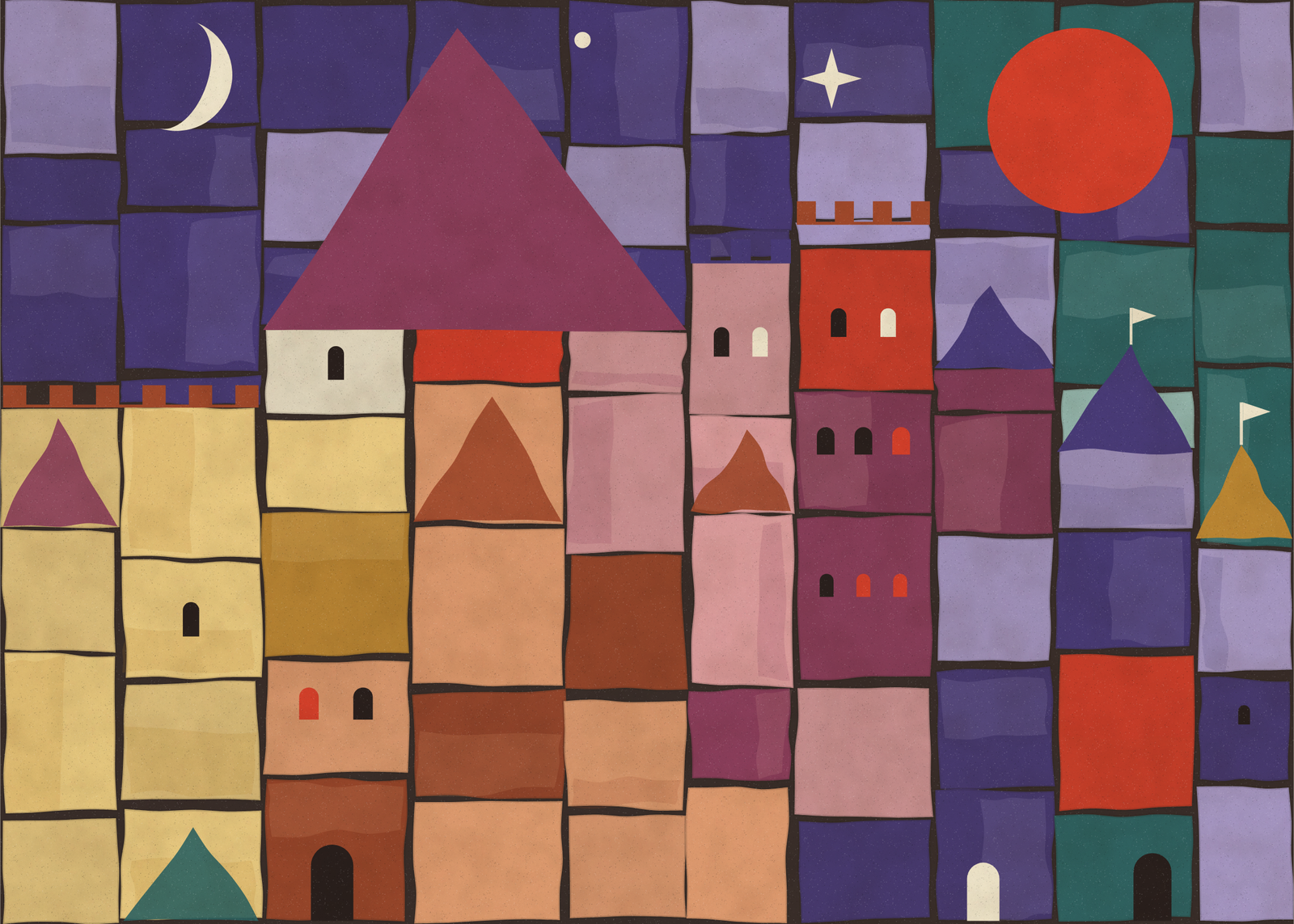
Castle
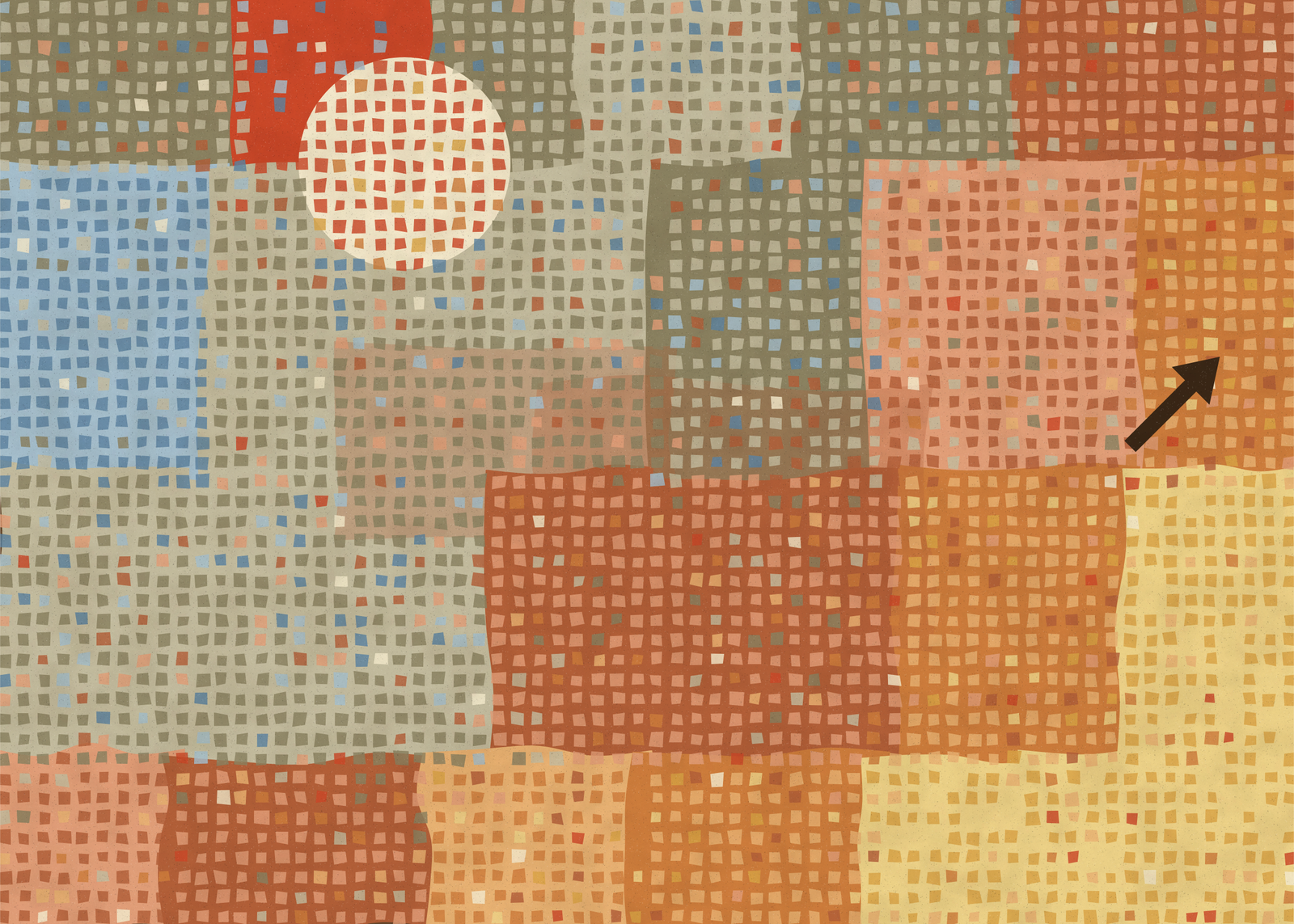
Polyphony
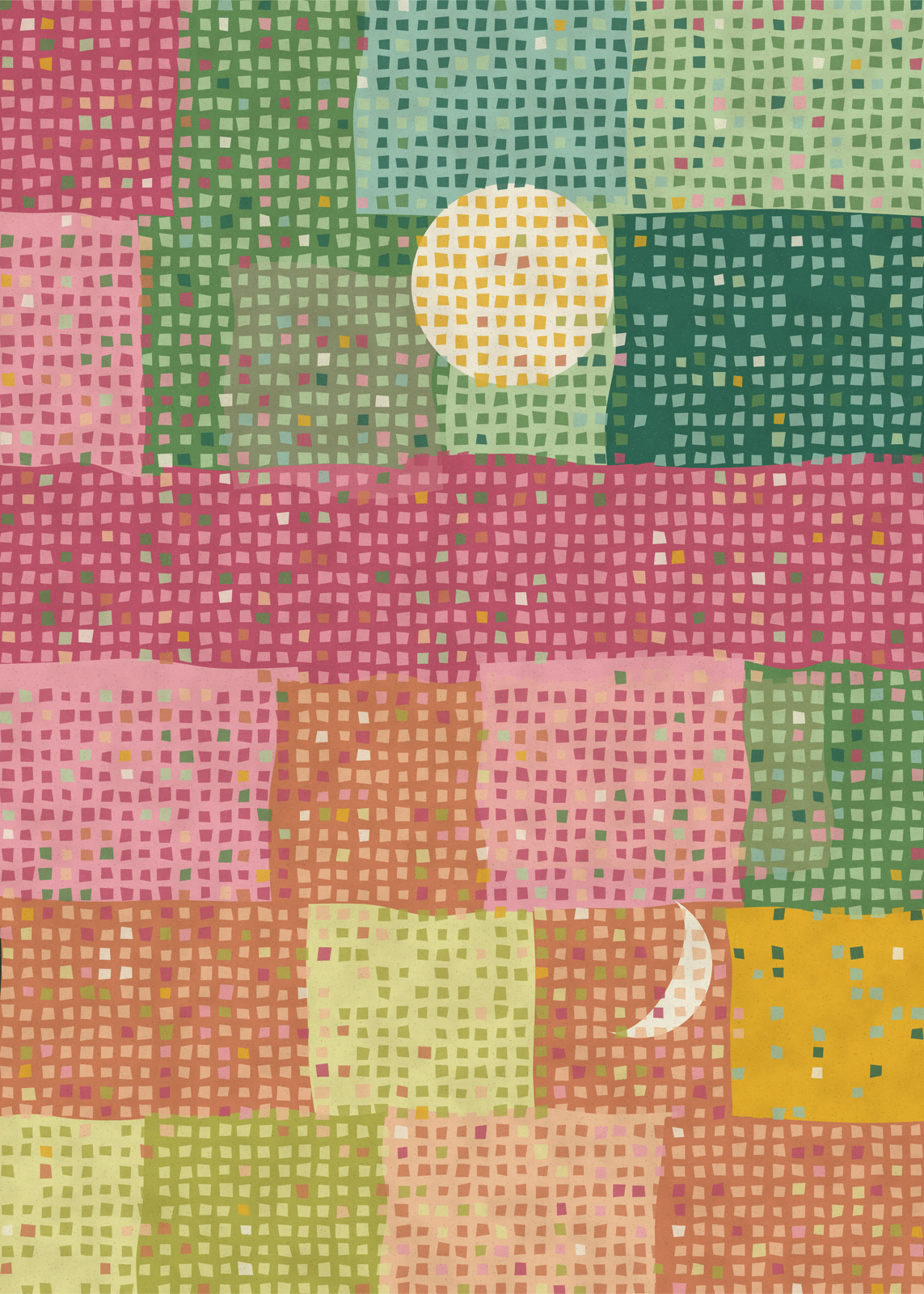
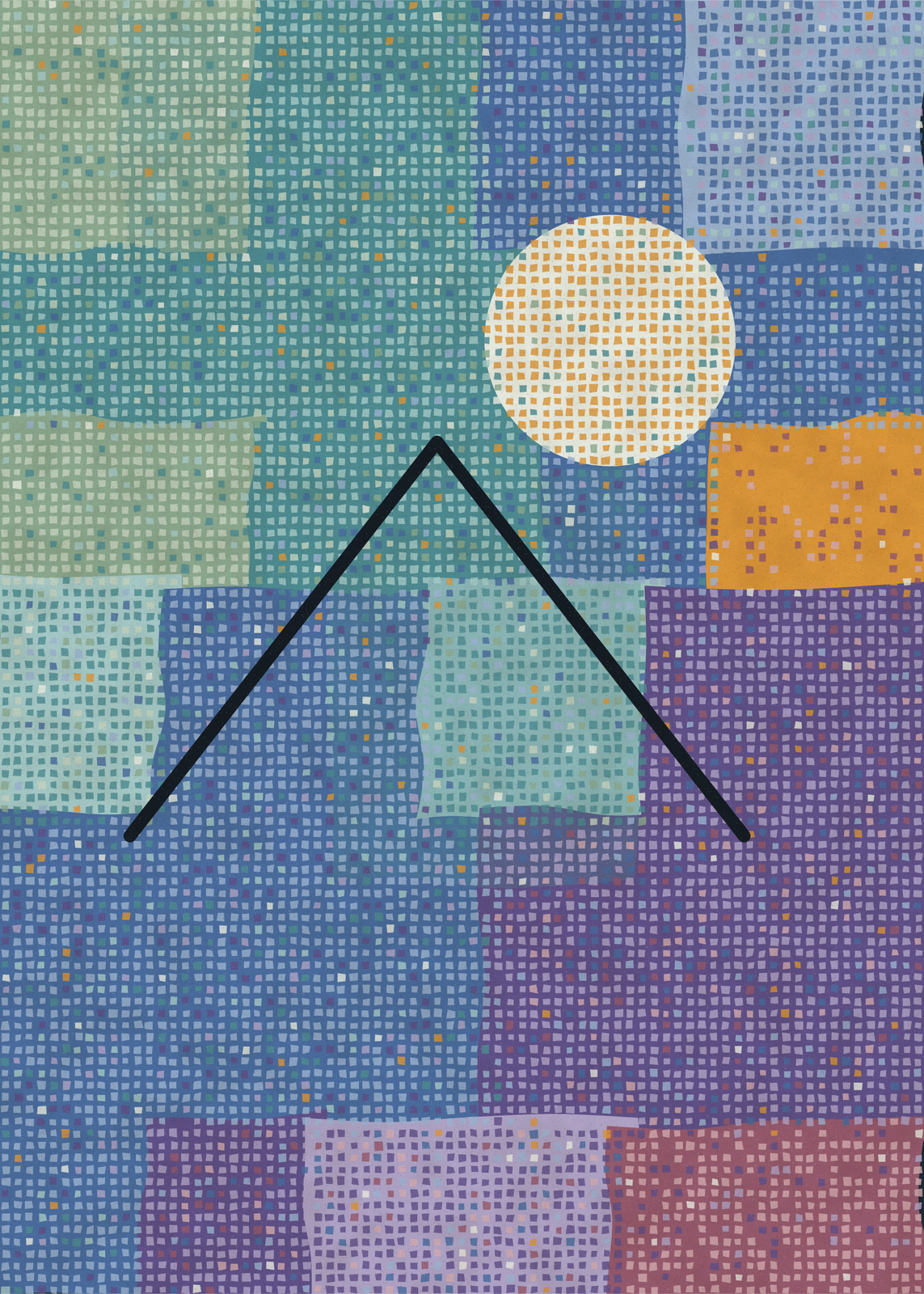
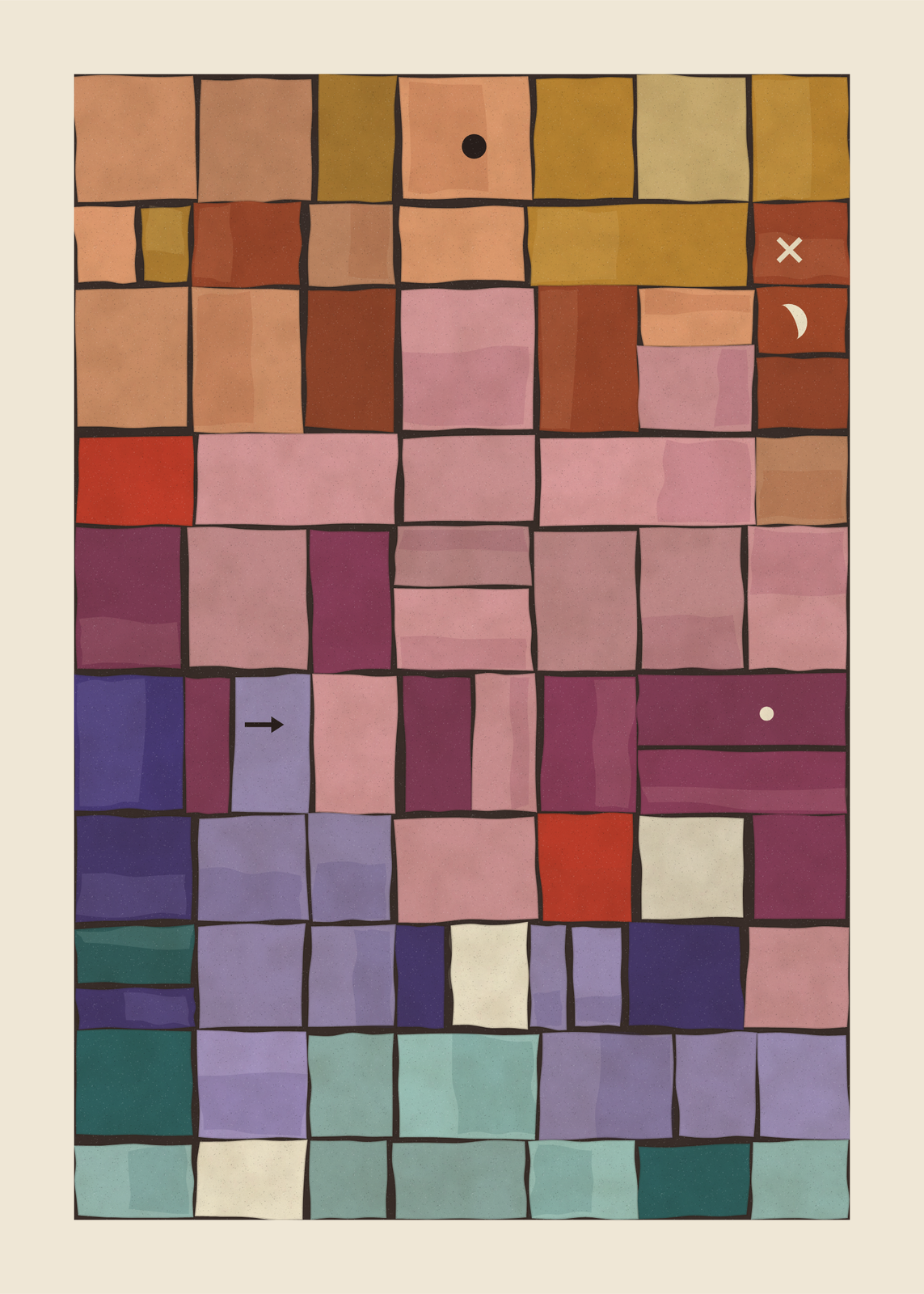
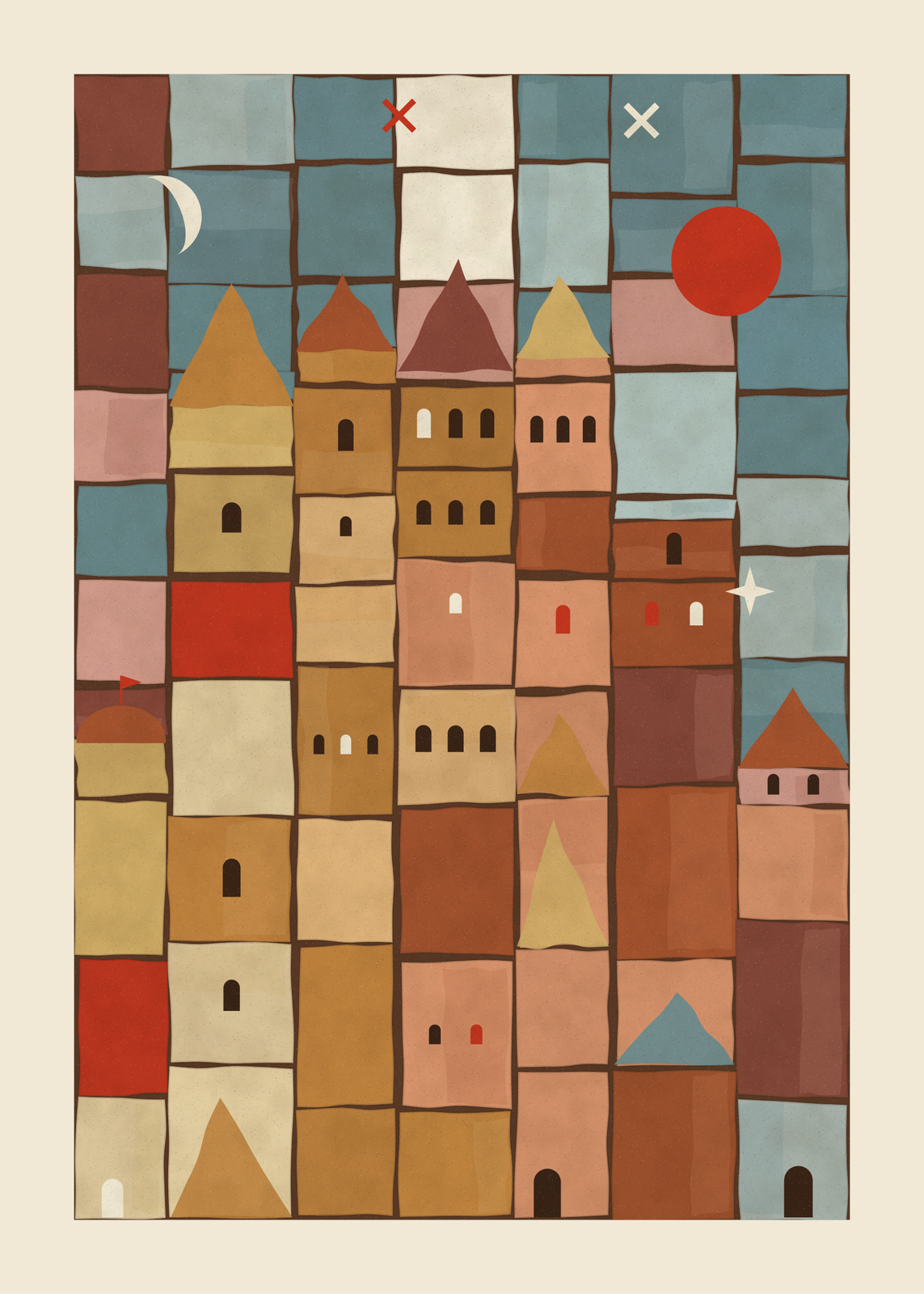
Squares, towns and dots
Klee taught at the Bauhaus from 1921 to 1931, and through those years he kept coming back to grids of color: the pictures often called his magic squares, where uneven patches of paint are tuned against each other until the whole sheet hums. In Castle and Sun (1928) the same squares stack into a town, and in Ad Parnassum and Polyphony (both 1932) small dabs of color shimmer over broad blocks. These posters paint in that manner, one seed at a time.
Three layouts
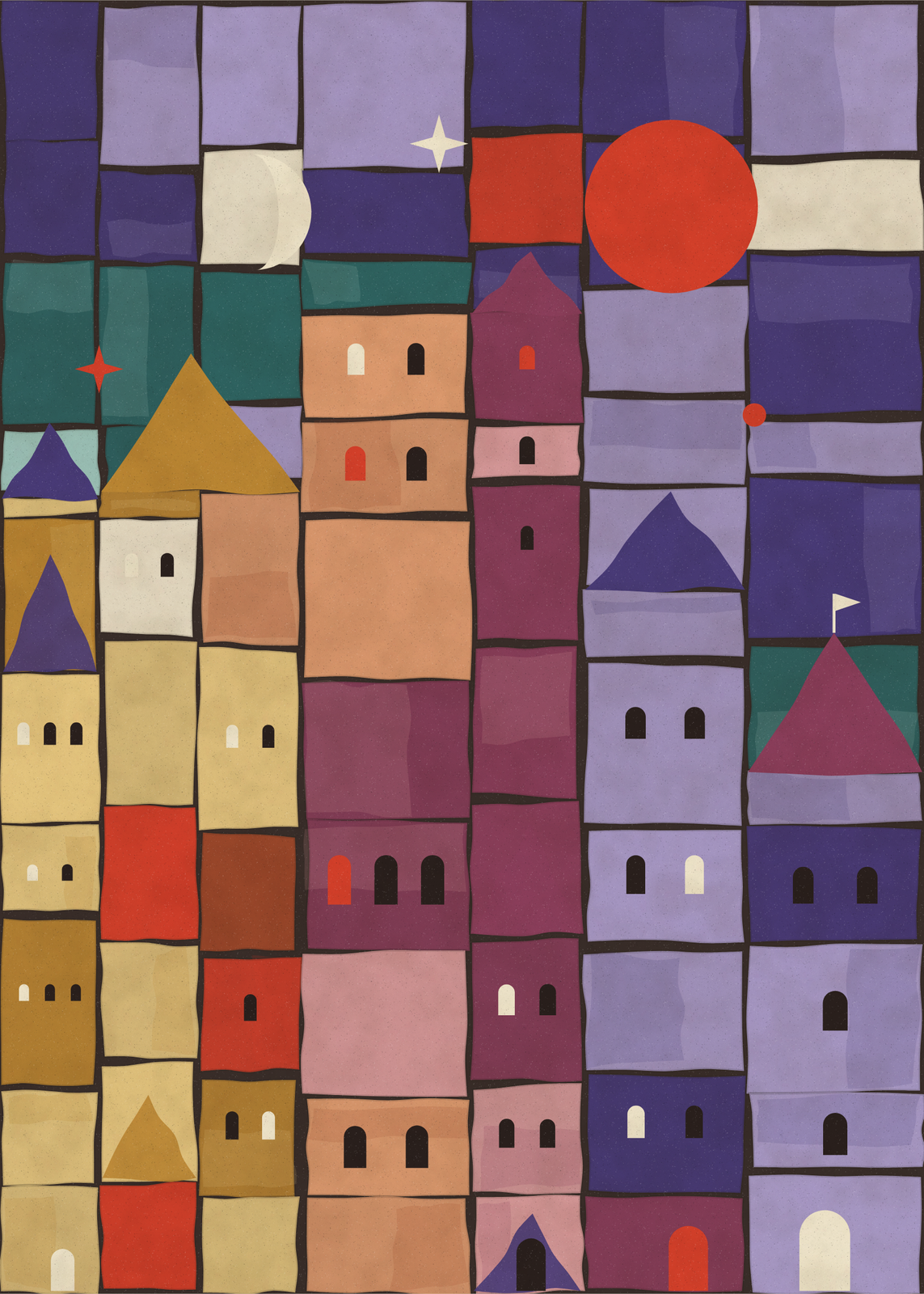
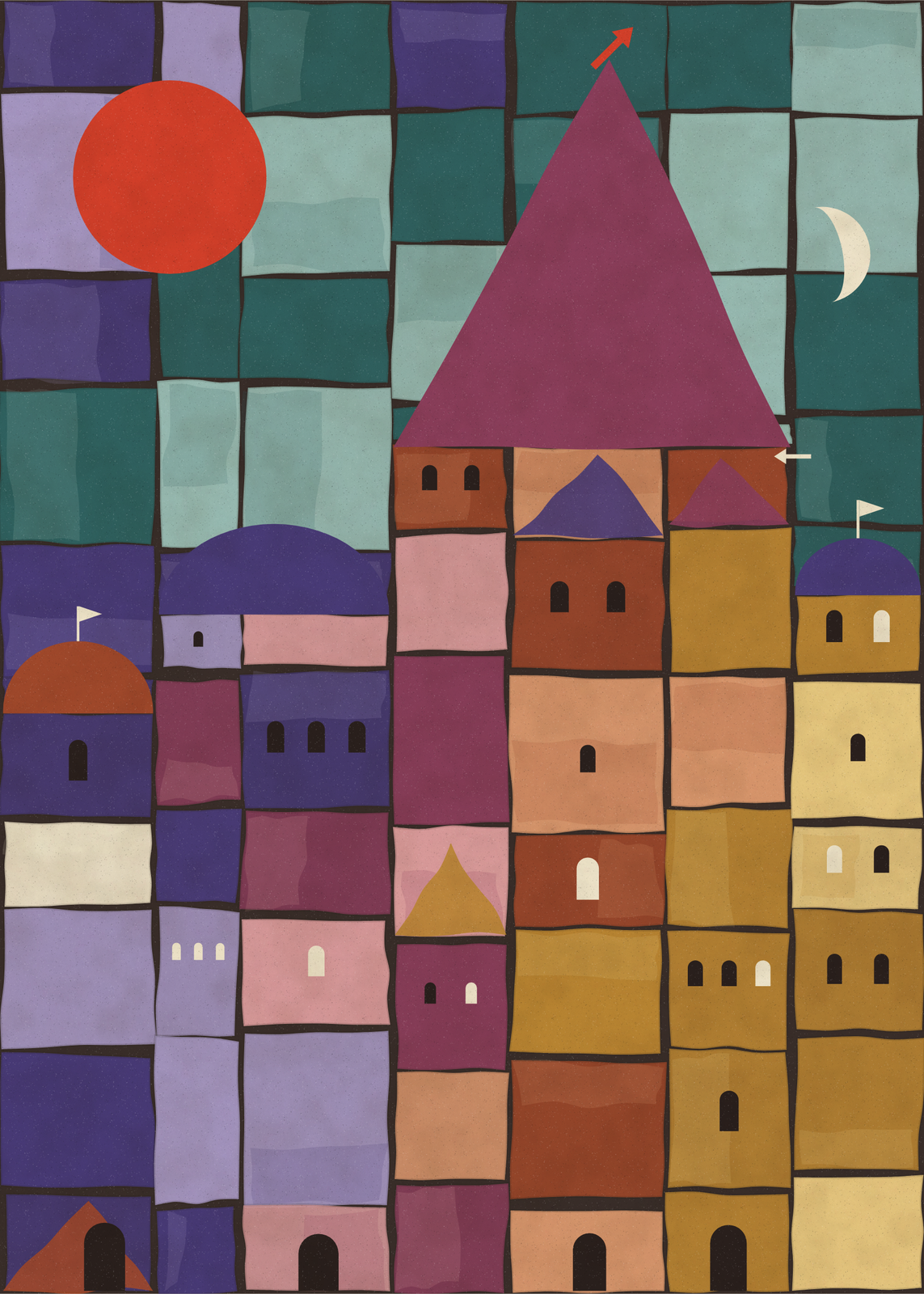
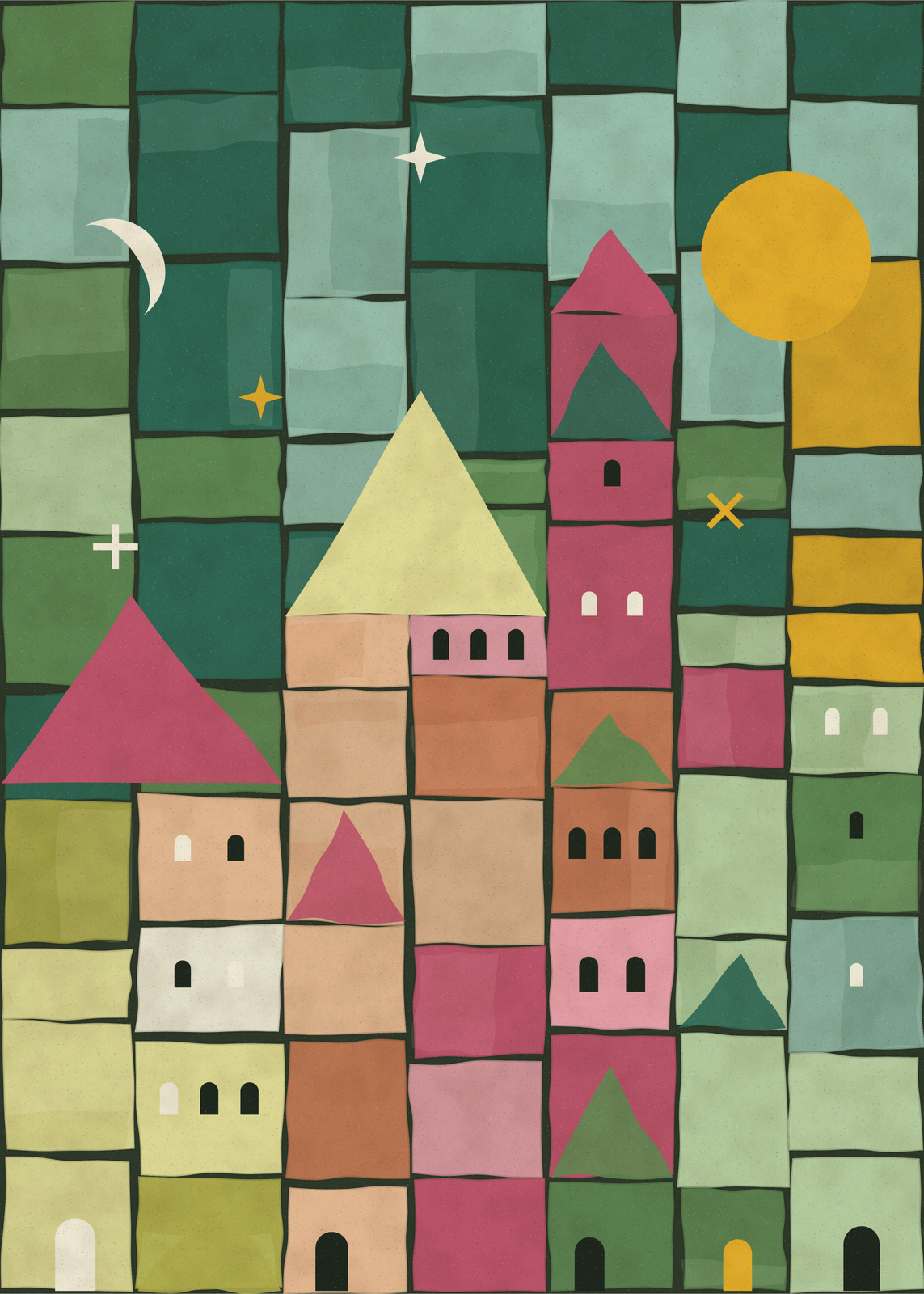
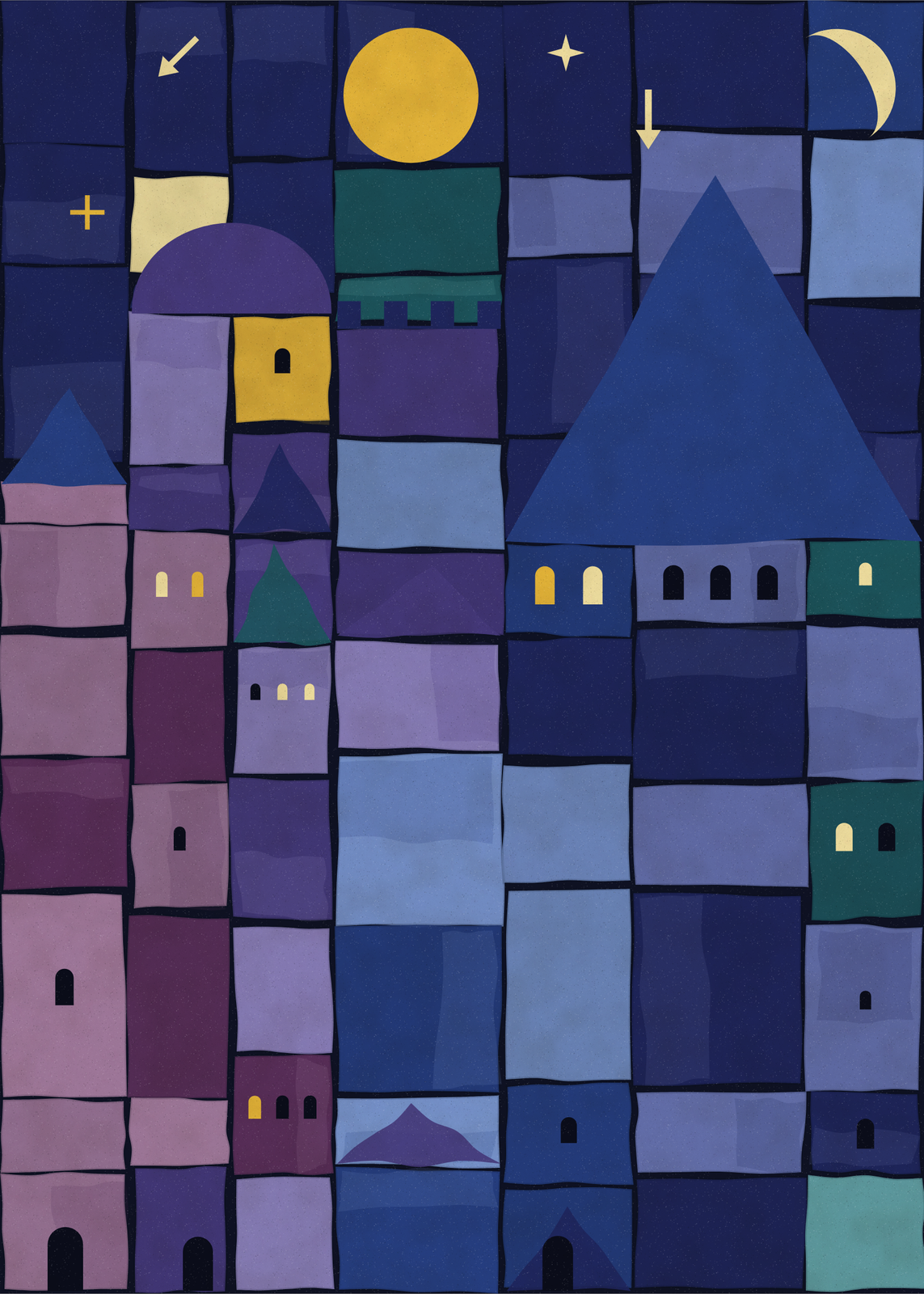
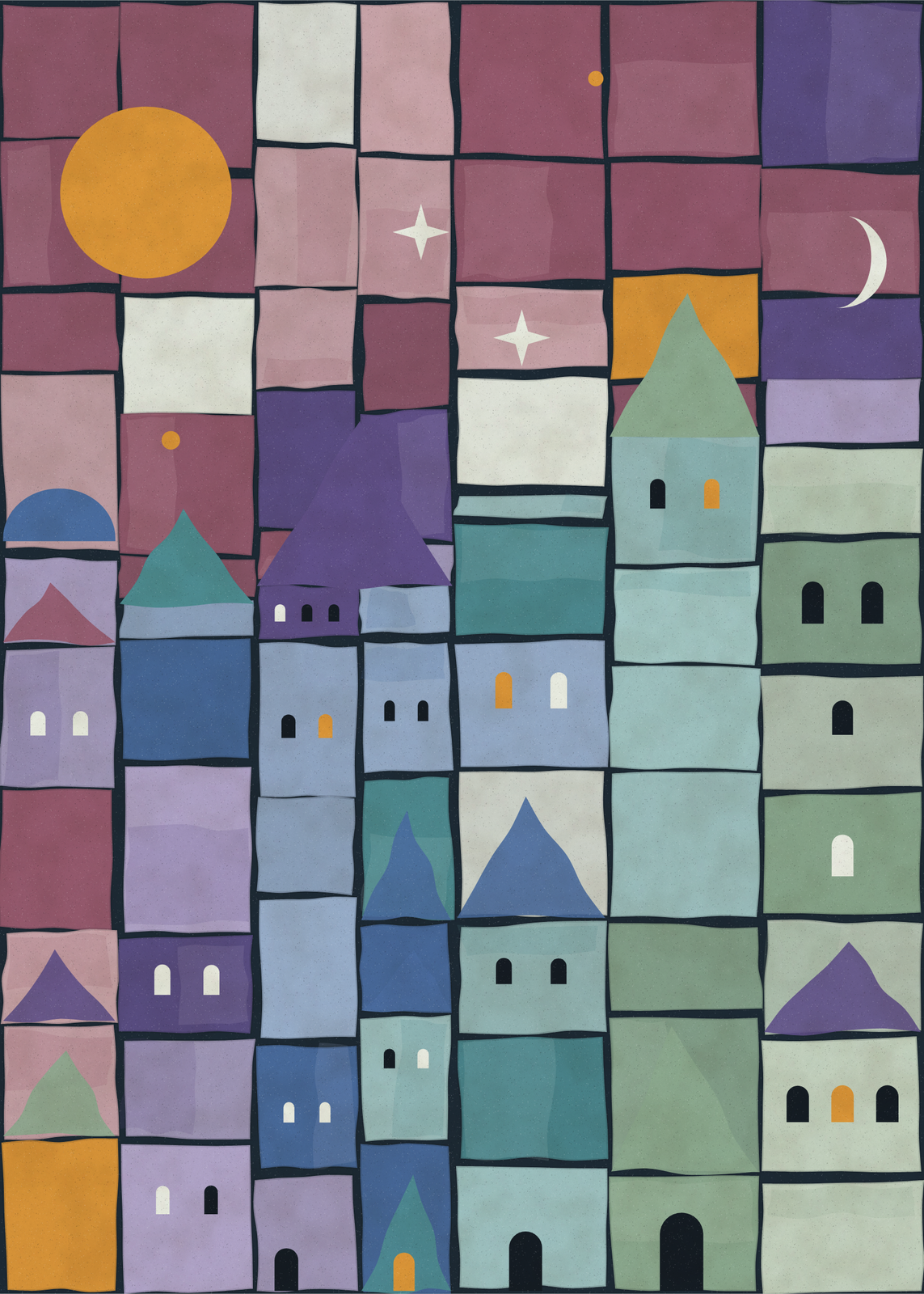
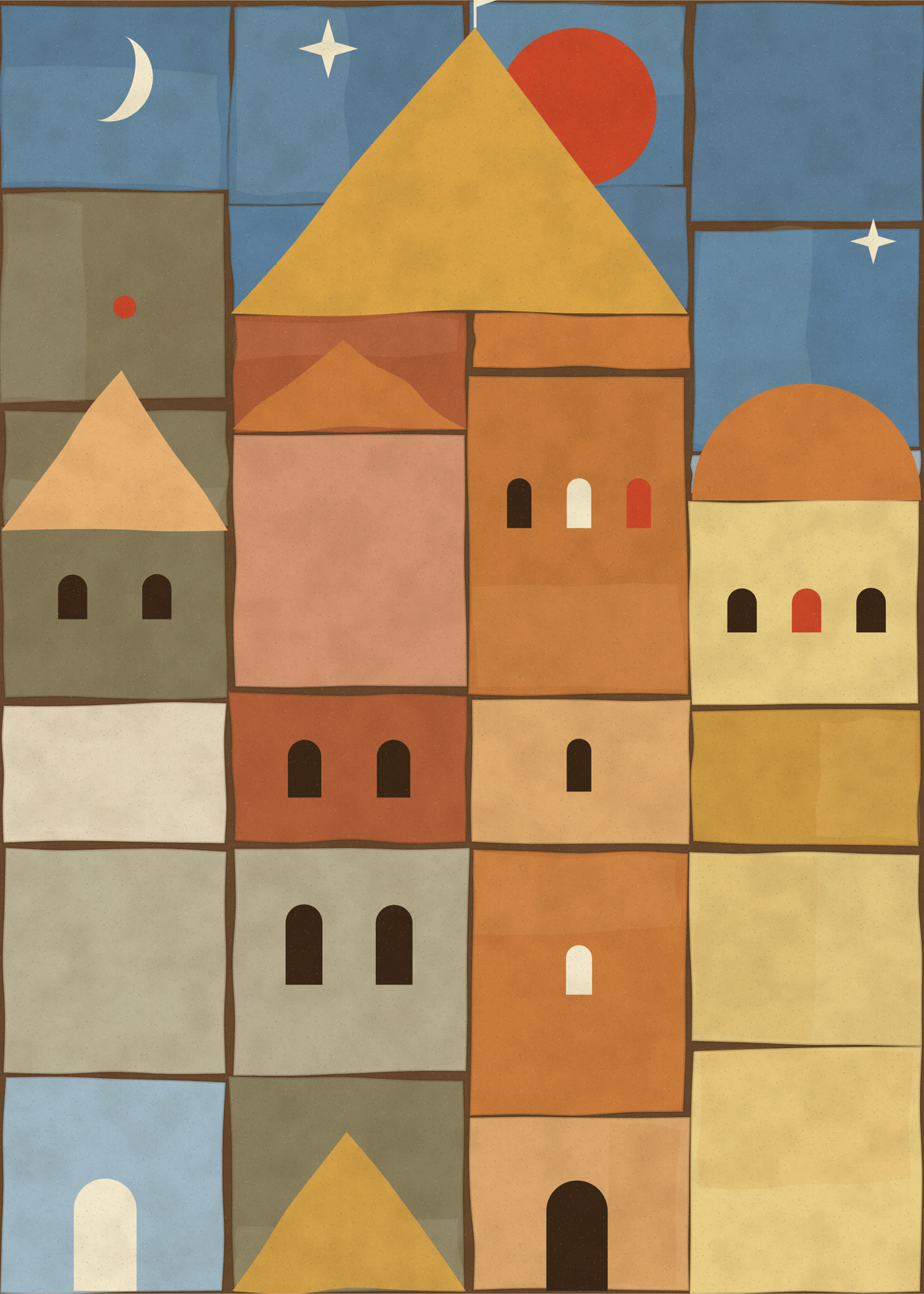
Squares cuts the sheet into rows of uneven height and the rows into cells of uneven width, a few split in two, a few merged, their edges wavering as if painted by hand. Castle stands the cells up in columns that rise to towers under a peak: sky above with a sun, a crescent and stars; floors below with arched windows, some lit, doors at the bottom and roofs of gables, domes or battlements.
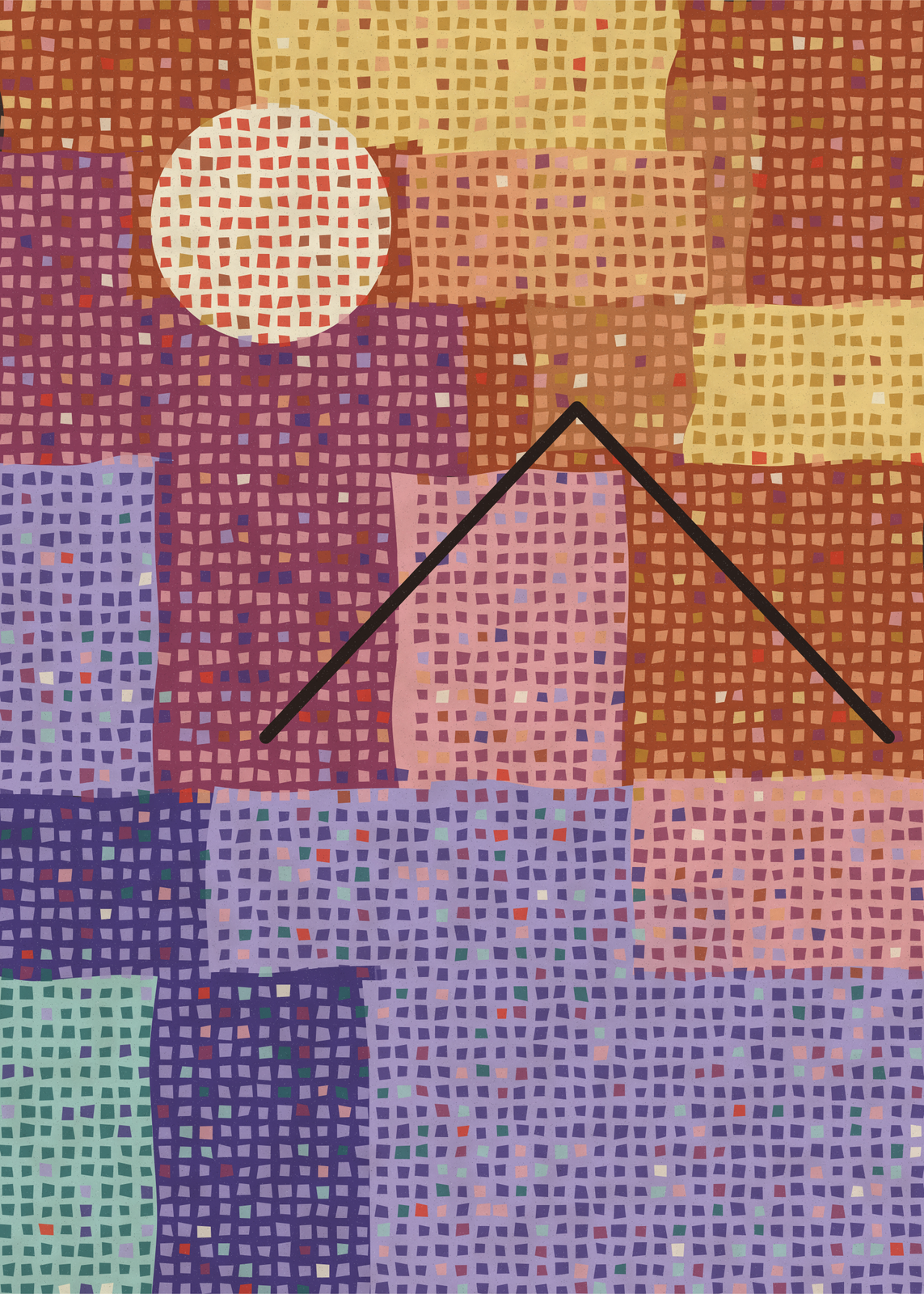
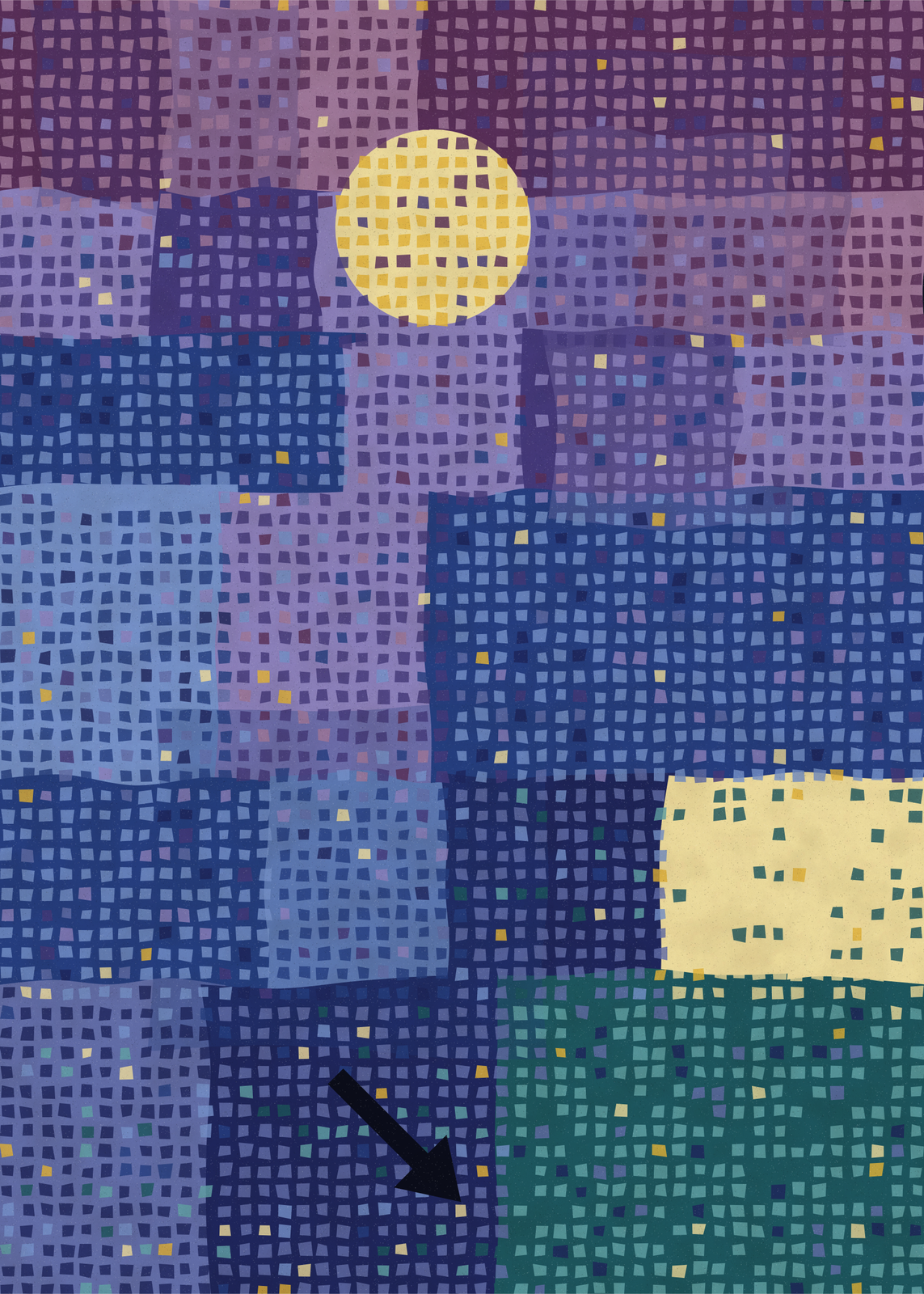
Polyphony lays a few broad blocks and see-through planes, then a regular grid of small dabs over them, each a shade off the block beneath, with a pale sun whose dabs turn bright. Grid detail sets how many cells cross the sheet, from a handful of big ones to a fine patchwork.
Colors and paper
Each palette runs through five tones from warm to cool, a light and a deep paint of each, plus a bright paint for the sun and a pale one for moons, all over a dark ground. Changing it repaints the same picture. Paper grain is the default, since many of Klee's squares were painted on paper; canvas weave and flat color are the other finishes. A margin turns into a pale mount round the picture, ready for a frame.
Questions
Is this a real Paul Klee?
No. Each poster is a new picture composed from a seed in the manner of his Bauhaus-era color pictures. None of his paintings is reproduced or traced.
Which of his pictures is it modeled on?
Three groups: the magic squares of the 1920s, the towns built of squares such as Castle and Sun, and the pointillist pictures of the early 1930s such as Ad Parnassum. It doesn't paint his drawings, faces or figures.
Does it work in a child's room?
The Castle layout does: towers with windows and doors under a sun and a moon, in soft patchwork color. Squares and Polyphony are quieter abstract pictures for a living room or study.
Can I get the same picture as an example?
Yes. Click an example to open it with its seed and settings, then change the colors or the paper; recoloring never moves a cell.
What sizes can I print?
US Letter, 8 × 10, 11 × 14, 12 × 16 and 12 × 18 in, A4 and A3, free. You download a 300 DPI JPEG drawn at the size you pick. Larger prints, up to 24 × 36 in, are coming soon.
Related
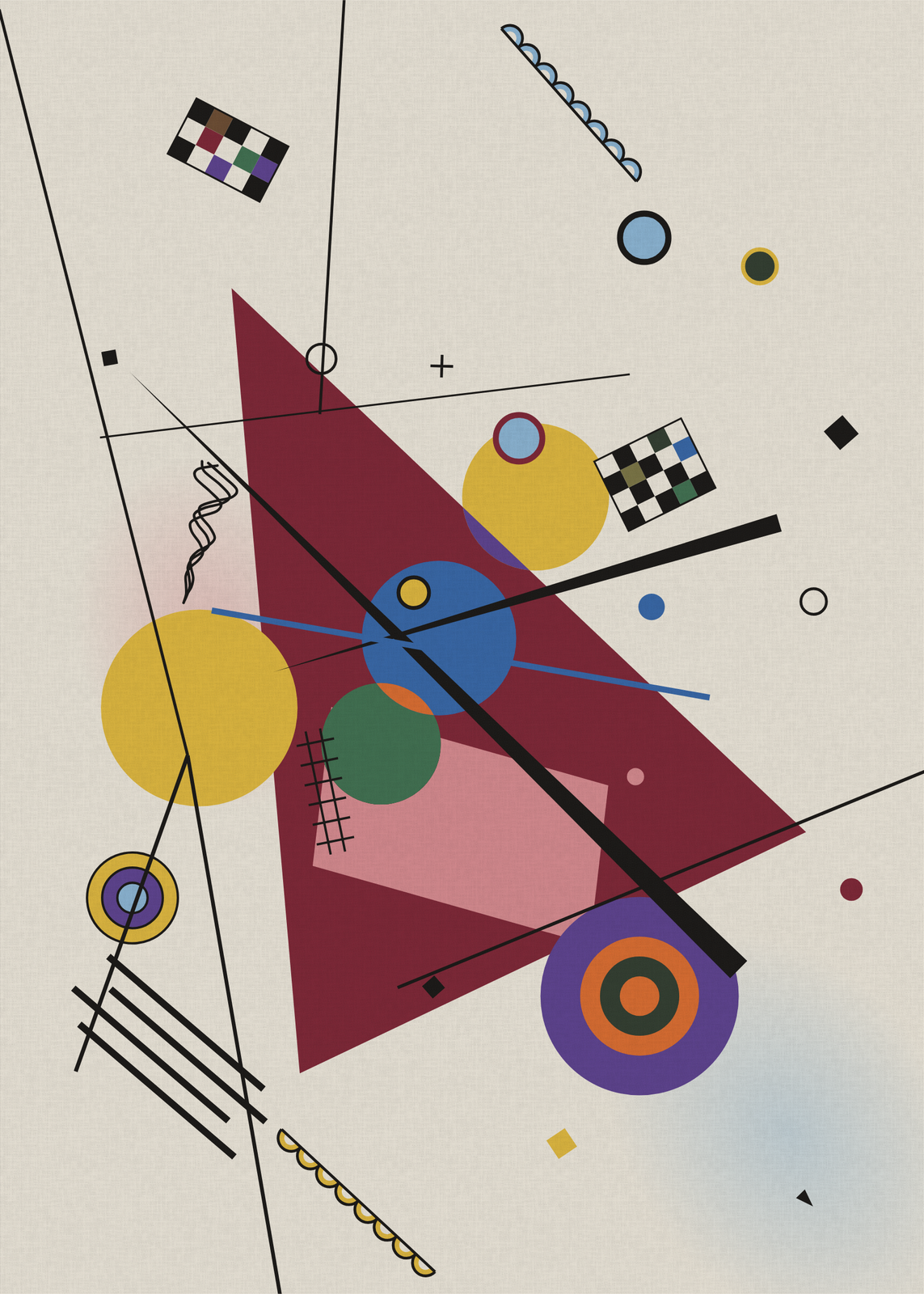 Modern artnew pictures after Matisse, Mondrian, Kandinsky, Klee and more
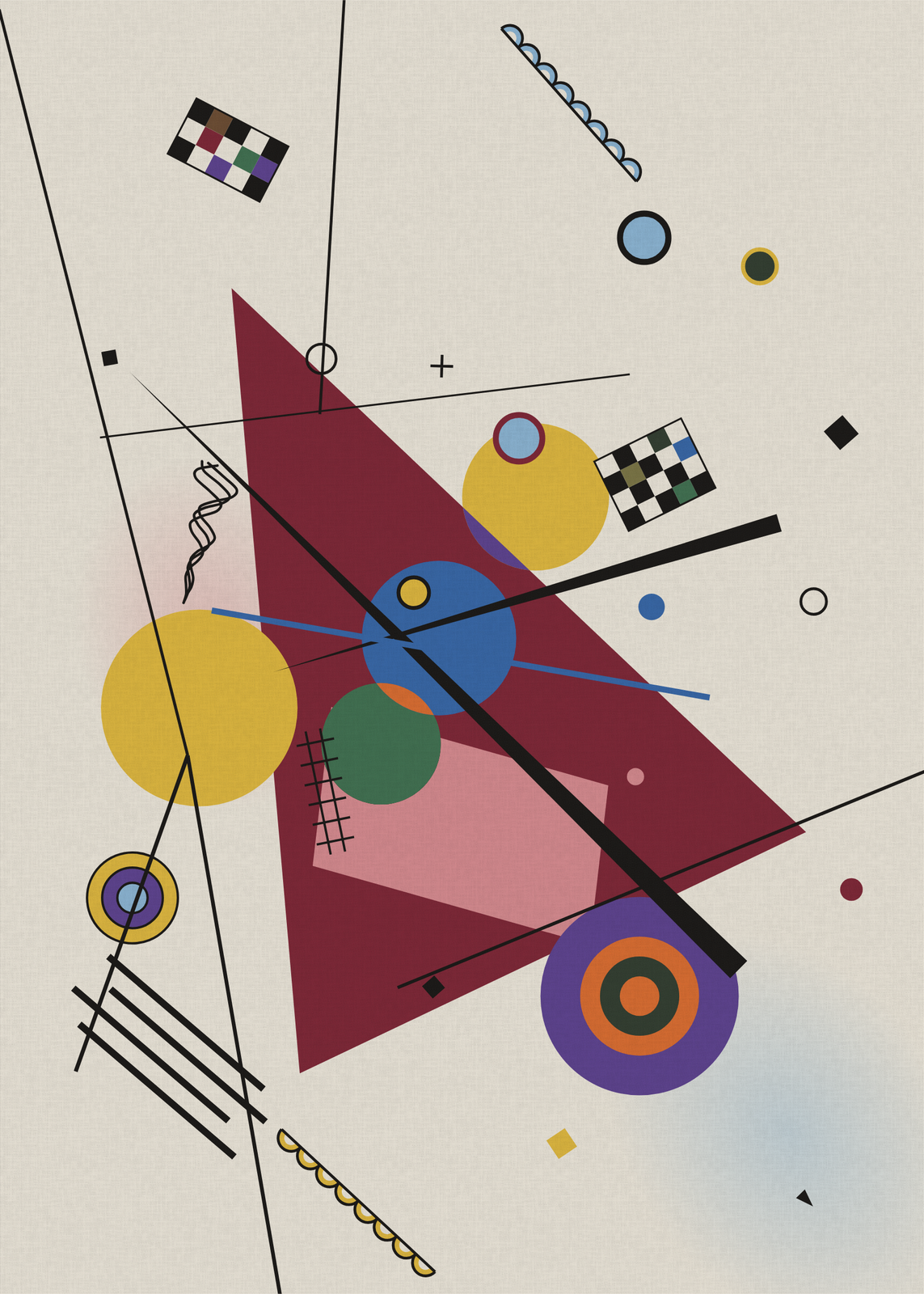 Kandinsky arthalo circles, tilted triangles and black spears, composed new in the manner of his Bauhaus years
 Hilma af Klint artpetal blooms and spirals on pastel grounds, rainbow altarpieces and mirrored halves, composed new in her manner
 Bauhaus art and postersprimary shapes composed for you, then yours to drag, turn and recolor
 Color block artloose watercolor rectangles glazed over each other and outlined in pen
Gift ideas by occasion
Every example is made with the Posterage generators. Change anything, then download it as a 300 DPI JPEG.