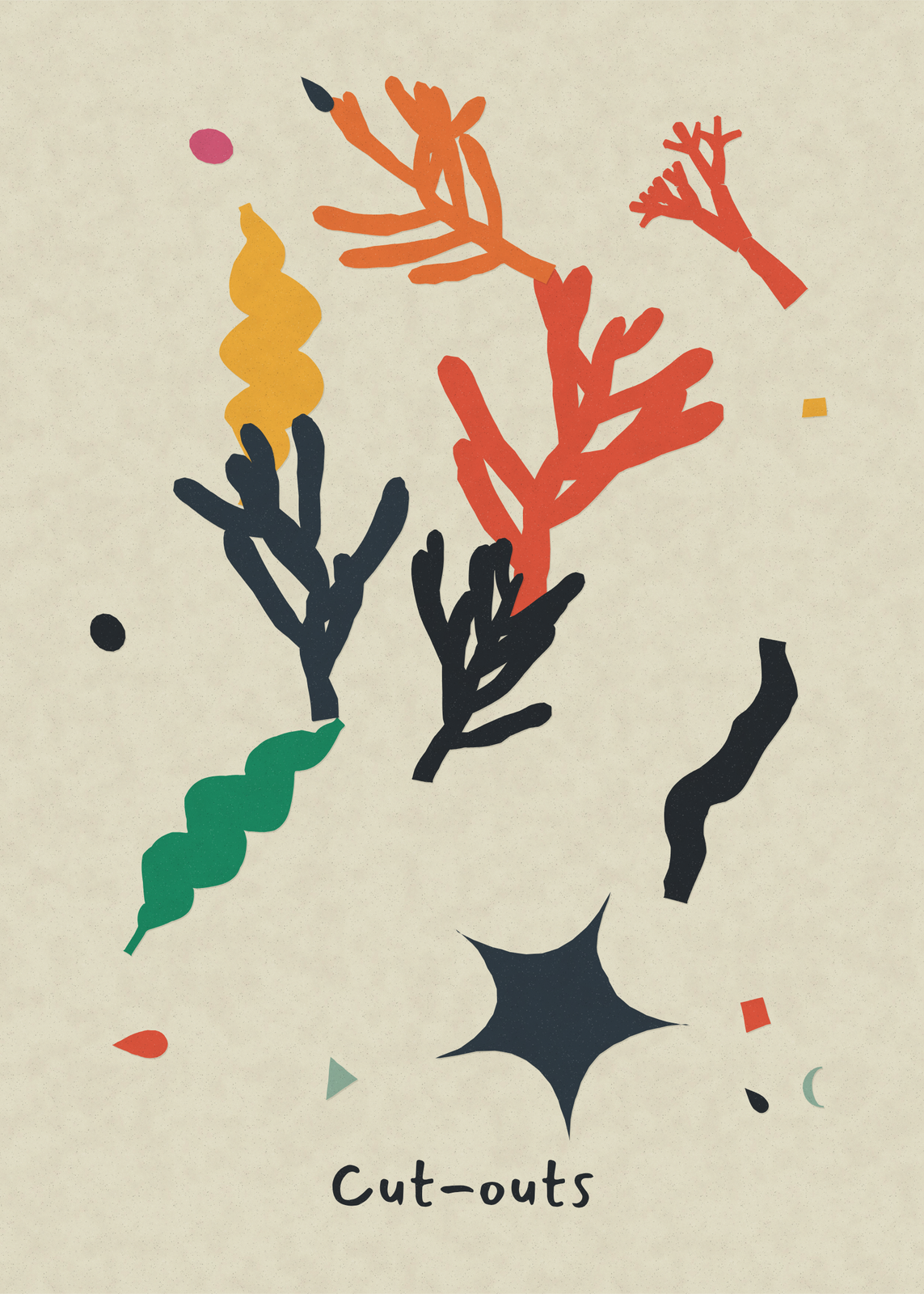
Matisse art seaweed, coral and stars cut from painted paper, composed new in the manner of his late cut-outs
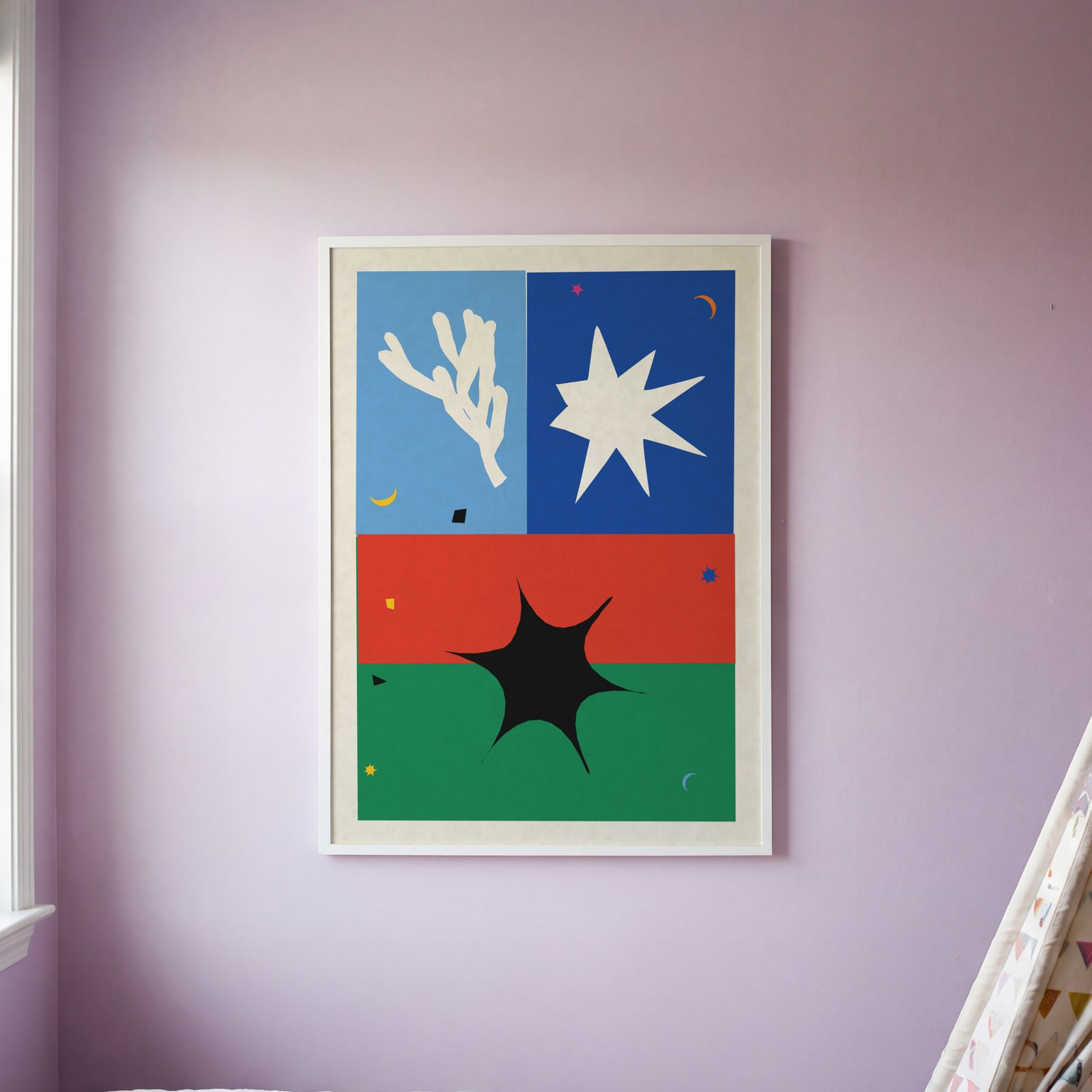
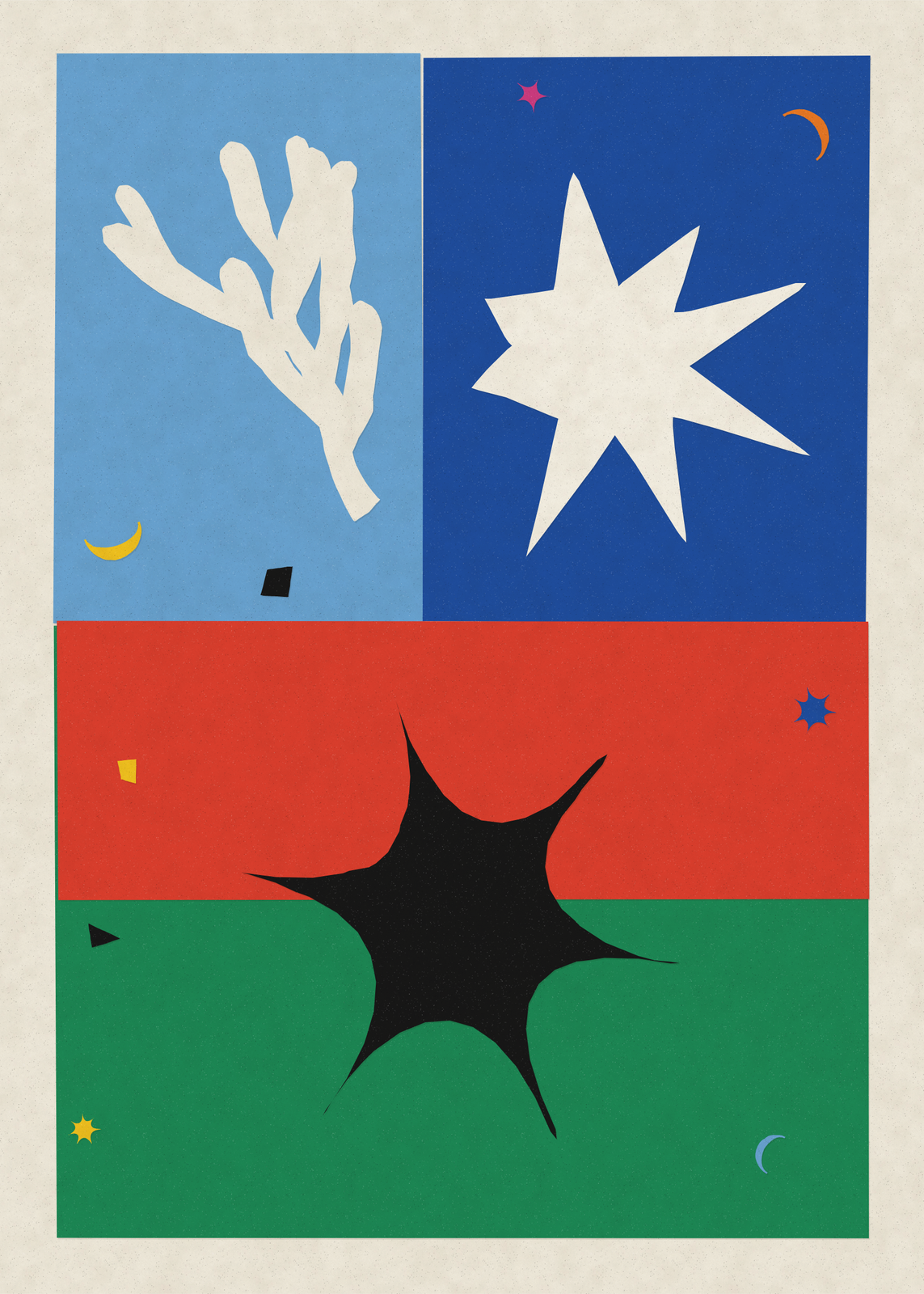
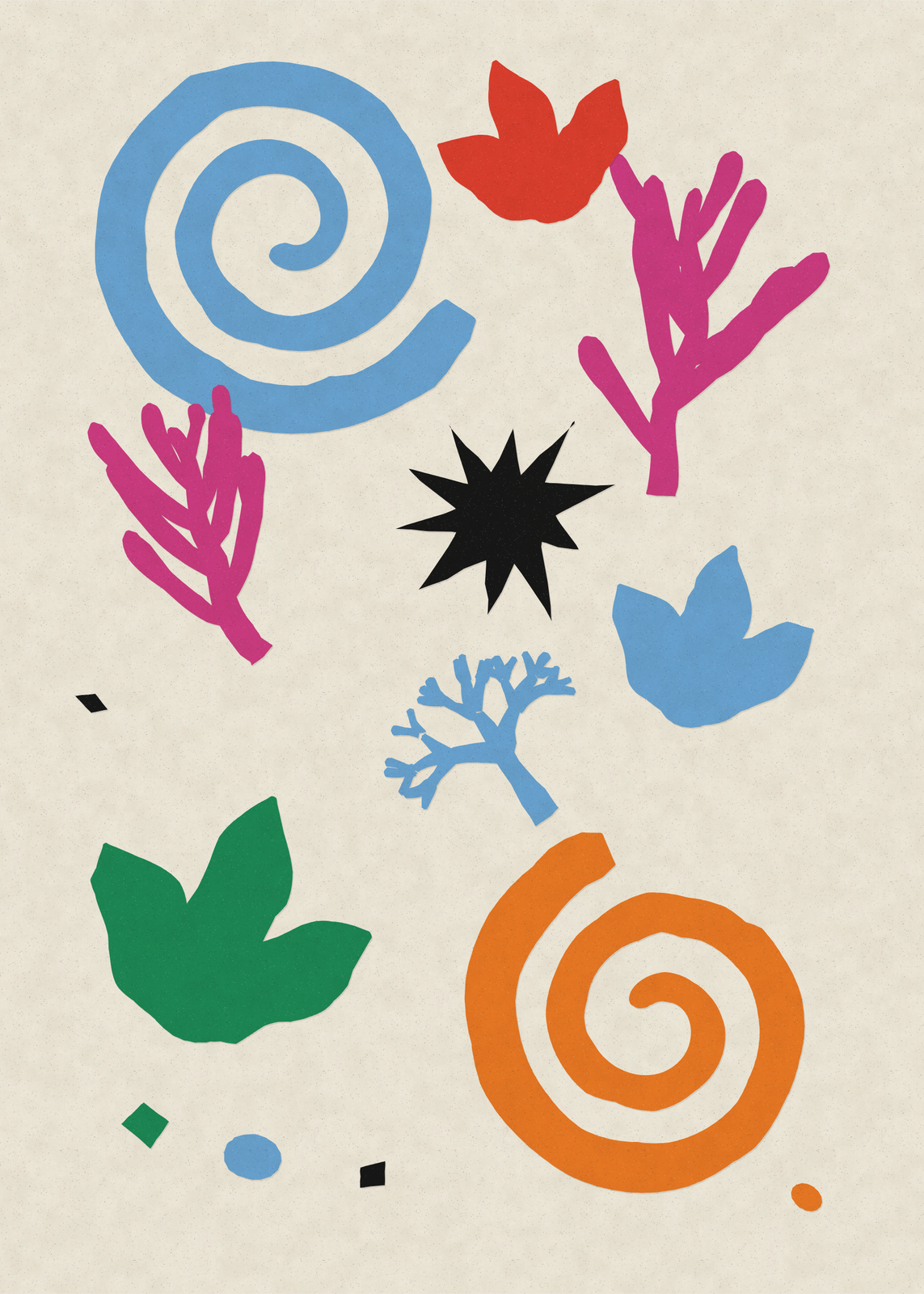
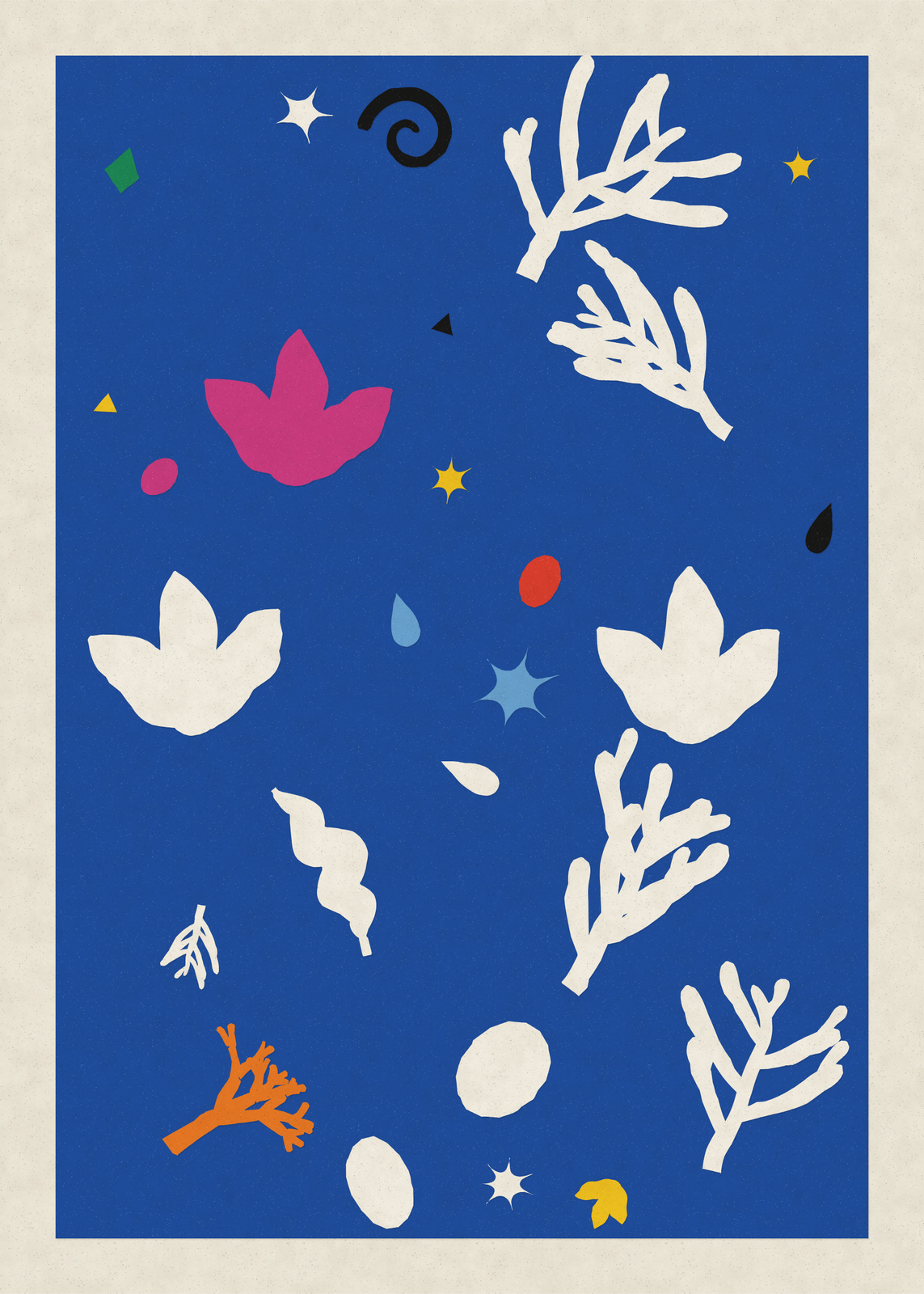
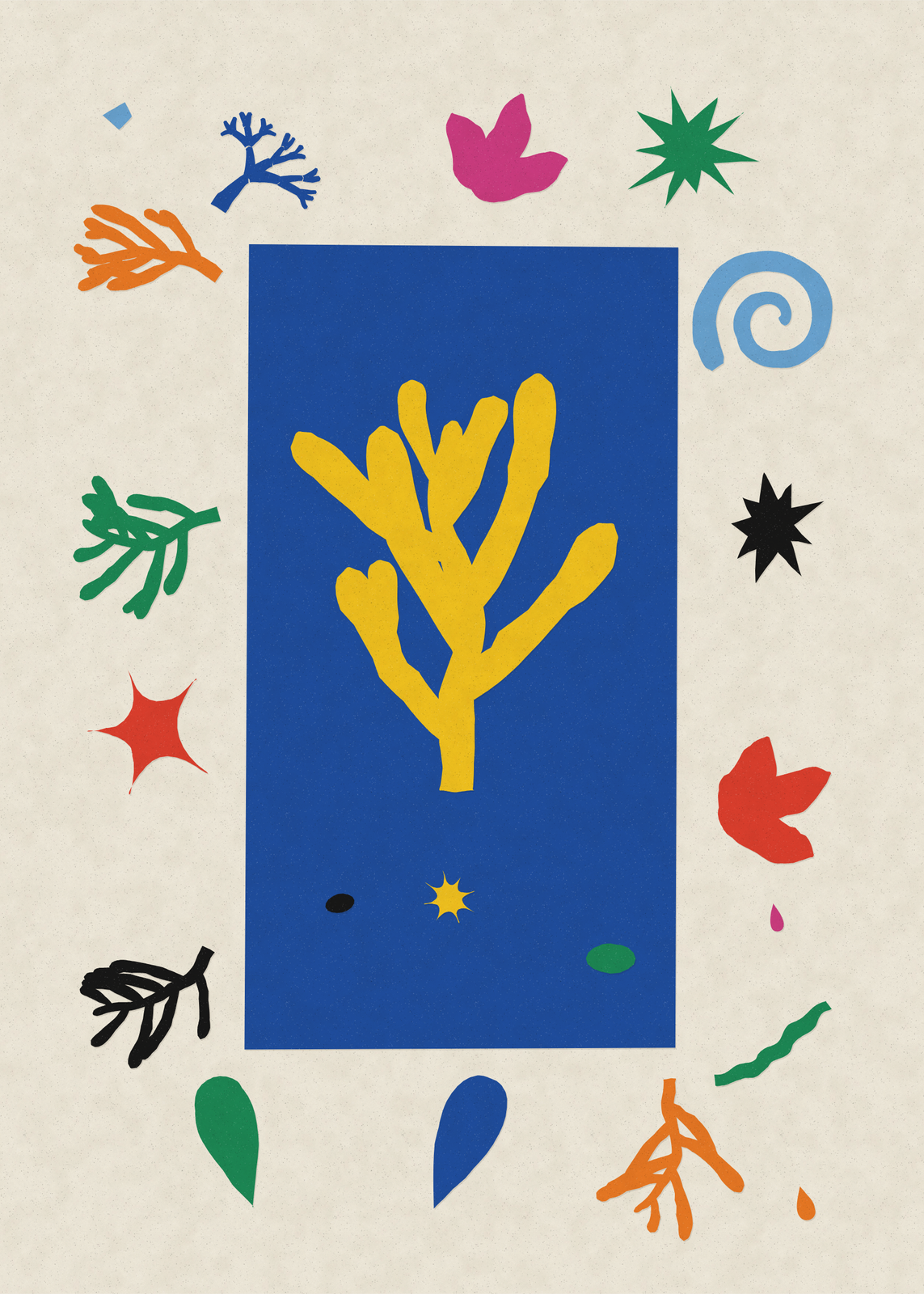
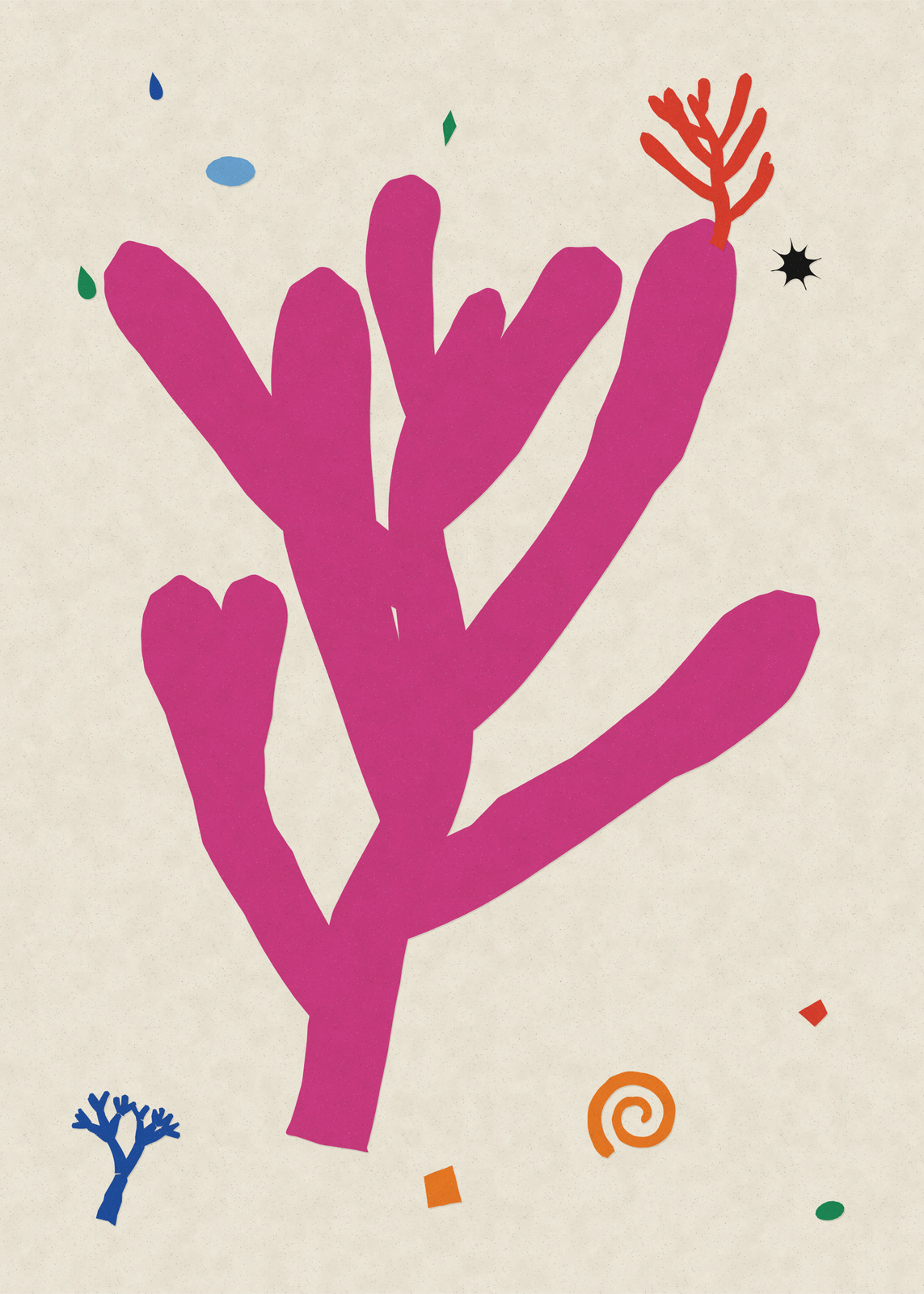
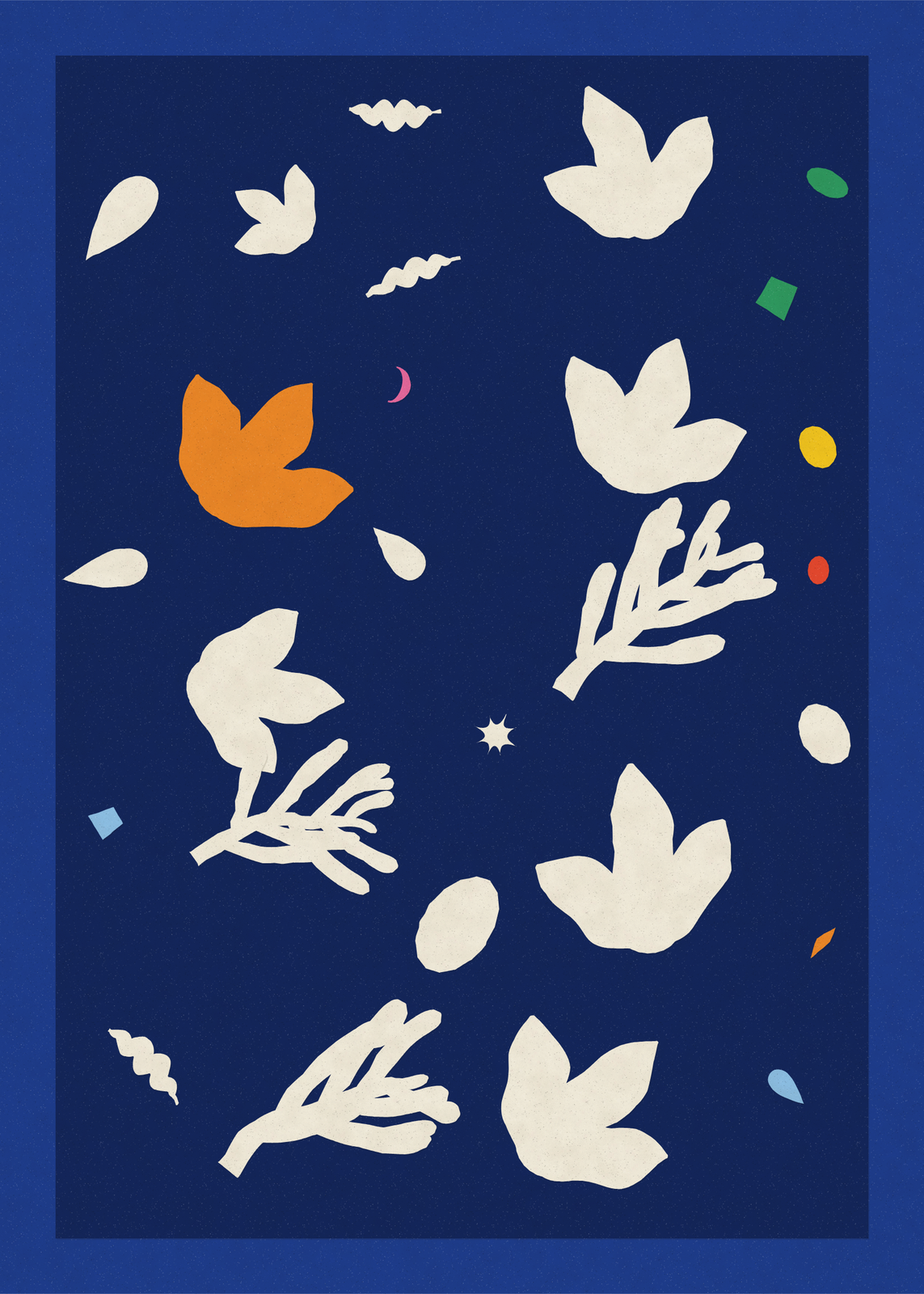
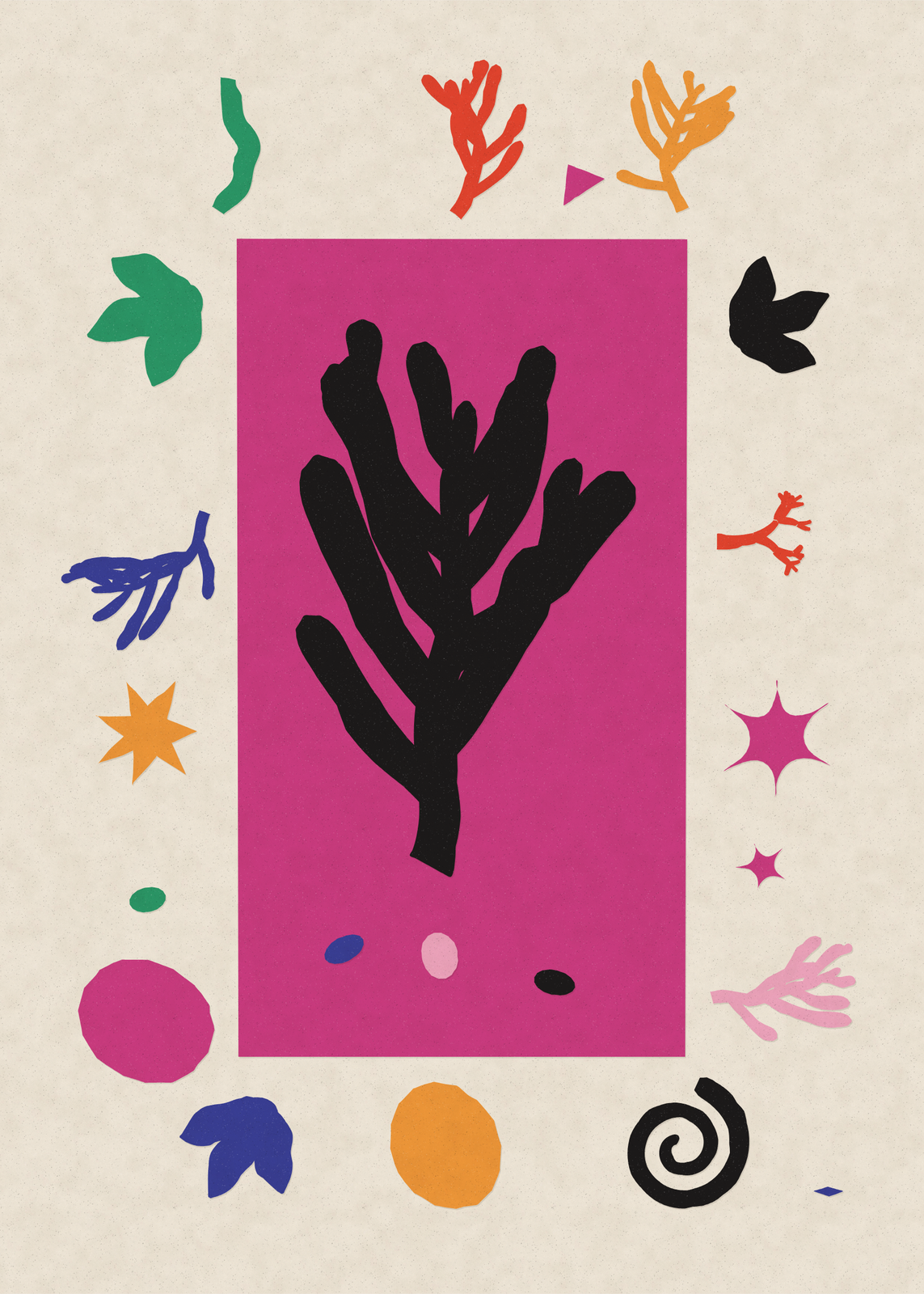
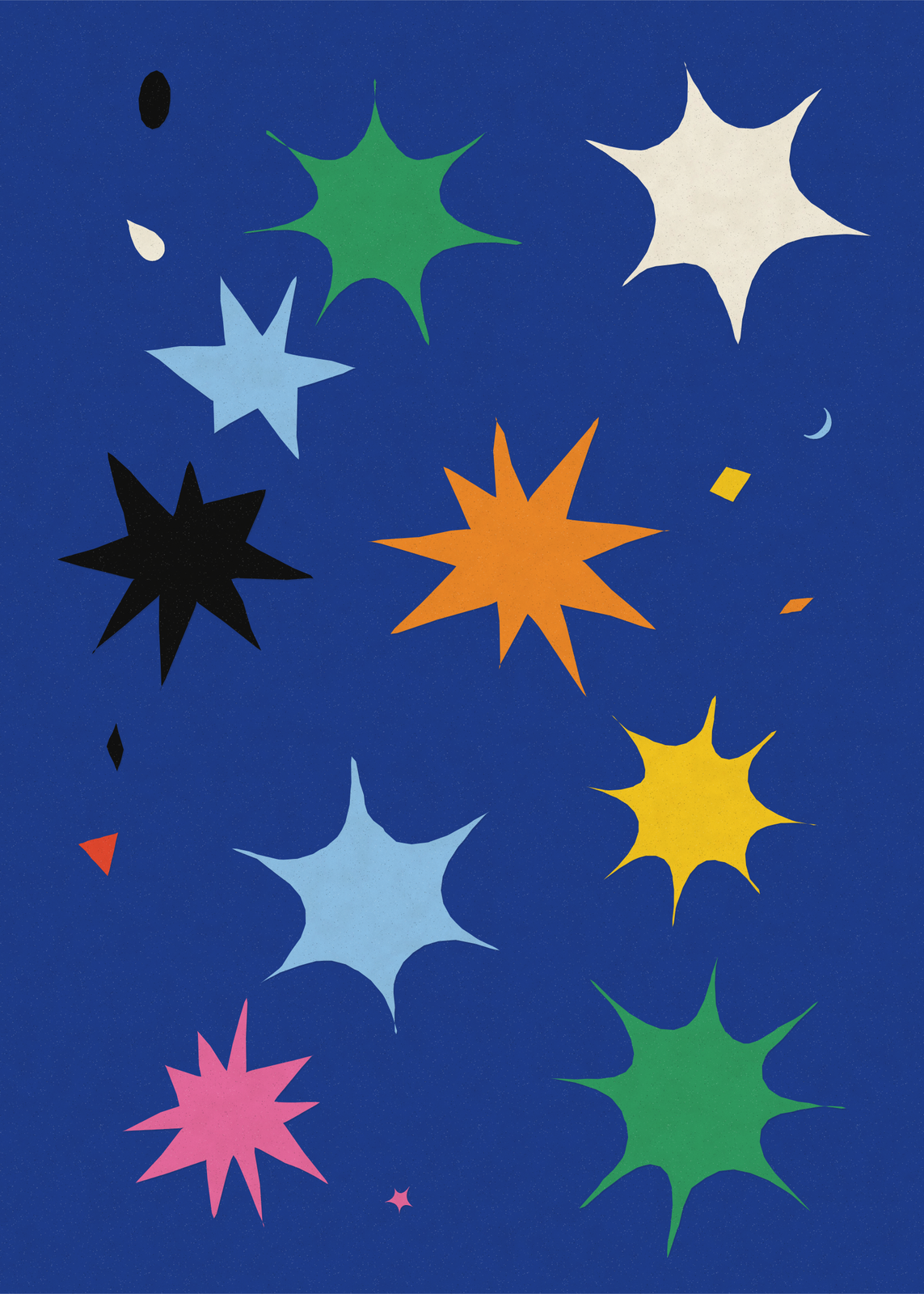
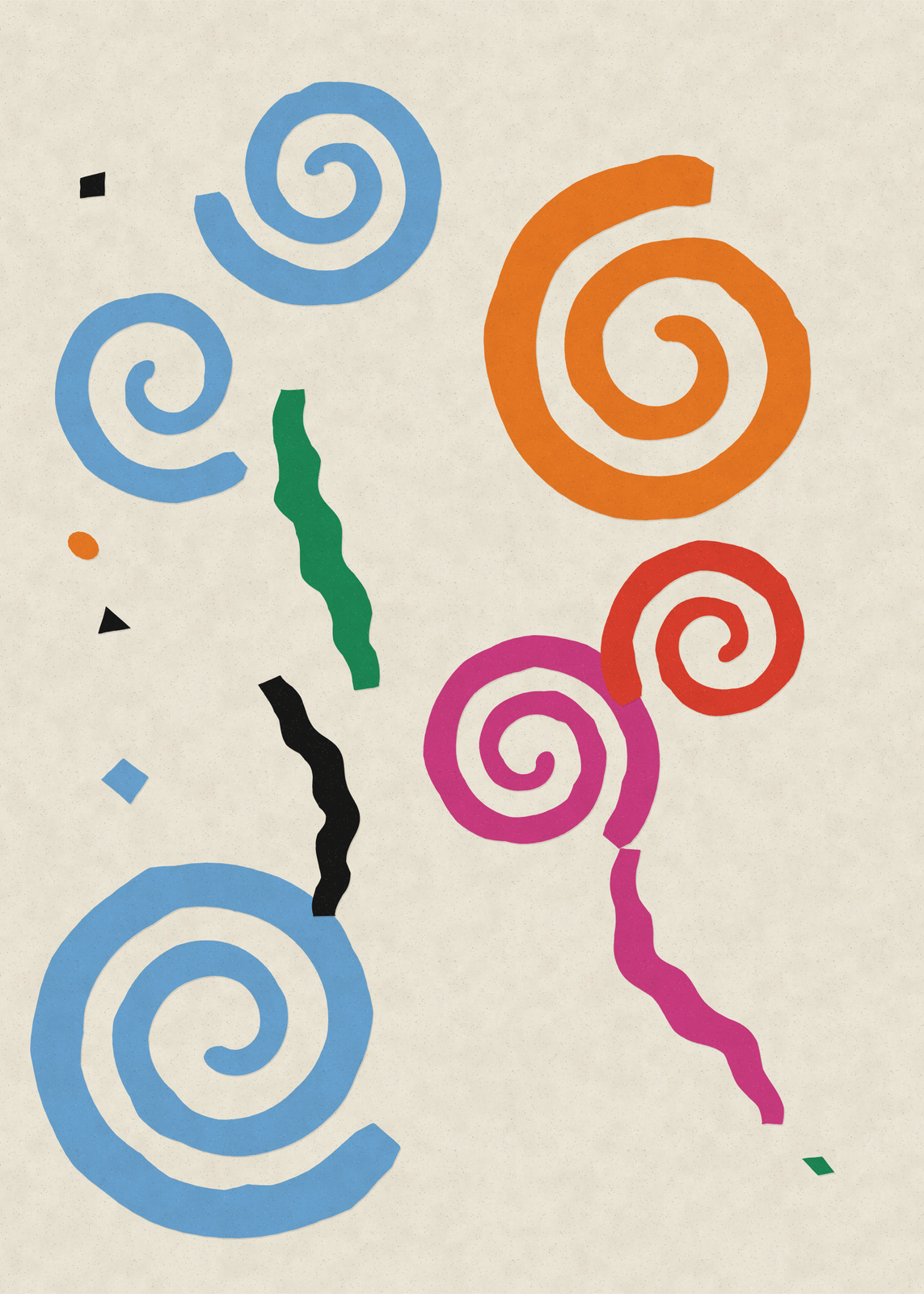
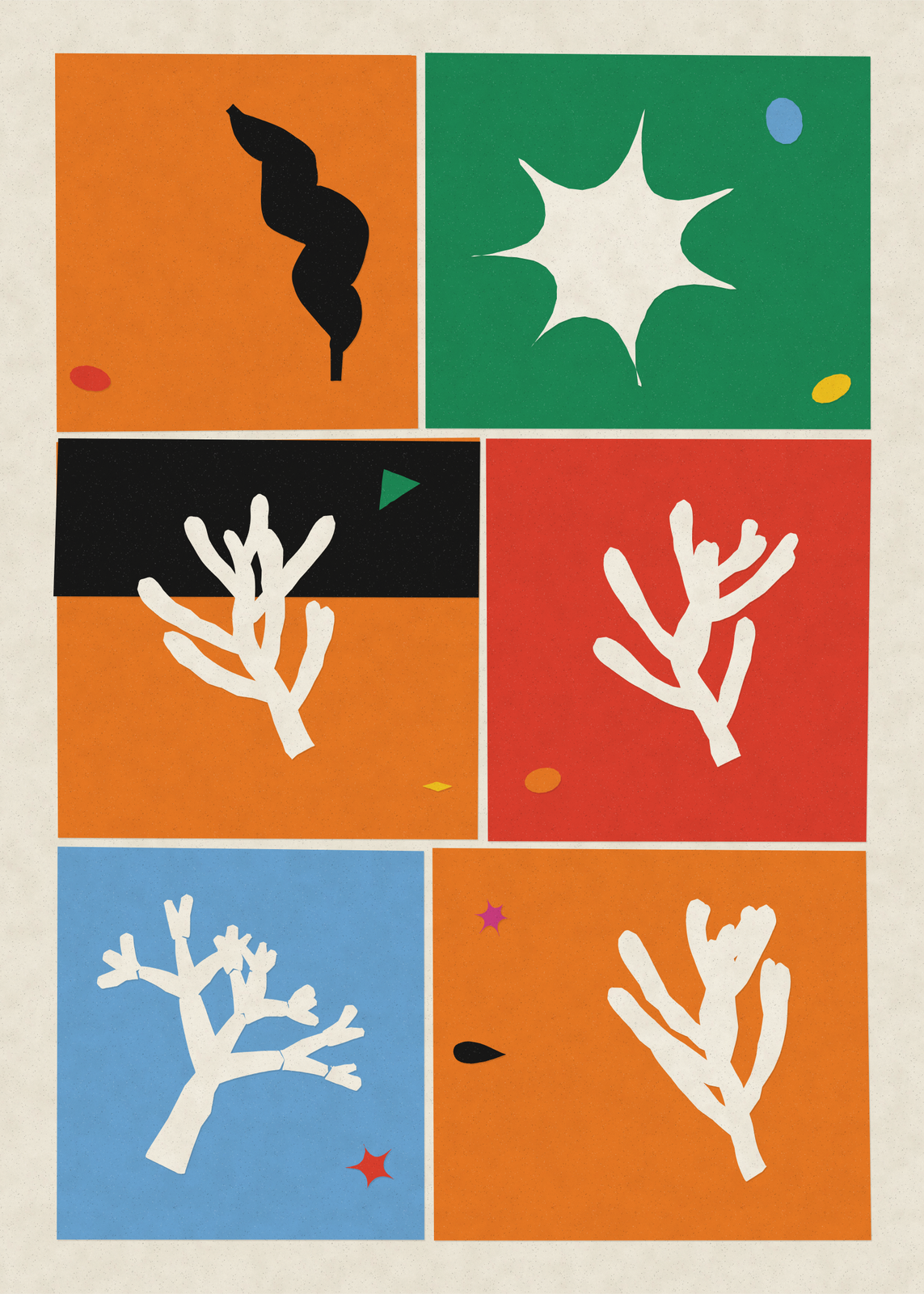
Each poster is a new composition in the manner of the paper cut-outs Henri Matisse made from the 1940s until his death in 1954: fronds of seaweed, branching coral, leaves, stars, bursts and spirals cut from sheets of gouache, pasted onto bright pages or scattered over the paper, with confetti from the scraps in the gaps. Every edge wanders a little off the line, as scissors do. Nothing is traced from his work and no figures are drawn. The seed composes every sheet, so no two come out alike.
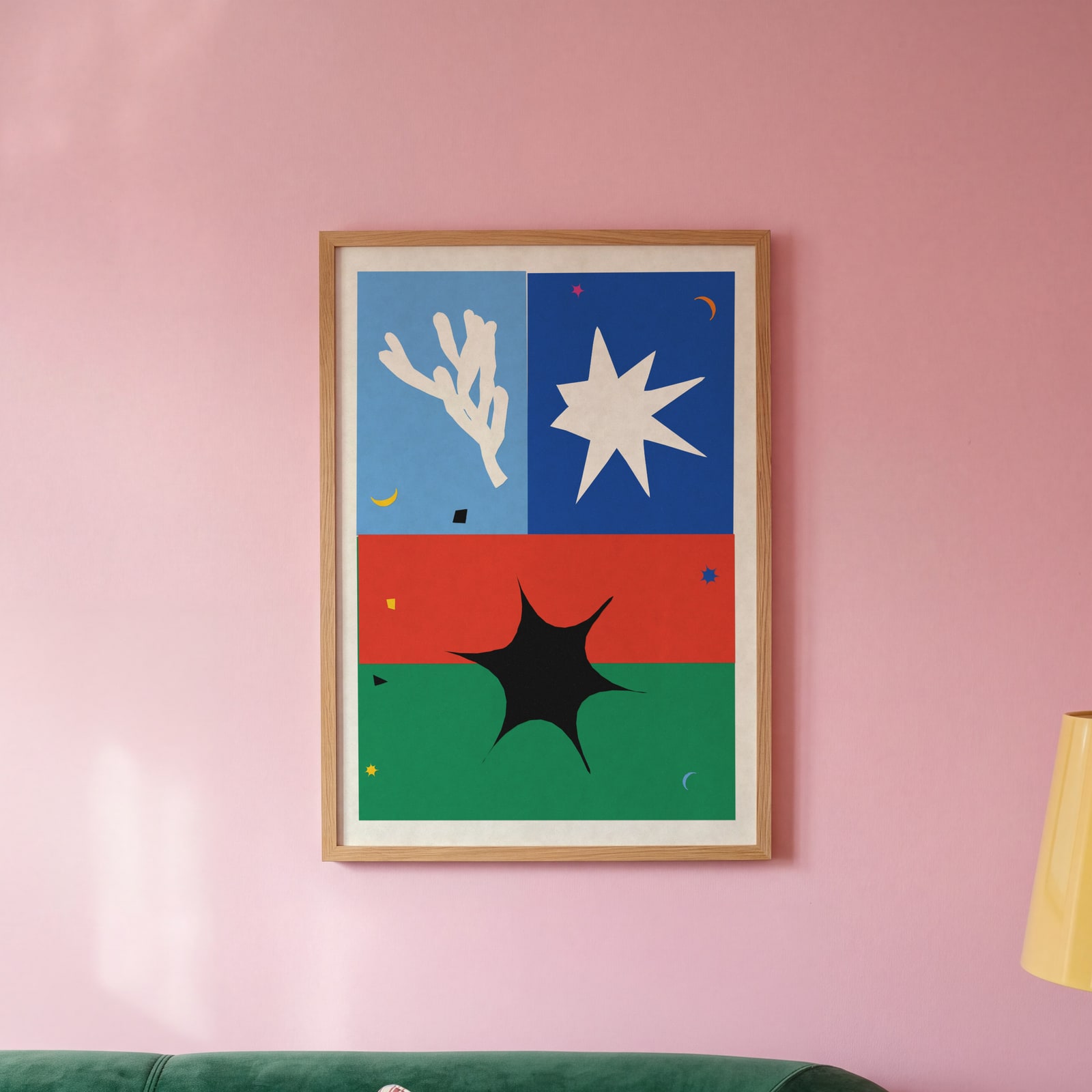
On the wall
A few of them framed at home. Open any one to make it yours.
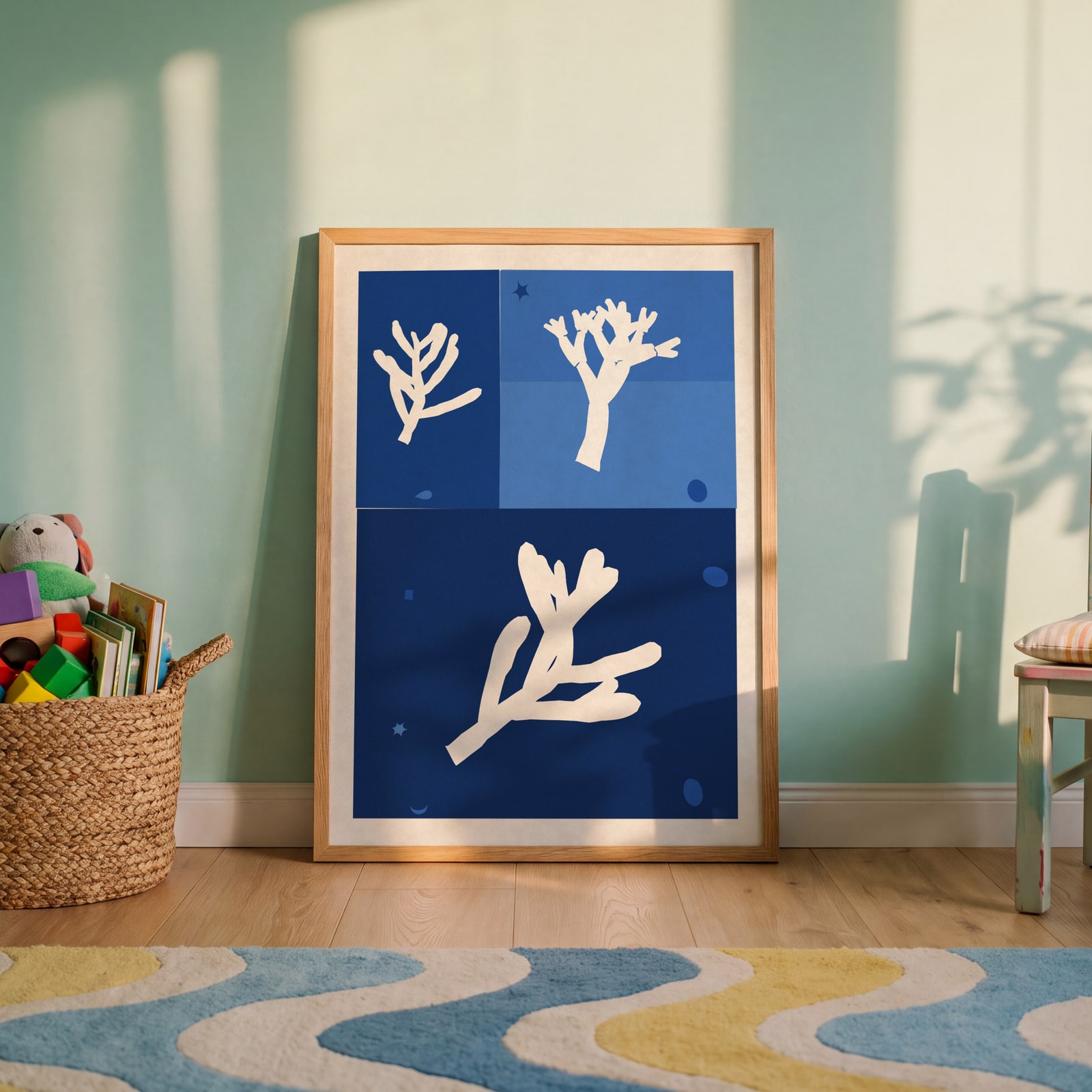
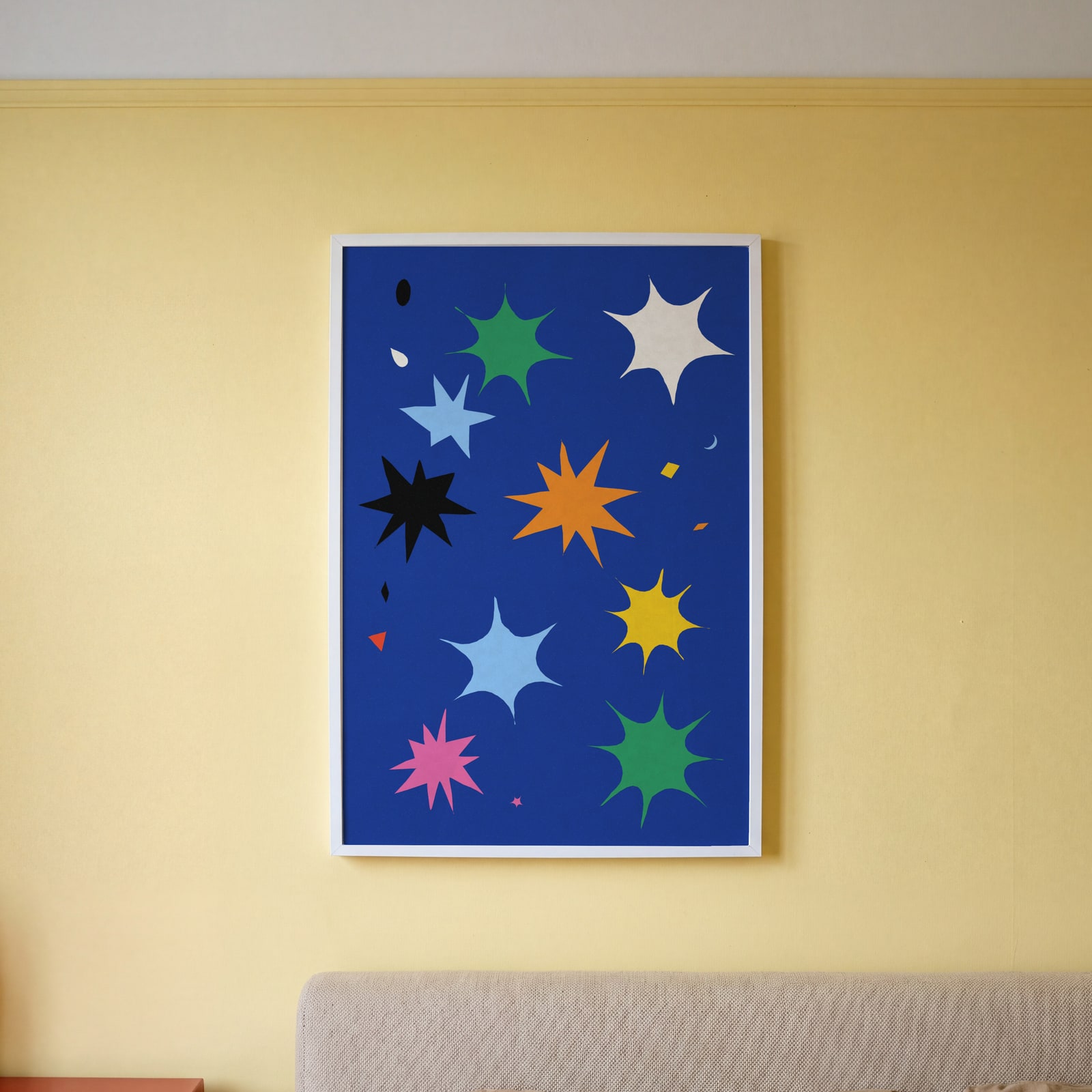
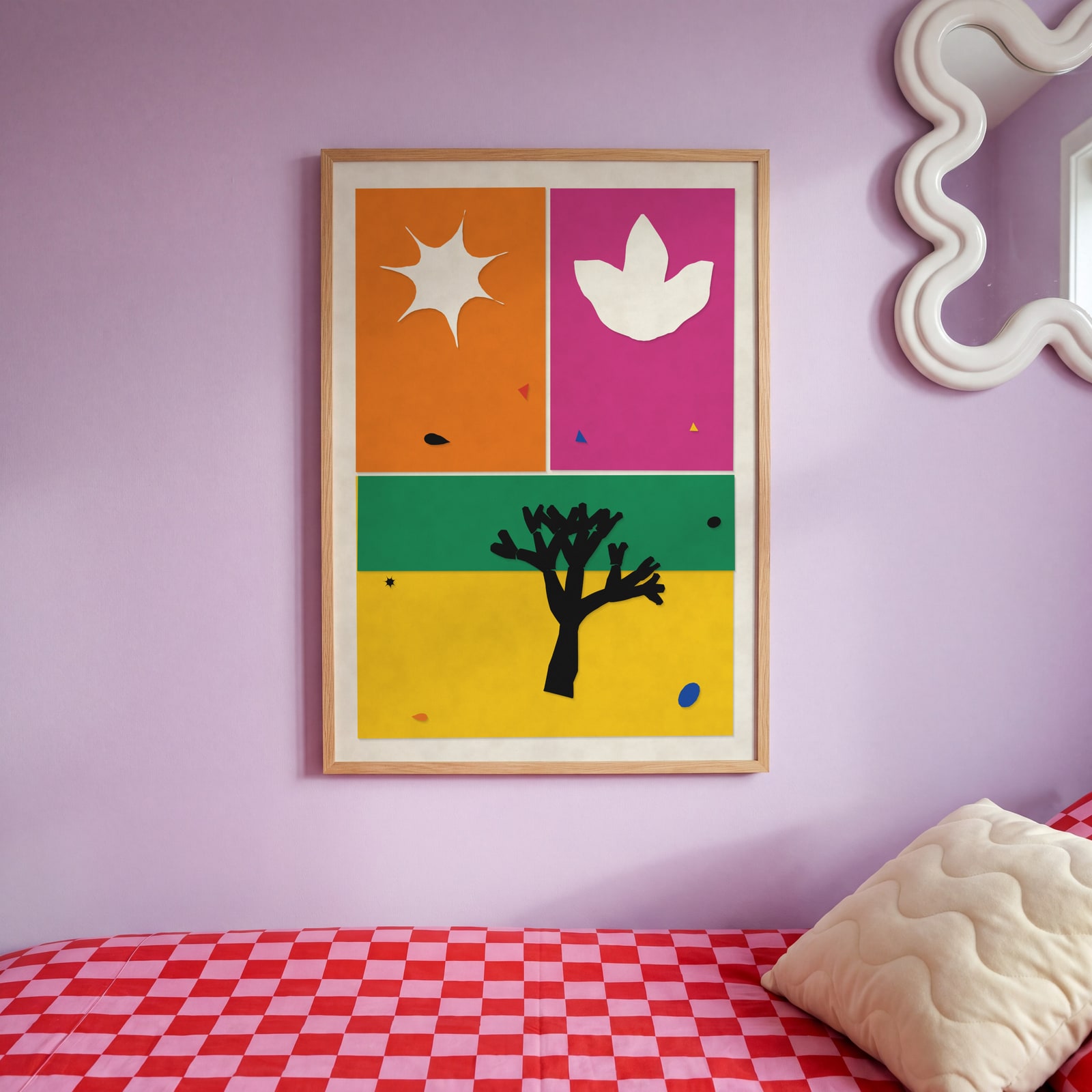
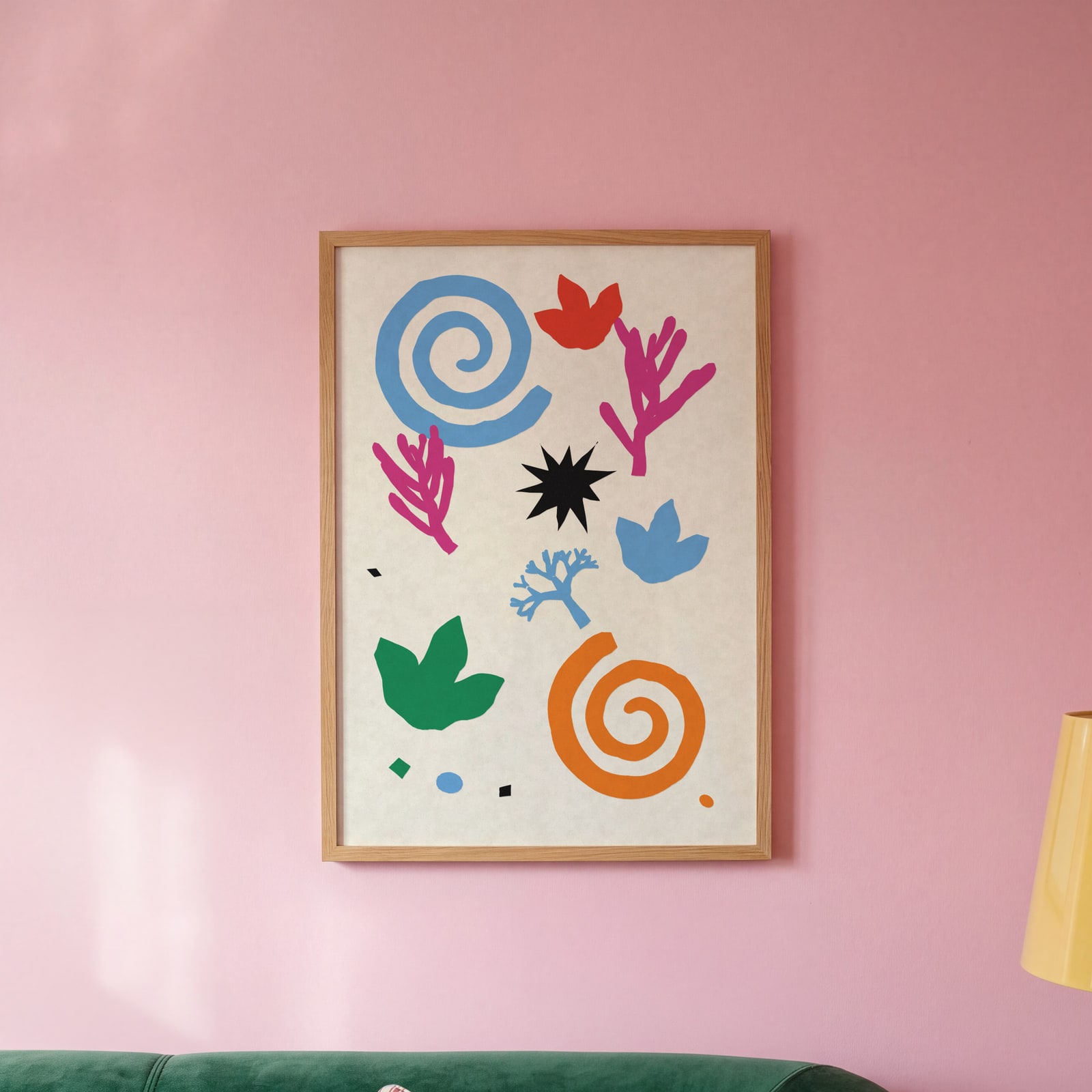
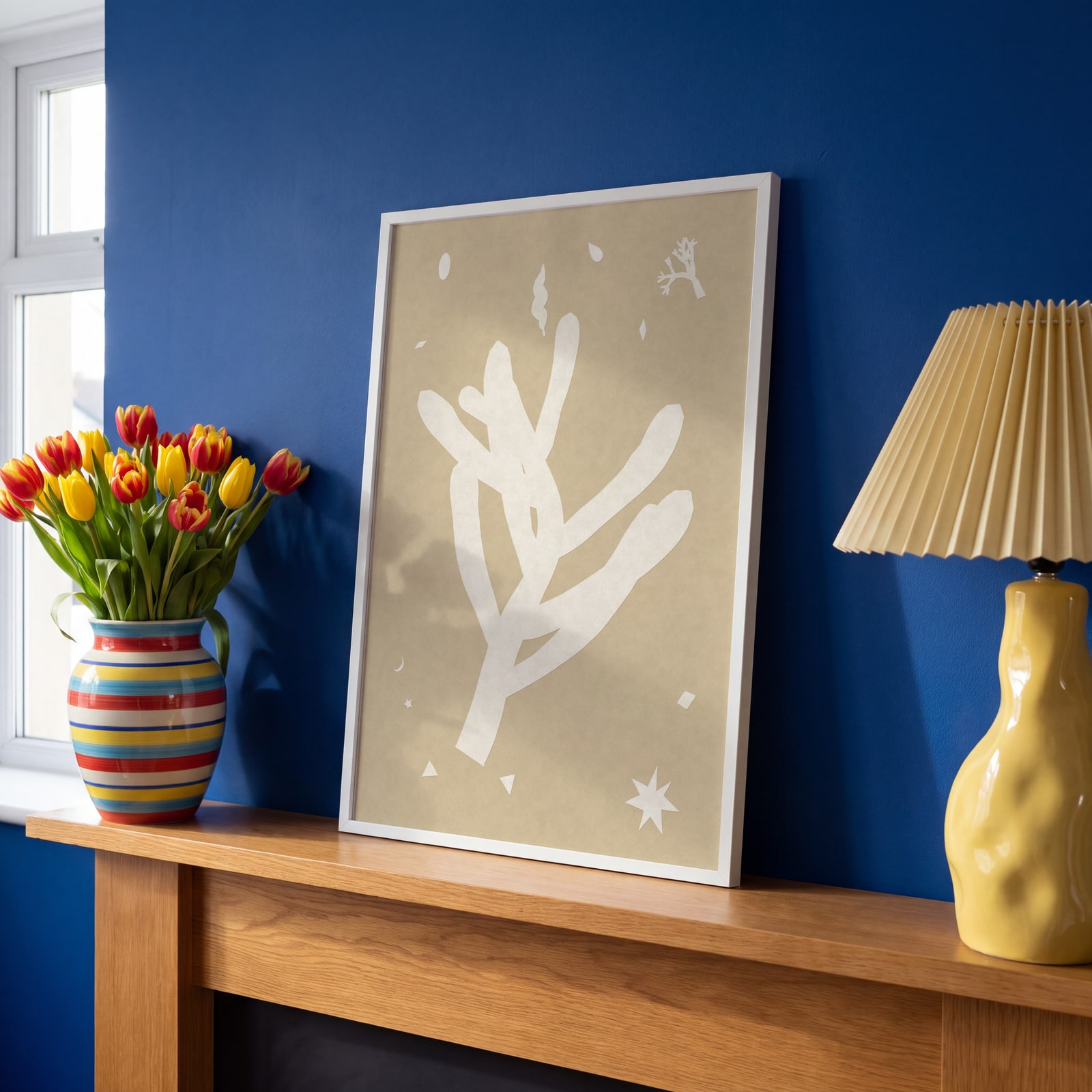
Examples
Open any of them to change the words, the place, the date and the style, then download the print file.
Six layouts
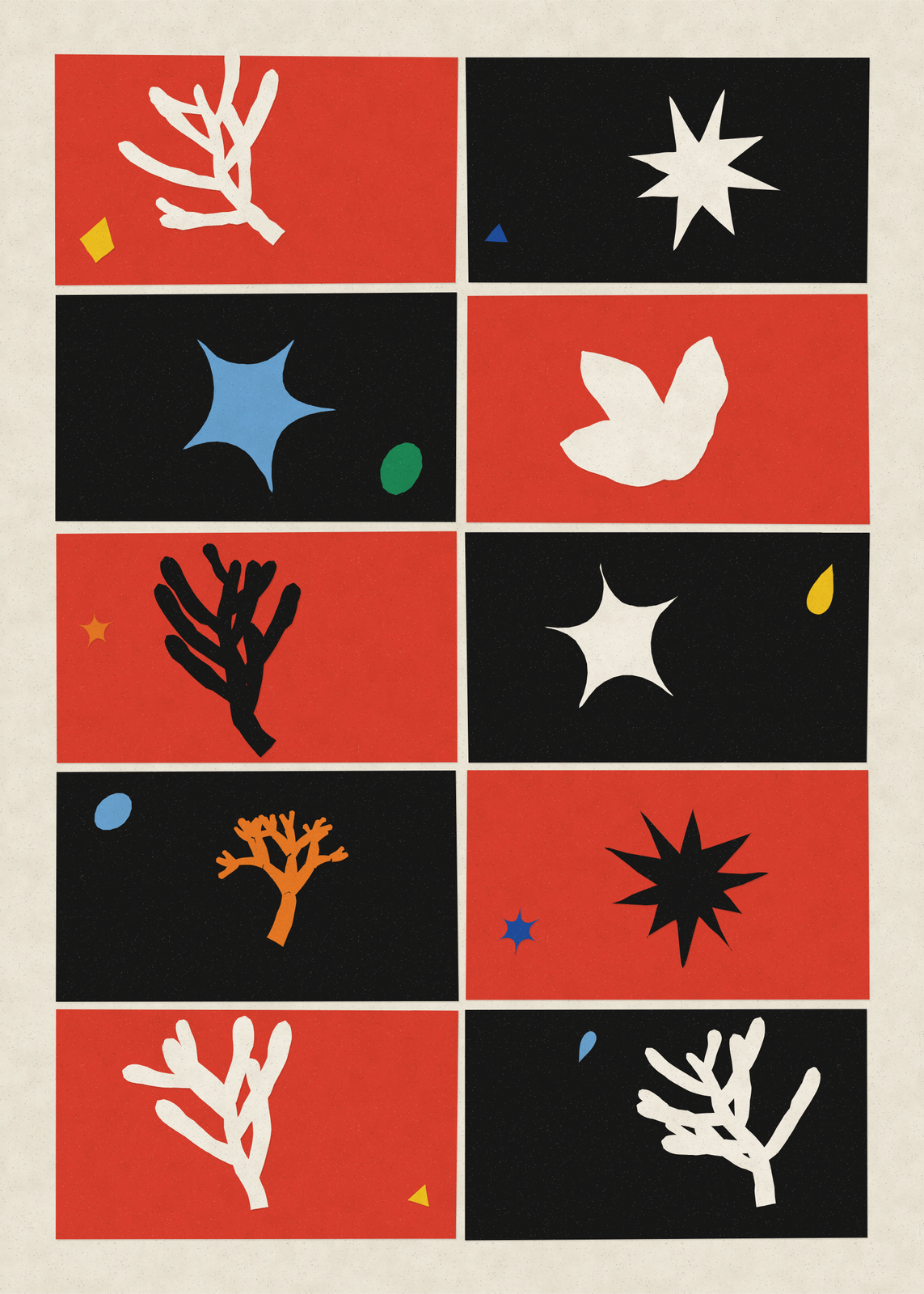
Colors
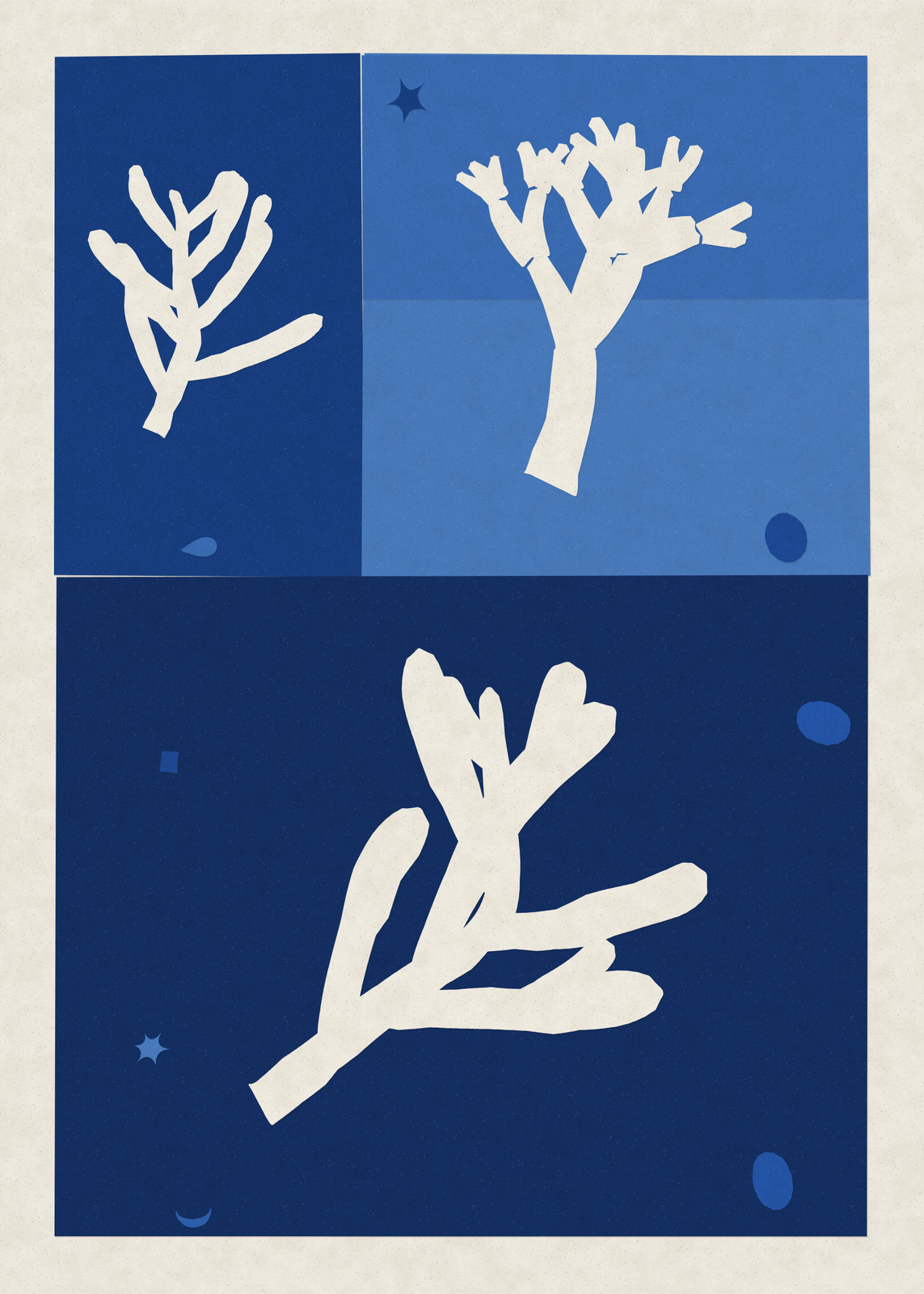
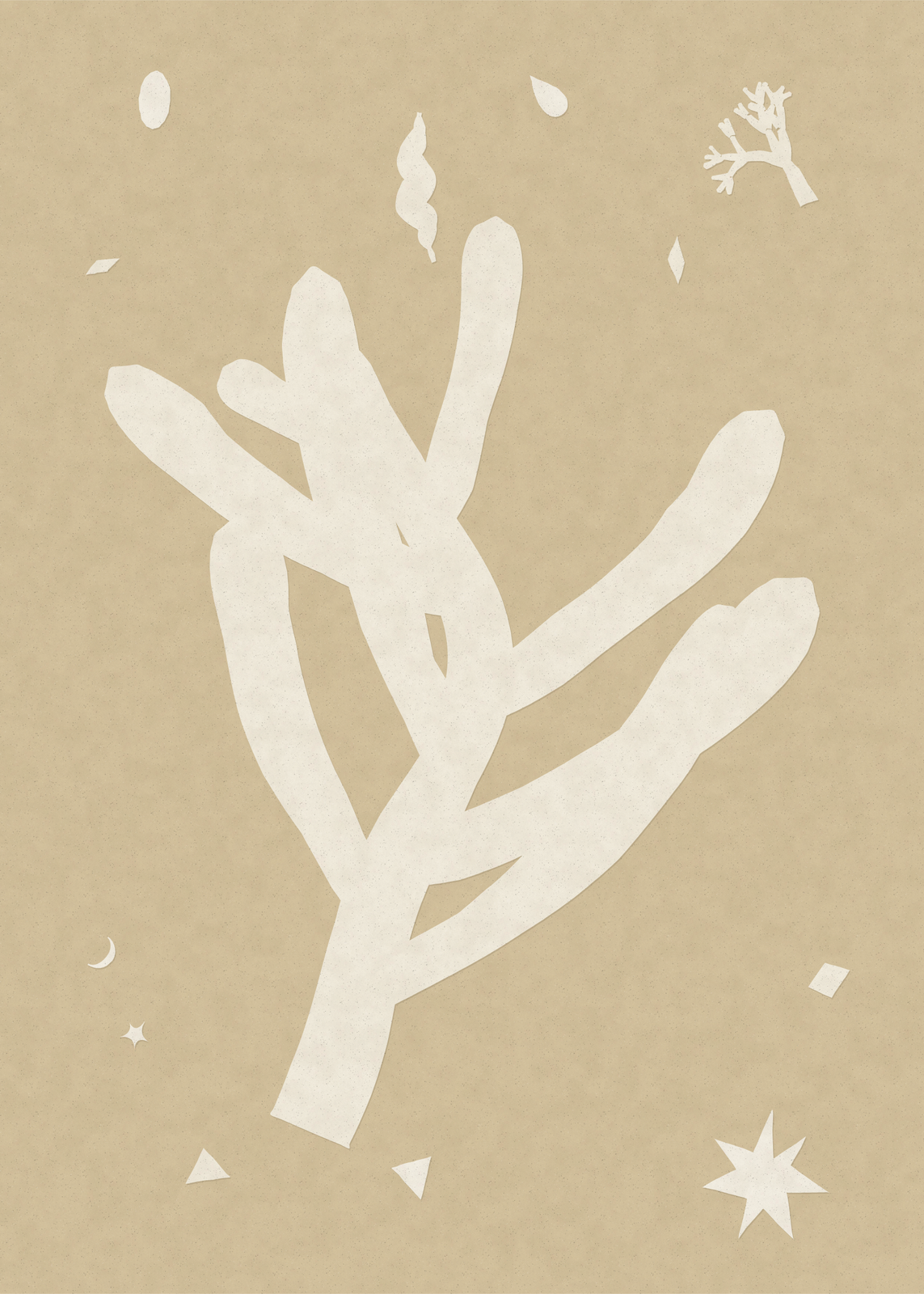
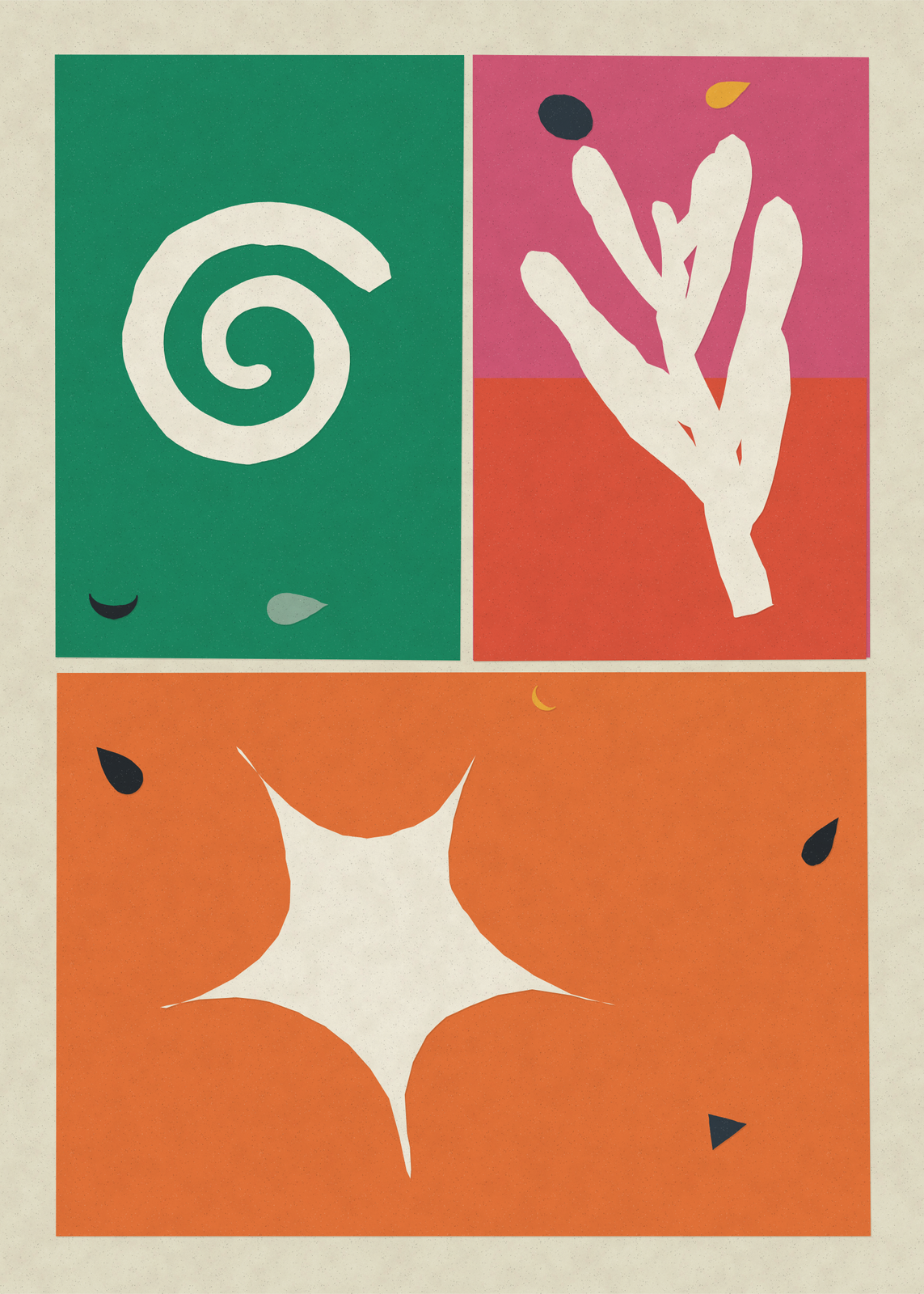
Shapes and counts
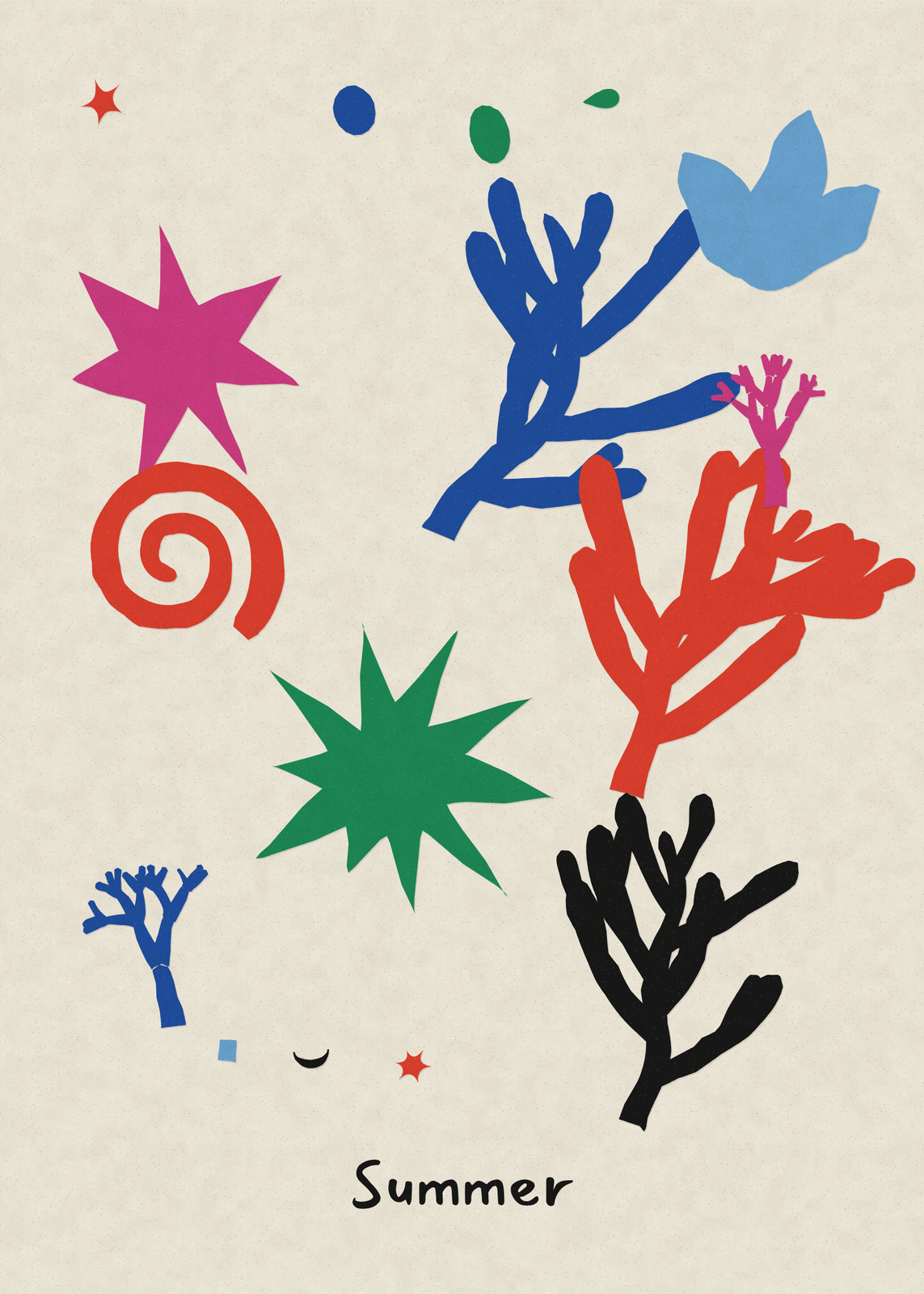
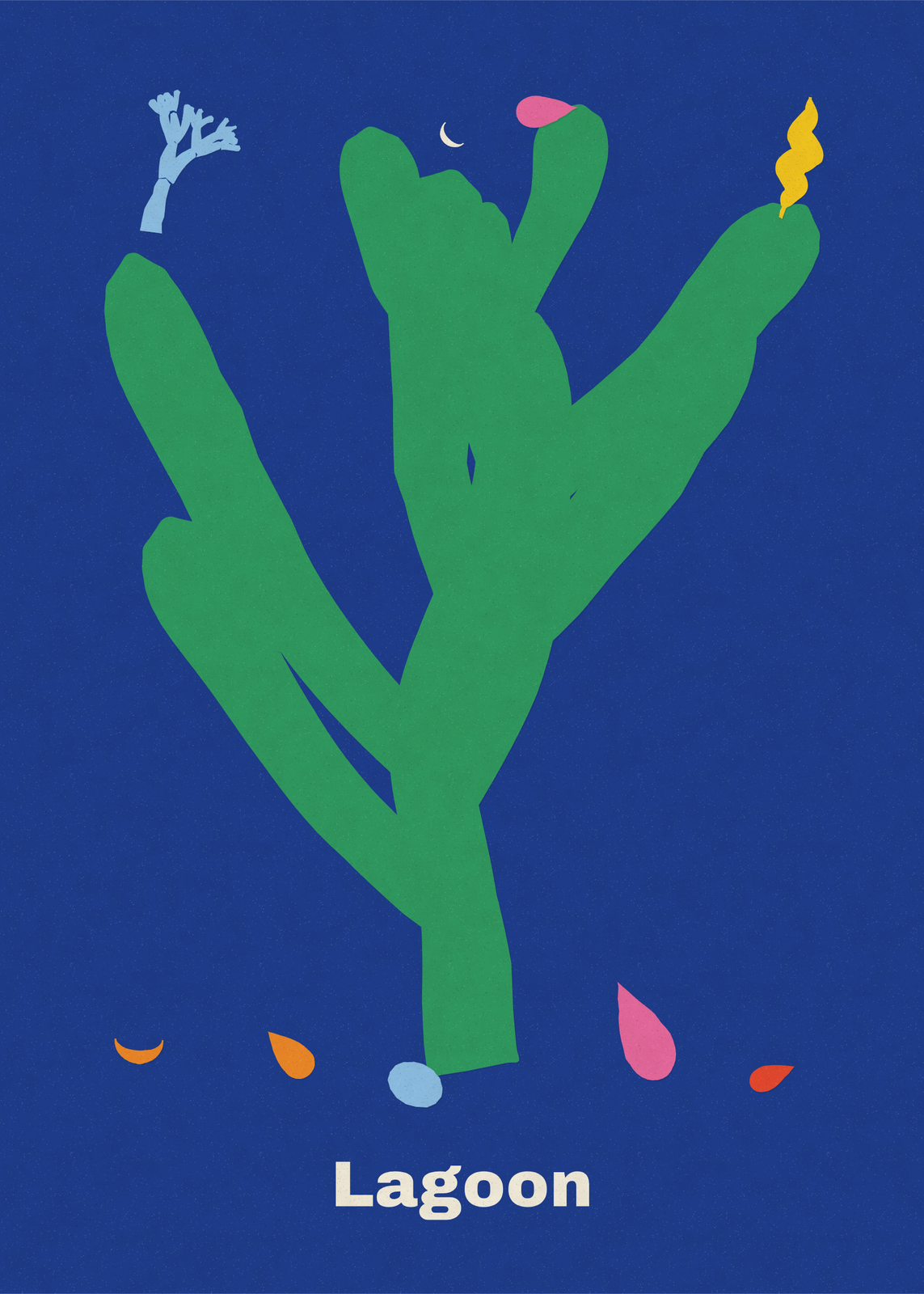
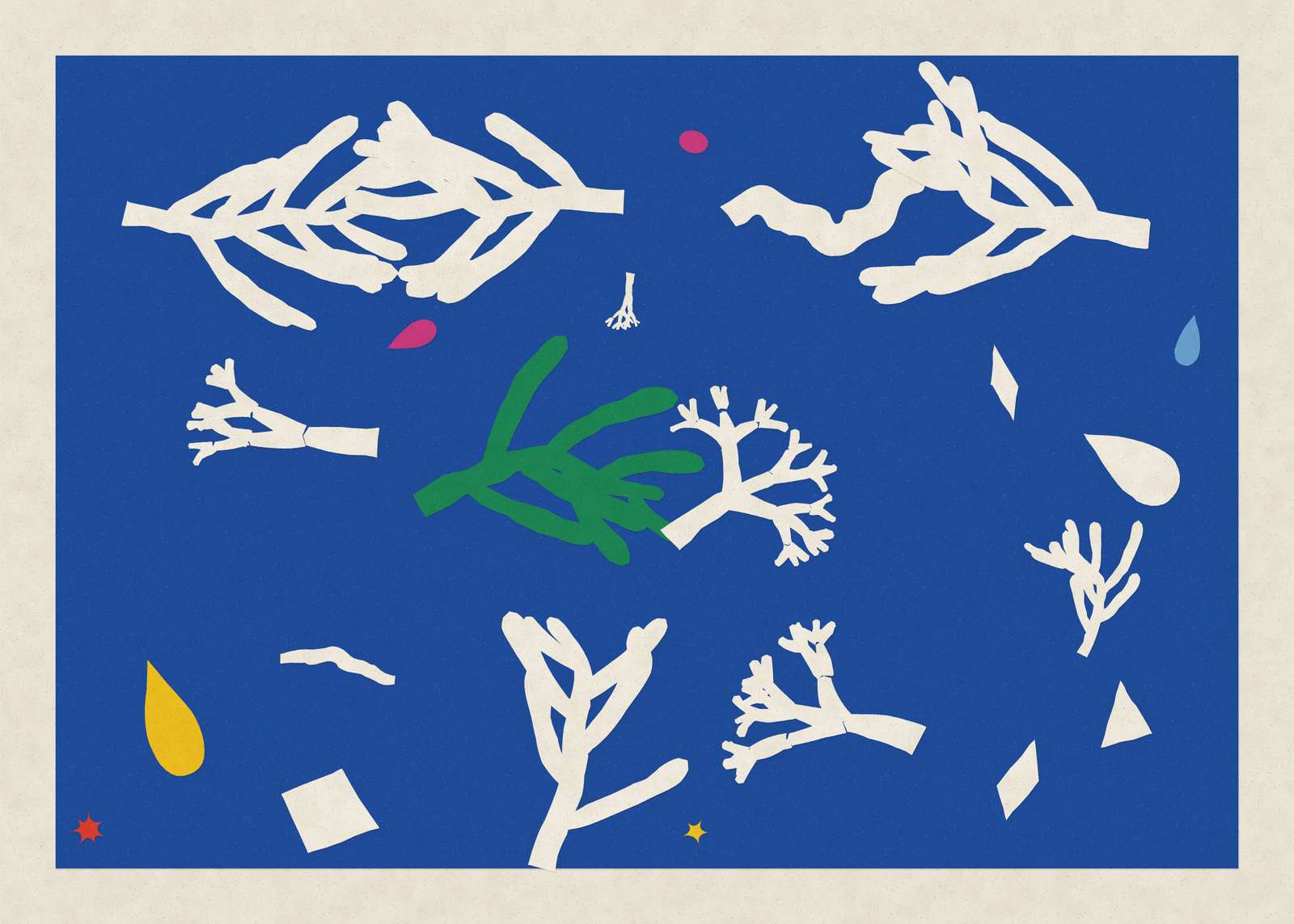
Matisse's cut-outs
After an operation in 1941 left him mostly in bed or a wheelchair, Matisse turned to scissors. His assistants painted sheets of paper with gouache; he cut shapes straight from the color and had them pinned to the walls of his rooms in Vence and Nice, moving them until the arrangement held. Jazz, the book that came out in 1947, printed twenty plates from such cut-outs. Oceania, the Sky and Oceania, the Sea (1946) set white birds, fish and seaweed on beige, and The Snail (1953) wound blocks of color into a spiral. These posters work from that late vocabulary of fronds, leaves, stars and bursts, not from his oil paintings.
Pages, a lagoon or one big frond
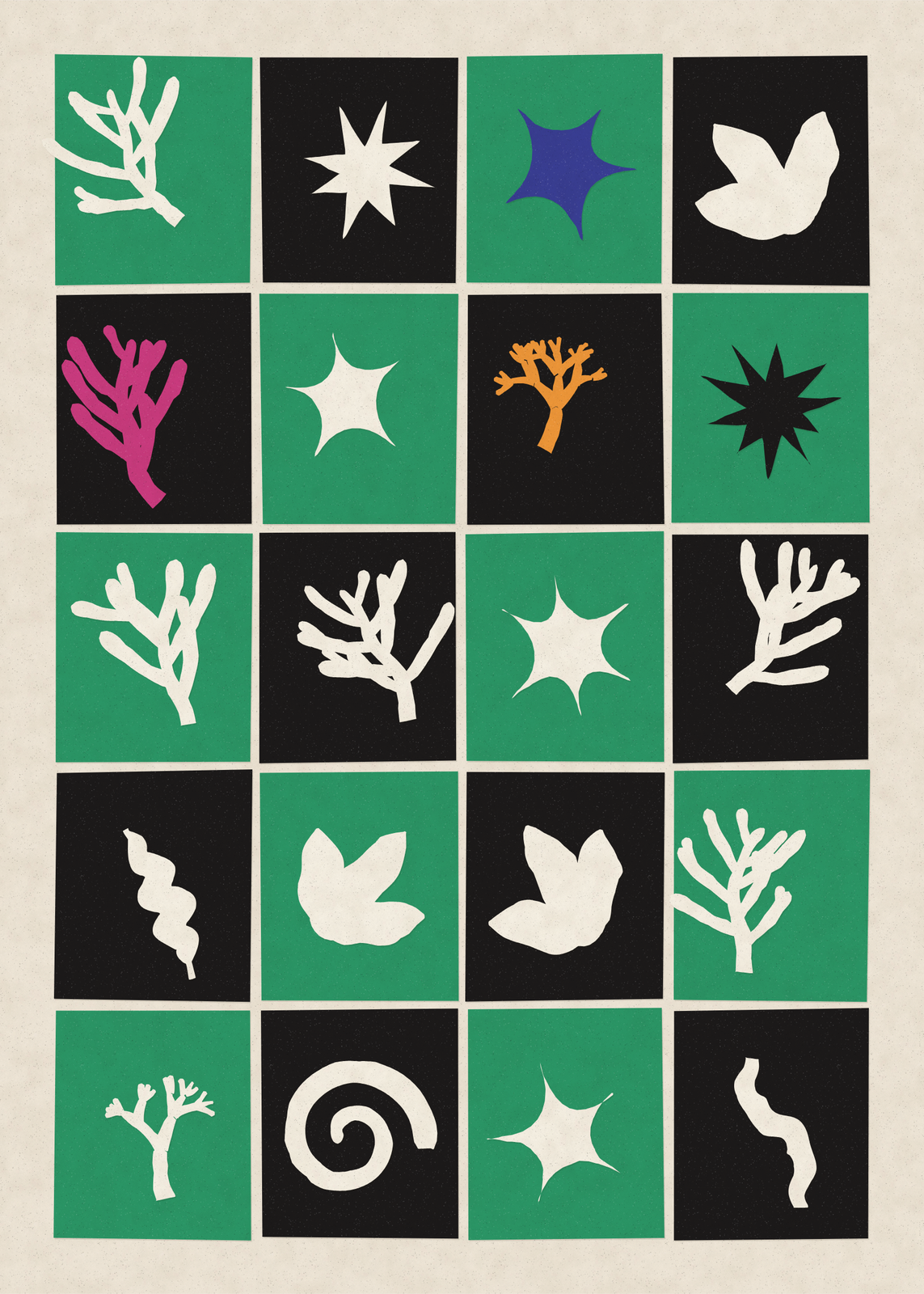
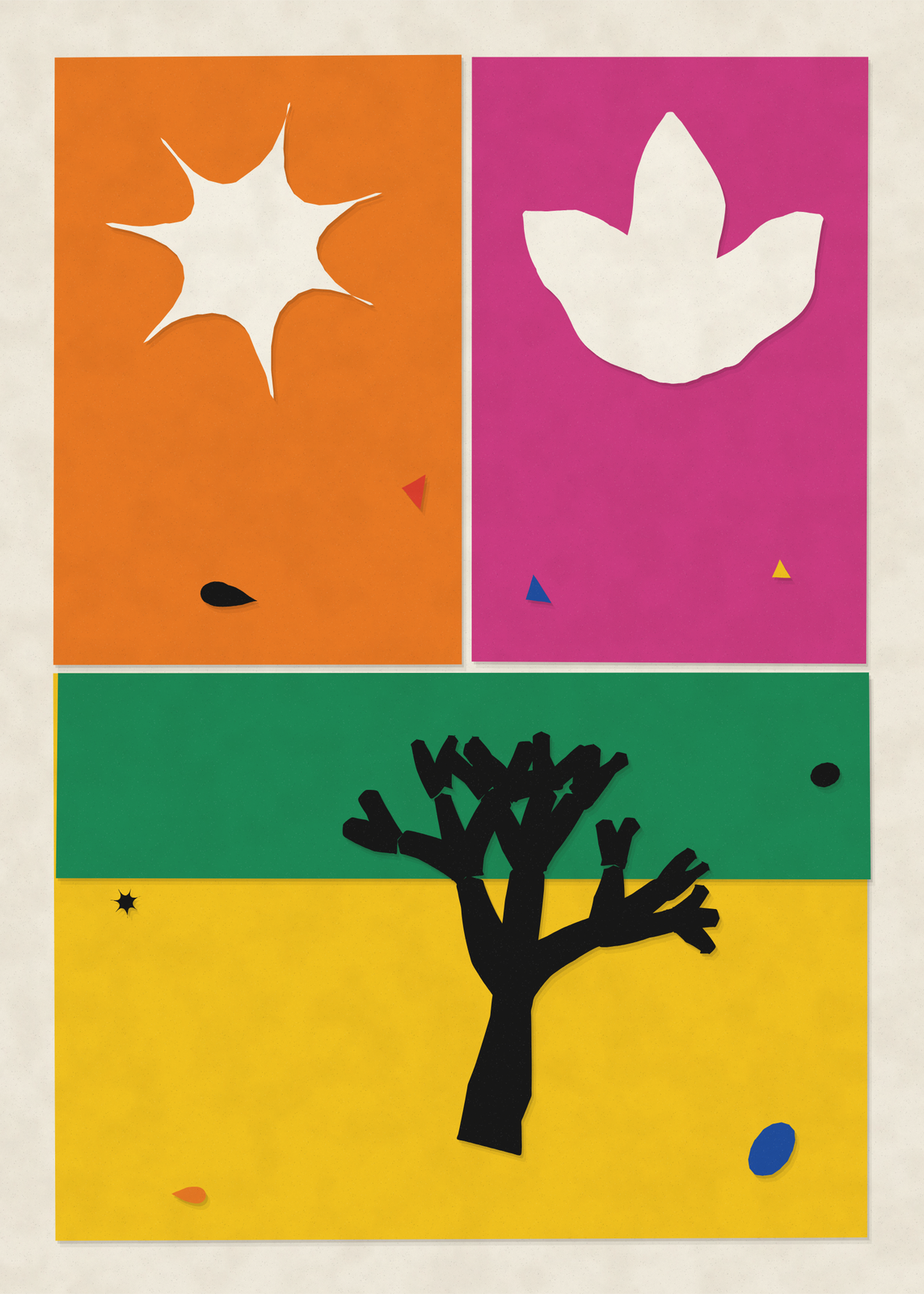
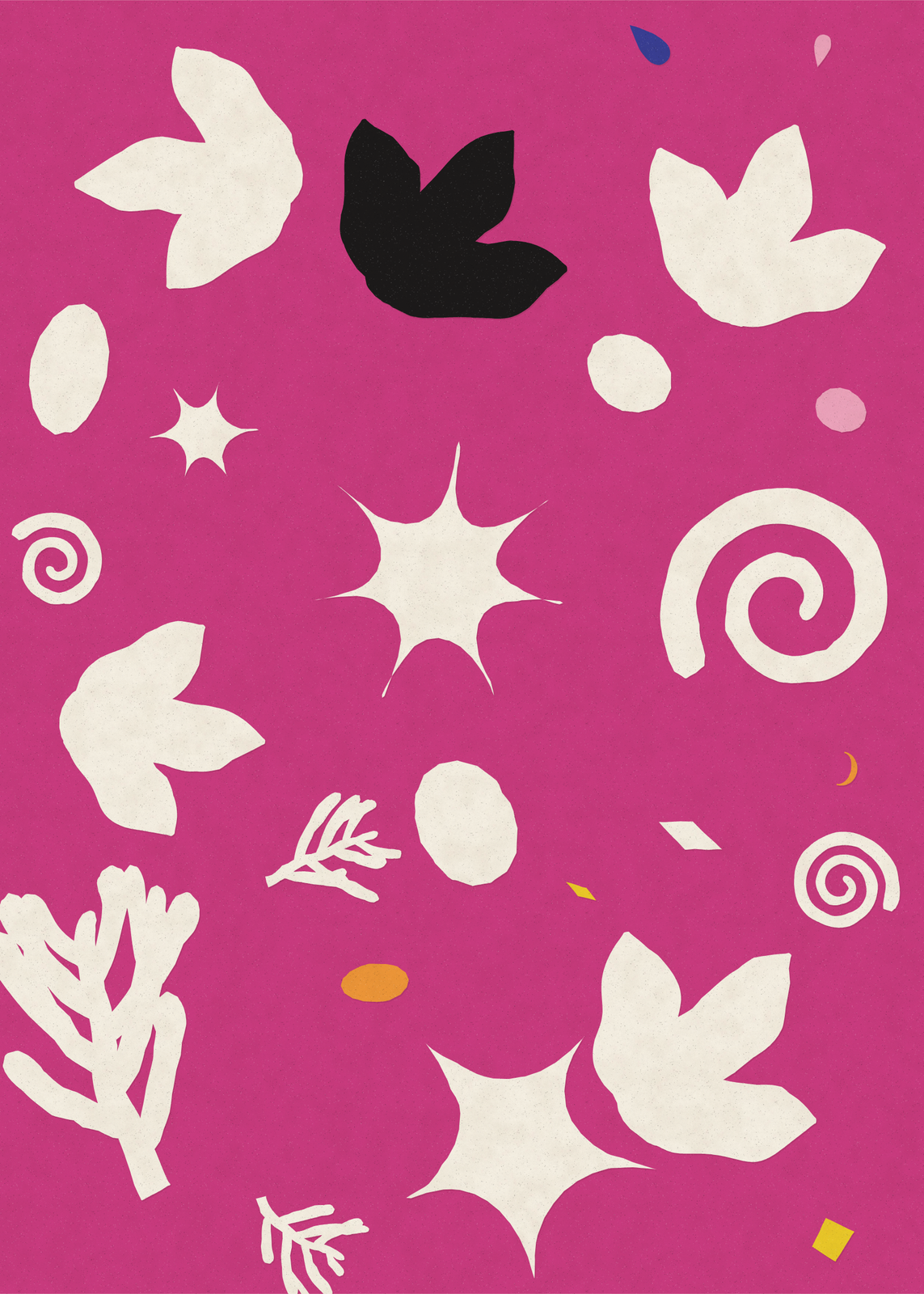
Jazz pages pastes two to six colored sheets side by side, edge to edge or a hair apart, some in two colors with the seam across, each holding a cut-out of its own, or two along a long sheet. Lagoon paints one field and spreads light cut-outs over it in a loose all-over pattern, after the Oceania pieces; Scattered lays them straight on the paper, biggest first where there's most room. Other layouts frame one big shape in a ring of small ones, let a single frond fill the sheet, or set one shape in each square of a checker.
No edge is quite straight: each outline drifts off the line between knots a few cuts apart, and the corners of pages and panels are nudged too. Confetti, seeds, drops and little stars from the scraps fill the gaps, only where they land clear of the shapes.
Colors and finish
Every palette holds eight gouaches by role, from deep blue and coral red to lemon and black, so switching colors repaints the same picture and never moves a cut-out. Oceania keeps everything white on beige; Ultramarine paints the paper itself blue. The Gouache finish lays a paper grain over the sheet, and Shadow tucks two faint shadows under every piece, as if pinned to a wall. The shapes are drawn as vector outlines, so the cut edges stay crisp at any print size.
Questions
Is this a real Matisse?
No. Each poster is a new picture composed from a seed in the manner of his late paper cut-outs. It doesn't reproduce, trace or copy any of his works, and it draws no figures, so you won't find his Blue Nudes or Icarus here.
Does it make pictures like his paintings?
No. It works only in the manner of the cut-outs he made from the 1940s on, not his oil paintings such as The Red Studio or The Dance. Every shape reads as a flat piece of painted paper with a hand-cut edge.
Will mine look like the examples?
Only with the same seed and settings. Each seed composes a new arrangement; the layout, shapes and sliders shape it, and the colors only repaint it. Click an example to start from it.
Can I add a title?
Yes. A line of text sits in a band of paper under the picture, in a brush hand, a serif or a heavy grotesk. Leave it empty for the cut-outs alone.
What sizes can I print?
US Letter, 8 × 10, 11 × 14, 12 × 16 and 12 × 18 in, A4 and A3, free. You download a 300 DPI JPEG drawn at the size you pick. Larger prints, up to 24 × 36 in, are coming soon.
Related
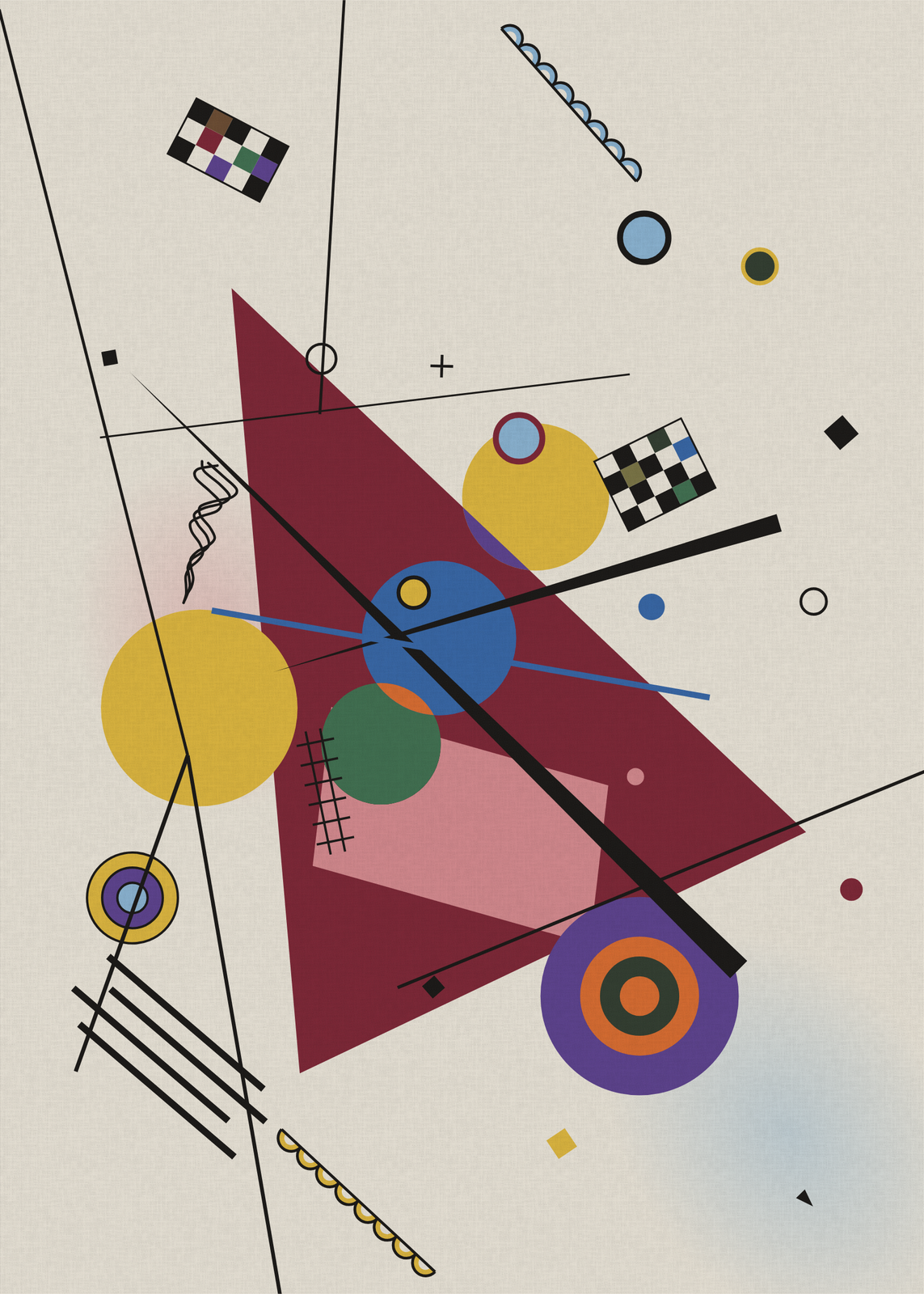 Modern artnew pictures after Matisse, Mondrian, Kandinsky, Klee and more
 Abstract artwall art from mid-century shapes, op art, cut paper and long color fades
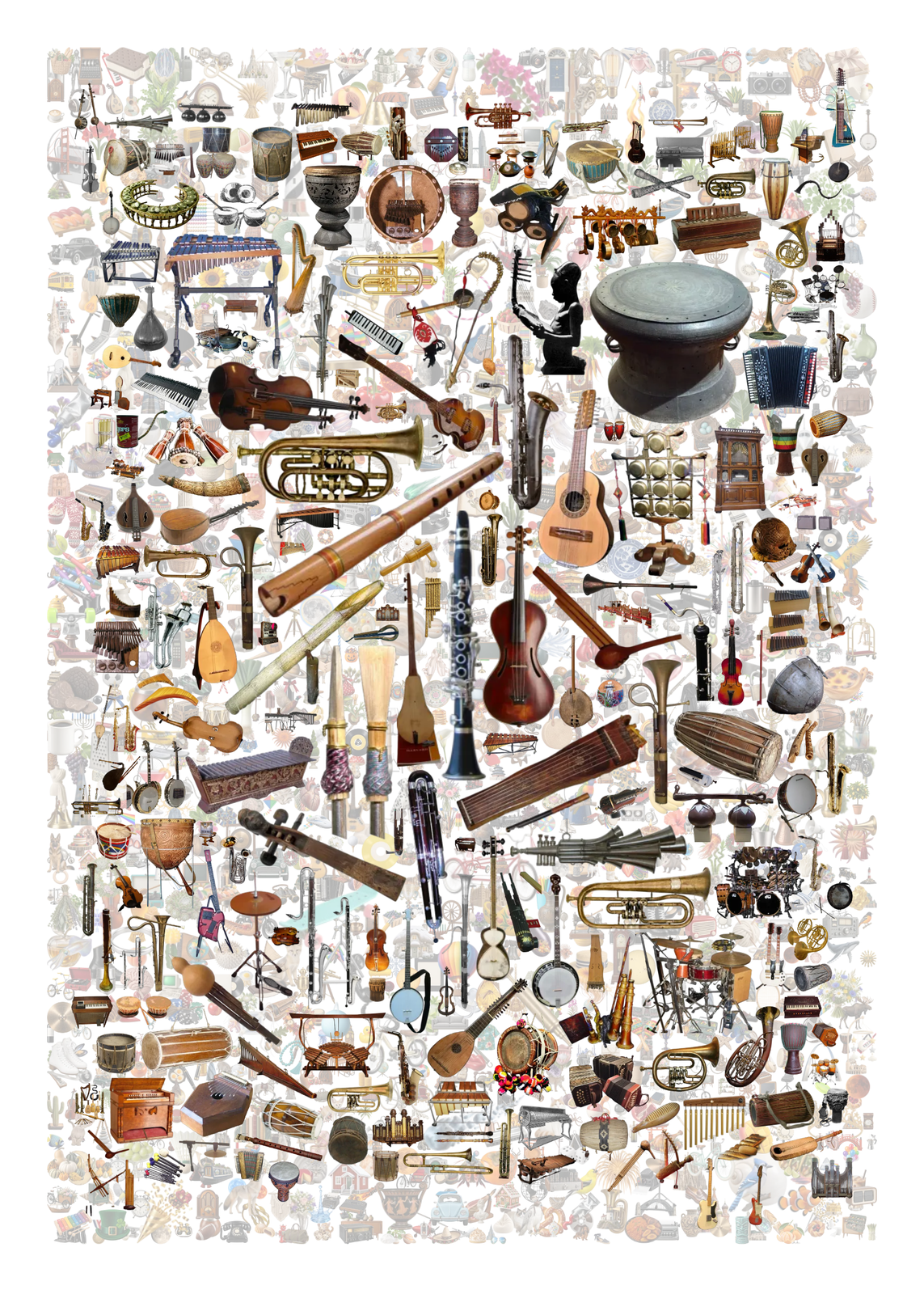 Collage arthundreds of real things cut out and packed edge to edge, on any theme
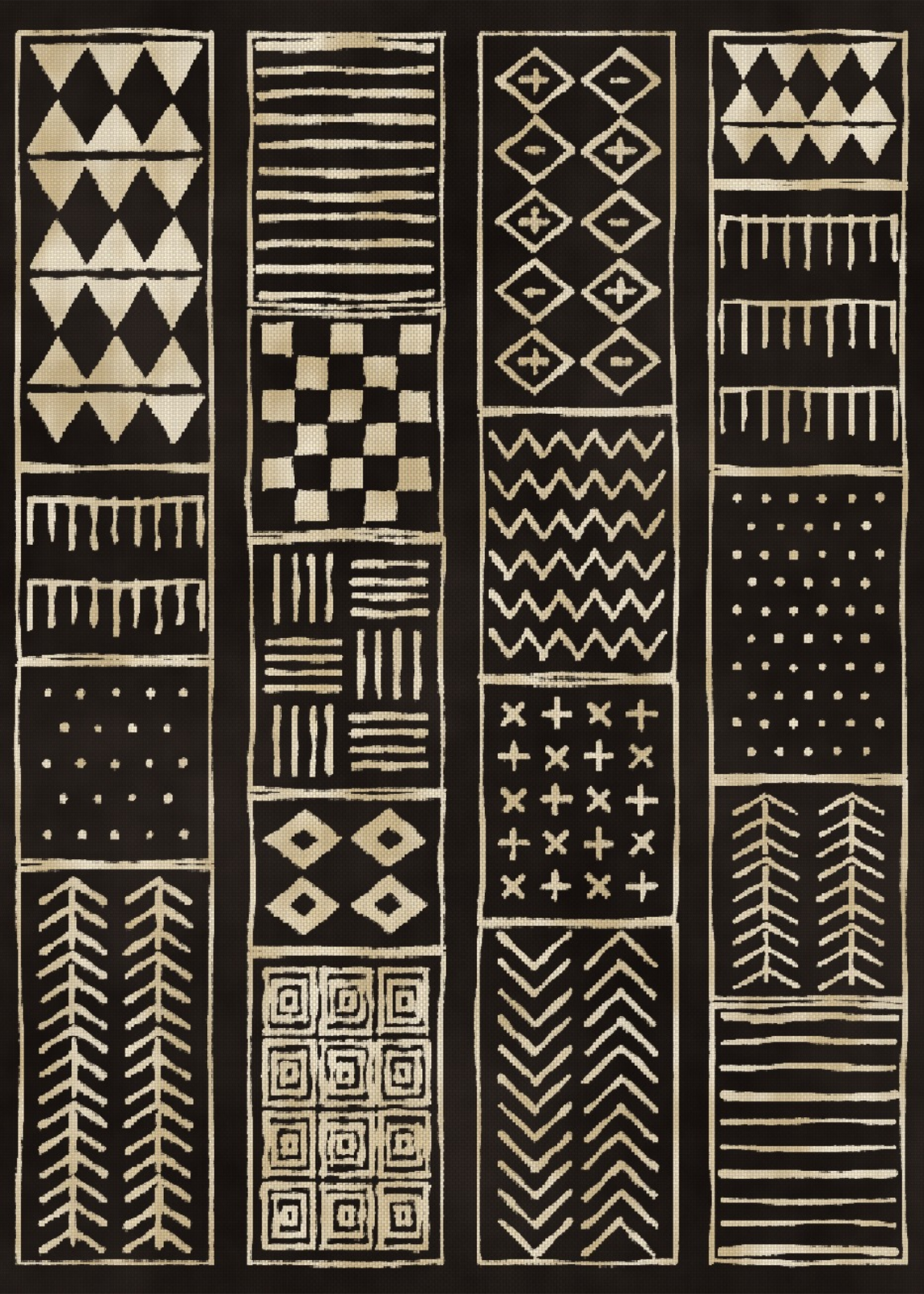 Boho wall artmade-up cloth, printed down to the thread
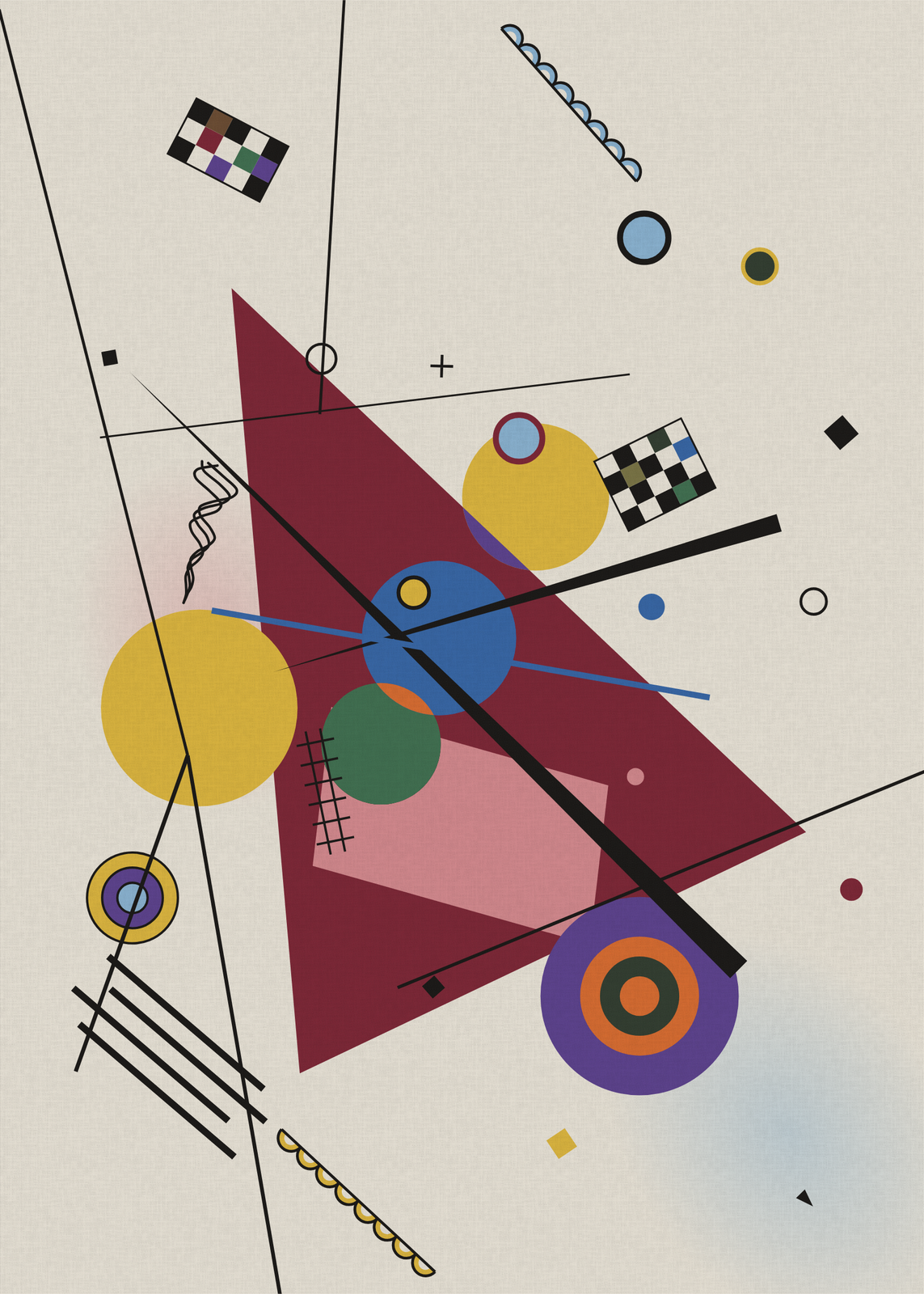 Kandinsky arthalo circles, tilted triangles and black spears, composed new in the manner of his Bauhaus years
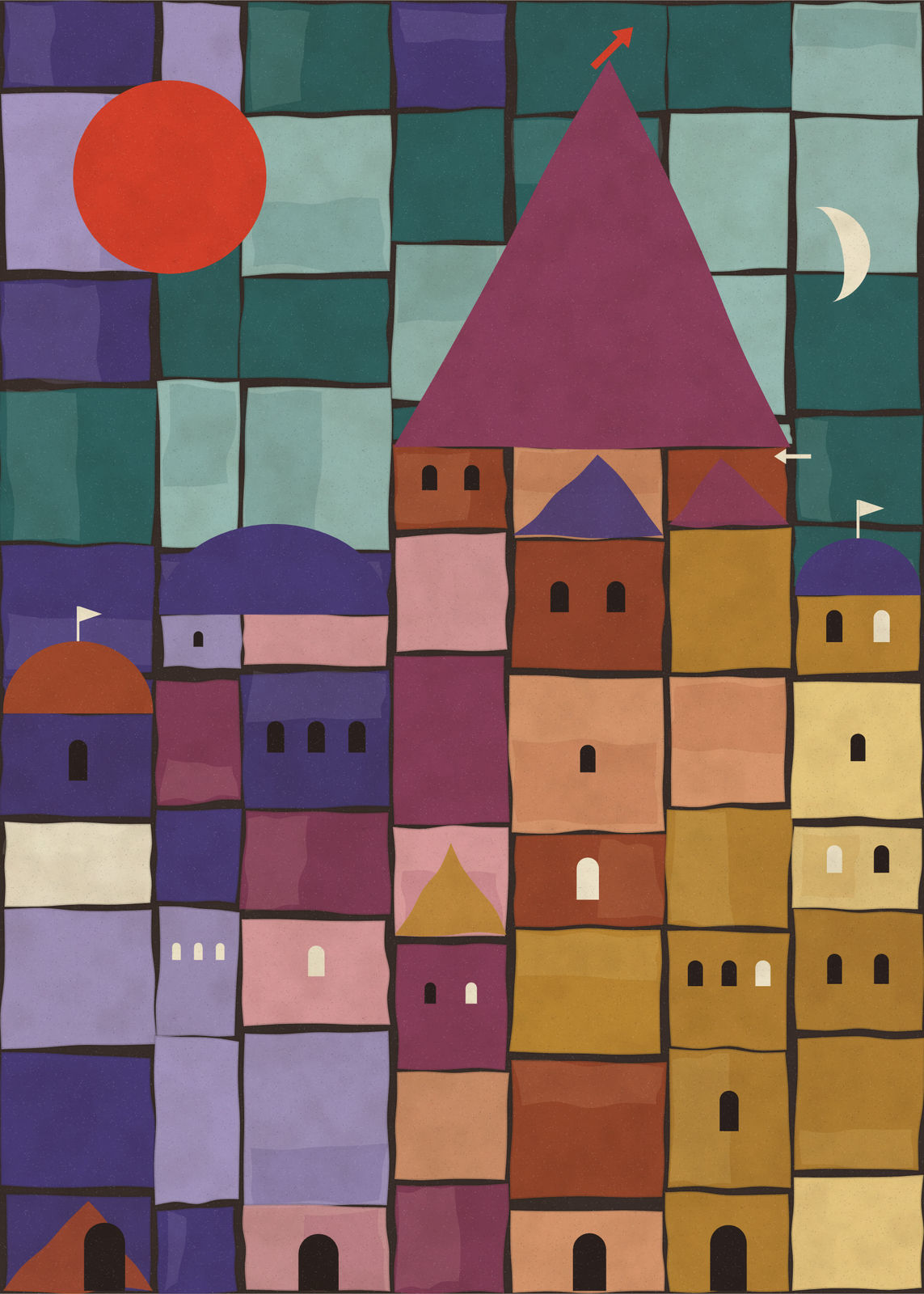 Paul Klee artmagic squares, a town of towers under the sun and shimmering dots, composed new in his manner
Gift ideas by occasion
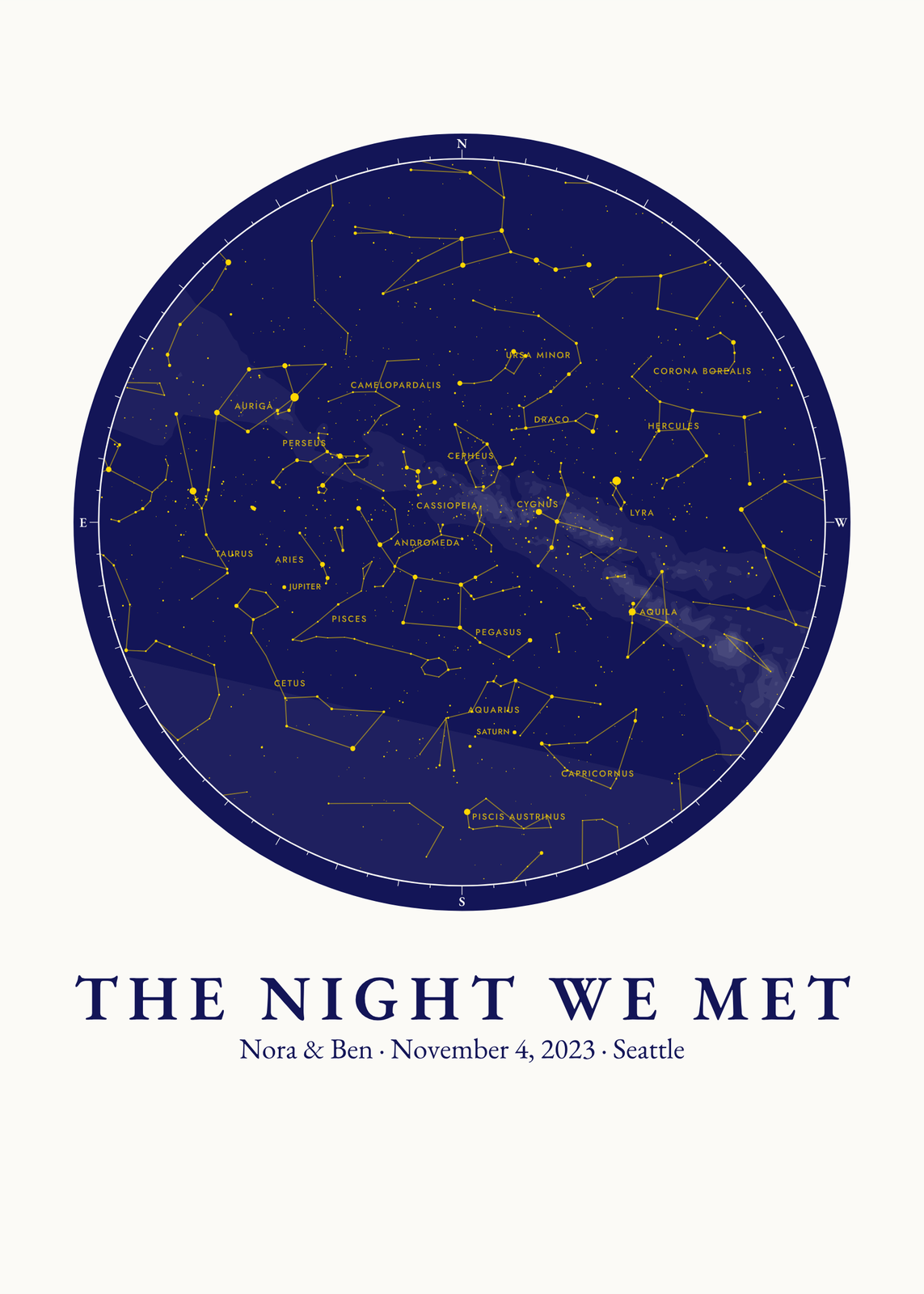
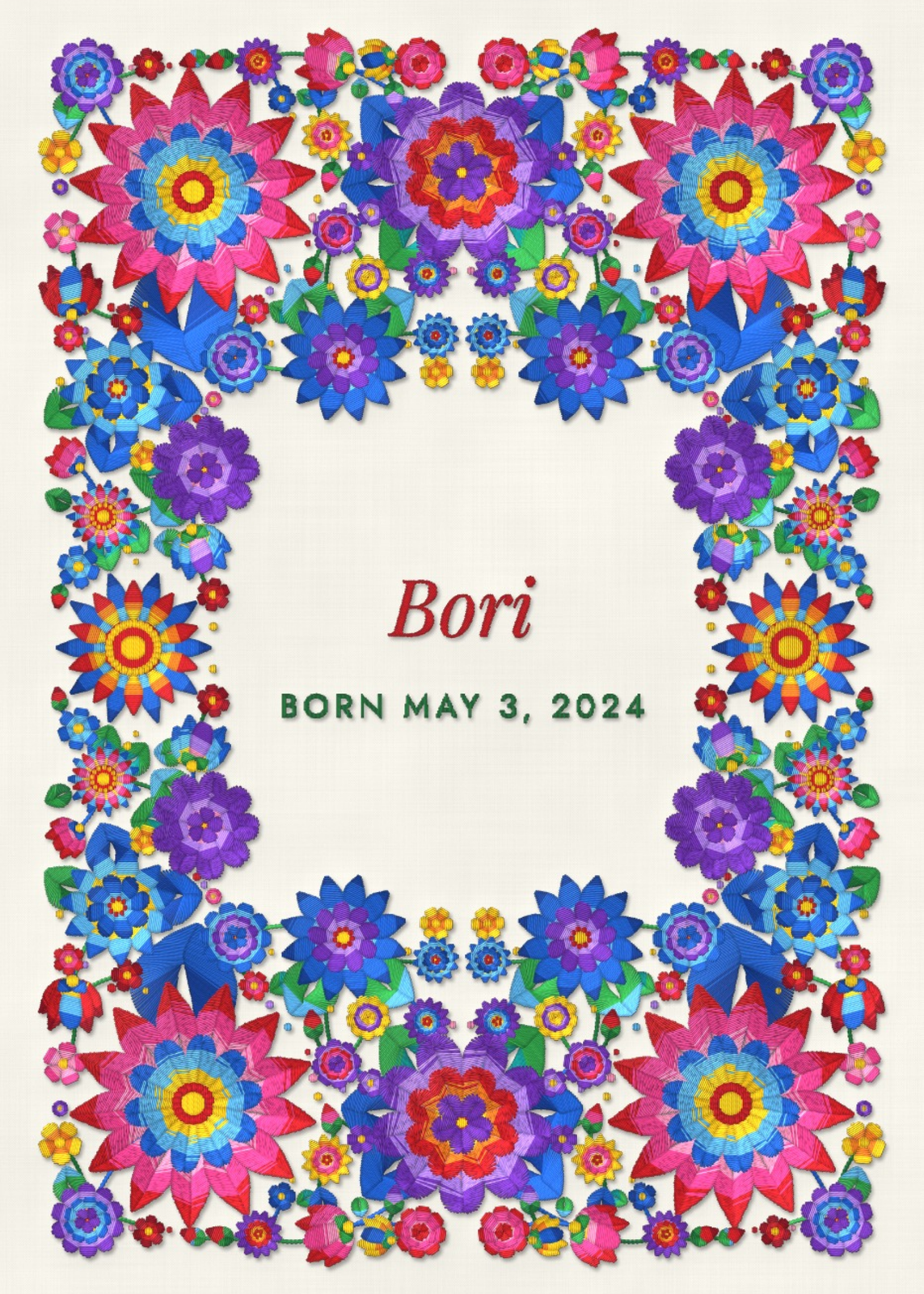
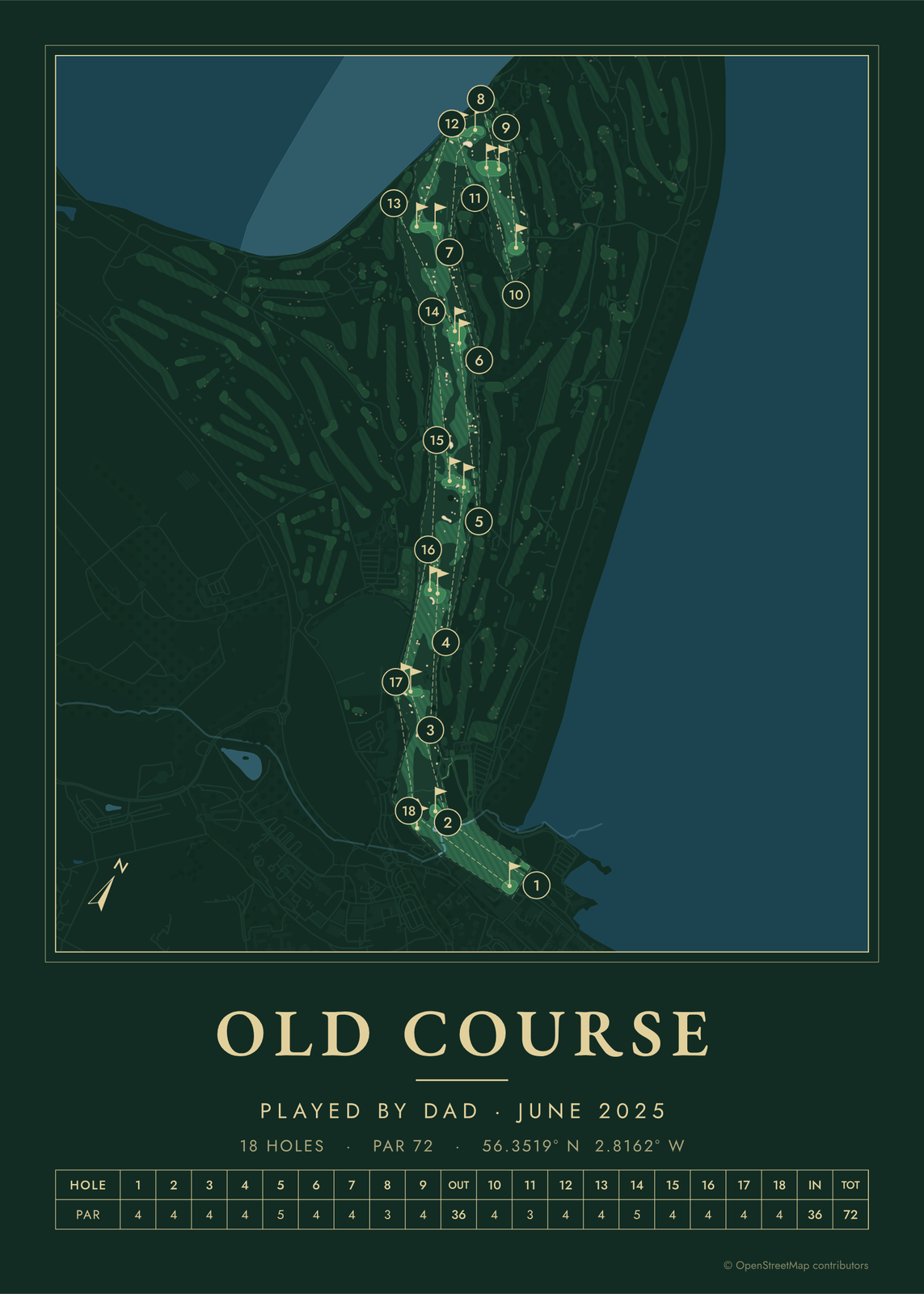
Every example is made with the Posterage generators. Change anything, then download it as a 300 DPI JPEG.